
A 1 Neural Development IB Biology 2015 2016
A. 1 Neural Development IB Biology 2015 -2016
The basics: The Nervous System https: //www. youtube. com/watch? v=q. Pix_X-9 t 7 E
Embryogenesis • The study of the fertilized egg to a fully formed organism • Typically done using animal models; same phylum as humans (Chordata, subphylum Vertebrates) – Fish, amphibians, reptiles, birds, mammals
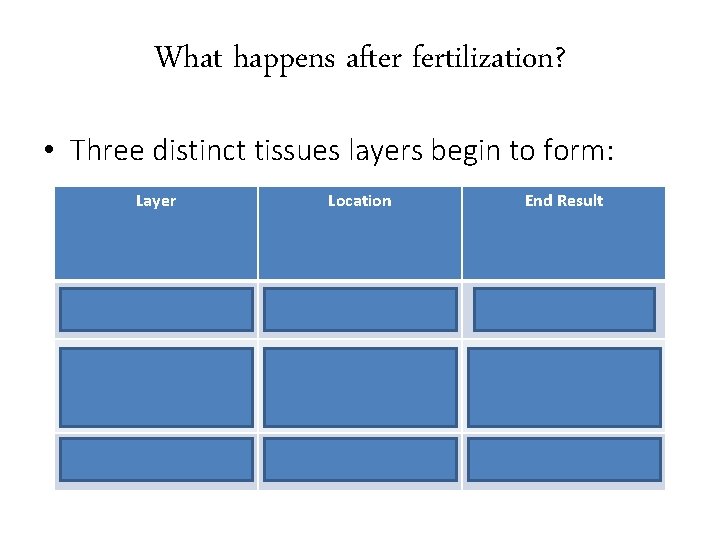
What happens after fertilization? • Three distinct tissues layers begin to form: Layer Location End Result Ectoderm Outermost layer The brain and nervous system Mesoderm Middle layer The skeletal, reproductive, circulatory, excretory, and muscular systems Endoderm Inner layer The lining of the gut and other organs
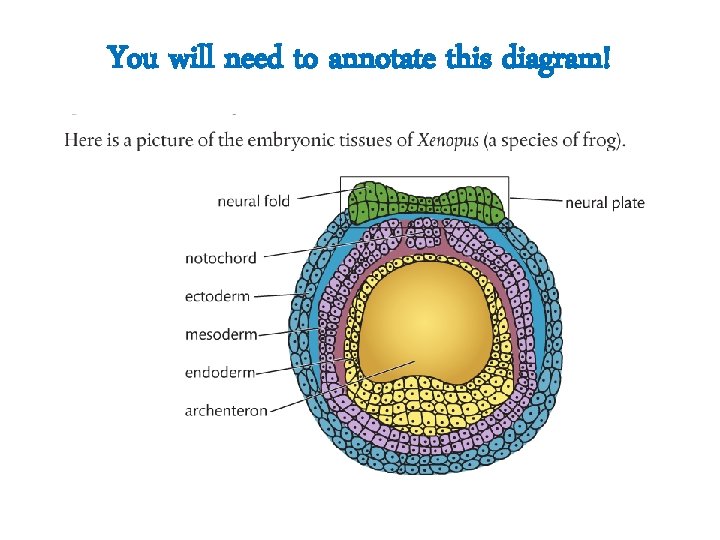
You will need to annotate this diagram!
Neural Tube Formation • From those layers, one of the first organs to develop is the neural tube – Will eventually become the brain and spinal cord – which is obviously SUPER IMPORTANT! • As embryogenesis continues, the neural plate folds in, closes, and becomes a neural tube. • This elongates and becomes the brain and spinal cord. • http: //media. pearsoncmg. com/intl/ema/9781447959007_Biol. HL_Damon/Animations/ch 12 p 496/index. html

Neural tube formation • A progressive process: does not take place simultaneously all along the body – The brain develops much sooner than the caudal (tail) end – What happens if the caudal end never fully closes? Spina Bifida Ciarlo's Story
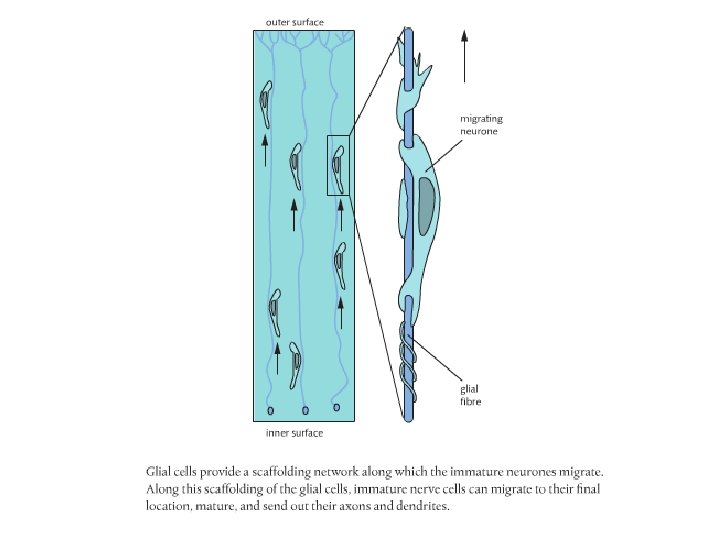
Neurogenesis • The neurones of the central nervous system (CNS) originate in the neural tube • Neurogenesis is the process by which neuroblasts mature into neurones – Splits into two major types of cells: • Glial Cells (support, nourish, protect neurones, among other things) • Neurones (messengers)
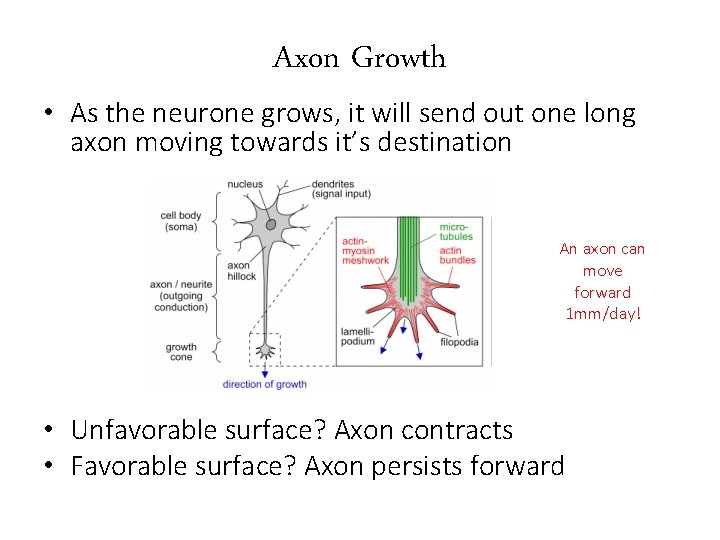
Axon Growth • As the neurone grows, it will send out one long axon moving towards it’s destination An axon can move forward 1 mm/day! • Unfavorable surface? Axon contracts • Favorable surface? Axon persists forward
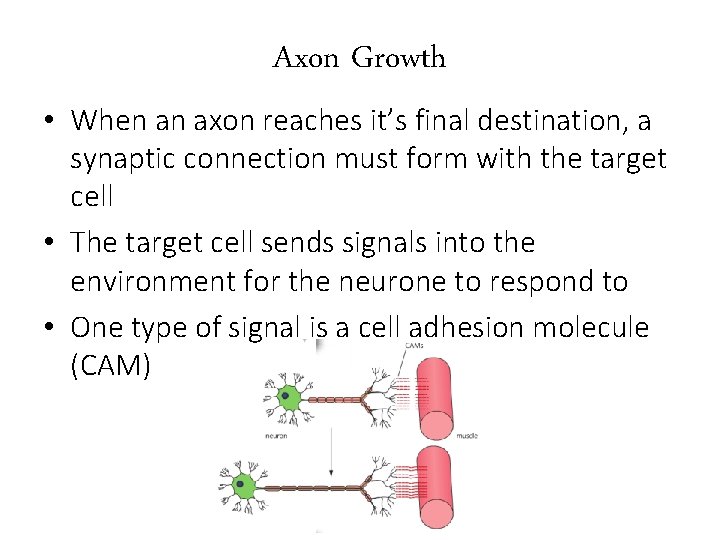
Axon Growth • When an axon reaches it’s final destination, a synaptic connection must form with the target cell • The target cell sends signals into the environment for the neurone to respond to • One type of signal is a cell adhesion molecule (CAM)
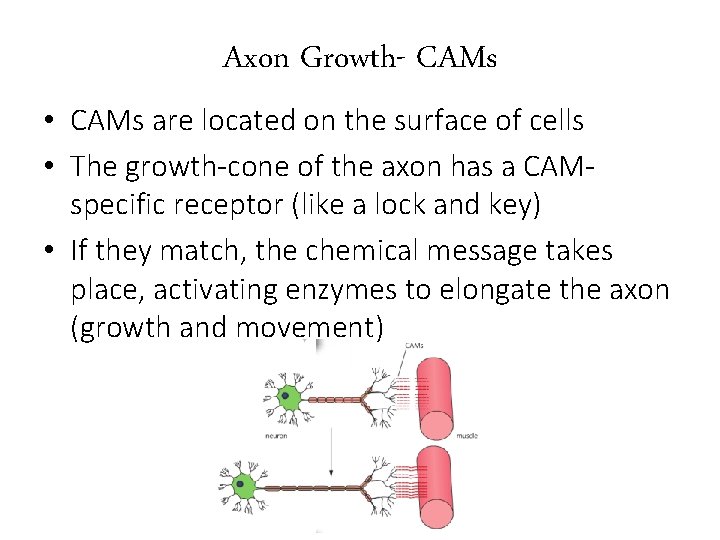
Axon Growth- CAMs • CAMs are located on the surface of cells • The growth-cone of the axon has a CAMspecific receptor (like a lock and key) • If they match, the chemical message takes place, activating enzymes to elongate the axon (growth and movement)
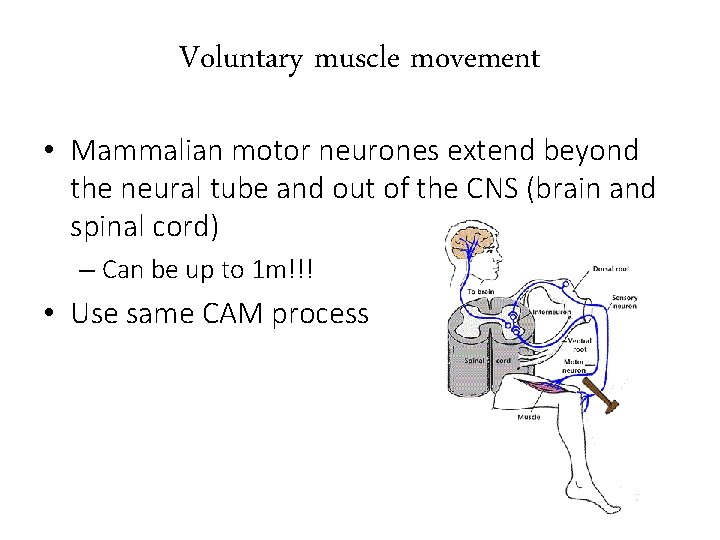
Voluntary muscle movement • Mammalian motor neurones extend beyond the neural tube and out of the CNS (brain and spinal cord) – Can be up to 1 m!!! • Use same CAM process
Many, many synapses • A single nerve makes many connections at first; needs to find best fit • If the connection does not work or is not efficient, that connection will be eliminated • This has mainly been studied with muscles and neurones from the spinal cord – The areas Where the connections persist are called neuromuscular junctions • Neural Pruning – Children 2 -3 years old have 15, 000 synapses per neurone… TWICE as many as an adult brain!! – Neural Pruning eliminates simple childhood connections and allows them to be replaced with complex adult connections – Microglia – type of glial cells that prune unused connections • Learning Language
Brain Plasticity: Your brain is PLASTIC
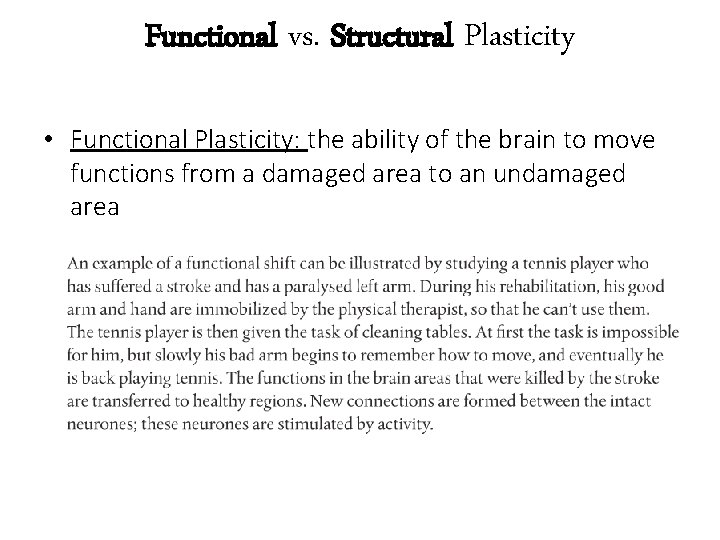
Functional vs. Structural Plasticity • Functional Plasticity: the ability of the brain to move functions from a damaged area to an undamaged area
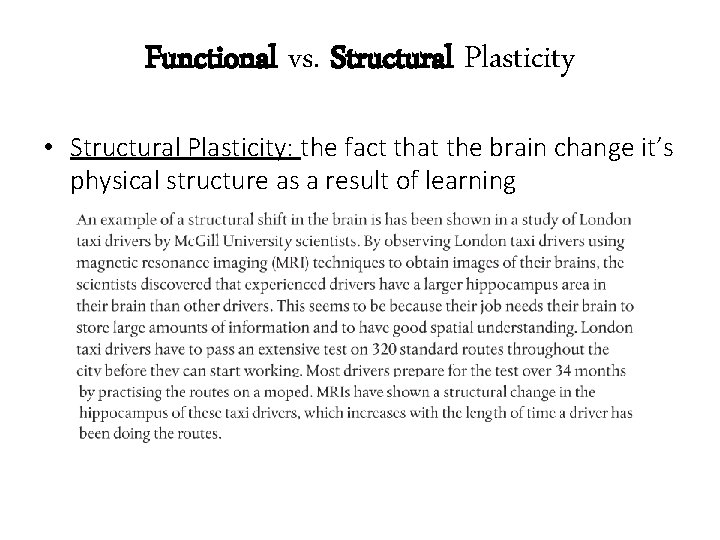
Functional vs. Structural Plasticity • Structural Plasticity: the fact that the brain change it’s physical structure as a result of learning
What about a stroke? https: //www. youtube. com/watch? v=w. Lw-7 bv. VQ 1 M
How to control someone else’s arm with your brain https: //www. youtube. com/watch? v=r. SQNi 5 s. Awuc What is so special about the brain? https: //www. youtube. com/watch? v=_7_XH 1 CBz. Gw
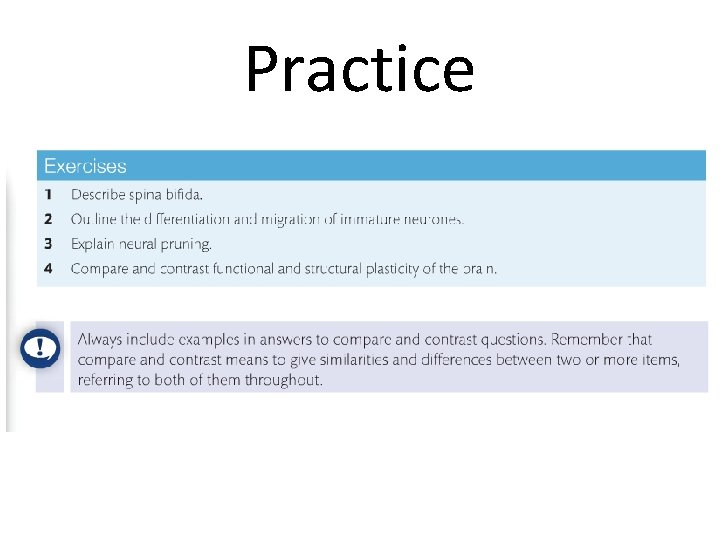
Practice
- Slides: 22