
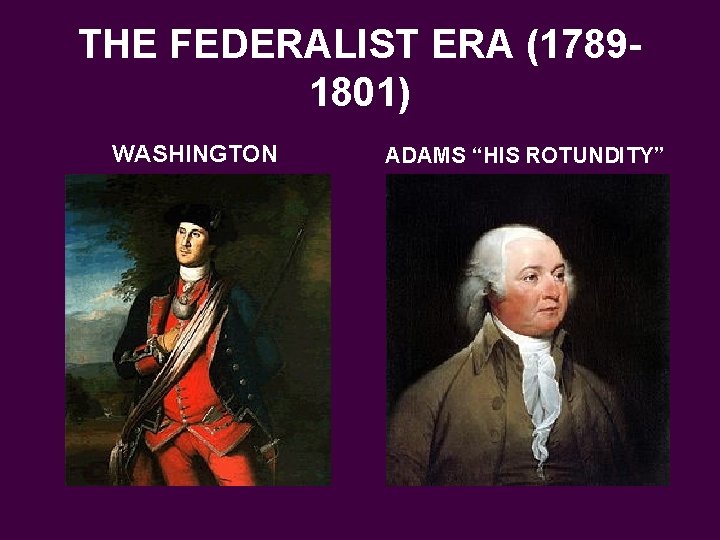
THE FEDERALIST ERA 17891801 WASHINGTON ADAMS HIS ROTUNDITY
- Slides: 20
THE FEDERALIST ERA (17891801) WASHINGTON ADAMS “HIS ROTUNDITY”
Political Change • In the Federalist Era, THE GOVERNMENT GREW EXPONENTIALLY, or a lot. • President Washington INITIATED A LOT OF GOVERNMENT POLICIES--he was the first one to do a lot. President Washington: – FORMED THE FIRST CABINET • National focus • Administrative responsibilities – – State War (now the Secretary of Defense) Treasury Attorney general – CREATED THE FIRST FEDERAL JUDICIARY —the first federal court system
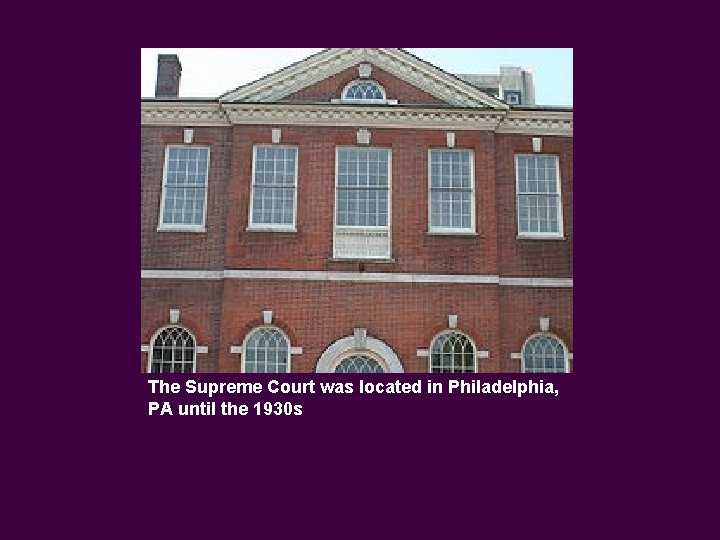
The Supreme Court was located in Philadelphia, PA until the 1930 s
Political and Economic Change • Madison and Hamilton had different plans for RAISING REVENUE • The Tariff of 1789 -MADE THE IMPORT AND EXPORT OF GOODS MORE EXPENSIVE – This improved the livelihood of northerners and harmed the livelihood of southerners
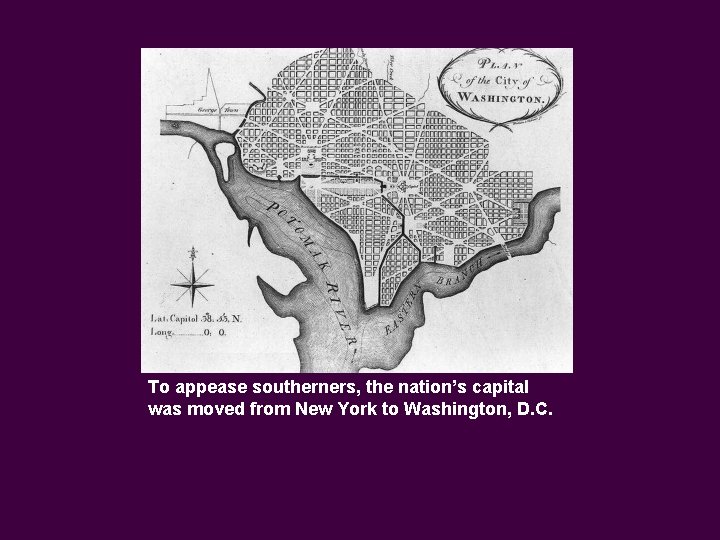
To appease southerners, the nation’s capital was moved from New York to Washington, D. C.
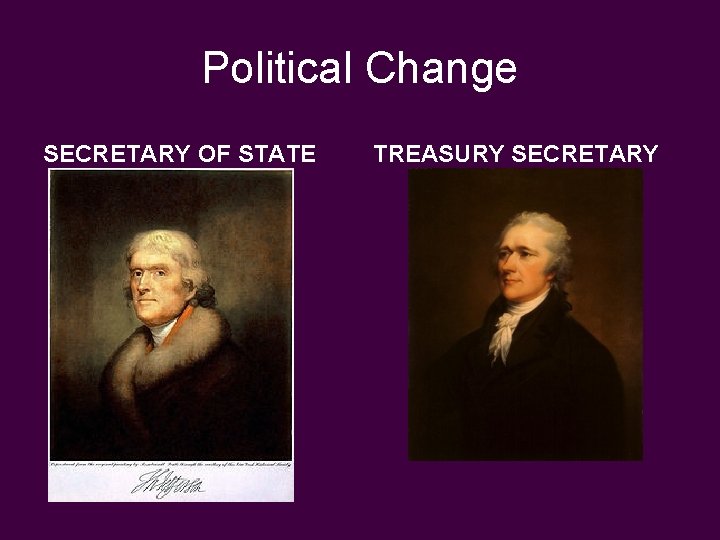
Political and Economic Change • The main method used by Treasury Secretary Hamilton and the federalists to increase the power of the national government was THE CREATION OF A NATIONAL BANK. • Secretary of State Jefferson opposed this policy because as an anti-federalist/Democratic Republican, HE PREFERRED THAT THE STATES HAVE MORE AUTHORITY. • The creation of a national bank was THE MAIN CAUSE of the eventual creation of political parties.
The Creation of a National Bank Hamilton-Federalist Jefferson-Democratic Republican • “If the measure have an obvious relation to that end, and it is not forbidden by any particular provision of the Constitution—it may be safely deemed to come within the compass of the national authority…Does the proposed measure abridge a pre-existing right of any state or any individual? If it does not, there is a strong presumption in favour [sic] of its constitutionality…” • “To take a single step beyond the boundaries…specially drawn around the powers of Congress [in the Tenth Amendment], is to take possession of a boundless [field] of power, no longer susceptible to any definition. ”
Enumerated and Implied Powers • Whereas Hamilton believed in the IMPLIED POWERS of Congress and of the national government; Jefferson believed that all powers not specifically delegated to the national government are reserved to the states respectively, or to the people. • WHAT IS THE DIFFERENCE BETWEEN ENUMERATED AND IMPLIED POWERS?
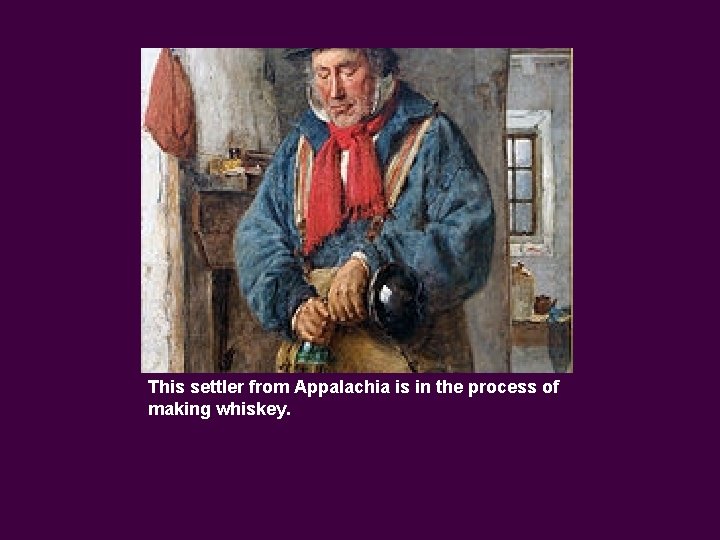
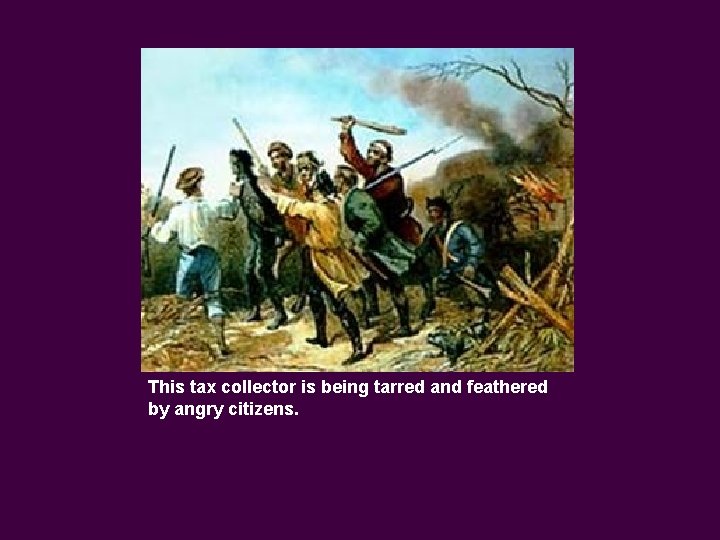
Political and Economic Change • In order to increase the power of the national government, Congress passed and President Washington signed into law AN EXCISE TAX ON WHISKEY. • This angered rural folk on the frontier (west of the Appalachians) who MADE THEIR LIVELIHOOD BY PRODUCING WHISKEY.
This settler from Appalachia is in the process of making whiskey.
This tax collector is being tarred and feathered by angry citizens.
Political Change SECRETARY OF STATE TREASURY SECRETARY
Political Change-the Creation of Factions Hamiltonians or Federalists Jeffersonian or Democratic. Republicans • Hamilton, a foreigner from • Jefferson, a Virginian, the West Indies, DREW received his support from HIS SUPPORT FROM tradesmen, farmers and THE WEALTHY, from COMMONERS. bankers and from • Believed in state northern industrialists. sovereignty and • Believed in A STRONG POPULAR CENTRAL SOVEREIGNTY. GOVERNMENT. • SUPPORTED BRITAIN in • SUPPORTED FRANCE its war with France. in its war with Britain.
Political Change • President Washington knew that we were too young of a country to involve ourselves in a war that included two of the most powerful nations in the world at that time and he KEPT US OUT OF THE WAR by issuing A PROCLAMATION OF NEUTRALITY. • Washington declared the United States to be “friendly and impartial” toward both warring powers.
Political Change • Jay’s Treaty – WAS HIGHLY FAVORABLE TO BRITAIN – Washington sent John Jay to Britain to negotiate • Britain could seize cargo headed for French ports • Americans would not be compensated for stolen property • Hearings about property would be decided by third parties • Britain gave up their forts on American territory • Britain granted the United States most-favored nation status • U. S. granted trade with British colonies in the Caribbean
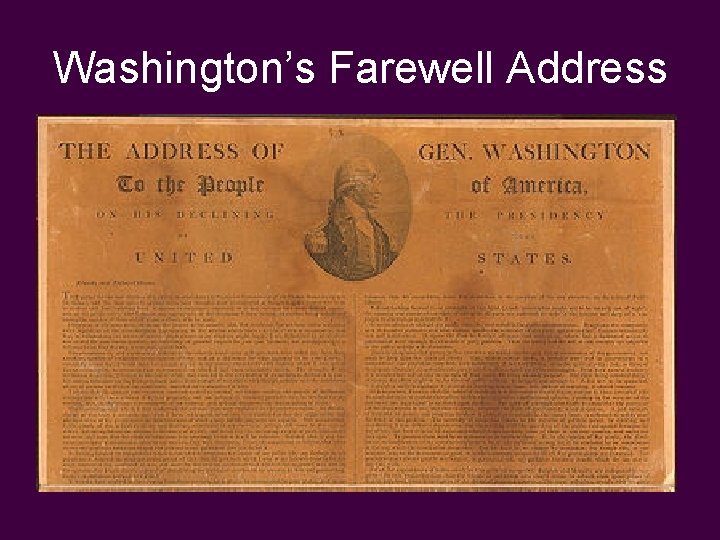
Washington’s Farewell Address
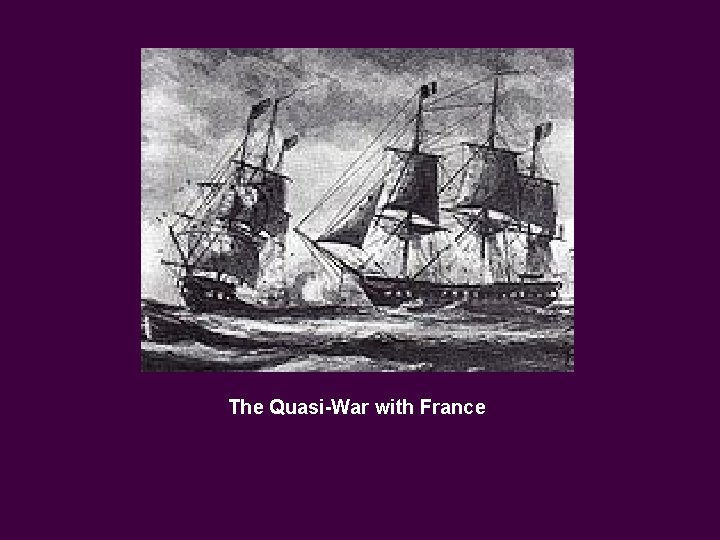
Political Change • President Adams, the Quasi-War with France, and the XYZ Affair – The French, who had aided us in our revolution, were upset at the FAVORABLE POLICIES towards THE BRITISH. – THE QUASI-WAR WITH FRANCE • French stopped American ships on the way to Britain and seized their cargo – THE X, Y, Z AFFAIR • X, Y and Z, representing three French agents, asked for a BRIBE of $250, 000. 00 and a LOAN of $12 million in order to avoid war with France
The Quasi-War with France
Political Change • THE CONVENTION OF 1800 – The U. S. gave up all claims against France for damages to American shipping – France released the U. S. from • In reaction to harsh Republican criticism of federalist policies, the federalists in Congress passed THE ALIEN AND SEDITION ACTS which: – Lengthened the period of NATURALIZATION from 5 to 14 years – Allowed the President to DEPORT without trial any alien deemed “dangerous to the nation. ” – Made it illegal to print anything “false, SCANDALOUS, and malicious about the federal government or about any government officer
Political Change • In response to the Alien and Sedition acts, the state legislatures of Virginia and Kentucky passed THE VIRGINIA AND KENTUCKY RESOLUTIONS which criticized the Alien and Sedition Acts – Argued for the process of INTERPOSITION and NULLIFICATION in which states can declare federal laws to be unconstitutional and act to make the law null and void