
PSYCH 335 Psychological Disorders Chapter 11 DepressiveBipolar and
PSYCH 335 Psychological Disorders Chapter 11 Depressive/Bipolar and Related disorders & Suicide Turn on speakers or connect headphones/earbuds to your computer to hear the audio annotation on each slide. If you point over the little speaker in the lower right hand corner, a play control should pop up, 1 you will need to click play on each slide in order to hear the audio.
Agenda/Overview ¢ Depressive disorders Major depression l Persistent Depressive Disorder (Dysthymia) l ¢ Bipolar and related disorders Bipolar disorder l Cyclothymia l ¢ Causes/treatments ¢ Suicide 2
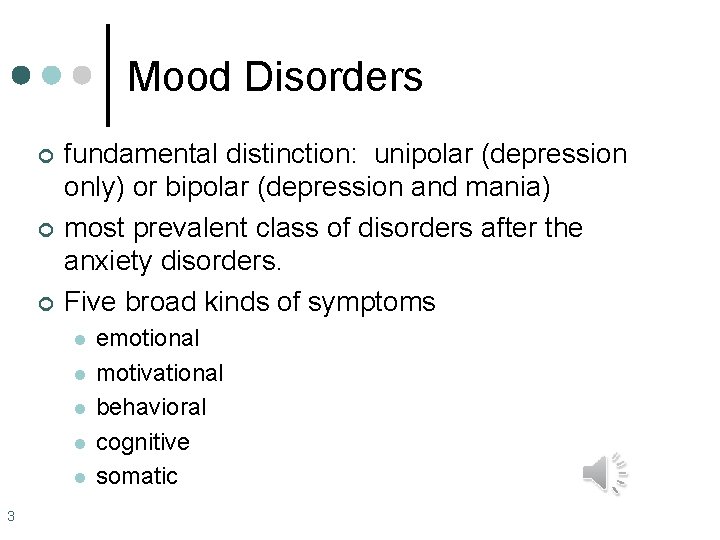
Mood Disorders ¢ ¢ ¢ fundamental distinction: unipolar (depression only) or bipolar (depression and mania) most prevalent class of disorders after the anxiety disorders. Five broad kinds of symptoms l l l 3 emotional motivational behavioral cognitive somatic
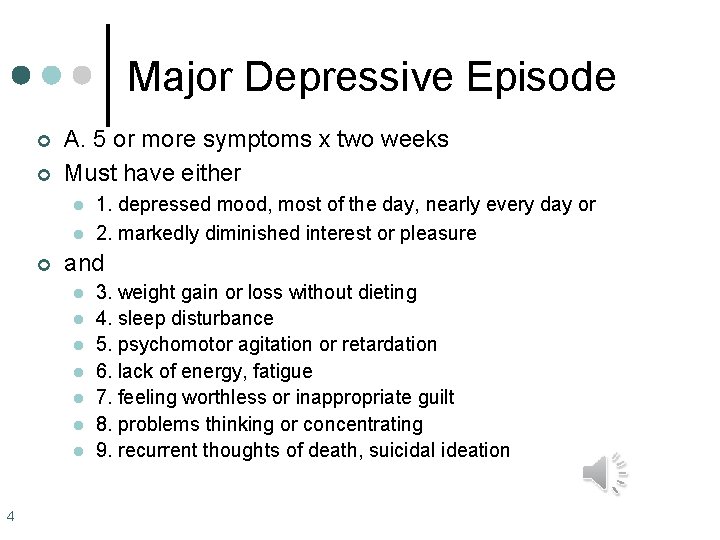
Major Depressive Episode ¢ ¢ A. 5 or more symptoms x two weeks Must have either l l ¢ and l l l l 4 1. depressed mood, most of the day, nearly every day or 2. markedly diminished interest or pleasure 3. weight gain or loss without dieting 4. sleep disturbance 5. psychomotor agitation or retardation 6. lack of energy, fatigue 7. feeling worthless or inappropriate guilt 8. problems thinking or concentrating 9. recurrent thoughts of death, suicidal ideation
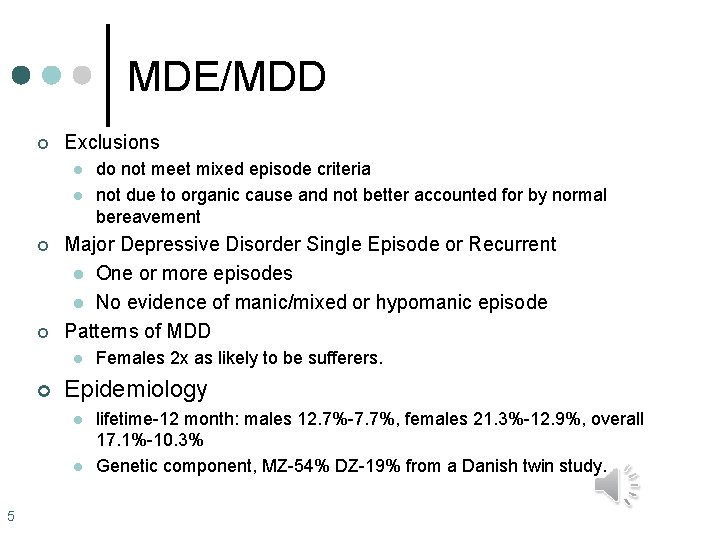
MDE/MDD ¢ Exclusions l l ¢ ¢ Major Depressive Disorder Single Episode or Recurrent l One or more episodes l No evidence of manic/mixed or hypomanic episode Patterns of MDD l ¢ Females 2 x as likely to be sufferers. Epidemiology l l 5 do not meet mixed episode criteria not due to organic cause and not better accounted for by normal bereavement lifetime-12 month: males 12. 7%-7. 7%, females 21. 3%-12. 9%, overall 17. 1%-10. 3% Genetic component, MZ-54% DZ-19% from a Danish twin study.
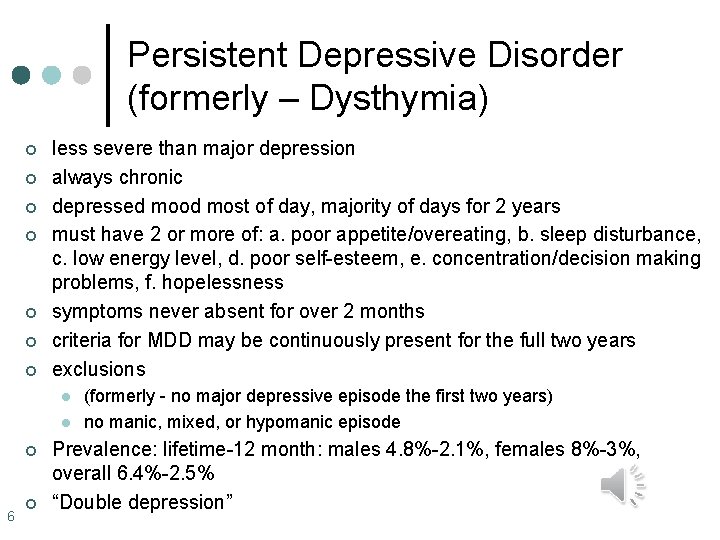
Persistent Depressive Disorder (formerly – Dysthymia) ¢ ¢ ¢ ¢ less severe than major depression always chronic depressed mood most of day, majority of days for 2 years must have 2 or more of: a. poor appetite/overeating, b. sleep disturbance, c. low energy level, d. poor self-esteem, e. concentration/decision making problems, f. hopelessness symptoms never absent for over 2 months criteria for MDD may be continuously present for the full two years exclusions l l ¢ 6 ¢ (formerly - no major depressive episode the first two years) no manic, mixed, or hypomanic episode Prevalence: lifetime-12 month: males 4. 8%-2. 1%, females 8%-3%, overall 6. 4%-2. 5% “Double depression”
Case video ¢ 7 Barbara – Major Depressive Disorder
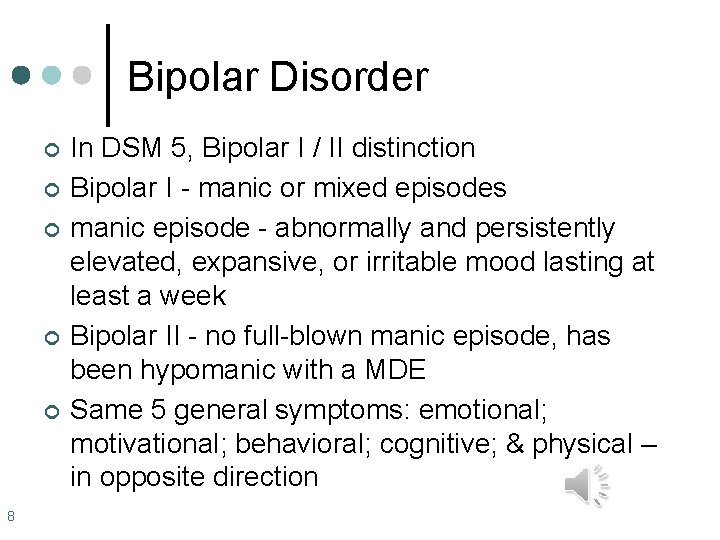
Bipolar Disorder ¢ ¢ ¢ 8 In DSM 5, Bipolar I / II distinction Bipolar I - manic or mixed episodes manic episode - abnormally and persistently elevated, expansive, or irritable mood lasting at least a week Bipolar II - no full-blown manic episode, has been hypomanic with a MDE Same 5 general symptoms: emotional; motivational; behavioral; cognitive; & physical – in opposite direction
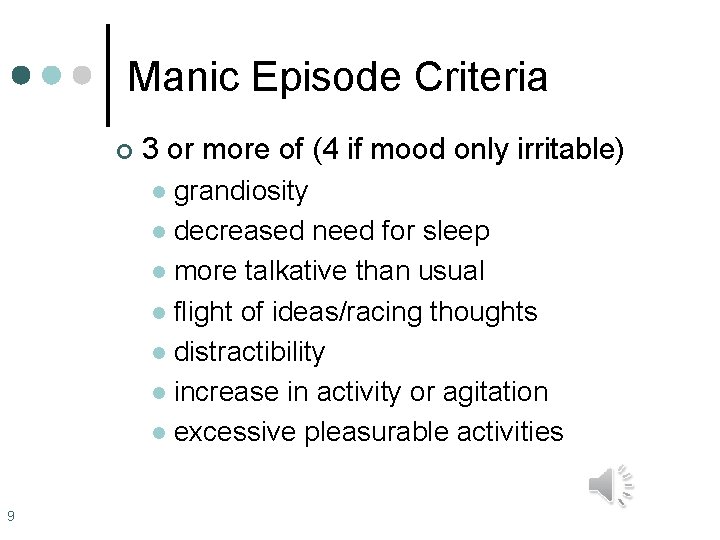
Manic Episode Criteria ¢ 3 or more of (4 if mood only irritable) grandiosity l decreased need for sleep l more talkative than usual l flight of ideas/racing thoughts l distractibility l increase in activity or agitation l excessive pleasurable activities l 9
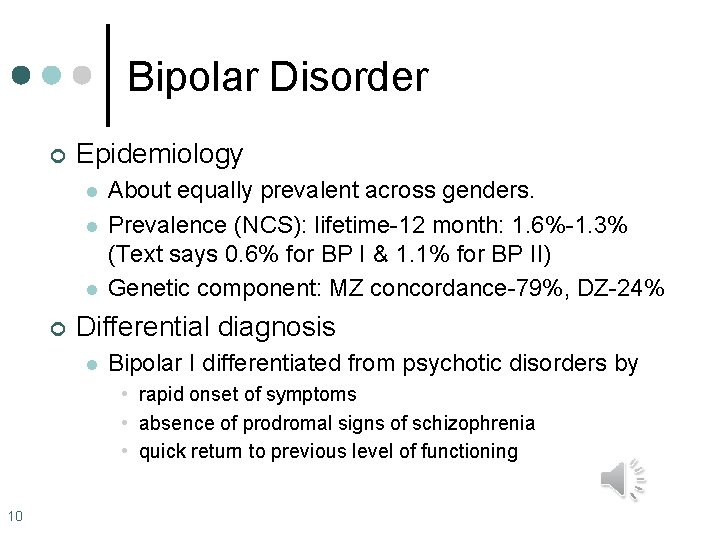
Bipolar Disorder ¢ Epidemiology l l l ¢ About equally prevalent across genders. Prevalence (NCS): lifetime-12 month: 1. 6%-1. 3% (Text says 0. 6% for BP I & 1. 1% for BP II) Genetic component: MZ concordance-79%, DZ-24% Differential diagnosis l Bipolar I differentiated from psychotic disorders by • rapid onset of symptoms • absence of prodromal signs of schizophrenia • quick return to previous level of functioning 10
Treatment Psychotherapy alone useless ¢ Medications effective in about 80% ¢ Lithium primarily – also anticonvulsants (valproic acid/ carbamazapine) ¢ Historical figures with Bipolar disorder ¢ 11
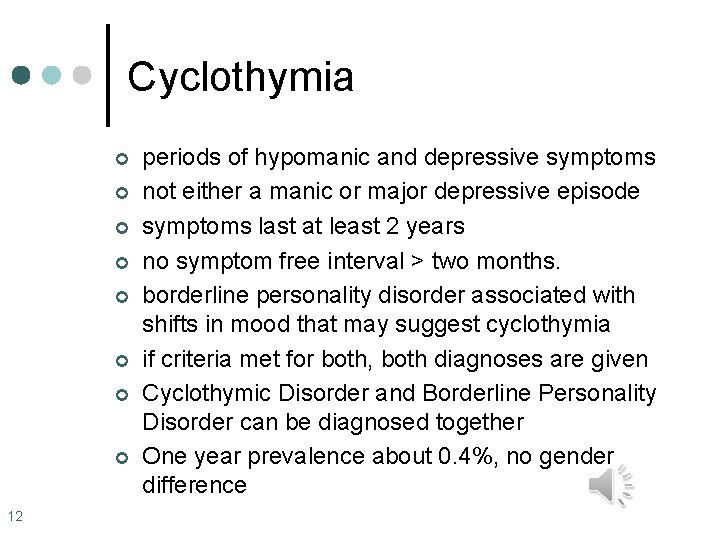
Cyclothymia ¢ ¢ ¢ ¢ 12 periods of hypomanic and depressive symptoms not either a manic or major depressive episode symptoms last at least 2 years no symptom free interval > two months. borderline personality disorder associated with shifts in mood that may suggest cyclothymia if criteria met for both, both diagnoses are given Cyclothymic Disorder and Borderline Personality Disorder can be diagnosed together One year prevalence about 0. 4%, no gender difference
Mood disorders ¢ Causes Neurotransmitters – 5 -HT & NE l Ions – Na & K l Brain structure – basal ganglia & cerebellum l Hormonal dysregulation – HPA axis, stress l Genetic – polygenetic l ¢ 13 Psychological Perspectives/Treatments: Cognitive, Learned Helplessness Paradigm, Psychodynamic
Cognitive behavioral therapy ¢ ¢ pessimistic and pervasively negative cognitions addresses the cognitive triad l ¢ automatic thoughts l l ¢ ¢ 14 depression-negativity about the self, the world, and the future confronted modified distortions addressed and depressive schemata exposed and modified Beck’s four phases
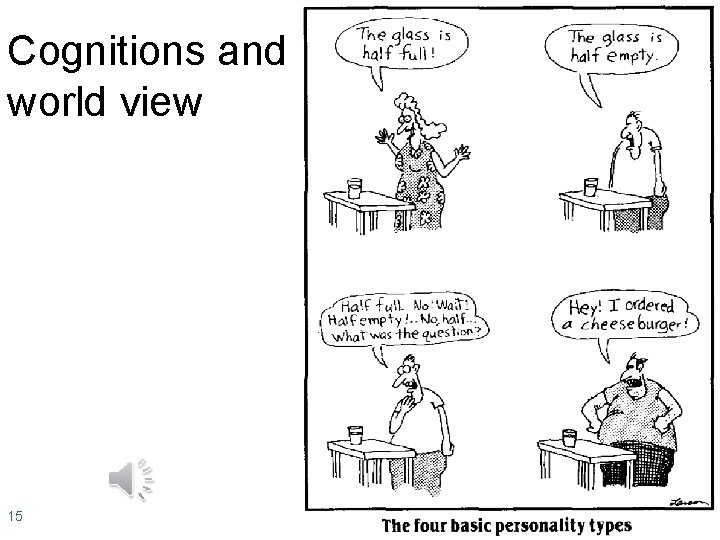
Cognitions and world view 15
Learned Helplessness/ Psychodynamic ¢ Learned Helplessness increase perceptions of efficacy l increasing perceptions over control of outcomes l ¢ Psychodynamic treatment aims at achieving insight l anger not being appropriately expressed l finding ways to do so l 16
Biological treatments Norepinepherine and serotonin ¢ Tricyclics block reuptake of norepinepherine ¢ MAO inhibitors prevent breakdown of NE ¢ SSRI’s prevent reuptake of serotonin ¢ Issue re: text table of antidepressants Polypharmacy – fairly common now ¢ ECT-works very quickly ¢ 17
Case video ¢ 18 Mary – Bipolar I Disorder
Suicide ¢ ¢ ¢ ¢ 19 ¢ very poor at predicting who will kill themselves best predictor: previous suicide attempt alcohol & drug use often associated. why? Shneidman: “psychache” depressed at greatest risk – risk can increase as symptoms improve should the state interfere with a decision to end one's own life? 37 K suicides vs. 17 K homicides in US suicide prevention
- Slides: 19