
Chapter 3 Metabolism of Carbohydrate Section 1 Digestion
生物化学 Chapter 3 Metabolism of Carbohydrate
Section 1 Digestion and uptaking of carbohydrate 第一节 糖的消化与吸收
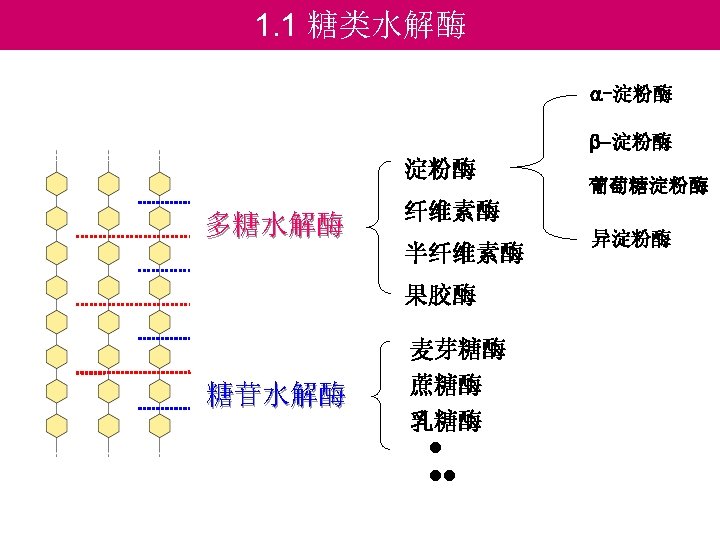
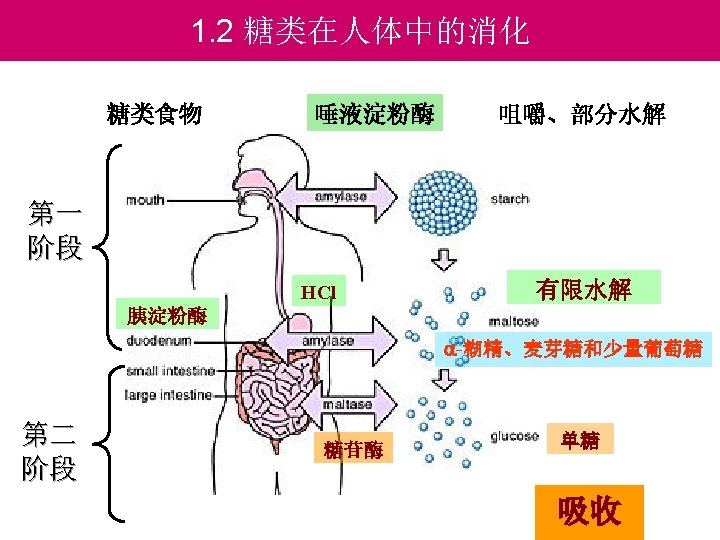
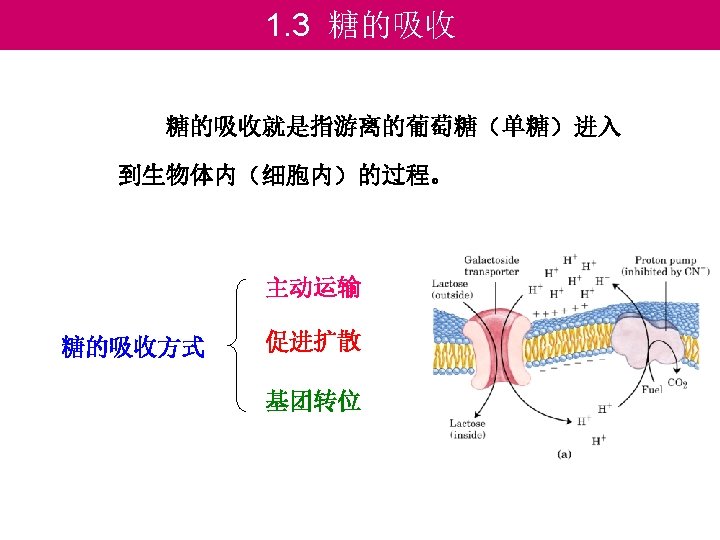
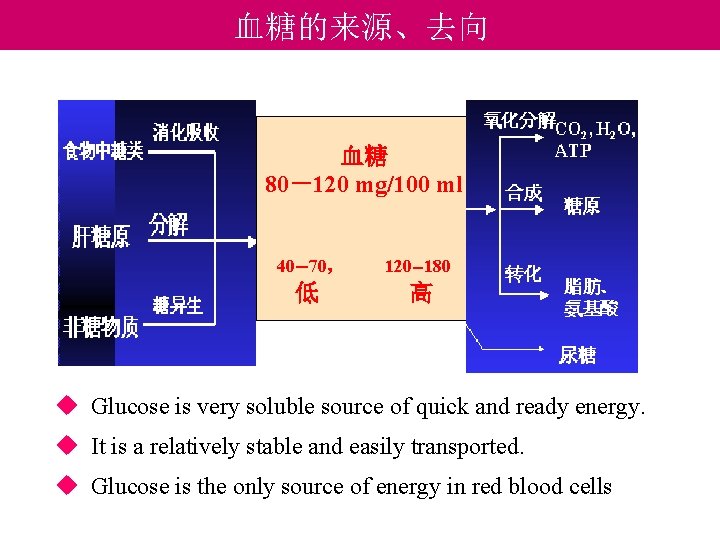
血糖的来源、去向 血糖 80-120 mg/100 ml 40-70, 120-180 低 高 u Glucose is very soluble source of quick and ready energy. u It is a relatively stable and easily transported. u Glucose is the only source of energy in red blood cells
Section 2 Catabolism of monocarbohydrate 第二节 单糖的分解代谢 Glycolysis and Gluconeogenesis Glycolysis. Derived from the Greek stem glyk-, ”sweet”, and the word lysis, “dissolution”.
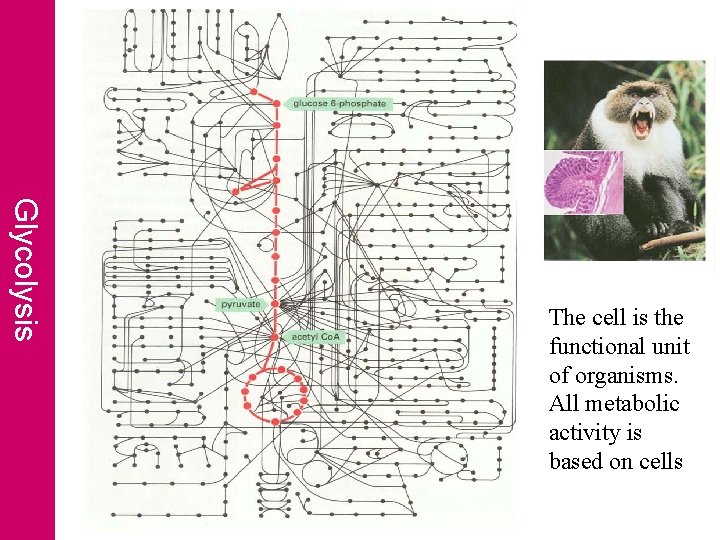
Glycolysis The cell is the functional unit of organisms. All metabolic activity is based on cells
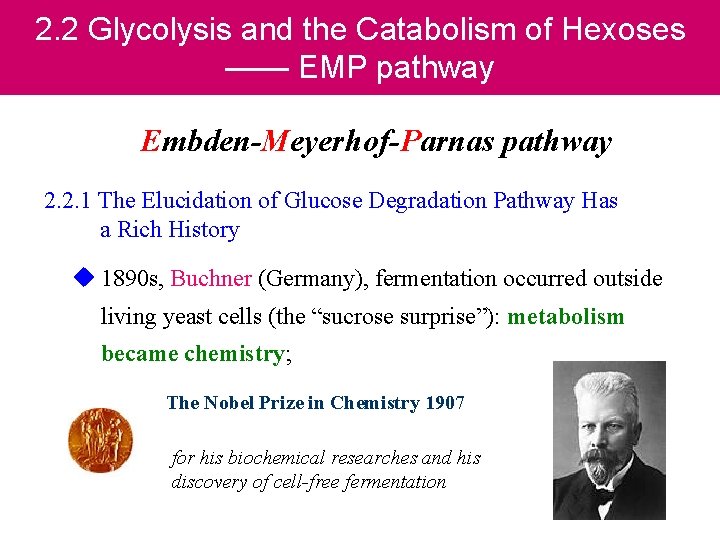
2. 2 Glycolysis and the Catabolism of Hexoses —— EMP pathway Embden-Meyerhof-Parnas pathway 2. 2. 1 The Elucidation of Glucose Degradation Pathway Has a Rich History u 1890 s, Buchner (Germany), fermentation occurred outside living yeast cells (the “sucrose surprise”): metabolism became chemistry; The Nobel Prize in Chemistry 1907 for his biochemical researches and his discovery of cell-free fermentation
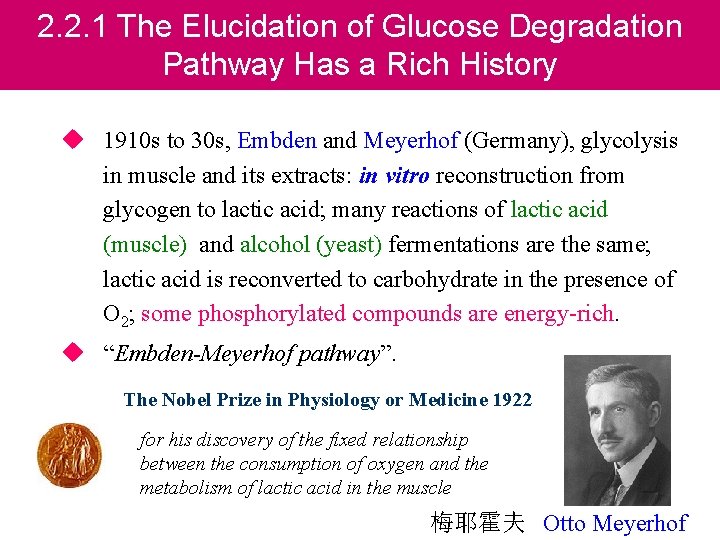
2. 2. 1 The Elucidation of Glucose Degradation Pathway Has a Rich History u 1910 s to 30 s, Embden and Meyerhof (Germany), glycolysis in muscle and its extracts: in vitro reconstruction from glycogen to lactic acid; many reactions of lactic acid (muscle) and alcohol (yeast) fermentations are the same; lactic acid is reconverted to carbohydrate in the presence of O 2; some phosphorylated compounds are energy-rich. u “Embden-Meyerhof pathway”. The Nobel Prize in Physiology or Medicine 1922 for his discovery of the fixed relationship between the consumption of oxygen and the metabolism of lactic acid in the muscle 梅耶霍夫 Otto Meyerhof
2. 2. 1 The Elucidation of Glucose Degradation Pathway Has a Rich History p 1940 s, Lipmann, discovery of Coenzyme A and acetyl-Co. A; p 1930 s to 40 s, Carl Cori and Gerty Cori, discovery of glycogen phosphorylase (磷酸化酶)and glucose-1 phosphate; p 1940 s, Cori and Houssay, discovery of hormone (激 素) regulation of metabolism; p The whole pathway of glycolysis (Glucose to pyruvate) was elucidated by the 1940 s.
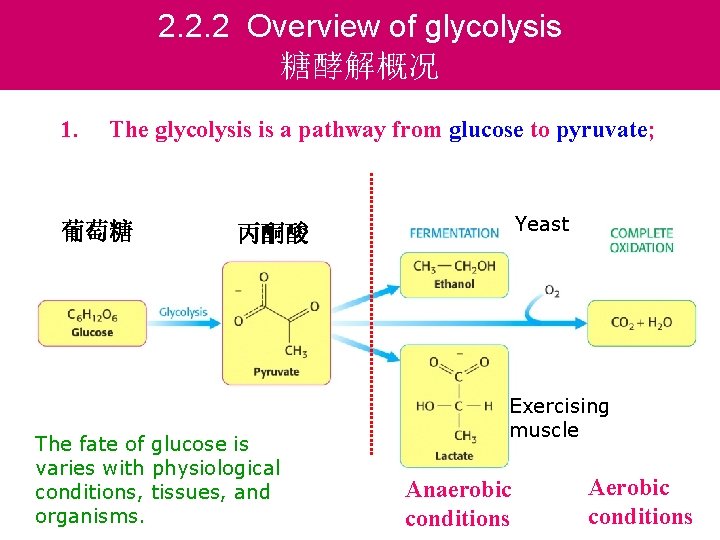
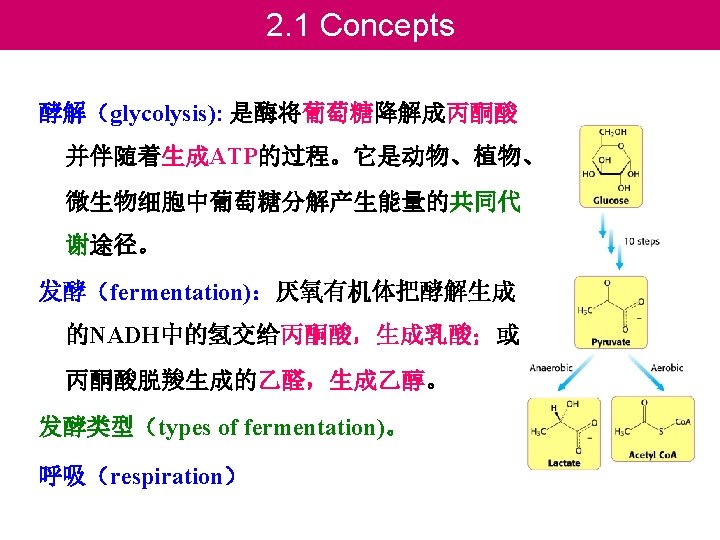
2. 2. 2 Overview of glycolysis 糖酵解概况 1. The glycolysis is a pathway from glucose to pyruvate; 葡萄糖 Yeast 丙酮酸 The fate of glucose is varies with physiological conditions, tissues, and organisms. Exercising muscle Anaerobic conditions Aerobic conditions
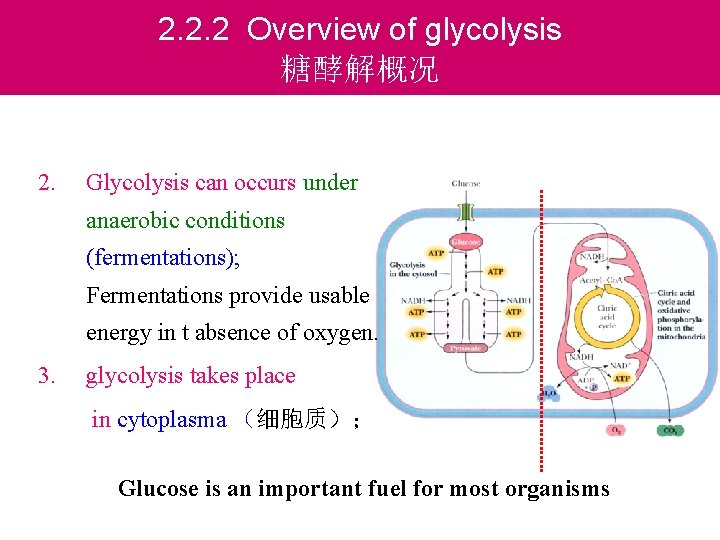
2. 2. 2 Overview of glycolysis 糖酵解概况 2. Glycolysis can occurs under anaerobic conditions (fermentations); Fermentations provide usable energy in t absence of oxygen. 3. glycolysis takes place in cytoplasma (细胞质); Glucose is an important fuel for most organisms
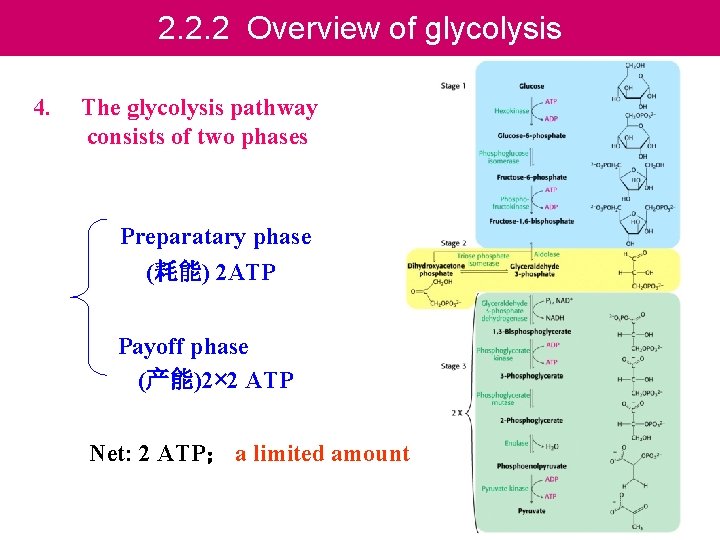
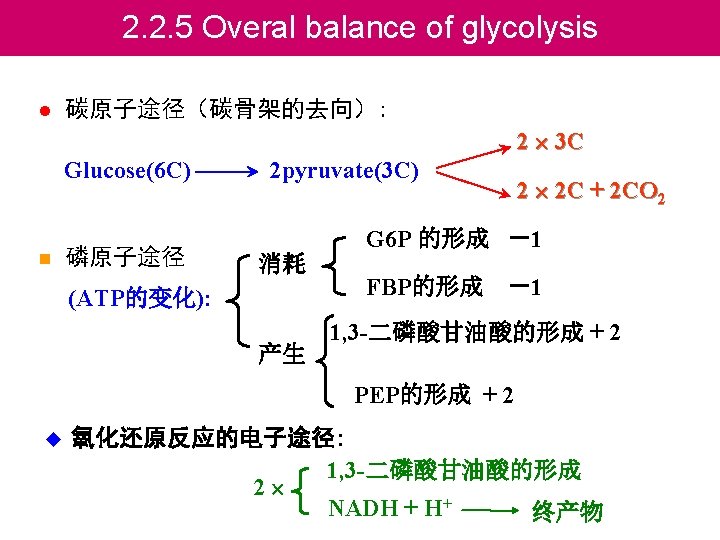
2. 2. 2 Overview of glycolysis 4. The glycolysis pathway consists of two phases Preparatary phase (耗能) 2 ATP Payoff phase (产能)2× 2 ATP Net: 2 ATP; a limited amount
2. 2. 2 Overview of glycolysis 5. Intermediary metabolites are phosphated(磷酸化的) ; 6. Three types of chemical changes; 碳原子途径 磷酸途径 氧化还原反应的电子途径 7. Glycolysis is highly regulated. Glycolysis is an energy-conversion pathway in many organisms
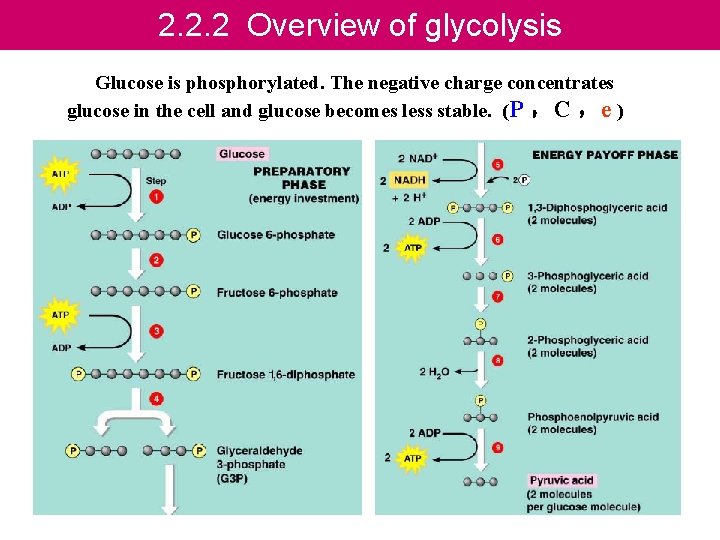
2. 2. 2 Overview of glycolysis Glucose is phosphorylated. The negative charge concentrates glucose in the cell and glucose becomes less stable. (P ,C ,e )
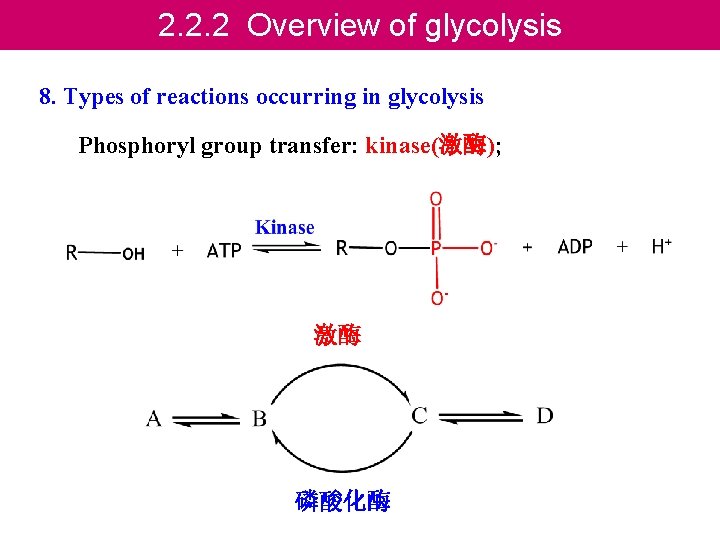
2. 2. 2 Overview of glycolysis 8. Types of reactions occurring in glycolysis Phosphoryl group transfer: kinase(激酶); 激酶 磷酸化酶
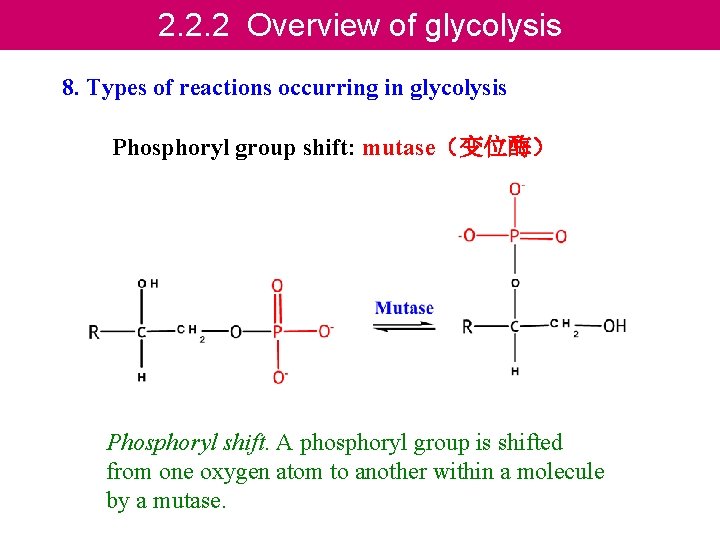
2. 2. 2 Overview of glycolysis 8. Types of reactions occurring in glycolysis Phosphoryl group shift: mutase(变位酶) Phosphoryl shift. A phosphoryl group is shifted from one oxygen atom to another within a molecule by a mutase.
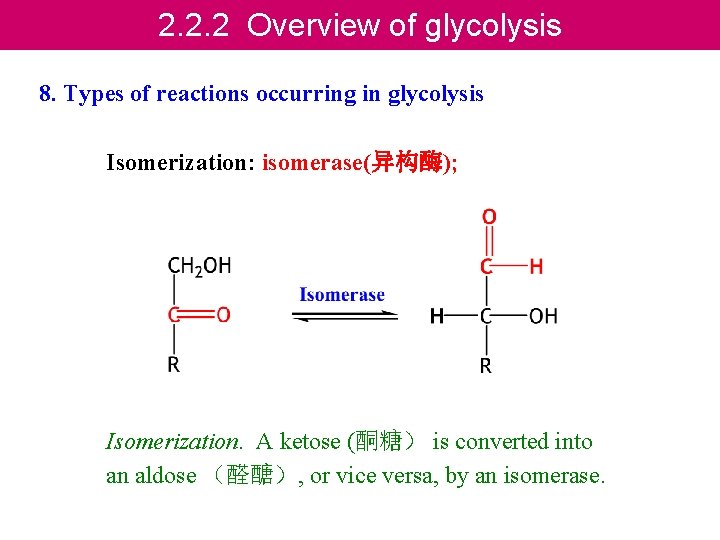
2. 2. 2 Overview of glycolysis 8. Types of reactions occurring in glycolysis Isomerization: isomerase(异构酶); Isomerization. A ketose (酮糖) is converted into an aldose (醛醣), or vice versa, by an isomerase.
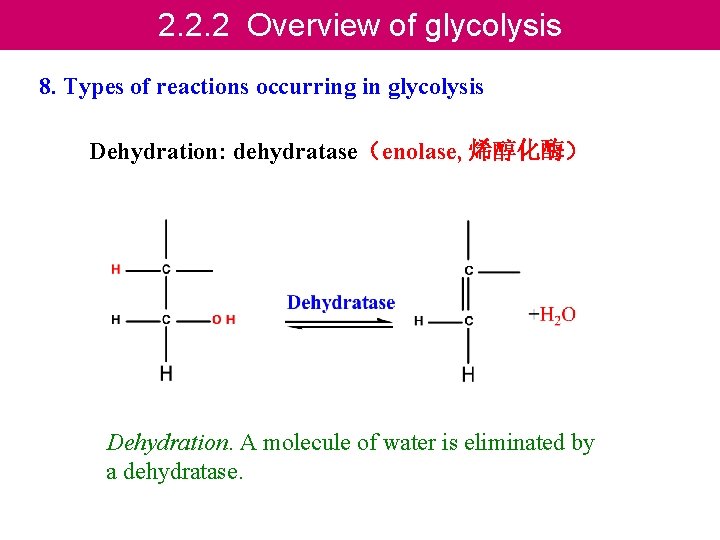
2. 2. 2 Overview of glycolysis 8. Types of reactions occurring in glycolysis Dehydration: dehydratase(enolase, 烯醇化酶) Dehydration. A molecule of water is eliminated by a dehydratase.
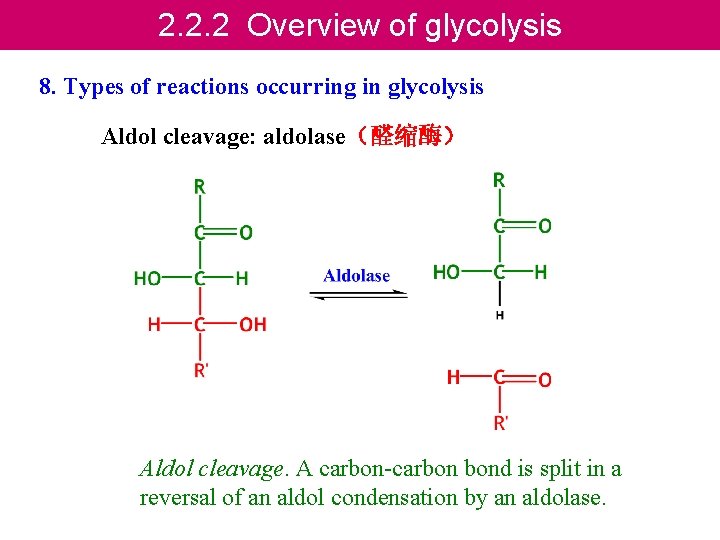
2. 2. 2 Overview of glycolysis 8. Types of reactions occurring in glycolysis Aldol cleavage: aldolase(醛缩酶) Aldol cleavage. A carbon-carbon bond is split in a reversal of an aldol condensation by an aldolase.
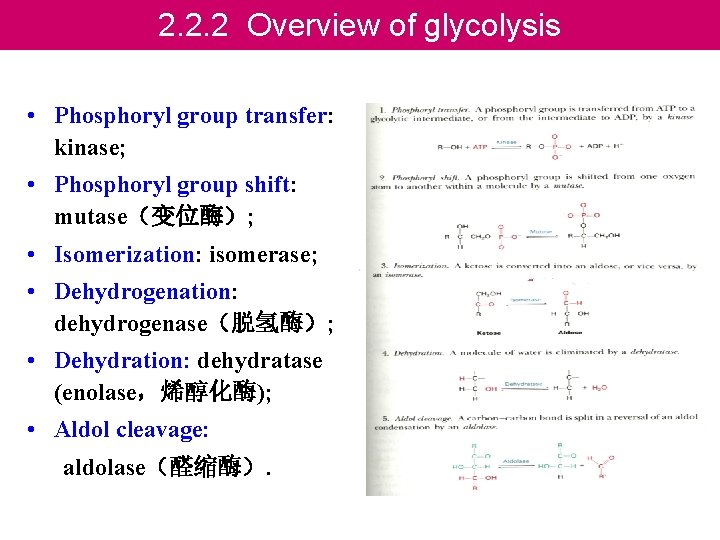
2. 2. 2 Overview of glycolysis • Phosphoryl group transfer: kinase; • Phosphoryl group shift: mutase(变位酶); • Isomerization: isomerase; • Dehydrogenation: dehydrogenase(脱氢酶); • Dehydration: dehydratase (enolase,烯醇化酶); • Aldol cleavage: aldolase(醛缩酶).
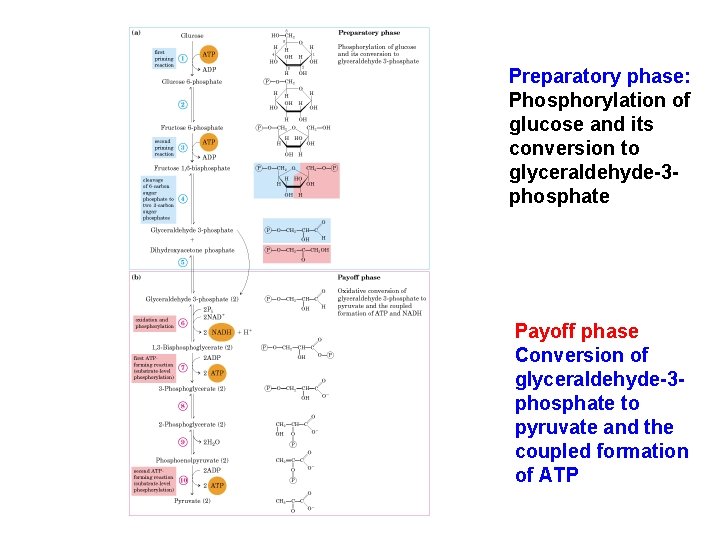
Preparatory phase: Phosphorylation of glucose and its conversion to glyceraldehyde-3 phosphate Payoff phase Conversion of glyceraldehyde-3 phosphate to pyruvate and the coupled formation of ATP
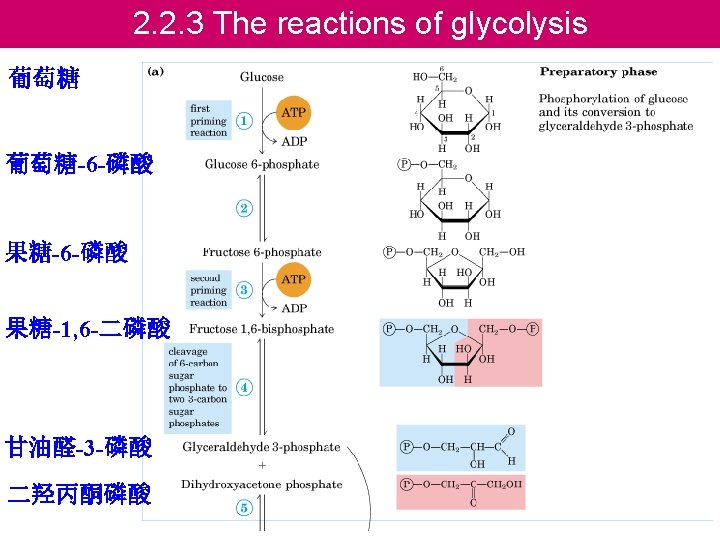
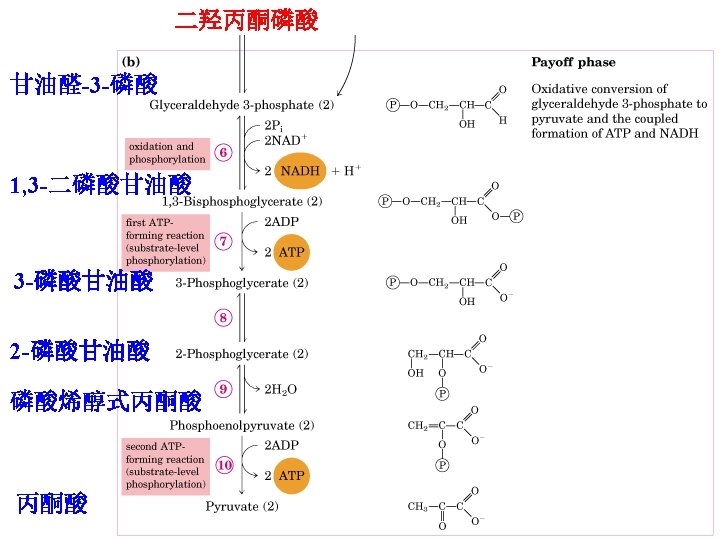
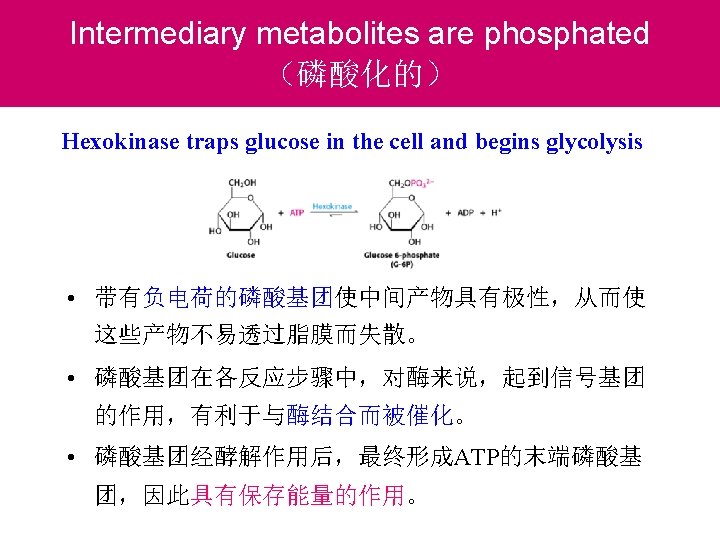
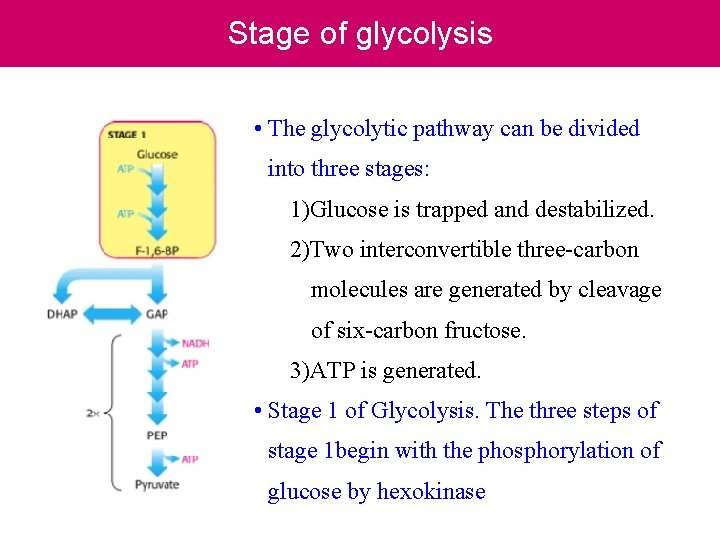
Stage of glycolysis • The glycolytic pathway can be divided into three stages: 1)Glucose is trapped and destabilized. 2)Two interconvertible three-carbon molecules are generated by cleavage of six-carbon fructose. 3)ATP is generated. • Stage 1 of Glycolysis. The three steps of stage 1 begin with the phosphorylation of glucose by hexokinase
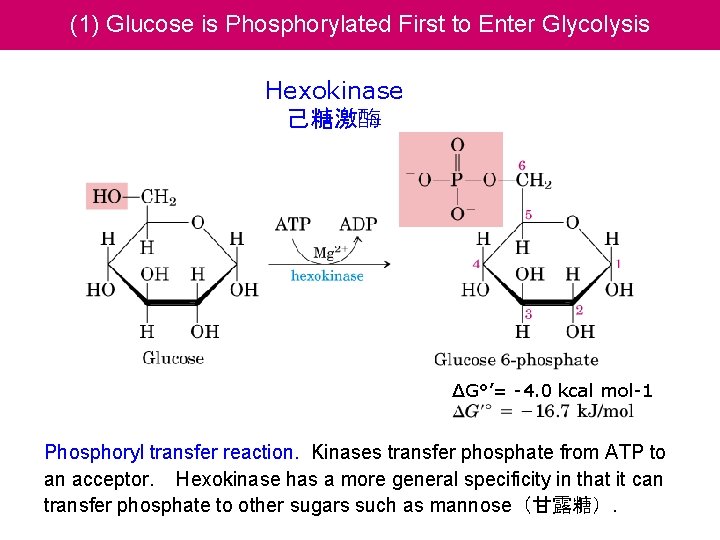
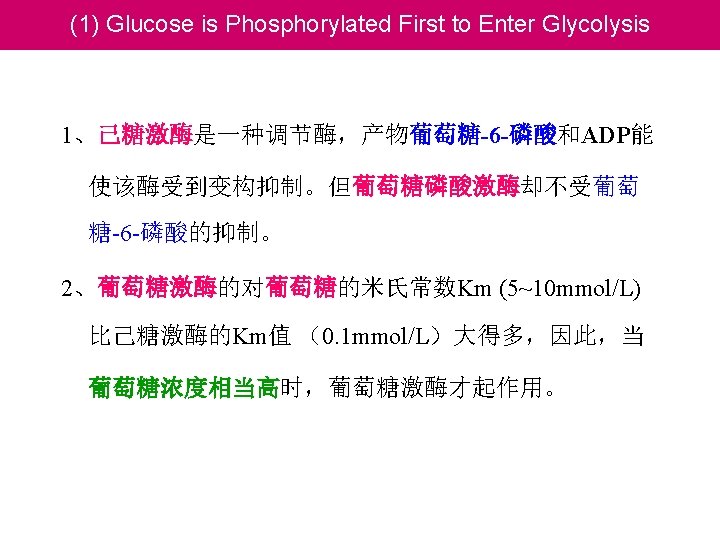
(1) Glucose is Phosphorylated First to Enter Glycolysis Hexokinase 己糖激酶 ΔG°’= -4. 0 kcal mol-1 Phosphoryl transfer reaction. Kinases transfer phosphate from ATP to an acceptor. Hexokinase has a more general specificity in that it can transfer phosphate to other sugars such as mannose(甘露糖).
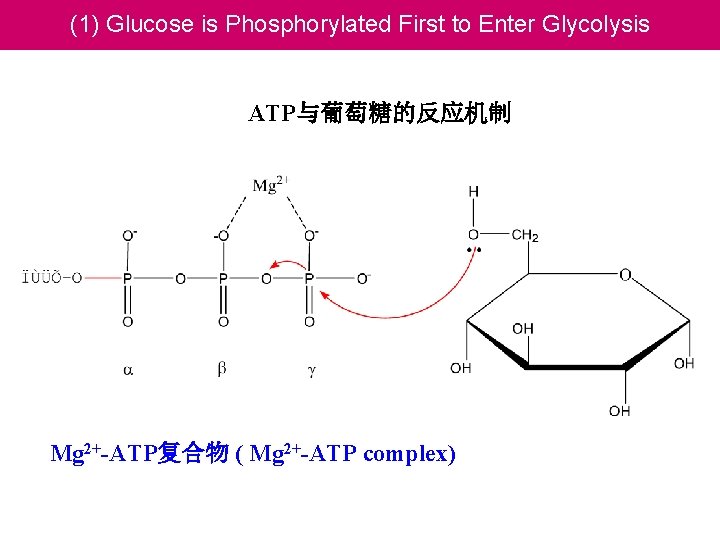
(1) Glucose is Phosphorylated First to Enter Glycolysis ATP与葡萄糖的反应机制 Mg 2+-ATP复合物 ( Mg 2+-ATP complex)
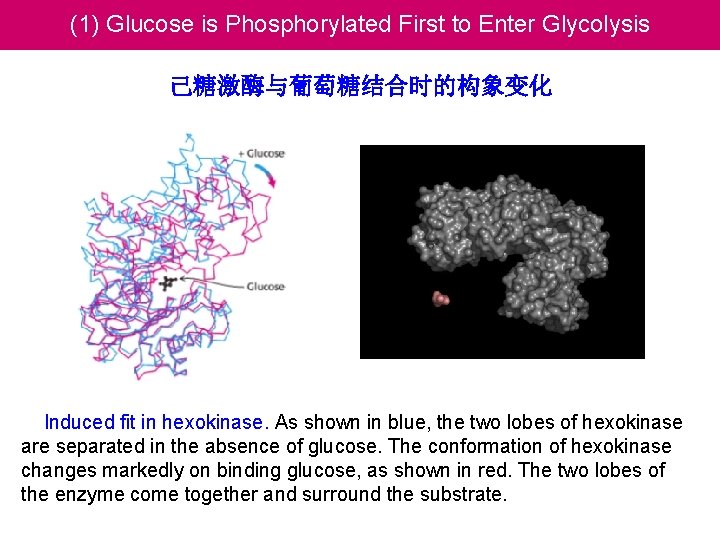
(1) Glucose is Phosphorylated First to Enter Glycolysis 己糖激酶与葡萄糖结合时的构象变化 Induced fit in hexokinase. As shown in blue, the two lobes of hexokinase are separated in the absence of glucose. The conformation of hexokinase changes markedly on binding glucose, as shown in red. The two lobes of the enzyme come together and surround the substrate.
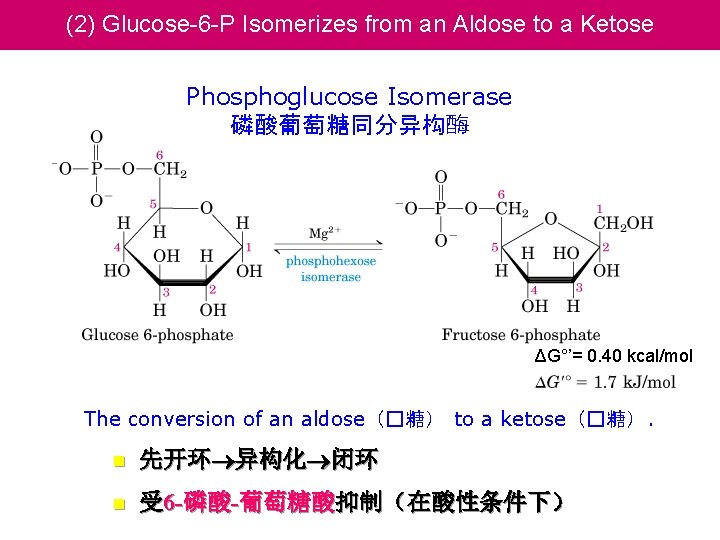
(2) Glucose-6 -P Isomerizes from an Aldose to a Ketose Phosphoglucose Isomerase 磷酸葡萄糖同分异构酶 ΔG°’= 0. 40 kcal/mol The conversion of an aldose(�糖) to a ketose(�糖). n 先开环 异构化 闭环 n 受 6 -磷酸-葡萄糖酸抑制(在酸性条件下)
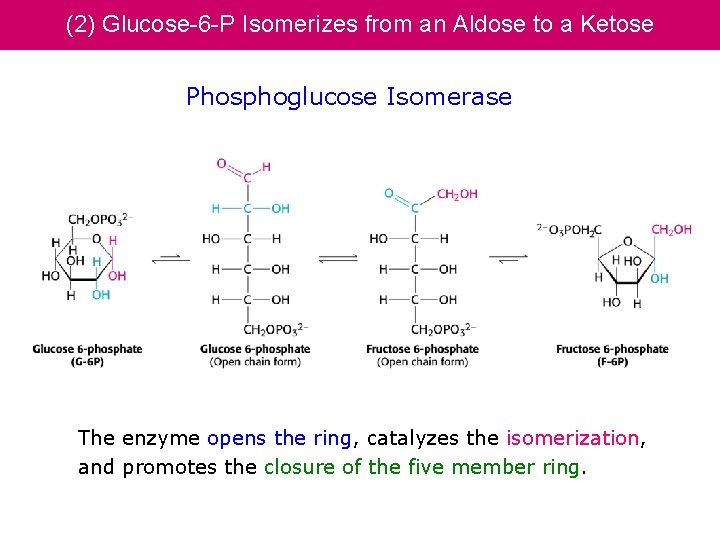
(2) Glucose-6 -P Isomerizes from an Aldose to a Ketose Phosphoglucose Isomerase The enzyme opens the ring, catalyzes the isomerization, and promotes the closure of the five member ring.
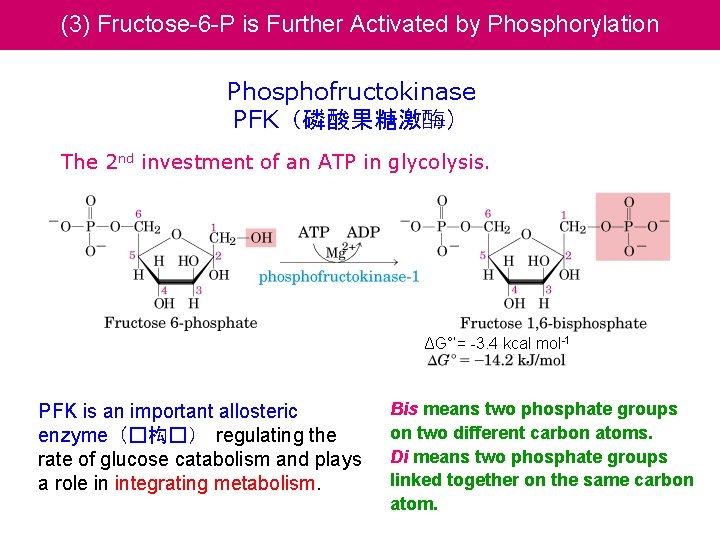
(3) Fructose-6 -P is Further Activated by Phosphorylation Phosphofructokinase PFK(磷酸果糖激酶) The 2 nd investment of an ATP in glycolysis. ΔG°’= -3. 4 kcal mol-1 PFK is an important allosteric enzyme(�构�) regulating the rate of glucose catabolism and plays a role in integrating metabolism. Bis means two phosphate groups on two different carbon atoms. Di means two phosphate groups linked together on the same carbon atom.
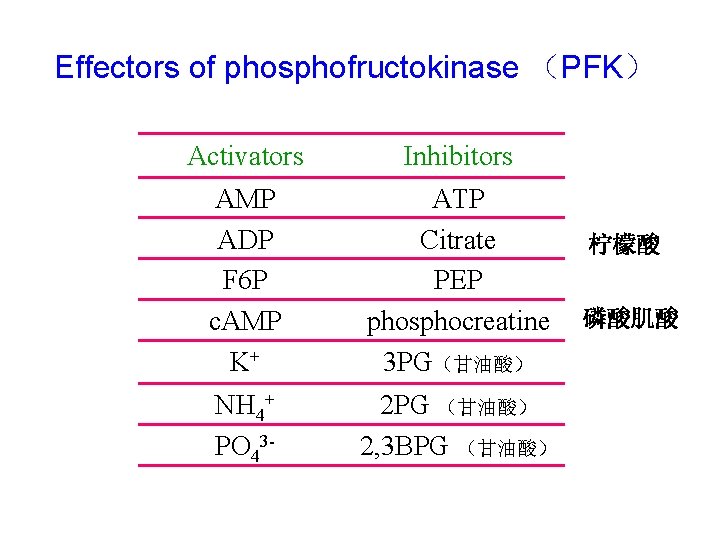
Effectors of phosphofructokinase (PFK) Activators Inhibitors AMP ADP F 6 P c. AMP K+ ATP Citrate PEP phosphocreatine 3 PG(甘油酸) NH 4+ PO 43 - 2 PG (甘油酸) 2, 3 BPG (甘油酸) 柠檬酸 磷酸肌酸
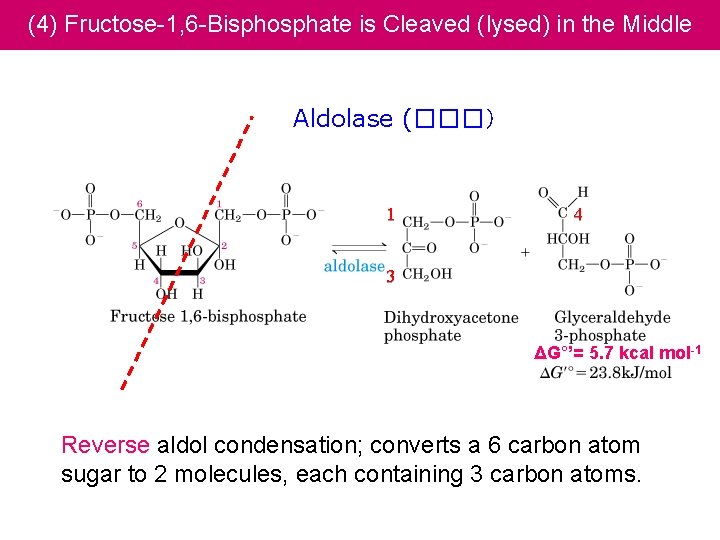
(4) Fructose-1, 6 -Bisphosphate is Cleaved (lysed) in the Middle Aldolase (���) 1 4 3 ΔG°’= 5. 7 kcal mol-1 Reverse aldol condensation; converts a 6 carbon atom sugar to 2 molecules, each containing 3 carbon atoms.
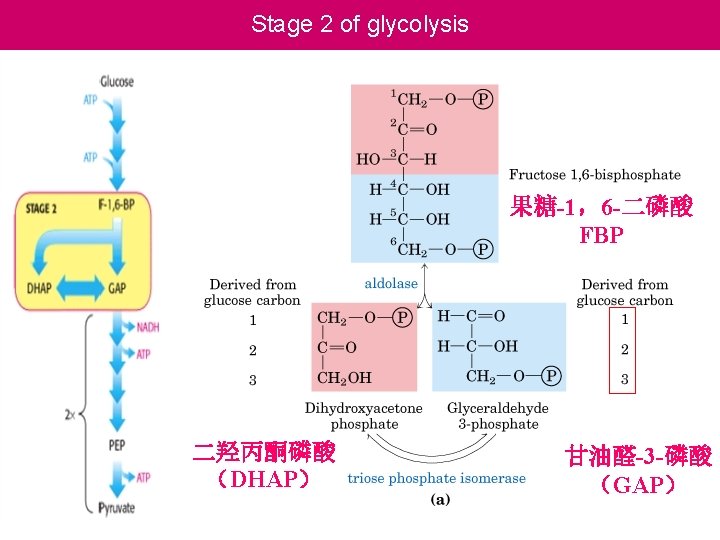
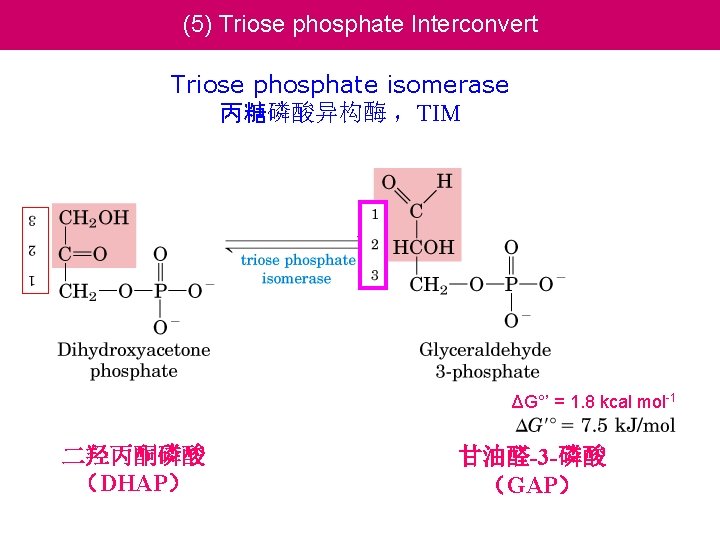
(5) Triose phosphate Interconvert Triose phosphate isomerase 丙糖磷酸异构酶 ,TIM ΔG°’ = 1. 8 kcal mol-1 二羟丙酮磷酸 (DHAP) 甘油醛-3 -磷酸 (GAP)
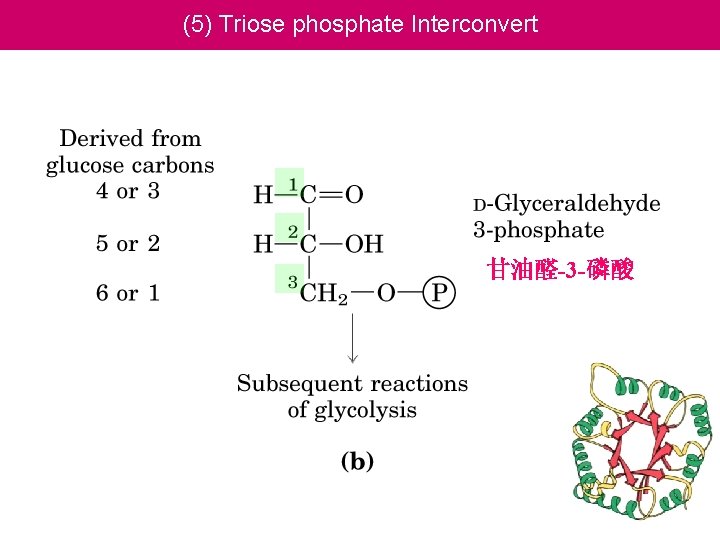
(5) Triose phosphate Interconvert 甘油醛-3 -磷酸
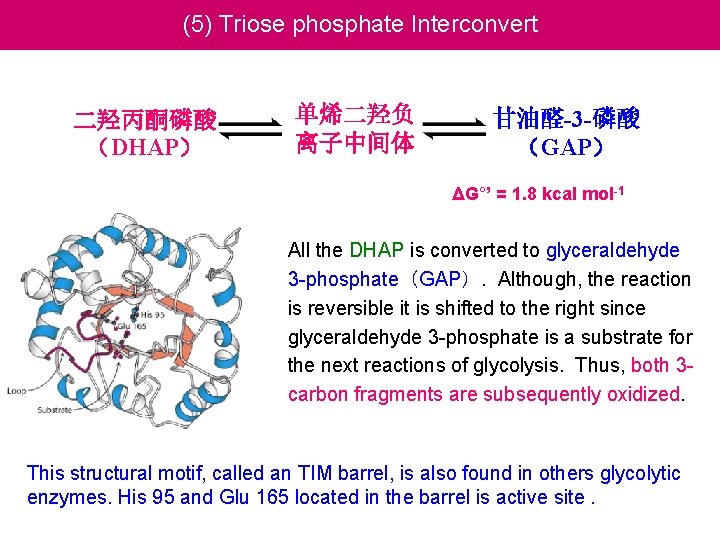
(5) Triose phosphate Interconvert 二羟丙酮磷酸 (DHAP) 单烯二羟负 离子中间体 甘油醛-3 -磷酸 (GAP) ΔG°’ = 1. 8 kcal mol-1 All the DHAP is converted to glyceraldehyde 3 -phosphate(GAP). Although, the reaction is reversible it is shifted to the right since glyceraldehyde 3 -phosphate is a substrate for the next reactions of glycolysis. Thus, both 3 carbon fragments are subsequently oxidized. This structural motif, called an TIM barrel, is also found in others glycolytic enzymes. His 95 and Glu 165 located in the barrel is active site.
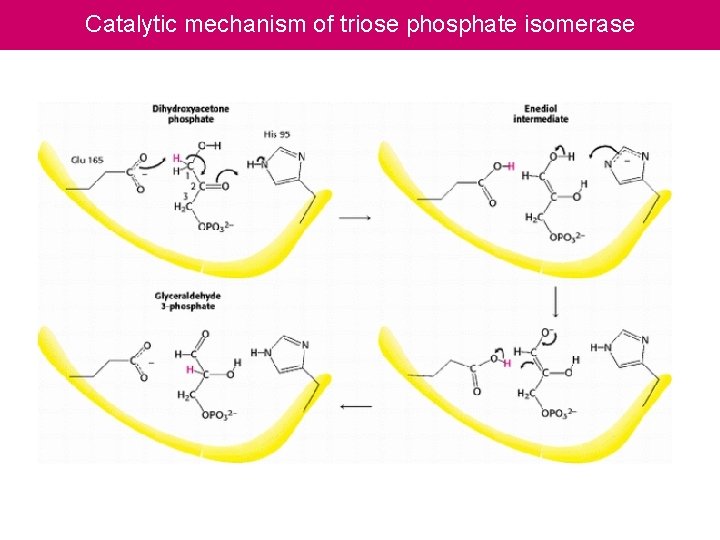
Catalytic mechanism of triose phosphate isomerase
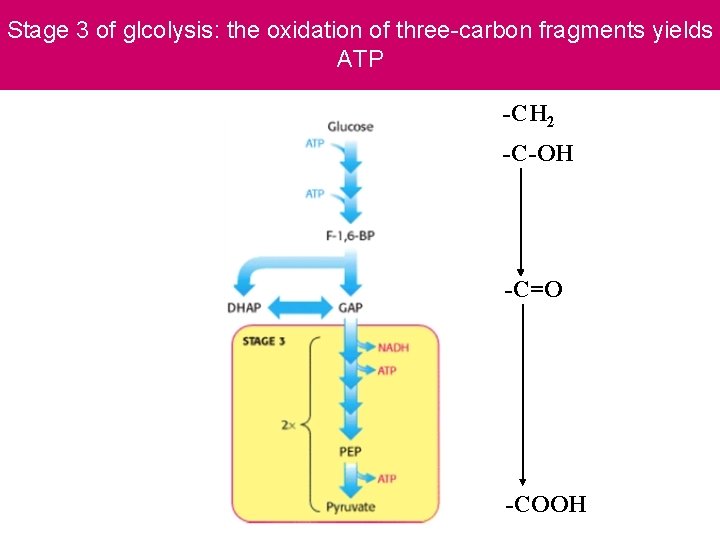
Stage 3 of glcolysis: the oxidation of three-carbon fragments yields ATP -CH 2 -C-OH -C=O -COOH
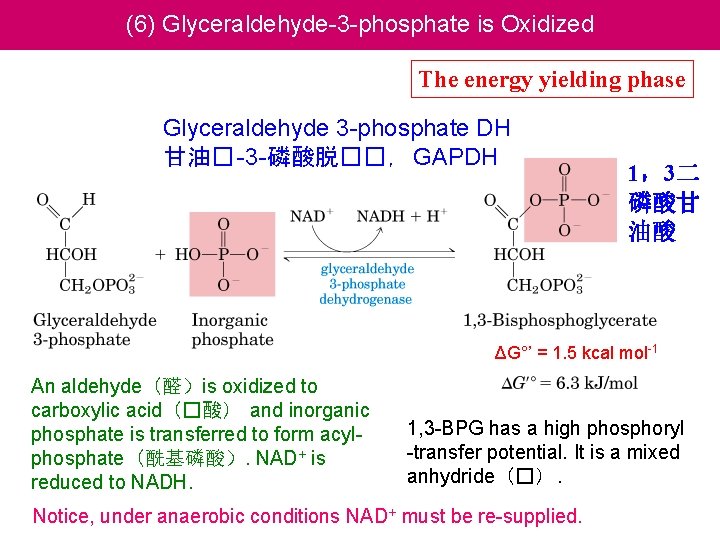
(6) Glyceraldehyde-3 -phosphate is Oxidized The energy yielding phase Glyceraldehyde 3 -phosphate DH 甘油� -3 -磷酸脱��, GAPDH 1,3二 磷酸甘 油酸 ΔG°’ = 1. 5 kcal mol-1 An aldehyde(醛)is oxidized to carboxylic acid(�酸) and inorganic phosphate is transferred to form acylphosphate(酰基磷酸). NAD+ is reduced to NADH. 1, 3 -BPG has a high phosphoryl -transfer potential. It is a mixed anhydride(�). Notice, under anaerobic conditions NAD+ must be re-supplied.
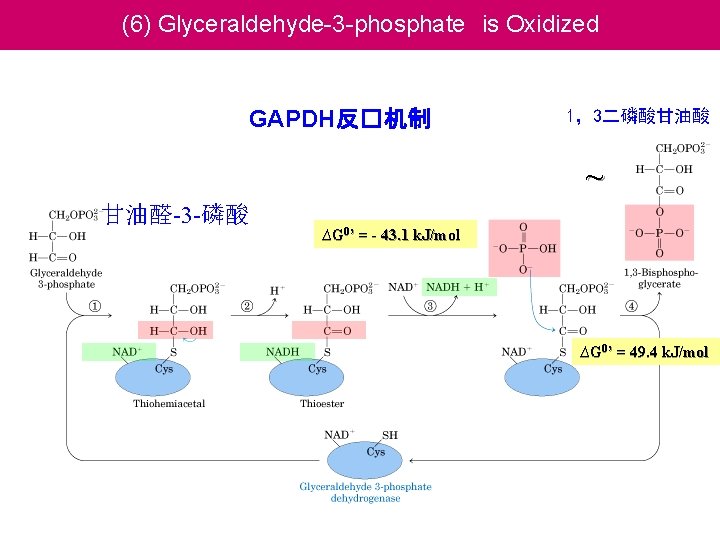
(6) Glyceraldehyde-3 -phosphate is Oxidized GAPDH反�机制 1,3二磷酸甘油酸 ~ 甘油醛-3 -磷酸 ∆G 0’ = - 43. 1 k. J/mol ∆G 0’ = 49. 4 k. J/mol
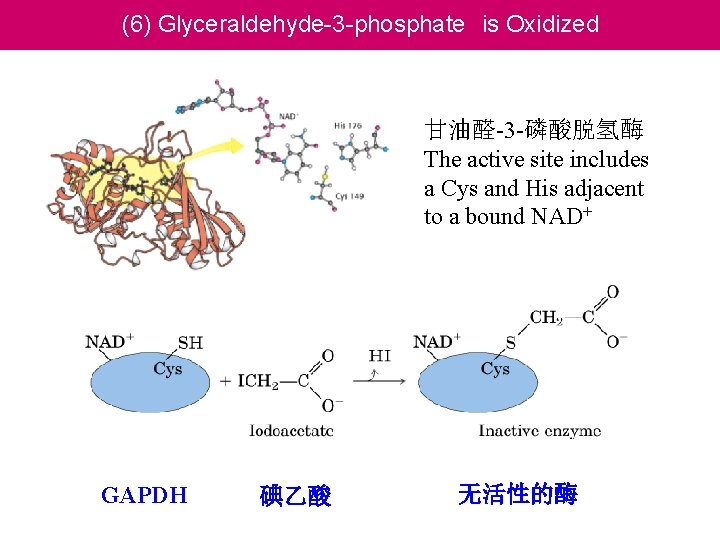
(6) Glyceraldehyde-3 -phosphate is Oxidized 甘油醛-3 -磷酸脱氢酶 The active site includes a Cys and His adjacent to a bound NAD+ GAPDH 碘乙酸 无活性的酶
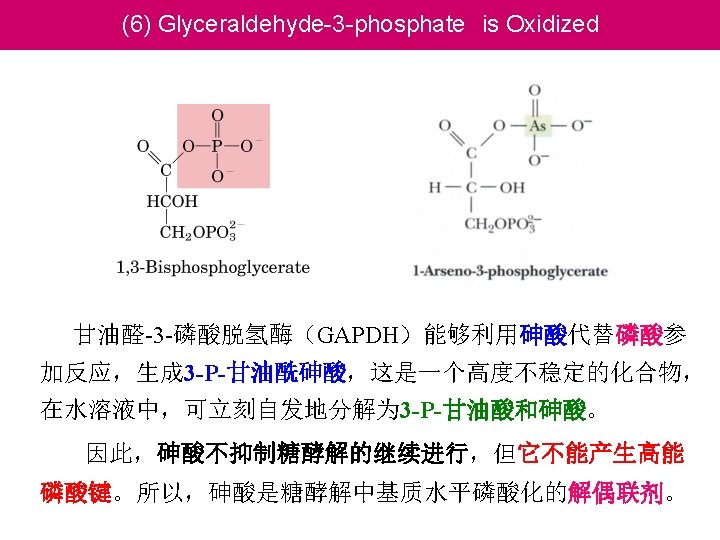
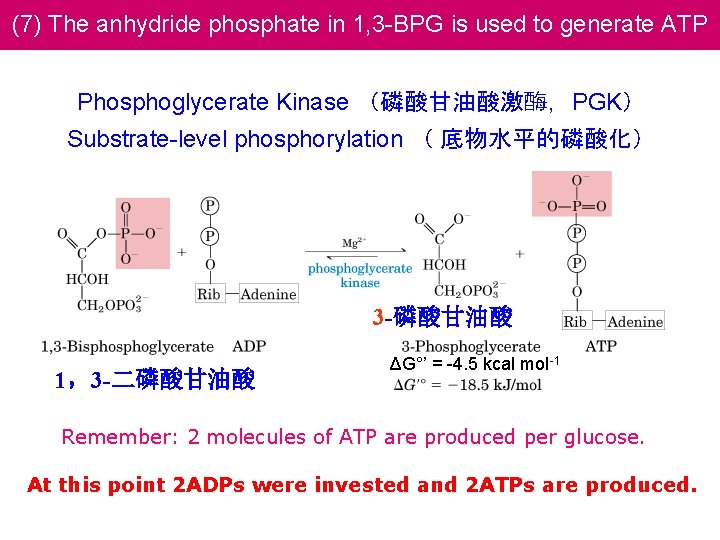
(7) The anhydride phosphate in 1, 3 -BPG is used to generate ATP Phosphoglycerate Kinase (磷酸甘油酸激酶,PGK) Substrate-level phosphorylation ( 底物水平的磷酸化) ~ 3 -磷酸甘油酸 1,3 -二磷酸甘油酸 ΔG°’ = -4. 5 kcal mol-1 Remember: 2 molecules of ATP are produced per glucose. At this point 2 ADPs were invested and 2 ATPs are produced.
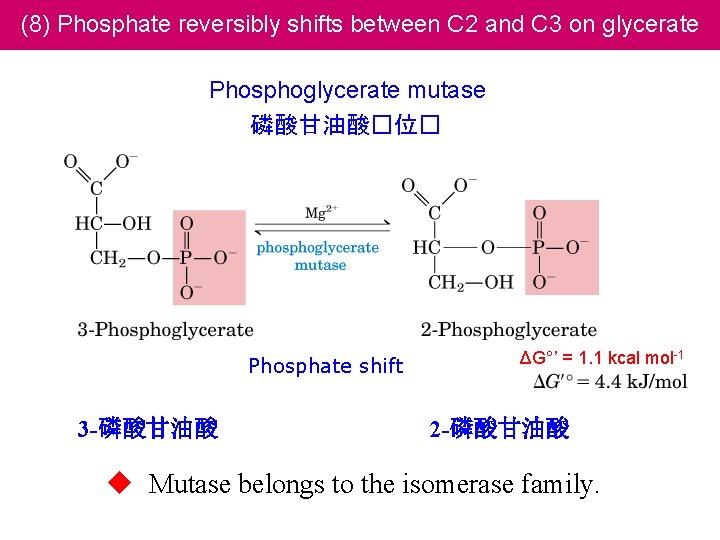
(8) Phosphate reversibly shifts between C 2 and C 3 on glycerate Phosphoglycerate mutase 磷酸甘油酸�位� Phosphate shift 3 -磷酸甘油酸 ΔG°’ = 1. 1 kcal mol-1 2 -磷酸甘油酸 u Mutase belongs to the isomerase family.
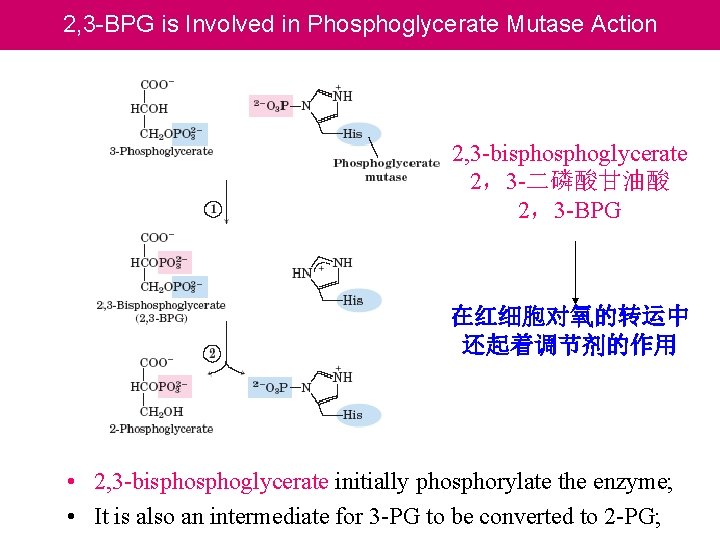
2, 3 -BPG is Involved in Phosphoglycerate Mutase Action 2, 3 -bisphoglycerate 2,3 -二磷酸甘油酸 2,3 -BPG 在红细胞对氧的转运中 还起着调节剂的作用 • 2, 3 -bisphoglycerate initially phosphorylate the enzyme; • It is also an intermediate for 3 -PG to be converted to 2 -PG;
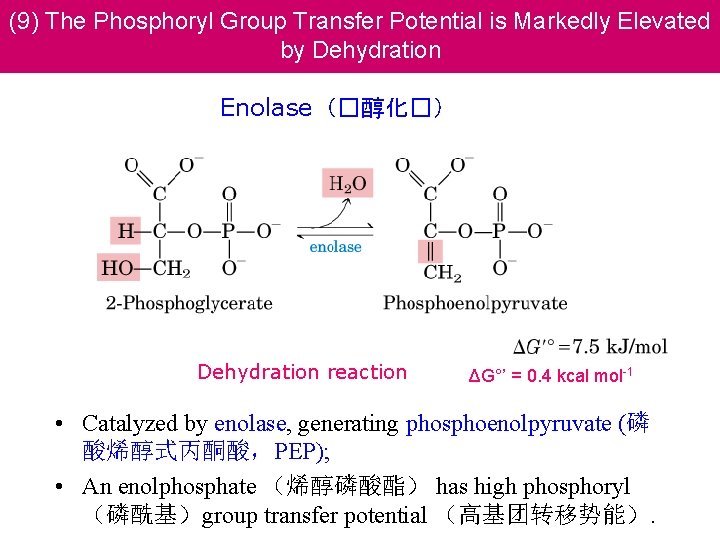
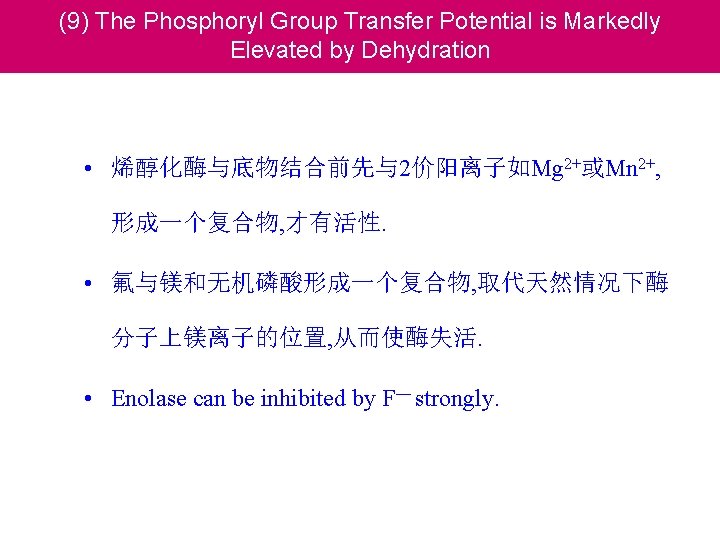
(9) The Phosphoryl Group Transfer Potential is Markedly Elevated by Dehydration Enolase(�醇化�) Dehydration reaction ΔG°’ = 0. 4 kcal mol-1 • Catalyzed by enolase, generating phosphoenolpyruvate (磷 酸烯醇式丙酮酸,PEP); • An enolphosphate (烯醇磷酸酯) has high phosphoryl (磷酰基)group transfer potential (高基团转移势能).
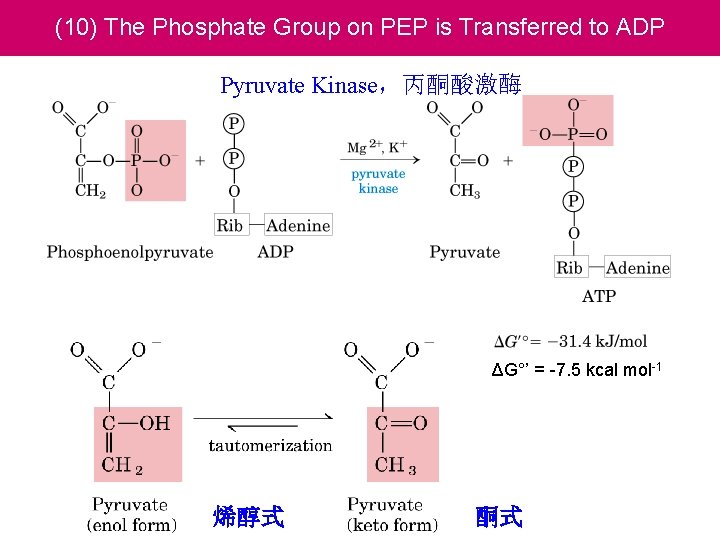
(10) The Phosphate Group on PEP is Transferred to ADP Pyruvate Kinase,丙酮酸激酶 ΔG°’ = -7. 5 kcal mol-1 烯醇式 酮式
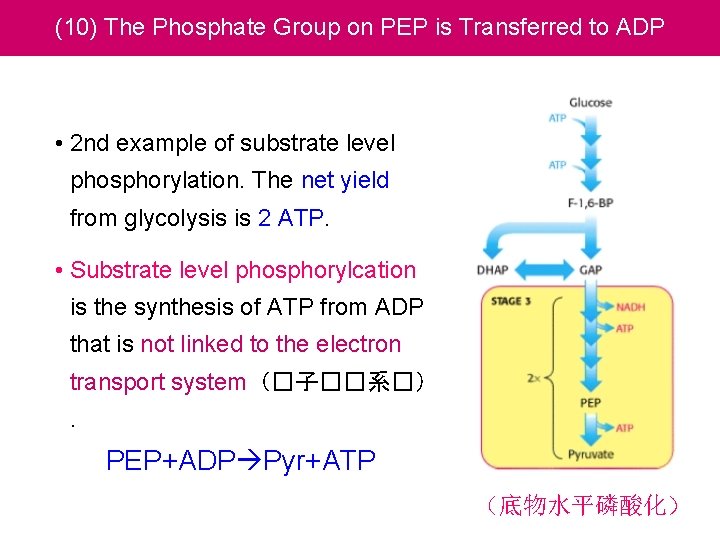
(10) The Phosphate Group on PEP is Transferred to ADP • 2 nd example of substrate level phosphorylation. The net yield from glycolysis is 2 ATP. • Substrate level phosphorylcation is the synthesis of ATP from ADP that is not linked to the electron transport system(�子��系�). PEP+ADP Pyr+ATP (底物水平磷酸化)
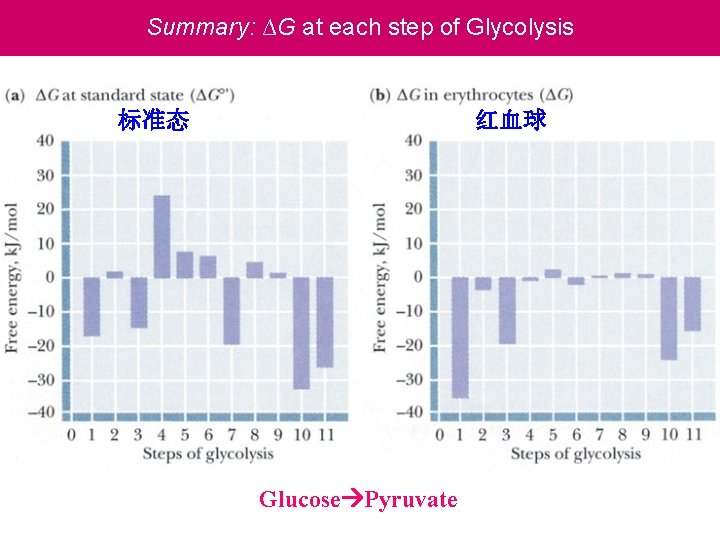
Summary: ∆G at each step of Glycolysis 标准态 红血球 Glucose Pyruvate
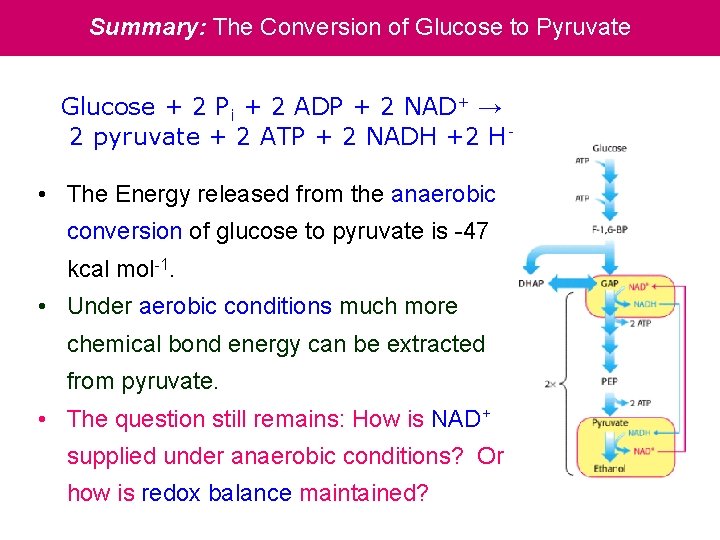
Summary: The Conversion of Glucose to Pyruvate Glucose + 2 Pi + 2 ADP + 2 NAD+ → 2 pyruvate + 2 ATP + 2 NADH +2 H+ • The Energy released from the anaerobic conversion of glucose to pyruvate is -47 kcal mol-1. • Under aerobic conditions much more chemical bond energy can be extracted from pyruvate. • The question still remains: How is NAD+ supplied under anaerobic conditions? Or how is redox balance maintained?
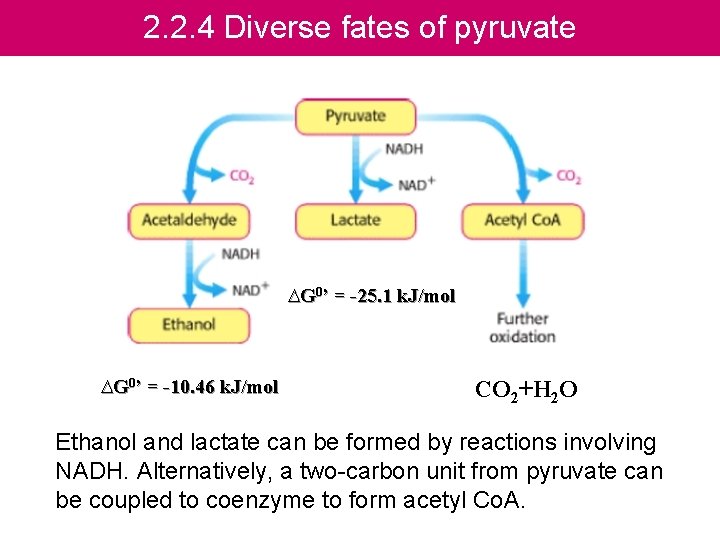
2. 2. 4 Diverse fates of pyruvate ∆G 0’ = -25. 1 k. J/mol ∆G 0’ = -10. 46 k. J/mol CO 2+H 2 O Ethanol and lactate can be formed by reactions involving NADH. Alternatively, a two-carbon unit from pyruvate can be coupled to coenzyme to form acetyl Co. A.
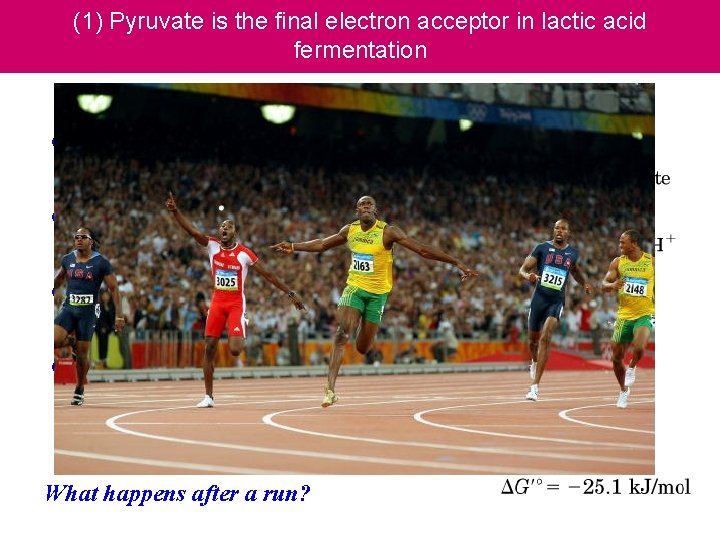
(1) Pyruvate is the final electron acceptor in lactic acid fermentation l Pyruvate reduced (还原) and NAD+ regenerated (生成); l Catalyzed by lactate dehydrogenase (乳酸脱氢酶); l This happens in animal tissues when O 2 is limited; l This also happens in many microorganisms (e. g. , lactobacilli). What happens after a run?
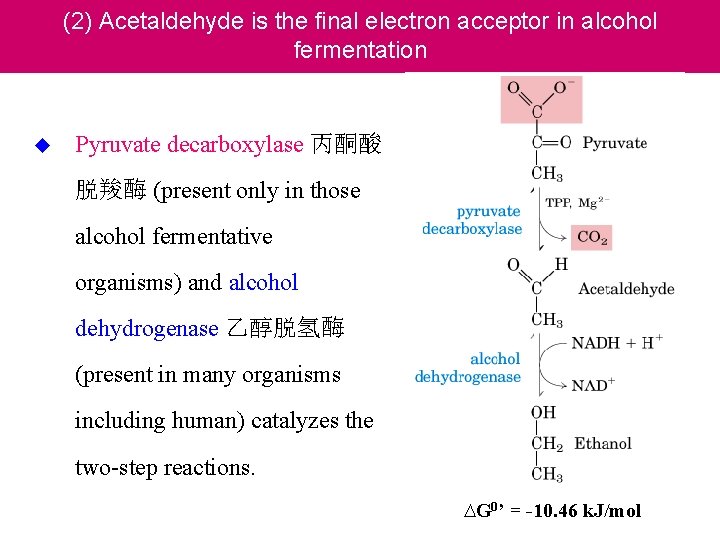
(2) Acetaldehyde is the final electron acceptor in alcohol fermentation u Pyruvate decarboxylase 丙酮酸 脱羧酶 (present only in those alcohol fermentative organisms) and alcohol dehydrogenase 乙醇脱氢酶 (present in many organisms including human) catalyzes the two-step reactions. ∆G 0’ = -10. 46 k. J/mol
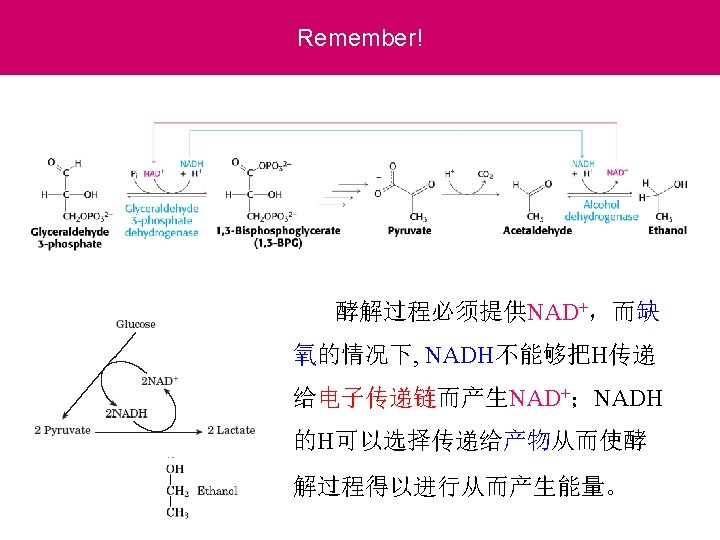
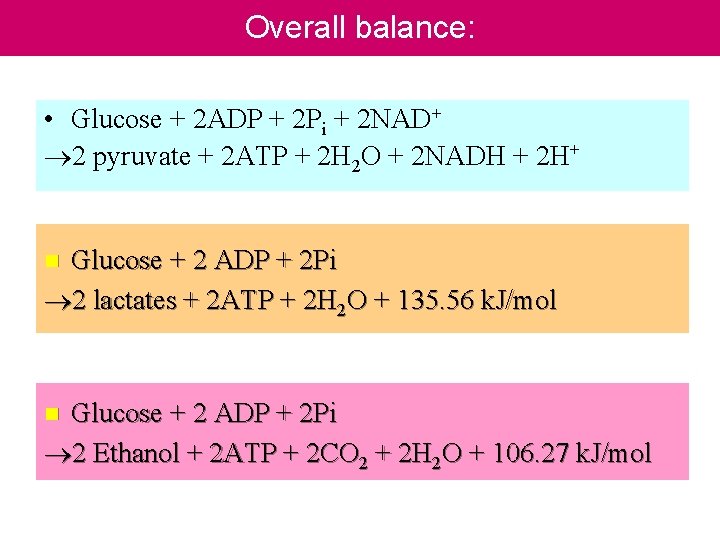
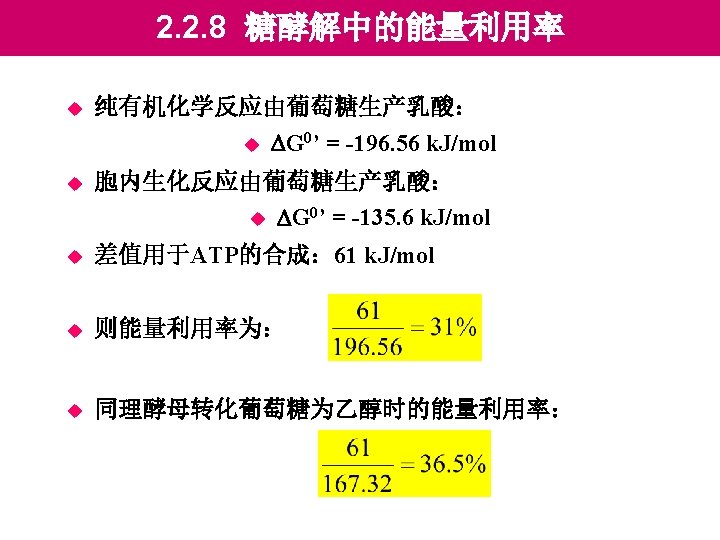
Overall balance: • Glucose + 2 ADP + 2 Pi + 2 NAD+ 2 pyruvate + 2 ATP + 2 H 2 O + 2 NADH + 2 H+ Glucose + 2 ADP + 2 Pi 2 lactates + 2 ATP + 2 H 2 O + 135. 56 k. J/mol n Glucose + 2 ADP + 2 Pi 2 Ethanol + 2 ATP + 2 CO 2 + 2 H 2 O + 106. 27 k. J/mol n
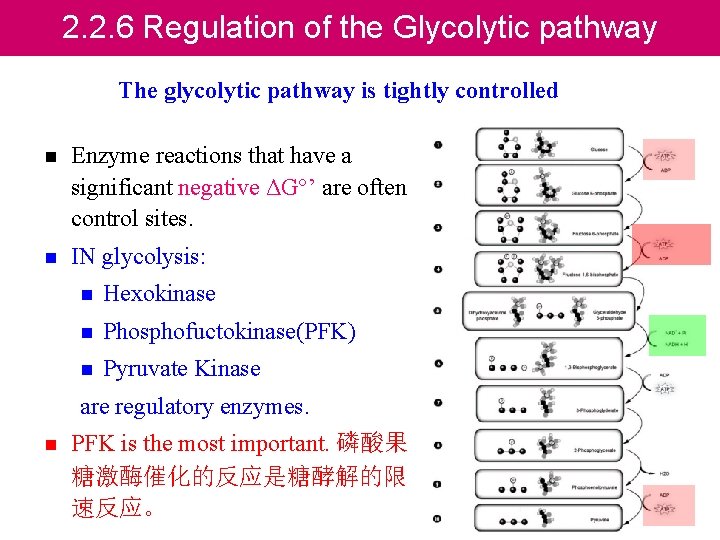
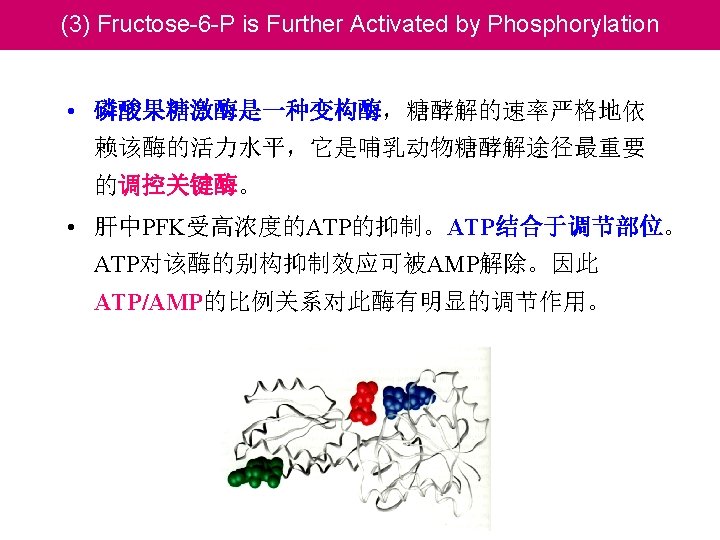
2. 2. 6 Regulation of the Glycolytic pathway The glycolytic pathway is tightly controlled n Enzyme reactions that have a significant negative ΔG°’ are often control sites. n IN glycolysis: n Hexokinase n Phosphofuctokinase(PFK) n Pyruvate Kinase are regulatory enzymes. n PFK is the most important. 磷酸果 糖激酶催化的反应是糖酵解的限 速反应。
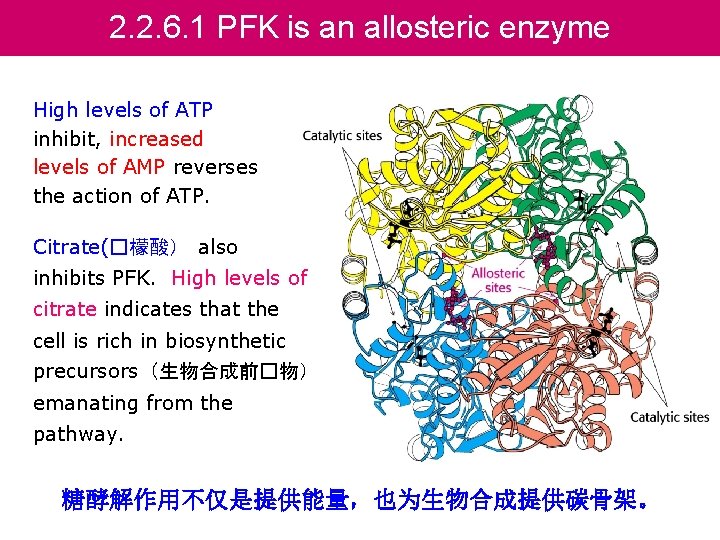
2. 2. 6. 1 PFK is an allosteric enzyme High levels of ATP inhibit, increased levels of AMP reverses the action of ATP. Citrate(�檬酸) also inhibits PFK. High levels of citrate indicates that the cell is rich in biosynthetic precursors(生物合成前�物) emanating from the pathway. 糖酵解作用不仅是提供能量,也为生物合成提供碳骨架。
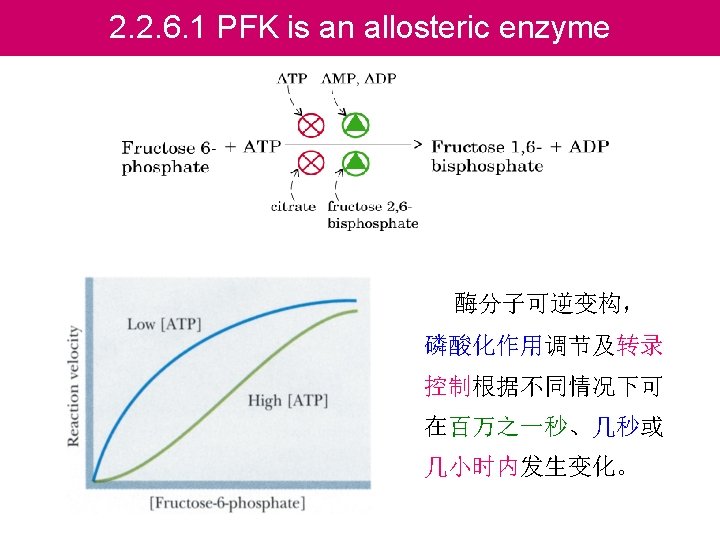
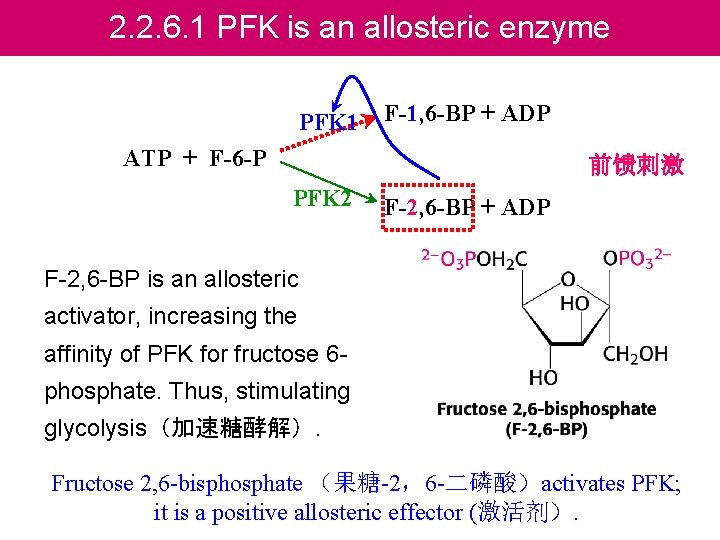
2. 2. 6. 1 PFK is an allosteric enzyme PFK 1 F-1, 6 -BP + ADP ATP + F-6 -P 前馈刺激 PFK 2 F-2, 6 -BP + ADP F-2, 6 -BP is an allosteric activator, increasing the affinity of PFK for fructose 6 phosphate. Thus, stimulating glycolysis(加速糖酵解). Fructose 2, 6 -bisphosphate (果糖-2,6 -二磷酸)activates PFK; it is a positive allosteric effector (激活剂).
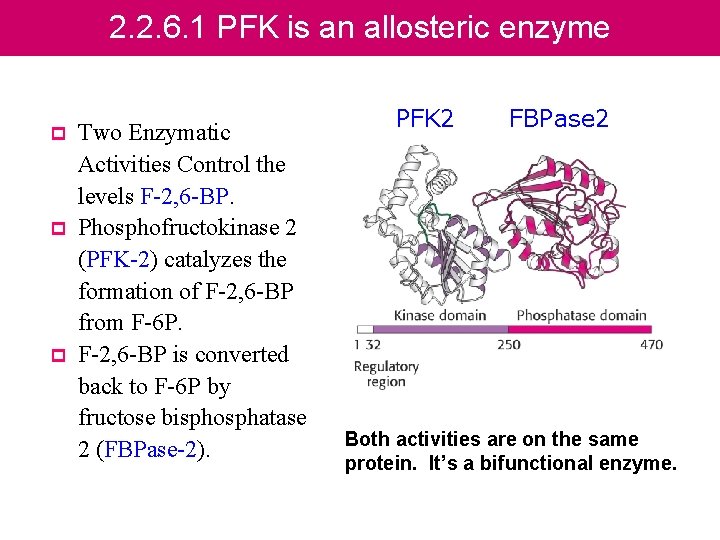
2. 2. 6. 1 PFK is an allosteric enzyme p p p Two Enzymatic Activities Control the levels F-2, 6 -BP. Phosphofructokinase 2 (PFK-2) catalyzes the formation of F-2, 6 -BP from F-6 P. F-2, 6 -BP is converted back to F-6 P by fructose bisphosphatase 2 (FBPase-2). PFK 2 FBPase 2 Both activities are on the same protein. It’s a bifunctional enzyme.
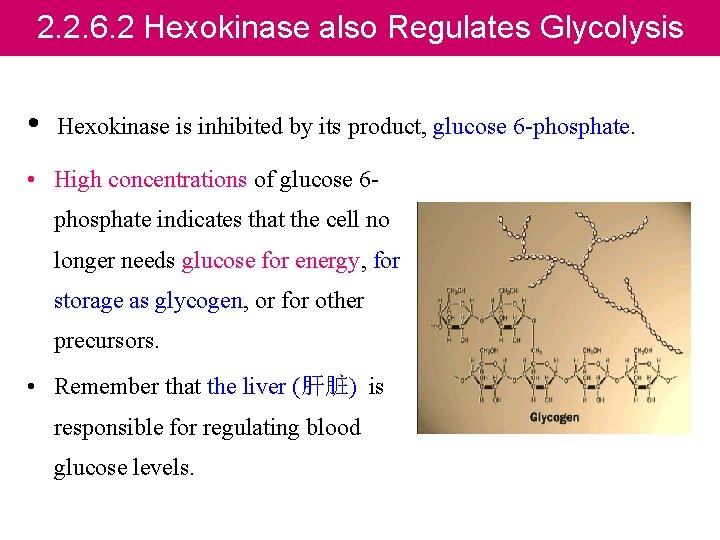
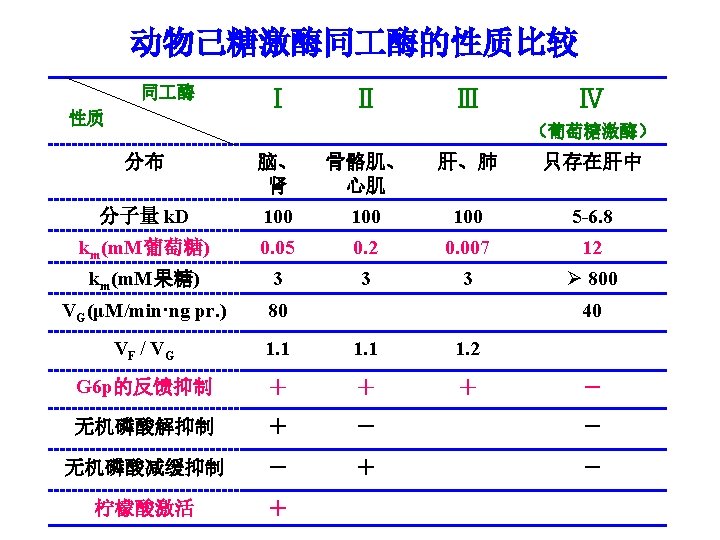
2. 2. 6. 2 Hexokinase also Regulates Glycolysis • Hexokinase is inhibited by its product, glucose 6 -phosphate. • High concentrations of glucose 6 phosphate indicates that the cell no longer needs glucose for energy, for storage as glycogen, or for other precursors. • Remember that the liver (肝脏) is responsible for regulating blood glucose levels.
2. 2. 6. 2 Hexokinase also Regulates Glycolysis Hexokinase and Glucokinase. The liver contains an isoform of hexokinase called glucokinase ( 葡萄糖激酶) – Glucokinase is not inhibited by glucose 6 -phosphate. – Glucokinase has a lower affinity for glucose than hexokinase. This assures that brain and muscle have first choice for the glucose. – When glucose is abundant in the liver, glucokinase phosphorylates glucose to glucose 6 -phosphate specifically for glycogen synthesis.
2. 2. 6. 3 Pyruvate kinase has regulatory role in glycolysis p Pyruvate Kinase has an L (liver) and M (muscle and brain) form. p Both forms are inhibited by its product, ATP. p Fructose 1, 6 -bisphosphate activates both forms of the enzyme to keep pace with the influx (流入) on intermediates. 当机体能荷或糖酵解的中间物积累时,丙酮酸激酶达到活 跃顶峰。 p Alanine (丙氨酸) can be reversibly transaminated (转氨) to pyruvate. Alanine also inhibits pyruvate kinase thus indicating that building blocks are abundant.
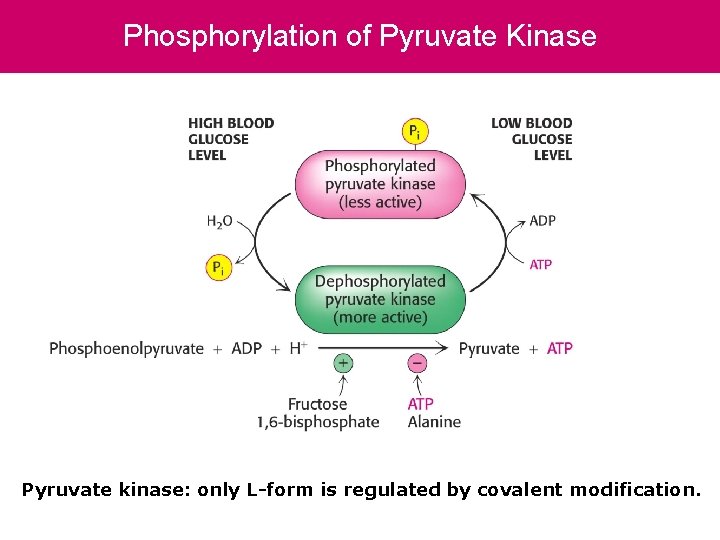
Phosphorylation of Pyruvate Kinase Pyruvate kinase: only L-form is regulated by covalent modification.
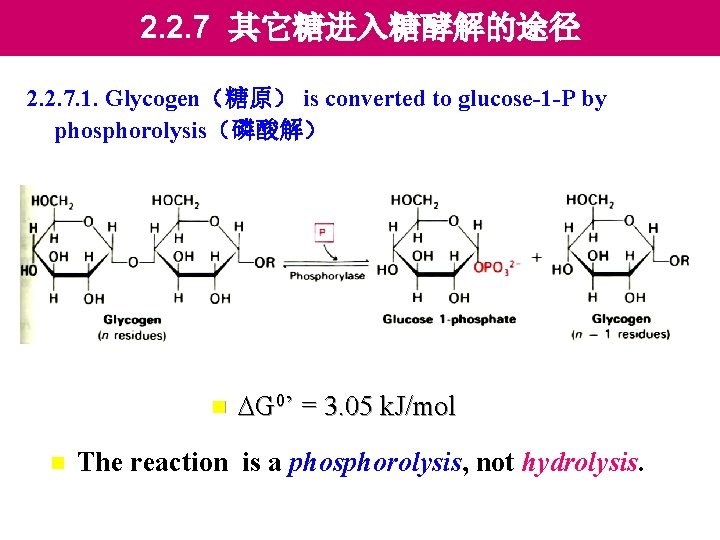
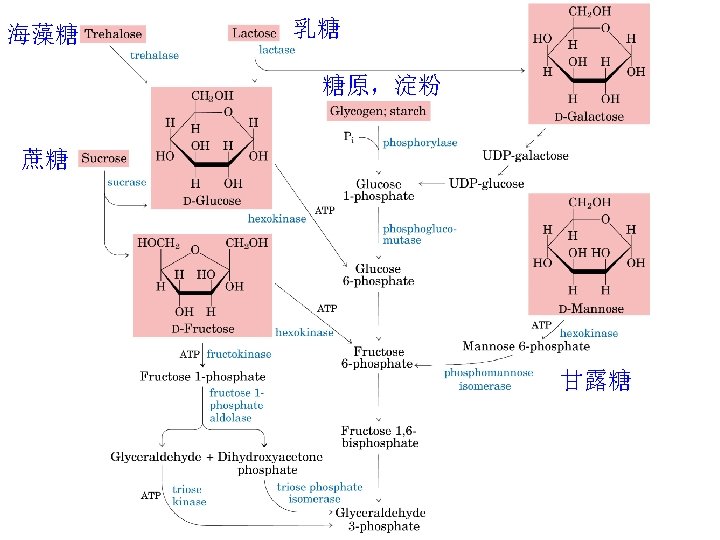
2. 2. 7 其它糖进入糖酵解的途径 2. 2. 7. 1. Glycogen(糖原) is converted to glucose-1 -P by phosphorolysis(磷酸解) n n G 0’ = 3. 05 k. J/mol The reaction is a phosphorolysis, not hydrolysis.
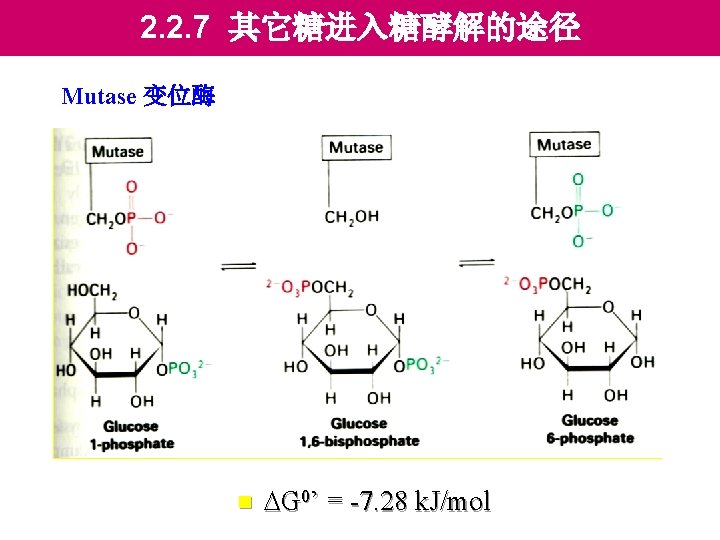
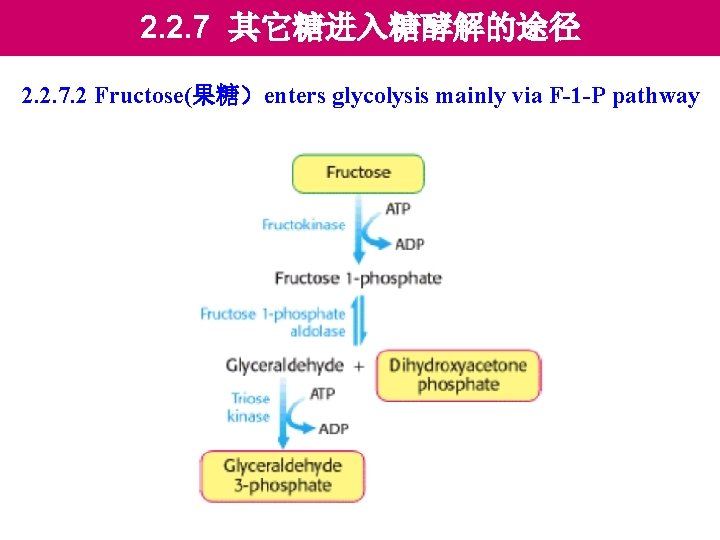
2. 2. 7 其它糖进入糖酵解的途径 2. 2. 7. 2 Fructose(果糖)enters glycolysis mainly via F-1 -P pathway
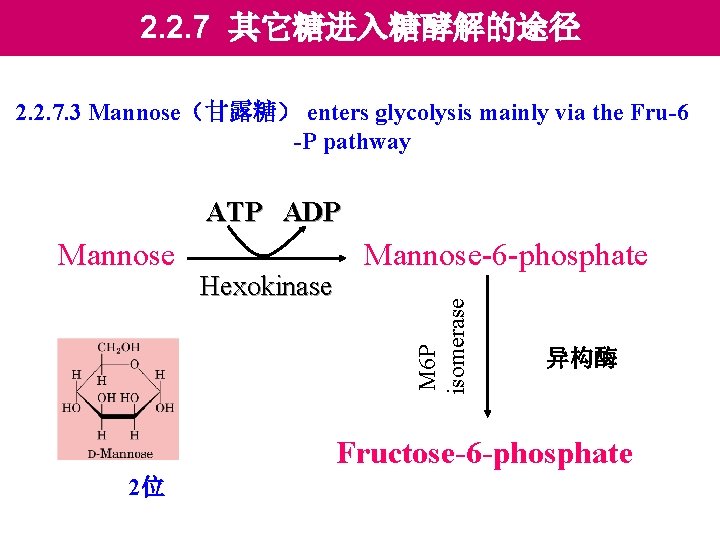
2. 2. 7 其它糖进入糖酵解的途径 2. 2. 7. 3 Mannose(甘露糖) enters glycolysis mainly via the Fru-6 -P pathway ATP ADP Hexokinase Mannose-6 -phosphate M 6 P isomerase Mannose 异构酶 Fructose-6 -phosphate 2位
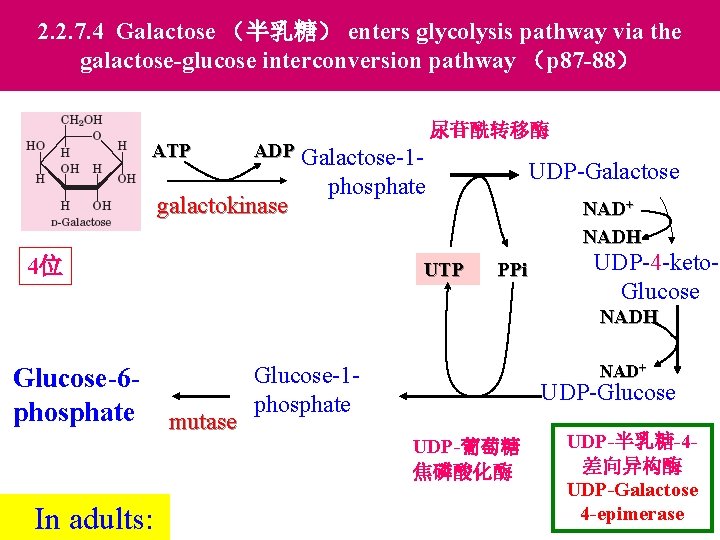
2. 2. 7. 4 Galactose (半乳糖) enters glycolysis pathway via the galactose-glucose interconversion pathway (p 87 -88) ATP Galactose 尿苷酰转移酶 ADP Galactose-1 - galactokinase UDP-Galactose phosphate 4位 UTP NAD+ NADH PPi UDP-4 -keto. Glucose NADH Glucose-6 phosphate mutase NAD+ Glucose-1 phosphate UDP-Glucose UDP-葡萄糖 焦磷酸化酶 n In adults: UDP-半乳糖-4差向异构酶 UDP-Galactose 4 -epimerase
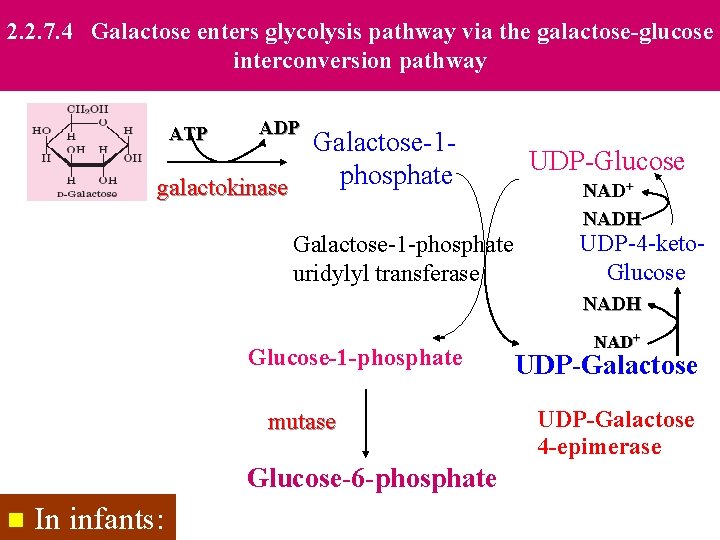
2. 2. 7. 4 Galactose enters glycolysis pathway via the galactose-glucose interconversion pathway ATP ADP Galactose-1 Galactose phosphate galactokinase Galactose-1 -phosphate uridylyl transferase UDP-Glucose NAD+ NADH UDP-4 -keto. Glucose NADH Glucose-1 -phosphate mutase Glucose-6 -phosphate n In infants: NAD+ UDP-Galactose 4 -epimerase
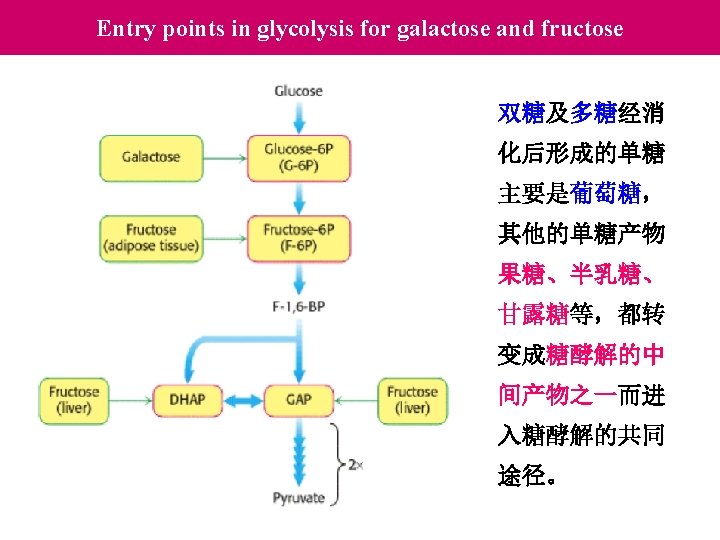
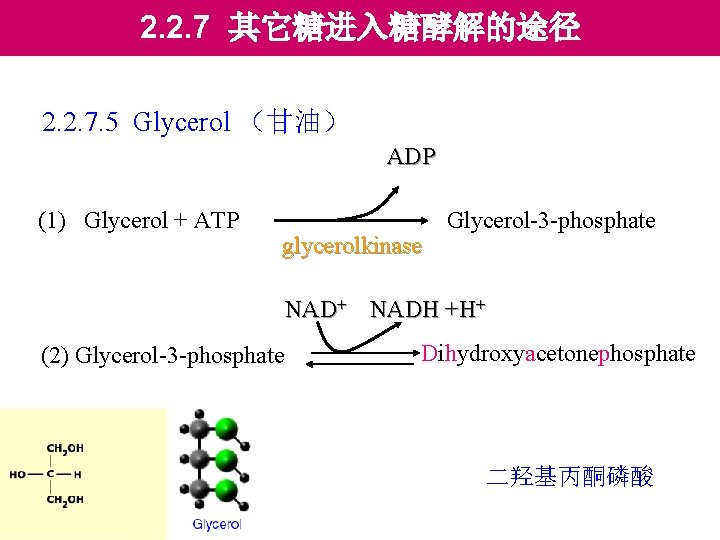
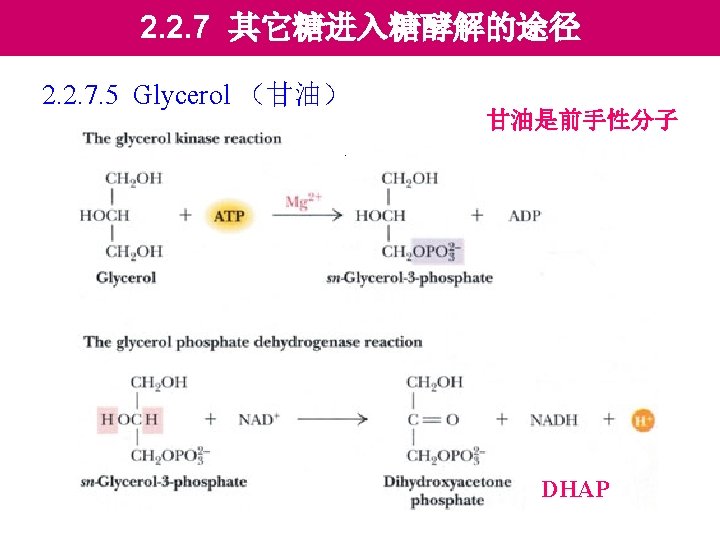
2. 2. 7 其它糖进入糖酵解的途径 2. 2. 7. 5 Glycerol (甘油) ADP (1) Glycerol + ATP glycerolkinase Glycerol-3 -phosphate NAD+ NADH +H+ (2) Glycerol-3 -phosphate Dihydroxyacetonephosphate 二羟基丙酮磷酸
- Slides: 88