
CHAPTER 44 NEUROSCIENCE II EVOLUTION AND FUNCTION OF
- Slides: 51
CHAPTER 44 NEUROSCIENCE II: EVOLUTION AND FUNCTION OF THE BRAIN AND NERVOUS SYSTEMS Prepared by Brenda Leady, University of Toledo Copyright (c) The Mc. Graw-Hill Companies, Inc. Permission required for reproduction or display. 1
Nervous system is the product of hundreds of millions of years of evolution n Development provided advantages that promoted reproductive success n Organization ranges from simple network of a few cells to complexity of human brain n 2
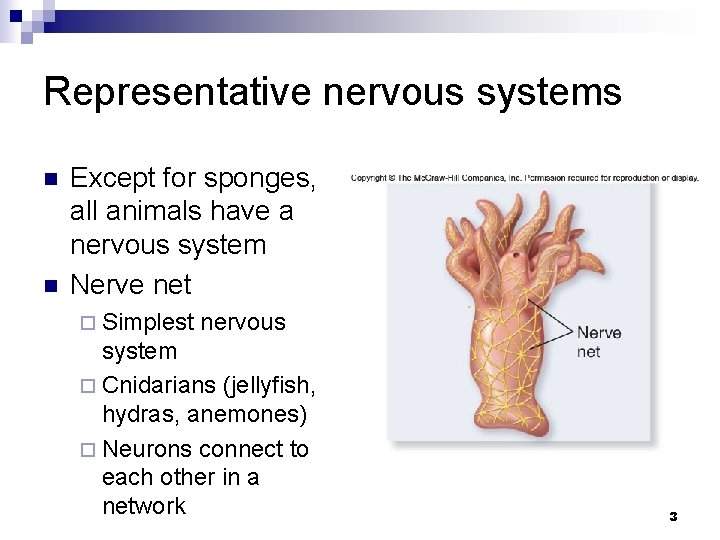
Representative nervous systems n n Except for sponges, all animals have a nervous system Nerve net ¨ Simplest nervous system ¨ Cnidarians (jellyfish, hydras, anemones) ¨ Neurons connect to each other in a network 3
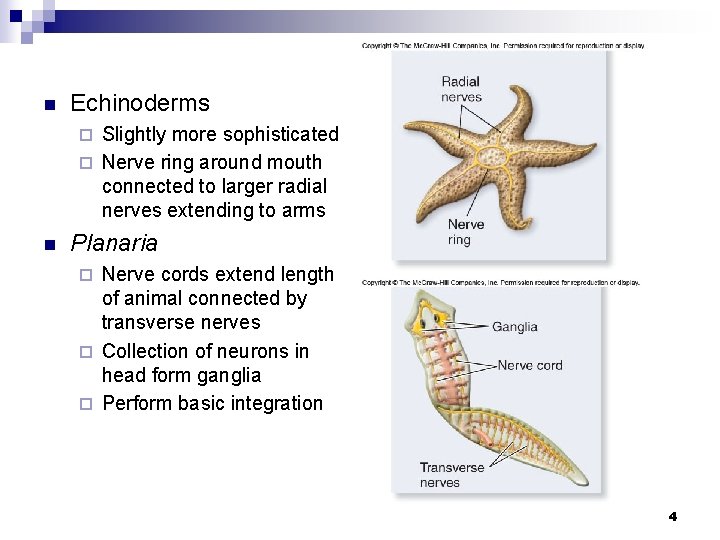
n Echinoderms Slightly more sophisticated ¨ Nerve ring around mouth connected to larger radial nerves extending to arms ¨ n Planaria Nerve cords extend length of animal connected by transverse nerves ¨ Collection of neurons in head form ganglia ¨ Perform basic integration ¨ 4
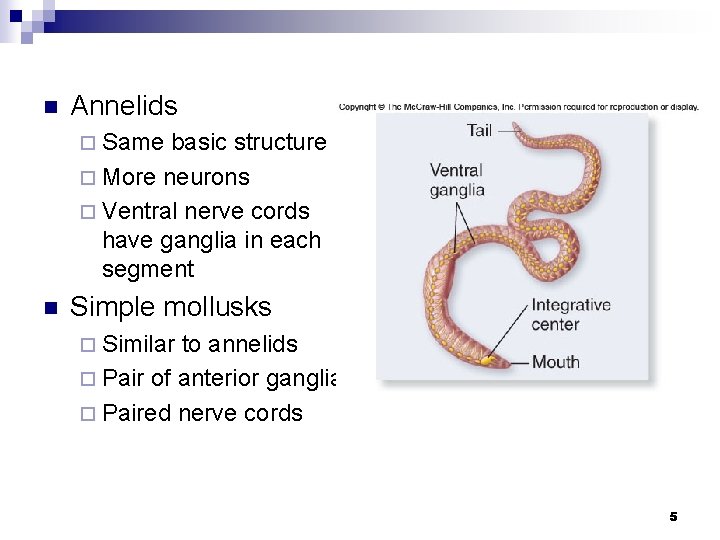
n Annelids ¨ Same basic structure ¨ More neurons ¨ Ventral nerve cords have ganglia in each segment n Simple mollusks ¨ Similar to annelids ¨ Pair of anterior ganglia ¨ Paired nerve cords 5
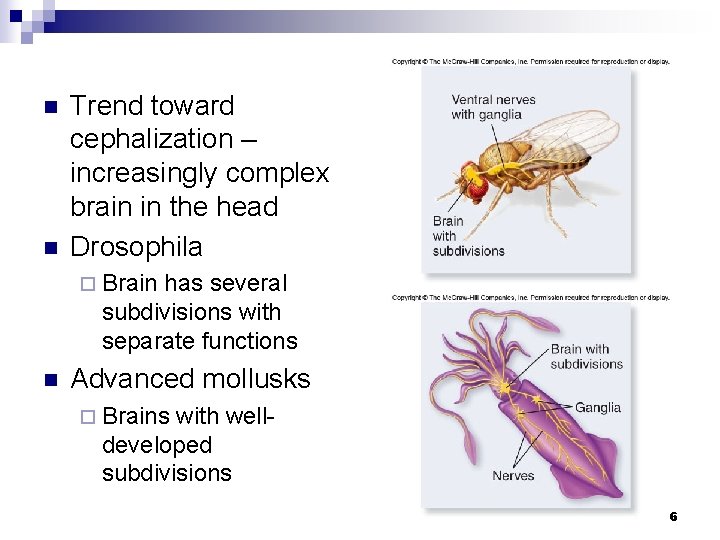
n n Trend toward cephalization – increasingly complex brain in the head Drosophila ¨ Brain has several subdivisions with separate functions n Advanced mollusks ¨ Brains with welldeveloped subdivisions 6
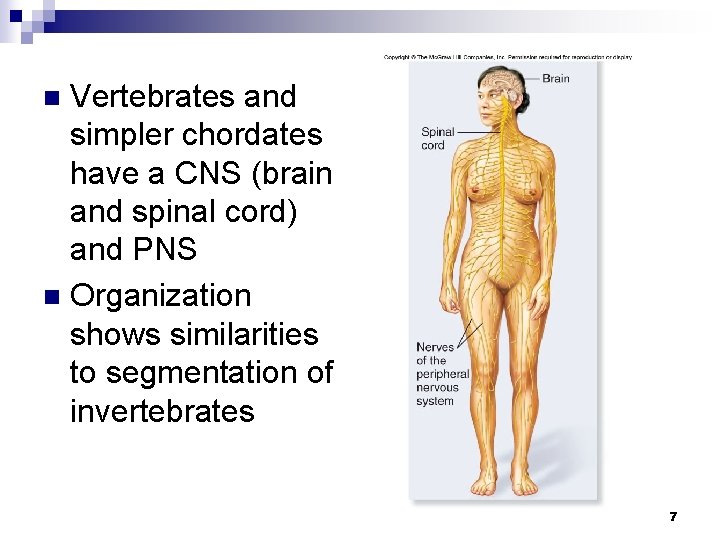
Vertebrates and simpler chordates have a CNS (brain and spinal cord) and PNS n Organization shows similarities to segmentation of invertebrates n 7
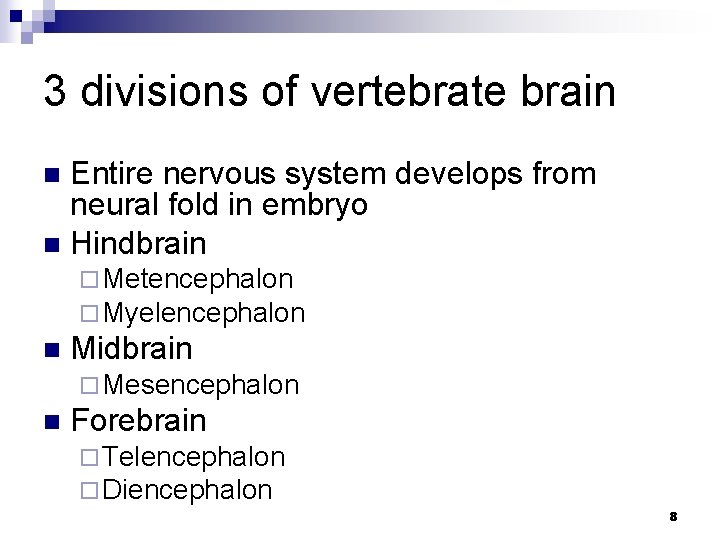
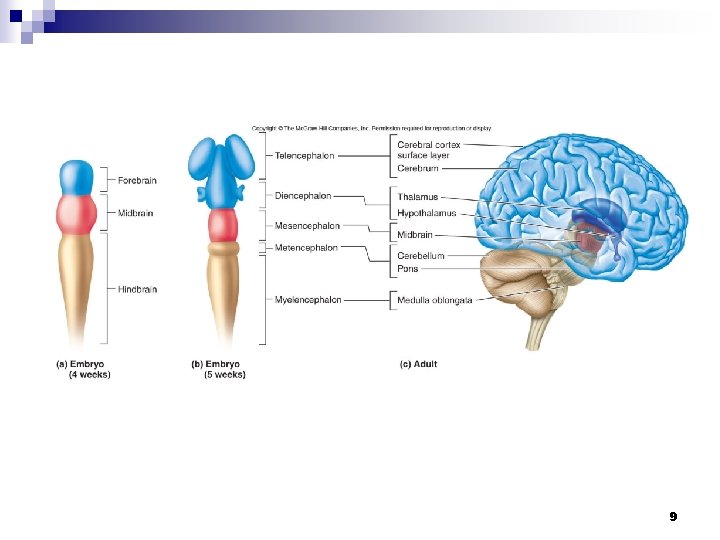
3 divisions of vertebrate brain Entire nervous system develops from neural fold in embryo n Hindbrain n ¨ Metencephalon ¨ Myelencephalon n Midbrain ¨ Mesencephalon n Forebrain ¨ Telencephalon ¨ Diencephalon 8
9
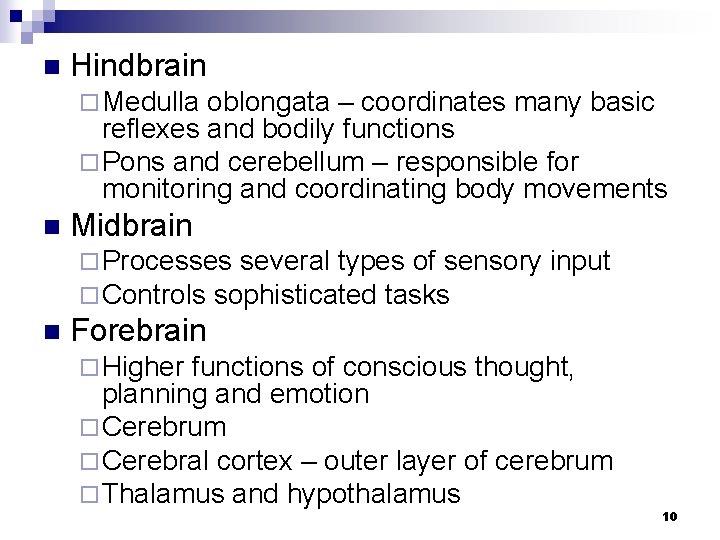
n Hindbrain ¨ Medulla oblongata – coordinates many basic reflexes and bodily functions ¨ Pons and cerebellum – responsible for monitoring and coordinating body movements n Midbrain ¨ Processes several types of sensory ¨ Controls sophisticated tasks n input Forebrain ¨ Higher functions of conscious thought, planning and emotion ¨ Cerebrum ¨ Cerebral cortex – outer layer of cerebrum ¨ Thalamus and hypothalamus 10
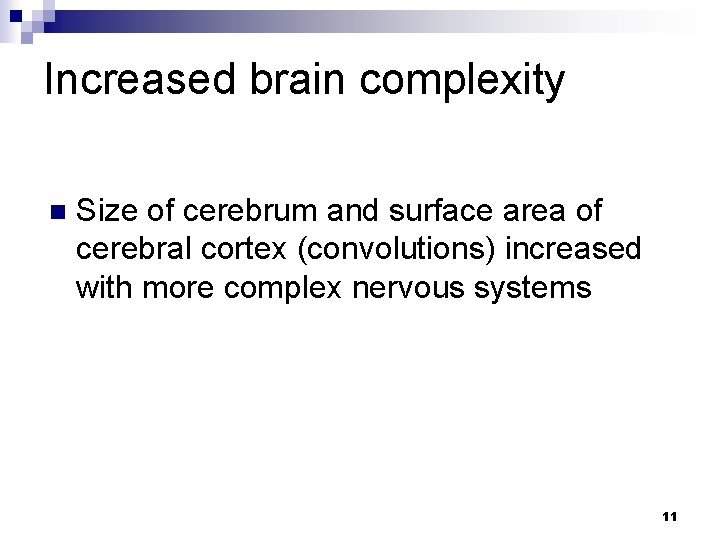
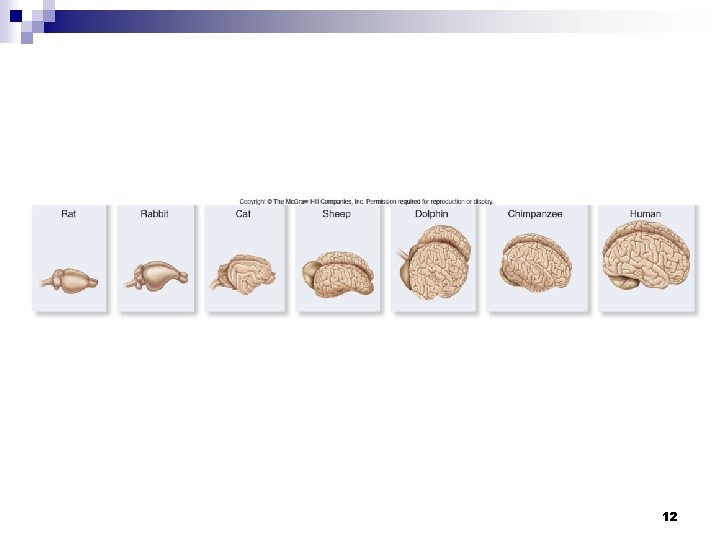
Increased brain complexity n Size of cerebrum and surface area of cerebral cortex (convolutions) increased with more complex nervous systems 11
12
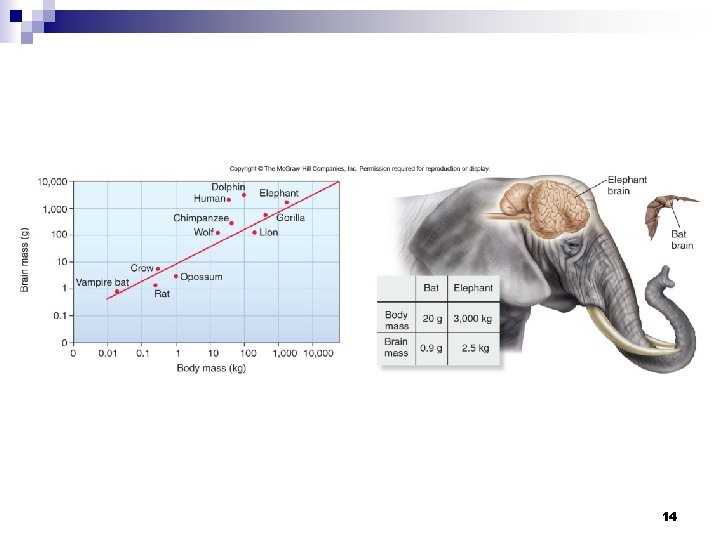
Body mass and brain mass proportional with exceptions (humans and dolphins) n Greater size and folding provides more surface area for greater processing and interpretation of information n 13
14
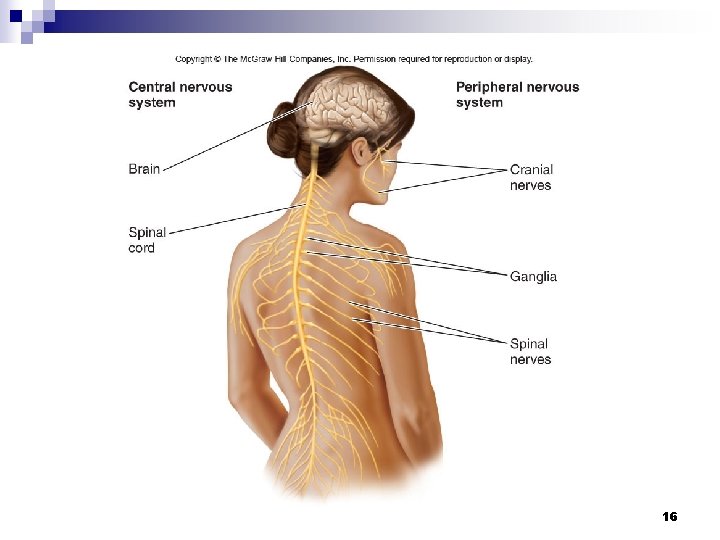
Human nervous system n Central nervous system (CNS) ¨ Brain n and spinal cord Peripheral nervous system (PNS) ¨ Neurons and axons of neurons outside the CNS 15
16
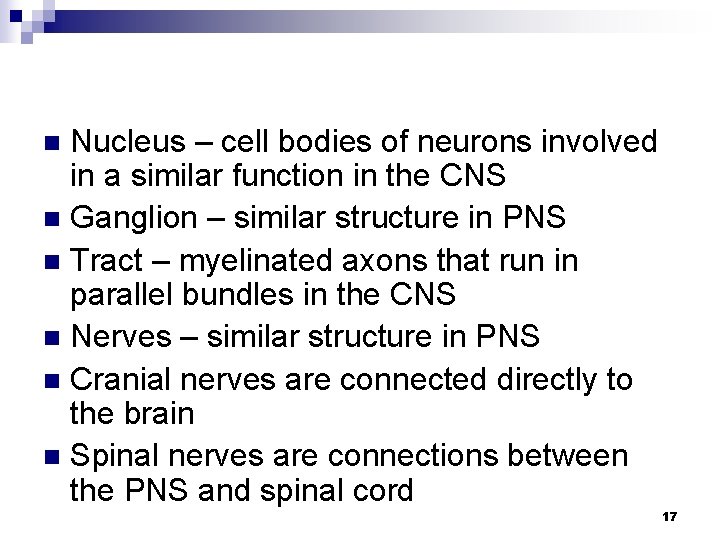
Nucleus – cell bodies of neurons involved in a similar function in the CNS n Ganglion – similar structure in PNS n Tract – myelinated axons that run in parallel bundles in the CNS n Nerves – similar structure in PNS n Cranial nerves are connected directly to the brain n Spinal nerves are connections between the PNS and spinal cord n 17
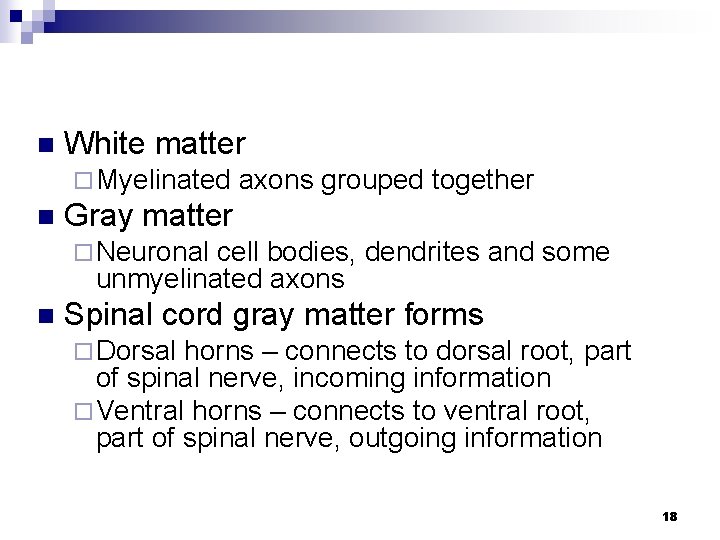
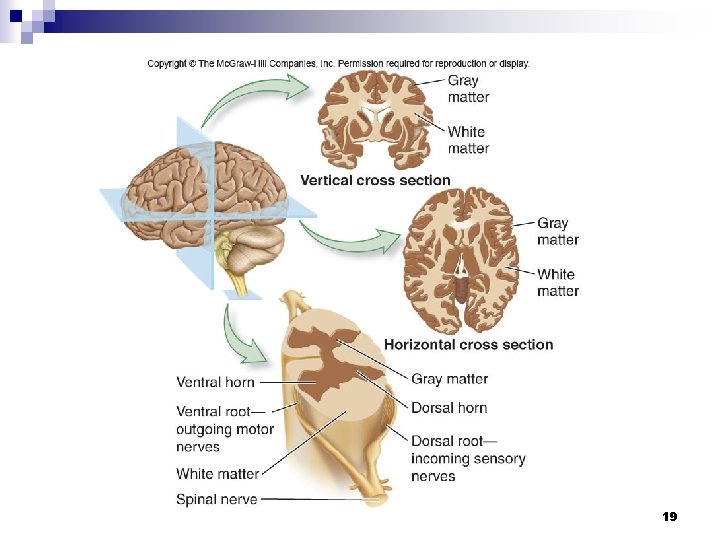
n White matter ¨ Myelinated n axons grouped together Gray matter ¨ Neuronal cell bodies, dendrites and some unmyelinated axons n Spinal cord gray matter forms ¨ Dorsal horns – connects to dorsal root, part of spinal nerve, incoming information ¨ Ventral horns – connects to ventral root, part of spinal nerve, outgoing information 18
19
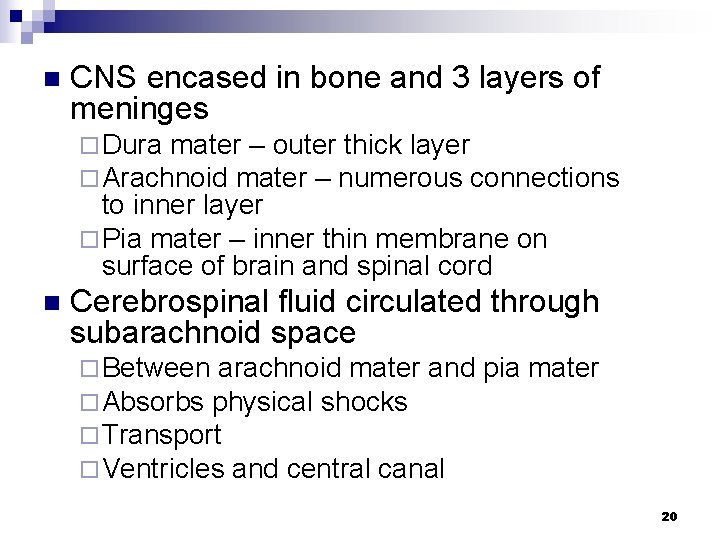
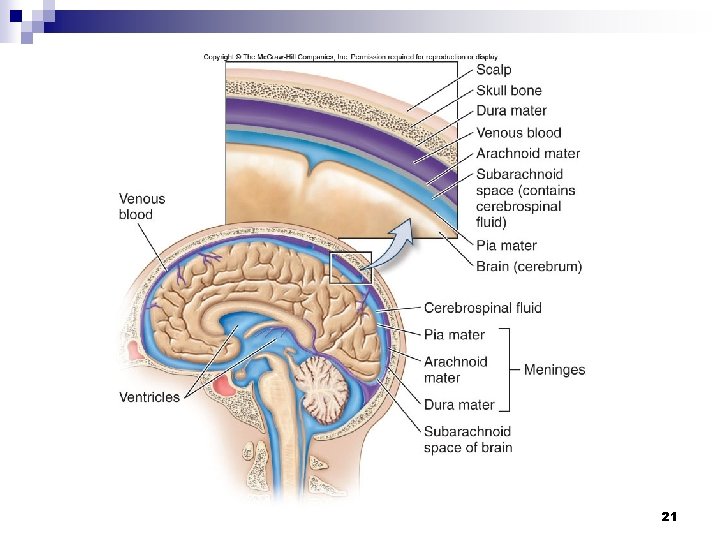
n CNS encased in bone and 3 layers of meninges ¨ Dura mater – outer thick layer ¨ Arachnoid mater – numerous connections to inner layer ¨ Pia mater – inner thin membrane on surface of brain and spinal cord n Cerebrospinal fluid circulated through subarachnoid space ¨ Between arachnoid mater and ¨ Absorbs physical shocks ¨ Transport ¨ Ventricles and central canal pia mater 20
21
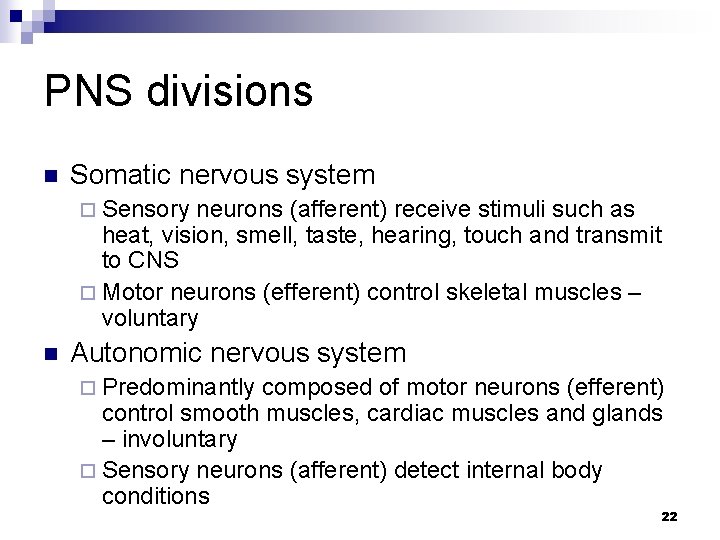
PNS divisions n Somatic nervous system ¨ Sensory neurons (afferent) receive stimuli such as heat, vision, smell, taste, hearing, touch and transmit to CNS ¨ Motor neurons (efferent) control skeletal muscles – voluntary n Autonomic nervous system ¨ Predominantly composed of motor neurons (efferent) control smooth muscles, cardiac muscles and glands – involuntary ¨ Sensory neurons (afferent) detect internal body conditions 22
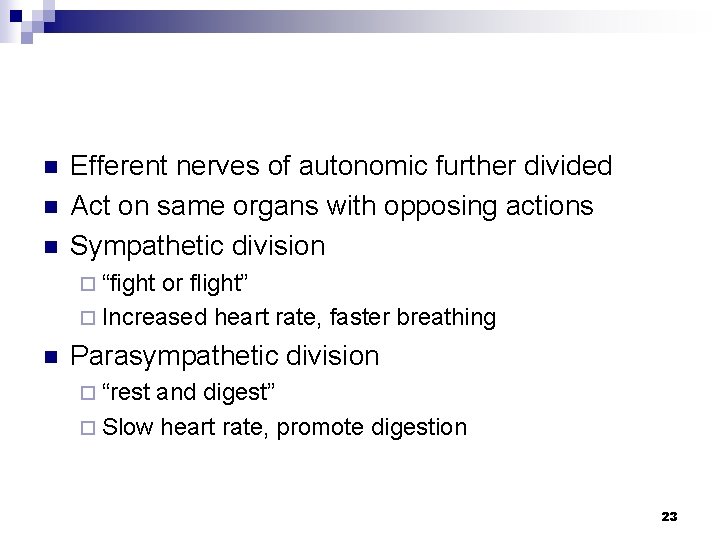
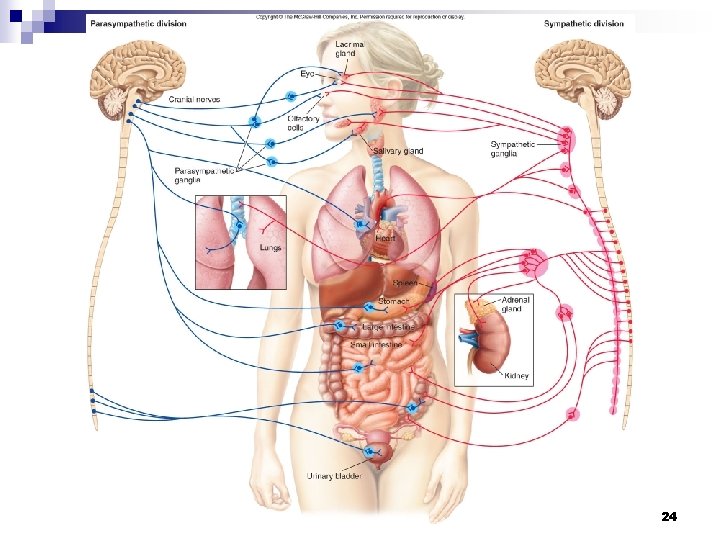
n n n Efferent nerves of autonomic further divided Act on same organs with opposing actions Sympathetic division ¨ “fight or flight” ¨ Increased heart rate, faster breathing n Parasympathetic division ¨ “rest and digest” ¨ Slow heart rate, promote digestion 23
24
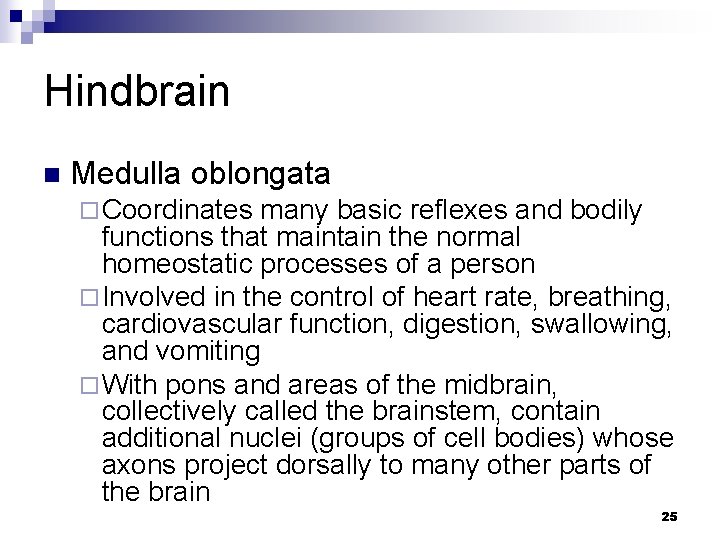
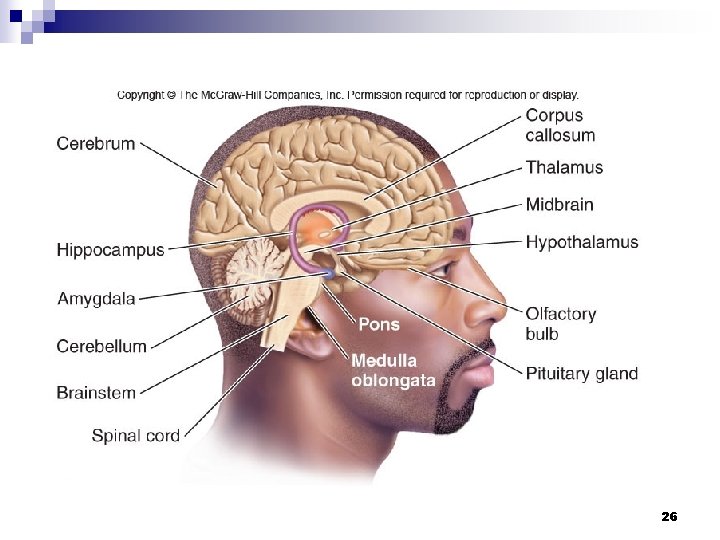
Hindbrain n Medulla oblongata ¨ Coordinates many basic reflexes and bodily functions that maintain the normal homeostatic processes of a person ¨ Involved in the control of heart rate, breathing, cardiovascular function, digestion, swallowing, and vomiting ¨ With pons and areas of the midbrain, collectively called the brainstem, contain additional nuclei (groups of cell bodies) whose axons project dorsally to many other parts of the brain 25
26
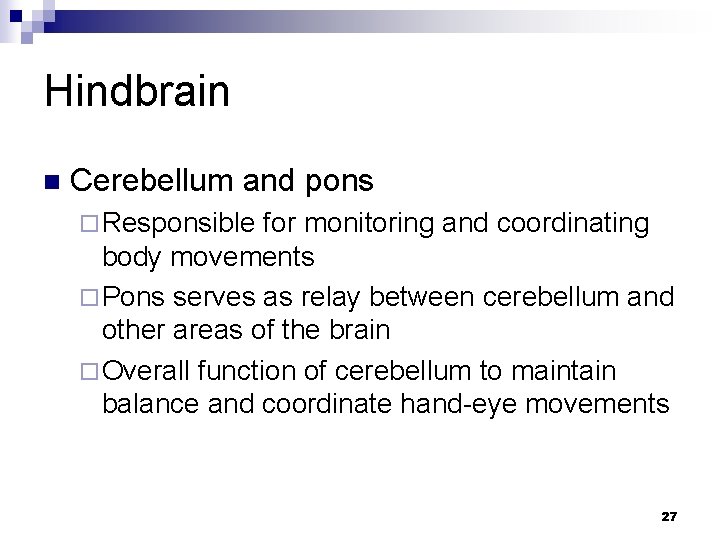
Hindbrain n Cerebellum and pons ¨ Responsible for monitoring and coordinating body movements ¨ Pons serves as relay between cerebellum and other areas of the brain ¨ Overall function of cerebellum to maintain balance and coordinate hand-eye movements 27
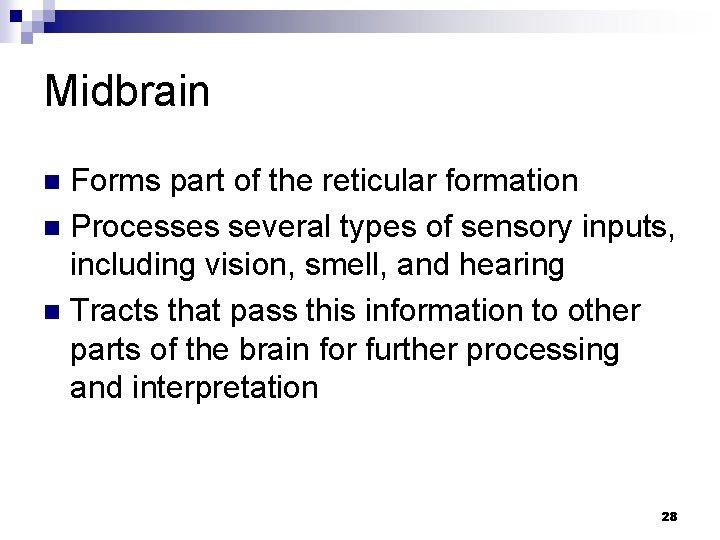
Midbrain Forms part of the reticular formation n Processes several types of sensory inputs, including vision, smell, and hearing n Tracts that pass this information to other parts of the brain for further processing and interpretation n 28
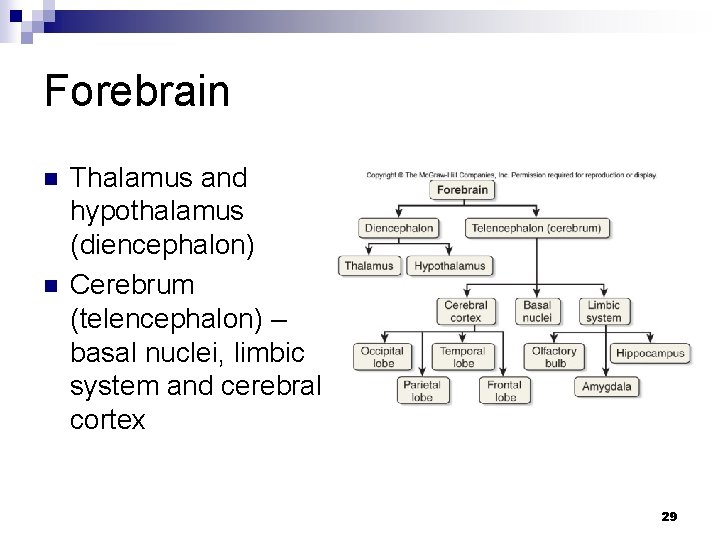
Forebrain n n Thalamus and hypothalamus (diencephalon) Cerebrum (telencephalon) – basal nuclei, limbic system and cerebral cortex 29
Forebrain n Thalamus ¨ Major role in relaying sensory information to appropriate parts of the cerebrum and, in turn, sending outputs from the cerebrum to other parts of the brain ¨ Receives input from all sensory systems n Hypothalamus ¨ Major role of production of hormones regulating pituitary gland which regulates hormone secretion from other glands 30
Forebrain n Basal nuclei ¨ Involved in planning and learning movements ¨ Involved in initiating or inhibiting movements ¨ Affected in Parkinson disease 31
n Limbic system ¨ Not all agree on members of limbic system ¨ Primarily involved in formation and expression of emotions ¨ Role in learning, memory, and perception of smells ¨ Amygdala – understand remember emotional situations, recognize emotional expressions in others ¨ Hippocampus – establish memories for spatial locations, facts, and sequences of events 32
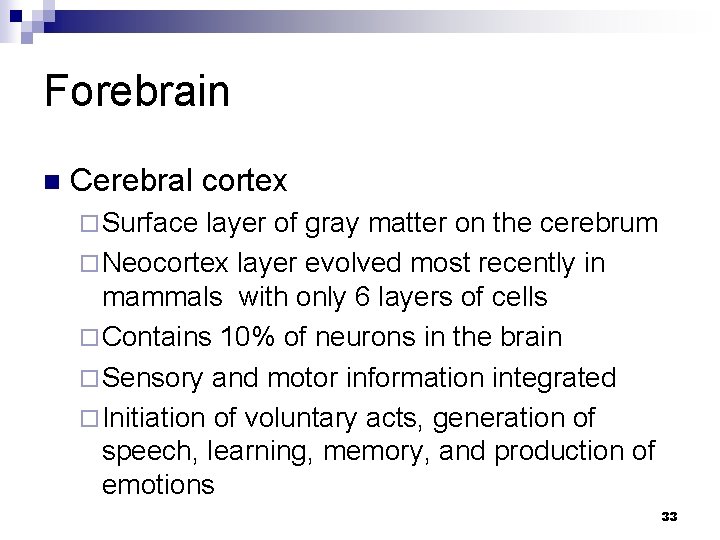
Forebrain n Cerebral cortex ¨ Surface layer of gray matter on the cerebrum ¨ Neocortex layer evolved most recently in mammals with only 6 layers of cells ¨ Contains 10% of neurons in the brain ¨ Sensory and motor information integrated ¨ Initiation of voluntary acts, generation of speech, learning, memory, and production of emotions 33
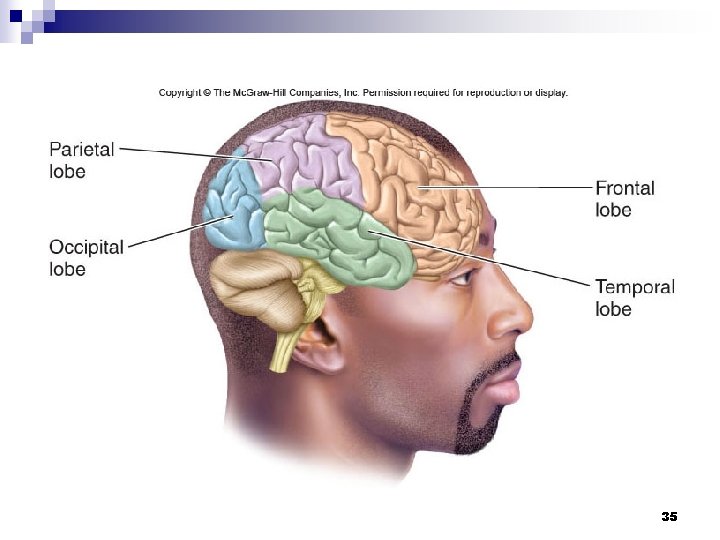
n n Frontal – conscious thought and social awareness Parietal – attention and making association between events and incoming information Occipital – vision Temporal – language, learning, and some types of memory 34
35
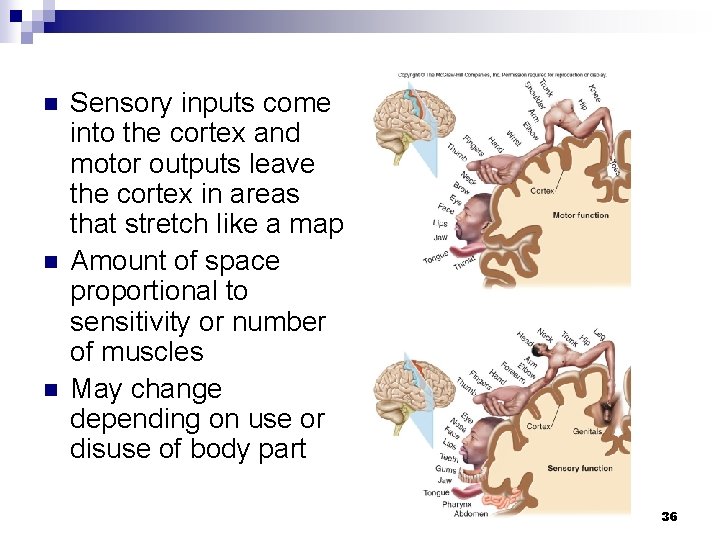
n n n Sensory inputs come into the cortex and motor outputs leave the cortex in areas that stretch like a map Amount of space proportional to sensitivity or number of muscles May change depending on use or disuse of body part 36
Cerebral hemispheres connected by corpus collosum n Severing connection used in the past to treat severe epilepsy n Hemispheres can function independently n Process different types of information n Left hemisphere – understanding language and producing speech n Right hemisphere – nonverbal memories, recognizing faces, and interpreting emotions n 37
38
Several Genes Have Been Important in the Evolution of the Cerebral Cortex n n Genes identified by studying developmentally disabled individuals or comparing human genes to other species Polymicrogyria – results in mental impairment, disrupted gait and language production ¨ Abnormal surface folds and fewer layers of cells ¨ Mutations alter receptors’ ability to bind ligand n Microcephalin and ASPM genes ¨ Determinants of brain size ¨ May be involved in brain evolution humans and great apes – greater changes in 39
Learning and memory n n n Learning – process by which new information is acquired Memory – involves retention of that information over time Long-term potentiation (LTP) ¨ Long-lasting strengthening of connections between neurons ¨ Experiments with rabbits showed short, electrical stimulations to a neuron strengthened synapses with adjacent cells ¨ Neurons communicated more readily 40
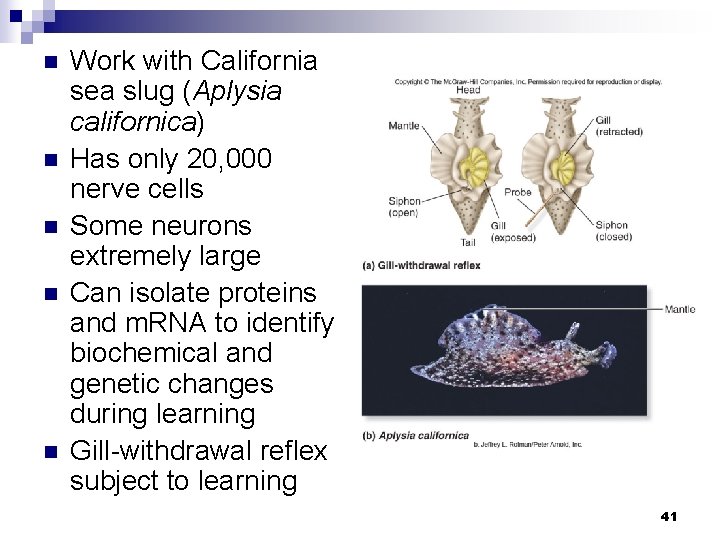
n n n Work with California sea slug (Aplysia californica) Has only 20, 000 nerve cells Some neurons extremely large Can isolate proteins and m. RNA to identify biochemical and genetic changes during learning Gill-withdrawal reflex subject to learning 41
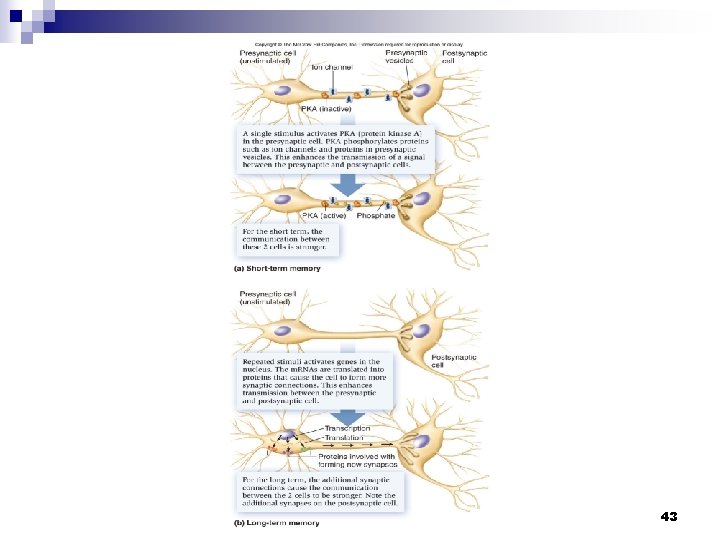
n n Sea slugs process in 2 phases Short-term memory lasts for minutes or hours ¨ Typically single stimulus ¨ No new proteins ¨ Intracellular second messengers neurons to communicate n make it easier for Long-term memory lasts days or weeks ¨ Repeated stimuli ¨ Activates genes, leads to m. RNA synthesis, new proteins for additional synaptic connections n Learning does not change neuron pathways but changes strength of signals along those pathways 42
43
Neurogenesis n n Until recently, adult brain thought incapable of producing new neurons through cell division Late 1990 s, stem cells found in primate and human CNS 1998, found new hippocampal cells in recently deceased patients Some evidence suggests that neurogenesis is involved in learning and memory 44
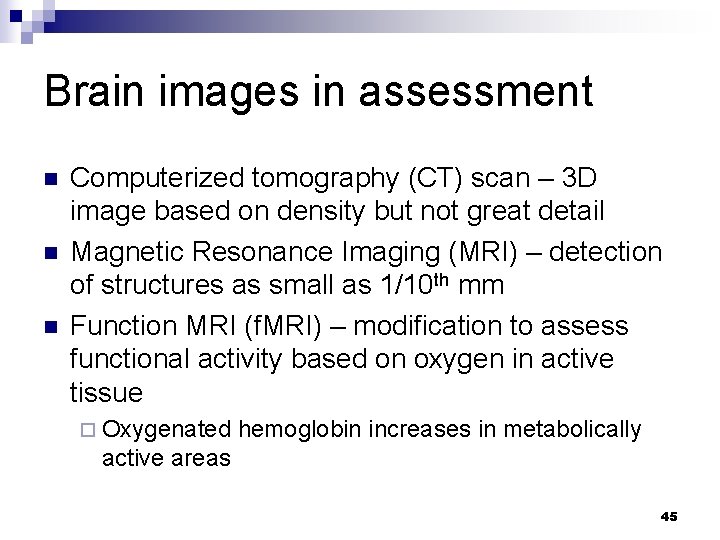
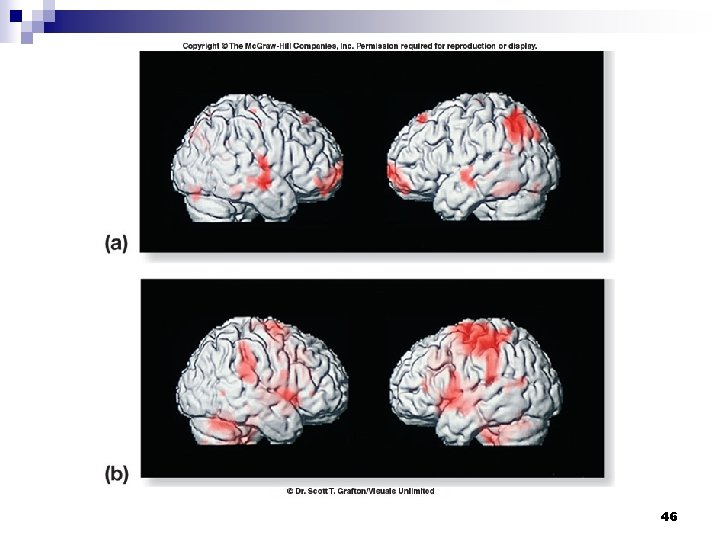
Brain images in assessment n n n Computerized tomography (CT) scan – 3 D image based on density but not great detail Magnetic Resonance Imaging (MRI) – detection of structures as small as 1/10 th mm Function MRI (f. MRI) – modification to assess functional activity based on oxygen in active tissue ¨ Oxygenated hemoglobin increases in metabolically active areas 45
46
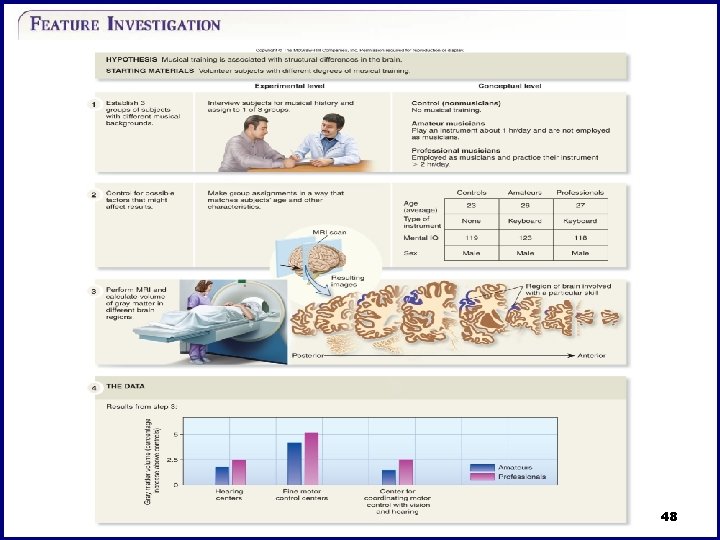
Gaser and Schlaug Showed That the Sizes of Certain Brain Structures Differ Between Musicians and Nonmusicians n n n Used MRI to examine sizes of brain structures in professional musicians, amateur musicians, and nonmusicians Brain areas involved in hearing, moving the fingers, and coordinating movements with vision and hearing were larger in professional musicians than in amateur musicians, and larger in amateurs than in nonmusicians Have not determined underlying reason(s) for increased brain size ¨ People with increased brain size in these areas may be more likely to become musicians or musical training may cause these areas to enlarge 47
48
Impact on public health n Meningitis ¨ Viral or bacterial infection of meninges ¨ Increased pressure effects range from severe headaches to death ¨ Bacterial infection can be treated with antibiotics ¨ Viral form less serious and short lasting ¨ Vaccine has reduced cases but still dangerous and prevalent disease (especially close quarters like college dorms) 49
n Alzheimer’s disease (AD) ¨ Leading worldwide cause of dementia ¨ Characterized by memory loss and intellectual and emotional function ¨ Definitive diagnosis can only be made after death ¨ 2 noticeable changes – senile plaques and neurofibrillary tangles ¨ Not clear how changes influence function ¨ Genetics plays a role but not the only possible cause ¨ Impact on public health enormous – especially as baby boomers age 50
51