
99 Preparation of expandable graphite and flameretardant properties
弘光科技大學 ( 學院) 99學年度學生專題研究競賽 Preparation of expandable graphite and flame-retardant properties of its halogen-free flame-retardant HDPE composites Tai-Ying Liu Department of Safety, Health and Environmental Engineering, Hung Kuang University 1

Outline Introduction Objectives Experimental Method Results and Discussion Conclusions Acknowledgements 2

Introduction 3
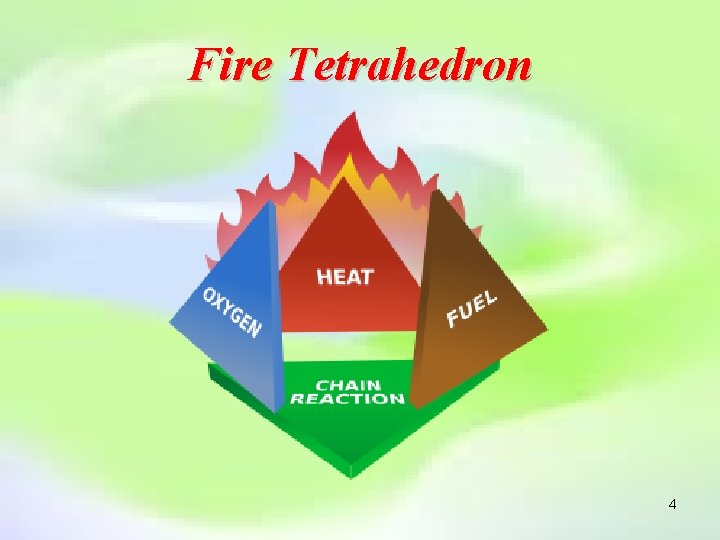
Fire Tetrahedron 4
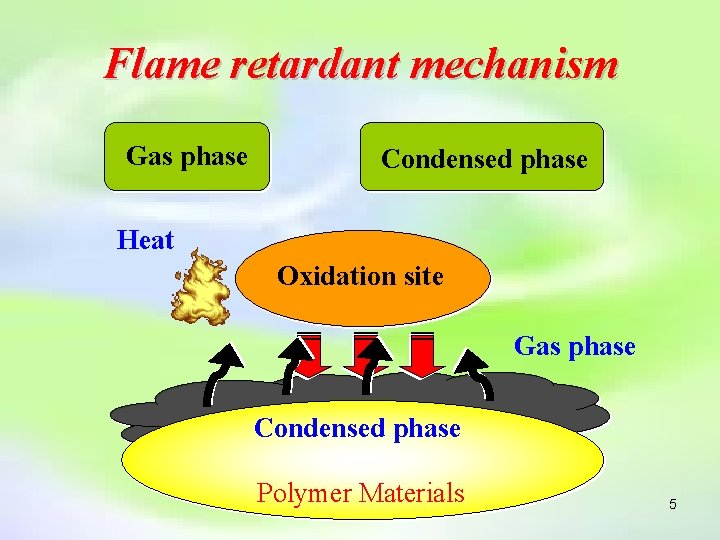
Flame retardant mechanism Gas phase Condensed phase Heat Oxidation site Gas phase Condensed phase Polymer Materials 5
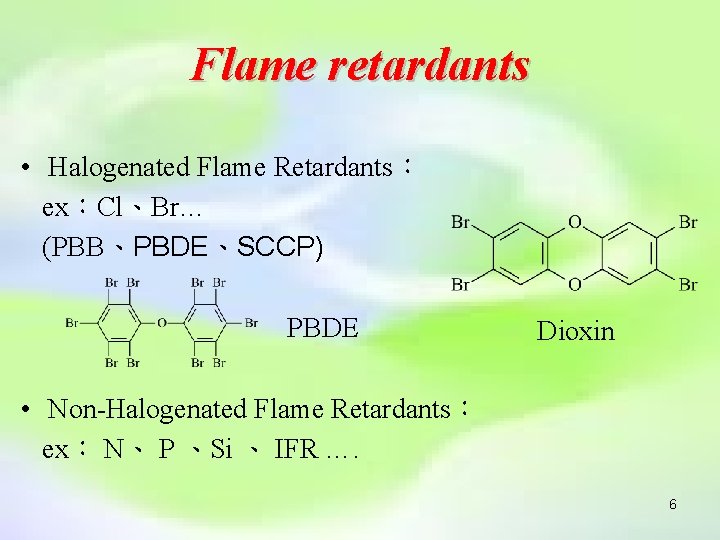
Flame retardants • Halogenated Flame Retardants: ex:Cl、Br… (PBB、PBDE、SCCP) PBDE Dioxin • Non-Halogenated Flame Retardants: ex: N、 P 、Si 、 IFR …. 6
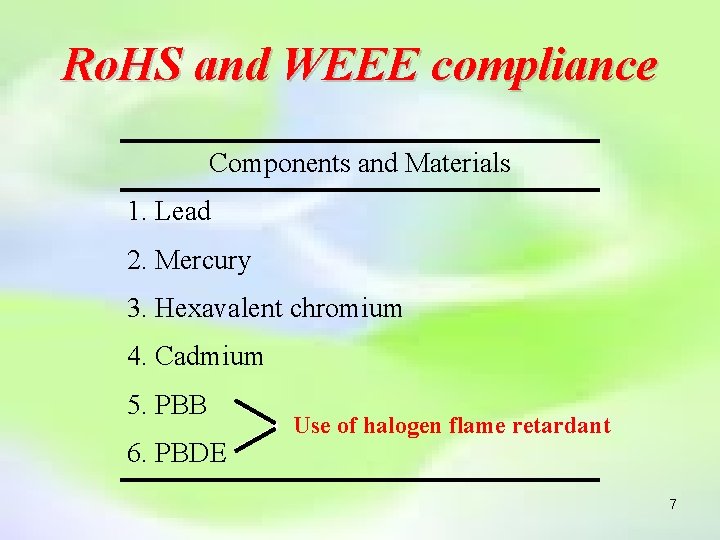
Ro. HS and WEEE compliance Components and Materials 1. Lead 2. Mercury 3. Hexavalent chromium 4. Cadmium 5. PBB 6. PBDE Use of halogen flame retardant 7
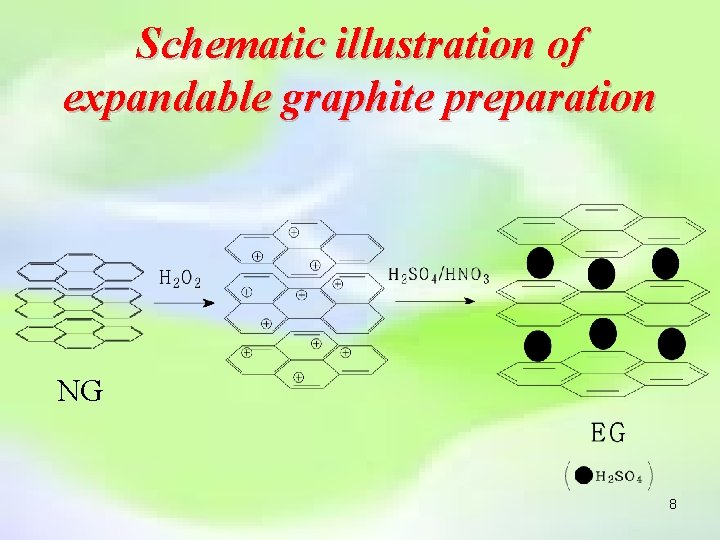
Schematic illustration of expandable graphite preparation NG 8
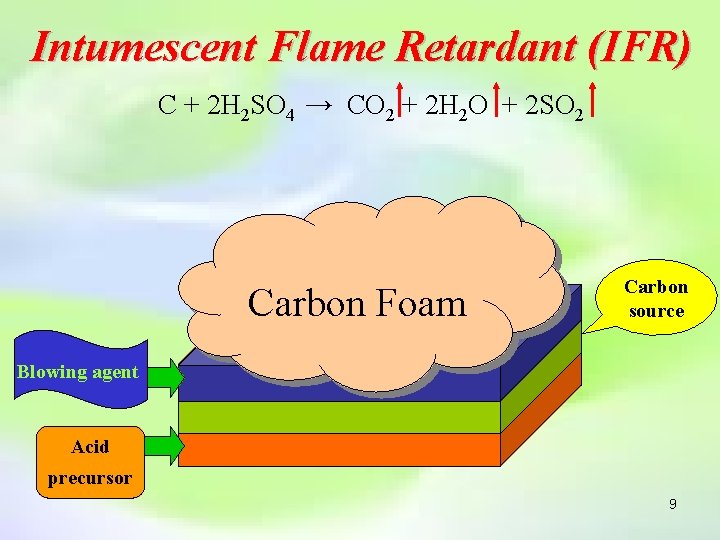
Intumescent Flame Retardant (IFR) C + 2 H 2 SO 4 → CO 2 + 2 H 2 O + 2 SO 2 Carbon Foam Carbon source Blowing agent Acid HDPE/EG precursor 9
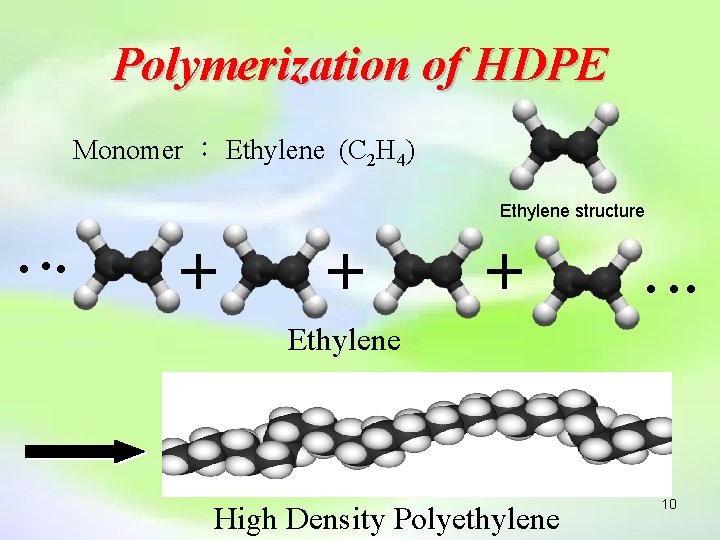
Polymerization of HDPE Monomer : Ethylene (C 2 H 4) Ethylene structure . . . + + + . . . Ethylene High Density Polyethylene 10

Objectives 11
Objectives • In this study, the H 2 O 2 -hydrothermal method was used to prepare EG and study its flame retardant performance of corresponding composites. 12

Experimental Method 13
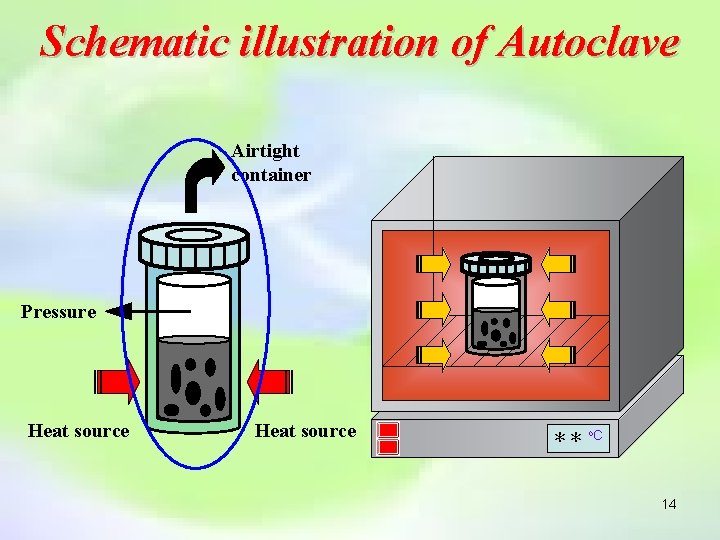
Schematic illustration of Autoclave Airtight container Pressure Heat source ** o. C 14
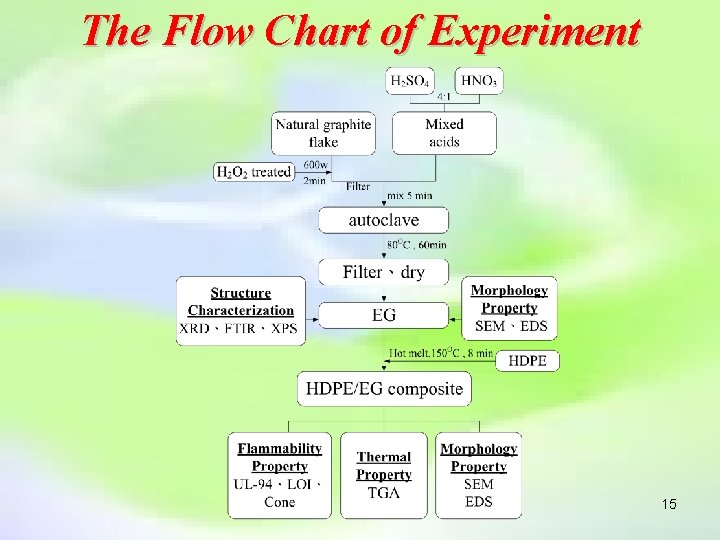
The Flow Chart of Experiment 15

Results and Discussion 16
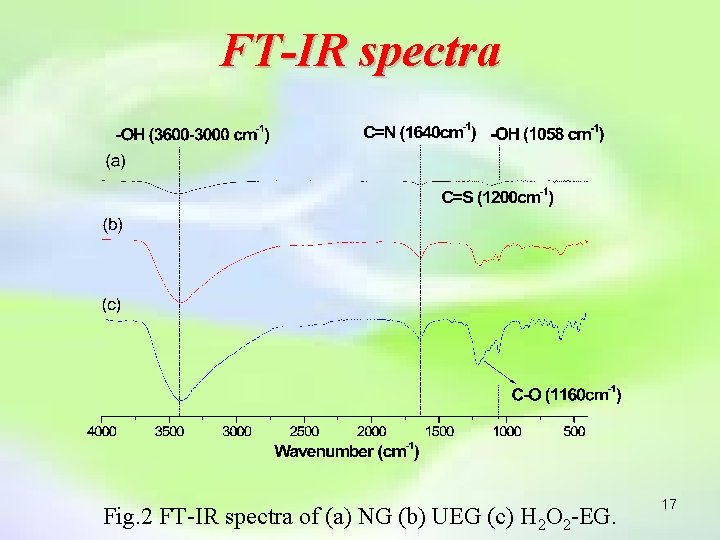
FT-IR spectra Fig. 2 FT-IR spectra of (a) NG (b) UEG (c) H 2 O 2 -EG. 17
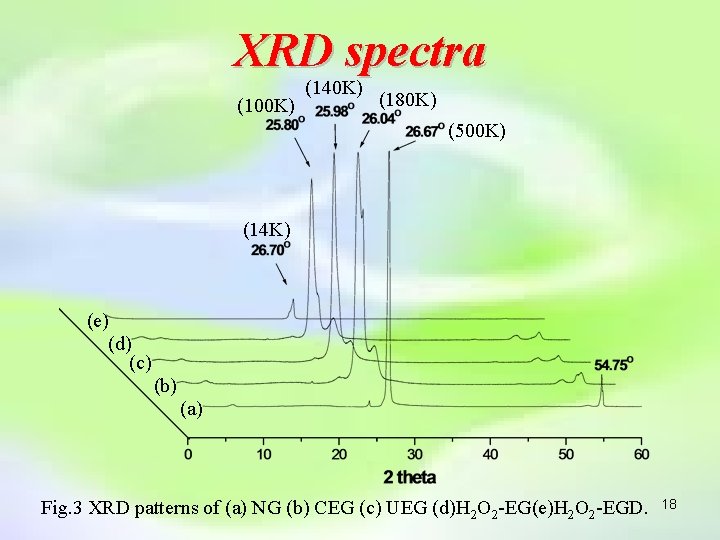
XRD spectra (100 K) (140 K) (180 K) (500 K) (14 K) (e) (d) (c) (b) (a) Fig. 3 XRD patterns of (a) NG (b) CEG (c) UEG (d)H 2 O 2 -EG(e)H 2 O 2 -EGD. 18
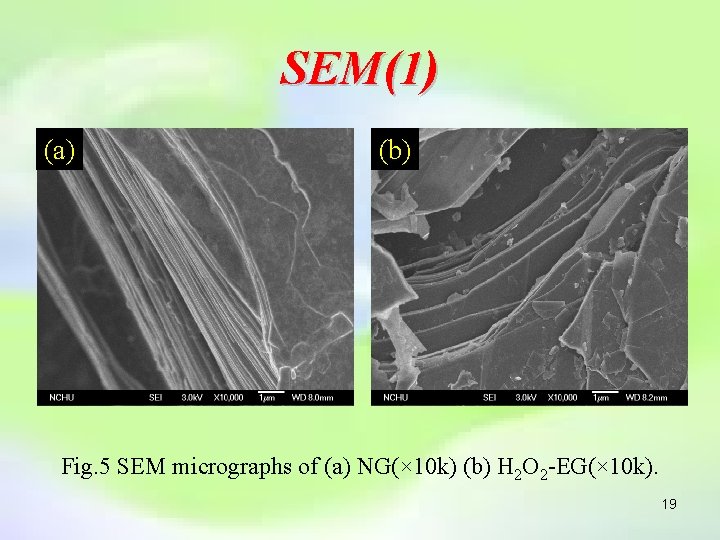
SEM(1) (a) (b) Fig. 5 SEM micrographs of (a) NG(× 10 k) (b) H 2 O 2 -EG(× 10 k). 19
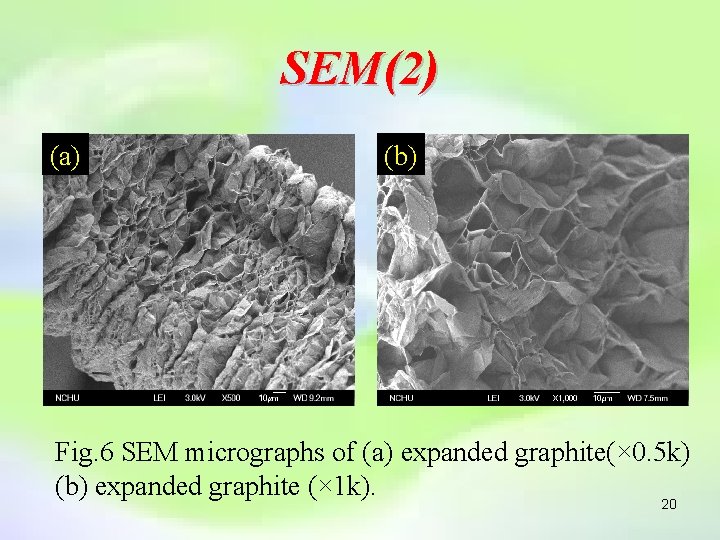
SEM(2) (a) (b) Fig. 6 SEM micrographs of (a) expanded graphite(× 0. 5 k) (b) expanded graphite (× 1 k). 20
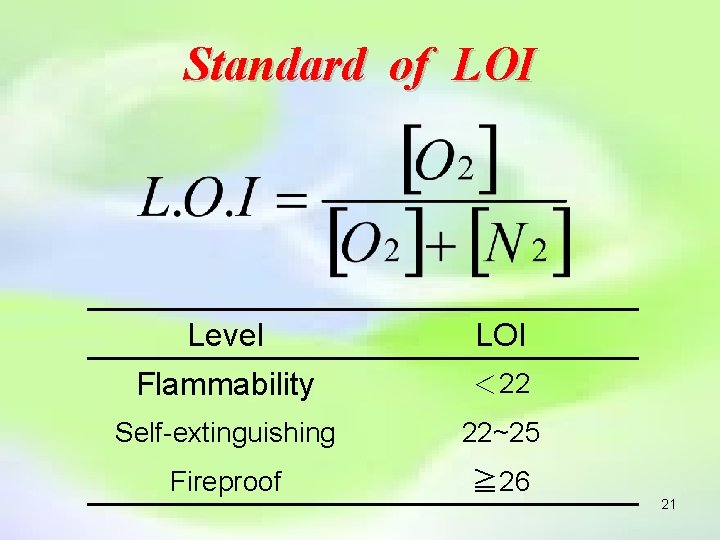
Standard of LOI Level LOI Flammability < 22 Self-extinguishing 22~25 Fireproof ≧ 26 21
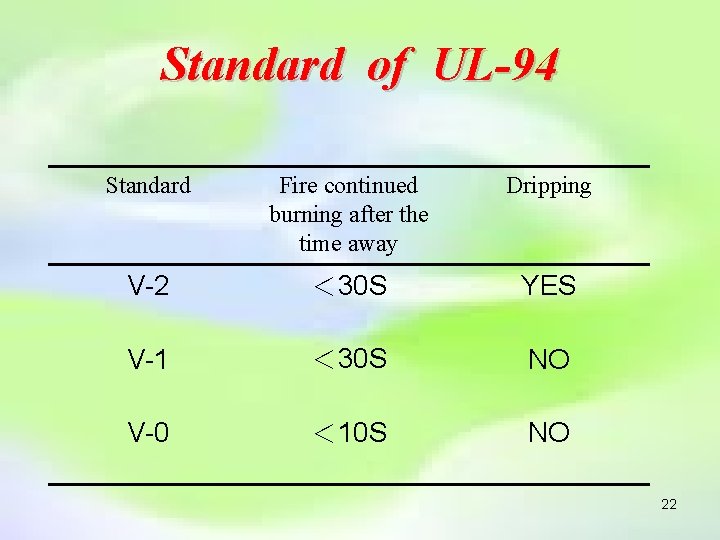
Standard of UL-94 Standard Fire continued burning after the time away Dripping V-2 < 30 S YES V-1 < 30 S NO V-0 < 10 S NO 22
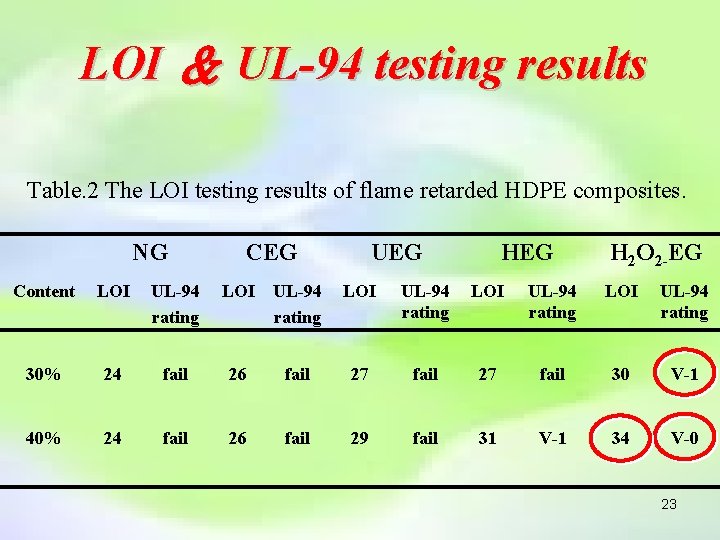
LOI & UL-94 testing results Table. 2 The LOI testing results of flame retarded HDPE composites. NG CEG UEG H 2 O 2 -EG Content LOI UL-94 rating LOI UL-94 rating 30% 24 fail 26 fail 27 fail 30 V-1 40% 24 fail 26 fail 29 fail 31 V-1 34 V-0 23
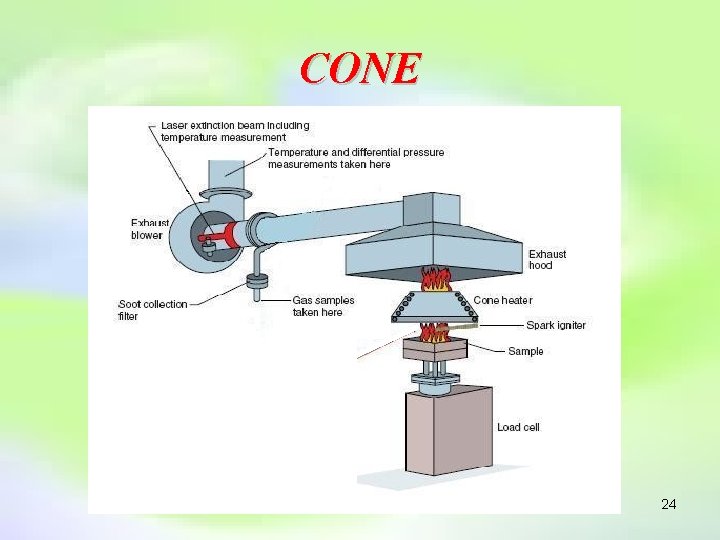
CONE 24
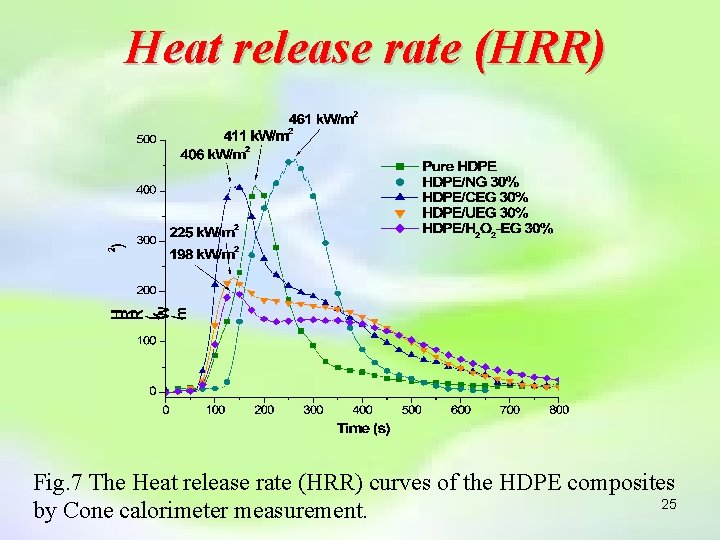
Heat release rate (HRR) Fig. 7 The Heat release rate (HRR) curves of the HDPE composites 25 by Cone calorimeter measurement.
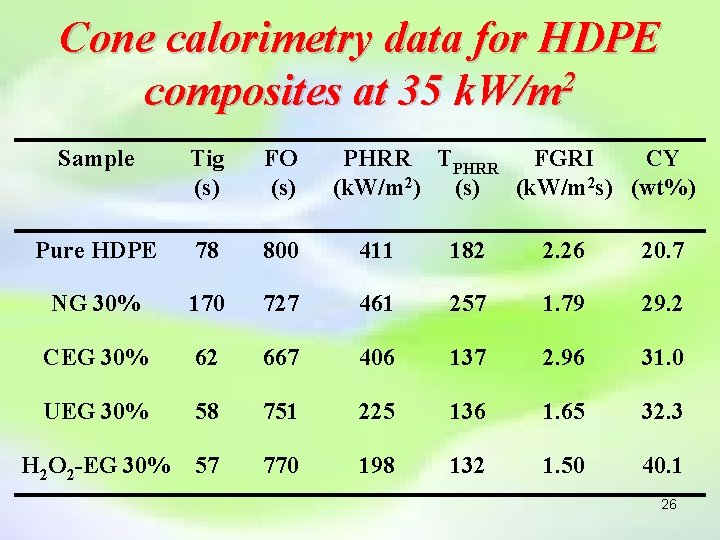
Cone calorimetry data for HDPE 2 composites at 35 k. W/m Sample Tig (s) FO (s) PHRR TPHRR FGRI CY (k. W/m 2) (s) (k. W/m 2 s) (wt%) Pure HDPE 78 800 411 182 2. 26 20. 7 NG 30% 170 727 461 257 1. 79 29. 2 CEG 30% 62 667 406 137 2. 96 31. 0 UEG 30% 58 751 225 136 1. 65 32. 3 H 2 O 2 -EG 30% 57 770 198 132 1. 50 40. 1 26

Conclusions 27
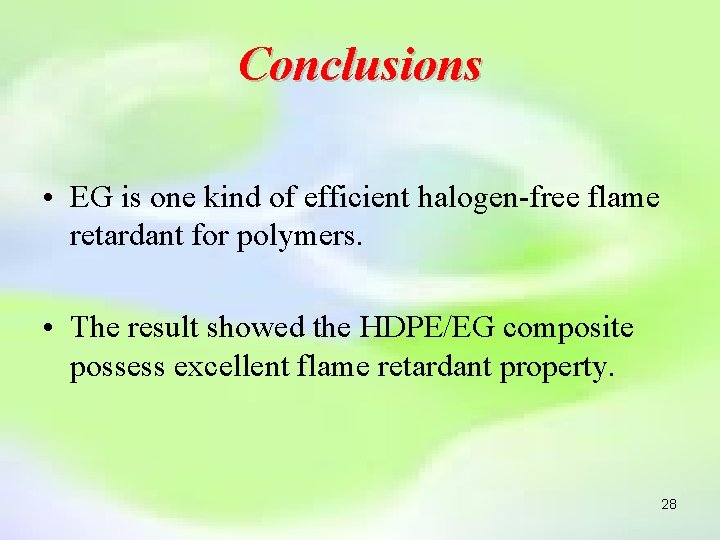
Conclusions • EG is one kind of efficient halogen-free flame retardant for polymers. • The result showed the HDPE/EG composite possess excellent flame retardant property. 28
Acknowledgement • Kuang-Chung Tsai • Department of Safety, Health and Environmental Engineering • National Kaohsiung First University • Chia-Hsum Chen , Hsu-Chiang Kuan and Chen-Feng Kuan • Department of Material Science and Engineering • Far East University 29

Thanks for your attention 30
- Slides: 30