
9 The Military Fronts of World War II
- Slides: 24
9. The Military Fronts of World War II Mr. Winchell APUSH 19 -20 Period 7
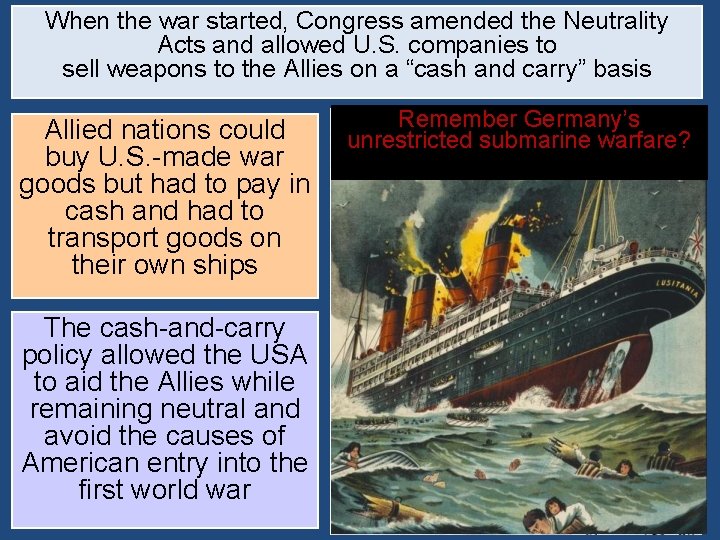
When the war started, Congress amended the Neutrality Acts and allowed U. S. companies to sell weapons to the Allies on a “cash and carry” basis Allied nations could buy U. S. -made war goods but had to pay in cash and had to transport goods on their own ships The cash-and-carry policy allowed the USA to aid the Allies while remaining neutral and avoid the causes of American entry into the first world war Remember Germany’s unrestricted submarine warfare?
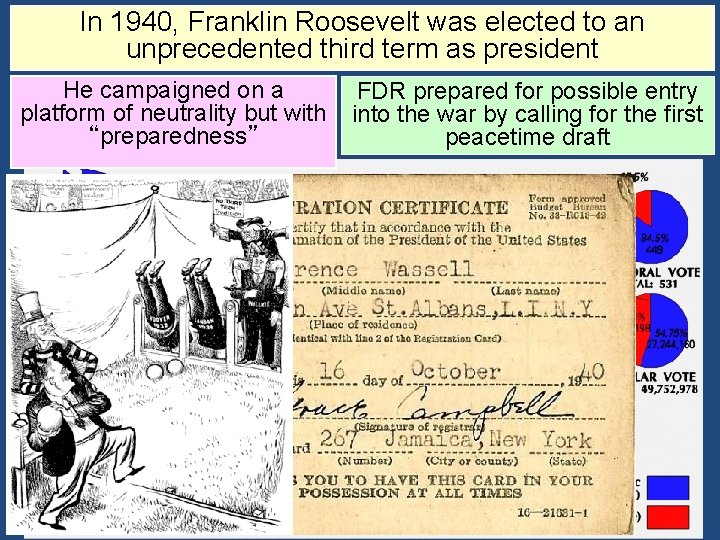
In 1940, Franklin Roosevelt was elected to an unprecedented third term as president He campaigned on a platform of neutrality but with “preparedness” FDR prepared for possible entry into the war by calling for the first peacetime draft
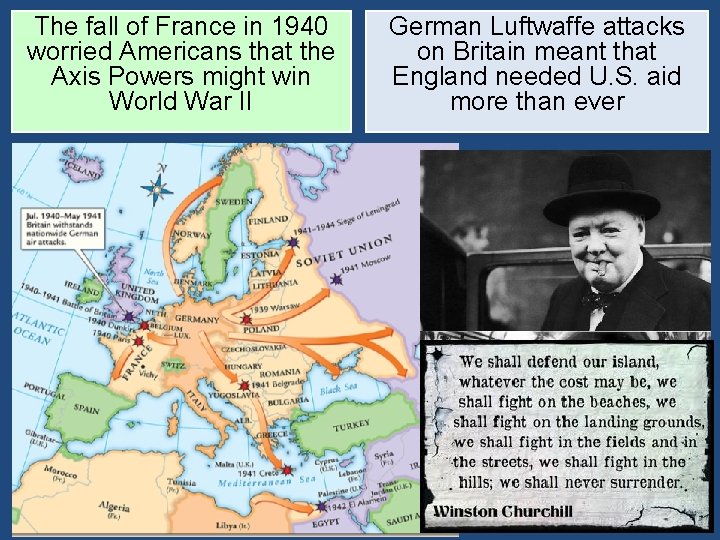
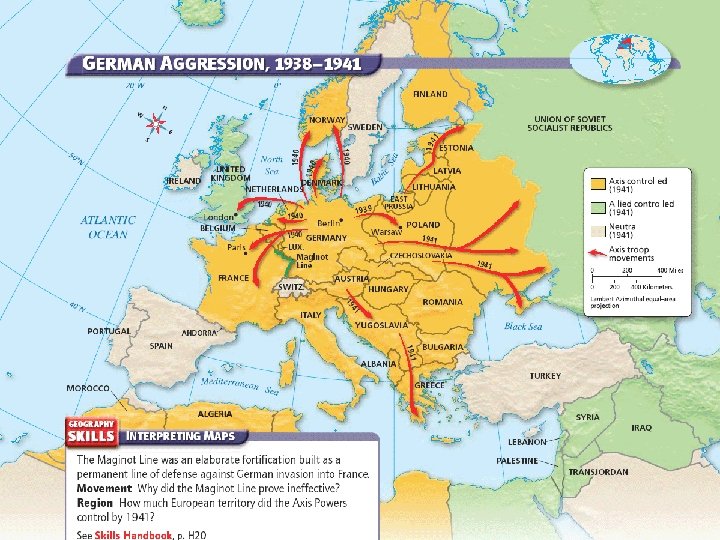
The fall of France in 1940 worried Americans that the Axis Powers might win World War II German Luftwaffe attacks on Britain meant that England needed U. S. aid more than ever
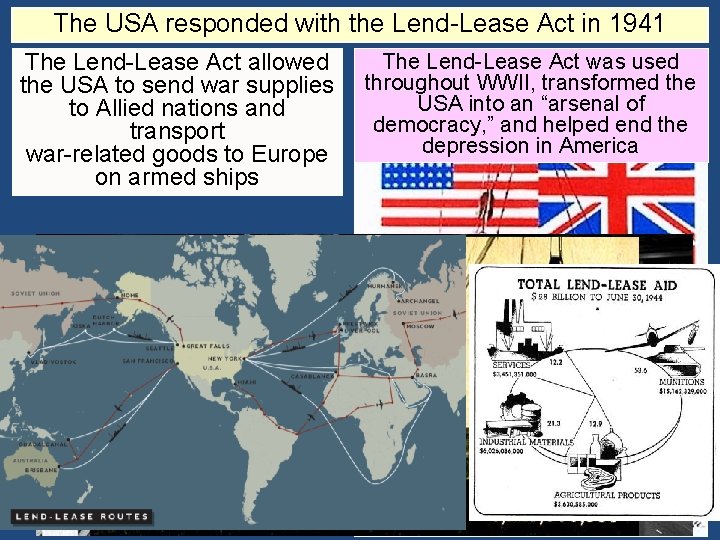
The USA responded with the Lend-Lease Act in 1941 The Lend-Lease Act allowed the USA to send war supplies to Allied nations and transport war-related goods to Europe on armed ships The Lend-Lease Act was used throughout WWII, transformed the USA into an “arsenal of democracy, ” and helped end the depression in America
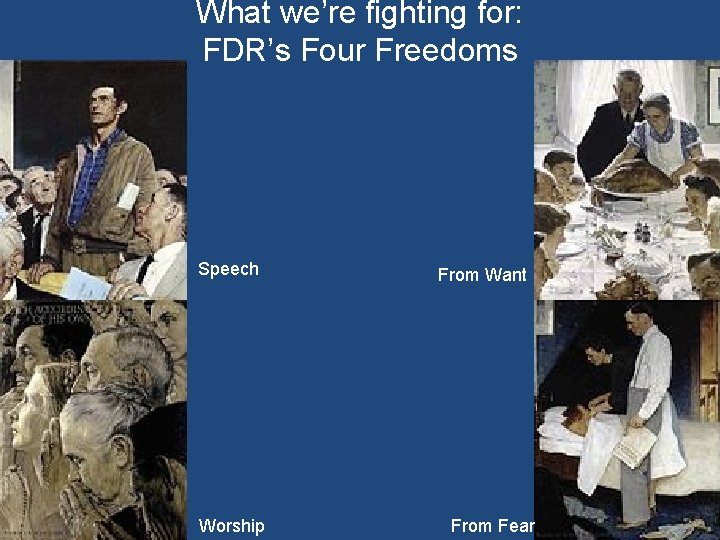
What we’re fighting for: FDR’s Four Freedoms Speech Worship From Want From Fear
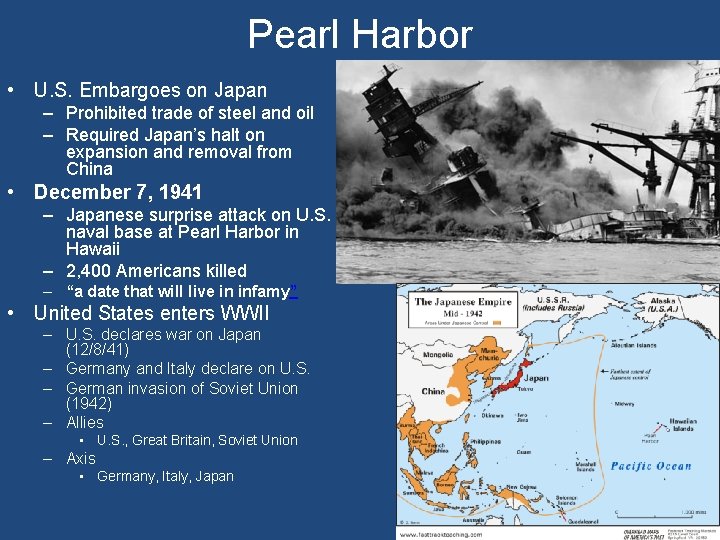
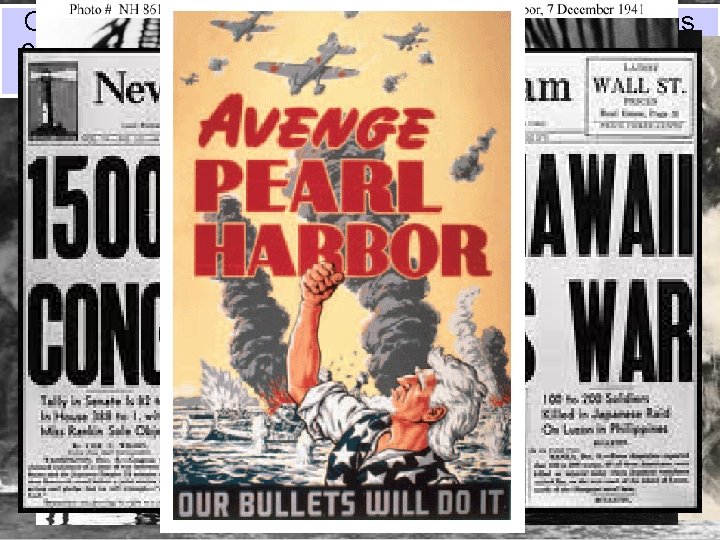
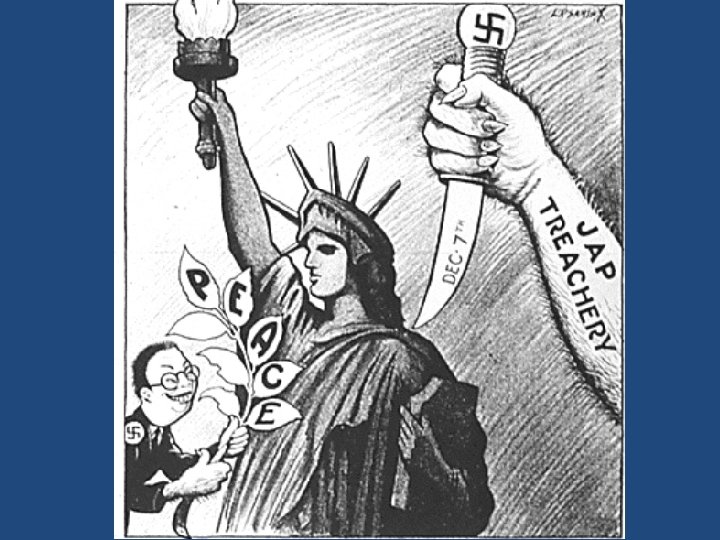
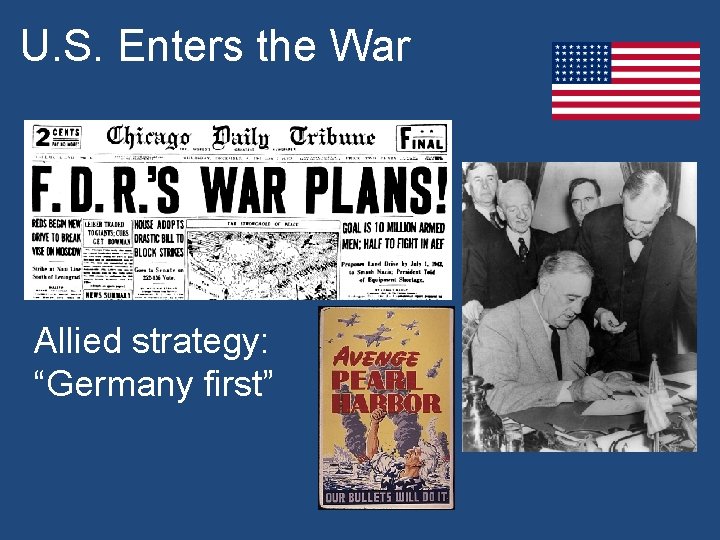
Pearl Harbor • U. S. Embargoes on Japan – Prohibited trade of steel and oil – Required Japan’s halt on expansion and removal from China • December 7, 1941 – Japanese surprise attack on U. S. naval base at Pearl Harbor in Hawaii – 2, 400 Americans killed – “a date that will live in infamy” • United States enters WWII – U. S. declares war on Japan (12/8/41) – Germany and Italy declare on U. S. – German invasion of Soviet Union (1942) – Allies • U. S. , Great Britain, Soviet Union – Axis • Germany, Italy, Japan
On Dec 7, 1941, the U. S. naval fleet in the Pacific was crippled by the attack; 8 battleships were sunk & 2, 400 Americans were killed
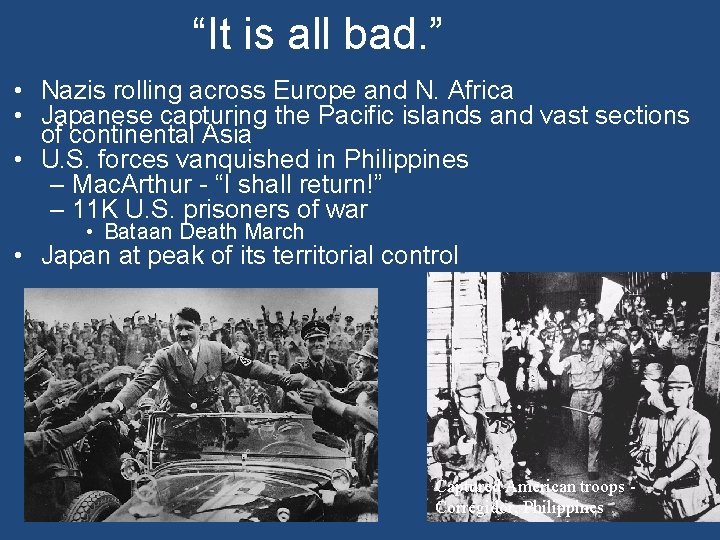
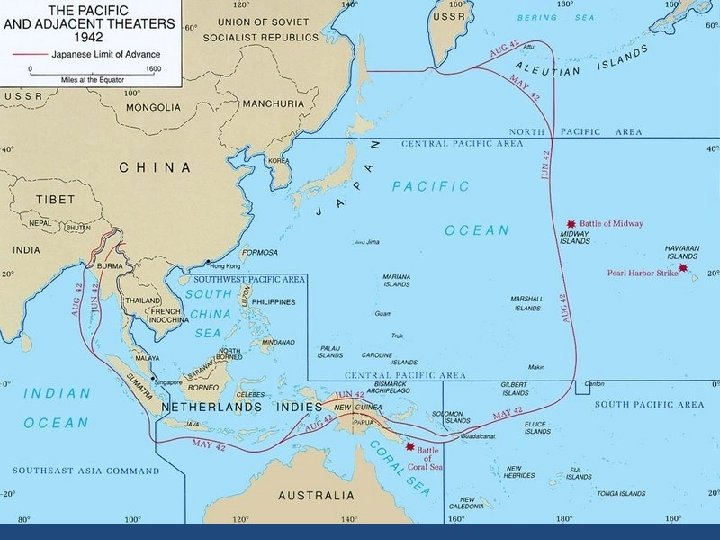
“It is all bad. ” • Nazis rolling across Europe and N. Africa • Japanese capturing the Pacific islands and vast sections of continental Asia • U. S. forces vanquished in Philippines – Mac. Arthur - “I shall return!” – 11 K U. S. prisoners of war • Bataan Death March • Japan at peak of its territorial control Captured American troops Corregidor, Philippines
U. S. Enters the War Allied strategy: “Germany first”
Gloomy Prospects for the Allied Powers • By the end of 1942, the Allies faced defeat. – The chain of spectacular victories disguised fatal weaknesses within the Axis alliance: • Japan and Germany fought separate wars, each on two fronts. They never coordinated strategies. – The early defeats also obscured the Allies’ strengths: • The manpower of the Soviet Union and the productive capacity of the United States.
Invasion of the Soviet Union • It was then that Hitler made his pivotal mistake. He invaded the Soviet Union. – The obliteration of Bolshevism was a key element of Hitler’s ideology; however, it was a gigantic military mistake. • On June 22, 1941, Hitler launched Operation Barbarossa, consisting of an attack army of 4 million men spread out along a 2, 000 -mile front in three massive offensives. • The German army quickly advanced, but at a terrifying cost. For the next three years, 90 percent of German deaths would happen on the eastern front.
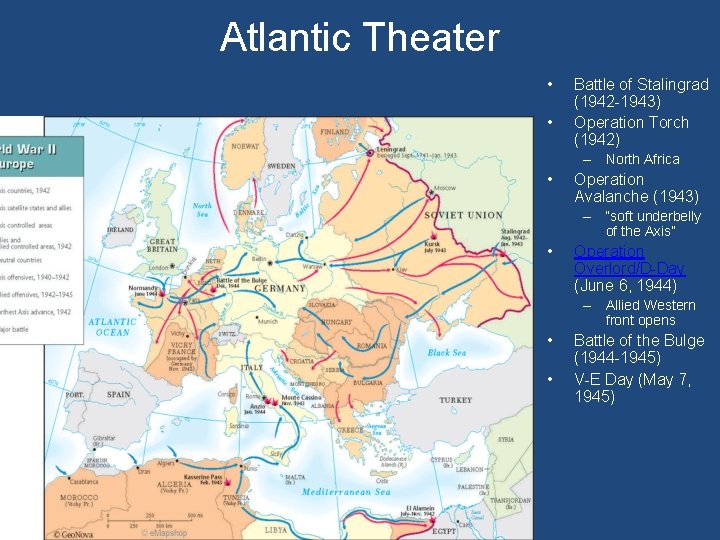
Atlantic Theater • • Battle of Stalingrad (1942 -1943) Operation Torch (1942) – North Africa • Operation Avalanche (1943) – “soft underbelly of the Axis” • Operation Overlord/D-Day (June 6, 1944) – Allied Western front opens • • Battle of the Bulge (1944 -1945) V-E Day (May 7, 1945)
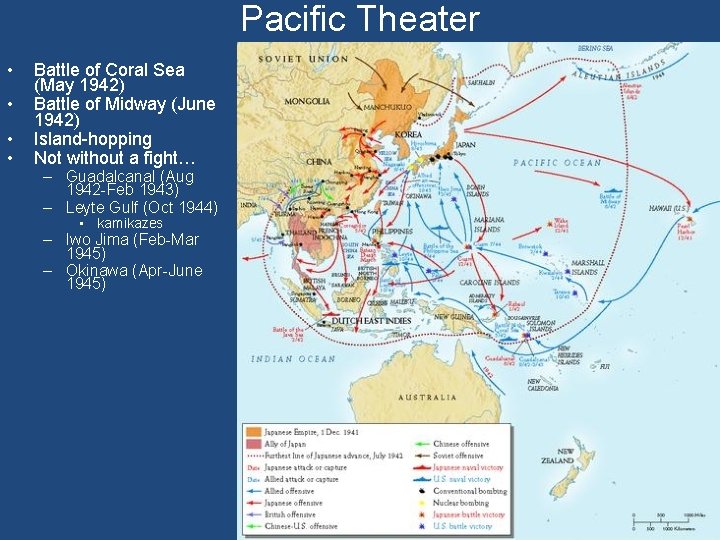
Pacific Theater • • Battle of Coral Sea (May 1942) Battle of Midway (June 1942) Island-hopping Not without a fight… – Guadalcanal (Aug 1942 -Feb 1943) – Leyte Gulf (Oct 1944) • kamikazes – Iwo Jima (Feb-Mar 1945) – Okinawa (Apr-June 1945)
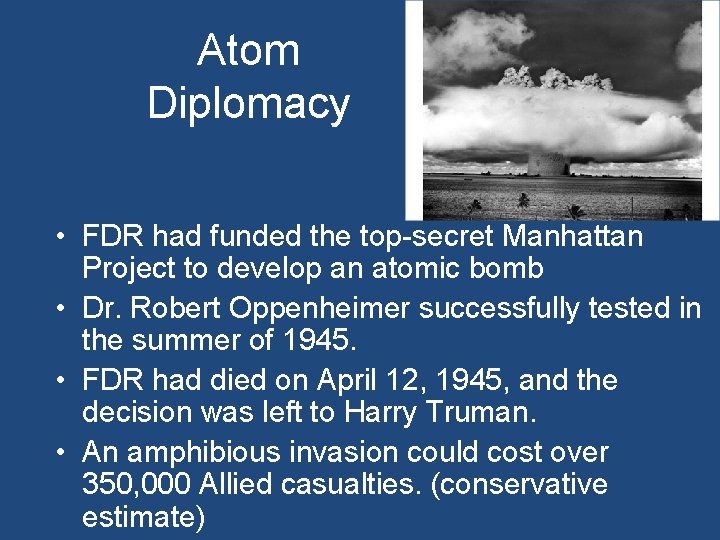
Atom Diplomacy • FDR had funded the top-secret Manhattan Project to develop an atomic bomb • Dr. Robert Oppenheimer successfully tested in the summer of 1945. • FDR had died on April 12, 1945, and the decision was left to Harry Truman. • An amphibious invasion could cost over 350, 000 Allied casualties. (conservative estimate)
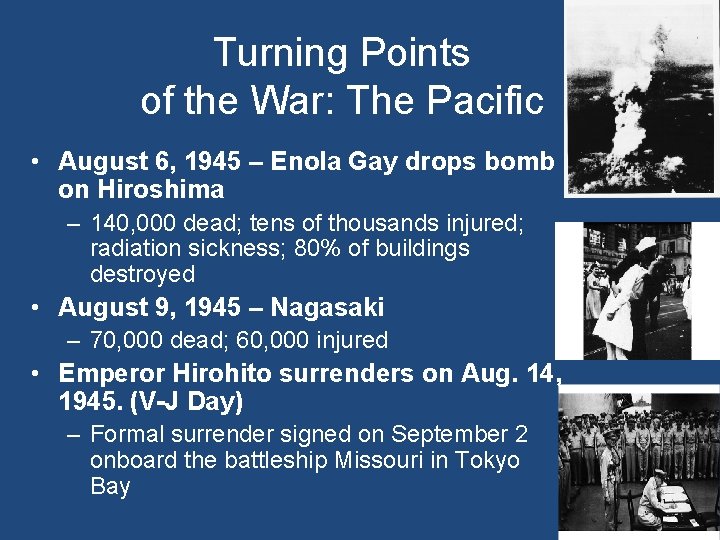
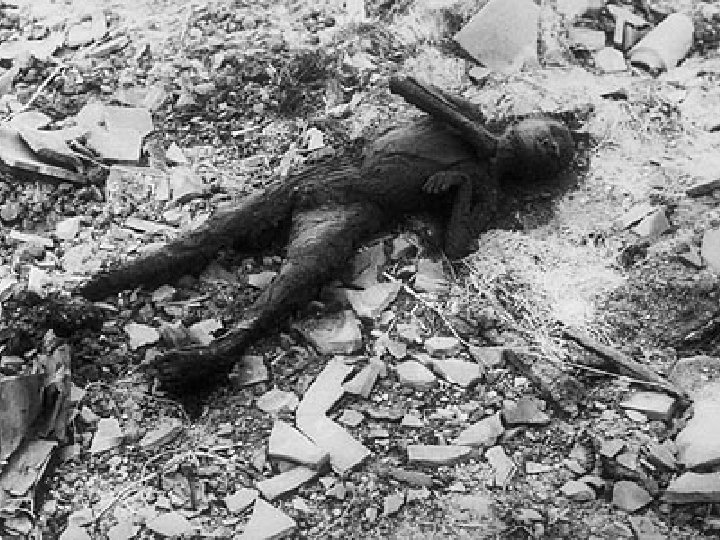
Turning Points of the War: The Pacific • August 6, 1945 – Enola Gay drops bomb on Hiroshima – 140, 000 dead; tens of thousands injured; radiation sickness; 80% of buildings destroyed • August 9, 1945 – Nagasaki – 70, 000 dead; 60, 000 injured • Emperor Hirohito surrenders on Aug. 14, 1945. (V-J Day) – Formal surrender signed on September 2 onboard the battleship Missouri in Tokyo Bay
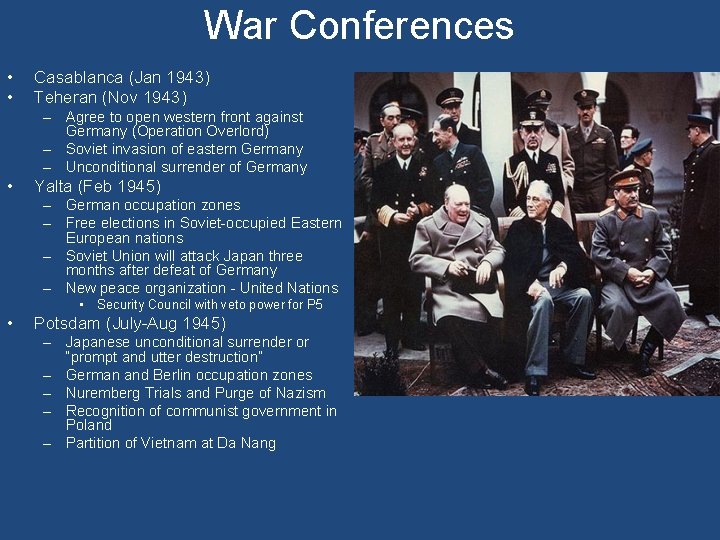
War Conferences • • Casablanca (Jan 1943) Teheran (Nov 1943) – Agree to open western front against Germany (Operation Overlord) – Soviet invasion of eastern Germany – Unconditional surrender of Germany • Yalta (Feb 1945) – German occupation zones – Free elections in Soviet-occupied Eastern European nations – Soviet Union will attack Japan three months after defeat of Germany – New peace organization - United Nations • Security Council with veto power for P 5 • Potsdam (July-Aug 1945) – Japanese unconditional surrender or “prompt and utter destruction” – German and Berlin occupation zones – Nuremberg Trials and Purge of Nazism – Recognition of communist government in Poland – Partition of Vietnam at Da Nang
Postwar Efforts at Peace • The United Nations – There was some hope when, in 1945, the United Nations was created; an organization to promote international stability – A General Assembly where representatives from all countries could debate international issues. – The Security Council had 5 permanent members – U. S. , Soviet Union, Britain, France, and China could veto any question of substance. There were also 6 elected members. – Key: the U. S. joined in contrast to League of Nations
Restoration of U. S. Prosperity • World War II ended the Great Depression. • Factories run at full capacity – Ford Motor Company – one bomber plane per hour • People save money (rationing) • Army bases in South provide economic boom (most bases in South b/c of climate) • The national debt grew to $260 billion (6 times its size on Dec. 7, 1941)