
9 5 Meiosis in Sexual Reproduction Haploid cells
- Slides: 14
9. 5 Meiosis in Sexual Reproduction
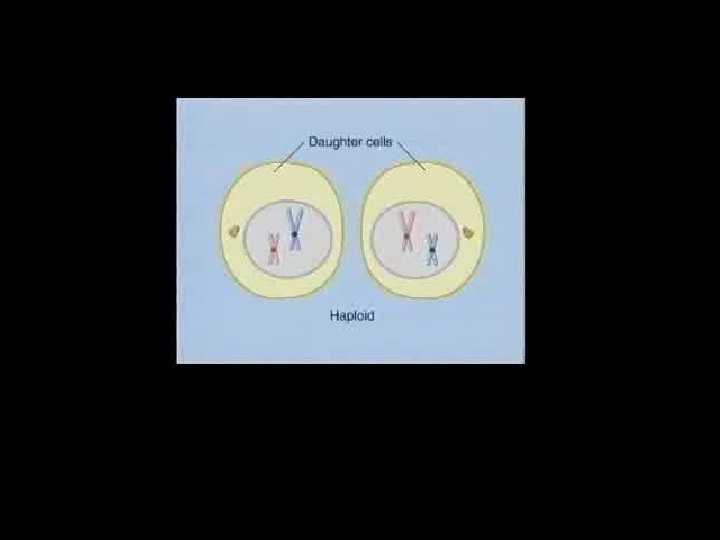
Haploid cells have only one set of chromosomes, abbreviated as “n” Diploid cells are those with two (di) sets = “ 2 n” Gametes = Haploid Sex Cells (sperm/egg)
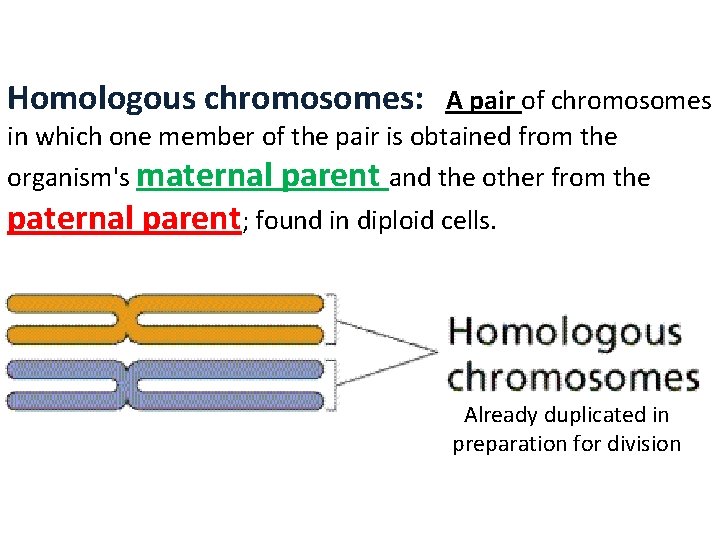
Homologous chromosomes: A pair of chromosomes in which one member of the pair is obtained from the organism's maternal parent and the other from the paternal parent; found in diploid cells. Already duplicated in preparation for division
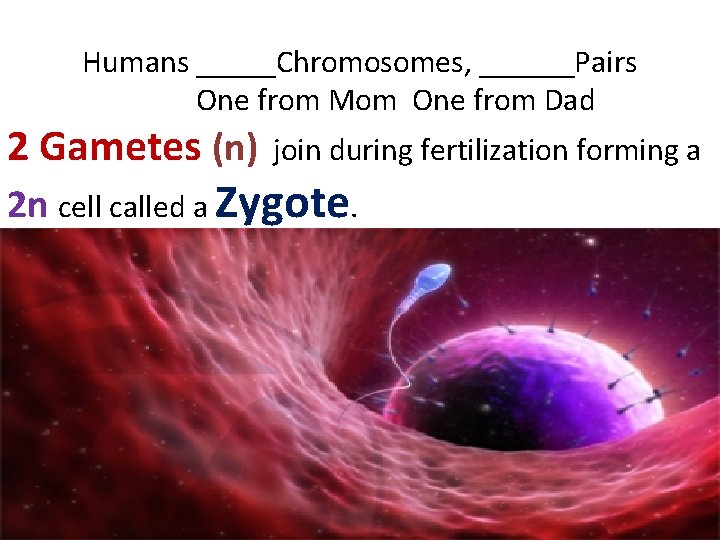
Humans _____Chromosomes, ______Pairs One from Mom One from Dad 2 Gametes (n) join during fertilization forming a 2 n cell called a Zygote.
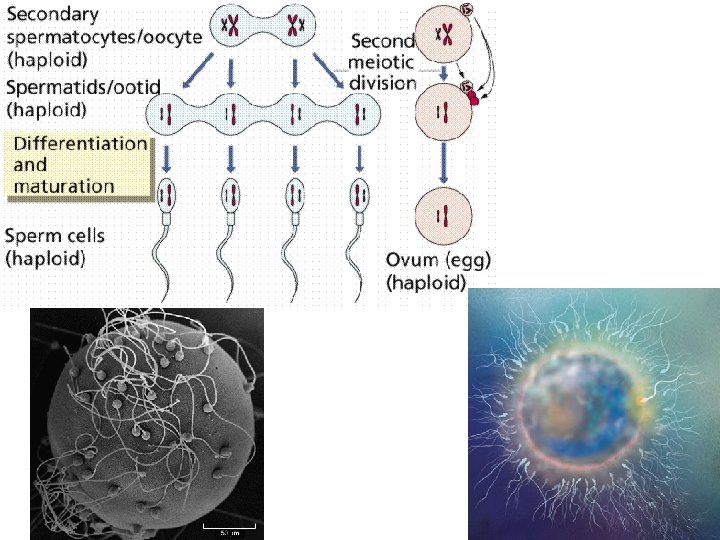
Mitosis starts with 1 2 n cell ends with 2 2 n cells genetically identical Meiosis starts with 1 2 n cell ends with 4 n cells genetically mixed
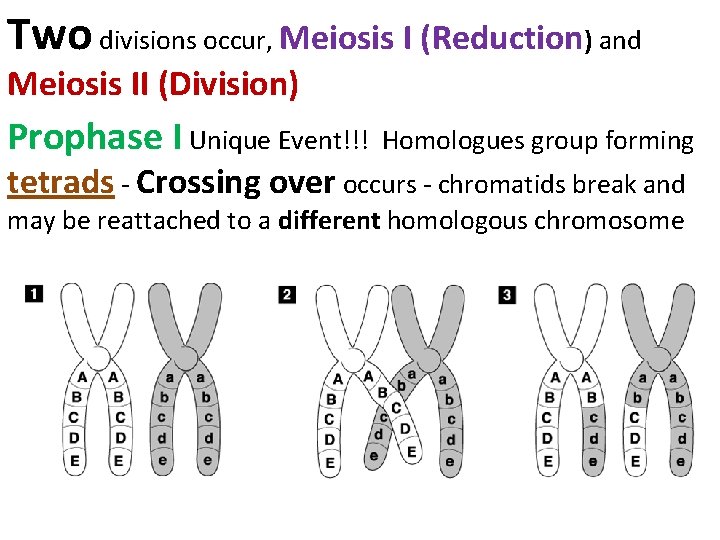
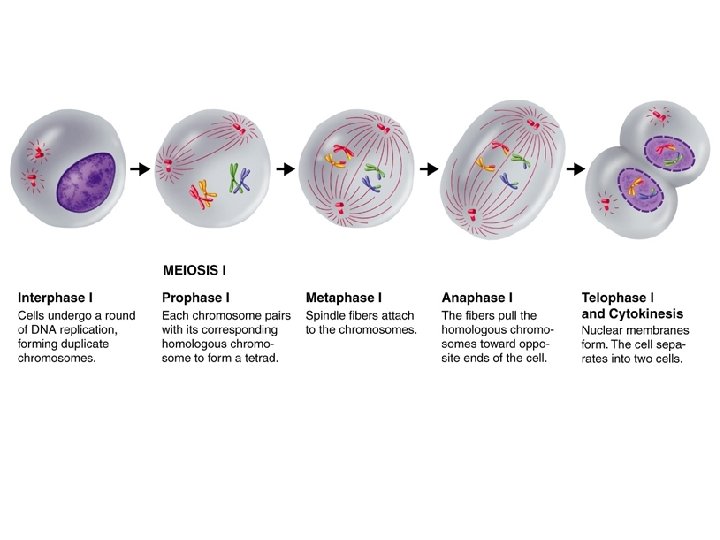
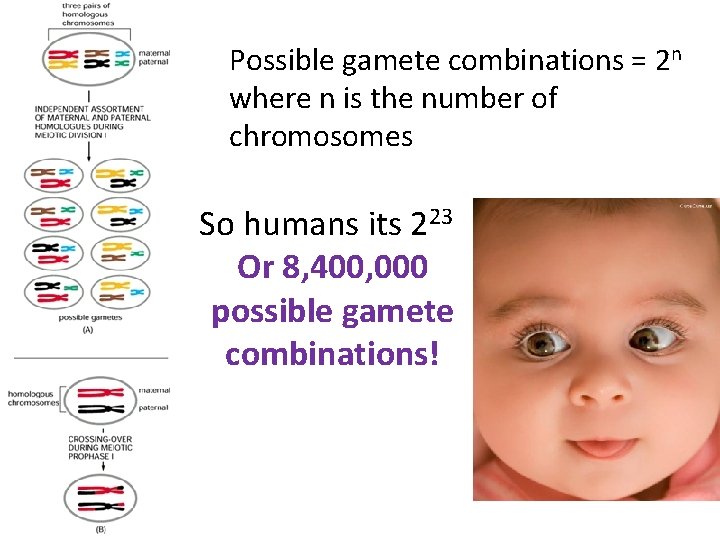
Two divisions occur, Meiosis I (Reduction) and Meiosis II (Division) Prophase I Unique Event!!! Homologues group forming tetrads - Crossing over occurs - chromatids break and may be reattached to a different homologous chromosome
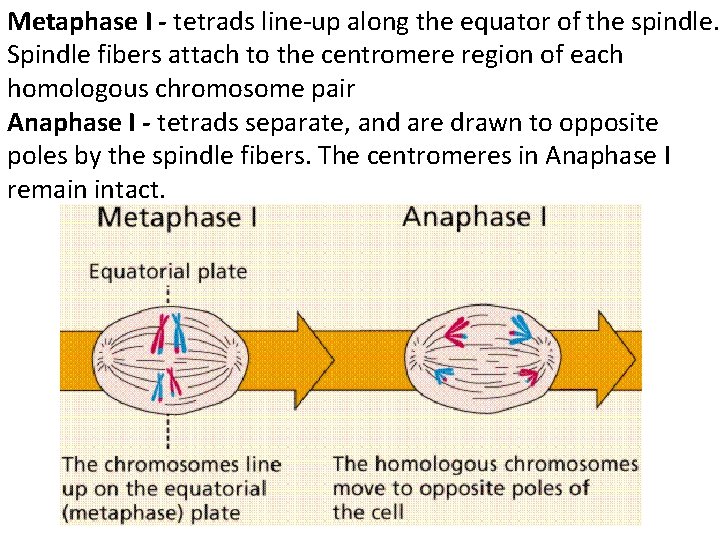
Metaphase I - tetrads line-up along the equator of the spindle. Spindle fibers attach to the centromere region of each homologous chromosome pair Anaphase I - tetrads separate, and are drawn to opposite poles by the spindle fibers. The centromeres in Anaphase I remain intact.
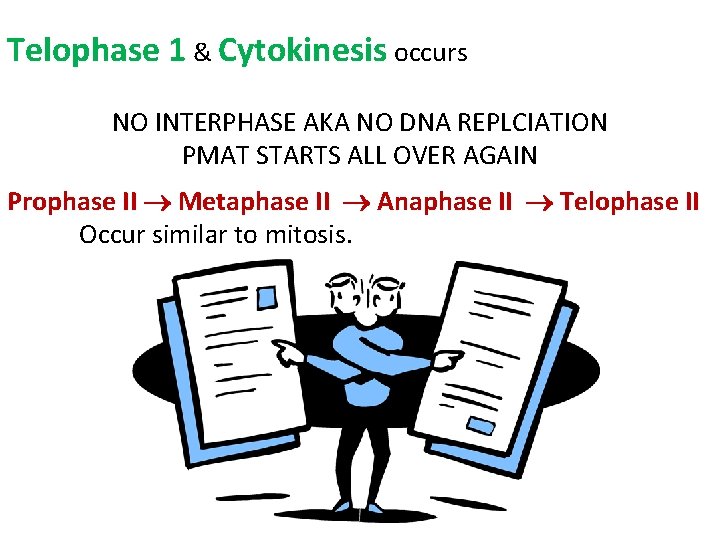
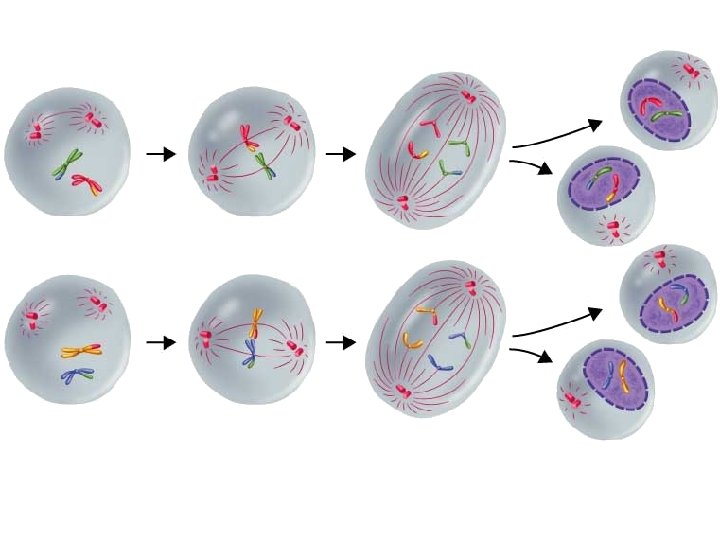
Telophase 1 & Cytokinesis occurs NO INTERPHASE AKA NO DNA REPLCIATION PMAT STARTS ALL OVER AGAIN Prophase II Metaphase II Anaphase II Telophase II Occur similar to mitosis.
Possible gamete combinations = 2 n where n is the number of chromosomes So humans its 223 Or 8, 400, 000 possible gamete combinations!