
9 3 Reproduction in Angiospermophytes PLANT SCIENCE Flower


- Slides: 17
9. 3 – Reproduction in Angiospermophytes PLANT SCIENCE
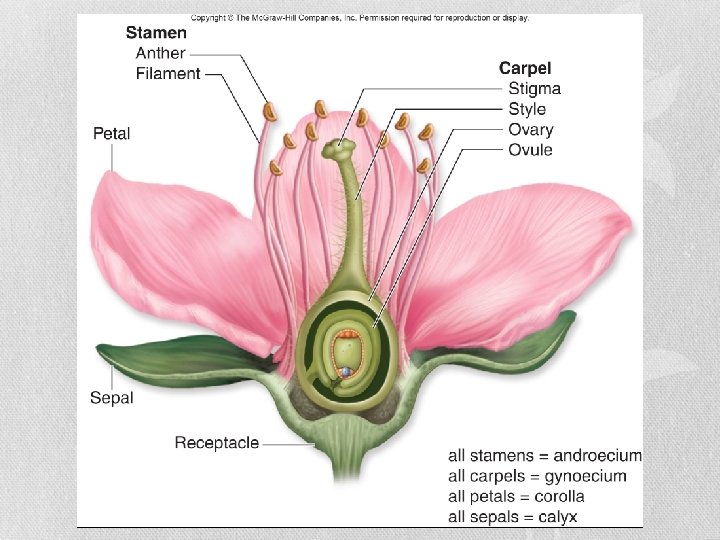
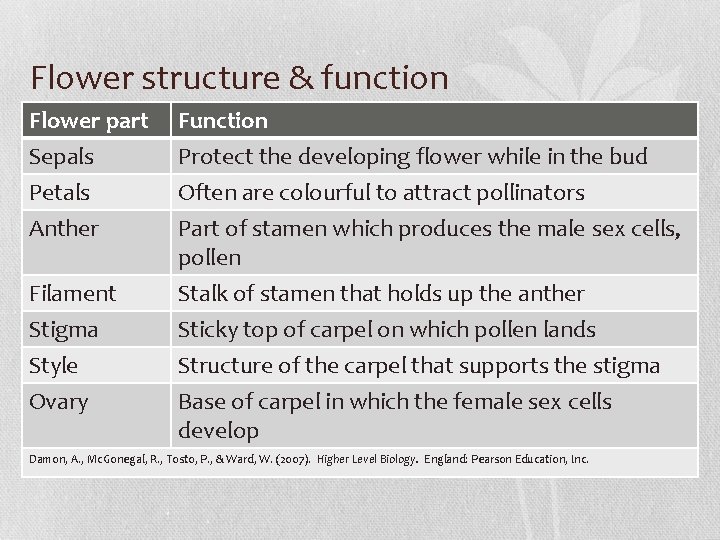
Flower structure & function Flower part Sepals Petals Anther Function Protect the developing flower while in the bud Often are colourful to attract pollinators Part of stamen which produces the male sex cells, pollen Filament Stigma Style Ovary Stalk of stamen that holds up the anther Sticky top of carpel on which pollen lands Structure of the carpel that supports the stigma Base of carpel in which the female sex cells develop Damon, A. , Mc. Gonegal, R. , Tosto, P. , & Ward, W. (2007). Higher Level Biology. England: Pearson Education, Inc.
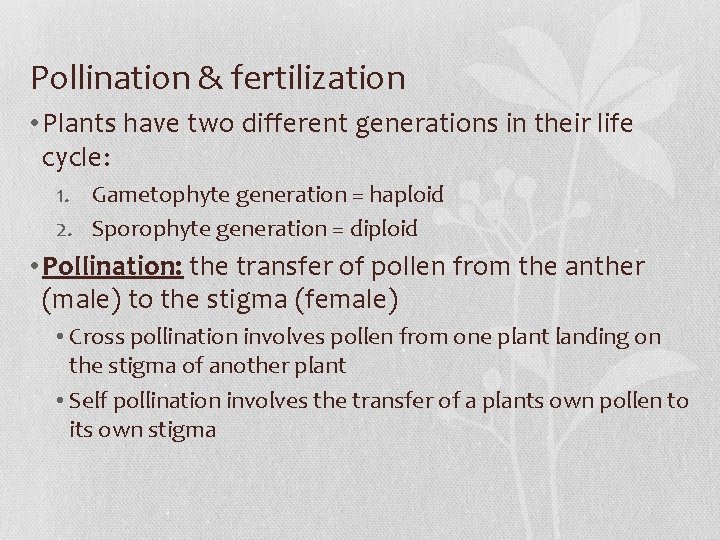
Pollination & fertilization • Plants have two different generations in their life cycle: 1. Gametophyte generation = haploid 2. Sporophyte generation = diploid • Pollination: the transfer of pollen from the anther (male) to the stigma (female) • Cross pollination involves pollen from one plant landing on the stigma of another plant • Self pollination involves the transfer of a plants own pollen to its own stigma
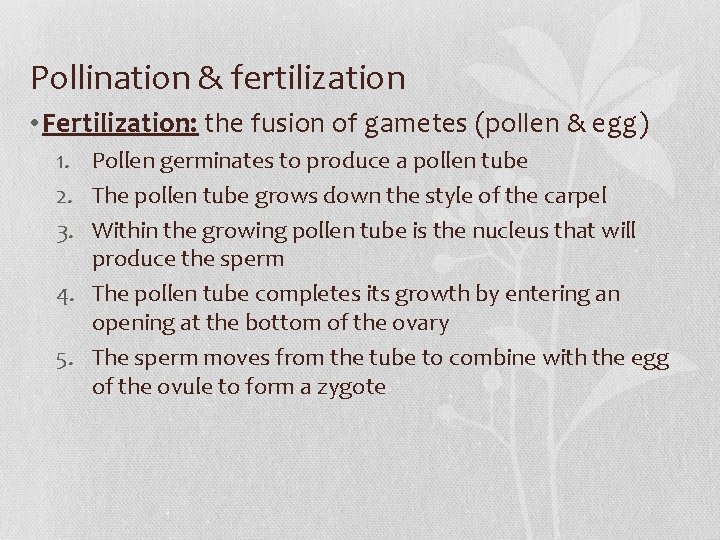
Pollination & fertilization • Fertilization: the fusion of gametes (pollen & egg) 1. Pollen germinates to produce a pollen tube 2. The pollen tube grows down the style of the carpel 3. Within the growing pollen tube is the nucleus that will produce the sperm 4. The pollen tube completes its growth by entering an opening at the bottom of the ovary 5. The sperm moves from the tube to combine with the egg of the ovule to form a zygote
Pollination & fertilization • Seed dispersal: the removal of seeds from the fruit, away from the parent • Methods include: • Wind • Parachutes (maple tree) • Carried by animals (burrs with hooks) • Edible fruit (digestive tract)
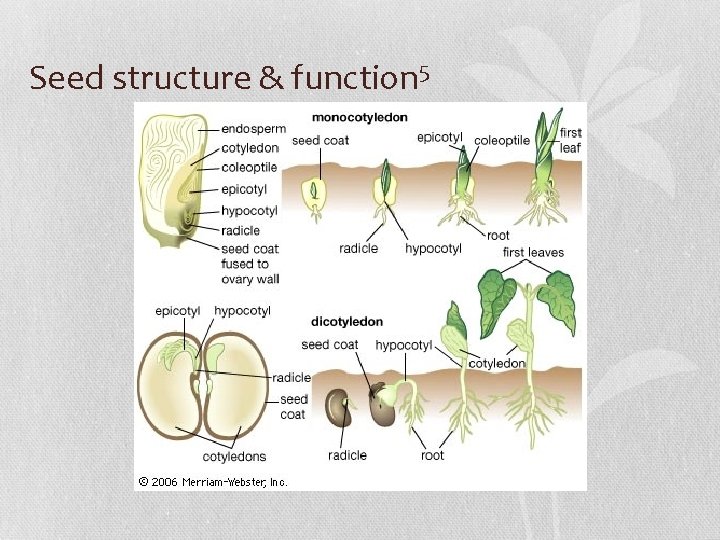
Seed structure & function 5
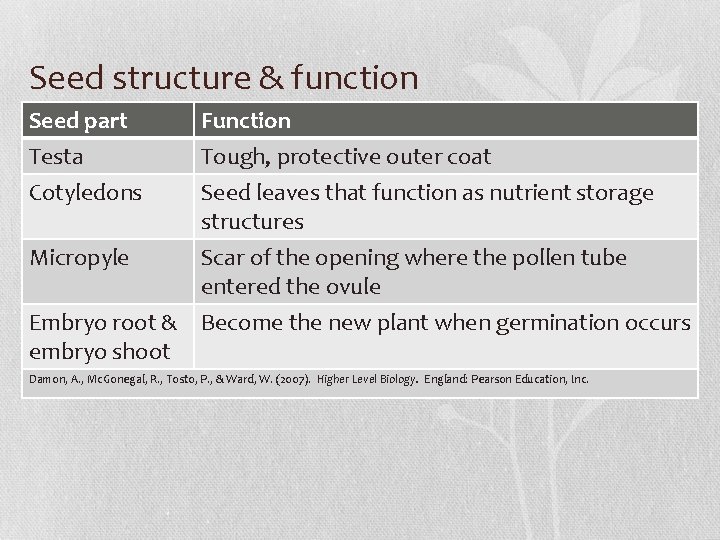
Seed structure & function Seed part Testa Cotyledons Function Tough, protective outer coat Seed leaves that function as nutrient storage structures Micropyle Scar of the opening where the pollen tube entered the ovule Embryo root & Become the new plant when germination occurs embryo shoot Damon, A. , Mc. Gonegal, R. , Tosto, P. , & Ward, W. (2007). Higher Level Biology. England: Pearson Education, Inc.
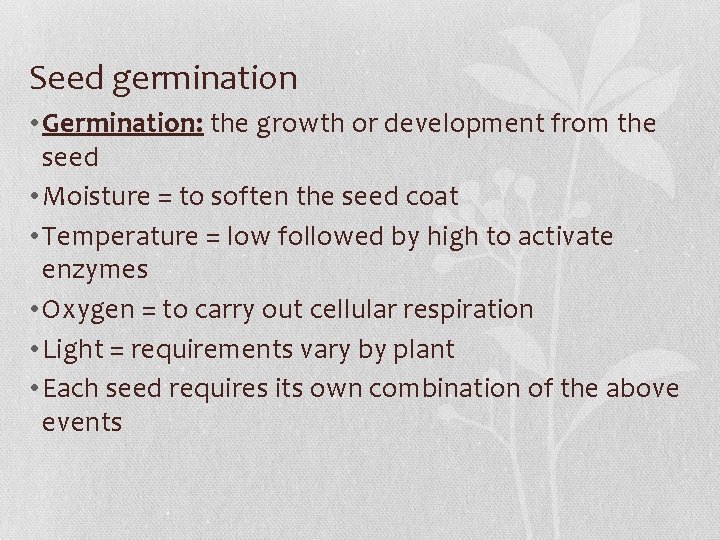
Seed germination • Germination: the growth or development from the seed • Moisture = to soften the seed coat • Temperature = low followed by high to activate enzymes • Oxygen = to carry out cellular respiration • Light = requirements vary by plant • Each seed requires its own combination of the above events
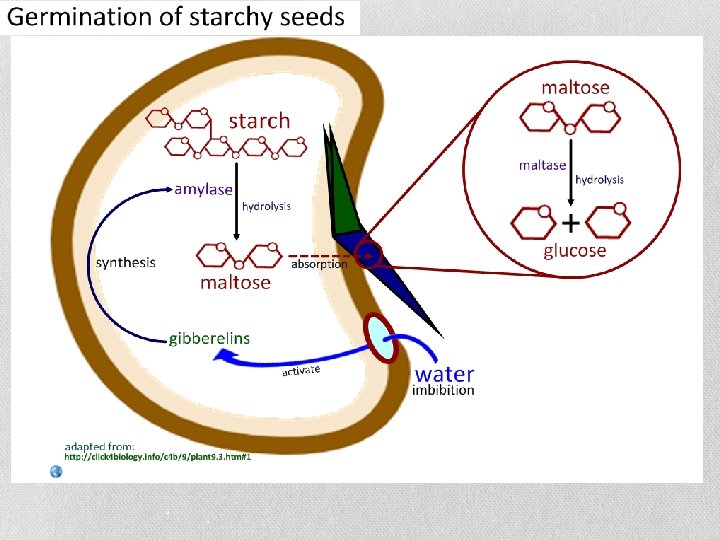
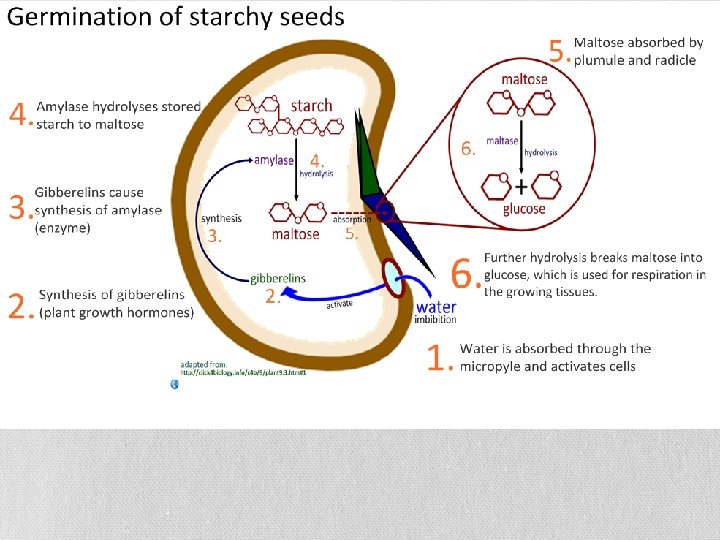
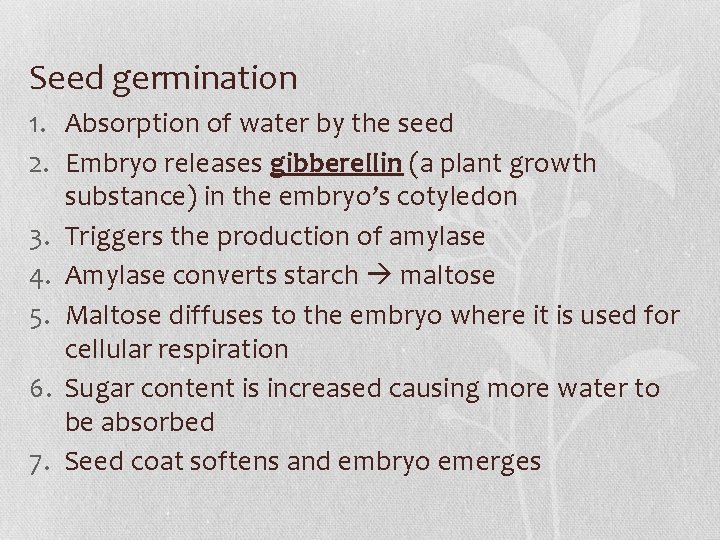
Seed germination 1. Absorption of water by the seed 2. Embryo releases gibberellin (a plant growth substance) in the embryo’s cotyledon 3. Triggers the production of amylase 4. Amylase converts starch maltose 5. Maltose diffuses to the embryo where it is used for cellular respiration 6. Sugar content is increased causing more water to be absorbed 7. Seed coat softens and embryo emerges
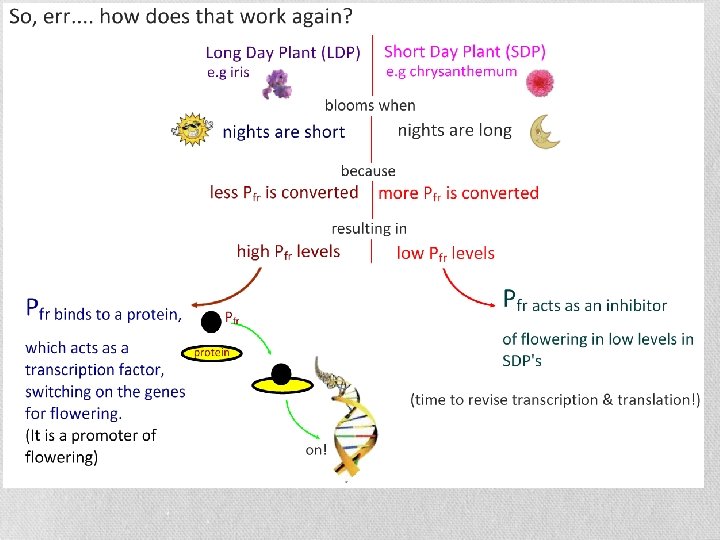
Control of flowering plants Plant type Long-day plants Flowering & light Bloom when days are longest and nights shortest (midsummer) Examples Radishes, spinach, and lettuce Short-day plants Bloom in spring, late summer, and autumn when days are shorter Flower without regard to day length Poinsettias, chrysanthemums, and asters Roses, dandelions, and tomatoes Day-neutral plants Damon, A. , Mc. Gonegal, R. , Tosto, P. , & Ward, W. (2007). Higher Level Biology. England: Pearson Education, Inc.
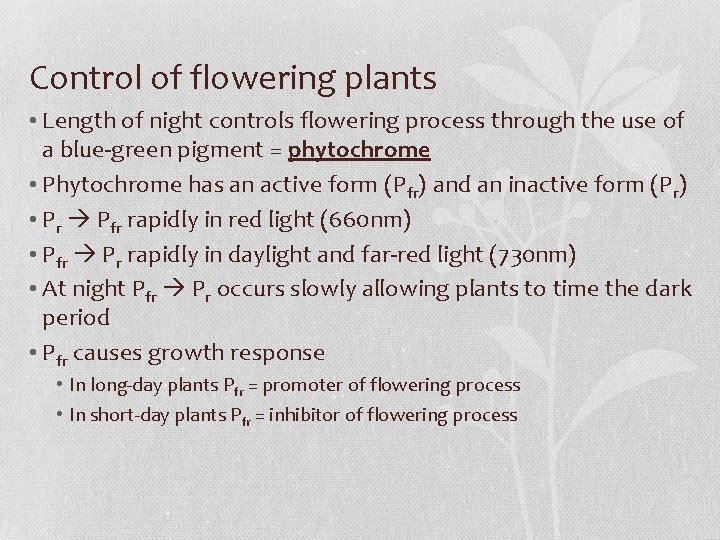
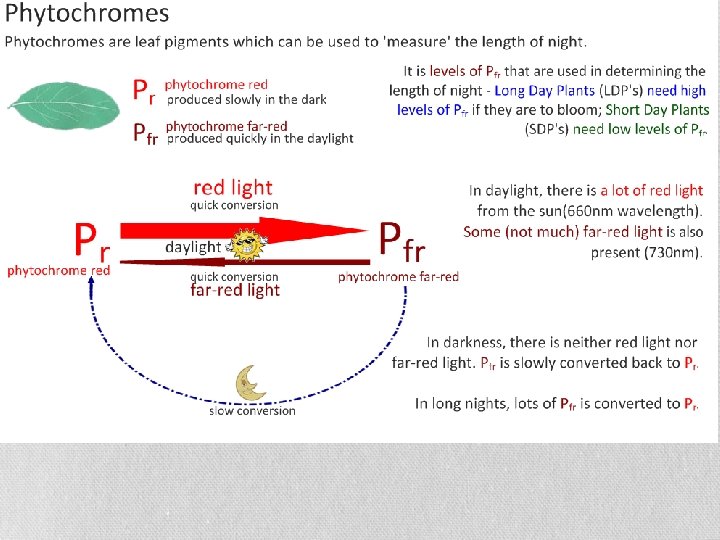
Control of flowering plants • Length of night controls flowering process through the use of a blue-green pigment = phytochrome • Phytochrome has an active form (P fr) and an inactive form (Pr) • Pr Pfr rapidly in red light (660 nm) • Pfr Pr rapidly in daylight and far-red light (730 nm) • At night Pfr Pr occurs slowly allowing plants to time the dark period • Pfr causes growth response • In long-day plants Pfr = promoter of flowering process • In short-day plants Pfr = inhibitor of flowering process
References 1. Damon, A. , Mc. Gonegal, R. , Tosto, P. , & Ward, W. (2007). Higher Level Biology. England: Pearson Education, Inc. 2. Raven, P. H. , Johnson, G. B. , Losos, J. B. , Mason, K. A. , & Singer, S. R. (2008). Biology. (8 th ed. ). New York: Mc. Graw. Hill Companies, Inc. 3. Dunlop, J. , Francis, L. , Gaspar, P. , Gibbons, K. , Grace, E. , Mills, A. , & Searle, S. (2010). Biology 11. Canada: Mc. Graw-Hill Companies, Inc. 4. Dickinson, T. , Edwards, L. , Flood, N. , Grace, E. , Jackson, C. , Mazza, M. , & Ross, J. (2009). ON Science 10. Canada: Mc. Graw-Hill Companies, Inc. 5. Encyclopedia Britannica Online. <www. britannica. com>