
9 3 Hybrid Orbital Theory 2 pz 90
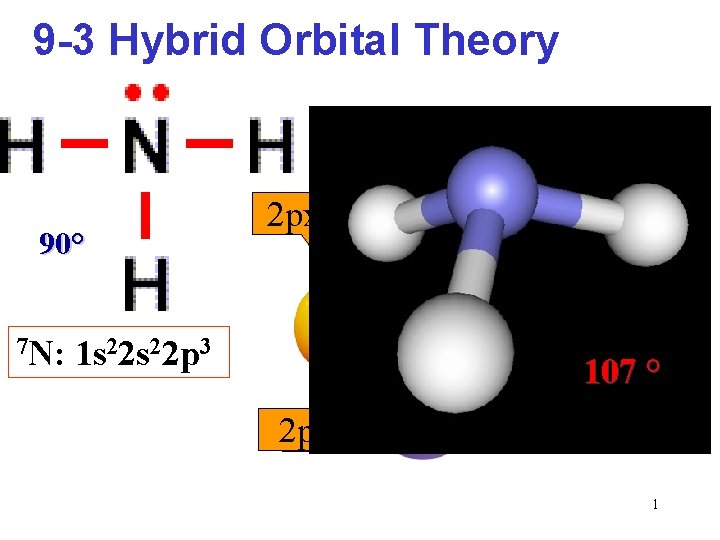
9 -3 Hybrid Orbital Theory 2 pz 90° 7 N: 2 px 1 s 22 p 3 107 ° 2 py 1
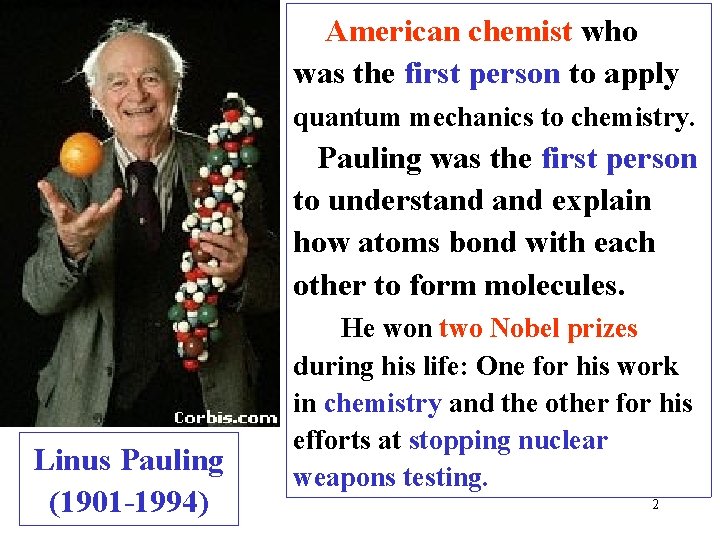
American chemist who was the first person to apply quantum mechanics to chemistry. Pauling was the first person to understand explain how atoms bond with each other to form molecules. Linus Pauling (1901 -1994) He won two Nobel prizes during his life: One for his work in chemistry and the other for his efforts at stopping nuclear weapons testing. 2
9. 3. 1 The Central Themes of Hybridization Theory (1) Hybridization is the process of mixing the atomic orbitals in an atom (usually the central atom) to generate a set of new atomic orbitals. 3
(2) The number of hybrid orbitals generated is equal to the number of atomic orbitals. (3) The spatial orientation of these new orbitals lead to more stable bonds and are consistent with the observed molecular shapes. 4
l The following points are useful for an understanding of hybridization (1) The concept of hybridization does not apply to isolated atoms. It is used only to explain a bonding scheme in a molecule. (2) Hybrid orbital is not a pure atomic orbital. Hybrid orbitals have very different shapes from pure atomic orbitals. 5
(3) All the hybrid orbitals are equivalent in every respect, except in their relative orientations in space. (4) Covalent bonds in polyatomic molecules are formed by the overlap of a hybrid orbital and a pure atomic orbital, or of two hybrid orbitals. 6
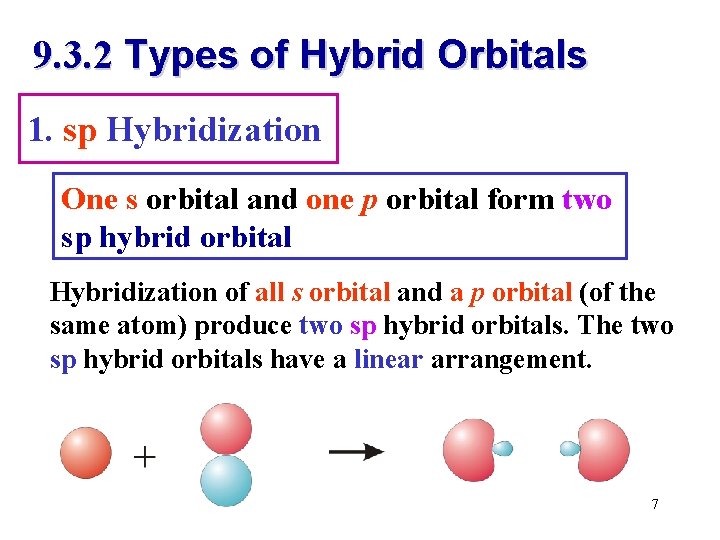
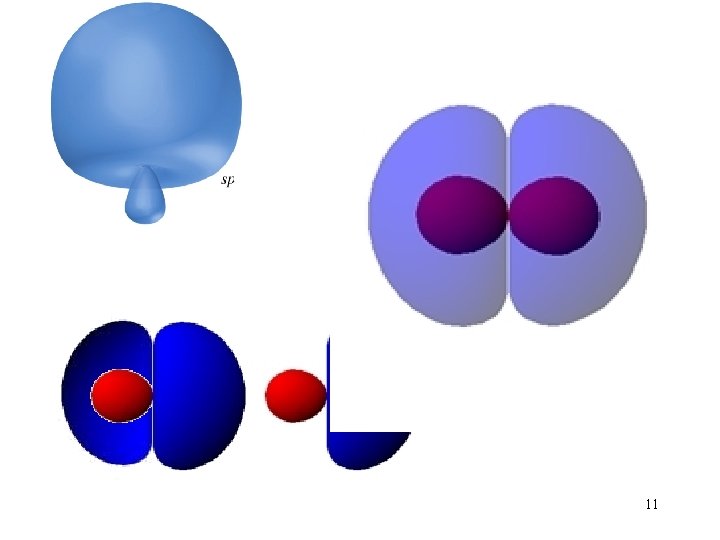
9. 3. 2 Types of Hybrid Orbitals 1. sp Hybridization One s orbital and one p orbital form two sp hybrid orbital Hybridization of all s orbital and a p orbital (of the same atom) produce two sp hybrid orbitals. The two sp hybrid orbitals have a linear arrangement. 7
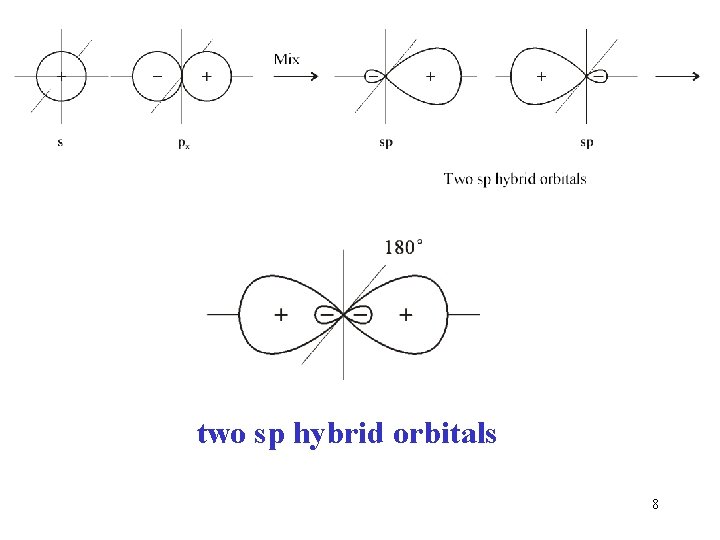
two sp hybrid orbitals 8
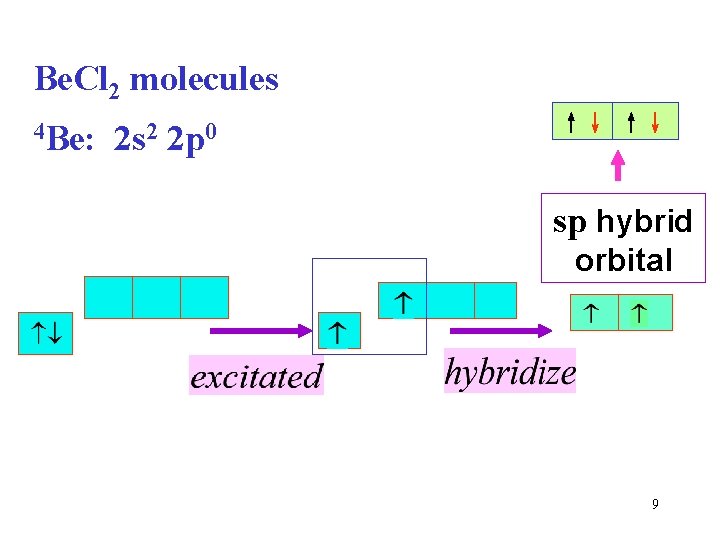
Be. Cl 2 molecules 4 Be: 2 s 2 2 p 0 ↑↓ ↑↓ sp hybrid orbital 9
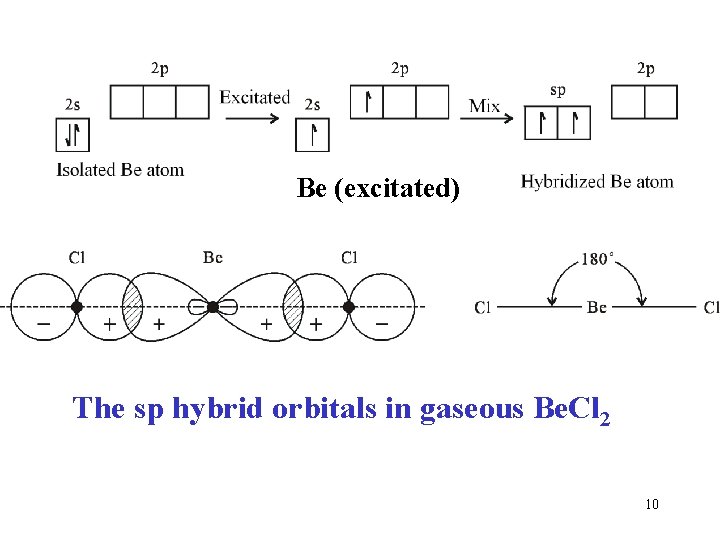
Be (excitated) The sp hybrid orbitals in gaseous Be. Cl 2 10
11

12

13
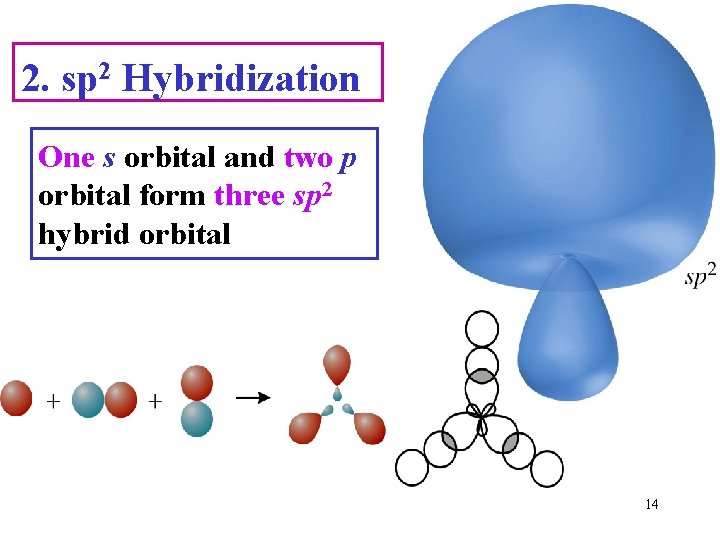
2. sp 2 Hybridization One s orbital and two p orbital form three sp 2 hybrid orbital 14
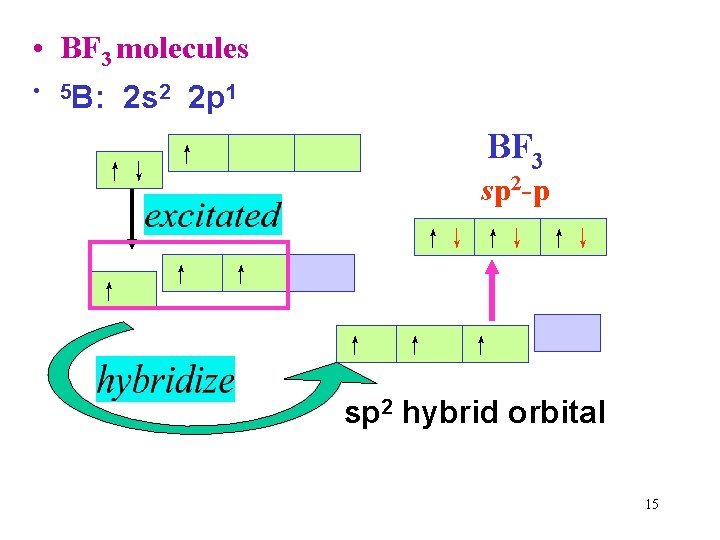
• BF 3 molecules • 5 B: 2 s 2 2 p 1 ↑↓ BF 3 ↑ sp 2 -p ↑↓ ↑↓ ↑↓ ↑ ↑ ↑ sp 2 hybrid orbital 15
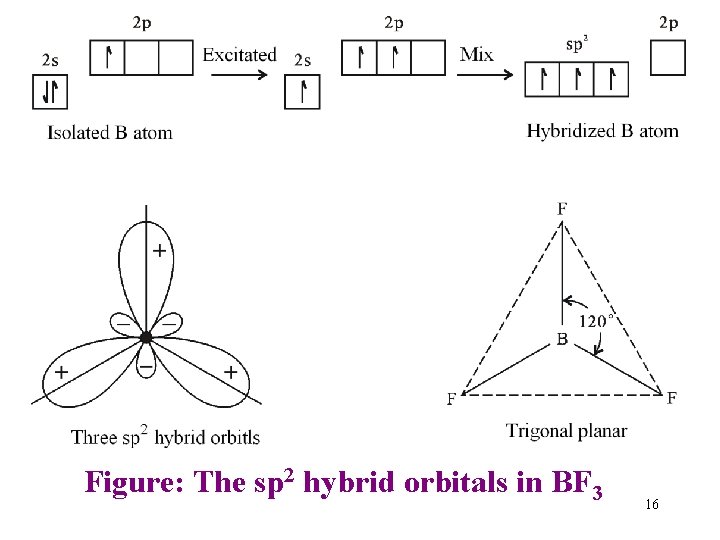
Figure: The sp 2 hybrid orbitals in BF 3 16
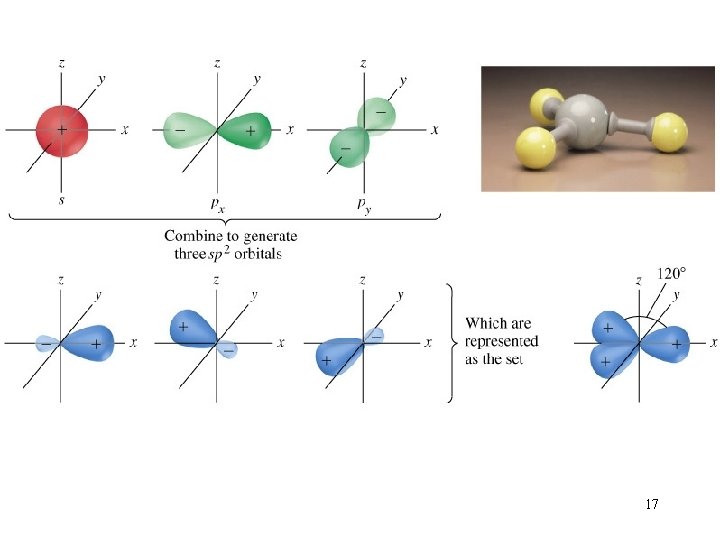
17
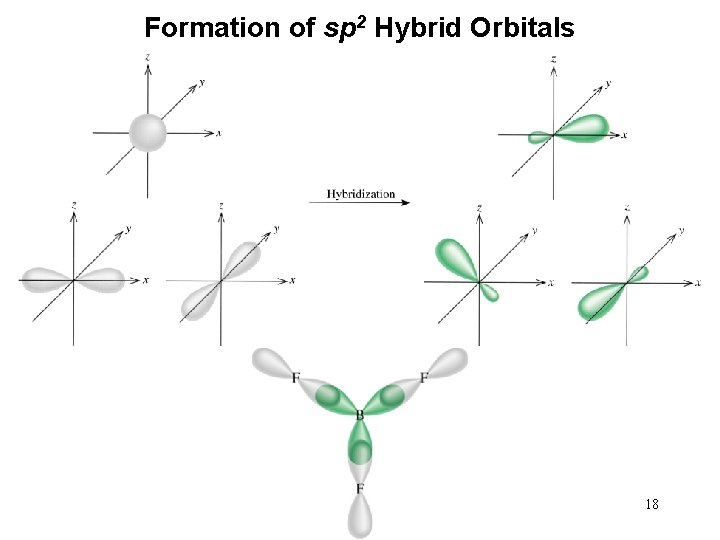
Formation of sp 2 Hybrid Orbitals 18
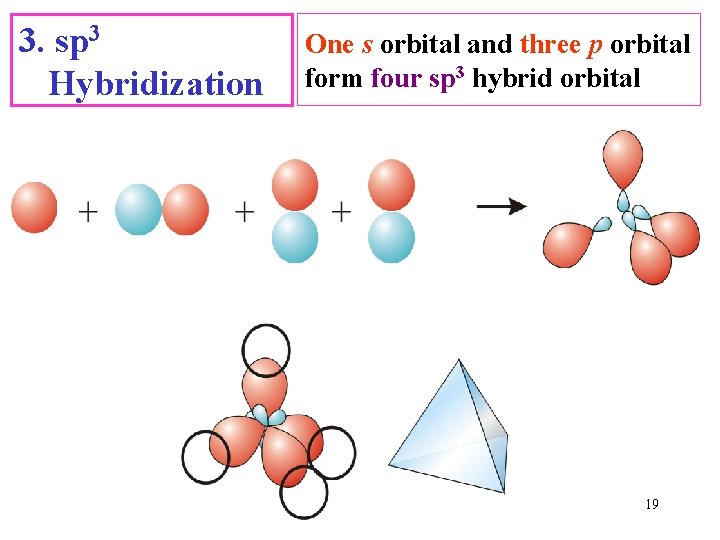
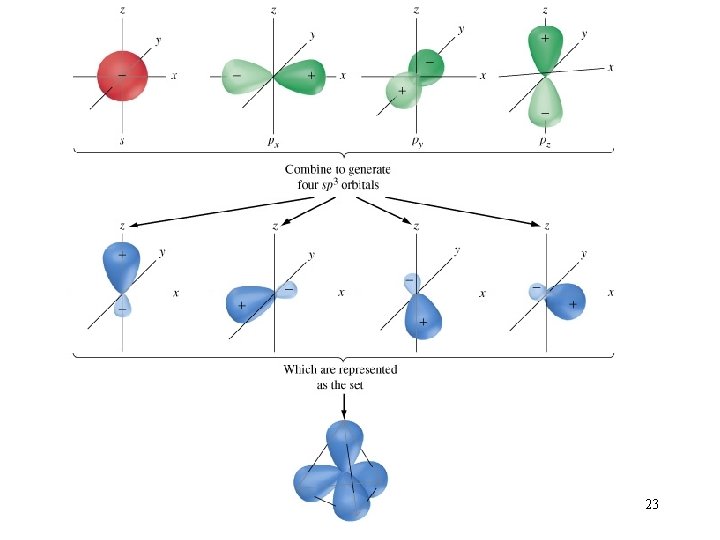
3. sp 3 Hybridization One s orbital and three p orbital form four sp 3 hybrid orbital 19
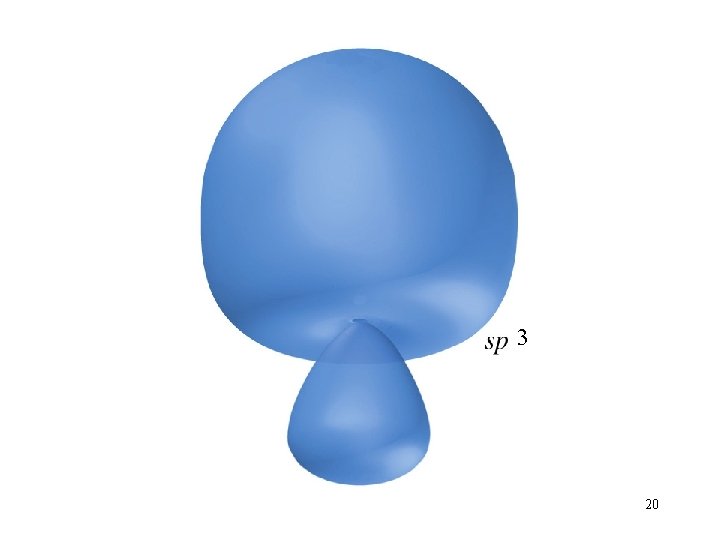
3 20
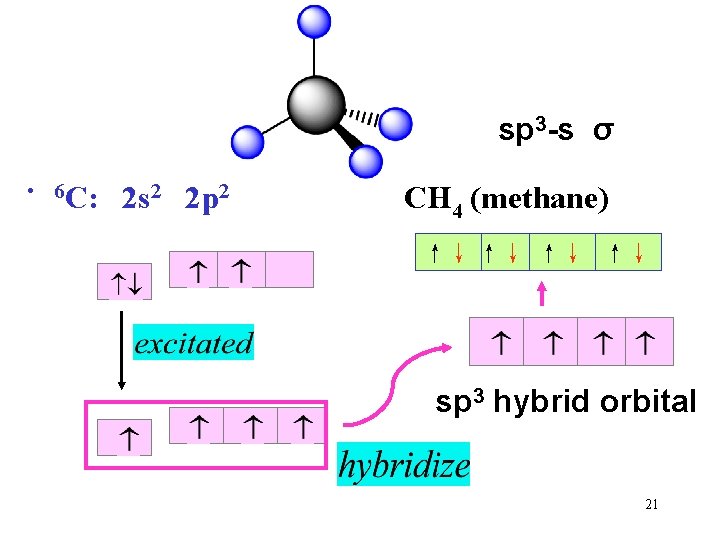
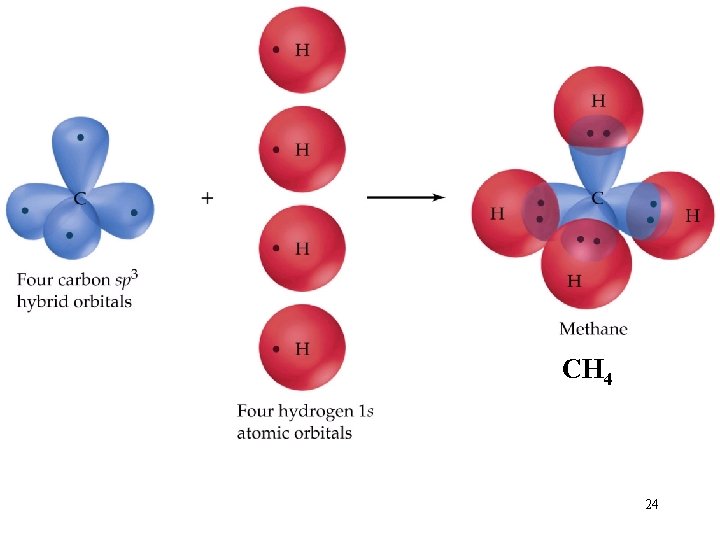
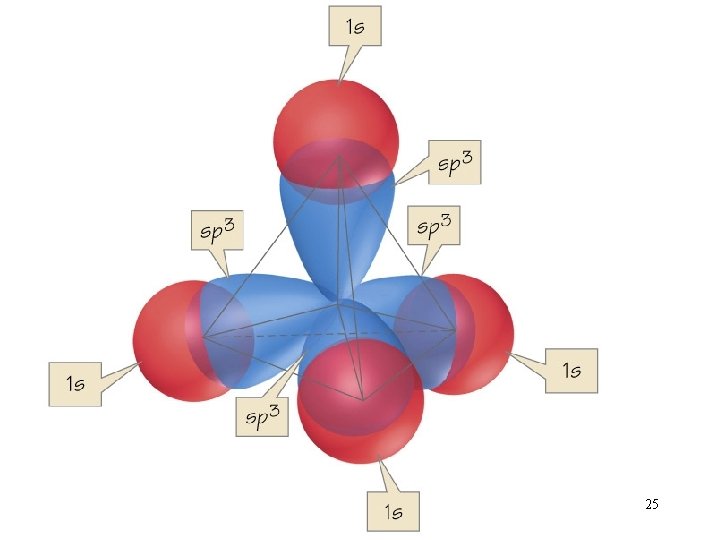
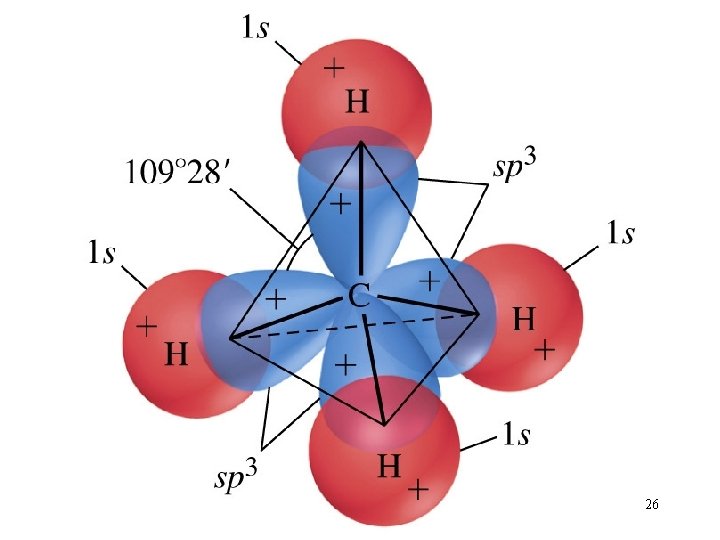
sp 3 -s σ • 6 C: 2 s 2 2 p 2 CH 4 (methane) ↑↓ ↑↓ sp 3 hybrid orbital 21
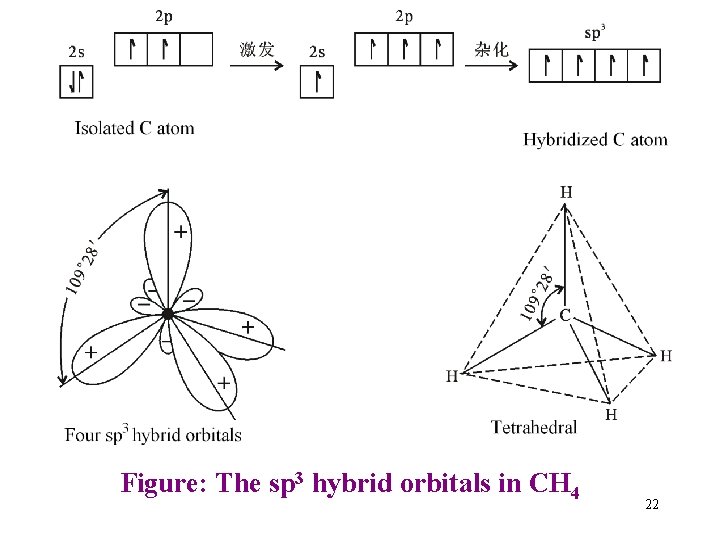
Figure: The sp 3 hybrid orbitals in CH 4 22
23
CH 4 24
25
26
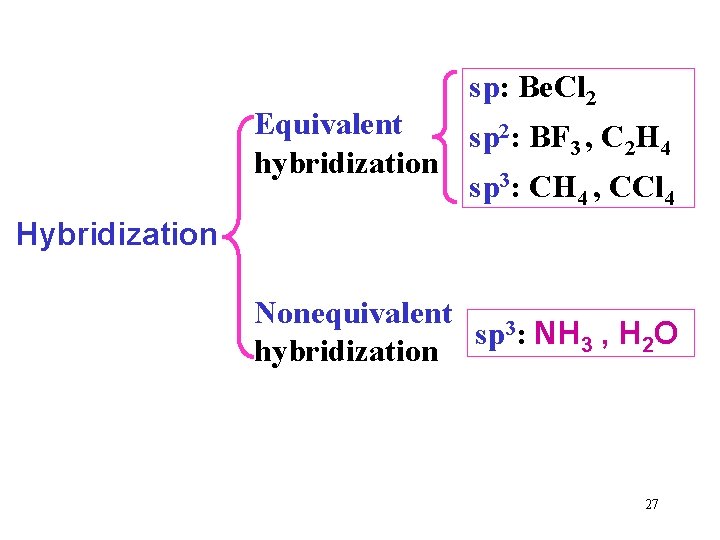
sp: Be. Cl 2 Equivalent sp 2: BF 3 , C 2 H 4 hybridization sp 3: CH 4 , CCl 4 Hybridization Nonequivalent sp 3: NH 3 , H 2 O hybridization 27
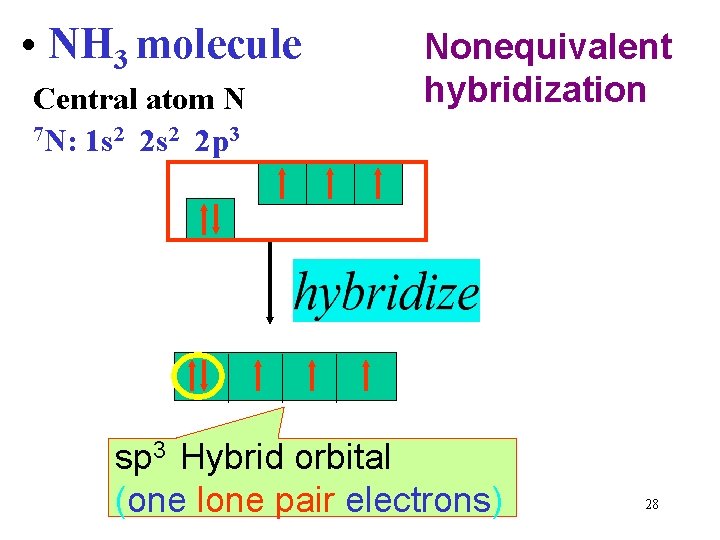
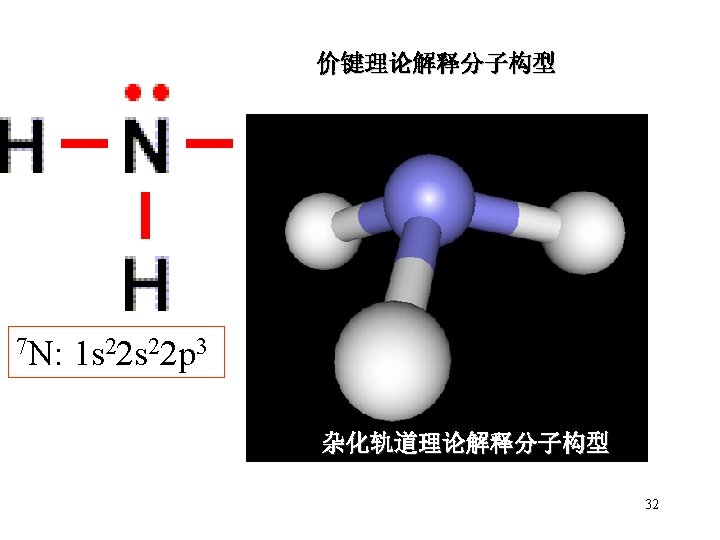
• NH 3 molecule Central atom N 7 N: 1 s 2 2 p 3 Nonequivalent hybridization sp 3 Hybrid orbital (one lone pair electrons) 28
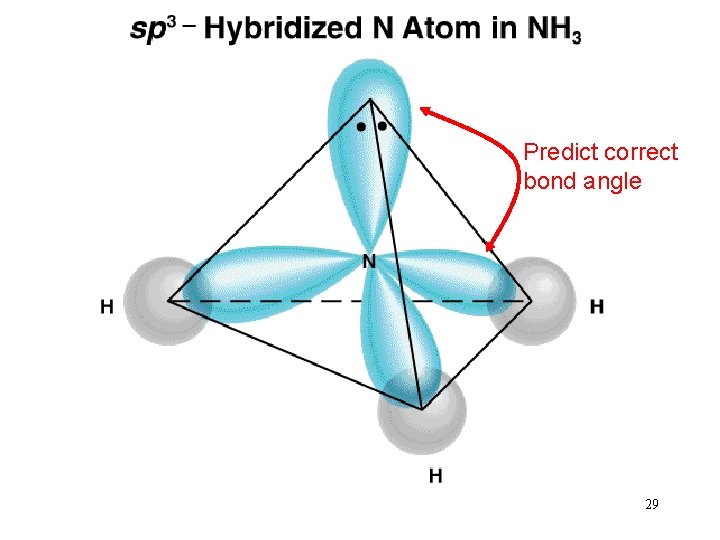
Predict correct bond angle 29
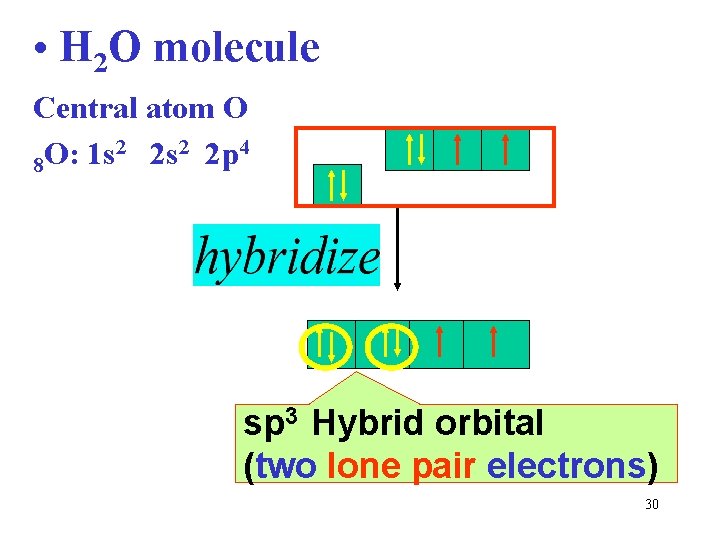
• H 2 O molecule Central atom O 2 2 s 2 2 p 4 O: 1 s 8 sp 3 Hybrid orbital (two lone pair electrons) 30
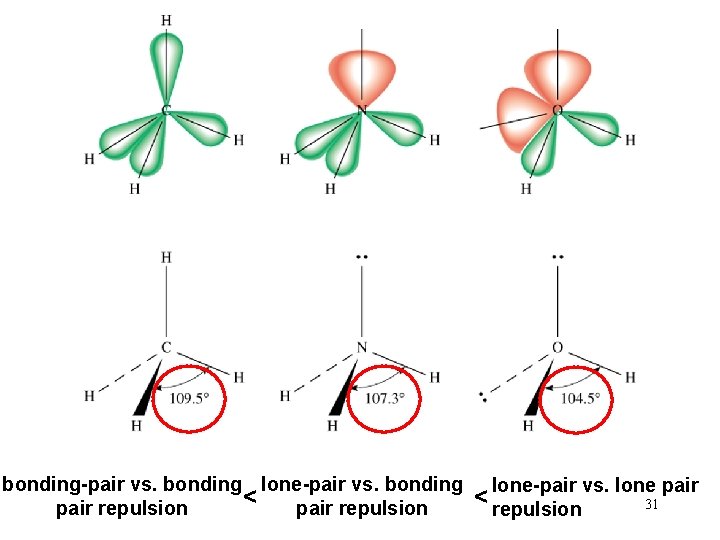
bonding-pair vs. bonding lone-pair vs. bonding < pair repulsion lone-pair vs. lone pair < repulsion 31
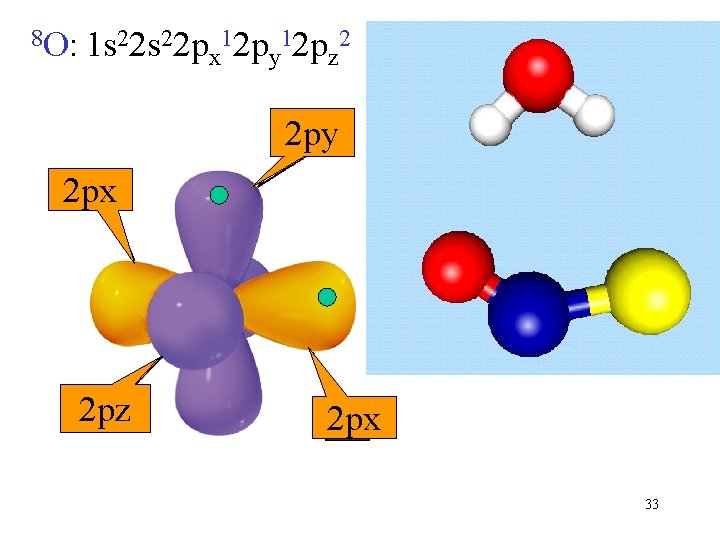
8 O: 1 s 22 p 12 p 2 x y z 2 py 2 px 2 pz 2 px 33
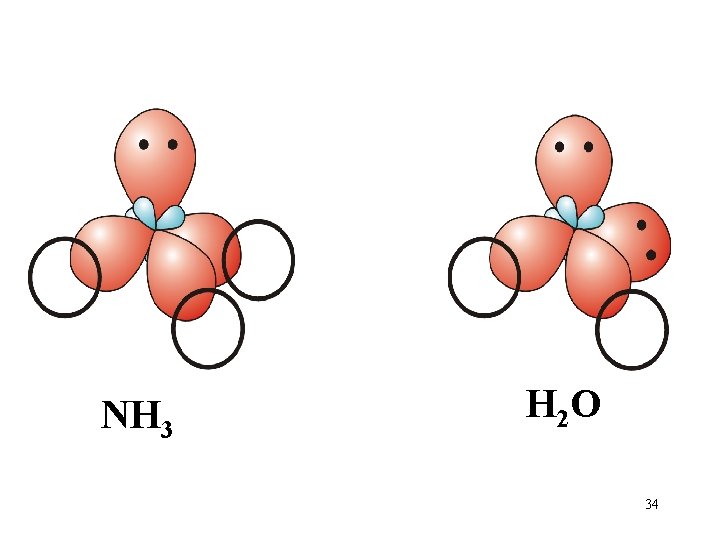
NH 3 H 2 O 34
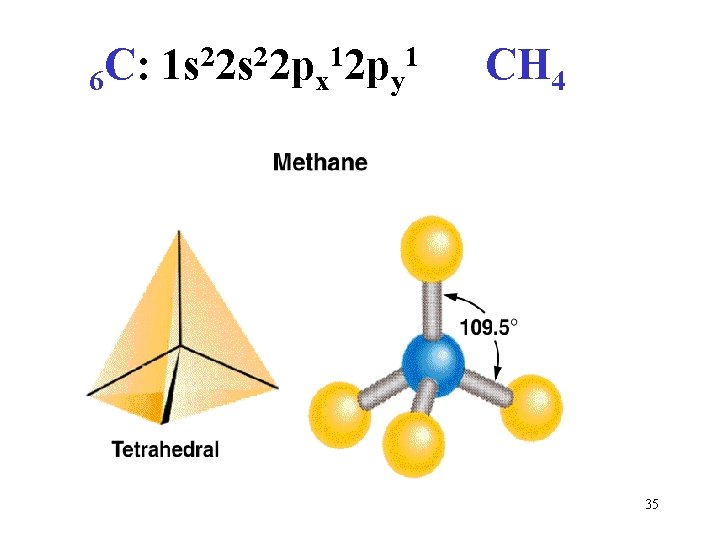
22 s 22 p 1 C: 1 s 6 x y CH 4 35
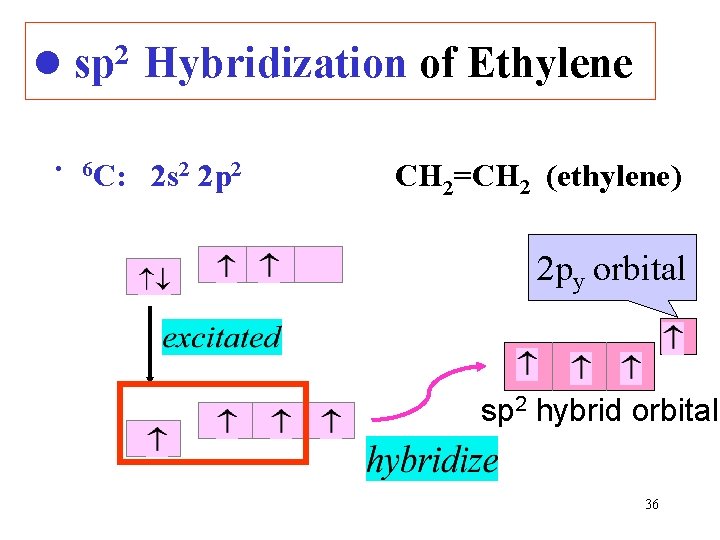
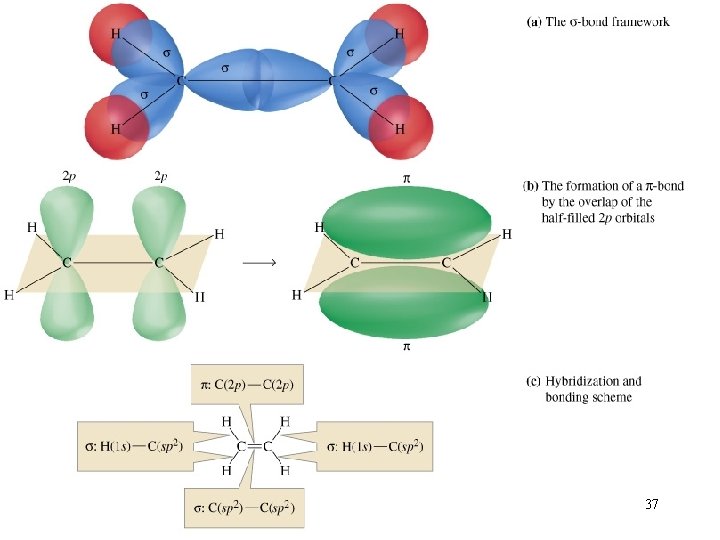
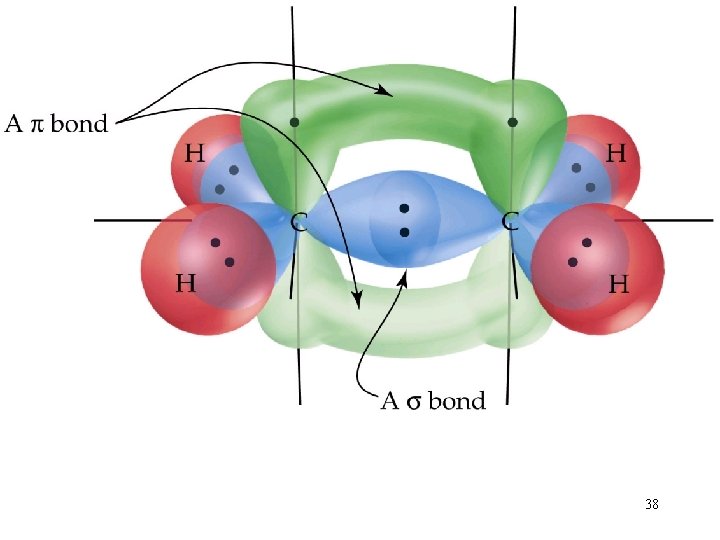
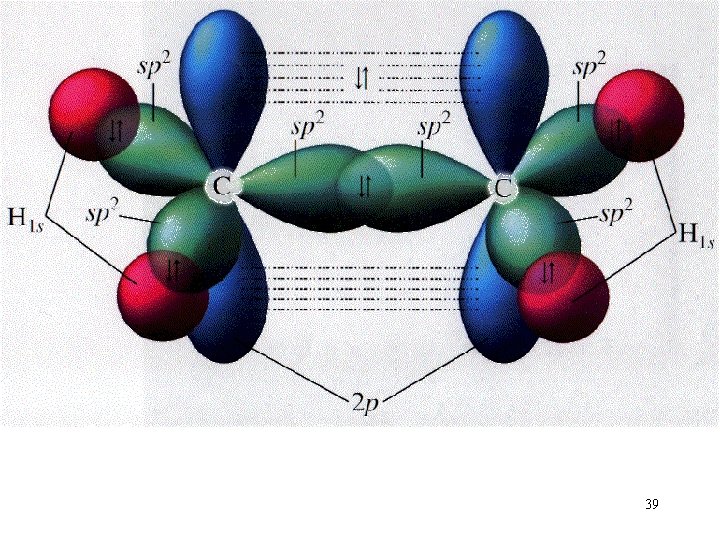
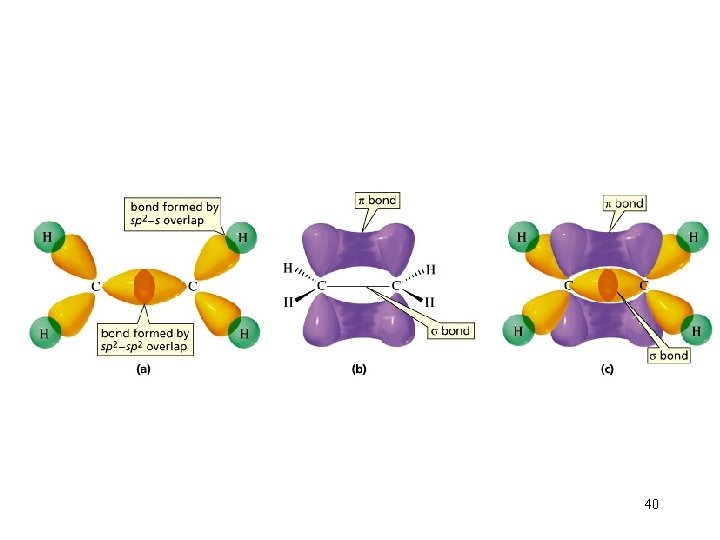
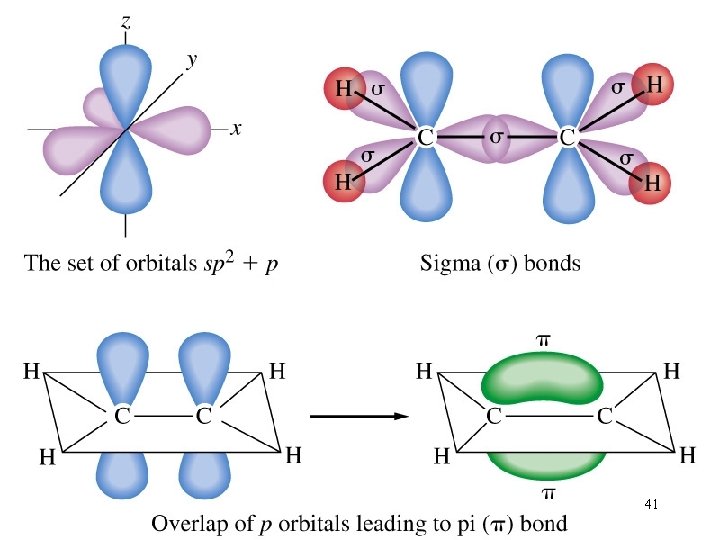
l sp 2 Hybridization of Ethylene • 6 C: 2 s 2 2 p 2 CH 2=CH 2 (ethylene) 2 py orbital sp 2 hybrid orbital 36
37
38
39
40
41
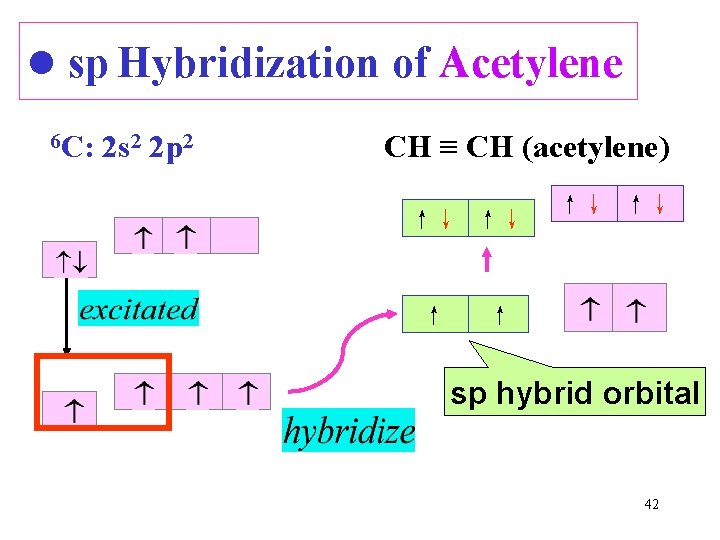
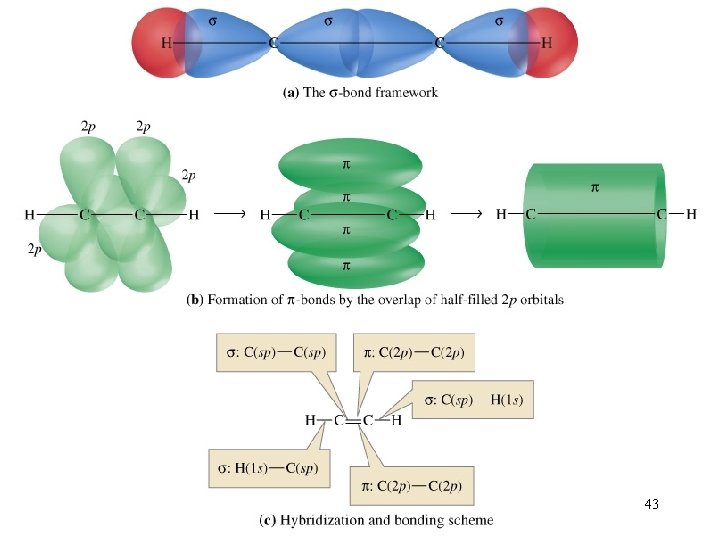
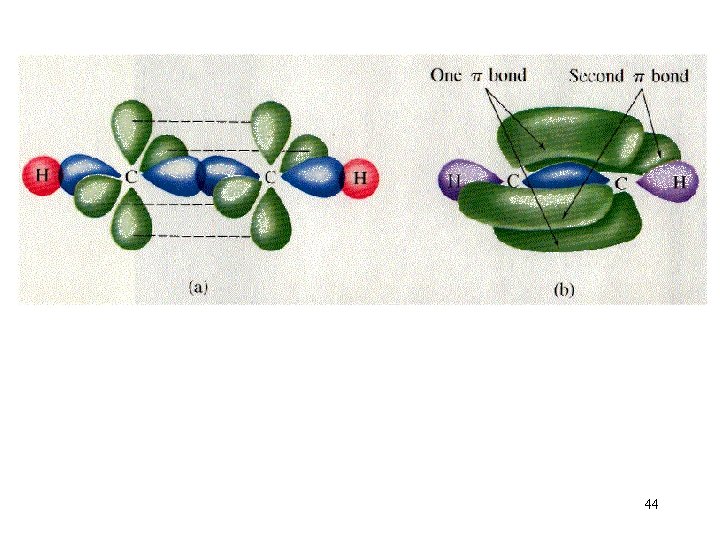
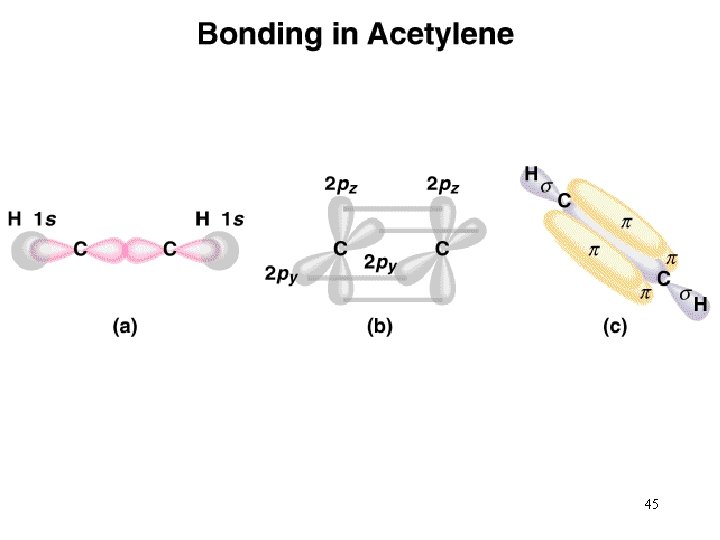
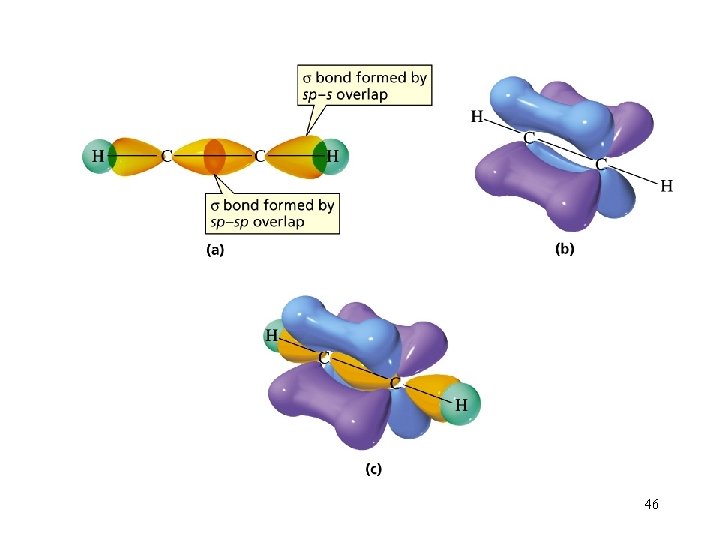
l sp Hybridization of Acetylene 6 C: 2 s 2 2 p 2 CH ≡ CH (acetylene) ↑↓ ↑↓ ↑ sp hybrid orbital 42
43
44
45
46
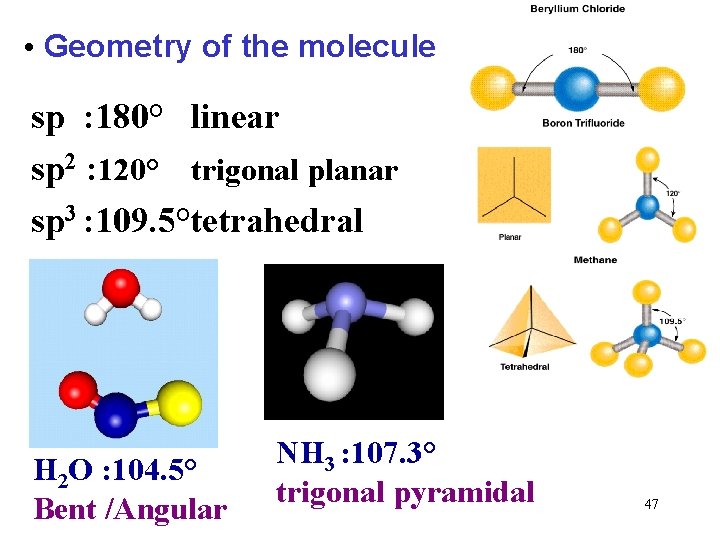
• Geometry of the molecule sp : 180° linear sp 2 : 120° trigonal planar sp 3 : 109. 5°tetrahedral H 2 O : 104. 5° Bent /Angular NH 3 : 107. 3° trigonal pyramidal 47
- Slides: 47