
9 1 Chapter 9 Production Cycle There is

- Slides: 29
9 -1 Chapter 9 Production Cycle “There is one rule for industrialists and that is: Make the best quality of goods possible at the lowest cost possible, paying the highest wages possible. ”—Henry Ford
9 -2 Presentation Outline I. Files and Reports in a Production System II. Production Control Application System III. Control Risk Assessment IV. Substantive Procedures
9 -3 I. Files and Reports in a Production System A. Production Order B. Bill of Materials C. Master Operations List D. Materials Requisitions E. Job Time Cards F. Resource Availability Reports G. Production Status Reports
A. Production Order Production control issues production orders to authorize production departments to make certain products. 9 -4 We are ready to begin this order.
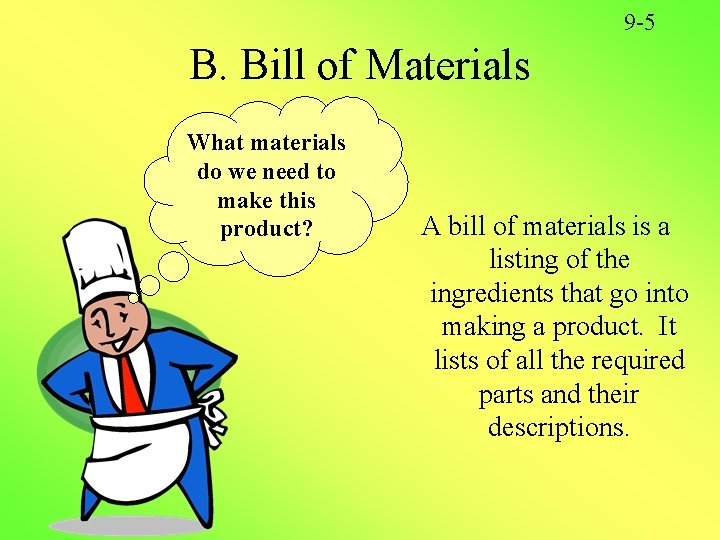
9 -5 B. Bill of Materials What materials do we need to make this product? A bill of materials is a listing of the ingredients that go into making a product. It lists of all the required parts and their descriptions.
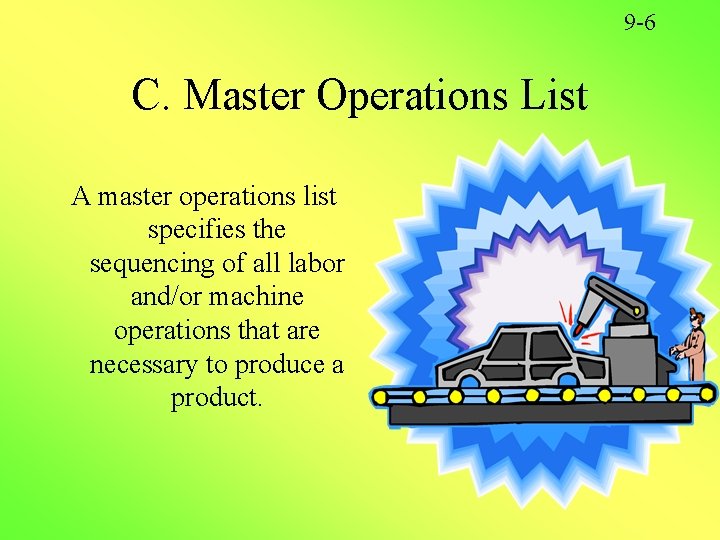
9 -6 C. Master Operations List A master operations list specifies the sequencing of all labor and/or machine operations that are necessary to produce a product.
9 -7 D. Materials Requisitions Production control prepares materials requisitions to authorize the release of raw materials from inventory for use in production.
9 -8 E. Job Time Cards Job time cards are used to document the amount of labor time that is spent on each production order or job.
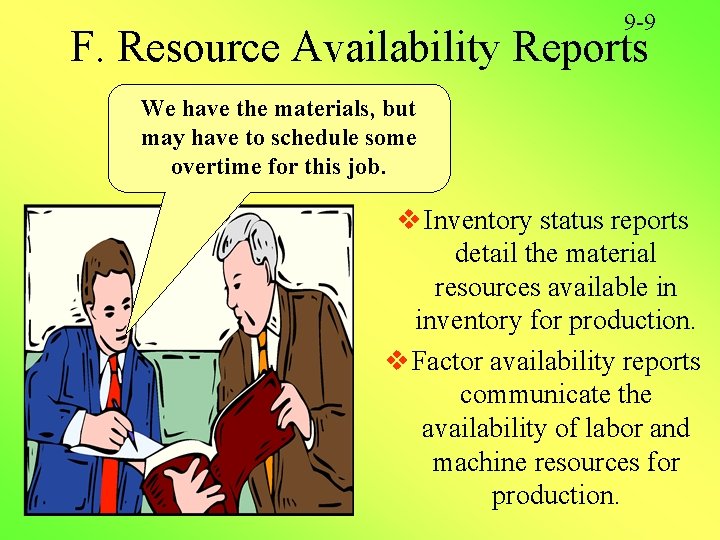
9 -9 F. Resource Availability Reports We have the materials, but may have to schedule some overtime for this job. v Inventory status reports detail the material resources available in inventory for production. v Factor availability reports communicate the availability of labor and machine resources for production.
G. Production Status Reports Production status reports detail the work completed on individual production orders as they move through production. Open production orders are monitored and departmental production schedules are revised as necessary. 9 -10
II. Production Control Application System 9 -11 A. The Role of Production Control B. Accounting for the Factors of Production C. Completion of the Production Order D. Overview of Production Cycle Control Procedures
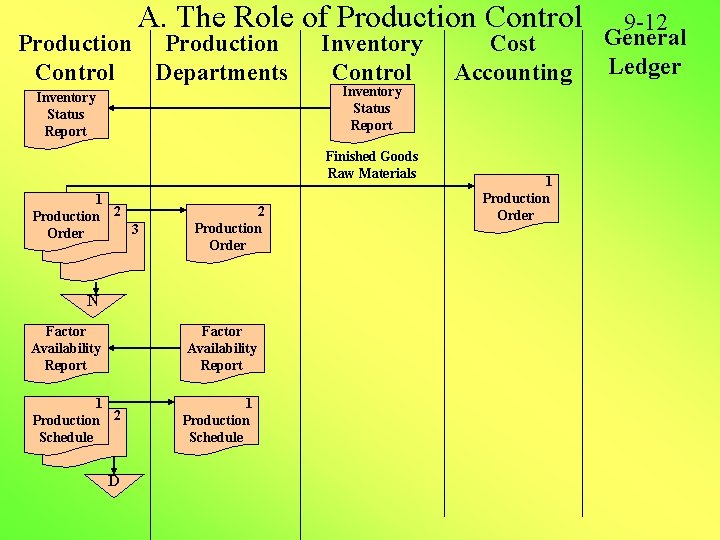
A. The Role of Production Control Departments Inventory Status Report Inventory Control Inventory Status Report Finished Goods Raw Materials 1 Production 2 3 Order 2 Production Order N Factor Availability Report 1 Production 2 Schedule D 1 Production Schedule Cost Accounting 1 Production Order 9 -12 General Ledger
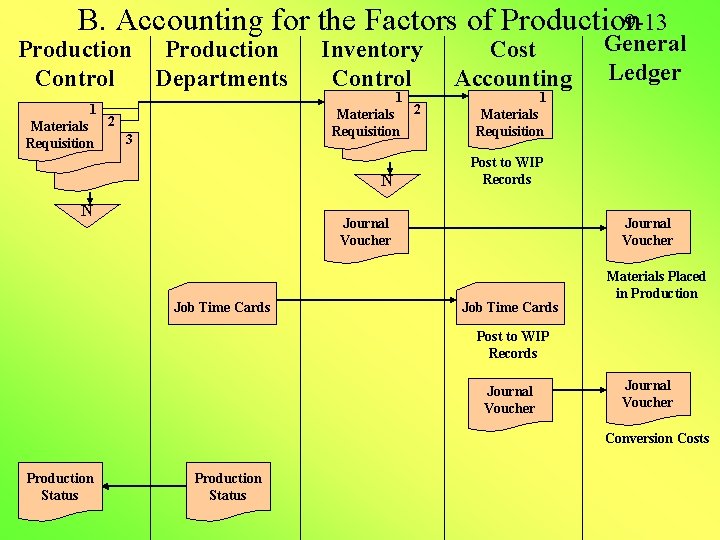
B. Accounting for the Factors of Production 9 -13 Production Control Departments 1 Inventory Control 1 Materials Requisition Materials 2 3 Requisition N N 2 Cost Accounting 1 Materials Requisition Post to WIP Records Journal Voucher Job Time Cards General Ledger Journal Voucher Job Time Cards Materials Placed in Production Post to WIP Records Journal Voucher Conversion Costs Production Status
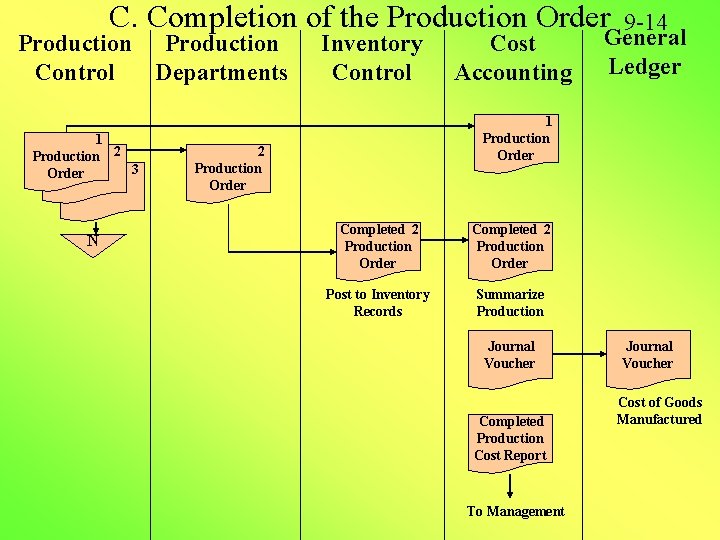
C. Completion of the Production Order Production Control Departments 1 Production 2 3 Order N Inventory Control Cost Accounting 9 -14 General Ledger 1 Production Order 2 Production Order Completed 2 Production Order Post to Inventory Records Summarize Production Journal Voucher Completed Production Cost Report To Management Journal Voucher Cost of Goods Manufactured
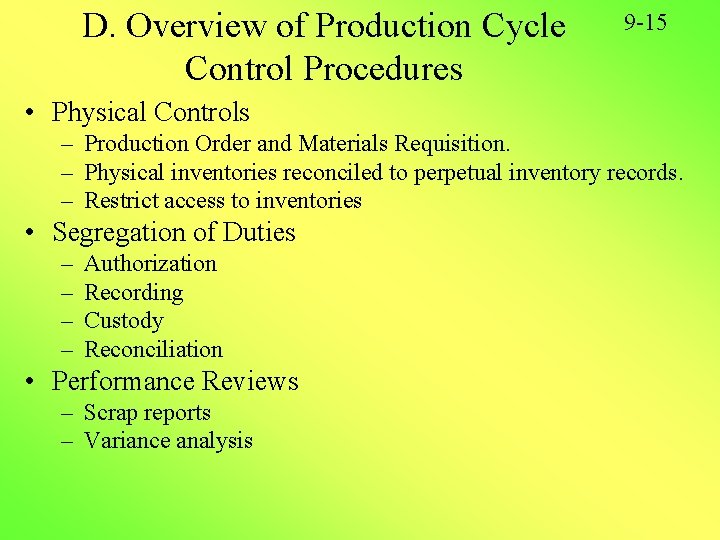
D. Overview of Production Cycle Control Procedures 9 -15 • Physical Controls – Production Order and Materials Requisition. – Physical inventories reconciled to perpetual inventory records. – Restrict access to inventories • Segregation of Duties – – Authorization Recording Custody Reconciliation • Performance Reviews – Scrap reports – Variance analysis
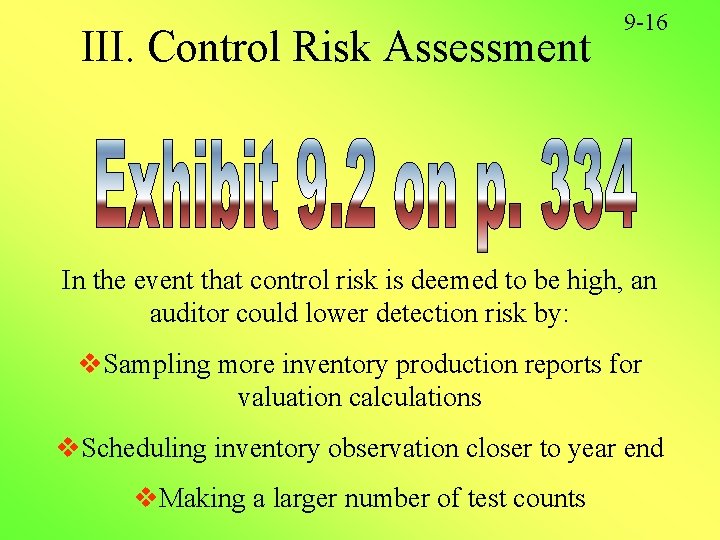
III. Control Risk Assessment 9 -16 In the event that control risk is deemed to be high, an auditor could lower detection risk by: v. Sampling more inventory production reports for valuation calculations v. Scheduling inventory observation closer to year end v. Making a larger number of test counts
9 -17 IV. Substantive Procedures A. Analytical Procedures B. Physical Inventory Observation C. Pricing and Compilation D. Purchase Cutoffs E. Accounting Firm Tips
9 -18 A. Analytical Procedures • Verify REASONABLENESS of COGS – Gross Profit Margin – Compare to prior year, industry averages • Verify REASONABLENESS of ending inventory – Days Sales in Inventory – Inventory Turnover
9 -19 B. Physical Inventory Observation 1. A Required Procedure 2. Client Count Instructions 3. Inventory Count and Measurement Challenges 4. Audit Program for Inventory Count 5. Inventory Count Sheet
9 -20 1. A Required Procedure • “…it will always be necessary for the auditor to make, or observe, some physical counts of the inventory and apply appropriate tests of intervening transactions" (AU 331. 12). • May make test counts at a time other than year-end. – test roll-forward.
9 -21 2. Client Count Instructions • Names of client personnel and dates and times of count • Instructions for recording inventory descriptions and counts (measuring physical quantities) • Noting obsolete or worn items • Tag control—compilation of counts • Shutting down production to avoid double counting • Controlling movement • Making changes and corrections to counts • Review and approval of supervisory personnel
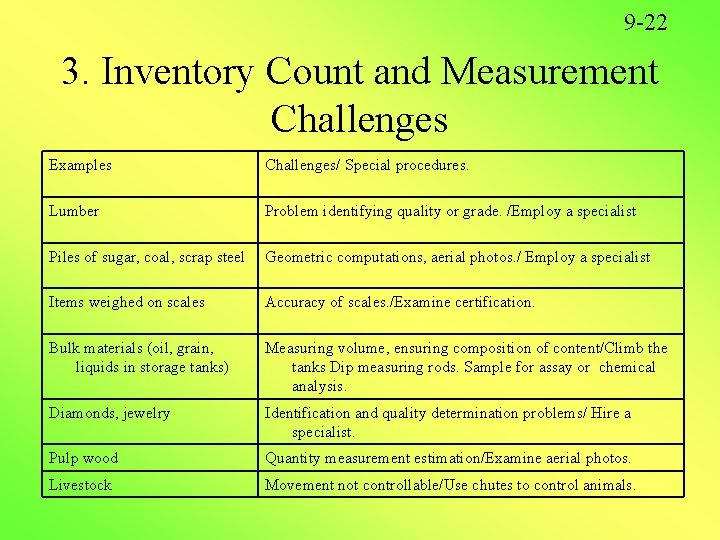
9 -22 3. Inventory Count and Measurement Challenges Examples Challenges/ Special procedures. Lumber Problem identifying quality or grade. /Employ a specialist Piles of sugar, coal, scrap steel Geometric computations, aerial photos. / Employ a specialist Items weighed on scales Accuracy of scales. /Examine certification. Bulk materials (oil, grain, liquids in storage tanks) Measuring volume, ensuring composition of content/Climb the tanks Dip measuring rods. Sample for assay or chemical analysis. Diamonds, jewelry Identification and quality determination problems/ Hire a specialist. Pulp wood Quantity measurement estimation/Examine aerial photos. Livestock Movement not controllable/Use chutes to control animals.
9 -23 4. Audit Program for Inventory Count
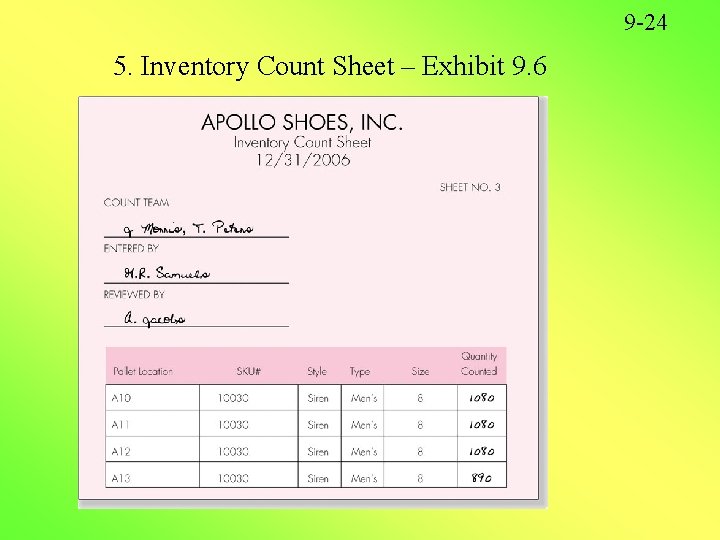
9 -24 5. Inventory Count Sheet – Exhibit 9. 6
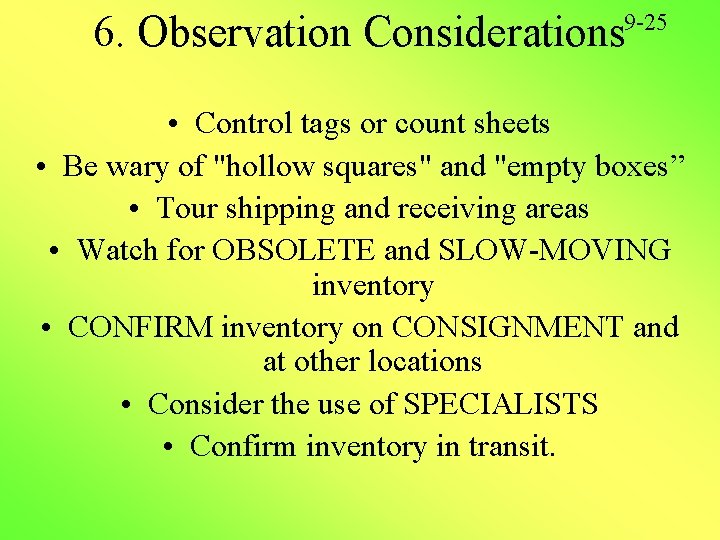
6. Observation Considerations 9 -25 • Control tags or count sheets • Be wary of "hollow squares" and "empty boxes” • Tour shipping and receiving areas • Watch for OBSOLETE and SLOW-MOVING inventory • CONFIRM inventory on CONSIGNMENT and at other locations • Consider the use of SPECIALISTS • Confirm inventory in transit.
9 -26 C. Pricing and Compilation Tests • Valuation (Price Tests) – VENDOR INVOICES – COST FLOW ASSUMPTION (FIFO, LIFO, average, specific identification) – LOWER OF COST OR MARKET for inventory • Check Extensions and Footings. • Agree to G/L
9 -27 D. Purchase Cutoffs • Verify CUT-OFFs for purchases and sales – Examine Receiving Reports and Vendor Sales Invoices occurring around year-end. – Examine bills of lading and sales invoices – Agree to inclusion/exclusion from inventory
9 -28 E. Accounting Firm Tips • Focus test counts on high value items. • Advise client as late as possible about locations for inventory observation and do not be predictable about approach. • Be skeptical of large test count differences. • Beware of client interest in procedures and test counts. • Be alert for slow moving or obsolete inventory.
9 -29 Summary • Documents in Production Cycle • Segregation of Duties in Production Cycle • Control Risk Assessment • Substantive Procedures including Observation of Physical Inventory