
800 1250 Place Niger River City Kumbi Saleh
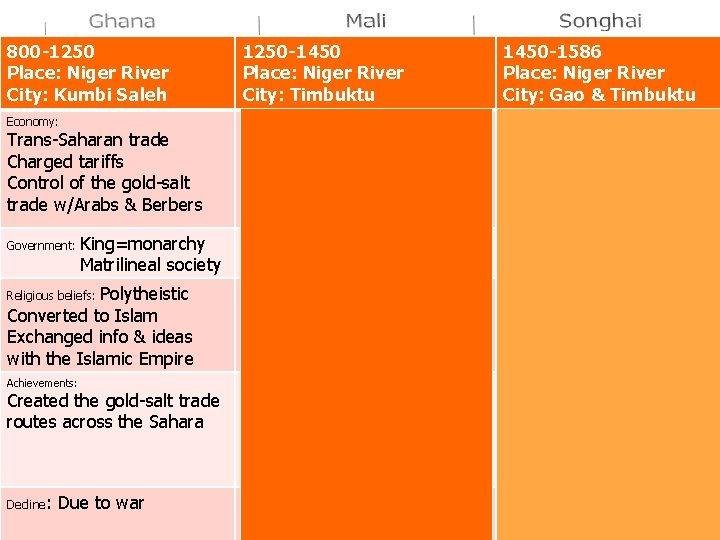
800 -1250 Place: Niger River City: Kumbi Saleh 1250 -1450 Place: Niger River City: Timbuktu 1450 -1586 Place: Niger River City: Gao & Timbuktu Control of the gold-salt trade Created new trade with Morocco & Egypt Control of the gold-salt trad routes with N. Africa & Arabia Imported books Emperor Justice based on the Qur’an Soldier-king: Sonni Ali Bureaucracy w/depts Polytheistic Converted to Islam Exchanged info & ideas with the Islamic Empire Islam Five Pillars – Hajj to Mecca Used Arabic art Traditional tribal religions Converted to Islam Pilgrimage to Mecca Achievements: Mansa Musa created peace & safety; Increased knowledge of Islam across Africa & world Expanded borders of Mali Built mosques & schools Timbuktu center of learning Largest kingdom-expanded Decline: Disputes over succession & war Economy: Trans-Saharan trade Charged tariffs Control of the gold-salt trade w/Arabs & Berbers Government: King=monarchy Matrilineal society Religious beliefs: Created the gold-salt trade routes across the Sahara Due to war
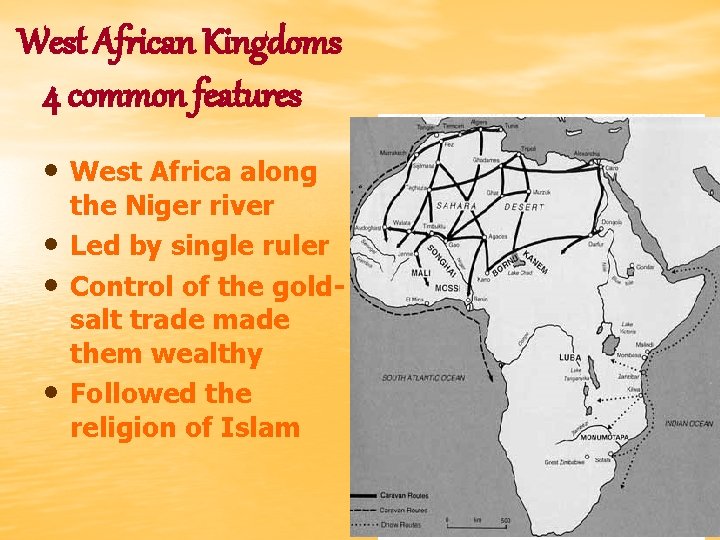
West African Kingdoms 4 common features • West Africa along • • • the Niger river Led by single ruler Control of the goldsalt trade made them wealthy Followed the religion of Islam
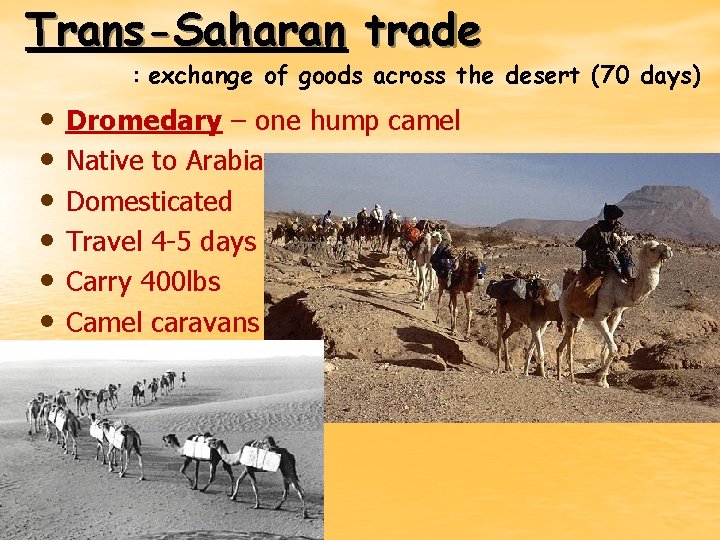
Trans-Saharan trade : exchange of goods across the desert (70 days) • • • Dromedary – one hump camel Native to Arabia Domesticated Travel 4 -5 days w/out water Carry 400 lbs Camel caravans helped increase trade between N & W Africa
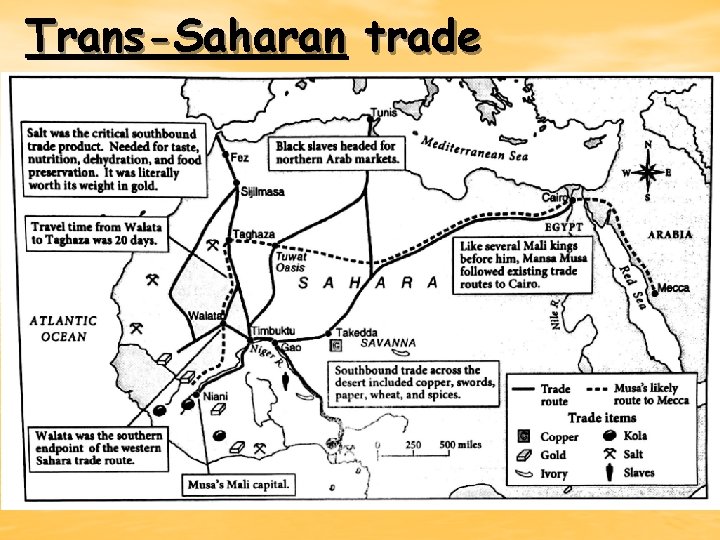
Trans-Saharan trade
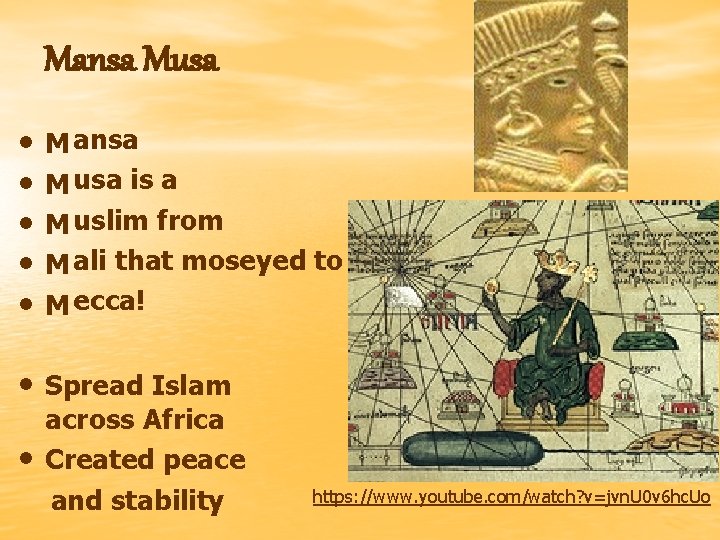
Mansa Musa • • • M ansa M usa is a M uslim from M ali that moseyed to M ecca! • Spread Islam • across Africa Created peace and stability In 1324 Mansa Musa made a pilgrimage ( a journey to a holy place) to Mecca, which is a holy city in Arabia, with 60, 000 servants and followers and 80 camels carrying more than 4, 000 pounds of gold to be distributed among the poor. Of the 12, 000 servants 500 carried a staff of pure gold. This showed his power and wealth to the other people he visited. https: //www. youtube. com/watch? v=jvn. U 0 v 6 hc. Uo

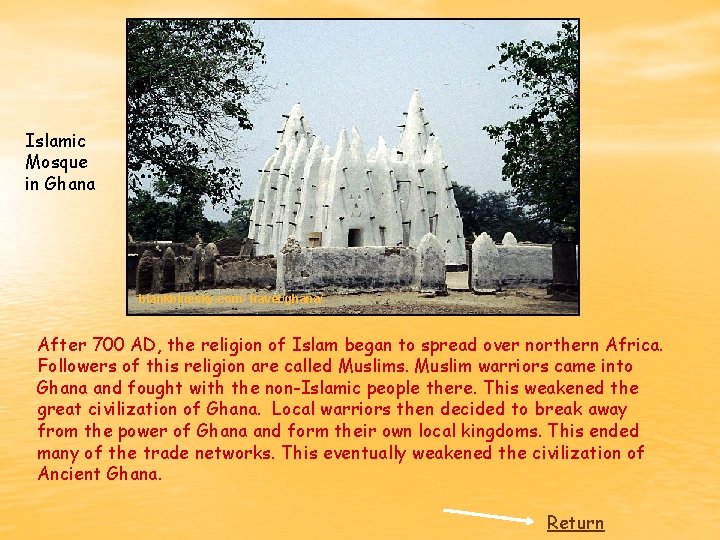
Islamic Mosque in Ghana blankbluesky. com/ travel/ghana/ After 700 AD, the religion of Islam began to spread over northern Africa. Followers of this religion are called Muslims. Muslim warriors came into Ghana and fought with the non-Islamic people there. This weakened the great civilization of Ghana. Local warriors then decided to break away from the power of Ghana and form their own local kingdoms. This ended many of the trade networks. This eventually weakened the civilization of Ancient Ghana. Return
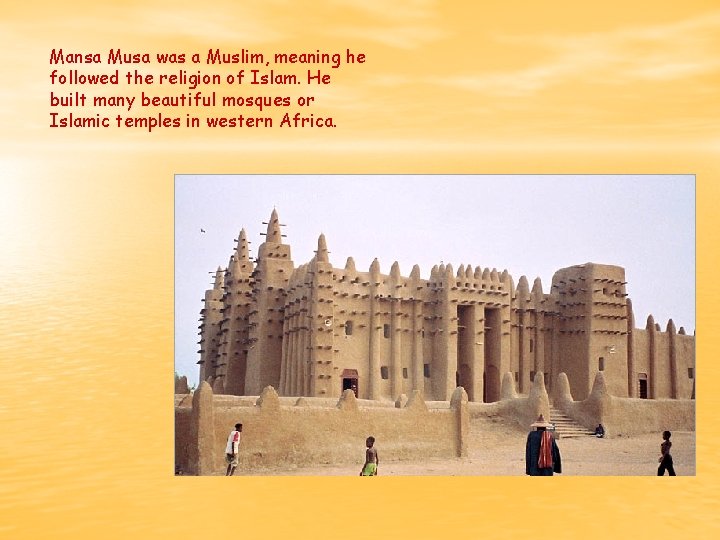
Mansa Musa was a Muslim, meaning he followed the religion of Islam. He built many beautiful mosques or Islamic temples in western Africa.
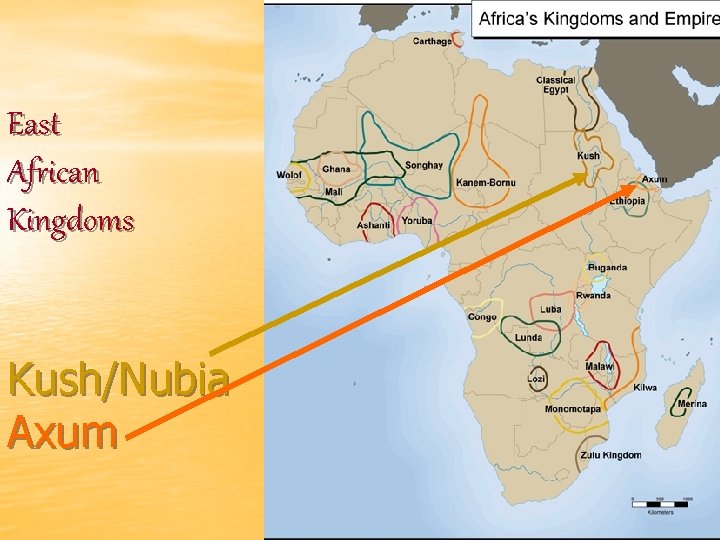
East African Kingdoms Kush/Nubia Axum
Why did people move from Egypt? ? ? • Muslim traders started to • • • exchange goods Gold mines were found Salt mines were found Bartering began between peoples
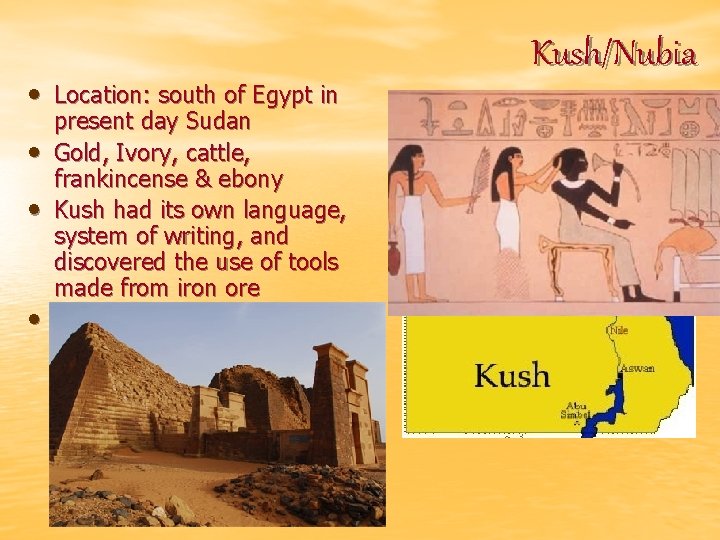
• Location: south of Egypt in • • • present day Sudan Gold, Ivory, cattle, frankincense & ebony Kush had its own language, system of writing, and discovered the use of tools made from iron ore Conquered Egypt in 9 th Century Kush adopted many Egyptian Forms of art/architecture Kush/Nubia
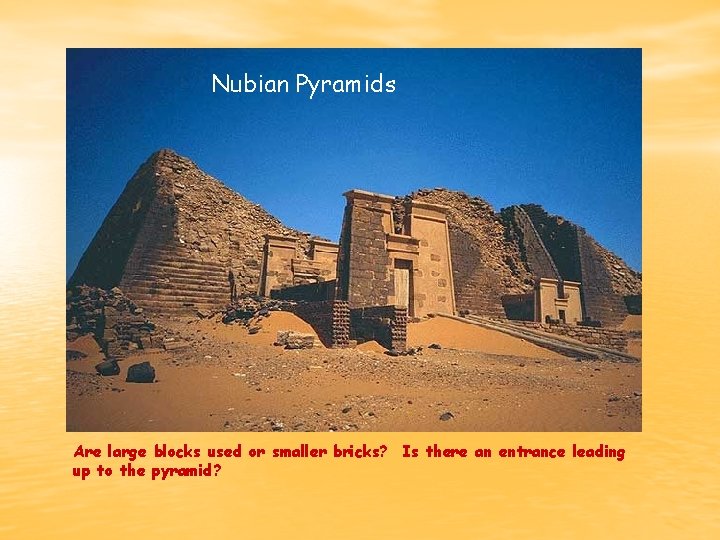
Nubian Pyramids Are large blocks used or smaller bricks? Is there an entrance leading up to the pyramid?
Nubian Pyramids
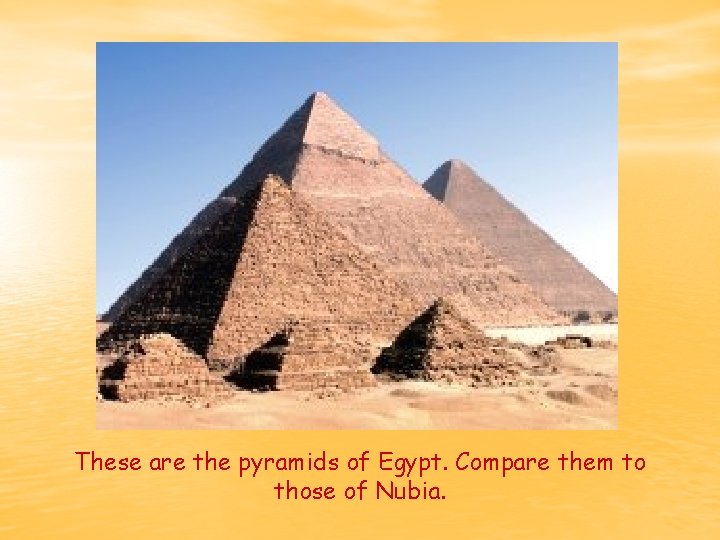
These are the pyramids of Egypt. Compare them to those of Nubia.
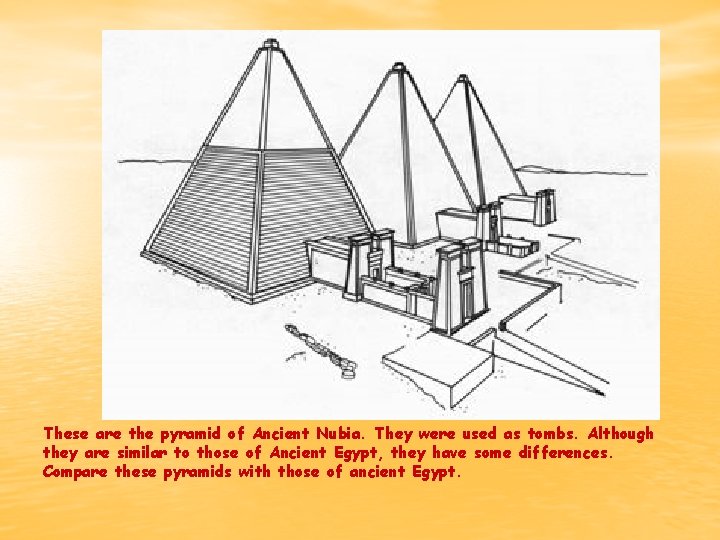
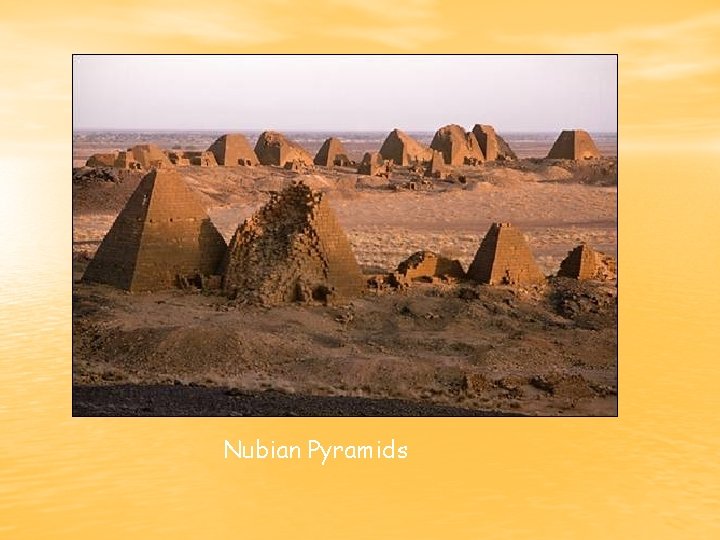
These are the pyramid of Ancient Nubia. They were used as tombs. Although they are similar to those of Ancient Egypt, they have some differences. Compare these pyramids with those of ancient Egypt.
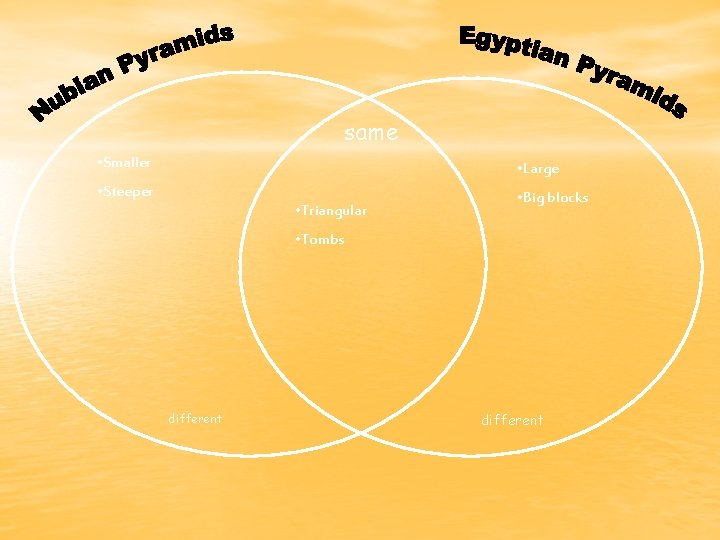
same • Smaller • Large • Steeper • Triangular • Big blocks • Tombs different
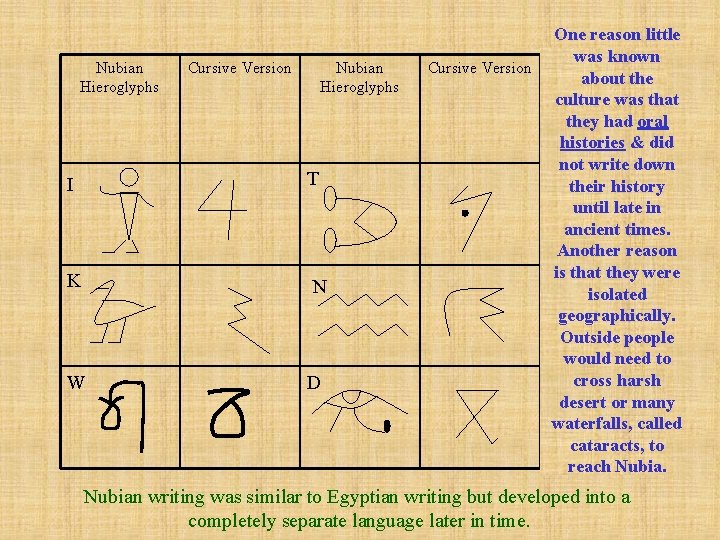
Nubian Hieroglyphs Cursive Version Nubian Hieroglyphs I T K N W D Cursive Version One reason little was known about the culture was that they had oral histories & did not write down their history until late in ancient times. Another reason is that they were isolated geographically. Outside people would need to cross harsh desert or many waterfalls, called cataracts, to reach Nubian writing was similar to Egyptian writing but developed into a completely separate language later in time.
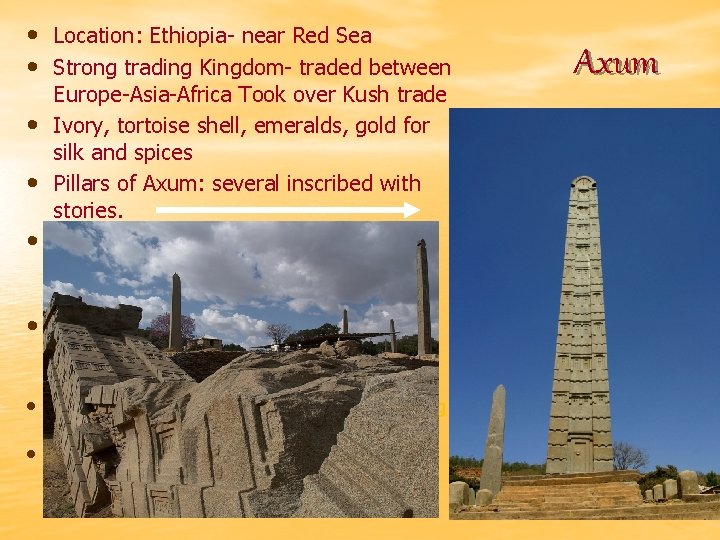
• Location: Ethiopia- near Red Sea • Strong trading Kingdom- traded between • • Europe-Asia-Africa Took over Kush trade Ivory, tortoise shell, emeralds, gold for silk and spices Pillars of Axum: several inscribed with stories. Muslim religion spread from traders through cultural diffusion (exchange of goods & ideas btwn people) In 328 Axum becomes a Christian Kingdom under Ezana & traditional temples replaced with Christian ones. • Home of Queen of Sheeba & perhaps the resting • place for the ark of the covenant! The Persians called it one of the worlds four greatest kingdoms alongside Rome, China & Persia. Axum
East African Trading kingdoms Kush/Nubia Axum • East African trading • East African Trading • • kingdom South of Egypt adopted their architecture More pyramids than Egypt Ruled over Egypt • kingdom Grew wealthy due to strategic location on Red Sea (trade with Arabia) Some Muslims, then in 328 becomes mostly Christian
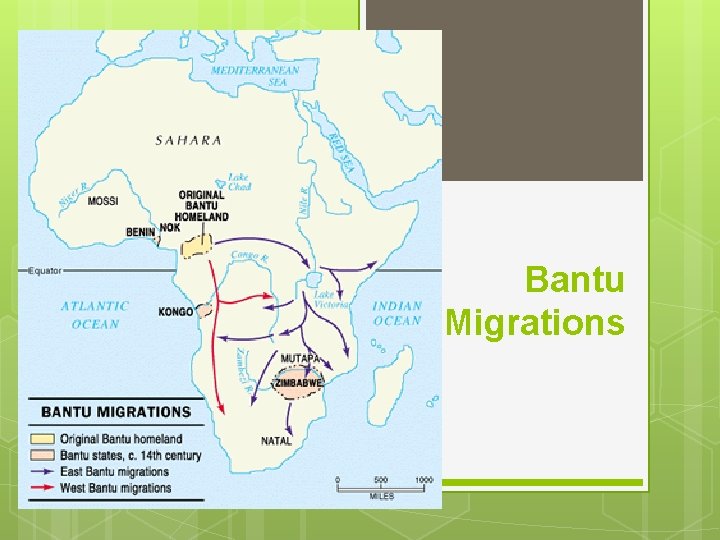
Bantu Migrations
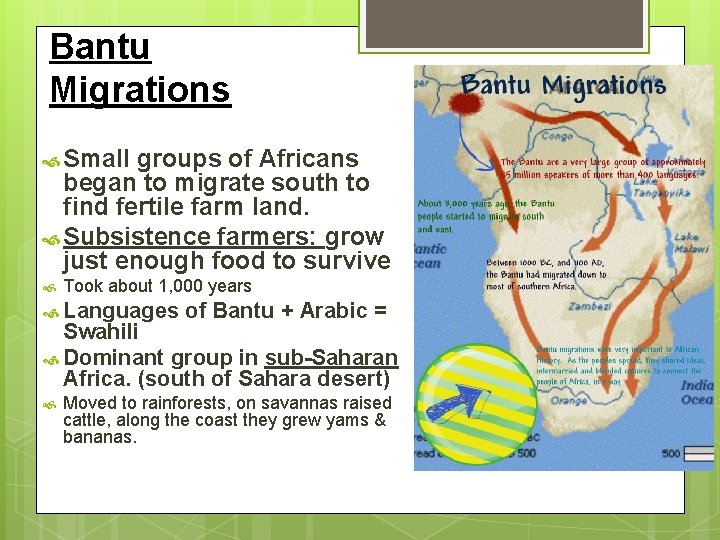
Bantu Migrations Small groups of Africans began to migrate south to find fertile farm land. Subsistence farmers: grow just enough food to survive Took about 1, 000 years Languages of Bantu + Arabic = Swahili Dominant group in sub-Saharan Africa. (south of Sahara desert) Moved to rainforests, on savannas raised cattle, along the coast they grew yams & bananas.
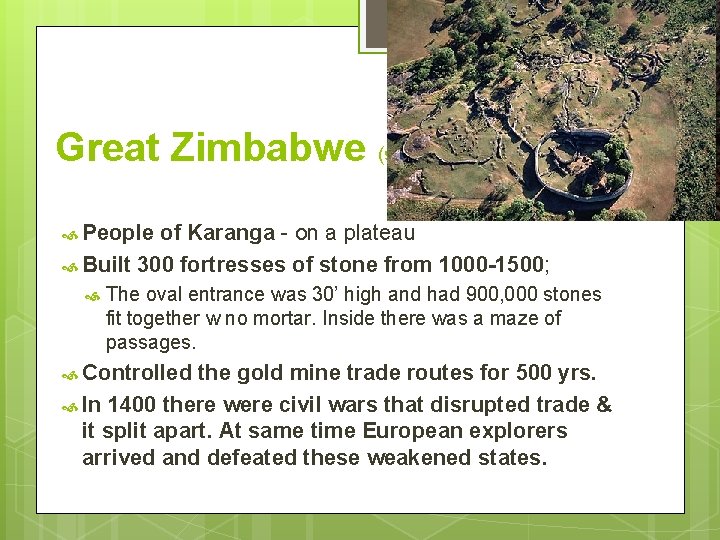
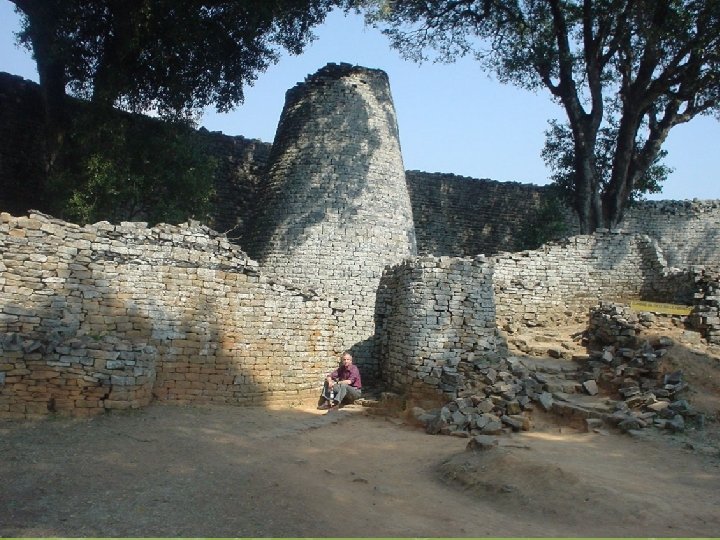
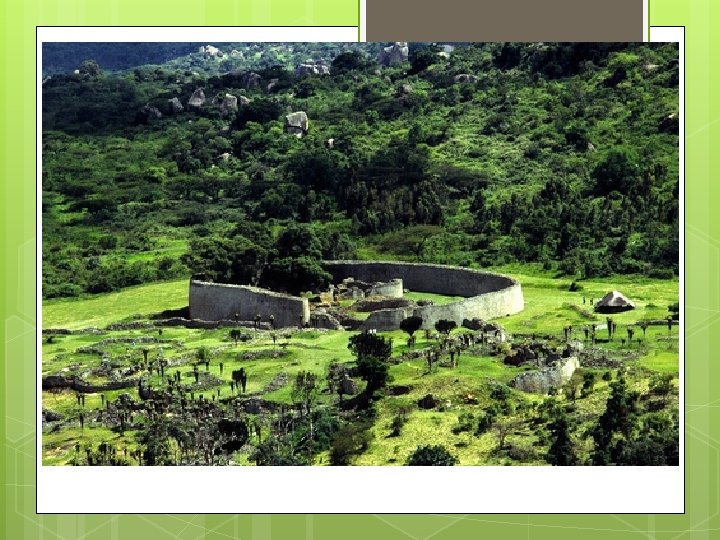
Great Zimbabwe (stone house) People of Karanga - on a plateau Built 300 fortresses of stone from 1000 -1500; The oval entrance was 30’ high and had 900, 000 stones fit together w no mortar. Inside there was a maze of passages. Controlled the gold mine trade routes for 500 yrs. In 1400 there were civil wars that disrupted trade & it split apart. At same time European explorers arrived and defeated these weakened states.
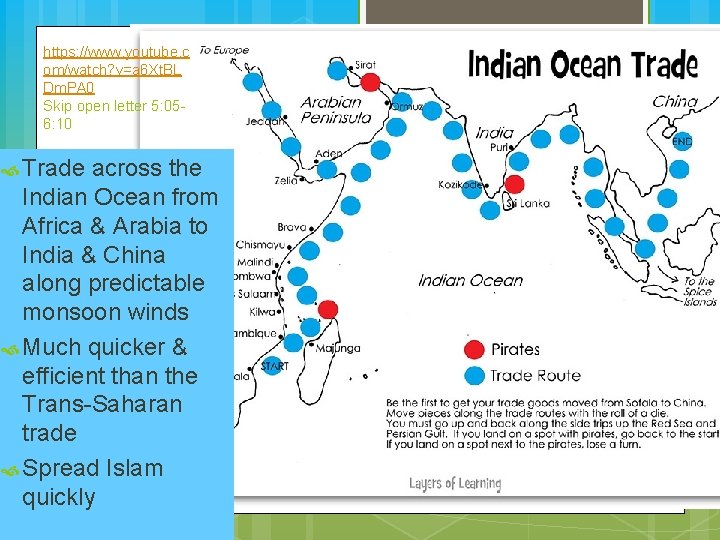
https: //www. youtube. c om/watch? v=a 6 Xt. BL Dm. PA 0 Skip open letter 5: 056: 10 Trade across the Indian Ocean from Africa & Arabia to India & China along predictable monsoon winds Much quicker & efficient than the Trans-Saharan trade Spread Islam quickly
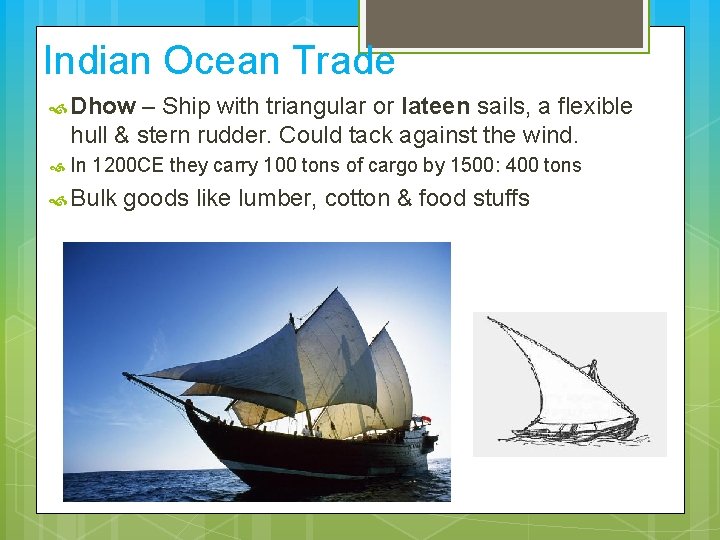
Indian Ocean Trade Dhow – Ship with triangular or lateen sails, a flexible hull & stern rudder. Could tack against the wind. In 1200 CE they carry 100 tons of cargo by 1500: 400 tons Bulk goods like lumber, cotton & food stuffs
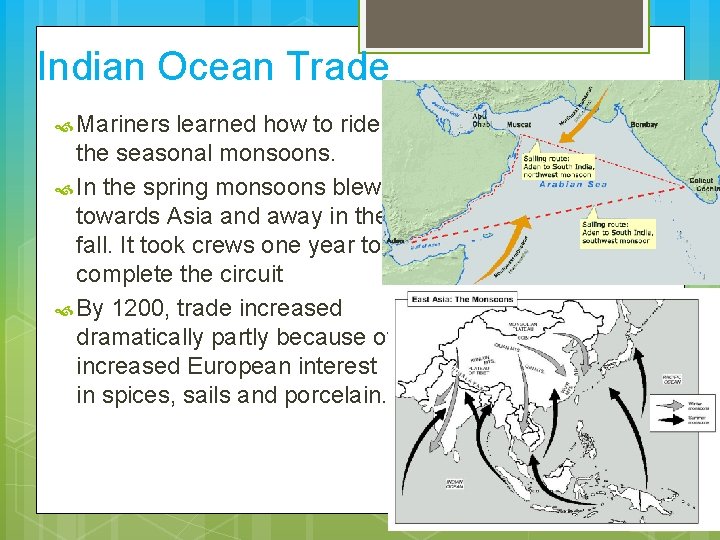
Indian Ocean Trade Mariners learned how to ride the seasonal monsoons. In the spring monsoons blew towards Asia and away in the fall. It took crews one year to complete the circuit By 1200, trade increased dramatically partly because of increased European interest in spices, sails and porcelain.
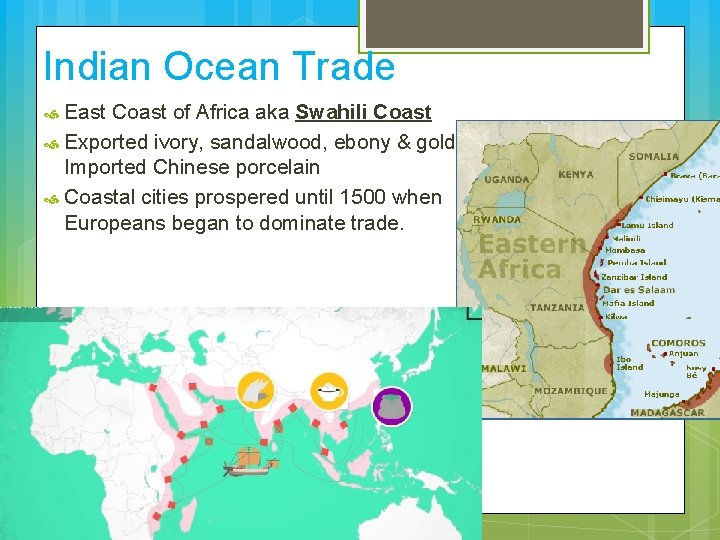
Indian Ocean Trade East Coast of Africa aka Swahili Coast Exported ivory, sandalwood, ebony & gold. Imported Chinese porcelain Coastal cities prospered until 1500 when Europeans began to dominate trade.
- Slides: 28