
8 The Passive Overview Crime and Punishment Focus






- Slides: 13
8 The Passive: Overview Crime and Punishment Focus on Grammar 4 Part VIII, Unit 18 By Ruth Luman, Gabriele Steiner, and BJ Wells Copyright © 2006. Pearson Education, Inc. All rights reserved.
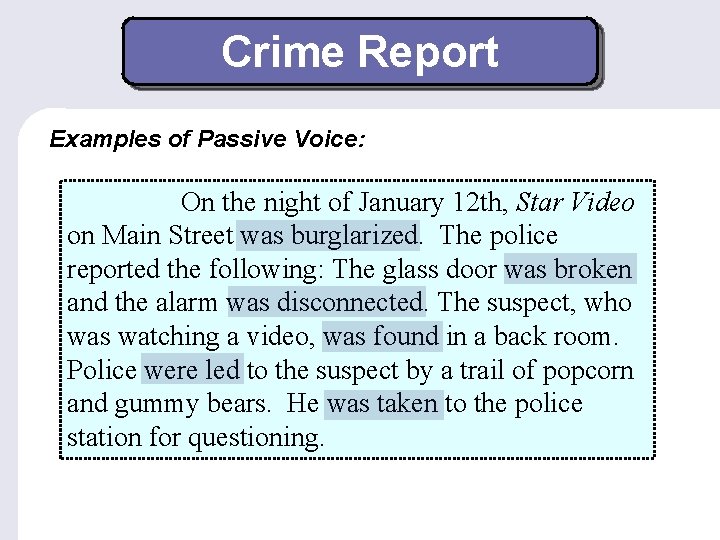
Crime Report Examples of Passive Voice: On the night of January 12 th, Star Video on Main Street was burglarized. The police reported the following: The glass door was broken and the alarm was disconnected. The suspect, who was watching a video, was found in a back room. Police were led to the suspect by a trail of popcorn and gummy bears. He was taken to the police station for questioning.
Legal System in the U. S. Examples of Passive Voice: If a crime is committed, a suspect is usually arrested and taken to jail. A lawyer is called and the suspect is interviewed. If a trial is necessary, jurors are selected. If the defendant is found guilty, he is sentenced by the judge to serve time in prison.
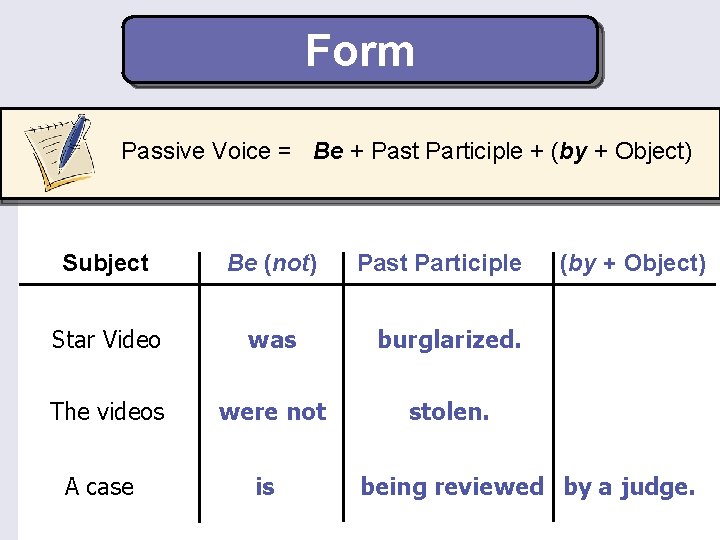
Form Passive Voice = Be + Past Participle + (by + Object) Subject Be (not) Star Video was burglarized. The videos were not stolen. A case is Past Participle (by + Object) being reviewed by a judge.
Active vs. Passive 1 Active sentences focus on the agent (person or thing doing the action). Passive sentences focus on the object (person or thing receiving the action). The police arrested the criminal. Subject is doing the action. Active voice The criminal was arrested by the police. Subject is receiving the action. Passive voice
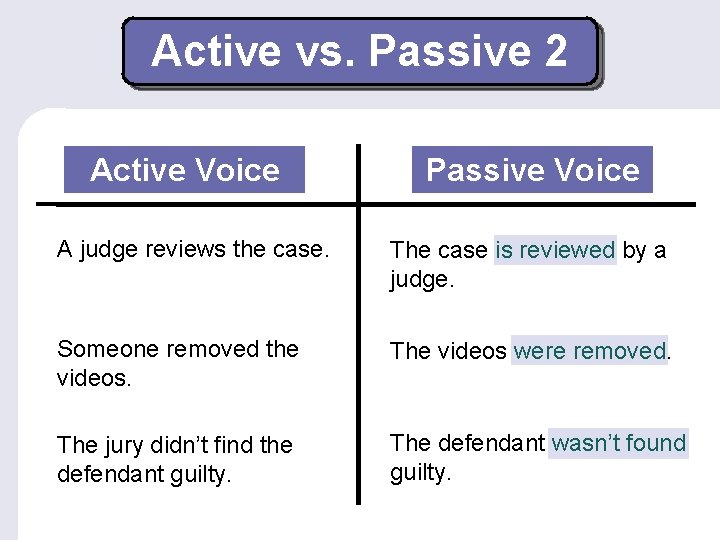
Active vs. Passive 2 Active Voice Passive Voice A judge reviews the case. The case is reviewed by a judge. Someone removed the videos. The videos were removed. The jury didn’t find the defendant guilty. The defendant wasn’t found guilty.
Identify the agent and receiver of the action. Are the verbs active or passive? Practice 1 1. The lawyer instructed the jury. Agent of the action Active voice 2. The jury was instructed by the lawyer. Receiver of the action Passive voice
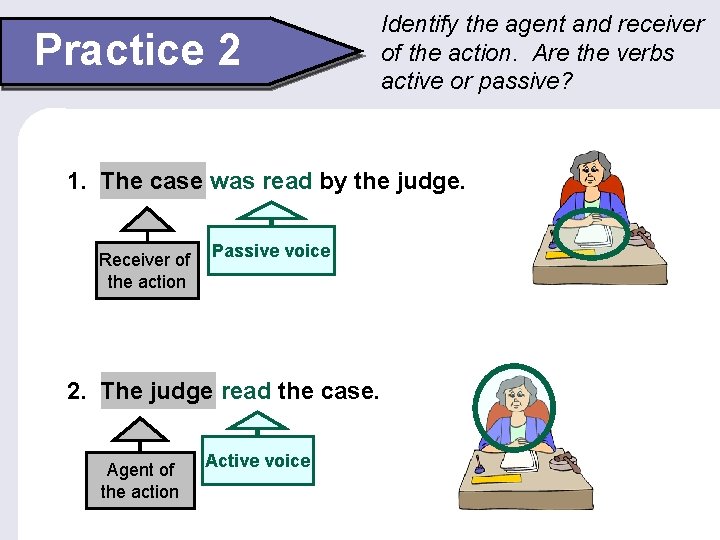
Practice 2 Identify the agent and receiver of the action. Are the verbs active or passive? 1. The case was read by the judge. Receiver of the action Passive voice 2. The judge read the case. Agent of the action Active voice
Use of Passive Voice 1 Use the passive voice when the agent of the action is unknown or not important. Pictures and fingerprints are taken. Jurors are selected.
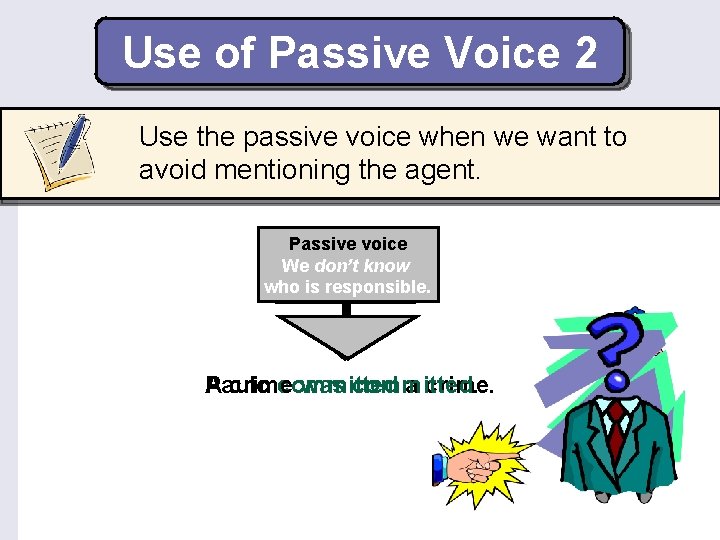
Use of Passive Voice 2 Use the passive voice when we want to avoid mentioning the agent. Passive voice Active voice We Paolo don’t know is whoresponsible. is responsible. Paulo A crime committed was committed. a crime.
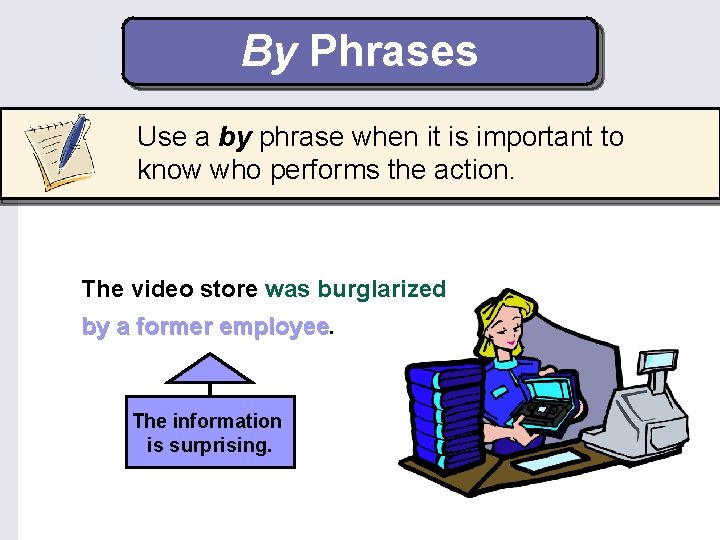
By Phrases Use a by phrase when it is important to know who performs the action. The video store was burglarized by a former employee The information is surprising.
Practice 3 Change the sentences from active to passive voice. Example: The lawyers submitted evidence. Evidence was submitted by the lawyers. 1. The witness answered questions. Questions were answered (by the witness). 2. The prosecution raised objections. Objections were raised (by the prosecution). 3. Jurors take notes. Notes are taken (by the jurors).
References Copyright © 2006 Pearson Education and its licensors. All rights reserved.