
8 The Genetics of Bacteria and Their Viruses
8 The Genetics of Bacteria and Their Viruses 1

Plasmids • Plasmids are circular DNA molecules which replicate independently of the bacterial chromosome • Plasmids often carry antibiotic resistance genes transferred to recipient cells by transformation • Plasmids are used in genetic engineering as gene transfer vectors 2

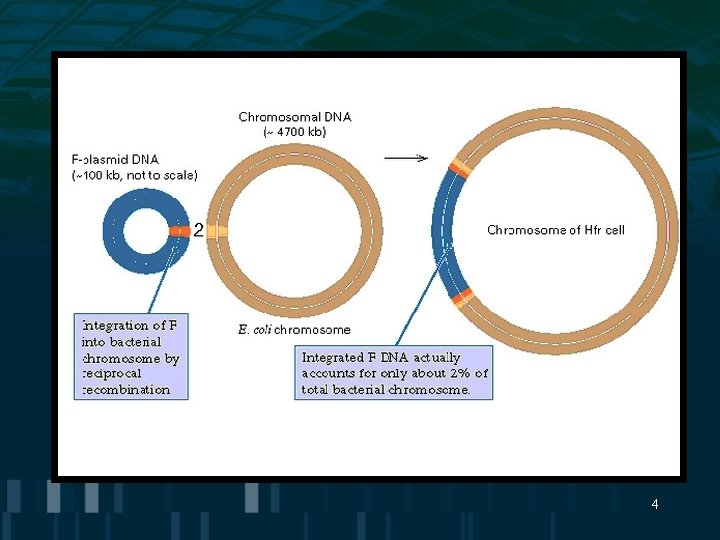
Conjugation • Conjugation = process in which DNA is transferred from bacterial donor cell (F+) to a recipient cell (F-) by cell-to-cell contact • F (fertility) factor = plasmid transferred by conjugation • F factor = episome = genetic element that can insert into chromosome or replicate as circular plasmid 3
4
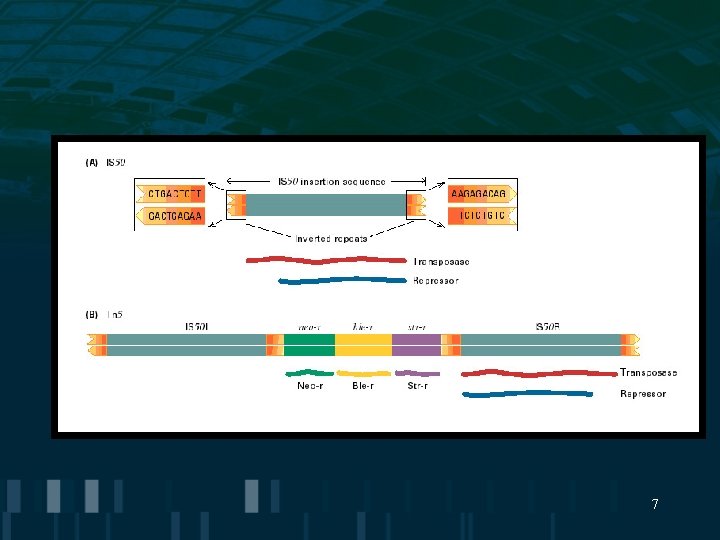
Transposable Elements • Transposable elements = DNA sequences present in multiple copies which are capable of movement within the genome • Insertion (IS) elements = mobile elements contain transposase = enzyme catalyzes IS element transfer • Transposons = IS elements which contain bacterial genes 5
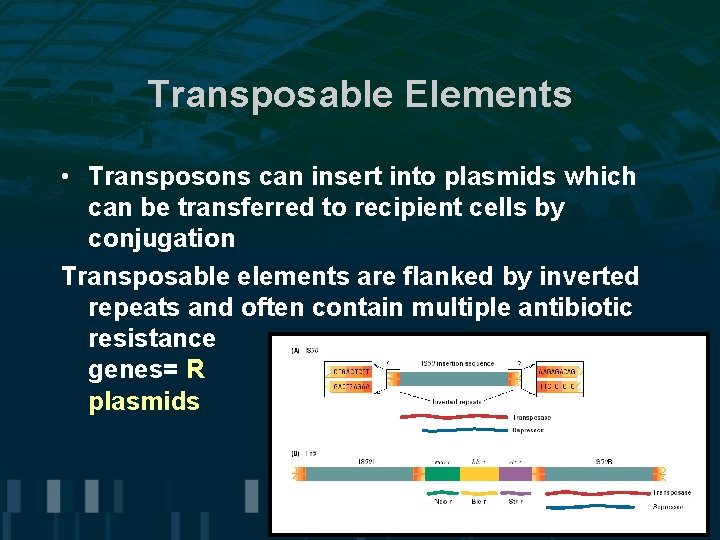
Transposable Elements • Transposons can insert into plasmids which can be transferred to recipient cells by conjugation Transposable elements are flanked by inverted repeats and often contain multiple antibiotic resistance genes= R plasmids 6
7

Bacterial Genetics Types of bacterial mutants: • Antibiotic-resistant mutants • Nutritional mutants: wildtype=prototroph mutant=auxotroph which cannot grow in minimal media providing basic nutrients only • carbon-source mutants=cannot use some carbon sources 8

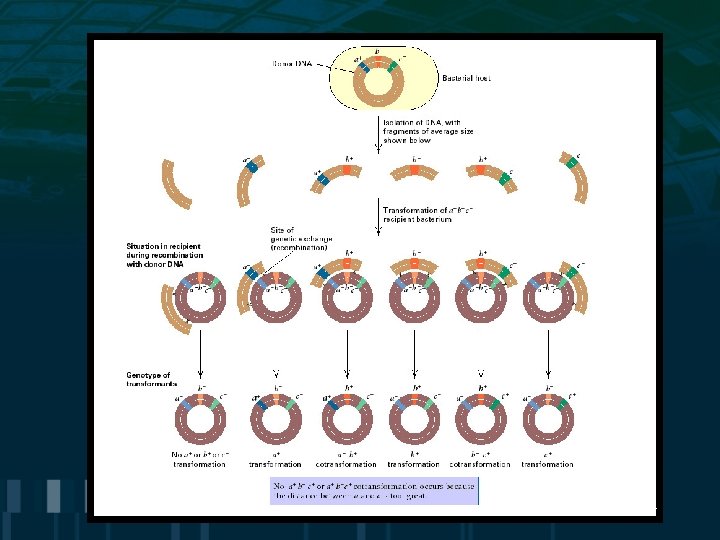
Bacterial Transformation • Recipient cells acquire genes from DNA outside the cell • DNA is taken up by cell and often recombines with genes on bacterial chromosome • Bacterial transformation showed that DNA is the genetic material • Transformation may alter phenotype of recipient cells 9
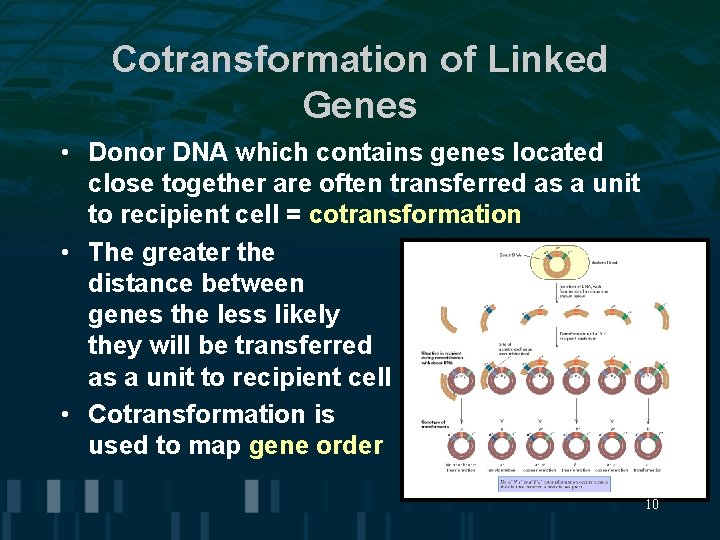
Cotransformation of Linked Genes • Donor DNA which contains genes located close together are often transferred as a unit to recipient cell = cotransformation • The greater the distance between genes the less likely they will be transferred as a unit to recipient cell • Cotransformation is used to map gene order 10
11

Hfr • Hfr (high frequency recombination) exchange between donor cells F+ and few cells where F factor integrated into bacterial chromosomes • Recombination inserts Hfr genes into chromosome 12

13

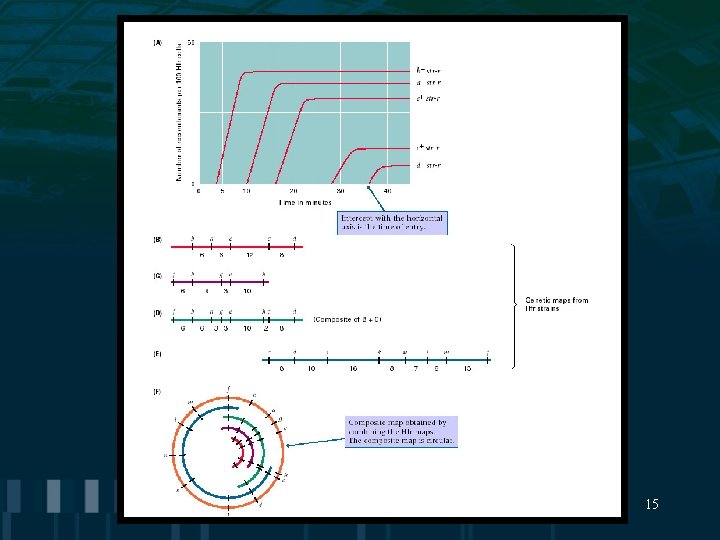
Chromosome Mapping • Time-of-Entry mapping = method of mapping genes by Hfr X F- matings using interrupted mating technique • A plot of time (minutes) versus # of recombinants is used to map genes as transfer order map • Circular genetic map of E. coli shows map distances of genes in minutes 14
15
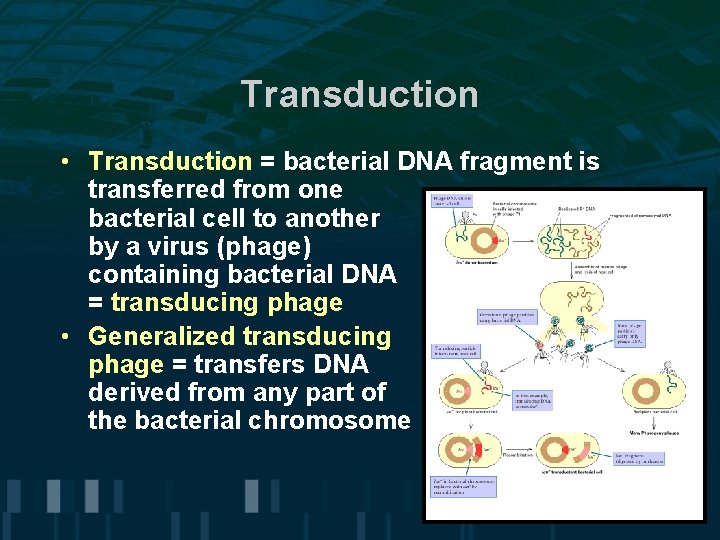
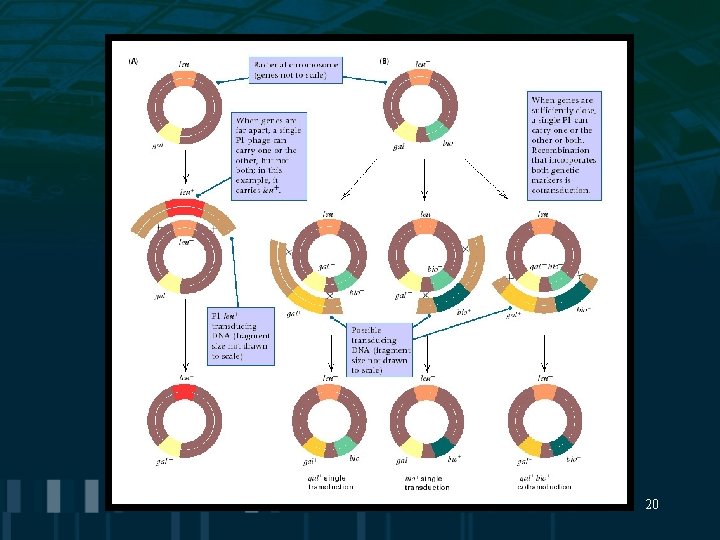
Transduction • Transduction = bacterial DNA fragment is transferred from one bacterial cell to another by a virus (phage) containing bacterial DNA = transducing phage • Generalized transducing phage = transfers DNA derived from any part of the bacterial chromosome 16
17
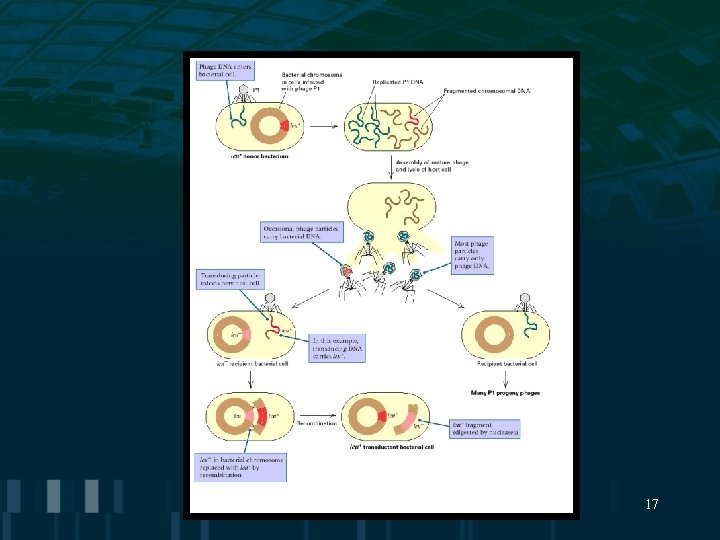
Transduction • Phage P 1 cuts bacterial chromosome into pieces and can package bacterial DNA into phage particles • Transducing particle will insert ‘transduced” bacterial genes into recipient cell by infection • Transduced genes may be inserted into recipient chromosome by homologous recombination 18
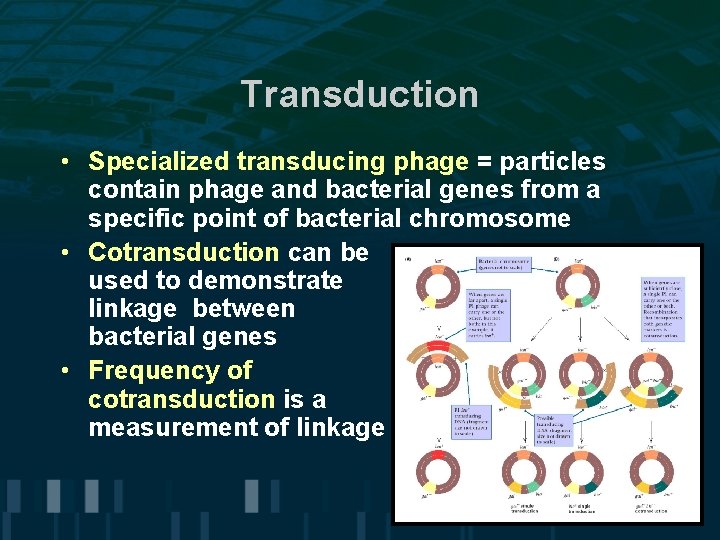
Transduction • Specialized transducing phage = particles contain phage and bacterial genes from a specific point of bacterial chromosome • Cotransduction can be used to demonstrate linkage between bacterial genes • Frequency of cotransduction is a measurement of linkage 19
20
Transduction • Specialized transducing phages transduce bacterial genes at the site of prophage insertion into the bacterial chromosome • Transduction of bacterial genes occurs by aberrant excision of viral DNA which results in the incorporation of bacterial genes into phage chromosome 21
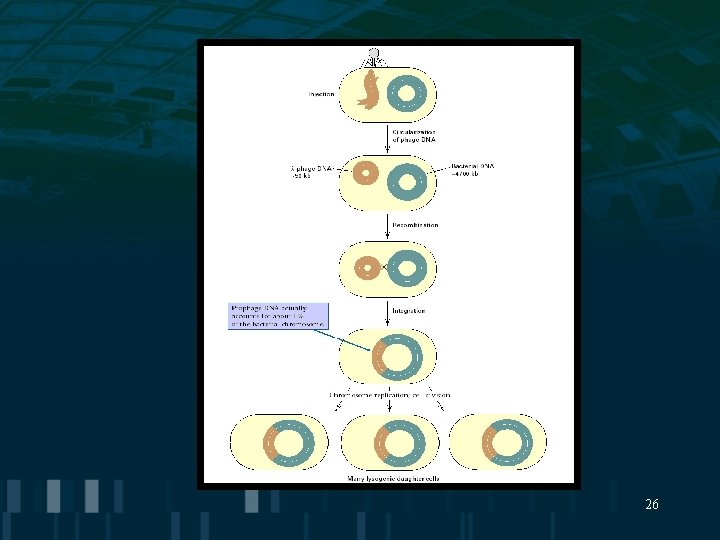
Temperate Bacteriophages • Temperate bacteriophages have two life cycles: lytic cycle=infection which results in production of progeny phage and bacterial cell lysis and lysogeny = nonproductive viral infection results in insertion of viral DNA into bacterial chromosome • Viral DNA integration= site-specific insertion into bacterial chromosome 22
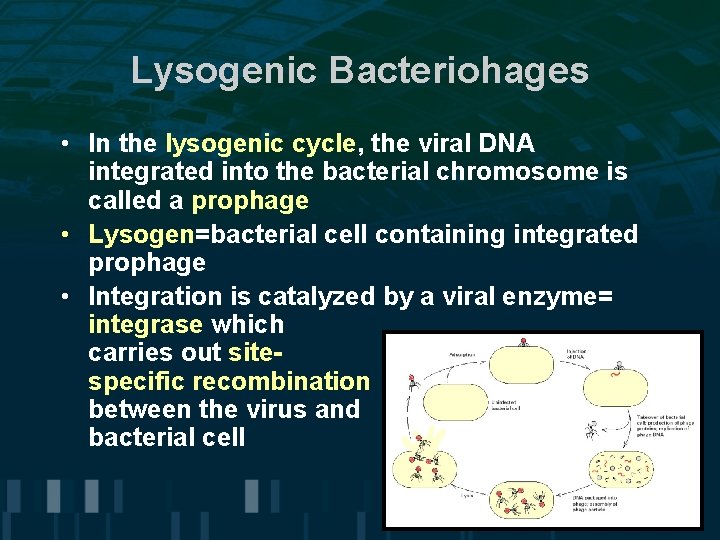
Lysogenic Bacteriohages • In the lysogenic cycle, the viral DNA integrated into the bacterial chromosome is called a prophage • Lysogen=bacterial cell containing integrated prophage • Integration is catalyzed by a viral enzyme= integrase which carries out sitespecific recombination between the virus and bacterial cell 23

24
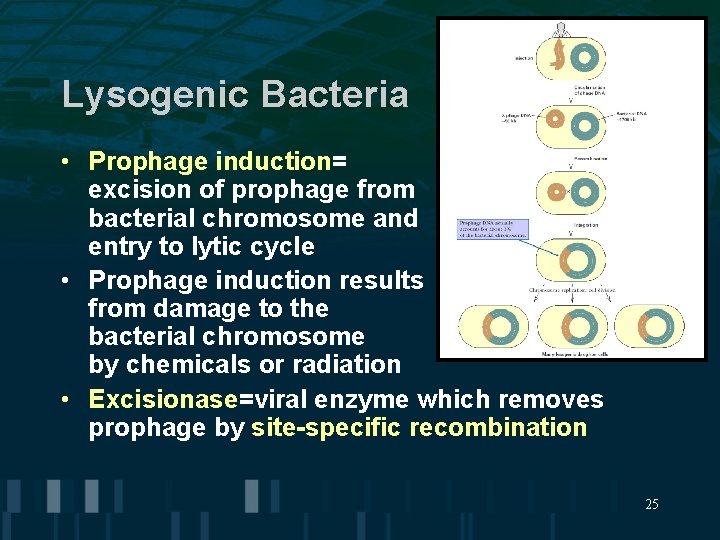
Lysogenic Bacteria • Prophage induction= excision of prophage from bacterial chromosome and entry to lytic cycle • Prophage induction results from damage to the bacterial chromosome by chemicals or radiation • Excisionase=viral enzyme which removes prophage by site-specific recombination 25
26
- Slides: 26