
8 th Triennial International Aircraft Fire and Cabin
8 th Triennial International Aircraft Fire and Cabin Safety Research Conference Development of New Flammability Tests for Magnesium-Alloy Cabin Components Presented to: 8 th Triennial Conference on Aircraft Fire and Cabin Safety Research, Tropicana Hotel Casino, Atlantic City, NJ By: Tim Marker, FAA Technical Center Date: October 24 -27, 2016 Federal Aviation Administration
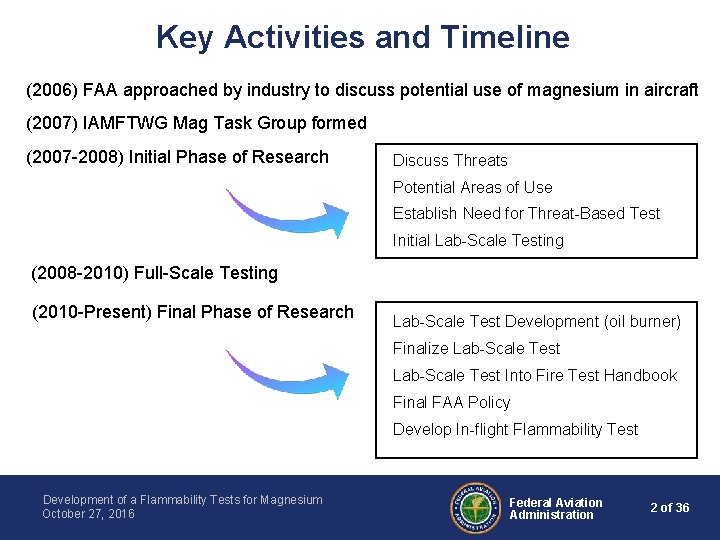
Key Activities and Timeline (2006) FAA approached by industry to discuss potential use of magnesium in aircraft (2007) IAMFTWG Mag Task Group formed (2007 -2008) Initial Phase of Research Discuss Threats Potential Areas of Use Establish Need for Threat-Based Test Initial Lab-Scale Testing (2008 -2010) Full-Scale Testing (2010 -Present) Final Phase of Research Lab-Scale Test Development (oil burner) Finalize Lab-Scale Test Into Fire Test Handbook Final FAA Policy Develop In-flight Flammability Test Development of a Flammability Tests for Magnesium October 27, 2016 Federal Aviation Administration 2 of 36
Magnesium Alloy Use in Commercial Aircraft Industry Question: Why can’t Magnesium-Alloy be used in the construction of an aircraft seat frame? Regulatory Response: Current FAA TSO C-127 “Rotorcraft and Transport Airplane Seating Systems” makes reference to SAE standard (AS 8049), “Performance Standard for Seats in Civil Rotorcraft, Transport Aircraft and General Aviation” Para 3. 3. 3 states, “Magnesium alloys shall not be used. ” Development of a Flammability Tests for Magnesium October 27, 2016 Federal Aviation Administration 3 of 36

Initial Laboratory-Scale Testing (2007 -2008) Development of a Flammability Tests for Magnesium October 27, 2016 Federal Aviation Administration 4 of 36
Full-Scale Testing (2008 -2010) Method: Conduct baseline tests using OEM aluminum-framed triple seats. Tests will simulate a post-crash fire with fuselage rupture, allowing external fire to directly impact the cabin materials. Then… Conduct additional tests in an identical fashion using mag-alloy in the construction of the primary seat components. External fuel fire permitted to burn for 5 minutes, then internal fire permitted to burn for 5 additional minutes before applying water. Outcome: Determine if the use of mag-alloy poses additional hazard during the 10 -minute event. Development of a Flammability Tests for Magnesium October 27, 2016 Federal Aviation Administration 5 of 36
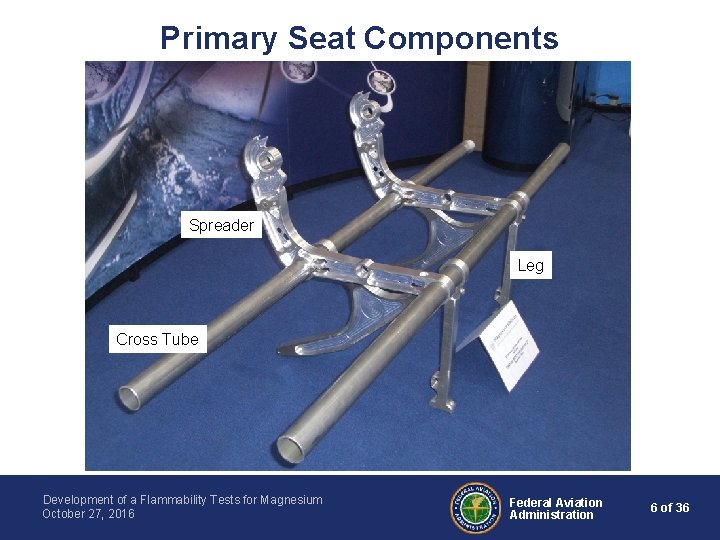
Primary Seat Components Spreader Leg Cross Tube Development of a Flammability Tests for Magnesium October 27, 2016 Federal Aviation Administration 6 of 36

Full-Scale Test Apparatus water applied at end of all tests (not just magnesium), for similarity Development of a Flammability Tests for Magnesium October 27, 2016 Federal Aviation Administration 7 of 36
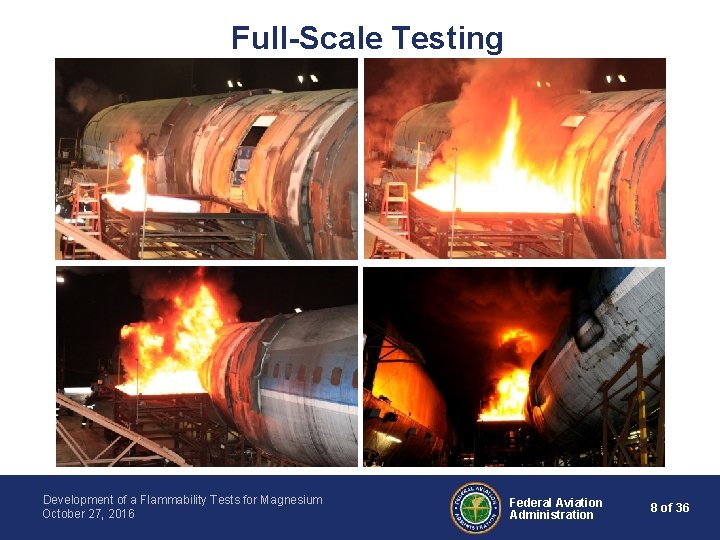
Full-Scale Testing Development of a Flammability Tests for Magnesium October 27, 2016 Federal Aviation Administration 8 of 36

Full-Scale Test Configuration Development of a Flammability Tests for Magnesium October 27, 2016 Federal Aviation Administration 9 of 36

Typical Test Result Development of a Flammability Tests for Magnesium October 27, 2016 Federal Aviation Administration 10 of 36
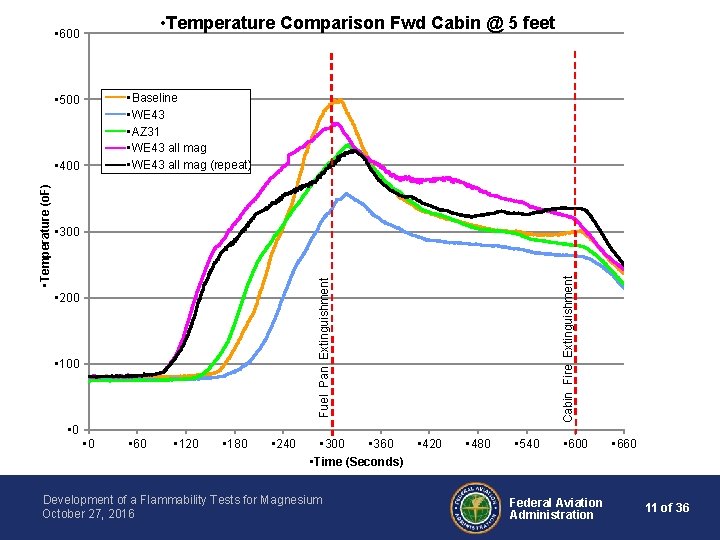
• Temperature Comparison Fwd Cabin @ 5 feet • 600 • Baseline • WE 43 • AZ 31 • WE 43 all mag (repeat) • 500 Cabin Fire Extinguishment • 300 Fuel Pan Extinguishment • Temperature (o. F) • 400 • 200 • 100 • 60 • 120 • 180 • 240 • 300 • 360 • Time (Seconds) Development of a Flammability Tests for Magnesium October 27, 2016 • 420 • 480 • 540 • 600 Federal Aviation Administration • 660 11 of 36
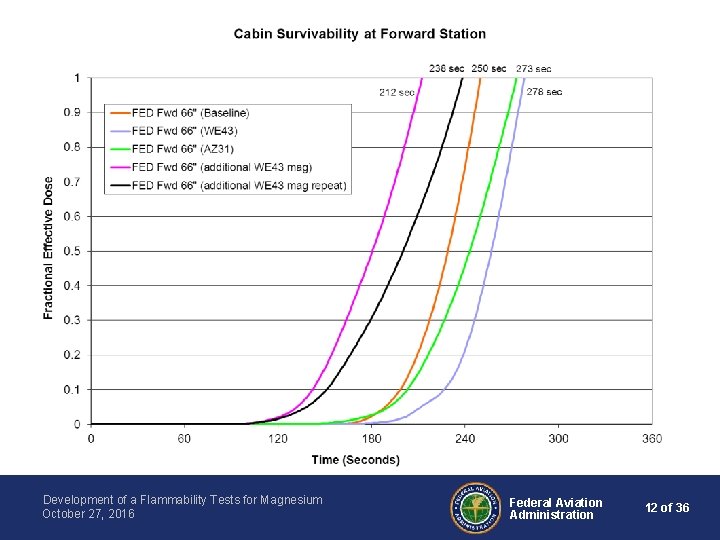
Development of a Flammability Tests for Magnesium October 27, 2016 Federal Aviation Administration 12 of 36
Full-Scale Testing Summary Magnesium alloy components had little/no effect on survivability Slight flashing of burning mag-alloy during water application for WE 43 test Noticeable difficulty extinguishing burning mag-alloy during AZ 31 test Incapacitation results very similar for baseline and mag-alloy tests • slightly better for mag-alloys at forward location • slightly worse for mag-alloys at mid location • More severe fire condition caused more rapid incapacitation during “all-mag” tests Development of a Flammability Tests for Magnesium October 27, 2016 Federal Aviation Administration 13 of 36
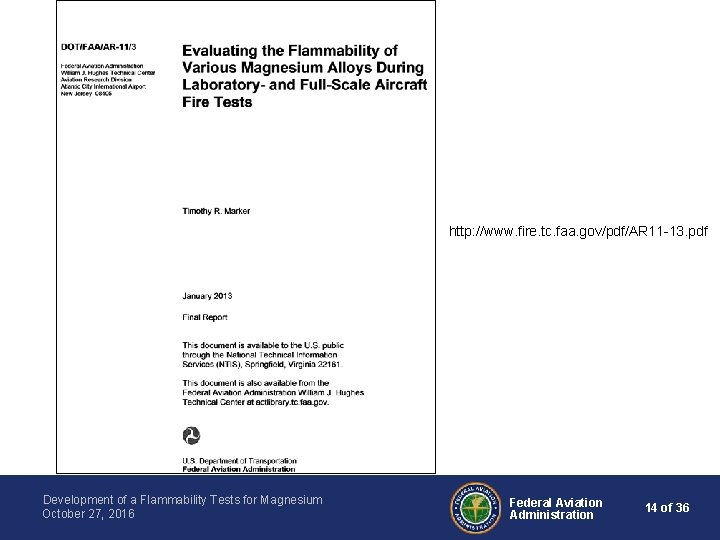
http: //www. fire. tc. faa. gov/pdf/AR 11 -13. pdf Development of a Flammability Tests for Magnesium October 27, 2016 Federal Aviation Administration 14 of 36
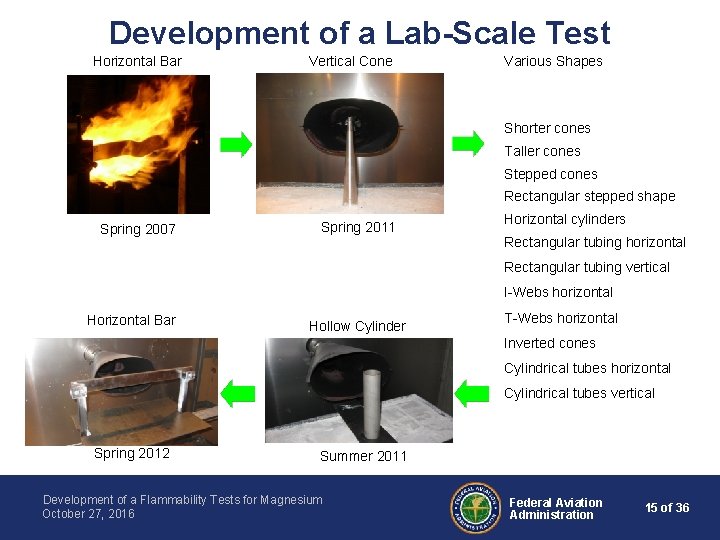
Development of a Lab-Scale Test Horizontal Bar Vertical Cone Various Shapes Shorter cones Taller cones Stepped cones Rectangular stepped shape Spring 2007 Spring 2011 Horizontal cylinders Rectangular tubing horizontal Rectangular tubing vertical I-Webs horizontal Horizontal Bar Hollow Cylinder T-Webs horizontal Inverted cones Cylindrical tubes horizontal Cylindrical tubes vertical Spring 2012 Summer 2011 Development of a Flammability Tests for Magnesium October 27, 2016 Federal Aviation Administration 15 of 36

Magnesium Alloy Flammability Testing Rig Development of a Flammability Tests for Magnesium October 27, 2016 Federal Aviation Administration 16 of 36
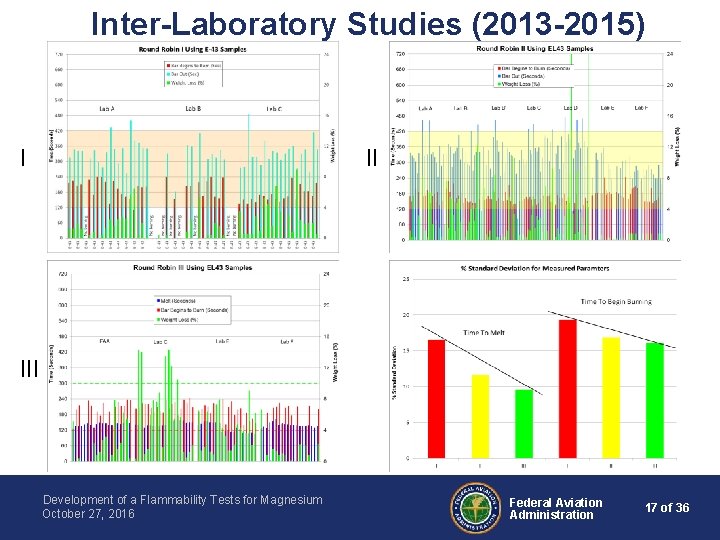
Inter-Laboratory Studies (2013 -2015) I II III Development of a Flammability Tests for Magnesium October 27, 2016 Federal Aviation Administration 17 of 36
https: //www. fire. tc. faa. gov/pdf/TC-13 -52. pdf Development of a Flammability Tests for Magnesium October 27, 2016 Federal Aviation Administration 18 of 36
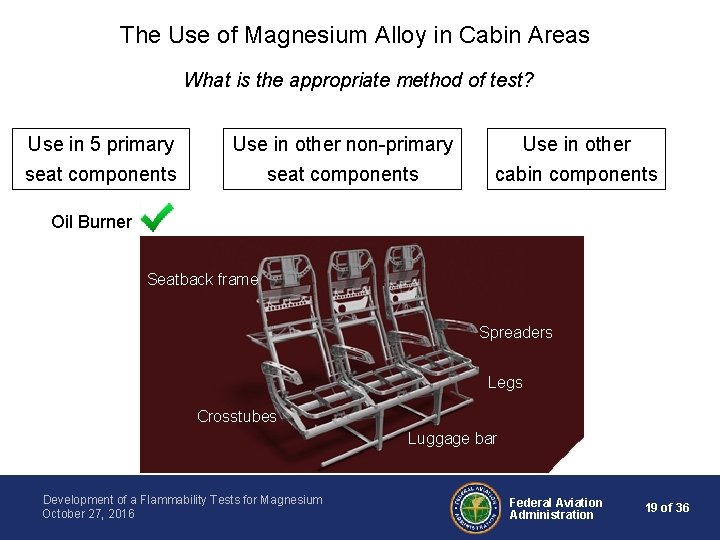
The Use of Magnesium Alloy in Cabin Areas What is the appropriate method of test? Use in 5 primary seat components Use in other non-primary seat components Use in other cabin components Oil Burner Seatback frame Spreaders Legs Crosstubes Luggage bar Development of a Flammability Tests for Magnesium October 27, 2016 Federal Aviation Administration 19 of 36
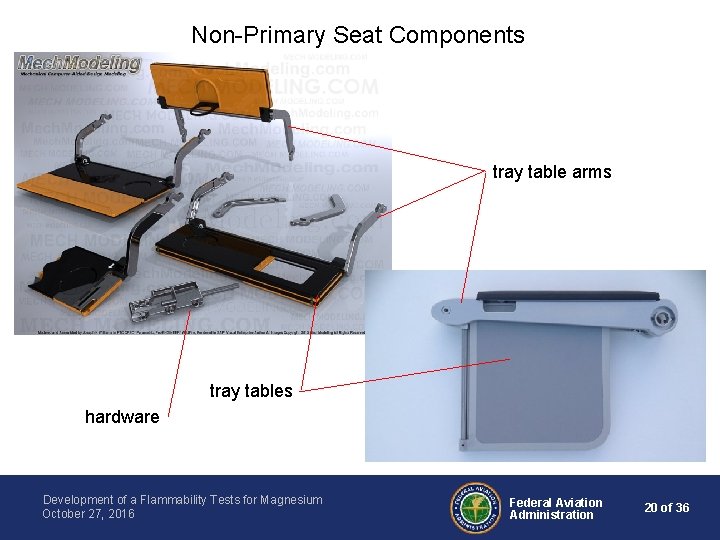
Non-Primary Seat Components tray table arms tray tables hardware Development of a Flammability Tests for Magnesium October 27, 2016 Federal Aviation Administration 20 of 36
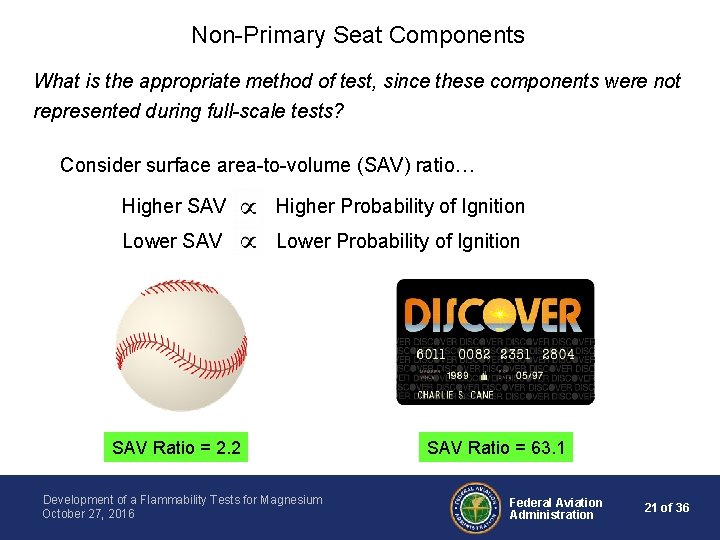
Non-Primary Seat Components What is the appropriate method of test, since these components were not represented during full-scale tests? Consider surface area-to-volume (SAV) ratio… Higher SAV Higher Probability of Ignition Lower SAV Lower Probability of Ignition SAV Ratio = 2. 2 Development of a Flammability Tests for Magnesium October 27, 2016 SAV Ratio = 63. 1 Federal Aviation Administration 21 of 36

Surface Area-to-Volume (SAV) Ratios of Seat Components SAV ratio solid component ≤ 20 SAV ratio hollow component ≤ 40 Development of a Flammability Tests for Magnesium October 27, 2016 Federal Aviation Administration 22 of 36
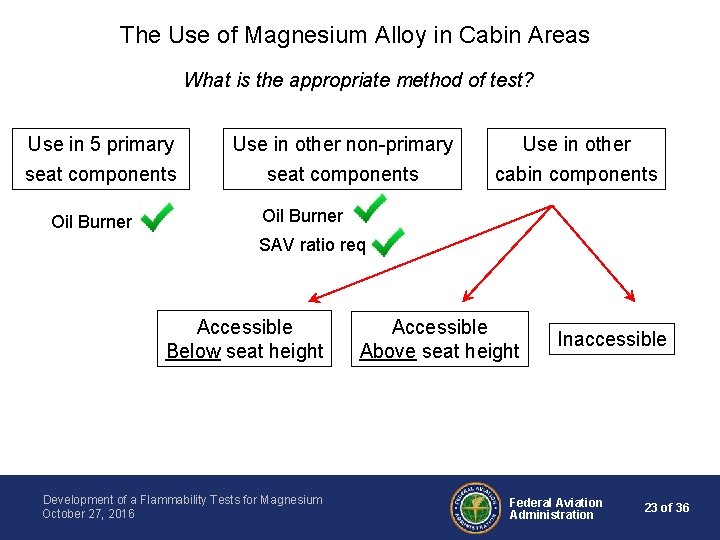
The Use of Magnesium Alloy in Cabin Areas What is the appropriate method of test? Use in 5 primary seat components Oil Burner Use in other non-primary seat components Use in other cabin components Oil Burner SAV ratio req Accessible Below seat height Development of a Flammability Tests for Magnesium October 27, 2016 Accessible Above seat height Inaccessible Federal Aviation Administration 23 of 36
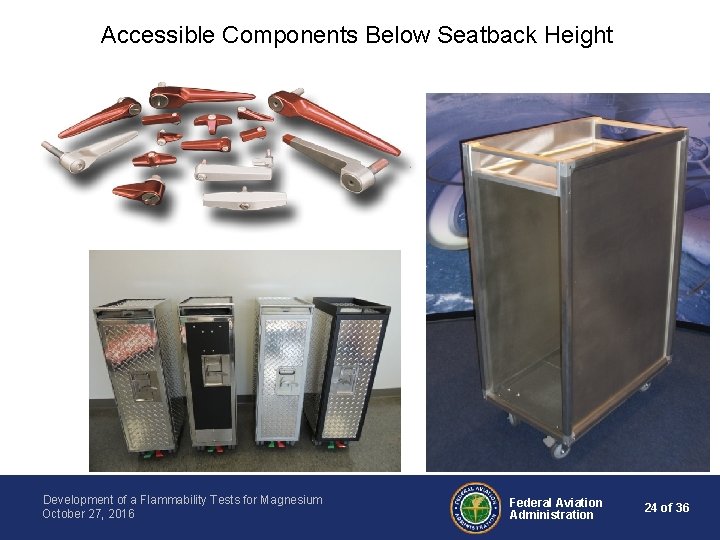
Accessible Components Below Seatback Height Development of a Flammability Tests for Magnesium October 27, 2016 Federal Aviation Administration 24 of 36
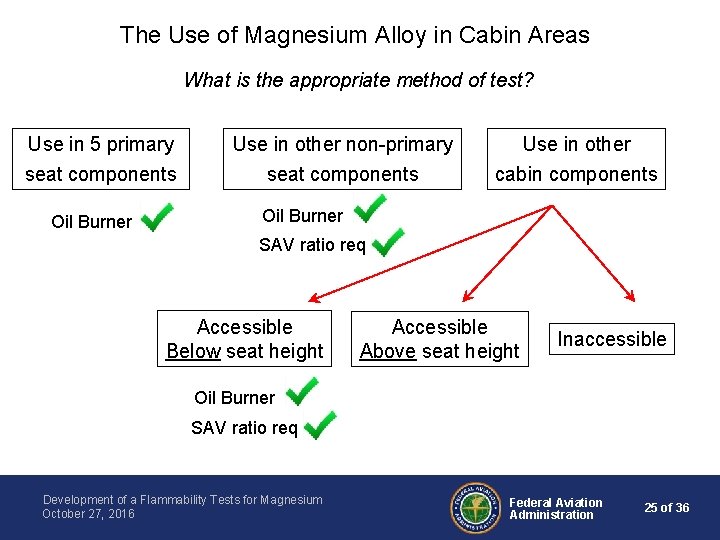
The Use of Magnesium Alloy in Cabin Areas What is the appropriate method of test? Use in 5 primary seat components Oil Burner Use in other non-primary seat components Use in other cabin components Oil Burner SAV ratio req Accessible Below seat height Accessible Above seat height Inaccessible Oil Burner SAV ratio req Development of a Flammability Tests for Magnesium October 27, 2016 Federal Aviation Administration 25 of 36
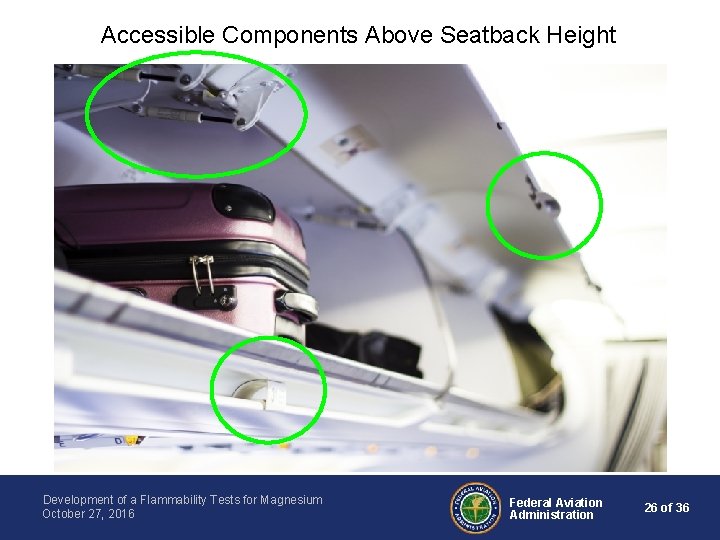
Accessible Components Above Seatback Height Development of a Flammability Tests for Magnesium October 27, 2016 Federal Aviation Administration 26 of 36
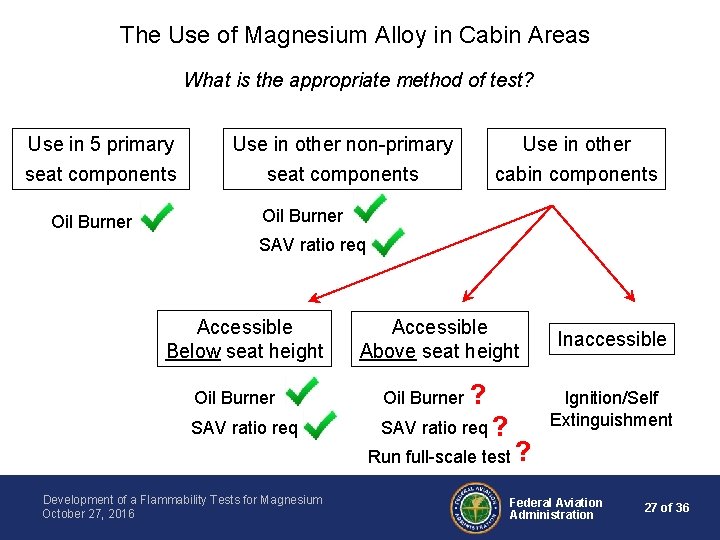
The Use of Magnesium Alloy in Cabin Areas What is the appropriate method of test? Use in 5 primary seat components Oil Burner Use in other non-primary seat components Use in other cabin components Oil Burner SAV ratio req Accessible Below seat height Accessible Above seat height ? Oil Burner SAV ratio req ? Development of a Flammability Tests for Magnesium October 27, 2016 Inaccessible Ignition/Self Extinguishment Run full-scale test ? Federal Aviation Administration 27 of 36
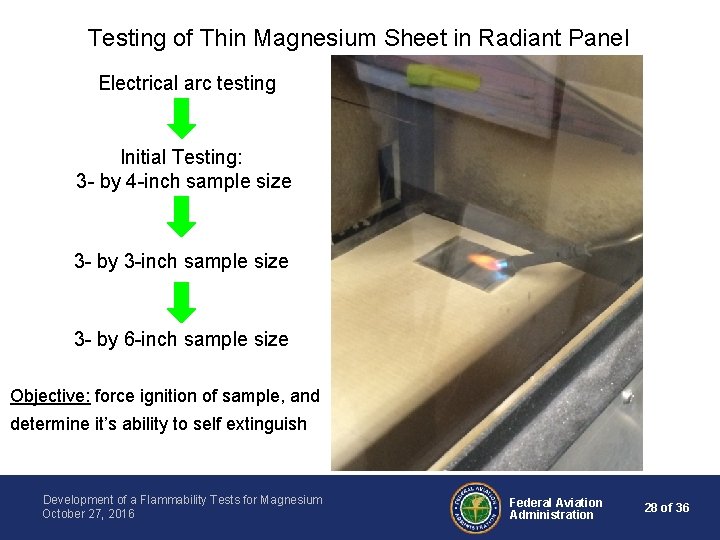
Testing of Thin Magnesium Sheet in Radiant Panel Electrical arc testing Initial Testing: 3 - by 4 -inch sample size 3 - by 3 -inch sample size 3 - by 6 -inch sample size Objective: force ignition of sample, and determine it’s ability to self extinguish Development of a Flammability Tests for Magnesium October 27, 2016 Federal Aviation Administration 28 of 36
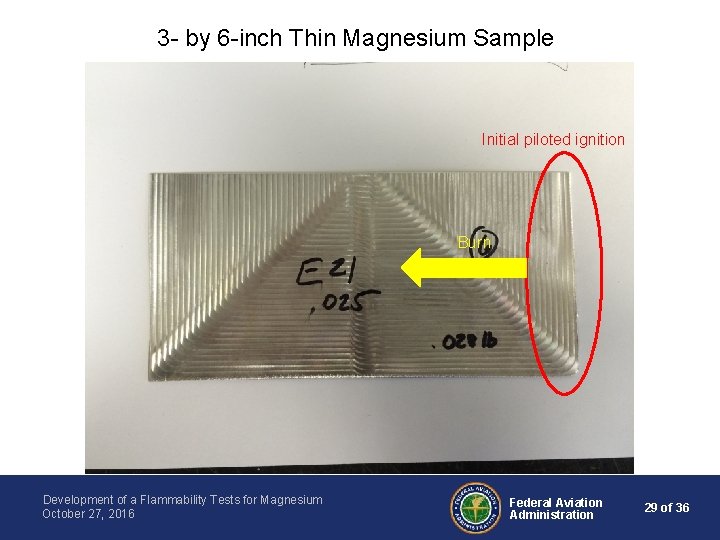
3 - by 6 -inch Thin Magnesium Sample Initial piloted ignition Burn Development of a Flammability Tests for Magnesium October 27, 2016 Federal Aviation Administration 29 of 36

3 - by 6 -inch Thin Magnesium Sample Development of a Flammability Tests for Magnesium October 27, 2016 Federal Aviation Administration 30 of 36
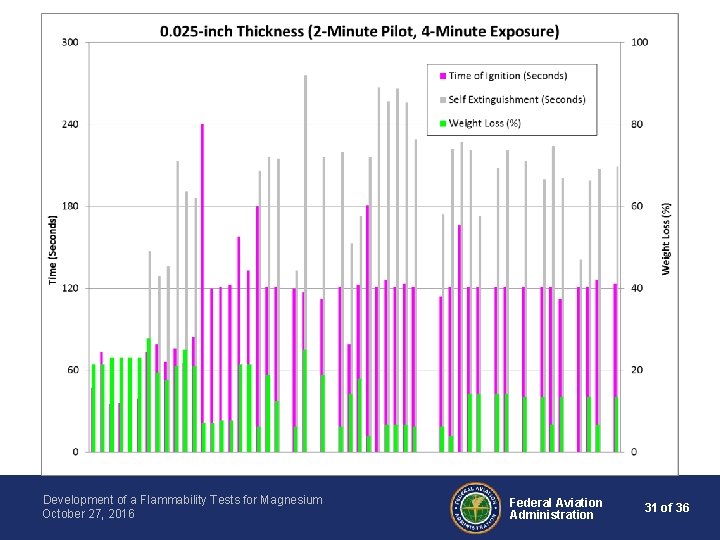
Development of a Flammability Tests for Magnesium October 27, 2016 Federal Aviation Administration 31 of 36
Development of a Flammability Tests for Magnesium October 27, 2016 Federal Aviation Administration 32 of 36
Development of a Flammability Tests for Magnesium October 27, 2016 Federal Aviation Administration 33 of 36
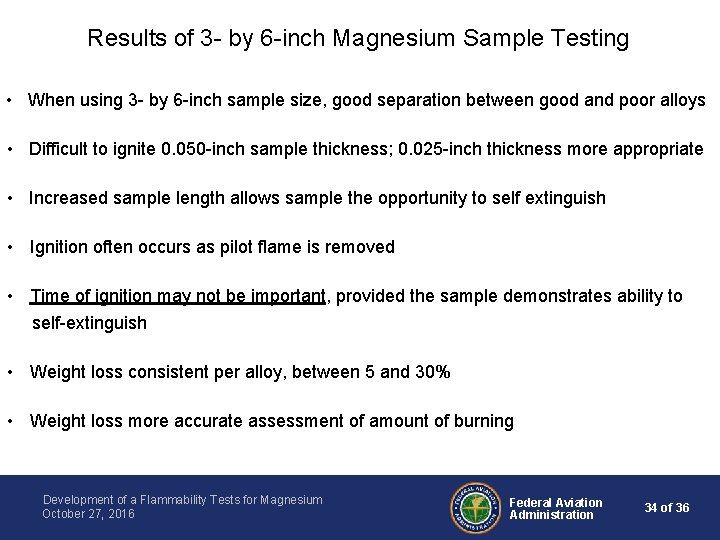
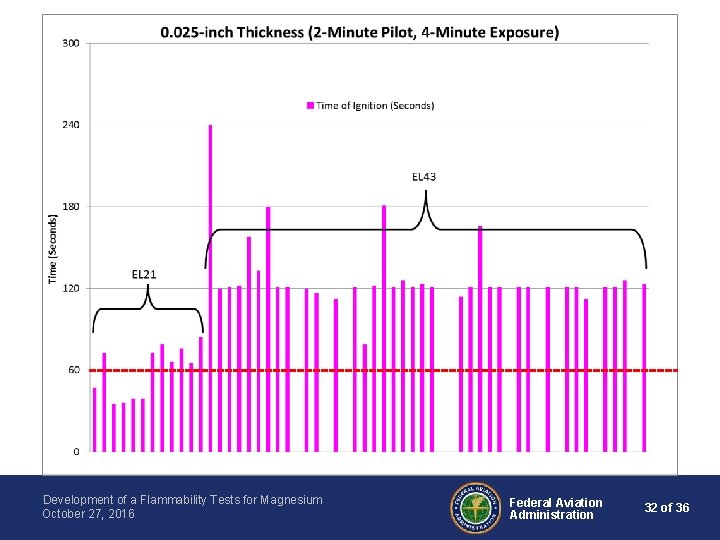
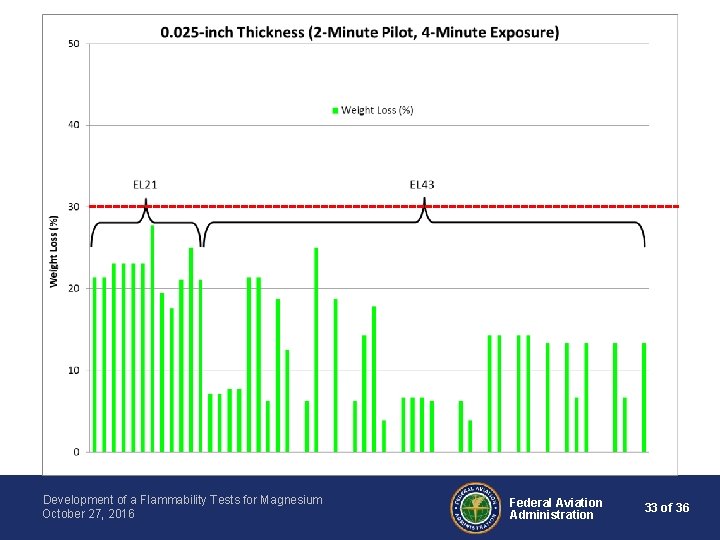
Results of 3 - by 6 -inch Magnesium Sample Testing • When using 3 - by 6 -inch sample size, good separation between good and poor alloys • Difficult to ignite 0. 050 -inch sample thickness; 0. 025 -inch thickness more appropriate • Increased sample length allows sample the opportunity to self extinguish • Ignition often occurs as pilot flame is removed • Time of ignition may not be important, provided the sample demonstrates ability to self-extinguish • Weight loss consistent per alloy, between 5 and 30% • Weight loss more accurate assessment of amount of burning Development of a Flammability Tests for Magnesium October 27, 2016 Federal Aviation Administration 34 of 36
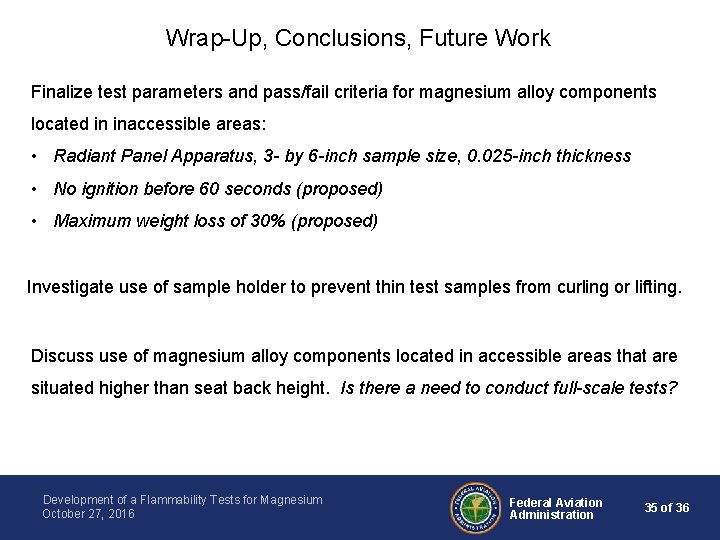
Wrap-Up, Conclusions, Future Work Finalize test parameters and pass/fail criteria for magnesium alloy components located in inaccessible areas: • Radiant Panel Apparatus, 3 - by 6 -inch sample size, 0. 025 -inch thickness • No ignition before 60 seconds (proposed) • Maximum weight loss of 30% (proposed) Investigate use of sample holder to prevent thin test samples from curling or lifting. Discuss use of magnesium alloy components located in accessible areas that are situated higher than seat back height. Is there a need to conduct full-scale tests? Development of a Flammability Tests for Magnesium October 27, 2016 Federal Aviation Administration 35 of 36
Questions? Development of a Flammability Tests for Magnesium October 27, 2016 Federal Aviation Administration 36 of 36
- Slides: 36