
8 th International Workshop on Linked Data in


- Slides: 29
8 th International Workshop on Linked Data in Architecture and Construction Hosted from Dublin, Ireland Kris Mc. Glinn, Markus Helfert, Declan O’Sullivan Pieter Pauwels, María Poveda-Villalón, Jakob Beetz, Ana Roxin, Mads Holten Rasmussen, Anna Wagner http: //linkedbuildingdata. net/ldac 2020/
Welcome to LDAC
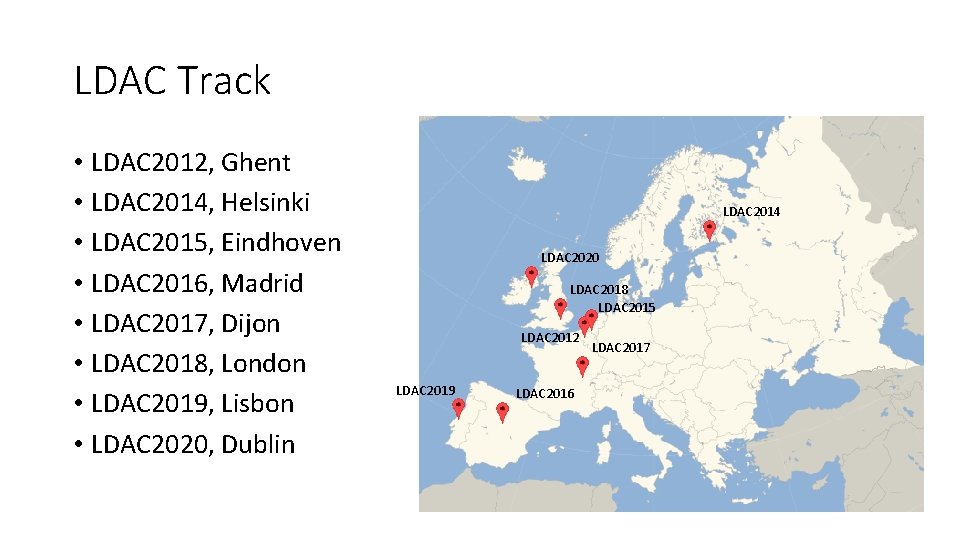
LDAC Track • LDAC 2012, Ghent • LDAC 2014, Helsinki • LDAC 2015, Eindhoven • LDAC 2016, Madrid • LDAC 2017, Dijon • LDAC 2018, London • LDAC 2019, Lisbon • LDAC 2020, Dublin LDAC 2014 LDAC 2020 LDAC 2018 LDAC 2015 LDAC 2012 LDAC 2019 LDAC 2016 LDAC 2017
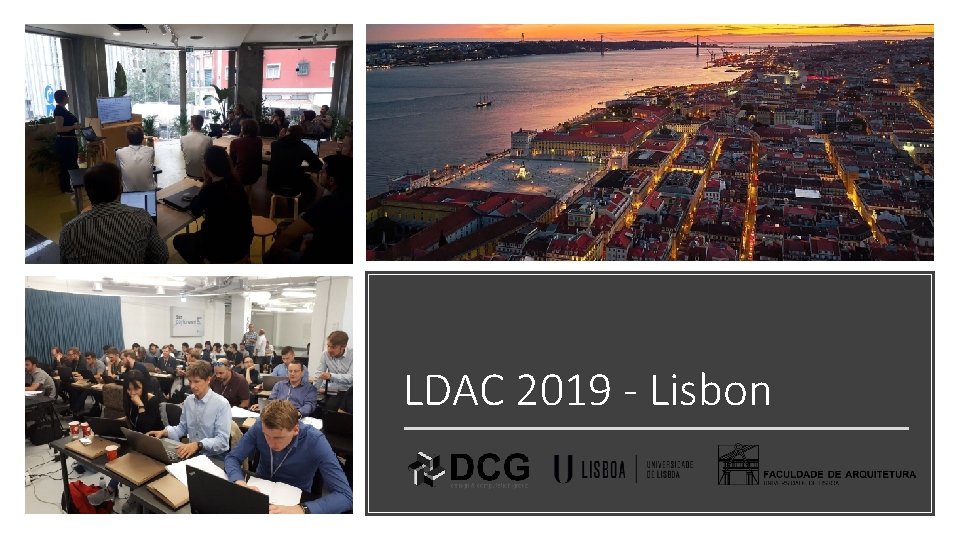
LDAC 2019 - Lisbon
LDAC 2020 Program
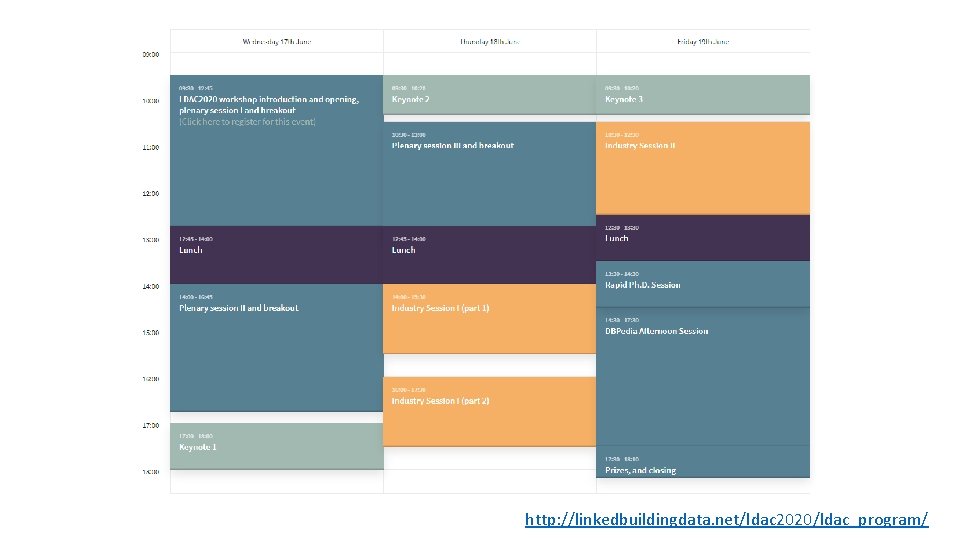
http: //linkedbuildingdata. net/ldac 2020/ldac_program/
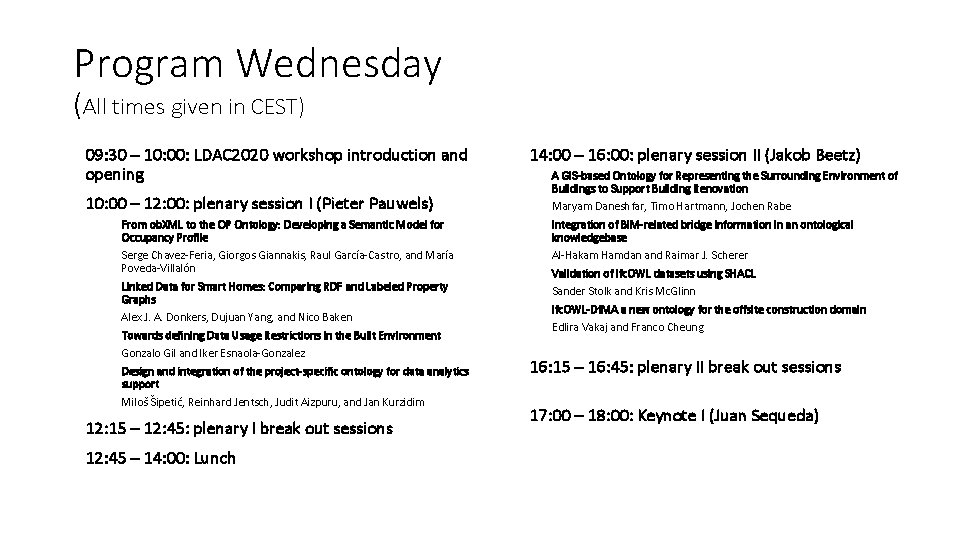
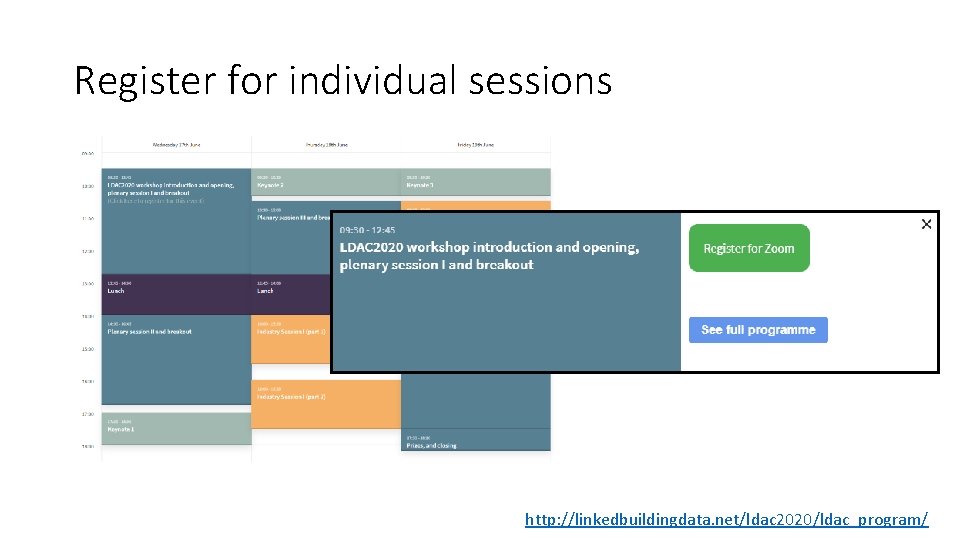
Program Wednesday (All times given in CEST) 09: 30 – 10: 00: LDAC 2020 workshop introduction and opening 10: 00 – 12: 00: plenary session I (Pieter Pauwels) From ob. XML to the OP Ontology: Developing a Semantic Model for Occupancy Profile Serge Chavez-Feria, Giorgos Giannakis, Raul García-Castro, and María Poveda-Villalón Linked Data for Smart Homes: Comparing RDF and Labeled Property Graphs Alex J. A. Donkers, Dujuan Yang, and Nico Baken Towards defining Data Usage Restrictions in the Built Environment Gonzalo Gil and Iker Esnaola-Gonzalez Design and integration of the project-specific ontology for data analytics support Miloš Šipetić, Reinhard Jentsch, Judit Aizpuru, and Jan Kurzidim 12: 15 – 12: 45: plenary I break out sessions 12: 45 – 14: 00: Lunch 14: 00 – 16: 00: plenary session II (Jakob Beetz) A GIS-based Ontology for Representing the Surrounding Environment of Buildings to Support Building Renovation Maryam Daneshfar, Timo Hartmann, Jochen Rabe Integration of BIM-related bridge information in an ontological knowledgebase Al-Hakam Hamdan and Raimar J. Scherer Validation of Ifc. OWL datasets using SHACL Sander Stolk and Kris Mc. Glinn ifc. OWL-Df. MA a new ontology for the offsite construction domain Edlira Vakaj and Franco Cheung 16: 15 – 16: 45: plenary II break out sessions 17: 00 – 18: 00: Keynote I (Juan Sequeda)
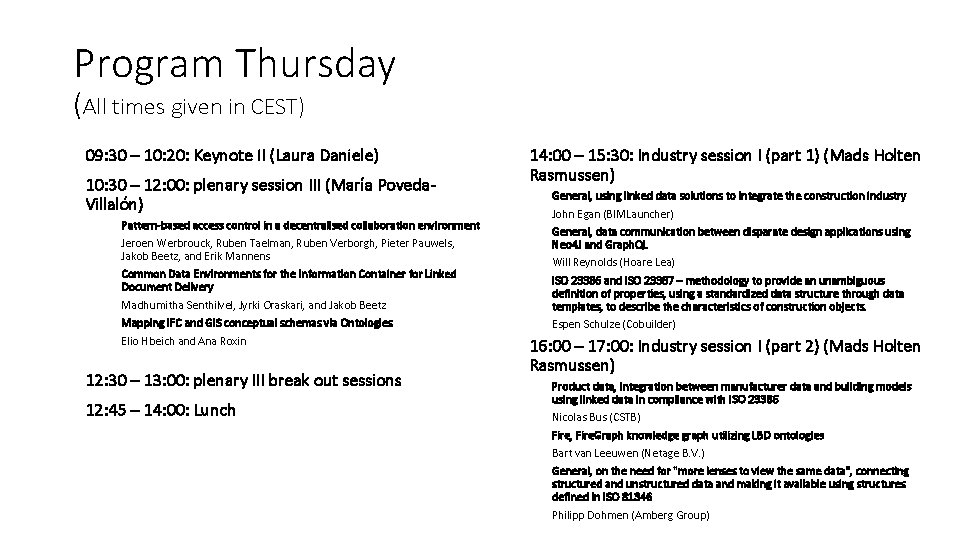
Program Thursday (All times given in CEST) 09: 30 – 10: 20: Keynote II (Laura Daniele) 10: 30 – 12: 00: plenary session III (María Poveda. Villalón) Pattern-based access control in a decentralised collaboration environment Jeroen Werbrouck, Ruben Taelman, Ruben Verborgh, Pieter Pauwels, Jakob Beetz, and Erik Mannens Common Data Environments for the Information Container for Linked Document Delivery Madhumitha Senthilvel, Jyrki Oraskari, and Jakob Beetz Mapping IFC and GIS conceptual schemas via Ontologies Elio Hbeich and Ana Roxin 12: 30 – 13: 00: plenary III break out sessions 12: 45 – 14: 00: Lunch 14: 00 – 15: 30: Industry session I (part 1) (Mads Holten Rasmussen) General, using linked data solutions to integrate the construction industry John Egan (BIMLauncher) General, data communication between disparate design applications using Neo 4 J and Graph. QL Will Reynolds (Hoare Lea) ISO 23386 and ISO 23387 – methodology to provide an unambiguous definition of properties, using a standardized data structure through data templates, to describe the characteristics of construction objects. Espen Schulze (Cobuilder) 16: 00 – 17: 00: Industry session I (part 2) (Mads Holten Rasmussen) Product data, integration between manufacturer data and building models using linked data in compliance with ISO 23386 Nicolas Bus (CSTB) Fire, Fire. Graph knowledge graph utilizing LBD ontologies Bart van Leeuwen (Netage B. V. ) General, on the need for "more lenses to view the same data", connecting structured and unstructured data and making it available using structures defined in ISO 81346 Philipp Dohmen (Amberg Group)
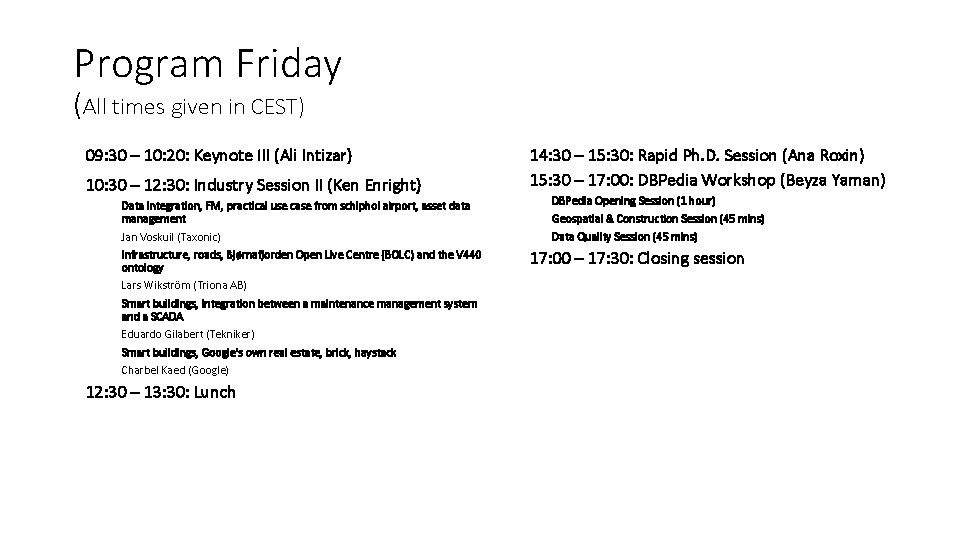
Program Friday (All times given in CEST) 09: 30 – 10: 20: Keynote III (Ali Intizar) 10: 30 – 12: 30: Industry Session II (Ken Enright) Data integration, FM, practical use case from schiphol airport, asset data management Jan Voskuil (Taxonic) Infrastructure, roads, Bjørnafjorden Open Live Centre (BOLC) and the V 440 ontology Lars Wikström (Triona AB) Smart buildings, integration between a maintenance management system and a SCADA Eduardo Gilabert (Tekniker) Smart buildings, Google's own real estate, brick, haystack Charbel Kaed (Google) 12: 30 – 13: 30: Lunch 14: 30 – 15: 30: Rapid Ph. D. Session (Ana Roxin) 15: 30 – 17: 00: DBPedia Workshop (Beyza Yaman) DBPedia Opening Session (1 hour) Geospatial & Construction Session (45 mins) Data Quality Session (45 mins) 17: 00 – 17: 30: Closing session
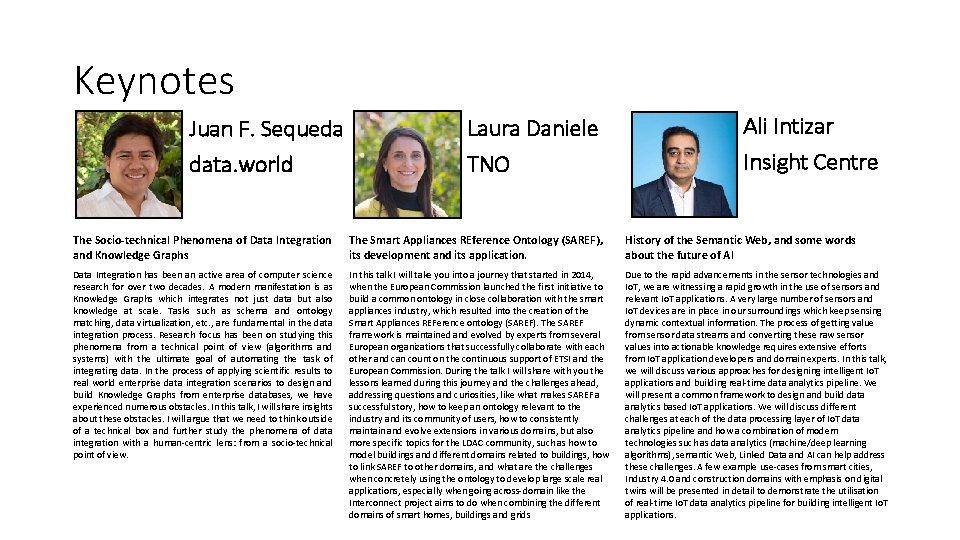
Keynotes Juan F. Sequeda data. world Laura Daniele TNO Ali Intizar Insight Centre The Socio-technical Phenomena of Data Integration and Knowledge Graphs The Smart Appliances REference Ontology (SAREF), its development and its application. History of the Semantic Web, and some words about the future of AI Data Integration has been an active area of computer science research for over two decades. A modern manifestation is as Knowledge Graphs which integrates not just data but also knowledge at scale. Tasks such as schema and ontology matching, data virtualization, etc. , are fundamental in the data integration process. Research focus has been on studying this phenomena from a technical point of view (algorithms and systems) with the ultimate goal of automating the task of integrating data. In the process of applying scientific results to real world enterprise data integration scenarios to design and build Knowledge Graphs from enterprise databases, we have experienced numerous obstacles. In this talk, I will share insights about these obstacles. I will argue that we need to think outside of a technical box and further study the phenomena of data integration with a human-centric lens: from a socio-technical point of view. In this talk I will take you into a journey that started in 2014, when the European Commission launched the first initiative to build a common ontology in close collaboration with the smart appliances industry, which resulted into the creation of the Smart Appliances REFerence ontology (SAREF). The SAREF framework is maintained and evolved by experts from several European organizations that successfully collaborate with each other and can count on the continuous support of ETSI and the European Commission. During the talk I will share with you the lessons learned during this journey and the challenges ahead, addressing questions and curiosities, like what makes SAREF a successful story, how to keep an ontology relevant to the industry and its community of users, how to consistently maintain and evolve extensions in various domains, but also more specific topics for the LDAC community, such as how to model buildings and different domains related to buildings, how to link SAREF to other domains, and what are the challenges when concretely using the ontology to develop large scale real applications, especially when going across-domain like the Interconnect project aims to do when combining the different domains of smart homes, buildings and grids Due to the rapid advancements in the sensor technologies and Io. T, we are witnessing a rapid growth in the use of sensors and relevant Io. T applications. A very large number of sensors and Io. T devices are in place in our surroundings which keep sensing dynamic contextual information. The process of getting value from sensor data streams and converting these raw sensor values into actionable knowledge requires extensive efforts from Io. T application developers and domain experts. In this talk, we will discuss various approaches for designing intelligent Io. T applications and building real-time data analytics pipeline. We will present a common framework to design and build data analytics based Io. T applications. We will discuss different challenges at each of the data processing layer of Io. T data analytics pipeline and how a combination of modern technologies such as data analytics (machine/deep learning algorithms), semantic Web, Linked Data and AI can help address these challenges. A few example use-cases from smart cities, Industry 4. 0 and construction domains with emphasis on digital twins will be presented in detail to demonstrate the utilisation of real-time Io. T data analytics pipeline for building intelligent Io. T applications.
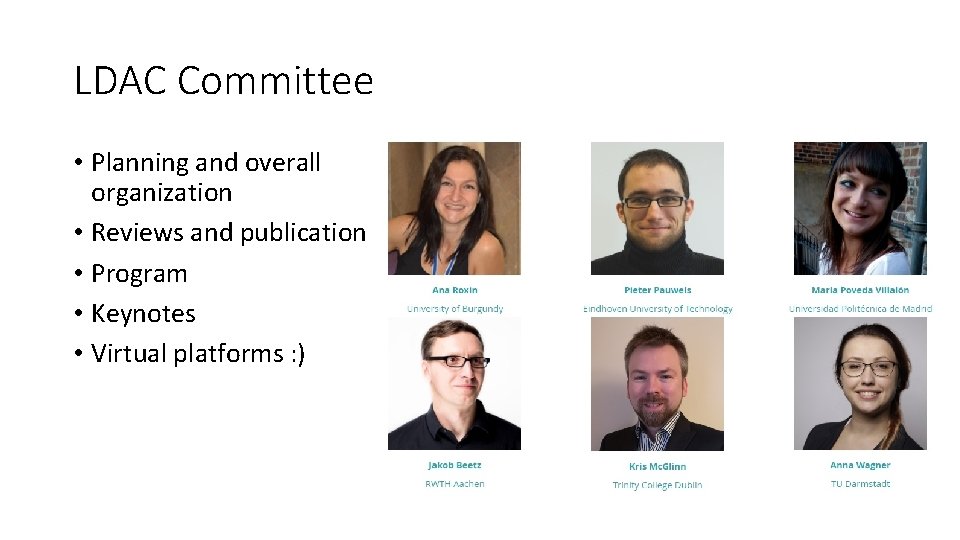
LDAC Committee • Planning and overall organization • Reviews and publication • Program • Keynotes • Virtual platforms : )
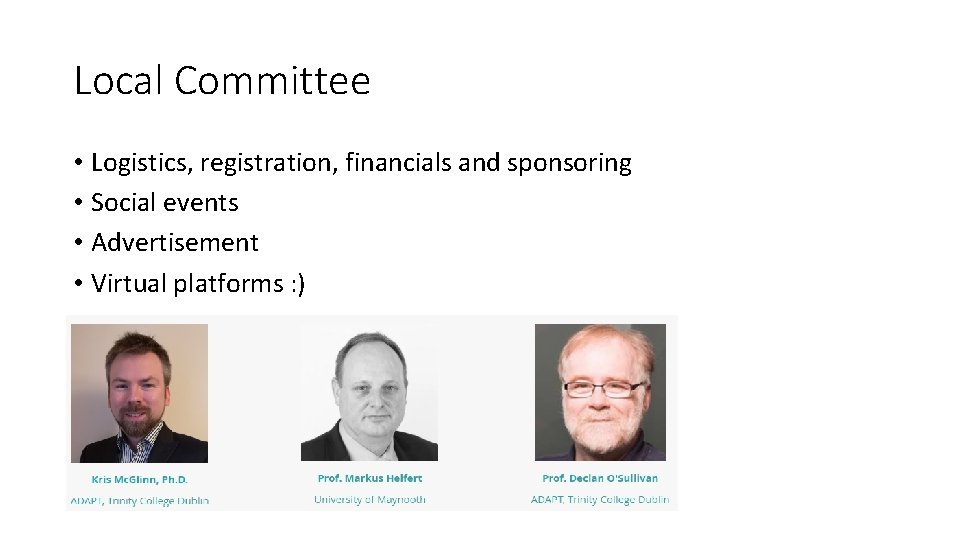
Local Committee • Logistics, registration, financials and sponsoring • Social events • Advertisement • Virtual platforms : )
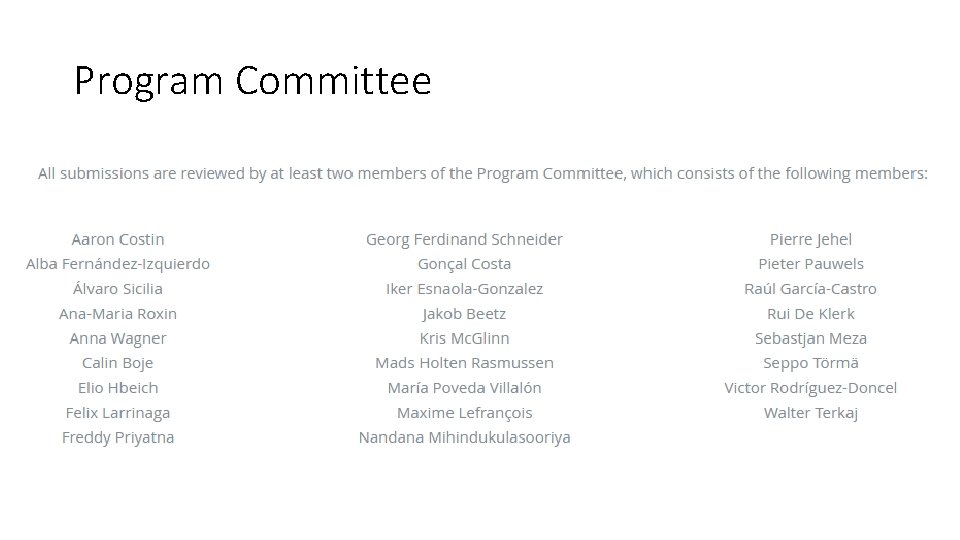
Program Committee
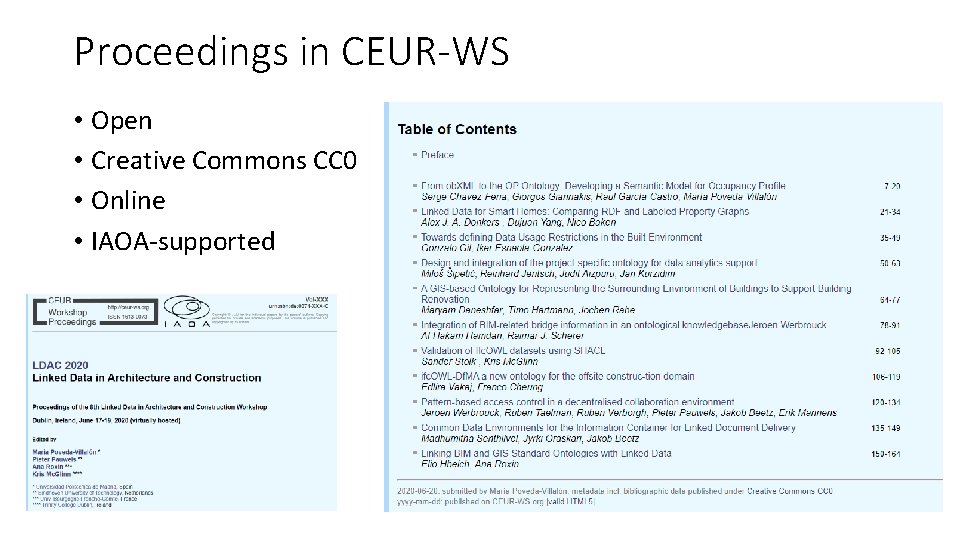
Proceedings in CEUR-WS • Open • Creative Commons CC 0 • Online • IAOA-supported
Supported by…
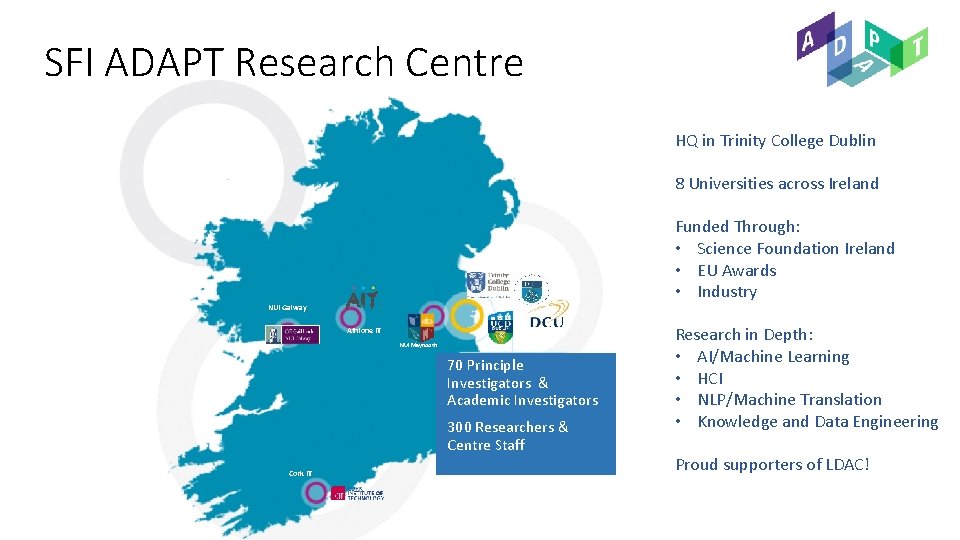
SFI ADAPT Research Centre HQ in Trinity College Dublin 8 Universities across Ireland Funded Through: • Science Foundation Ireland • EU Awards • Industry NUI Galway Athlone IT NUI Maynooth 70 Principle Investigators & Academic Investigators 300 Researchers & Centre Staff Cork IT Research in Depth: • AI/Machine Learning • HCI • NLP/Machine Translation • Knowledge and Data Engineering Proud supporters of LDAC!
Turn your Data into Knowledge
Support
Practicalities and house rules
Register for individual sessions http: //linkedbuildingdata. net/ldac 2020/ldac_program/
Online material, Zoom, and complete detail • Website: • will remain to be updated: www. linkedbuildingdata. net/ldac 2020 • Presentations - Papers • Detailed Information Sheet • https: //linkedbuildingdata. net/ldac 2020/information_sheet. pdf • During Zoom: • Asking questions: Please post any questions in the public IM window on Zoom, or directly to the moderators (who will be listed at the top of the Zoom call as “hosts”). • Host moderator will have name “Pieter Pauwels [moderator]”
Breakout sessions • For each plenary session we will have a 30 minutes break out session where we encourage further discussion and interaction. • One breakout room for each paper presentation • Moderators: • 1 paper presenter • 1 LDAC Committee Team member • Breakout rooms on request => Ask in the #breakout channel in Slack
How do break out sessions work? • You enter a Zoom session via the Zoom link to the “Main room” • The main room serves as a hallway from which you can enter any break out room you would like to be in. • The main room displays on screen which break out rooms are available • The main room has two hosts (LDAC Team) who will assign you to break out rooms, based <only> on your name • You vote by changing your name to “<your name> [Room 1]” • e. g. “Kris Mc. Glinn [Room 1]” • You will then be assigned to a room at breakout. You may change room by editing your name again and returning to the main lobby • e. g. “Kris Mc. Glinn [Room 2]” • You leave when you want, but sessions last max 30 min.
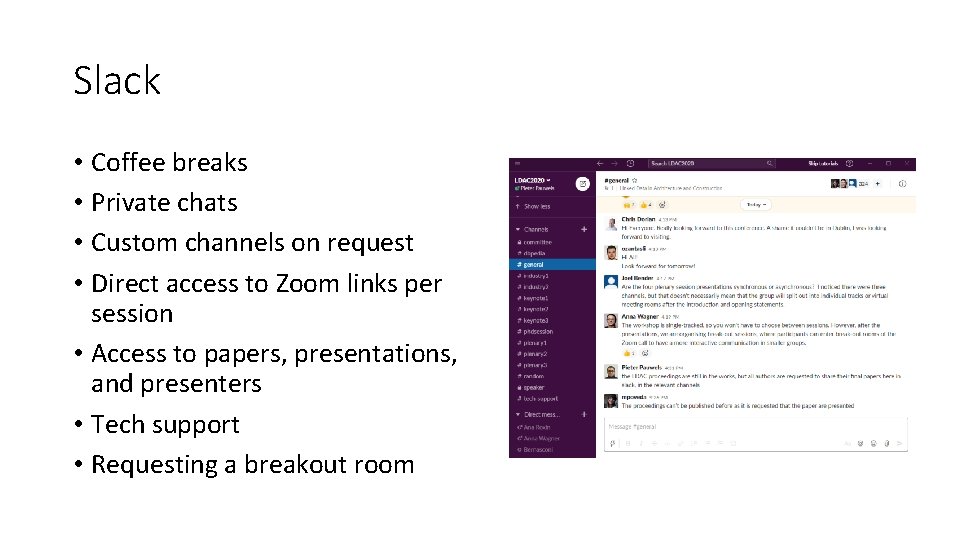
Slack • Coffee breaks • Private chats • Custom channels on request • Direct access to Zoom links per session • Access to papers, presentations, and presenters • Tech support • Requesting a breakout room
Questions? • Find help with one of the 350 people in Slack! • • #techsupport #general #speakers #random • Or mail to ldac 2020@linkedbuildingdata. net
8 th International Workshop on Linked Data in Architecture and Construction Hosted from Dublin, Ireland Kris Mc. Glinn, Markus Helfert, Declan O’Sullivan Pieter Pauwels, María Poveda-Villalón, Jakob Beetz, Ana Roxin, Mads Holten Rasmussen, Anna Wagner http: //linkedbuildingdata. net/ldac 2020/