
8 ROUNDABOUTS HOW THEY WORK FOR PEDESTRIANS Golden
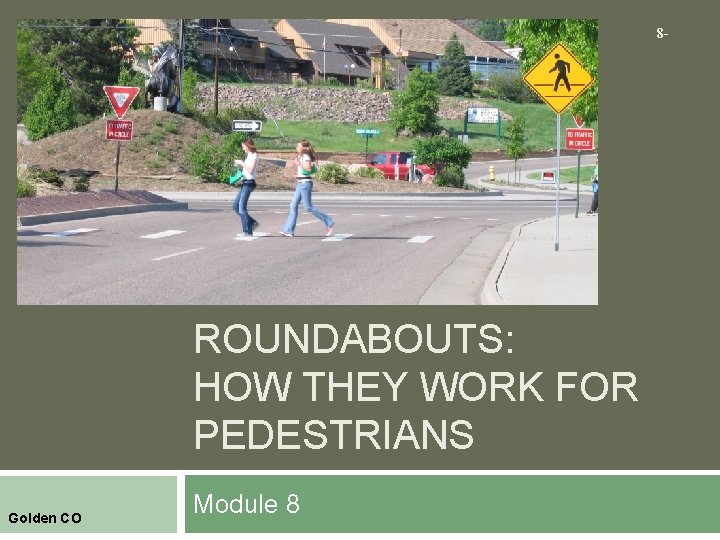
8 - ROUNDABOUTS: HOW THEY WORK FOR PEDESTRIANS Golden CO Module 8
8 -2 Roundabouts: Learning Objectives: At the end of this module, you will be able to: Explain why roundabouts reduce crashes Describe the safety benefits for pedestrians and motor vehicles of roundabouts Describe how roundabout safety depends on correct design Designing for Pedestrian Safety – Roundabouts

Essential roundabout characteristics 8 -3 Separated sidewalks direct peds to crosswalks Slow speed exit Splitter island Truck apron Crosswalk 1 car length back Lots of deflection = slow speeds throughout Slow speed entry = yield

Roundabouts are a type (or subset) of circular intersections 8 -4 All circular Roundabouts intersections Others Rotaries Neighborhood traffic circles Bottom Line: Not all circular intersections are roundabouts!! Designing for Pedestrian Safety – Roundabouts
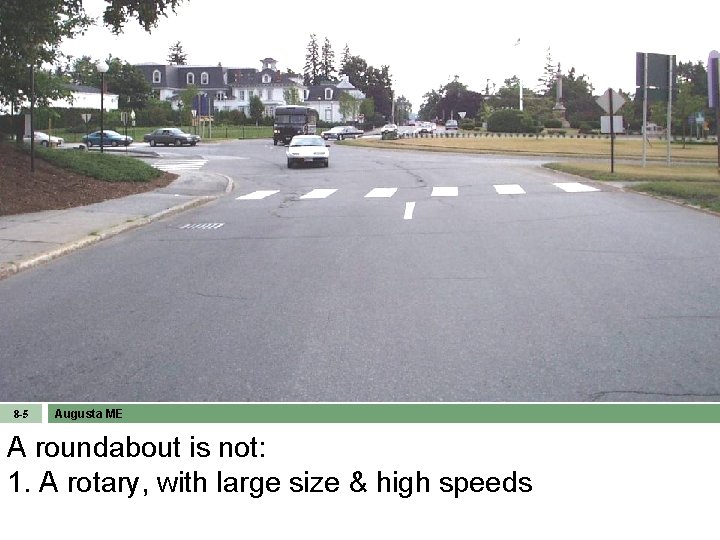
8 -5 Augusta ME A roundabout is not: 1. A rotary, with large size & high speeds
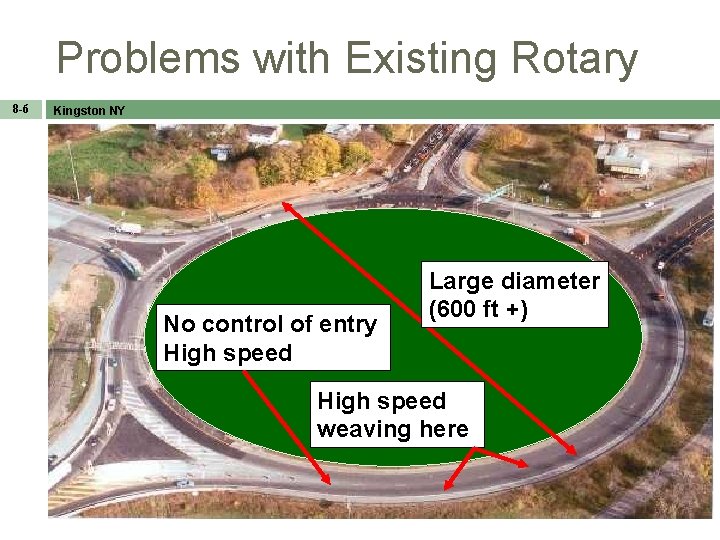
Problems with Existing Rotary 8 -6 Kingston NY No control of entry High speed Large diameter (600 ft +) High speed weaving here
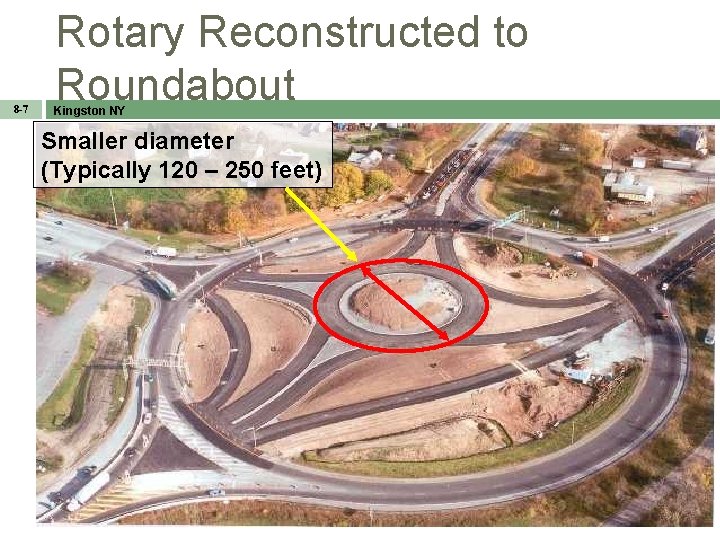
8 -7 Rotary Reconstructed to Roundabout Kingston NY Smaller diameter (Typically 120 – 250 feet)
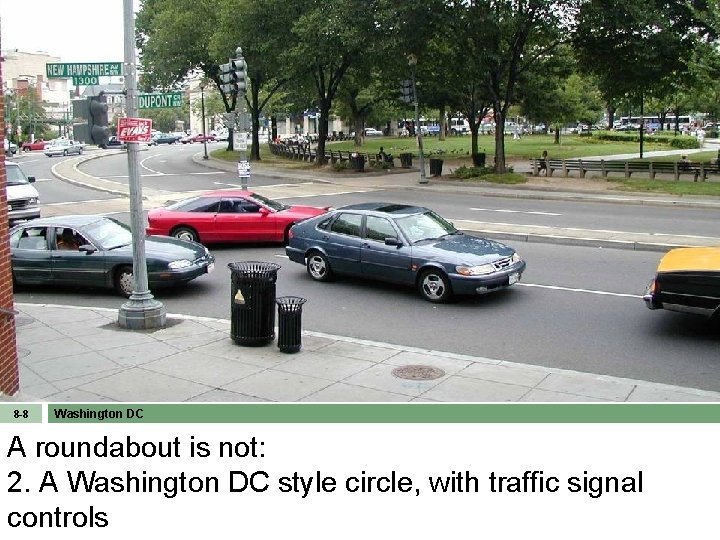
8 -8 Washington DC A roundabout is not: 2. A Washington DC style circle, with traffic signal controls
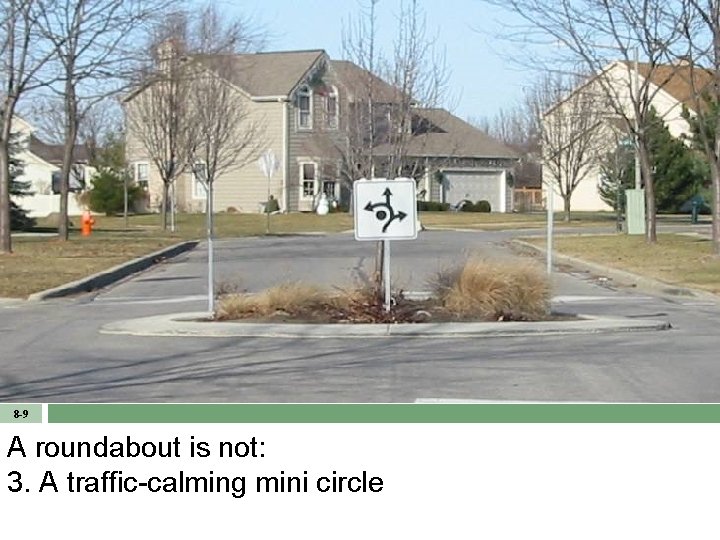
8 -9 A roundabout is not: 3. A traffic-calming mini circle
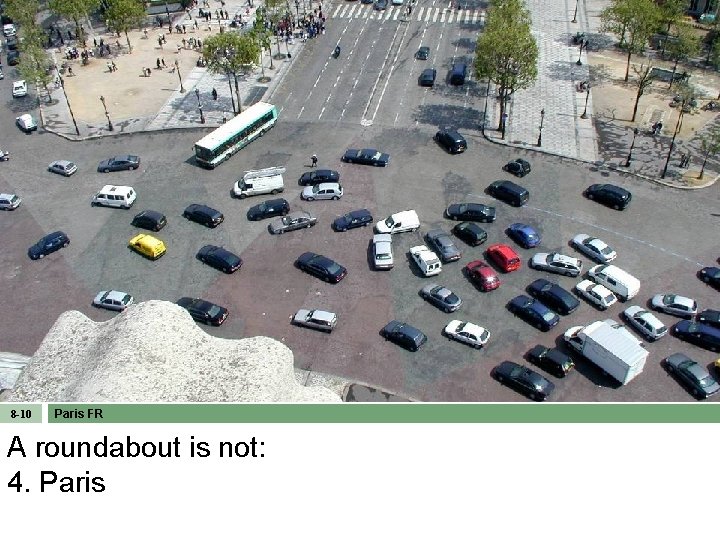
8 -10 Paris FR A roundabout is not: 4. Paris
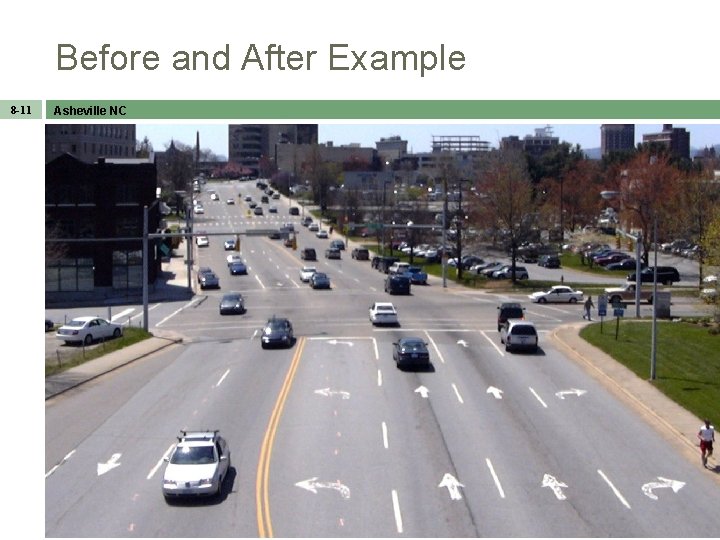
Before and After Example 8 -11 Asheville NC
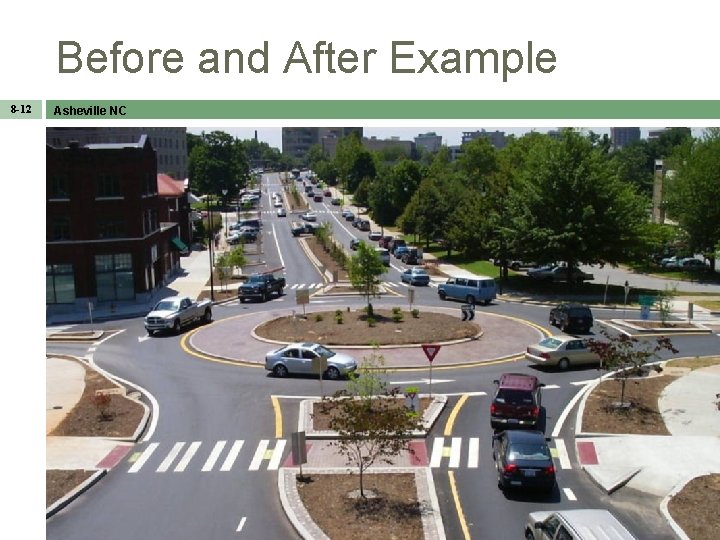
Before and After Example 8 -12 Asheville NC
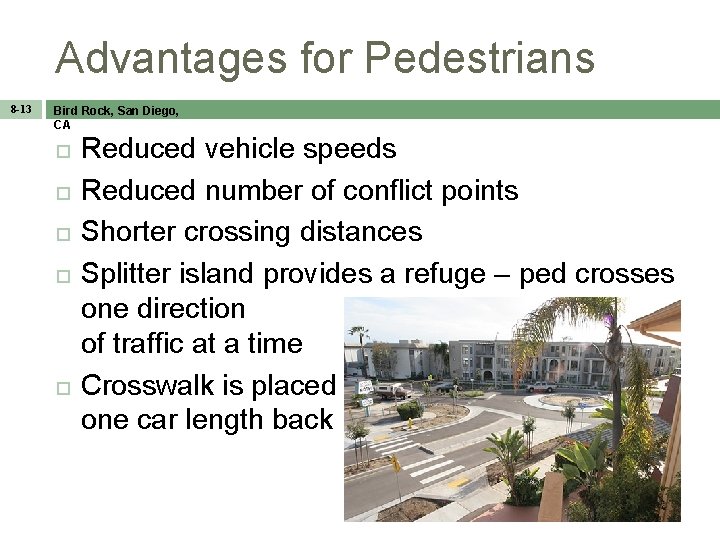
Advantages for Pedestrians 8 -13 Bird Rock, San Diego, CA Reduced vehicle speeds Reduced number of conflict points Shorter crossing distances Splitter island provides a refuge – ped crosses one direction of traffic at a time Crosswalk is placed one car length back
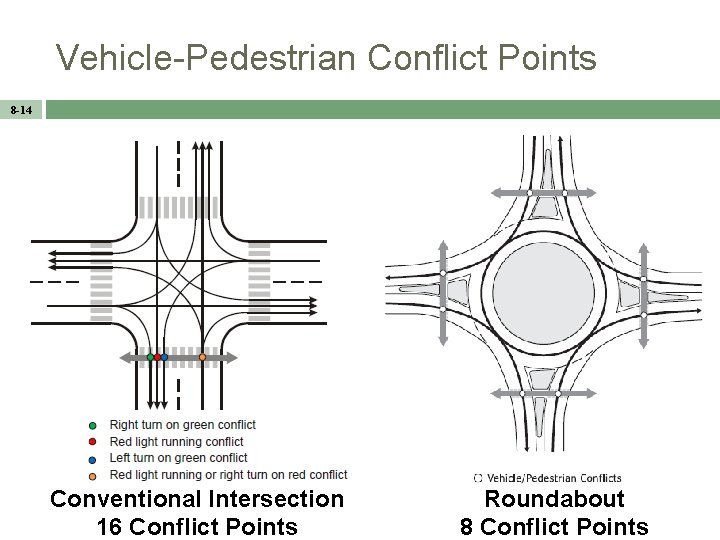
Vehicle-Pedestrian Conflict Points 8 -14 Conventional Intersection 16 Conflict Points Roundabout 8 Conflict Points
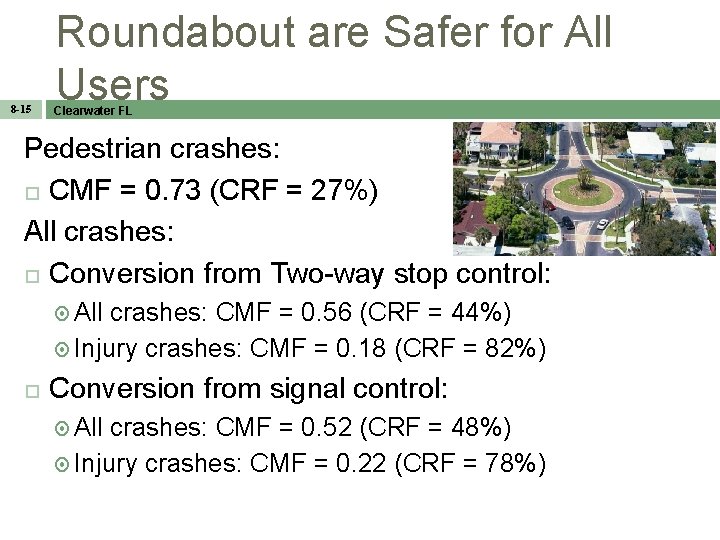
8 -15 Roundabout are Safer for All Users Clearwater FL Pedestrian crashes: CMF = 0. 73 (CRF = 27%) All crashes: Conversion from Two-way stop control: All crashes: CMF = 0. 56 (CRF = 44%) Injury crashes: CMF = 0. 18 (CRF = 82%) Conversion from signal control: All crashes: CMF = 0. 52 (CRF = 48%) Injury crashes: CMF = 0. 22 (CRF = 78%)
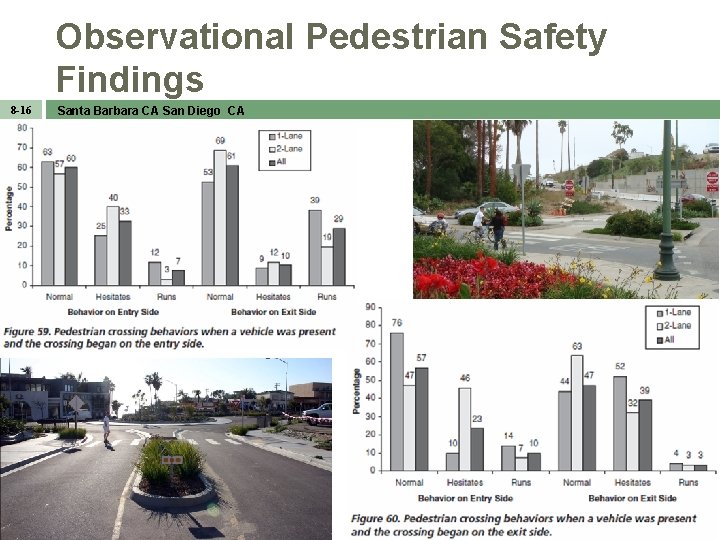
Observational Pedestrian Safety Findings 8 -16 Santa Barbara CA San Diego CA
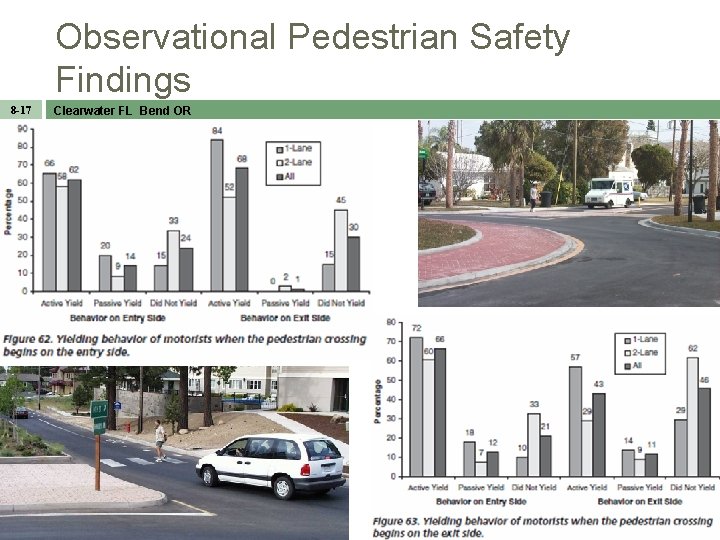
Observational Pedestrian Safety Findings 8 -17 Clearwater FL Bend OR
Pedestrian Movements at Roundabouts 8 -18
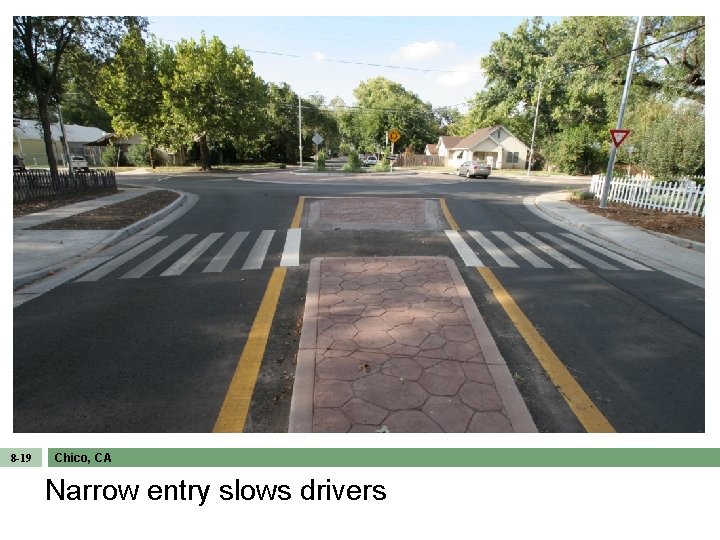
8 -19 Chico, CA Narrow entry slows drivers
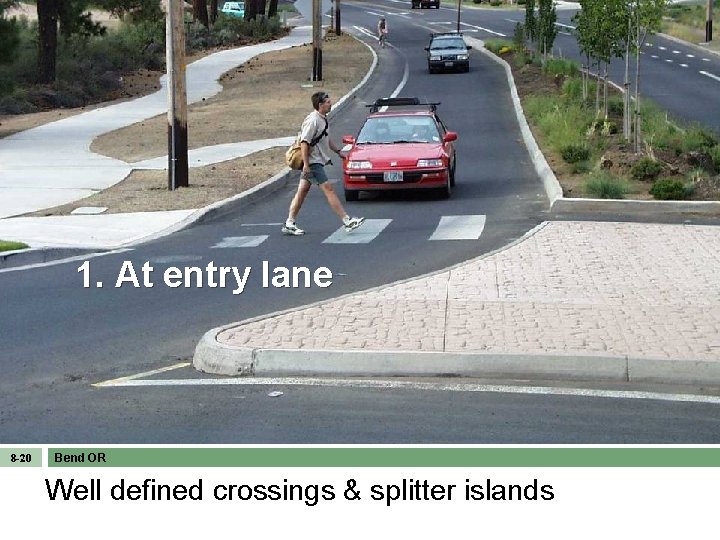
1. At entry lane 8 -20 Bend OR Well defined crossings & splitter islands
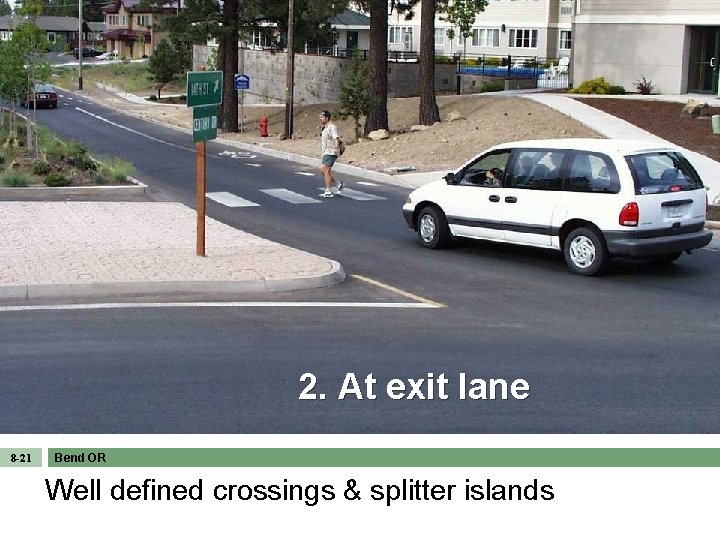
2. At exit lane 8 -21 Bend OR Well defined crossings & splitter islands
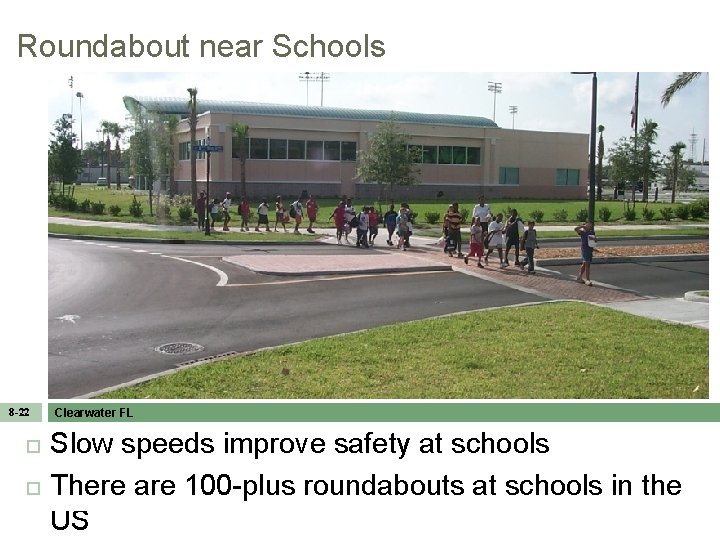
Roundabout near Schools 8 -22 Clearwater FL Slow speeds improve safety at schools There are 100 -plus roundabouts at schools in the US
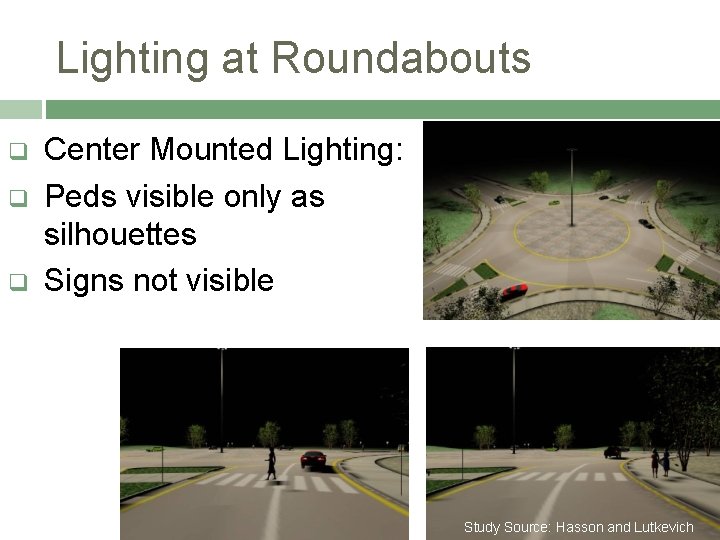
Lighting at Roundabouts q q q Center Mounted Lighting: Peds visible only as silhouettes Signs not visible Study Source: Hasson and Lutkevich
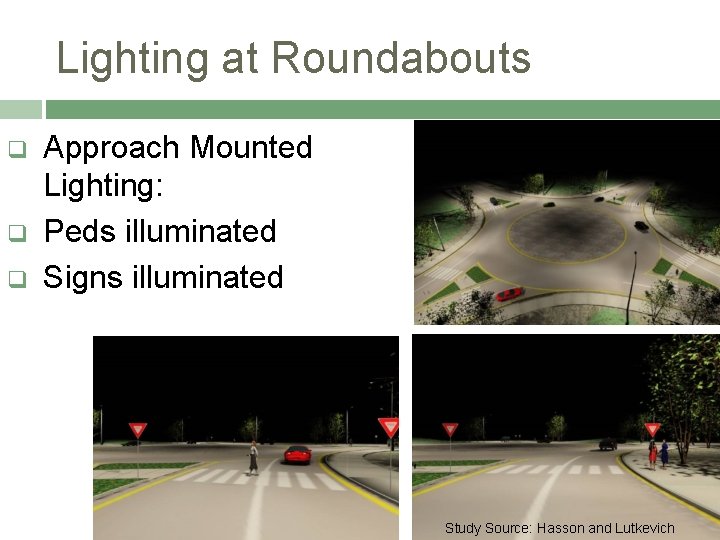
Lighting at Roundabouts q q q Approach Mounted Lighting: Peds illuminated Signs illuminated Study Source: Hasson and Lutkevich
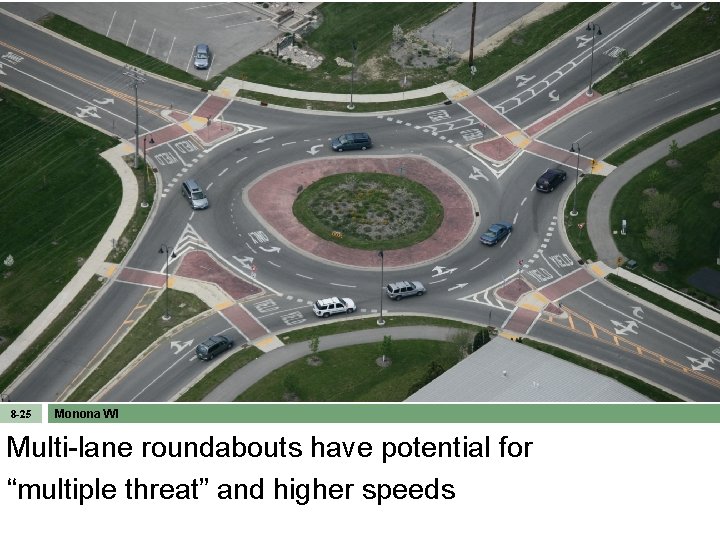
8 -25 Monona WI Multi-lane roundabouts have potential for “multiple threat” and higher speeds
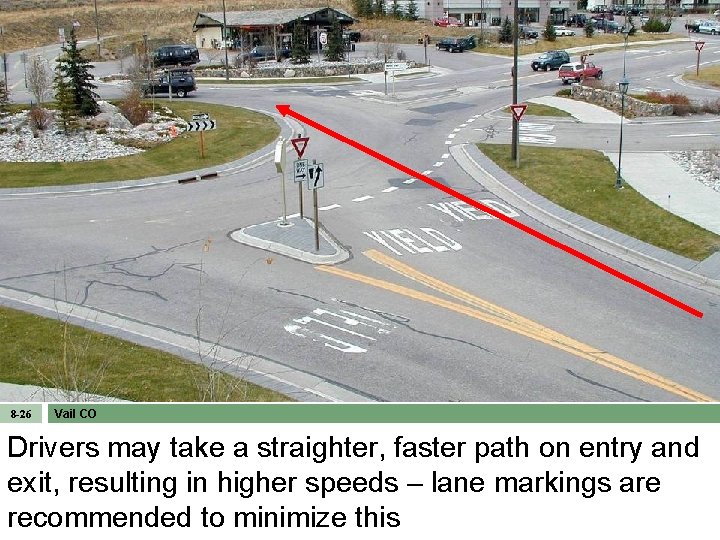
8 -26 Vail CO Drivers may take a straighter, faster path on entry and exit, resulting in higher speeds – lane markings are recommended to minimize this
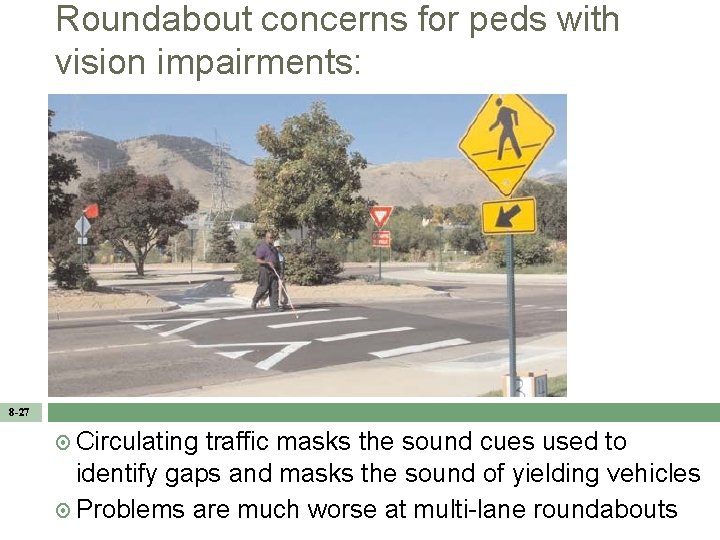
Roundabout concerns for peds with vision impairments: 8 -27 Circulating traffic masks the sound cues used to identify gaps and masks the sound of yielding vehicles Problems are much worse at multi-lane roundabouts Golden CO
8 -28 Possible Mitigation Measures for Blind Pedestrians at Multi-Lane Roundabouts Public Right-of-Way Accessibility Guidelines (PROWAG, proposed rule July 26, 2011) require signals at multi-lane roundabout approaches: Pedestrian Hybrid Beacon (HAWK) Regular Red-Yellow-Green Signal Research – other solutions may work: Raised Crosswalk Rectangular Rapid Flash Beacon Ped signal may rest in dark (optional use by peds)
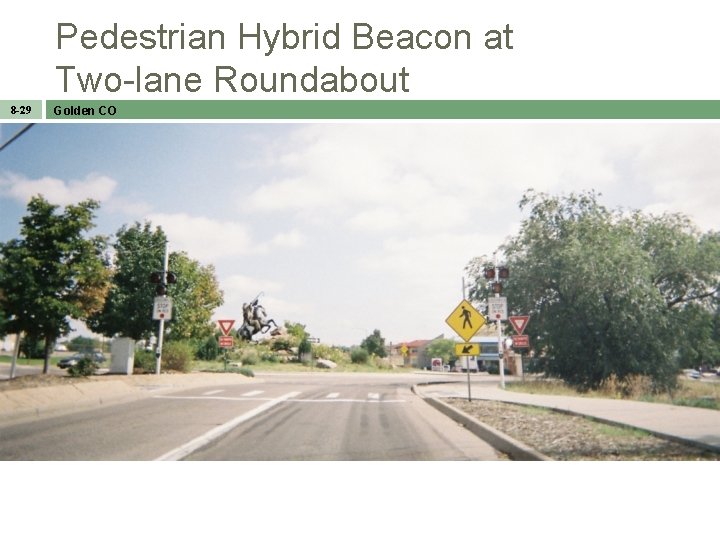
Pedestrian Hybrid Beacon at Two-lane Roundabout 8 -29 Golden CO
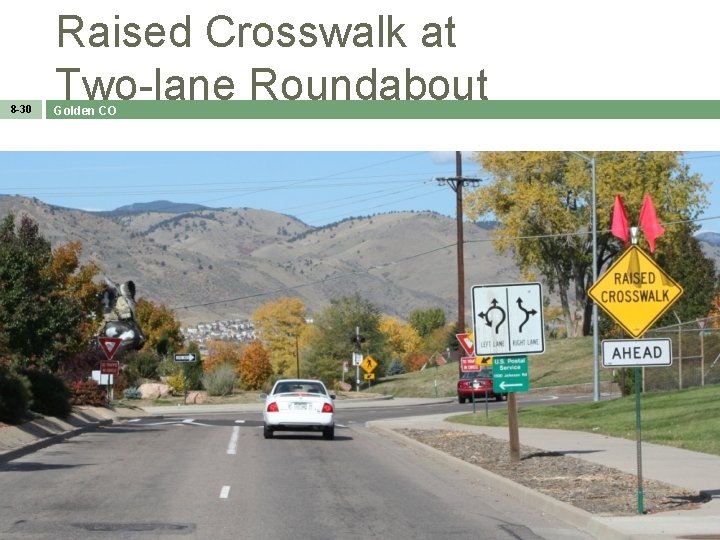
8 -30 Raised Crosswalk at Two-lane Roundabout Golden CO
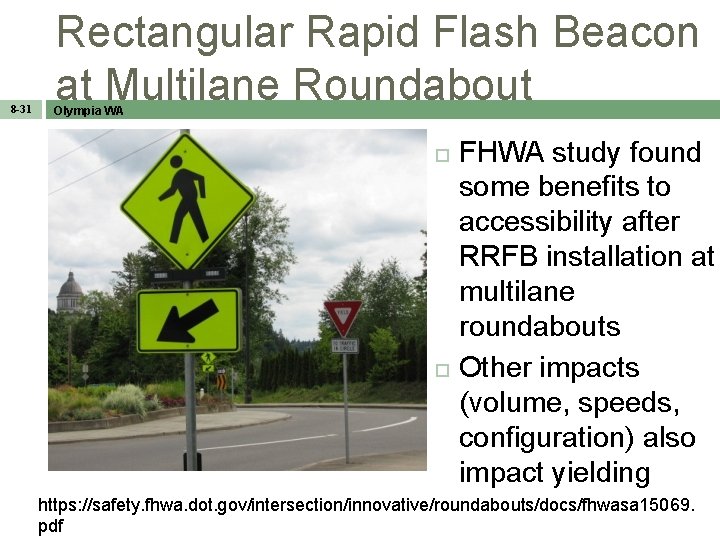
8 -31 Rectangular Rapid Flash Beacon at Multilane Roundabout Olympia WA FHWA study found some benefits to accessibility after RRFB installation at multilane roundabouts Other impacts (volume, speeds, configuration) also impact yielding https: //safety. fhwa. dot. gov/intersection/innovative/roundabouts/docs/fhwasa 15069. pdf
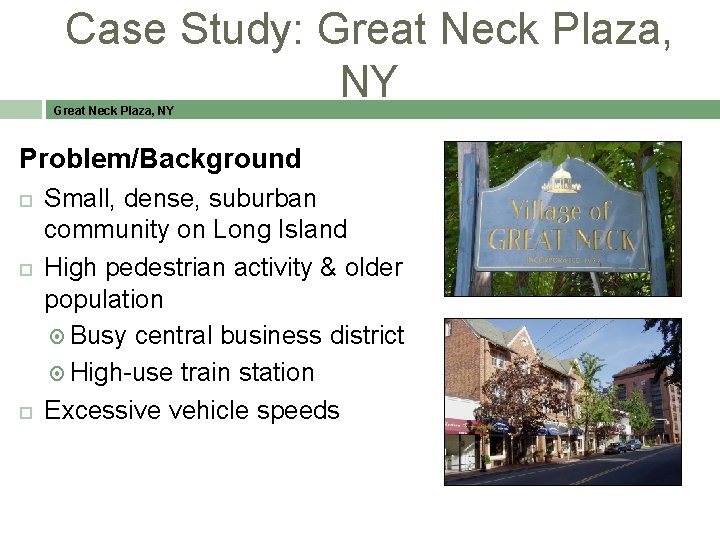
Case Study: Great Neck Plaza, NY Problem/Background Small, dense, suburban community on Long Island High pedestrian activity & older population Busy central business district High-use train station Excessive vehicle speeds
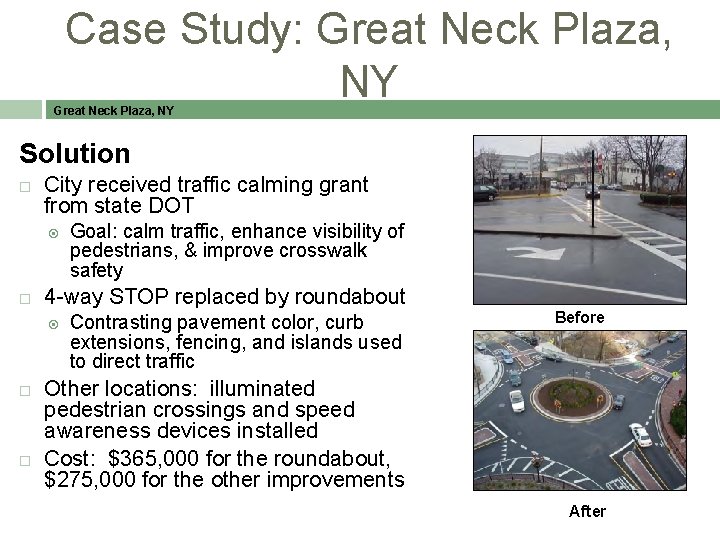
Case Study: Great Neck Plaza, NY Solution City received traffic calming grant from state DOT 4 -way STOP replaced by roundabout Goal: calm traffic, enhance visibility of pedestrians, & improve crosswalk safety Contrasting pavement color, curb extensions, fencing, and islands used to direct traffic Before Other locations: illuminated pedestrian crossings and speed awareness devices installed Cost: $365, 000 for the roundabout, $275, 000 for the other improvements After
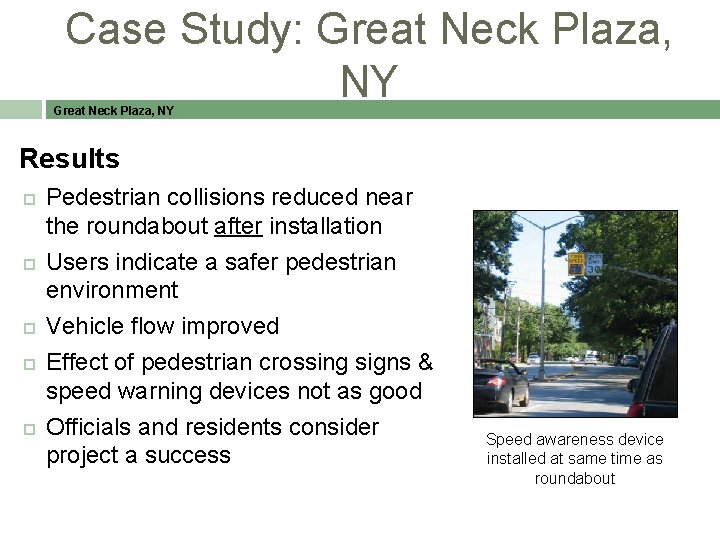
Case Study: Great Neck Plaza, NY Results Pedestrian collisions reduced near the roundabout after installation Users indicate a safer pedestrian environment Vehicle flow improved Effect of pedestrian crossing signs & speed warning devices not as good Officials and residents consider project a success Speed awareness device installed at same time as roundabout
Roundabout: Learning Outcomes 8 -35 You should now be able to: Explain why roundabouts reduce crashes Describe the safety benefits for pedestrians and motor vehicles of roundabouts Describe how roundabout safety depends on correct design
8 -36 Questions?
- Slides: 36