
8 Memory Formation PostTranslation Processes Memory Formation PostTranslation
- Slides: 23
8 Memory Formation: Post-Translation Processes
Memory Formation: Post-Translation Processes The goal of this chapter and several that follow is to determine if some of the processes that have been identified in establishing LTP are involved in making behavioral memories. We are going to focus on three major players: • Glutamate Receptors (NMDA and AMPA) • Ca. MKII
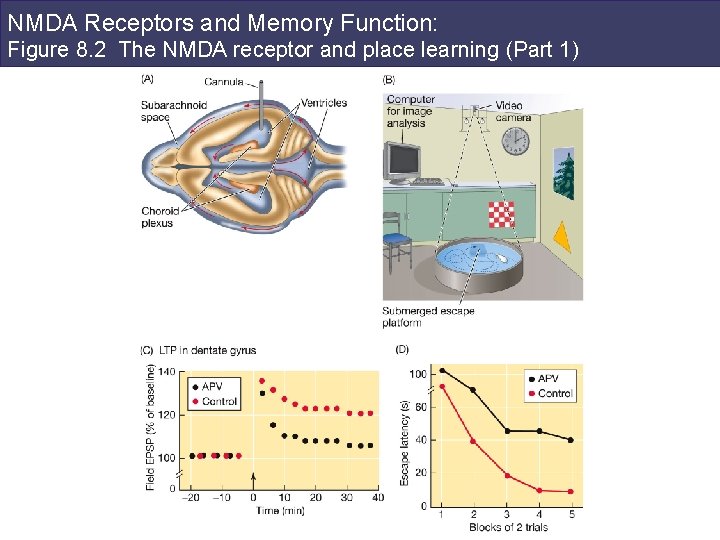
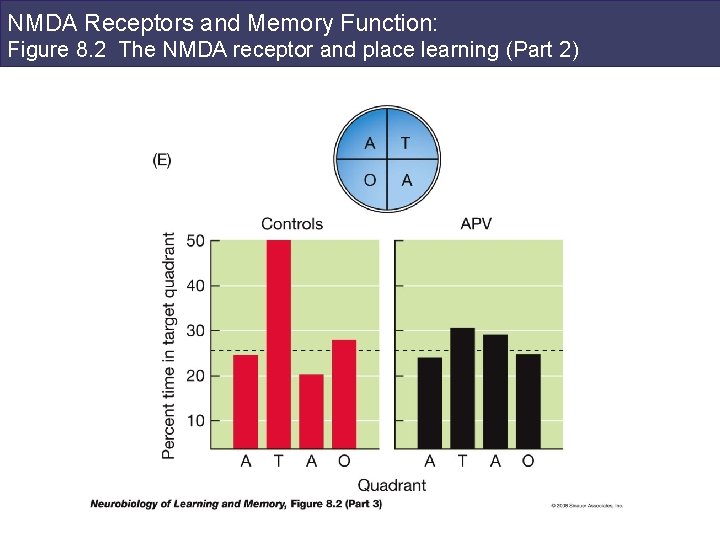
NMDA Receptors and Memory Function The NMDA receptor is critical to many forms of LTP. Is the NMDA receptor the gateway to the acquisition of a behavioral memory? This was the question Richard Morris addressed in his classic 1986 paper. This paper was a classic because it was the first to outline an approach to the problem and produce some reasonable data.
NMDA Receptors and Memory Function: Figure 8. 2 The NMDA receptor and place learning (Part 1)
NMDA Receptors and Memory Function: Figure 8. 2 The NMDA receptor and place learning (Part 2)
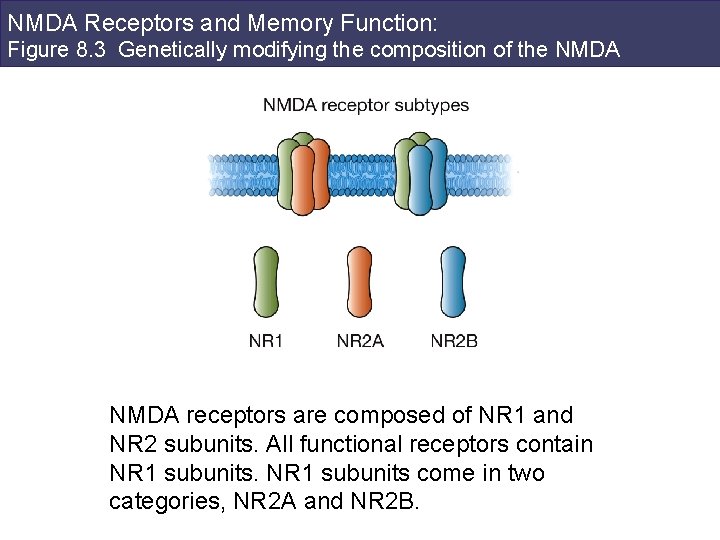
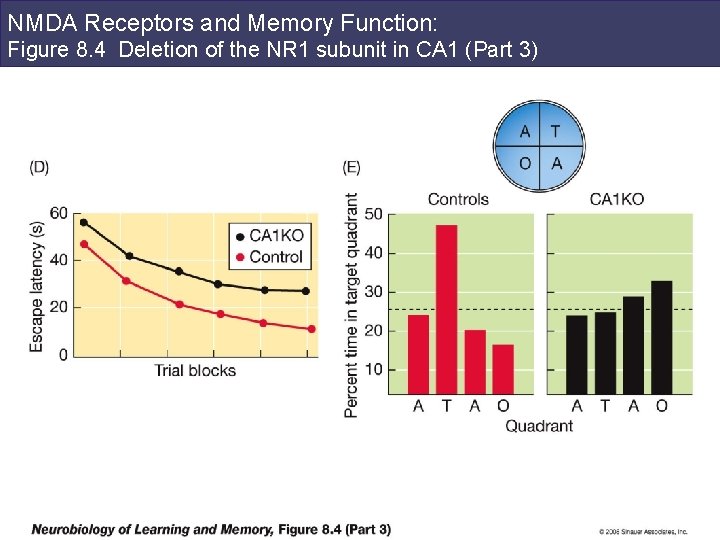
NMDA Receptors and Memory Function: Figure 8. 3 Genetically modifying the composition of the NMDA receptors are composed of NR 1 and NR 2 subunits. All functional receptors contain NR 1 subunits come in two categories, NR 2 A and NR 2 B.
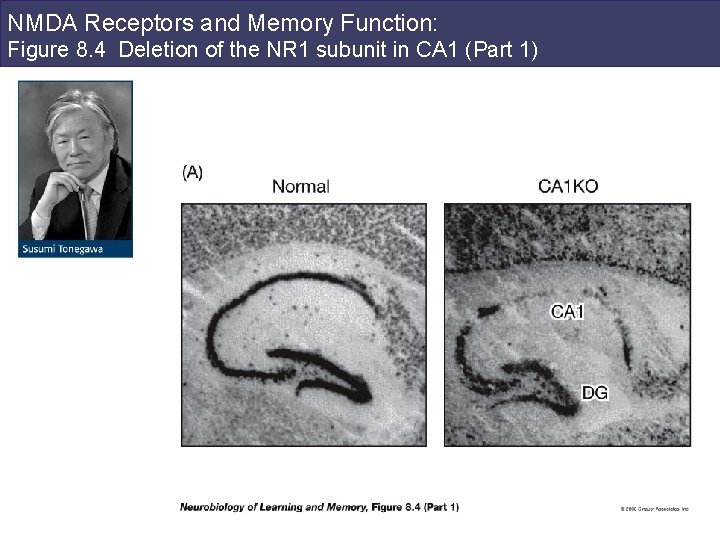
NMDA Receptors and Memory Function: Figure 8. 4 Deletion of the NR 1 subunit in CA 1 (Part 1)
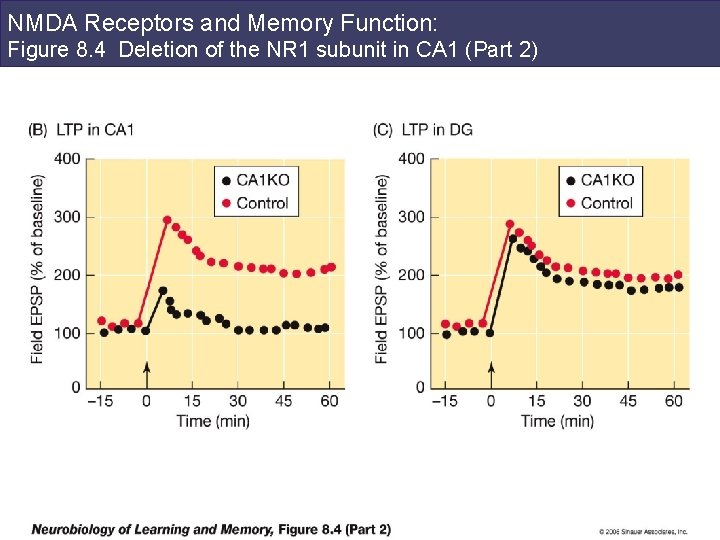
NMDA Receptors and Memory Function: Figure 8. 4 Deletion of the NR 1 subunit in CA 1 (Part 2)
NMDA Receptors and Memory Function: Figure 8. 4 Deletion of the NR 1 subunit in CA 1 (Part 3)
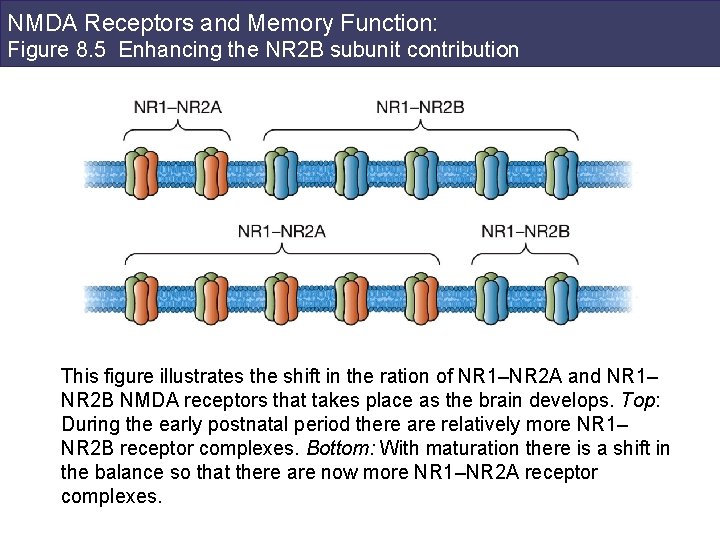
NMDA Receptors and Memory Function: Figure 8. 5 Enhancing the NR 2 B subunit contribution This figure illustrates the shift in the ration of NR 1–NR 2 A and NR 1– NR 2 B NMDA receptors that takes place as the brain develops. Top: During the early postnatal period there are relatively more NR 1– NR 2 B receptor complexes. Bottom: With maturation there is a shift in the balance so that there are now more NR 1–NR 2 A receptor complexes.
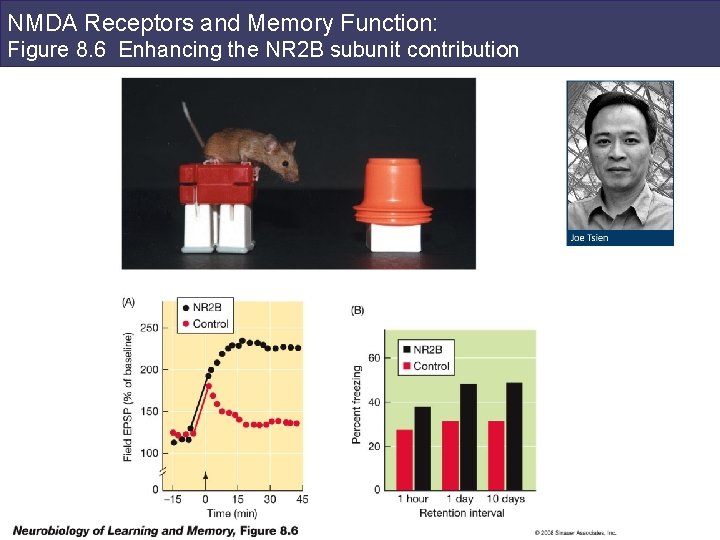
NMDA Receptors and Memory Function: Figure 8. 6 Enhancing the NR 2 B subunit contribution
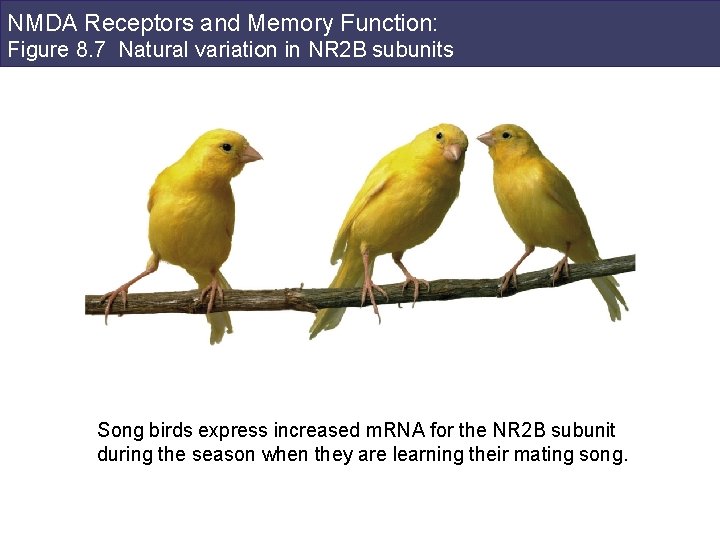
NMDA Receptors and Memory Function: Figure 8. 7 Natural variation in NR 2 B subunits Song birds express increased m. RNA for the NR 2 B subunit during the season when they are learning their mating song.
NMDA Receptors and Memory Function: Some Caveats There is no doubt that NMDA receptors can make a critical contribution to memory formation. However, it is also important to note that there are many reports that memories can be formed even in the face of a strong blockade of NMDA receptors.
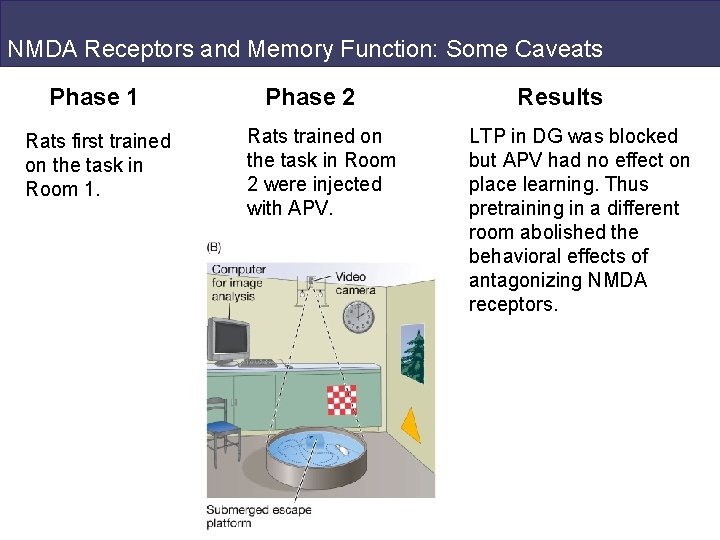
NMDA Receptors and Memory Function: Some Caveats Phase 1 Rats first trained on the task in Room 1. Phase 2 Rats trained on the task in Room 2 were injected with APV. Results LTP in DG was blocked but APV had no effect on place learning. Thus pretraining in a different room abolished the behavioral effects of antagonizing NMDA receptors.
NMDA Receptors and Memory Function: Some Caveats Drugs and genetic manipulations can modify behavior without affecting learning and memory processes. These agents can have multiple effect. Even if the targeted molecule or receptor does make a contribution to memory, it might be involved in some other component system that influences behavior. Memory formation may take place without the contribution of NMDA receptors. This means that there are other mechanisms that can produce memories when NMDA receptors are not functional. However, this does not exclude the possibility that NMDA receptors normally contribute to creating memories.
NMDA Receptors and Memory Function: Some Caveats General Point When a component of the brain is removed and this has no effect on memory formation, one cannot say the component (e. g. , brain region, cell, or molecule) is not involved in memory formation when it is normally present. The brain has redundant mechanisms that might substitute for each other. So, the absence of an effect primarily tells us what the brain can do without the component. It does not tell us what that brain component does in the normal brain.
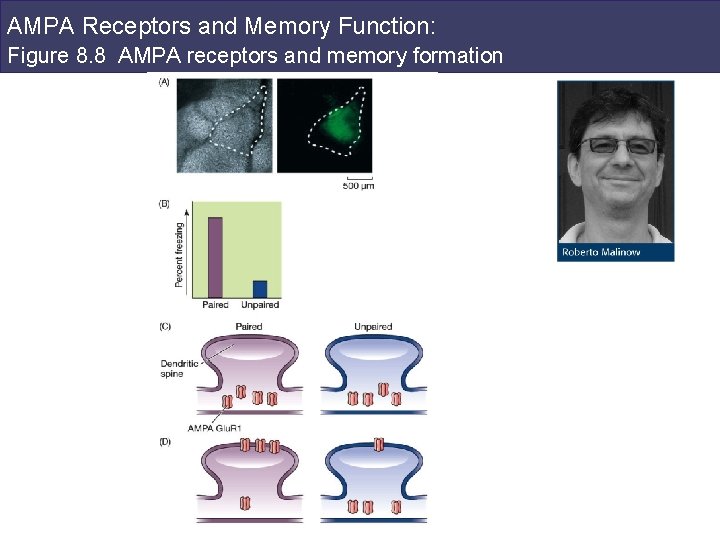
AMPA Receptors and Memory Function: Figure 8. 8 AMPA receptors and memory formation
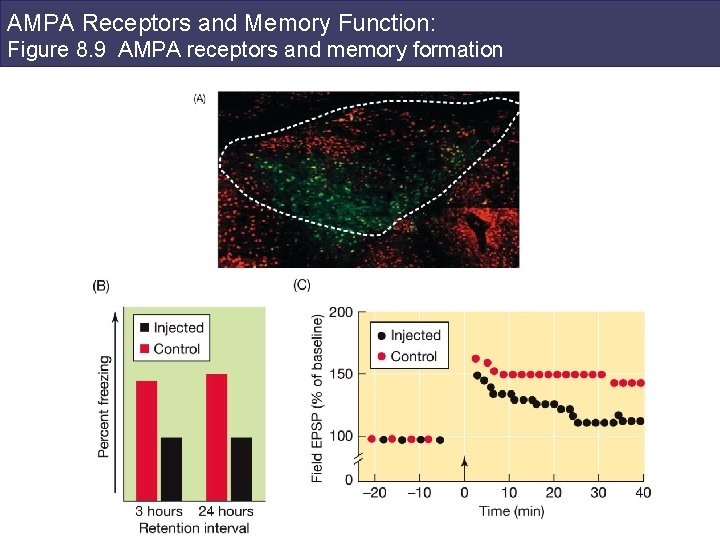
AMPA Receptors and Memory Function: Figure 8. 9 AMPA receptors and memory formation
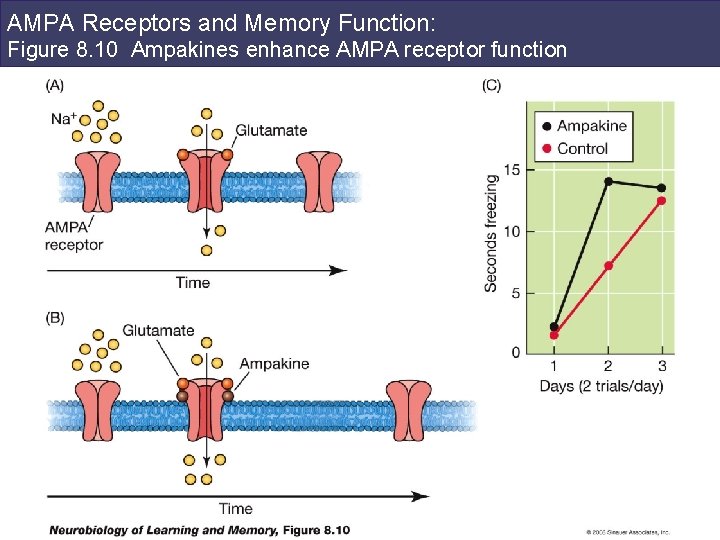
AMPA Receptors and Memory Function: Figure 8. 10 Ampakines enhance AMPA receptor function
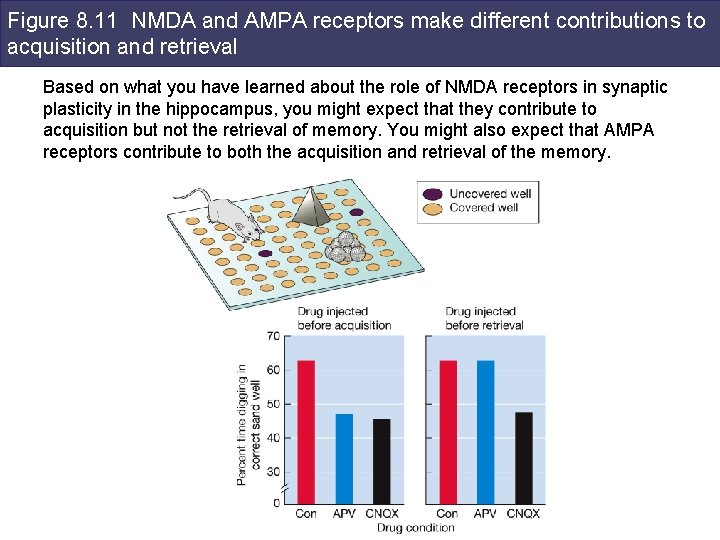
Figure 8. 11 NMDA and AMPA receptors make different contributions to acquisition and retrieval Based on what you have learned about the role of NMDA receptors in synaptic plasticity in the hippocampus, you might expect that they contribute to acquisition but not the retrieval of memory. You might also expect that AMPA receptors contribute to both the acquisition and retrieval of the memory.
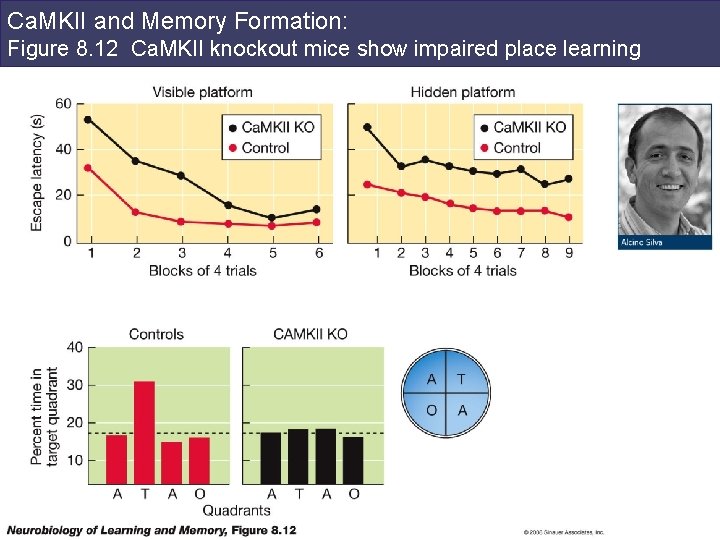
Ca. MKII and Memory Formation: Figure 8. 12 Ca. MKII knockout mice show impaired place learning
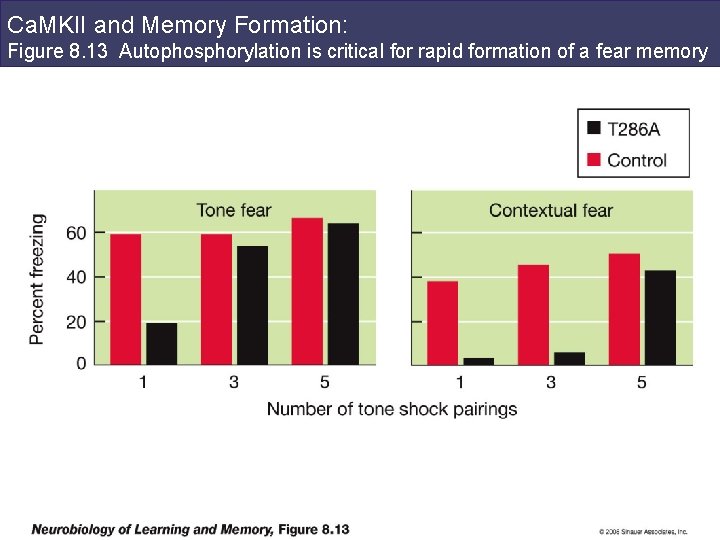
Ca. MKII and Memory Formation: Figure 8. 13 Autophosphorylation is critical for rapid formation of a fear memory
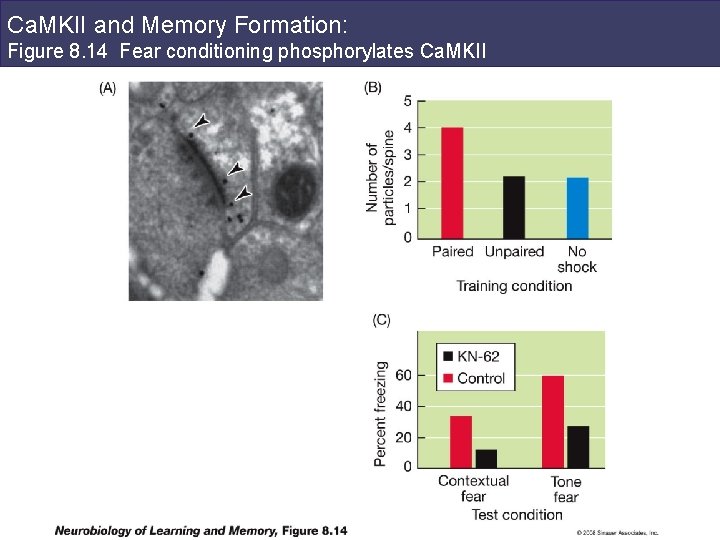
Ca. MKII and Memory Formation: Figure 8. 14 Fear conditioning phosphorylates Ca. MKII