
8 Location Planning and Analysis Mc GrawHillIrwin Copyright
- Slides: 23
8 Location Planning and Analysis Mc. Graw-Hill/Irwin Copyright © 2007 by The Mc. Graw-Hill Companies, Inc. All rights reserved.
Learning Objectives § § § List some of the main reasons organizations need to make location decisions. Explain why location decisions are important. Discuss the options that are available for location decisions. Describe some of the major factors that affect location decisions. Outline the decision process for making these kinds of decisions. Use the techniques presented to solve typical problems. 2
Need for Location Decisions § Marketing Strategy § Cost of Doing Business § Growth § Depletion of Resources 3
Nature of Location Decisions § Strategic Importance of location decisions § § § Long term commitment/costs Impact on investments, revenues, and operations Supply chains § Objectives of location decisions § § § Profit potential No single location may be better than others Identify several locations from which to choose § Location Options § § § Expand existing facilities Add new facilities Move 4
Making Location Decisions § § Decide on the criteria Identify the important factors Develop location alternatives Evaluate the alternatives § Identify general region § Identify a small number of community alternatives § Identify site alternatives § Evaluate and make selection 5
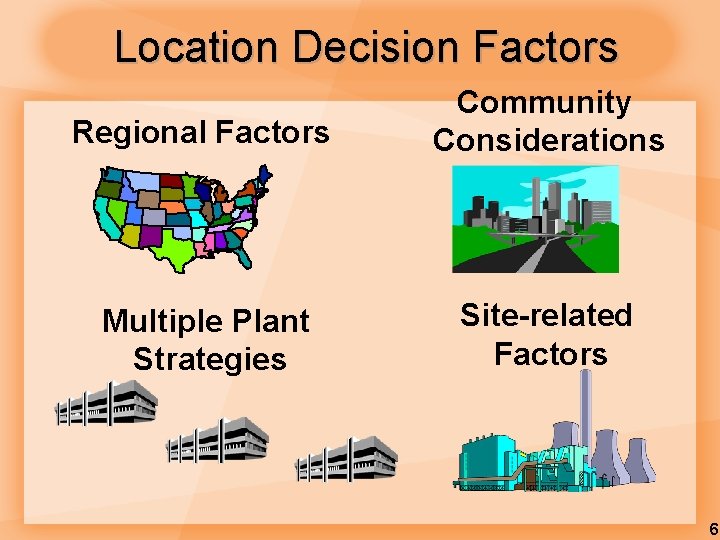
Location Decision Factors Regional Factors Community Considerations Multiple Plant Strategies Site-related Factors 6
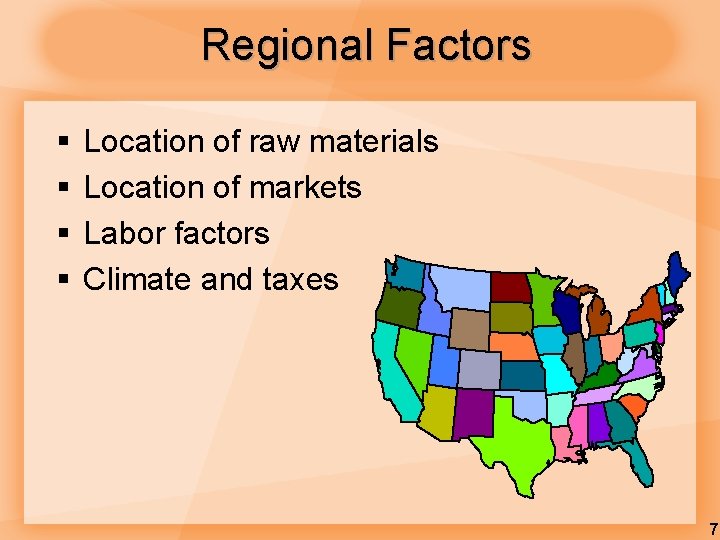
Regional Factors § § Location of raw materials Location of markets Labor factors Climate and taxes 7
Community Considerations § § § § Quality of life Services Attitudes Taxes Environmental regulations Utilities Developer support 8
Site Related Factors § § Land Transportation Environmental Legal 9
Multiple Plant Strategies § Product plant strategy § Market area plant strategy § Process plant strategy 10
Service and Retail Locations § Manufacturers – cost focused § Service and retail – revenue focused § Traffic volume and convenience most important § Demographics § Age § Income § Education § Location, location § Good transportation § Customer safety 11
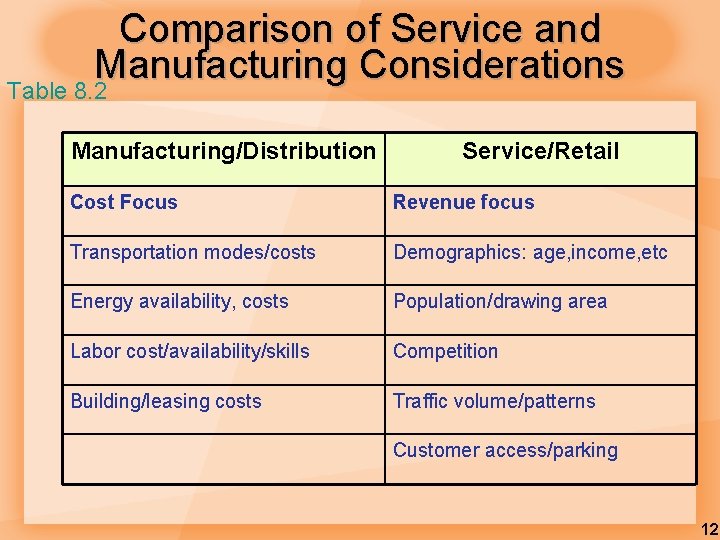
Comparison of Service and Manufacturing Considerations Table 8. 2 Manufacturing/Distribution Service/Retail Cost Focus Revenue focus Transportation modes/costs Demographics: age, income, etc Energy availability, costs Population/drawing area Labor cost/availability/skills Competition Building/leasing costs Traffic volume/patterns Customer access/parking 12
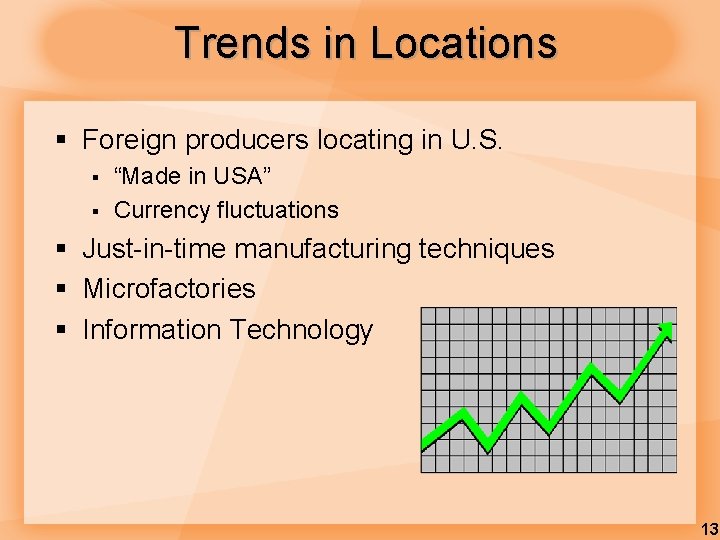
Trends in Locations § Foreign producers locating in U. S. § § “Made in USA” Currency fluctuations § Just-in-time manufacturing techniques § Microfactories § Information Technology 13
Global Locations § § § Reasons for globalization Benefits Disadvantages Risks Global operations issues 14
Globalization § Facilitating Factors § Trade agreements § Technology § Benefits § § Markets Cost savings Legal and regulatory Financial 15
Globalization § Disadvantages § § § Transportation costs Security Unskilled labor Import restrictions Criticisms § Risks § § Political Terrorism Legal Cultural 16
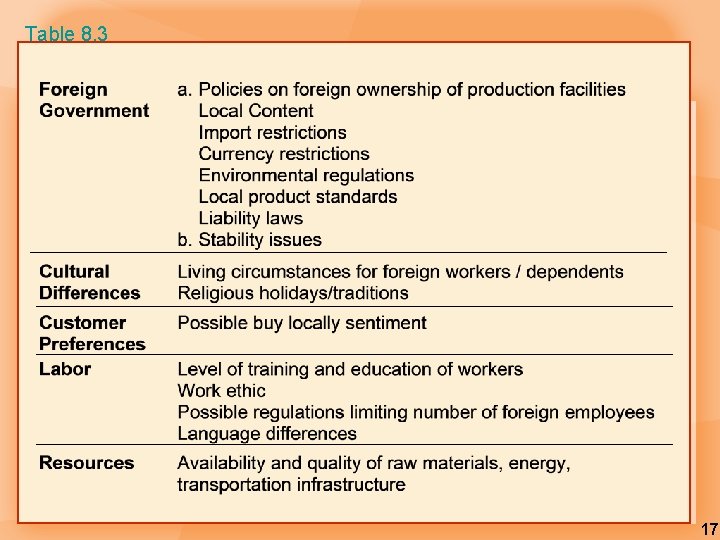
Table 8. 3 17
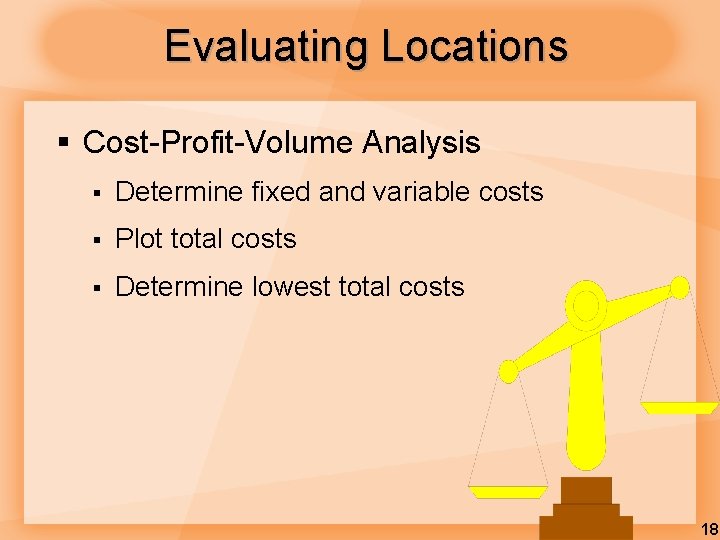
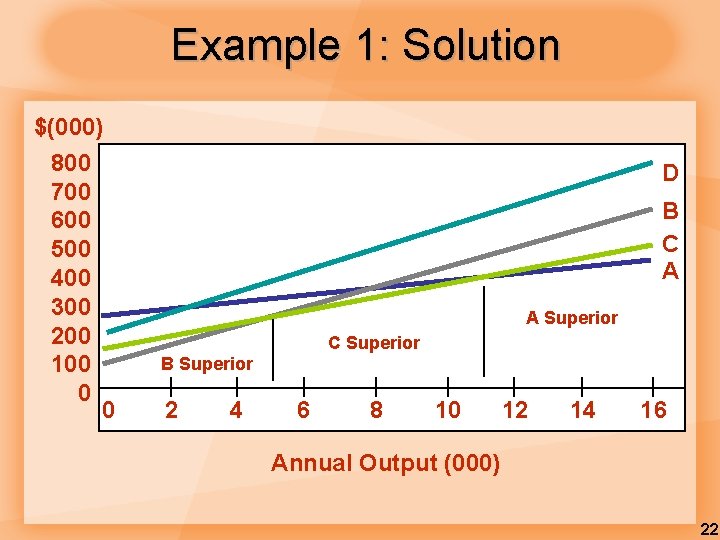
Evaluating Locations § Cost-Profit-Volume Analysis § Determine fixed and variable costs § Plot total costs § Determine lowest total costs 18
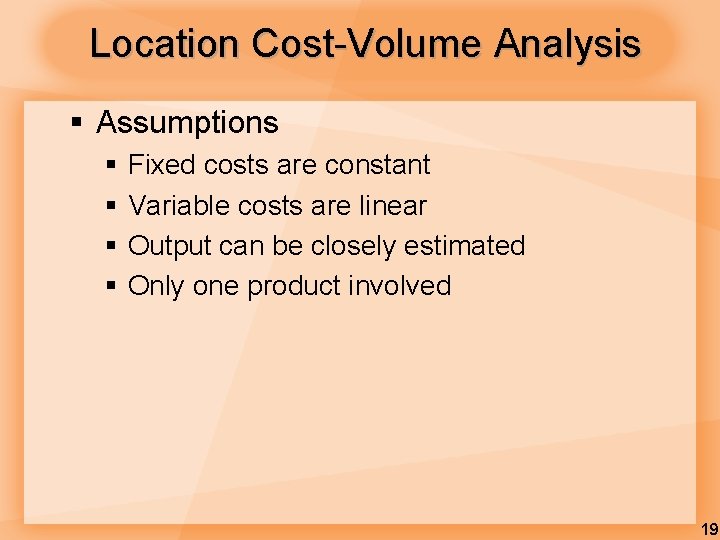
Location Cost-Volume Analysis § Assumptions § § Fixed costs are constant Variable costs are linear Output can be closely estimated Only one product involved 19
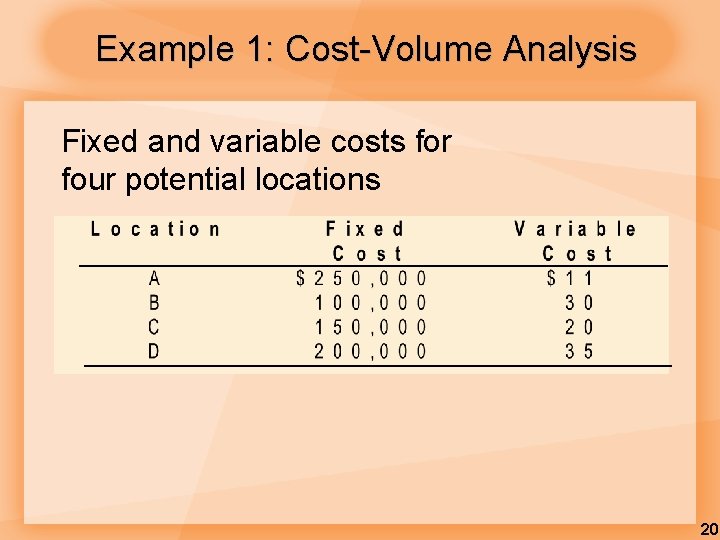
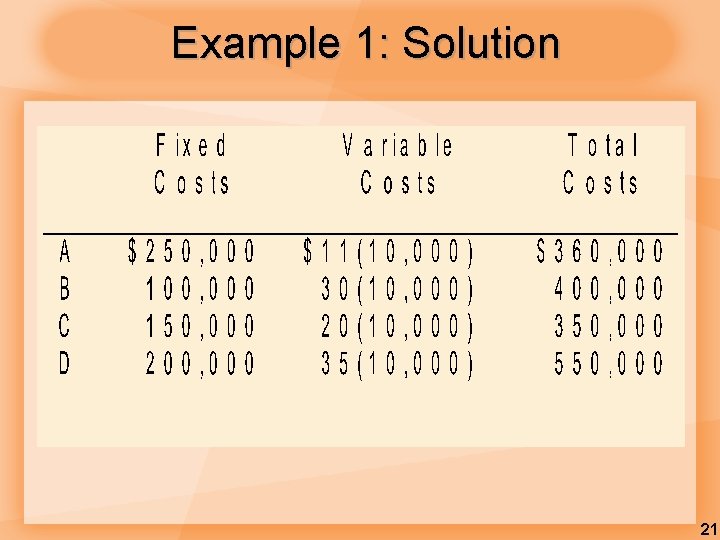
Example 1: Cost-Volume Analysis Fixed and variable costs for four potential locations 20
Example 1: Solution 21
Example 1: Solution $(000) 800 700 600 500 400 300 200 100 0 D B C A A Superior C Superior B Superior 0 2 4 6 8 10 12 14 16 Annual Output (000) 22
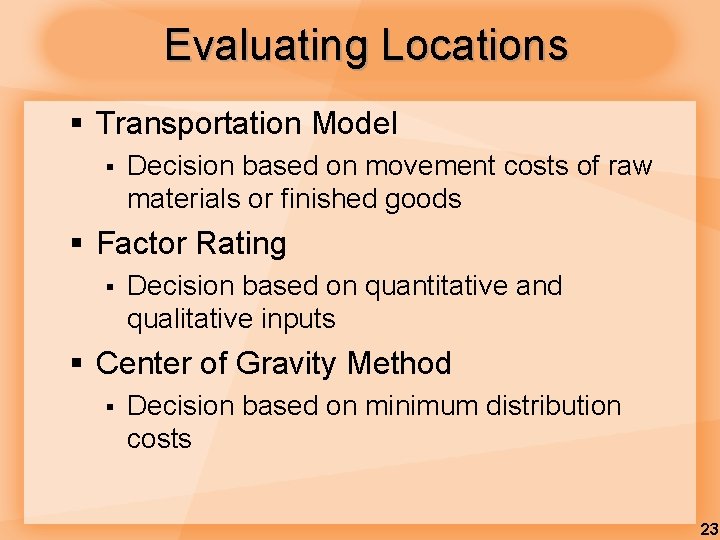
Evaluating Locations § Transportation Model § Decision based on movement costs of raw materials or finished goods § Factor Rating § Decision based on quantitative and qualitative inputs § Center of Gravity Method § Decision based on minimum distribution costs 23