
8 c Know the effects of genetic drift
- Slides: 23
8 c. Know the effects of genetic drift on the diversity of organisms in a population.
8 d. Know reproductive or geographic isolation affects speciation.
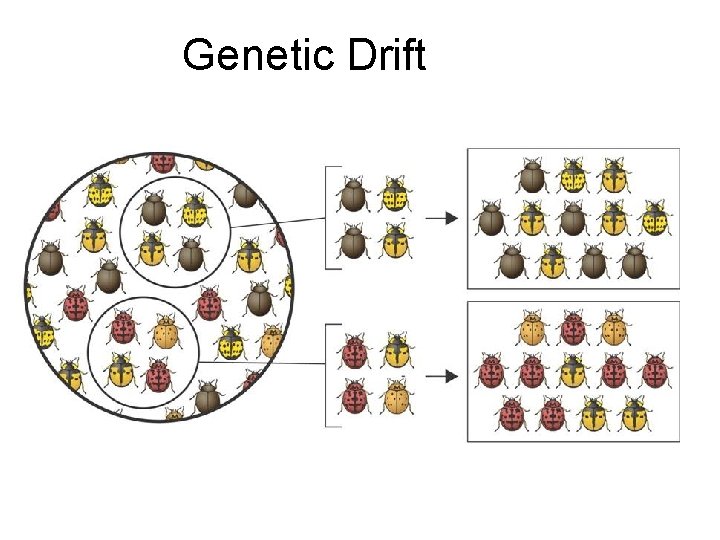
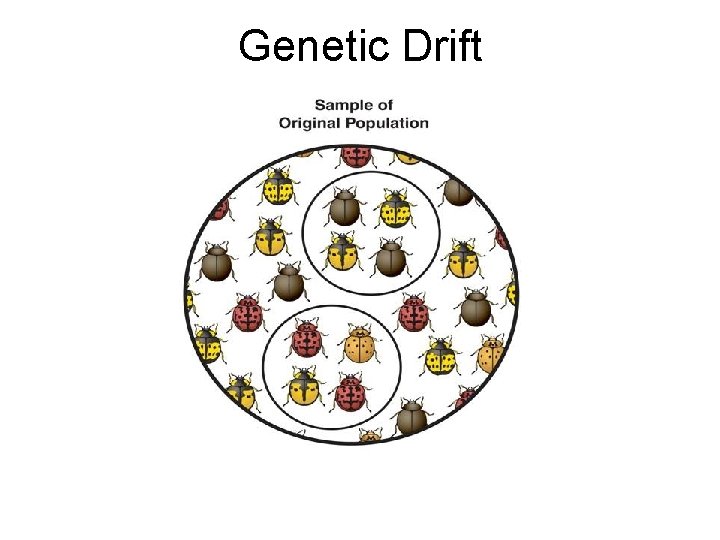
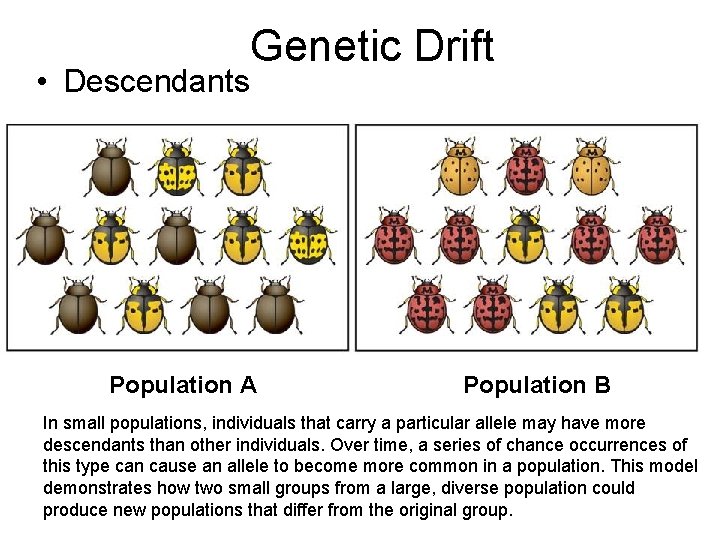
Genetic Drift • Genetic Drift – What is genetic drift? • A random change in allele frequency is called ________. – In small populations, individuals that carry a particular allele may leave more descendants than other individuals do, just by chance. – Over time, a series of chance occurrences of this type can cause an allele to become common in a population.
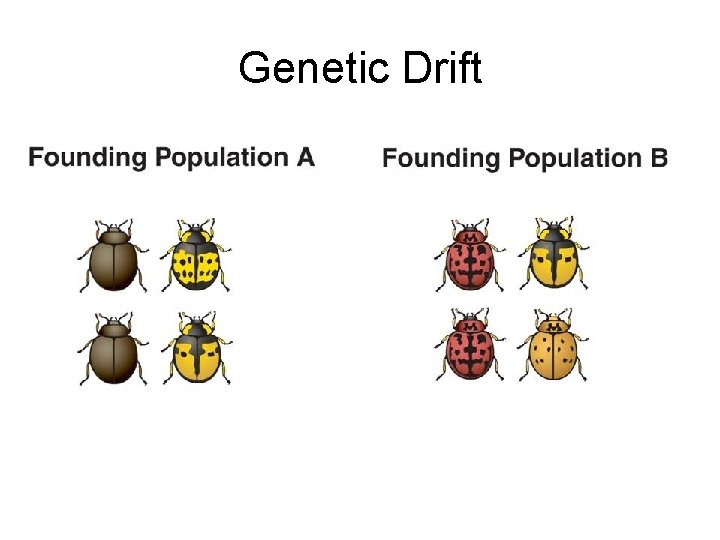
Genetic Drift • Genetic drift may occur when a _____ group of individuals colonizes a new habitat. • Individuals may carry alleles in different relative frequencies than did the larger population from which they came. • The _____ population will be genetically different from the parent population.
Genetic Drift
Genetic Drift
Genetic Drift
• Descendants Genetic Drift Population A Population B In small populations, individuals that carry a particular allele may have more descendants than other individuals. Over time, a series of chance occurrences of this type can cause an allele to become more common in a population. This model demonstrates how two small groups from a large, diverse population could produce new populations that differ from the original group.
Genetic Drift • When allele frequencies change due to migration of a small subgroup of a population it is known as the ________.
16 -3 The Process of Speciation • Natural selection and chance events can change the relative frequencies of alleles in a population and lead to speciation. • _______ is the formation of new species. • A species is a group of organisms that breed with one another and produce fertile offspring.
Isolating Mechanisms – What factors are involved in the formation of new species? • The gene pools of two populations must become __________ for them to become new species. • Isolating Mechanisms – As new species evolve, populations become __________ isolated from each other. – When the members of two populations cannot interbreed and produce fertile offspring, reproductive isolation has occurred.
Isolating Mechanisms • Reproductive isolation can develop in a variety of ways, including: • __________________ isolation
Isolating Mechanisms – Behavioral ________ • ___________ isolation occurs when two populations are capable of interbreeding but have differences in courtship rituals or other reproductive strategies that involve behavior. – Geographic _______ • ___________ isolation occurs when two populations are separated by geographic barriers such as rivers or mountains.
Isolating Mechanisms • Geographic barriers do not guarantee the formation of new _________. • If two formerly separated populations can still interbreed, they remain a single species. • Potential geographic barriers may separate certain types of organisms but not others.
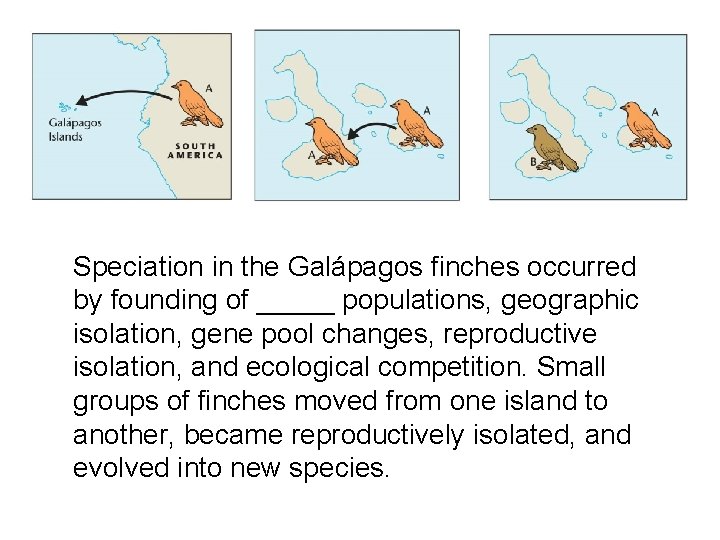
Speciation in Darwin’s Finches – Describe the process of speciation in the Galápagos finches. • Speciation in Darwin's Finches – Speciation in the Galápagos finches occurred by: » founding of a new population » geographic isolation » changes in new population's gene pool » reproductive isolation » ecological competition
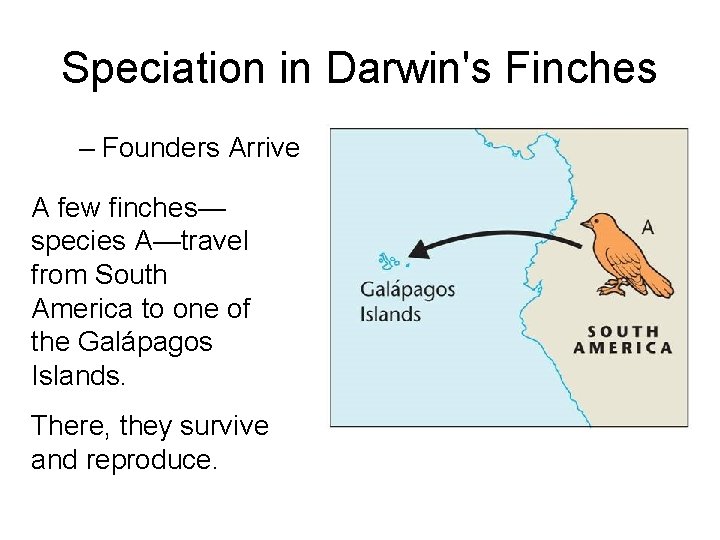
Speciation in Darwin's Finches – Founders Arrive A few finches— species A—travel from South America to one of the Galápagos Islands. There, they survive and reproduce.
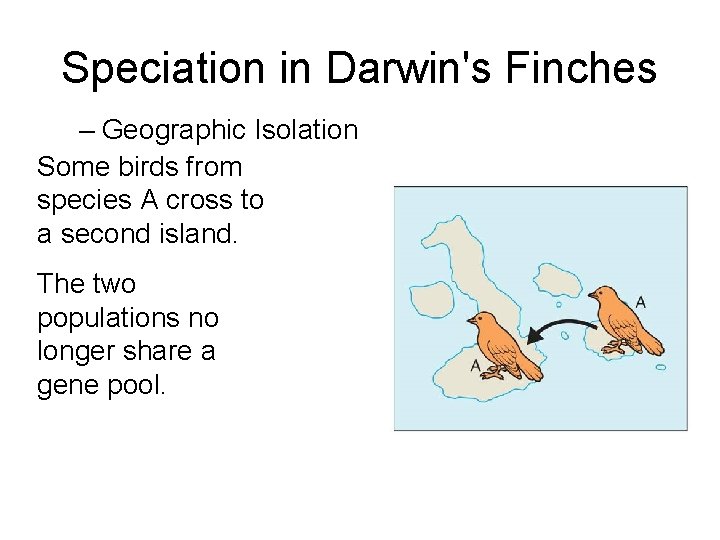
Speciation in Darwin's Finches – Geographic Isolation Some birds from species A cross to a second island. The two populations no longer share a gene pool.
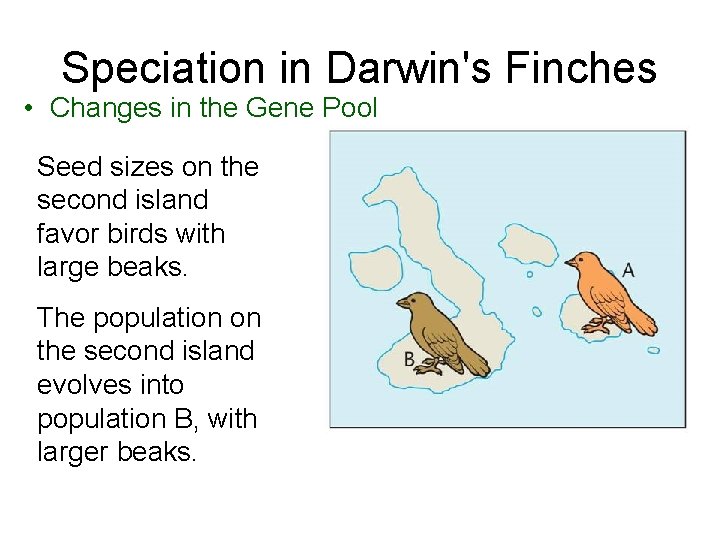
Speciation in Darwin's Finches • Changes in the Gene Pool Seed sizes on the second island favor birds with large beaks. The population on the second island evolves into population B, with larger beaks.
Speciation in the Galápagos finches occurred by founding of _____ populations, geographic isolation, gene pool changes, reproductive isolation, and ecological competition. Small groups of finches moved from one island to another, became reproductively isolated, and evolved into new species.
Speciation in Darwin's Finches – _________ Isolation • If population B birds cross back to the first island, they will not mate with birds from population A. • Populations A and B are separate species. – _________ Competition • As species A and B compete for available seeds on the first island, they continue to evolve in a way that increases the differences between them. • A new species—C—may evolve. – Continued Evolution • This process of isolation, genetic change, and reproductive isolation probably repeated itself often across the entire Galápagos island chain.
Studying Evolution Since Darwin • Scientific evidence supports theory that living species descended with __________ from common ancestors that lived in the ancient past. • Scientists predict that as new ________ are found, they will continue to expand our understanding of how species evolved.
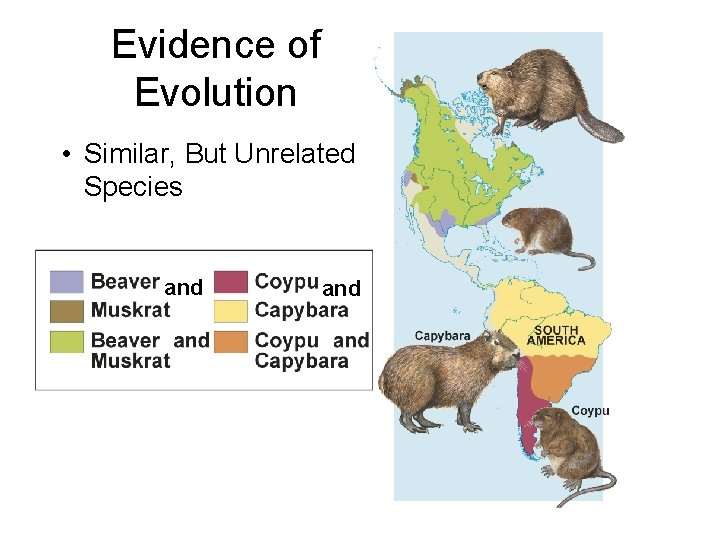
Evidence of Evolution • Similar, But Unrelated Species and
Summary _______ is the change in allele frequency in a population due to random change. If a small subgroup of a population is separated from the larger population, the subgroup may have fewer different alleles than the main population. Populations become reproductively _______ when they can no longer interbreed and produce fertile offspring.