
8 Attitudes Persuasive Communications CONSUMER BEHAVIOR 12 e
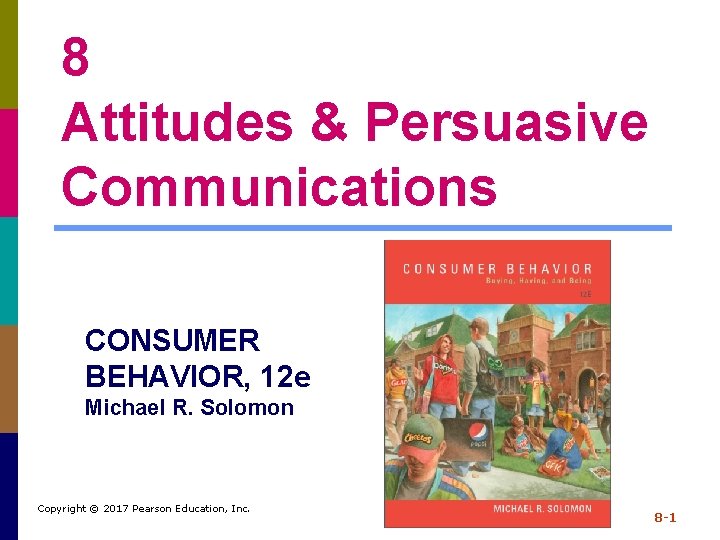
8 Attitudes & Persuasive Communications CONSUMER BEHAVIOR, 12 e Michael R. Solomon Copyright © 2017 Pearson Education, Inc. 8 -1
Chapter Objectives 1. It is important for consumer researchers to understand the nature and power of attitudes. 2. Attitudes are more complex than they first appear. 3. We form attitudes in several ways. Copyright © 2017 Pearson Education, Inc. 8 -2
Chapter Objectives (Cont. ) 4. A need to maintain consistency among all of our attitudinal components motivates us to alter one or more of them. 5. Attitude models identify specific components and combine them to predict a consumer’s overall attitude toward a product or brand. Copyright © 2017 Pearson Education, Inc. 8 -3
Chapter Objectives (Cont. ) 6. The communications model identifies several important components for marketers when they try to change consumers’ attitudes toward products and services. 7. The consumer who processes such a message is not necessarily the passive receiver of information marketers once believed him to be. Copyright © 2017 Pearson Education, Inc. 8 -4
Chapter Objectives (Cont. ) 8. Several factors influence a message source’s effectiveness. 9. The way a marketer structures his or her message determines how persuasive it will be. 10. Many modern marketers are reality engineers. Copyright © 2017 Pearson Education, Inc. 8 -5
Chapter Objectives (Cont. ) 11. Audience characteristics help to determine whether the nature of the source or the message itself will be relatively more effective. Copyright © 2017 Pearson Education, Inc. 8 -6
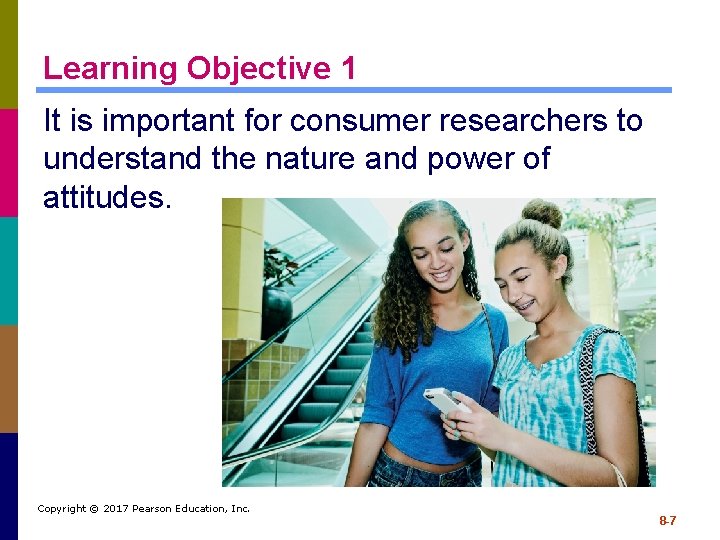
Learning Objective 1 It is important for consumer researchers to understand the nature and power of attitudes. Copyright © 2017 Pearson Education, Inc. 8 -7
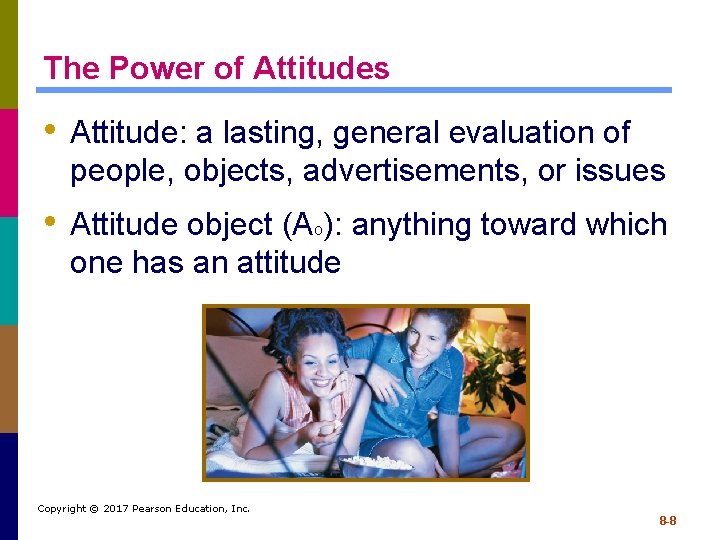
The Power of Attitudes • Attitude: a lasting, general evaluation of people, objects, advertisements, or issues • Attitude object (A ): anything toward which O one has an attitude Copyright © 2017 Pearson Education, Inc. 8 -8
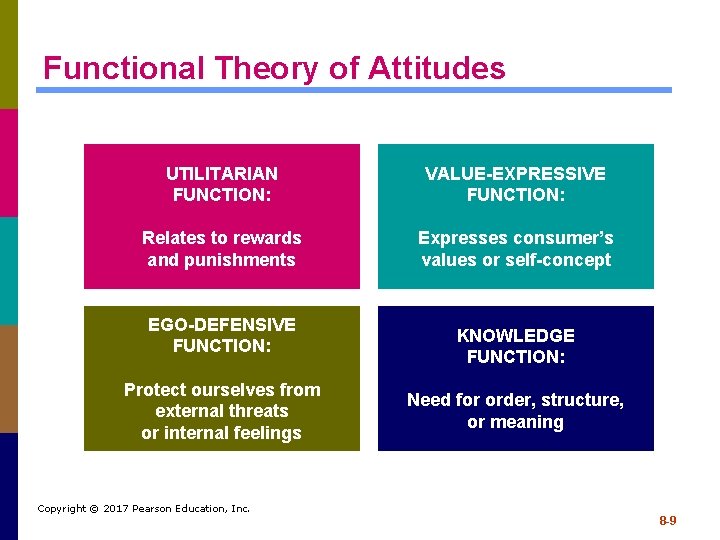
Functional Theory of Attitudes UTILITARIAN FUNCTION: VALUE-EXPRESSIVE FUNCTION: Relates to rewards and punishments Expresses consumer’s values or self-concept EGO-DEFENSIVE FUNCTION: Protect ourselves from external threats or internal feelings KNOWLEDGE FUNCTION: Need for order, structure, or meaning Copyright © 2017 Pearson Education, Inc. 8 -9
For Reflection • Imagine that you work for the marketing department of your college or university and have segmented students into four different clusters, each representing one of the four functions identified by Katz. • Develop a marketing strategy based on each of the four functions to motivate students to stay in school and complete their degrees. Copyright © 2017 Pearson Education, Inc. 8 -10
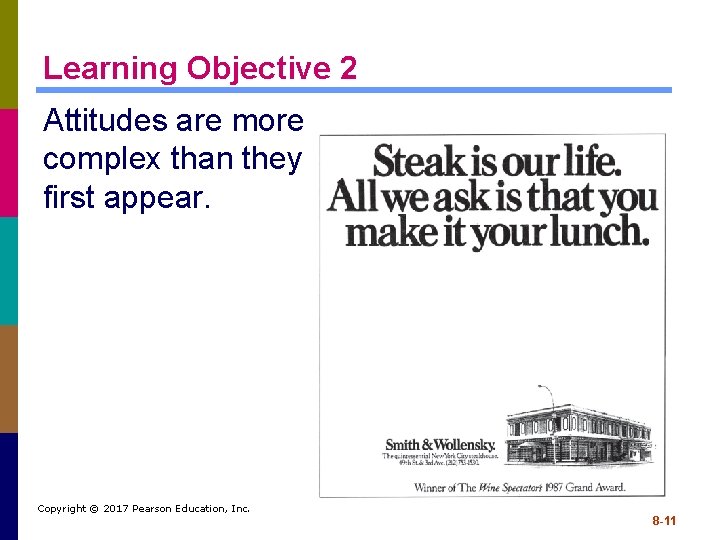
Learning Objective 2 Attitudes are more complex than they first appear. Copyright © 2017 Pearson Education, Inc. 8 -11
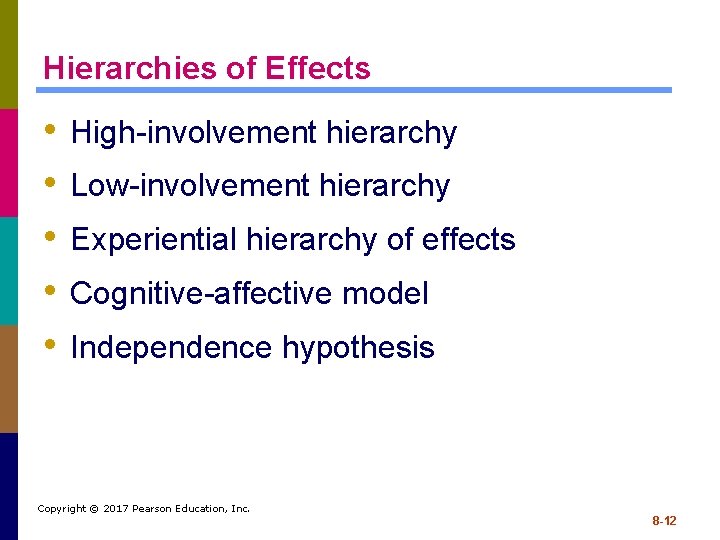
Hierarchies of Effects • • • High-involvement hierarchy Low-involvement hierarchy Experiential hierarchy of effects Cognitive-affective model Independence hypothesis Copyright © 2017 Pearson Education, Inc. 8 -12
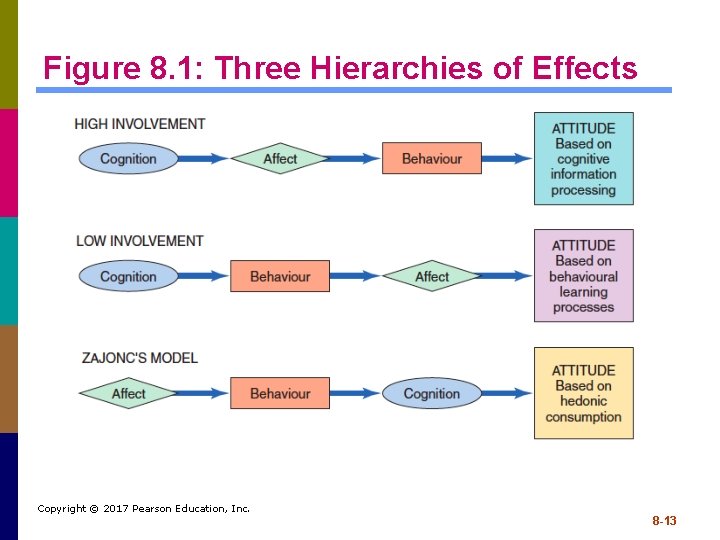
Figure 8. 1: Three Hierarchies of Effects Copyright © 2017 Pearson Education, Inc. 8 -13
For Reflection • Share a decision you made following the three learning hierarchies: o Think Feel Do o Do Feel Think o Feel Do Think Copyright © 2017 Pearson Education, Inc. 8 -14
Learning Objective 3 We form attitudes in several ways. Copyright © 2017 Pearson Education, Inc. 8 -15
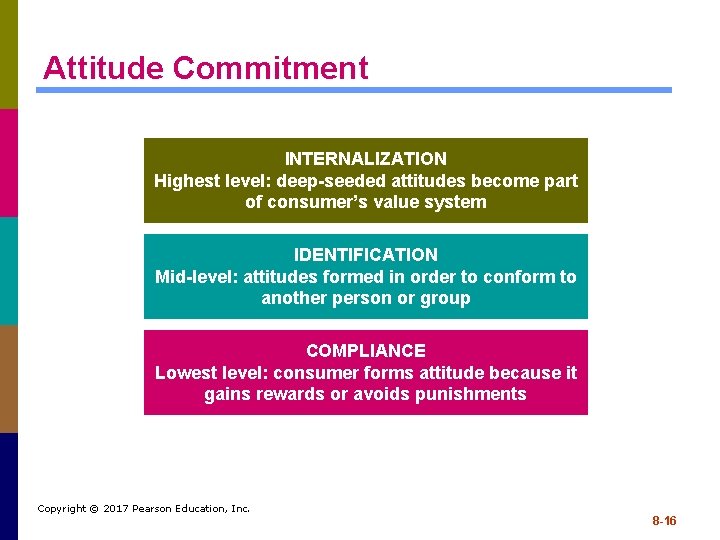
Attitude Commitment INTERNALIZATION Highest level: deep-seeded attitudes become part of consumer’s value system IDENTIFICATION Mid-level: attitudes formed in order to conform to another person or group COMPLIANCE Lowest level: consumer forms attitude because it gains rewards or avoids punishments Copyright © 2017 Pearson Education, Inc. 8 -16
For Reflection • Share a commitment you’ve made at each of the three levels of commitment: o Internalization o Identification o Compliance • Can you feel the variations in commitment for the three types? Explain. Copyright © 2017 Pearson Education, Inc. 8 -17
Learning Objective 4 A need to maintain consistency among all of our attitudinal components often motivates us to alter one or more of them. Copyright © 2017 Pearson Education, Inc. 8 -18
Consistency Principle • We value/seek harmony among thoughts, feelings, and behaviors • We will change components to make them consistent • Relates to theory of cognitive dissonance – we take action to resolve dissonance when our attitudes and behaviors are inconsistent Copyright © 2017 Pearson Education, Inc. 8 -19
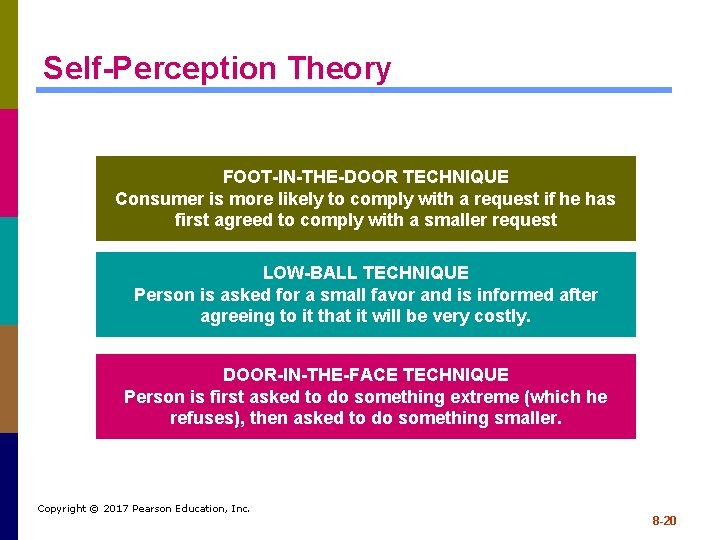
Self-Perception Theory FOOT-IN-THE-DOOR TECHNIQUE Consumer is more likely to comply with a request if he has first agreed to comply with a smaller request LOW-BALL TECHNIQUE Person is asked for a small favor and is informed after agreeing to it that it will be very costly. DOOR-IN-THE-FACE TECHNIQUE Person is first asked to do something extreme (which he refuses), then asked to do something smaller. Copyright © 2017 Pearson Education, Inc. 8 -20
Social Judgment Theory We assimilate new information about attitude objects in light of what we already know/feel • Initial attitude = frame of reference • Latitudes of acceptance and rejection o Assimilation effects o Contrast effects o Example: “Choosy mothers choose Jif Peanut Butter” Copyright © 2017 Pearson Education, Inc. 8 -21
Balance Theory Considers how a person might perceive relations among different attitude objects and how he might alter attitudes to maintain consistency. Triad attitude structures: • Person • Perception of attitude object • Perception of other person/object Copyright © 2017 Pearson Education, Inc. 8 -22
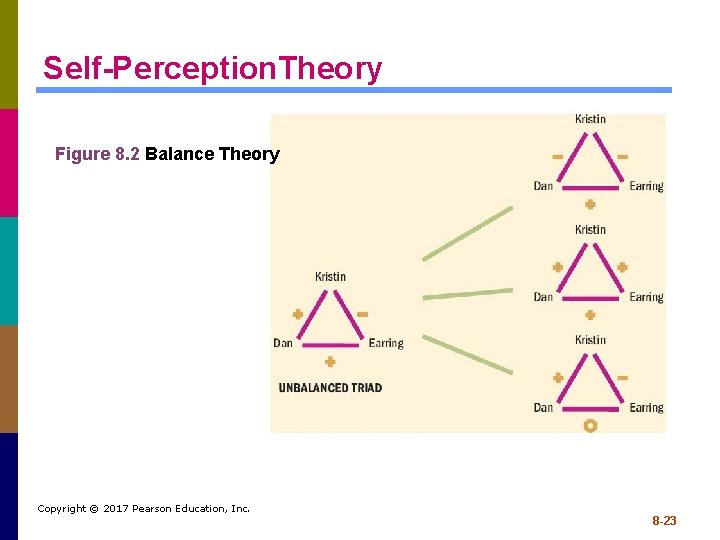
Self-Perception. Theory Figure 8. 2 Balance Theory Copyright © 2017 Pearson Education, Inc. 8 -23
For Reflection • Interview a student next to you about a behavior that he or she has that is inconsistent with his or her attitudes (e. g. , attitudes toward healthy eating or active lifestyle, attitudes toward materialism, etc. ) • Ask the student to elaborate on why he or she has the behavior, then try to identify the way the person has resolved dissonant elements. Copyright © 2017 Pearson Education, Inc. 8 -24
Learning Objective 5 Attitude models identify specific components and combine them to predict a consumer’s overall attitude toward a product or brand. Copyright © 2017 Pearson Education, Inc. 8 -25
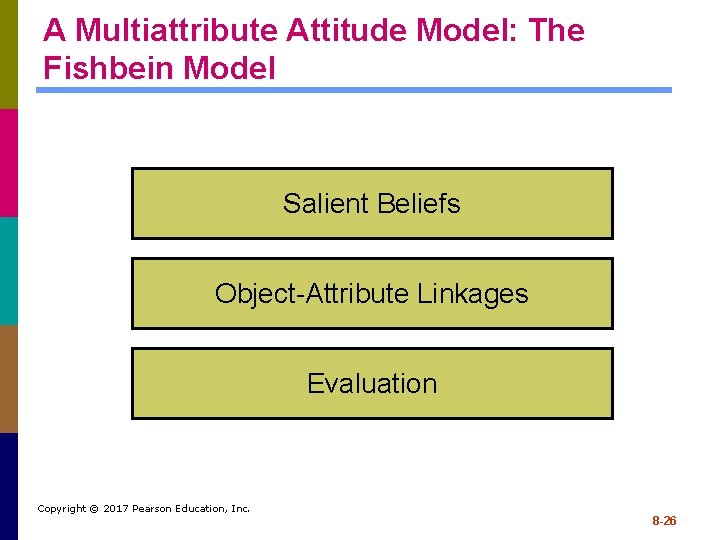
A Multiattribute Attitude Model: The Fishbein Model Salient Beliefs Object-Attribute Linkages Evaluation Copyright © 2017 Pearson Education, Inc. 8 -26
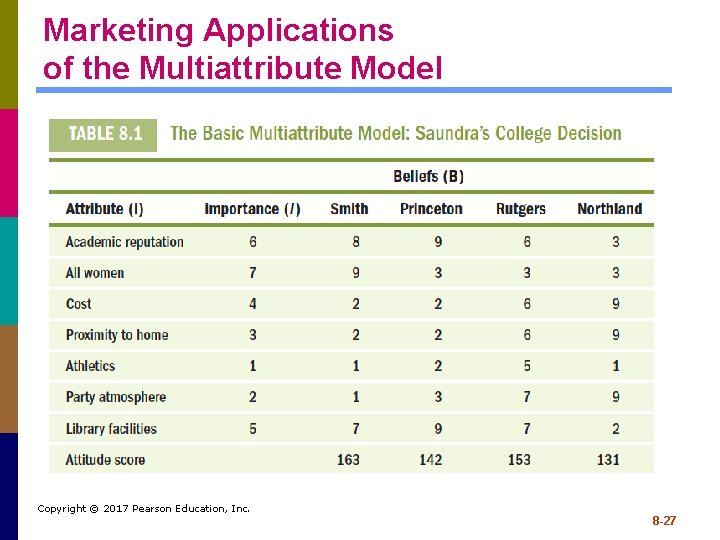
Marketing Applications of the Multiattribute Model Copyright © 2017 Pearson Education, Inc. 8 -27
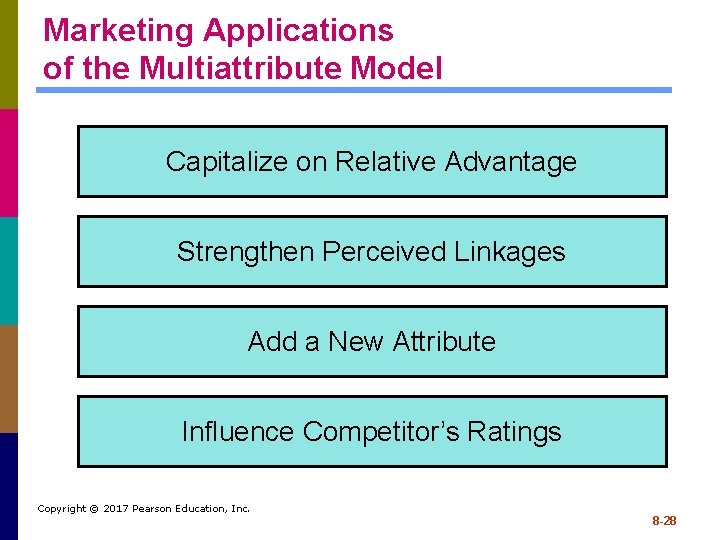
Marketing Applications of the Multiattribute Model Capitalize on Relative Advantage Strengthen Perceived Linkages Add a New Attribute Influence Competitor’s Ratings Copyright © 2017 Pearson Education, Inc. 8 -28
The Extended Fishbein Model: Theory of Reasoned Action • Intentions versus behavior: measure behavioral intentions, not just intentions • Social pressure: acknowledge the power of other people in purchasing decision • Attitude toward buying: measure attitude toward the act of buying, not just the product Copyright © 2017 Pearson Education, Inc. 8 -29
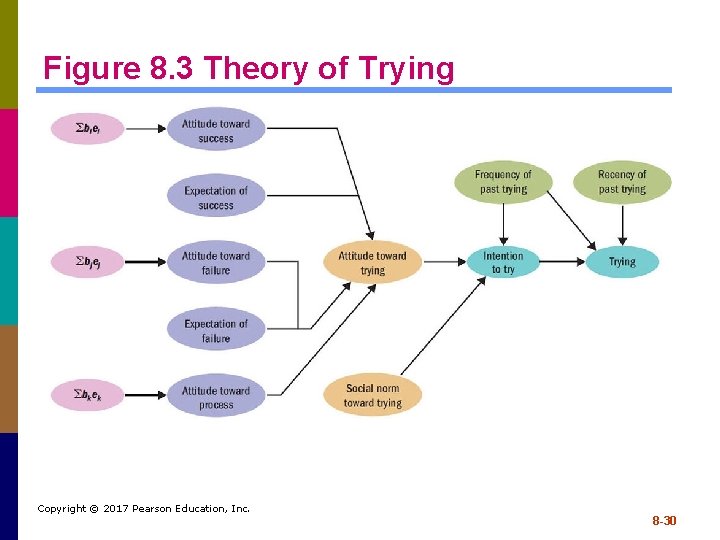
Figure 8. 3 Theory of Trying Copyright © 2017 Pearson Education, Inc. 8 -30
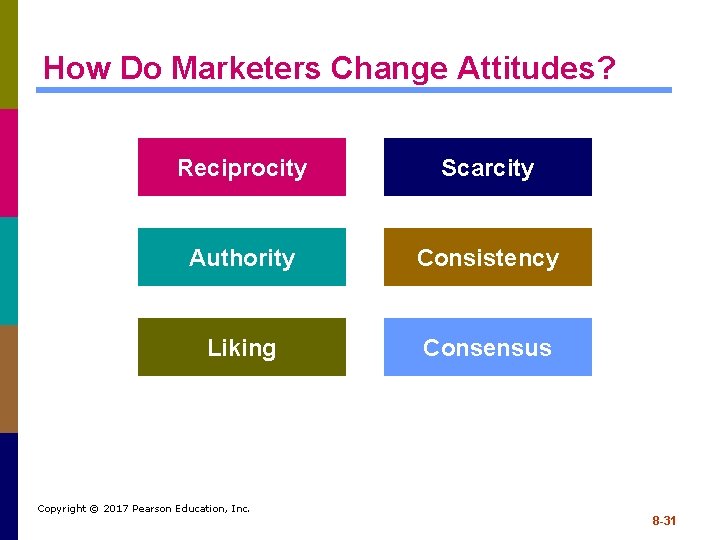
How Do Marketers Change Attitudes? Reciprocity Scarcity Authority Consistency Liking Consensus Copyright © 2017 Pearson Education, Inc. 8 -31
For Reflection • Can you think of a time that you were persuaded by marketing? Which of the persuasion tactics were used and in what way? Copyright © 2017 Pearson Education, Inc. 8 -32
Learning Objective 6 The communications model identifies several important components for marketers when they try to change consumers’ attitudes toward products and services. Copyright © 2017 Pearson Education, Inc. 8 -33
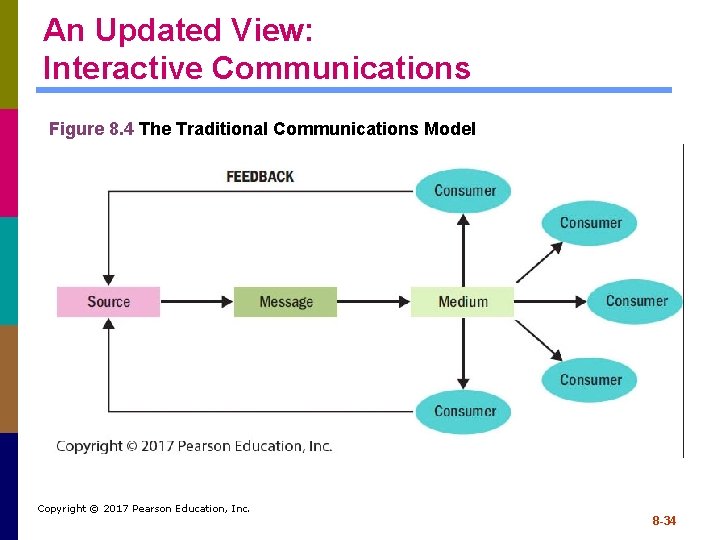
An Updated View: Interactive Communications Figure 8. 4 The Traditional Communications Model Copyright © 2017 Pearson Education, Inc. 8 -34
For Reflection • In what kinds of situations would the traditional communications model work less effectively? Copyright © 2017 Pearson Education, Inc. 8 -35
Learning Objective 7 The consumer who processes a message is not necessarily the passive receiver of information marketers once believed him or her to be. Copyright © 2017 Pearson Education, Inc. 8 -36
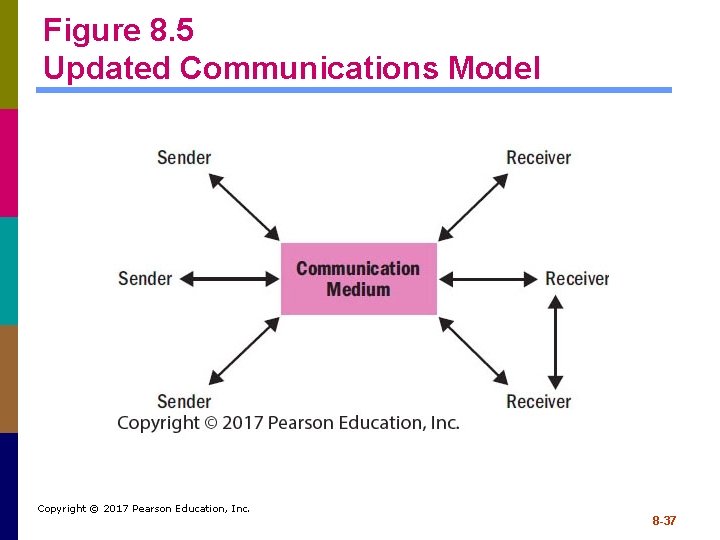
Figure 8. 5 Updated Communications Model Copyright © 2017 Pearson Education, Inc. 8 -37
New Message Formats M-commerce - marketers promote goods and services via wireless devices. New social media platforms: • Blogs and video blogs • Podcasts • Twitter • Virtual worlds • Widgets Copyright © 2017 Pearson Education, Inc. 8 -38
For Reflection • To what extent have mobile messages changed your behavior as a buyer? Have you acted on a mobile coupon or message? Copyright © 2017 Pearson Education, Inc. 8 -39
Learning Objective 8 Several factors influence the effectiveness of a message source. Copyright © 2017 Pearson Education, Inc. 8 -40
The Source • • • Source credibility Disclaimers Sleeper effect Native advertising Knowledge bias • • • Reporting bias Source attractiveness Shared endorsements Halo effect Spokecharacters Copyright © 2017 Pearson Education, Inc. 8 -41
For Reflection • Think of a celebrity endorser that you find to lack persuasive ability. • What is it about the person, product, or endorser-product fit that fails to persuade you? Copyright © 2017 Pearson Education, Inc. 8 -42
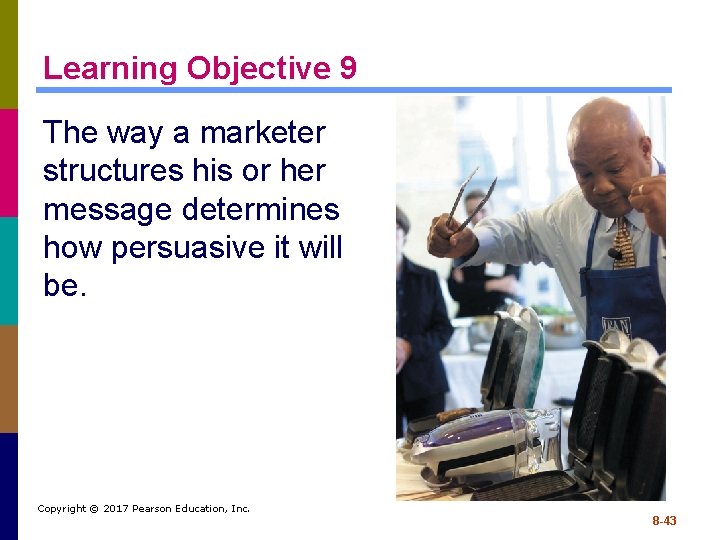
Learning Objective 9 The way a marketer structures his or her message determines how persuasive it will be. Copyright © 2017 Pearson Education, Inc. 8 -43
Decisions to Make About the Message • • Should we use pictures or words? How often should message be repeated? Should it draw an explicit conclusion? Should it show both sides of argument? Should it explicitly compare product to competitors? Should it arouse emotions? Should it be concrete or based on imagery? Copyright © 2017 Pearson Education, Inc. 8 -44
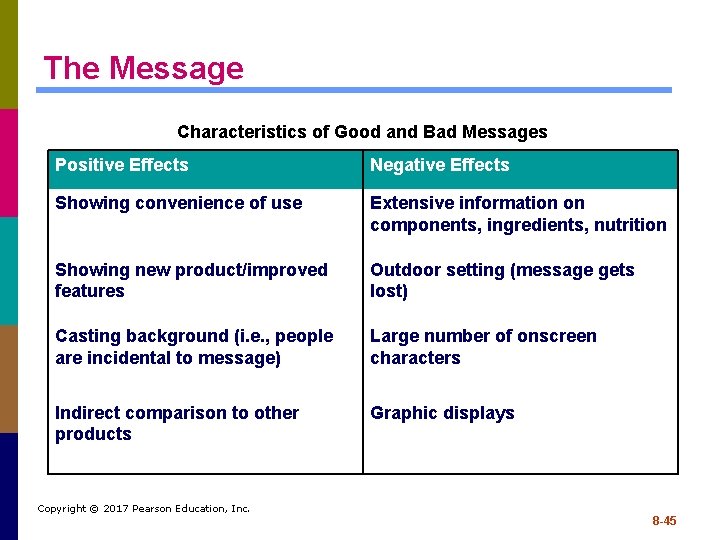
The Message Characteristics of Good and Bad Messages Positive Effects Negative Effects Showing convenience of use Extensive information on components, ingredients, nutrition Showing new product/improved features Outdoor setting (message gets lost) Casting background (i. e. , people are incidental to message) Large number of onscreen characters Indirect comparison to other products Graphic displays Copyright © 2017 Pearson Education, Inc. 8 -45
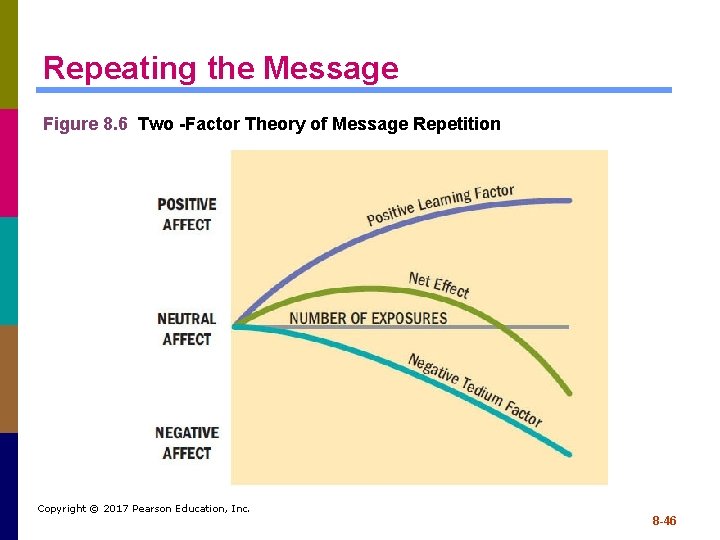
Repeating the Message Figure 8. 6 Two -Factor Theory of Message Repetition Copyright © 2017 Pearson Education, Inc. 8 -46
How Do We Structure Arguments? • One-sided: supportive arguments • Two-sided: both positive and negative information • Refutational argument: negative issue is raised, then dismissed • Positive attributes should refute presented negative attributes • Effective with well-educated and not-yetloyal audiences Copyright © 2017 Pearson Education, Inc. 8 -47
Comparative Advertising Comparative advertising: message compares two+ recognizable brands on specific attributes. • “Unlike Mc. Donalds, all of Arby's chicken sandwiches are made with 100% allnatural chicken” • Negative outcomes include source derogation Copyright © 2017 Pearson Education, Inc. 8 -48
New Message Formats • • • Martyrdom effect M-commerce Transmedia storytelling Reality engineering Guerrilla marketing Copyright © 2017 Pearson Education, Inc. 8 -49
Product Placement and Branded Entertainment • Insertion of specific products and use of brand names in movie/TV scripts • Directors incorporate branded props for realism • Is product placement a positive or negative when it comes to consumer decisionmaking? Copyright © 2017 Pearson Education, Inc. 8 -50
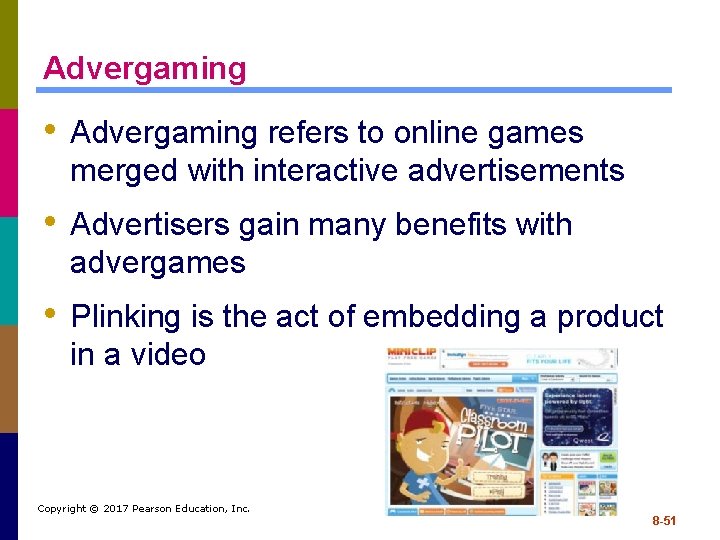
Advergaming • Advergaming refers to online games merged with interactive advertisements • Advertisers gain many benefits with advergames • Plinking is the act of embedding a product in a video Copyright © 2017 Pearson Education, Inc. 8 -51
Types of Message Appeals Emotional versus Rational Appeals Sex Appeals Humorous Appeals Fear Appeals Copyright © 2017 Pearson Education, Inc. 8 -52
For Reflection • Old Spice used a sex/humor appeal in its campaign, The Man Your Man Could Smell Like. • What benefits were communicated in the ad? • Is the message implicit or explicit? Explain. Copyright © 2017 Pearson Education, Inc. 8 -53
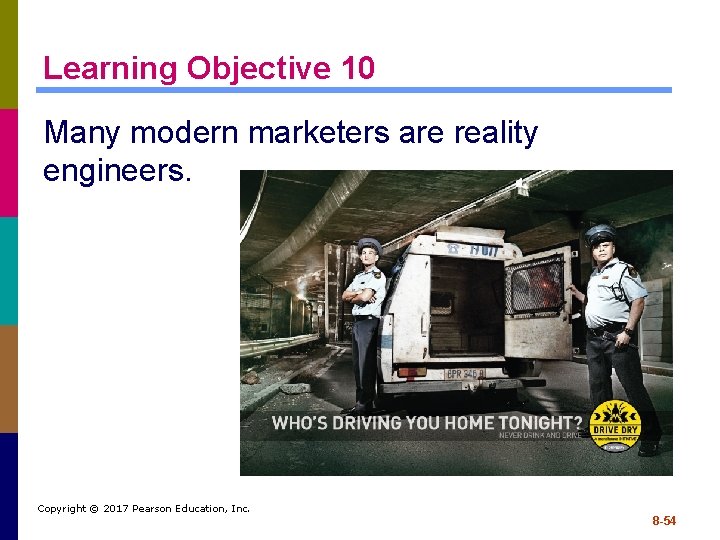
Learning Objective 10 Many modern marketers are reality engineers. Copyright © 2017 Pearson Education, Inc. 8 -54
Learning Objective 11 Audience characteristics help to determine whether the nature of the source or the message itself will be relatively more effective. Copyright © 2017 Pearson Education, Inc. 8 -55
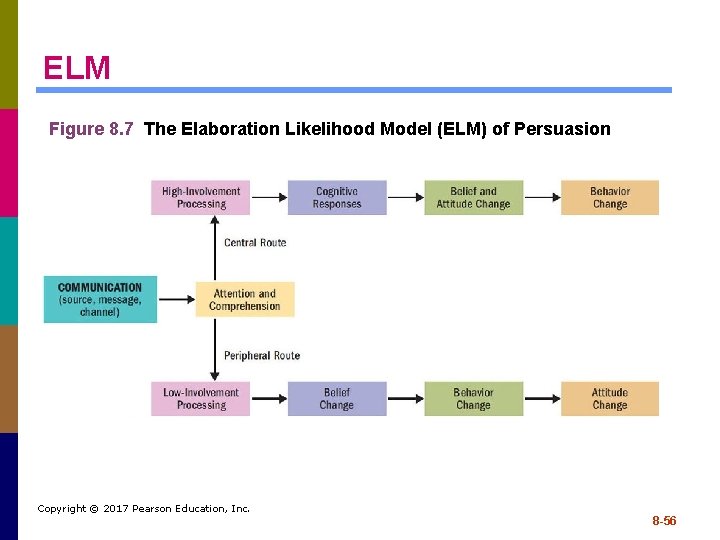
ELM Figure 8. 7 The Elaboration Likelihood Model (ELM) of Persuasion Copyright © 2017 Pearson Education, Inc. 8 -56
For Reflection • As people become more accustomed to short messages like “tweets, ” will we be less likely to elaborate on communications? Explain. Copyright © 2017 Pearson Education, Inc. 8 -57
Chapter Summary • Attitudes are very powerful, and they are formed in several ways. • People try to maintain consistency among their attitudinal components and their attitudes and behaviors. • The communications model includes several important components which can be influenced by marketers to enhance the persuasiveness of the message. Copyright © 2017 Pearson Education, Inc. 8 -58
Chapter Summary • The communications model identifies • several important components for marketers when they try to change consumers’ attitudes toward products and services. The consumer who processes such a message is not necessarily the passive receiver of information marketers once believed him to be. Copyright © 2017 Pearson Education, Inc. 8 -59
Chapter Summary • Several factors influence a message • • source’s effectiveness. The way a marketer structures his message determines how persuasive it will be. Audience characteristics help to determine whether the nature of the source or the message itself will be relatively more effective. Copyright © 2017 Pearson Education, Inc. 8 -60

Copyright © 2017 Pearson Education, Inc. 2 -61
- Slides: 61