
8 A THE COLD WAR The Two Super
- Slides: 17
8 A. THE COLD WAR The Two Super Powers
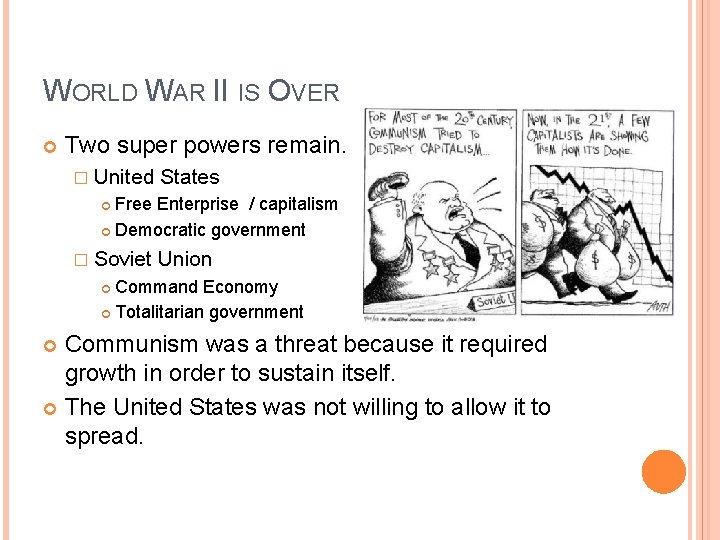
WORLD WAR II IS OVER Two super powers remain. � United States Free Enterprise / capitalism Democratic government � Soviet Union Command Economy Totalitarian government Communism was a threat because it required growth in order to sustain itself. The United States was not willing to allow it to spread.
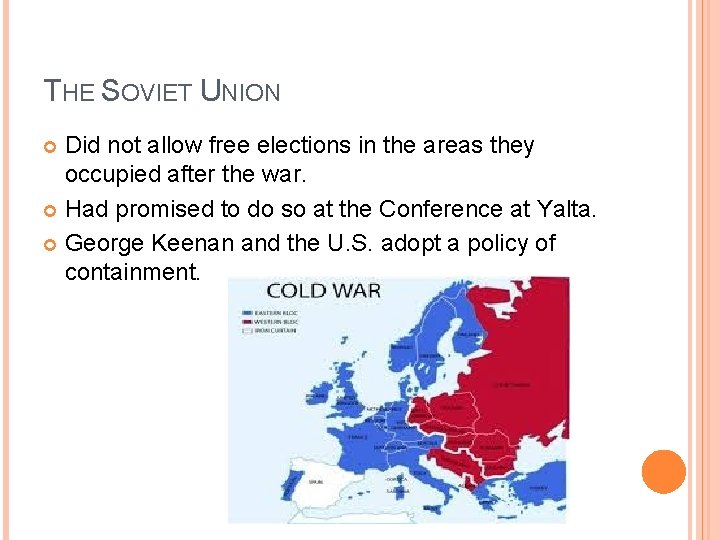
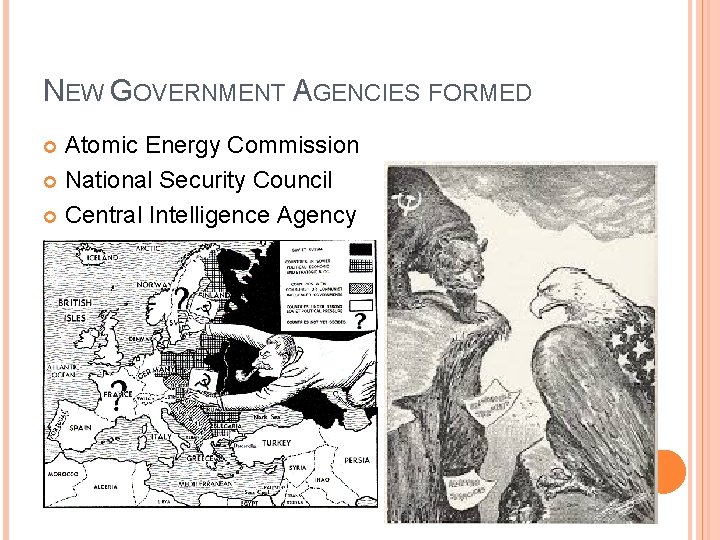
THE SOVIET UNION Did not allow free elections in the areas they occupied after the war. Had promised to do so at the Conference at Yalta. George Keenan and the U. S. adopt a policy of containment.
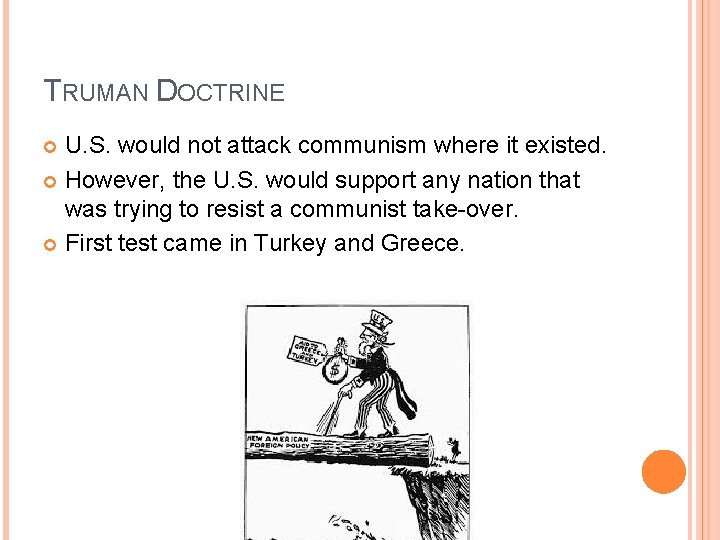
TRUMAN DOCTRINE U. S. would not attack communism where it existed. However, the U. S. would support any nation that was trying to resist a communist take-over. First test came in Turkey and Greece.
NEW GOVERNMENT AGENCIES FORMED Atomic Energy Commission National Security Council Central Intelligence Agency
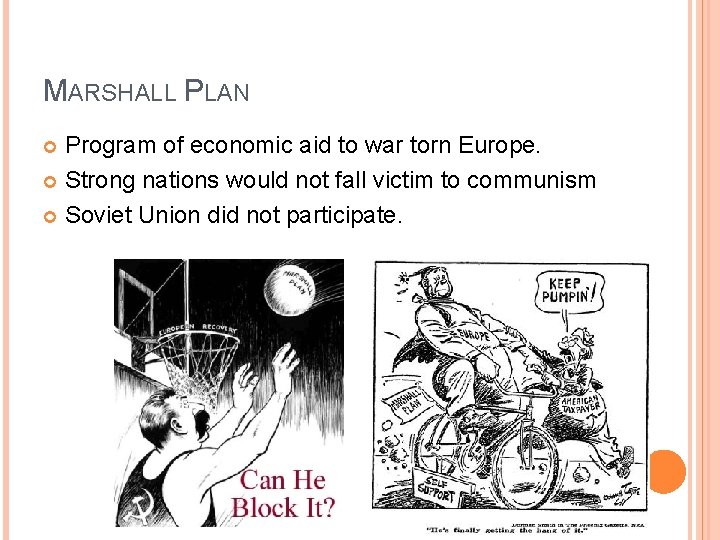
MARSHALL PLAN Program of economic aid to war torn Europe. Strong nations would not fall victim to communism Soviet Union did not participate.
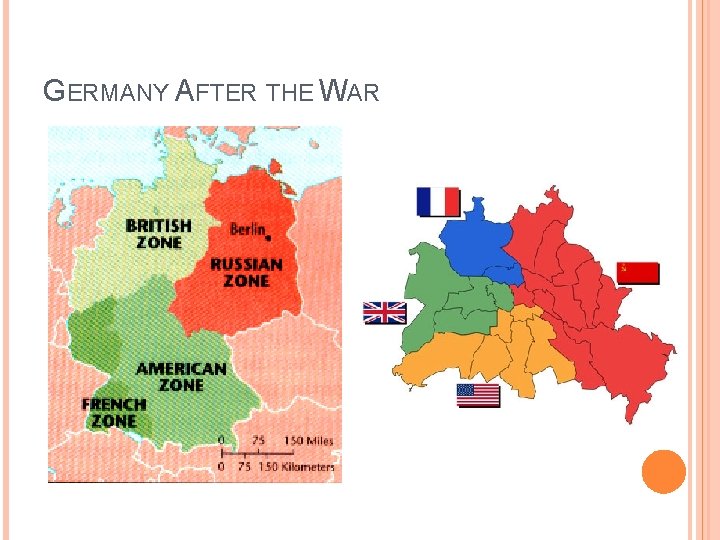
GERMANY AFTER THE WAR
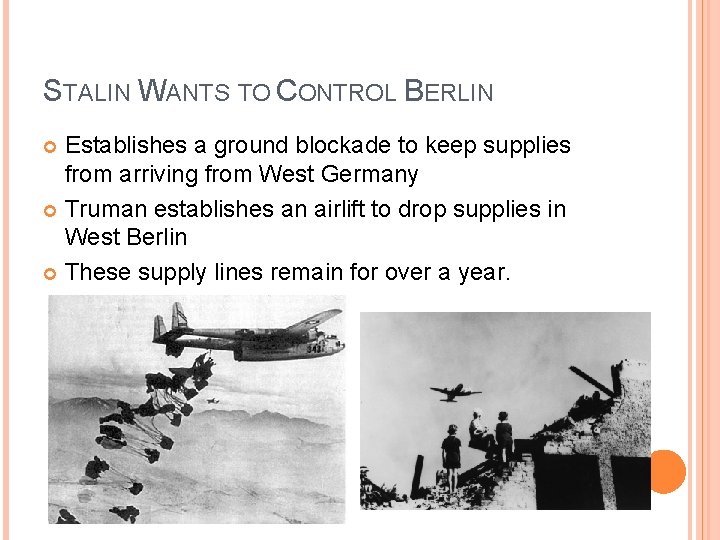
STALIN WANTS TO CONTROL BERLIN Establishes a ground blockade to keep supplies from arriving from West Germany Truman establishes an airlift to drop supplies in West Berlin These supply lines remain for over a year.
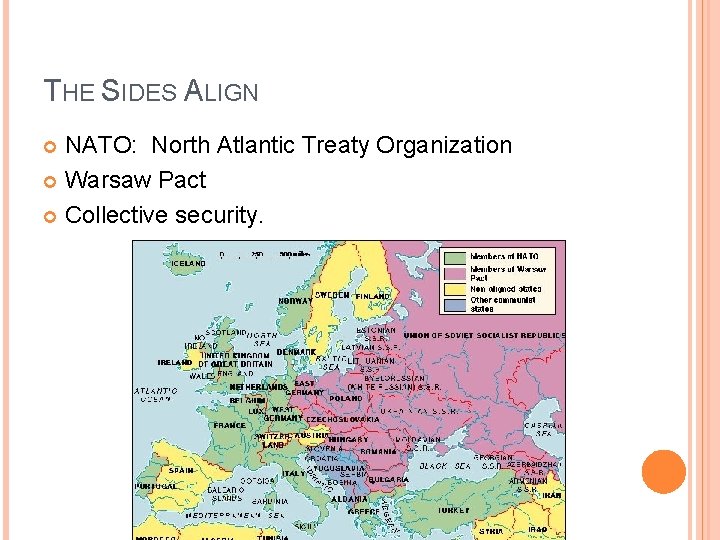
THE SIDES ALIGN NATO: North Atlantic Treaty Organization Warsaw Pact Collective security.
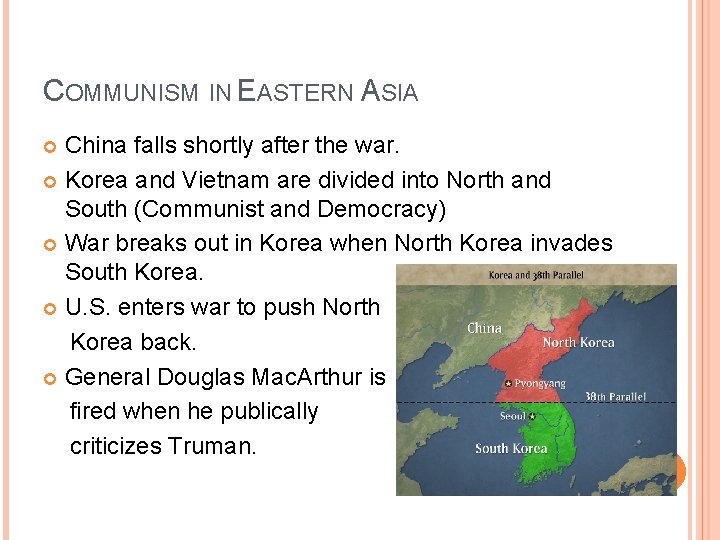
COMMUNISM IN EASTERN ASIA China falls shortly after the war. Korea and Vietnam are divided into North and South (Communist and Democracy) War breaks out in Korea when North Korea invades South Korea. U. S. enters war to push North Korea back. General Douglas Mac. Arthur is fired when he publically criticizes Truman.
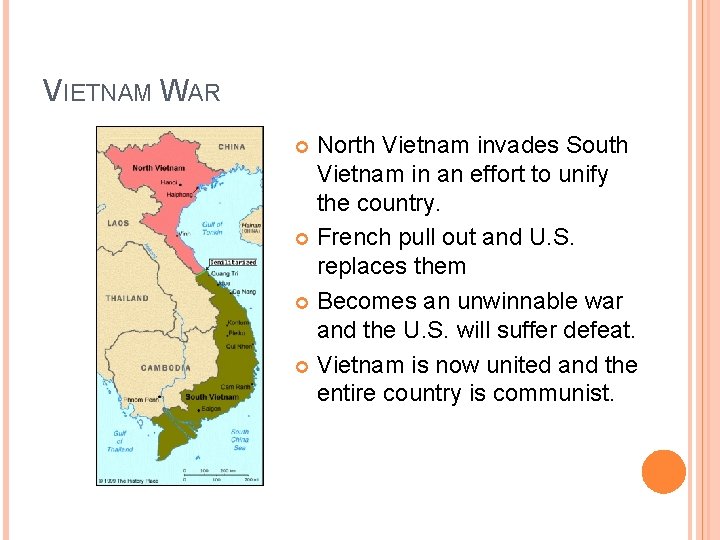
VIETNAM WAR North Vietnam invades South Vietnam in an effort to unify the country. French pull out and U. S. replaces them Becomes an unwinnable war and the U. S. will suffer defeat. Vietnam is now united and the entire country is communist.
AMERICANS DEBATED The merits of a large nuclear arsenal The military industrial complex The appropriate power of the executive branch in conducting foreign and military policy.
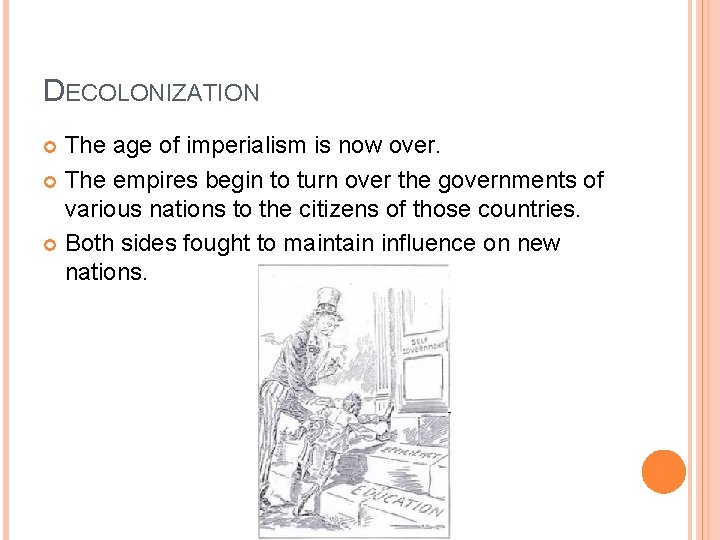
DECOLONIZATION The age of imperialism is now over. The empires begin to turn over the governments of various nations to the citizens of those countries. Both sides fought to maintain influence on new nations.
TRUMAN’S PRESIDENCY Transitions from a wartime economy to a peace time economy All wartime regulations are lifted Great wave of labor strikes begins – particularly in the South GI Bill offers opportunities to returning veterans. Women leave jobs and return home. Off year election returns power to Republicans. Focus on communism and human rights highlights the inequities of race relations in the U. S.
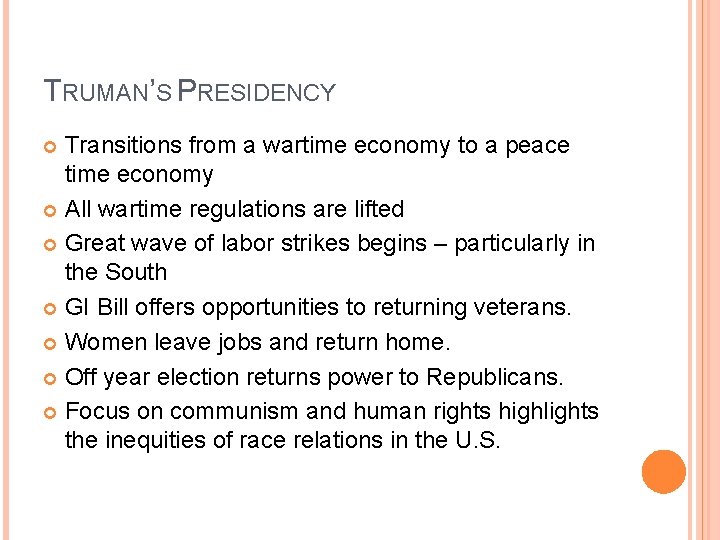
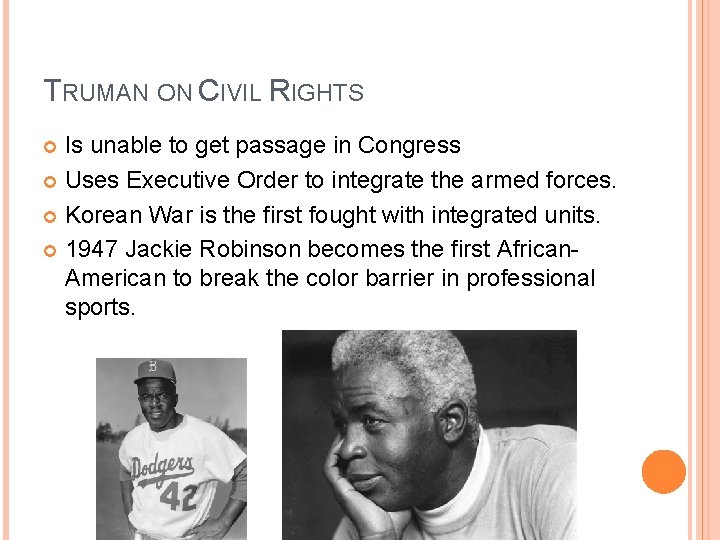
TRUMAN ON CIVIL RIGHTS Is unable to get passage in Congress Uses Executive Order to integrate the armed forces. Korean War is the first fought with integrated units. 1947 Jackie Robinson becomes the first African. American to break the color barrier in professional sports.
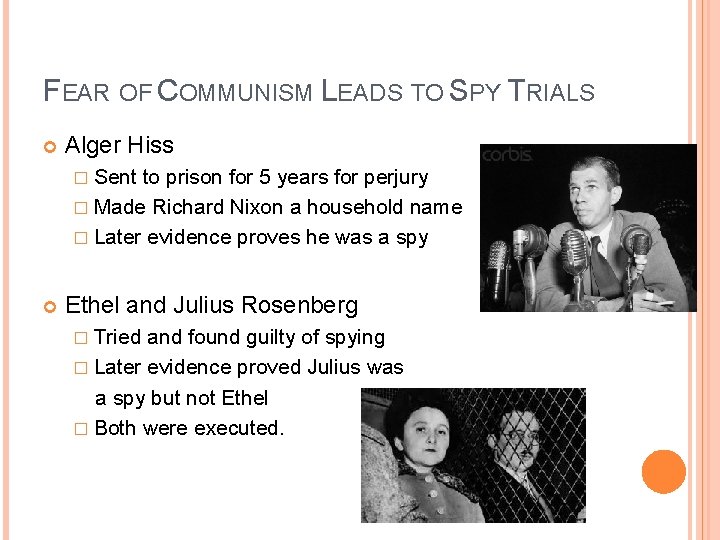
FEAR OF COMMUNISM LEADS TO SPY TRIALS Alger Hiss � Sent to prison for 5 years for perjury � Made Richard Nixon a household name � Later evidence proves he was a spy Ethel and Julius Rosenberg � Tried and found guilty of spying � Later evidence proved Julius was a spy but not Ethel � Both were executed.
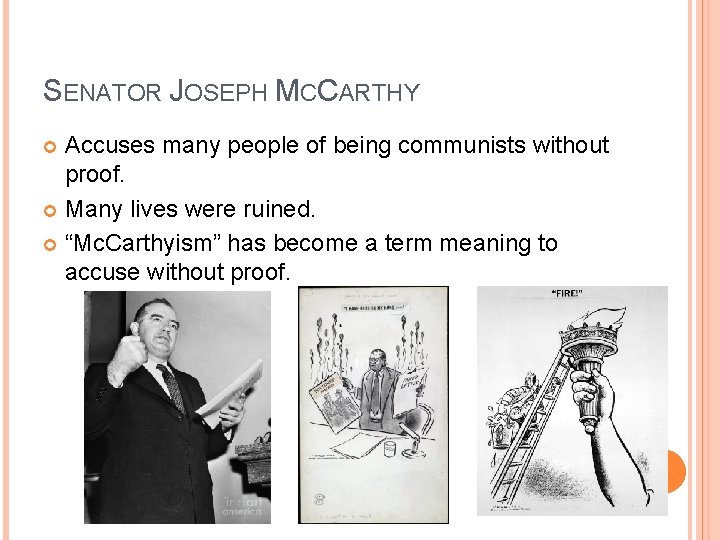
SENATOR JOSEPH MCCARTHY Accuses many people of being communists without proof. Many lives were ruined. “Mc. Carthyism” has become a term meaning to accuse without proof.