
8 1 The Cell Structure Function Structure is



- Slides: 27
8. 1 The Cell
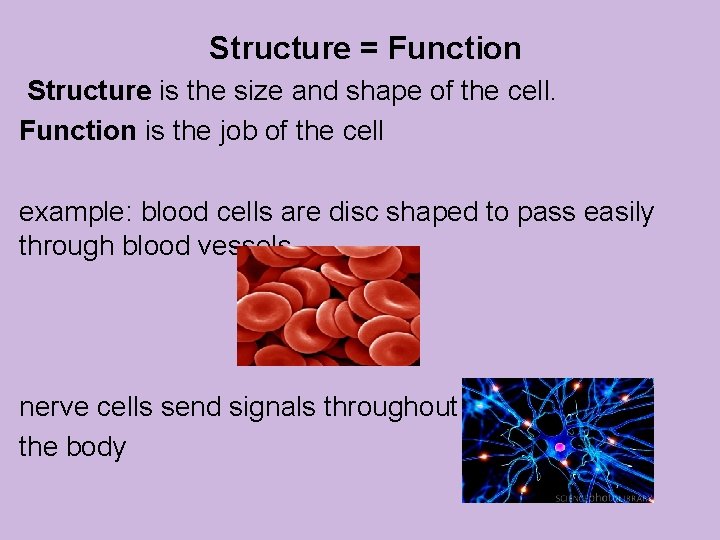
Structure = Function Structure is the size and shape of the cell. Function is the job of the cell example: blood cells are disc shaped to pass easily through blood vessels nerve cells send signals throughout the body
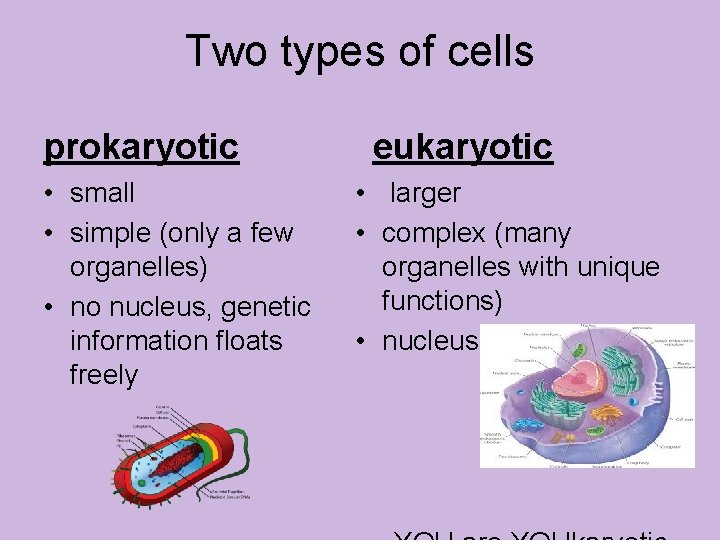
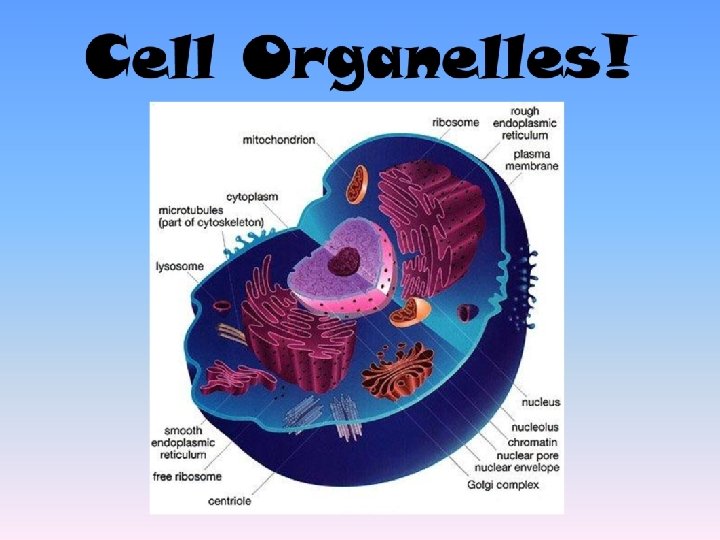
Two types of cells prokaryotic • small • simple (only a few organelles) • no nucleus, genetic information floats freely eukaryotic • larger • complex (many organelles with unique functions) • nucleus
Cell Movement and Structure
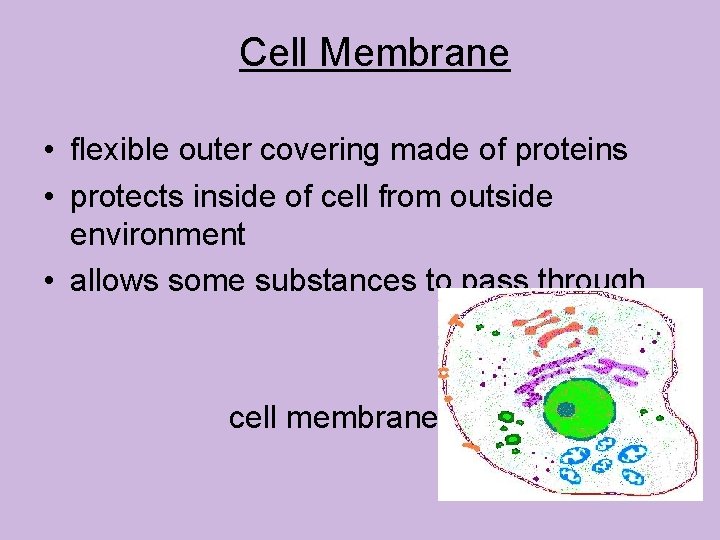
Cell Membrane • flexible outer covering made of proteins • protects inside of cell from outside environment • allows some substances to pass through cell membrane →
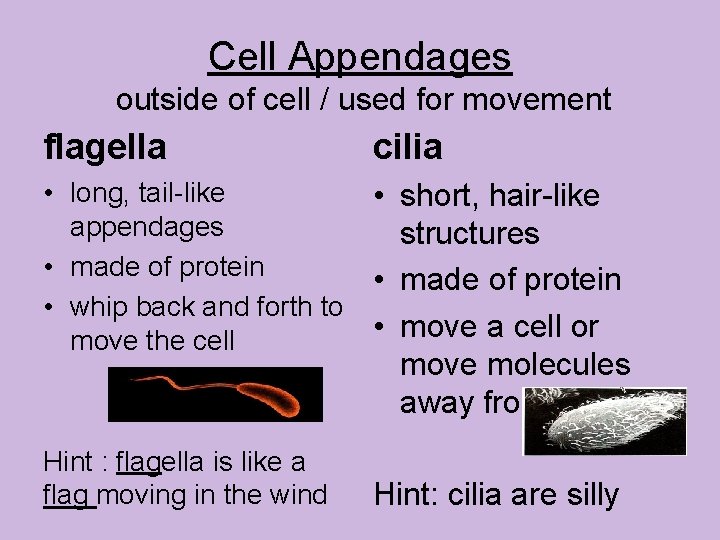
Cell Appendages outside of cell / used for movement flagella cilia • long, tail-like appendages • made of protein • whip back and forth to move the cell • short, hair-like structures • made of protein • move a cell or move molecules away from the cell Hint : flagella is like a flag moving in the wind Hint: cilia are silly
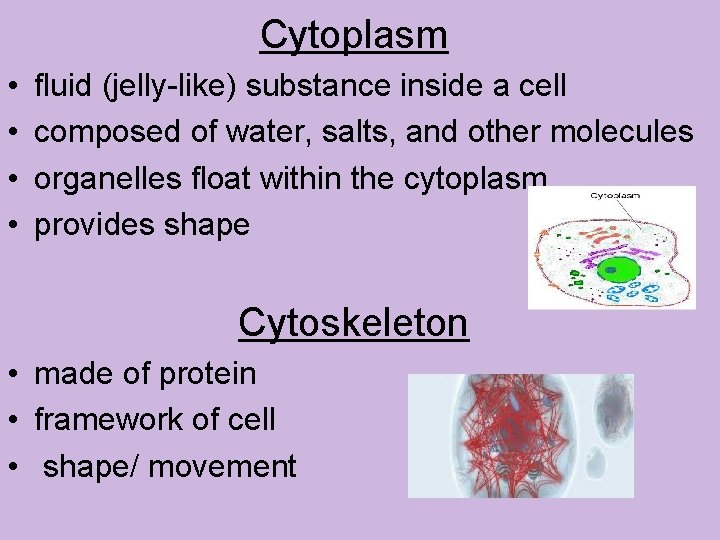
Cytoplasm • • fluid (jelly-like) substance inside a cell composed of water, salts, and other molecules organelles float within the cytoplasm provides shape Cytoskeleton • made of protein • framework of cell • shape/ movement
Substances within a Cell
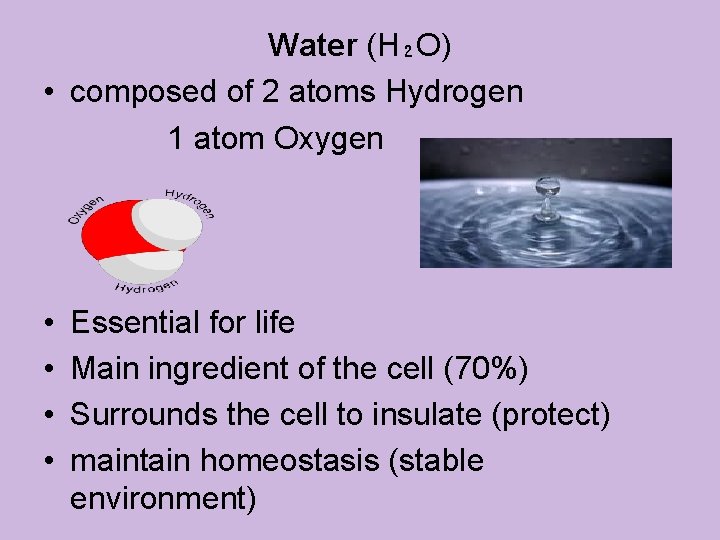
Water (H₂O) • composed of 2 atoms Hydrogen 1 atom Oxygen • • Essential for life Main ingredient of the cell (70%) Surrounds the cell to insulate (protect) maintain homeostasis (stable environment)
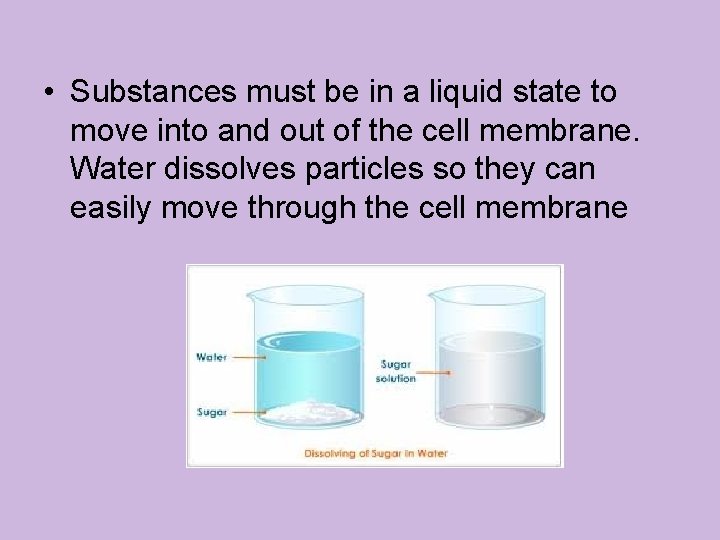
• Substances must be in a liquid state to move into and out of the cell membrane. Water dissolves particles so they can easily move through the cell membrane
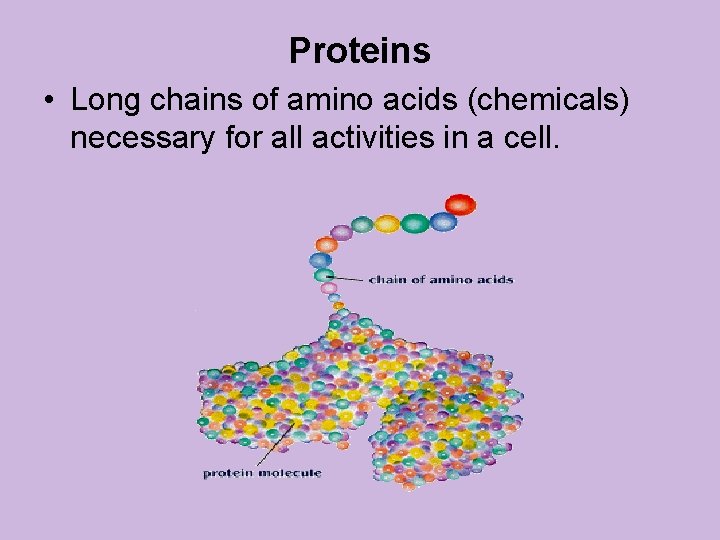
Proteins • Long chains of amino acids (chemicals) necessary for all activities in a cell.
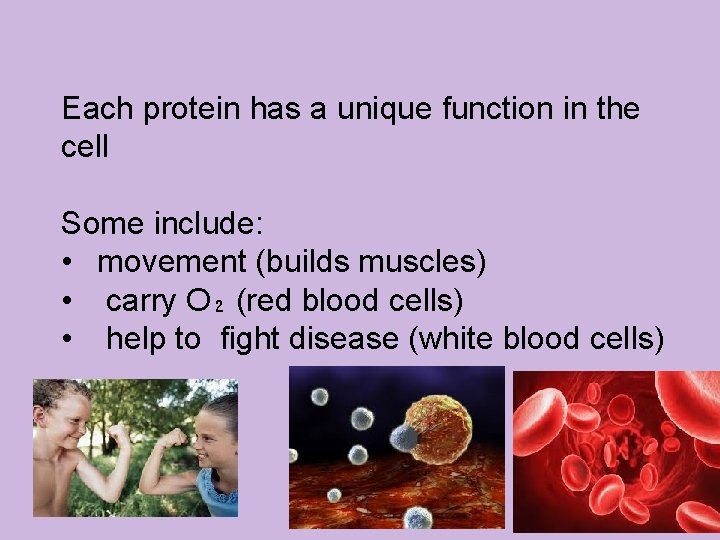
Each protein has a unique function in the cell Some include: • movement (builds muscles) • carry O₂ (red blood cells) • help to fight disease (white blood cells)
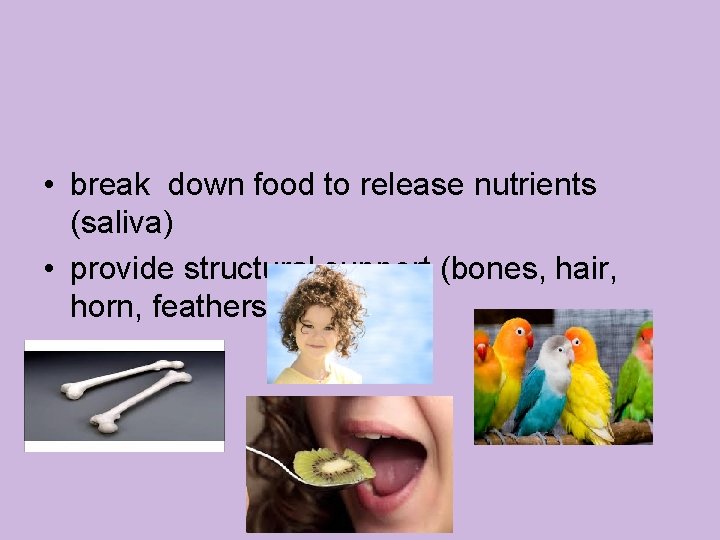
• break down food to release nutrients (saliva) • provide structural support (bones, hair, horn, feathers)
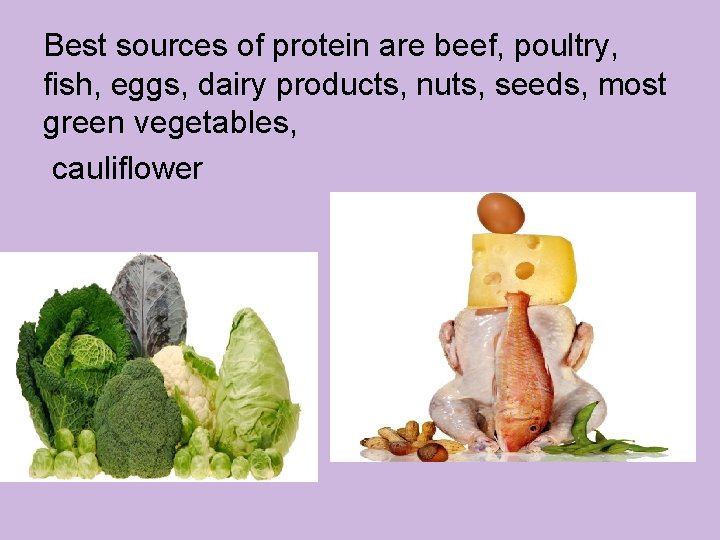
Best sources of protein are beef, poultry, fish, eggs, dairy products, nuts, seeds, most green vegetables, cauliflower
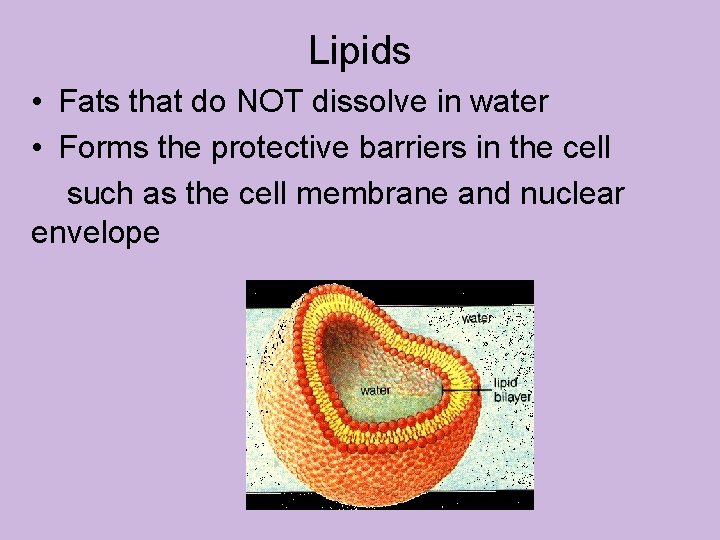
Lipids • Fats that do NOT dissolve in water • Forms the protective barriers in the cell such as the cell membrane and nuclear envelope
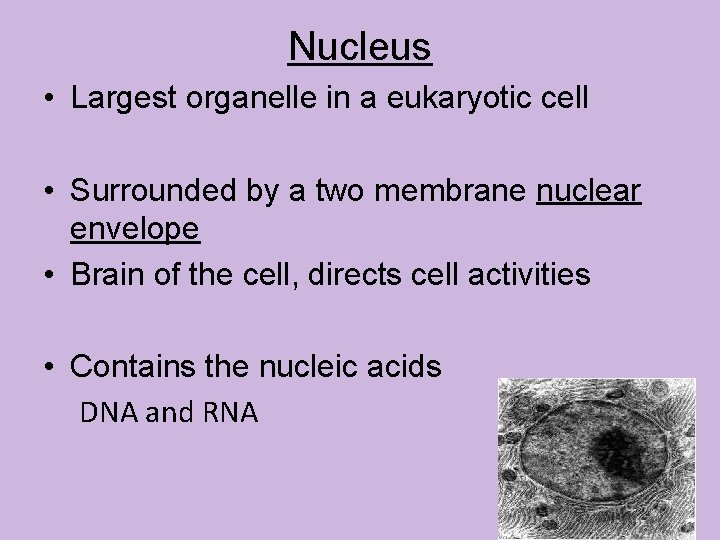
Nucleus • Largest organelle in a eukaryotic cell • Surrounded by a two membrane nuclear envelope • Brain of the cell, directs cell activities • Contains the nucleic acids DNA and RNA
• DNA (deoxyribonucleic acid) which contain a person’s genetic information. These instructions are used by the cell to pass on characteristics from parent to offspring. RNA (ribonucleic acid) which produce ribosomes
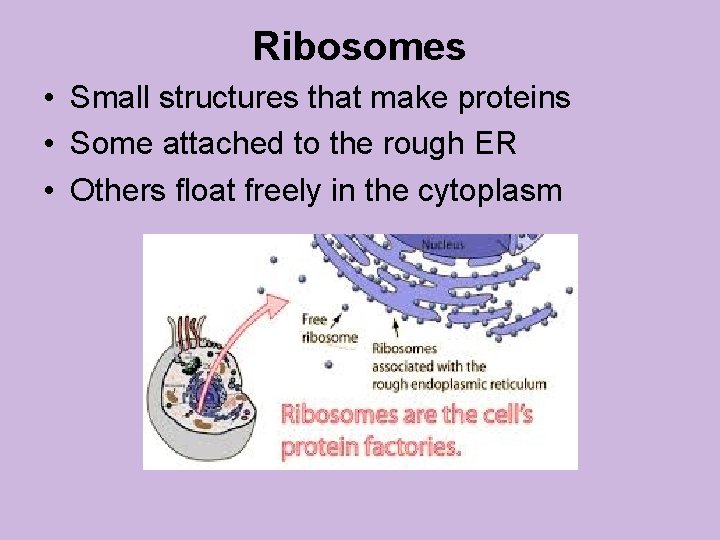
Ribosomes • Small structures that make proteins • Some attached to the rough ER • Others float freely in the cytoplasm
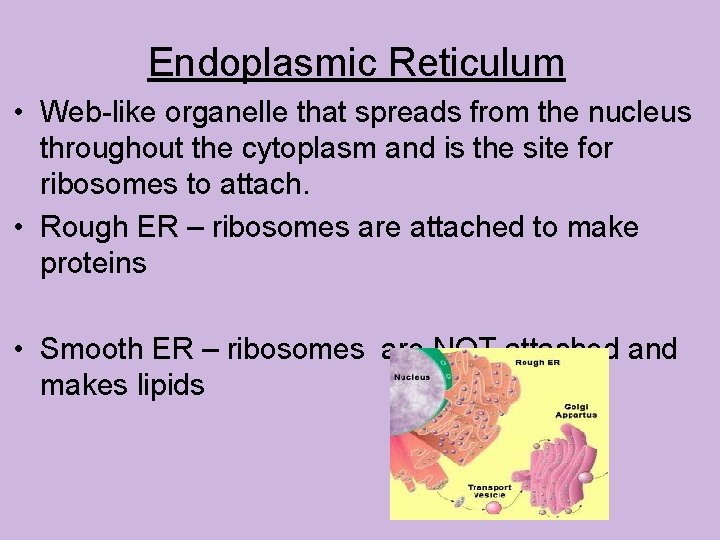
Endoplasmic Reticulum • Web-like organelle that spreads from the nucleus throughout the cytoplasm and is the site for ribosomes to attach. • Rough ER – ribosomes are attached to make proteins • Smooth ER – ribosomes are NOT attached and makes lipids
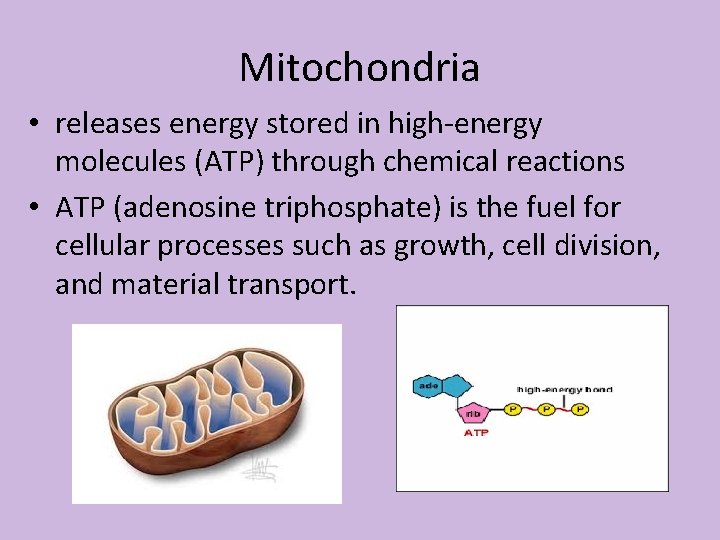
Mitochondria • releases energy stored in high-energy molecules (ATP) through chemical reactions • ATP (adenosine triphosphate) is the fuel for cellular processes such as growth, cell division, and material transport.
ATP (adenosine triphosphate) is the fuel for cellular processes such as growth, cell division, and material transport.
• there can be hundreds in a eukaryotic cell depending on the function of the cell. ex. a muscle cell requires more energy than a skin cell. Hint: You need a lot of energy to have “mighty” muscles
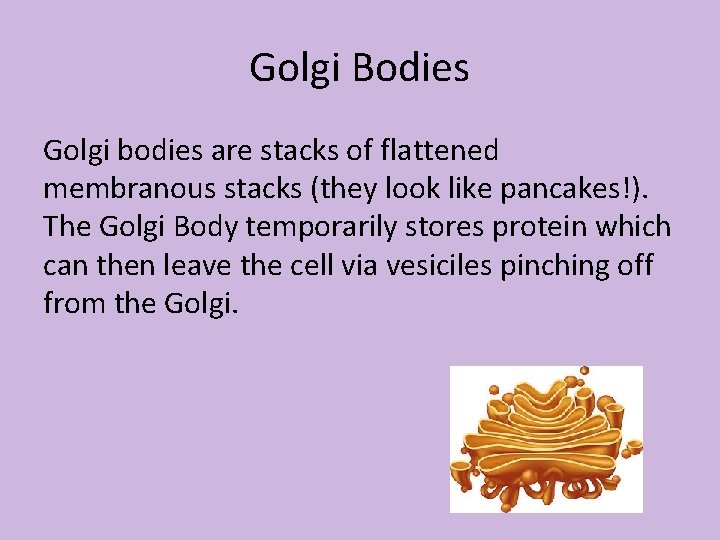
Golgi Bodies Golgi bodies are stacks of flattened membranous stacks (they look like pancakes!). The Golgi Body temporarily stores protein which can then leave the cell via vesiciles pinching off from the Golgi.
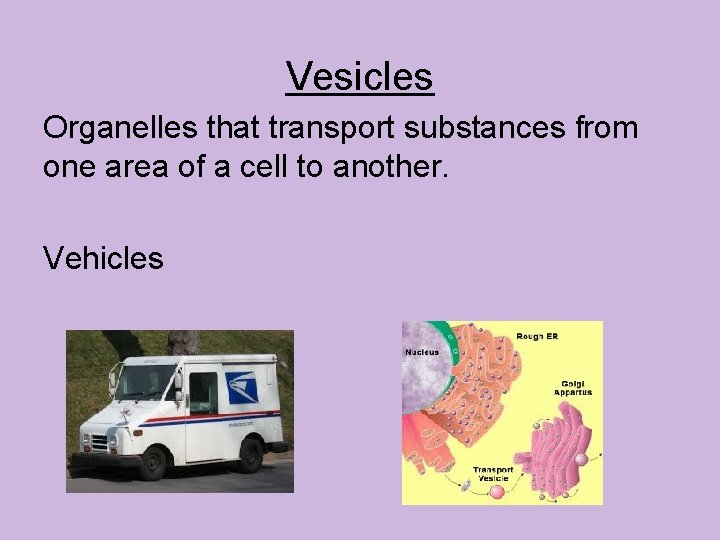
Vesicles Organelles that transport substances from one area of a cell to another. Vehicles
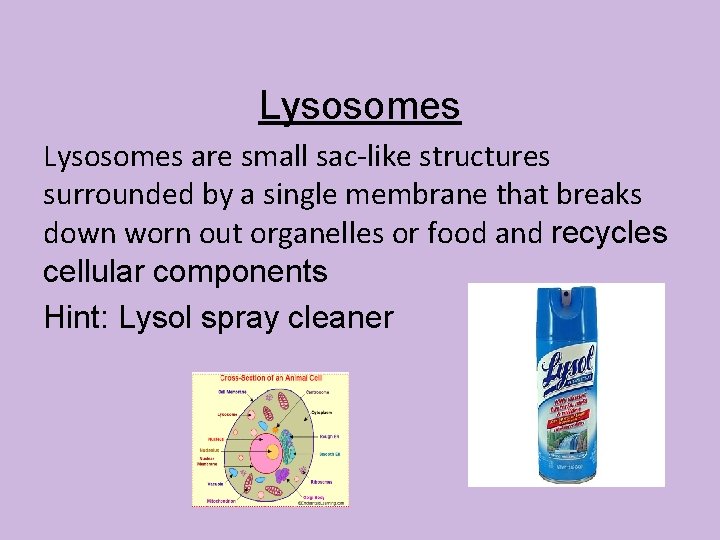
Lysosomes are small sac-like structures surrounded by a single membrane that breaks down worn out organelles or food and recycles cellular components Hint: Lysol spray cleaner
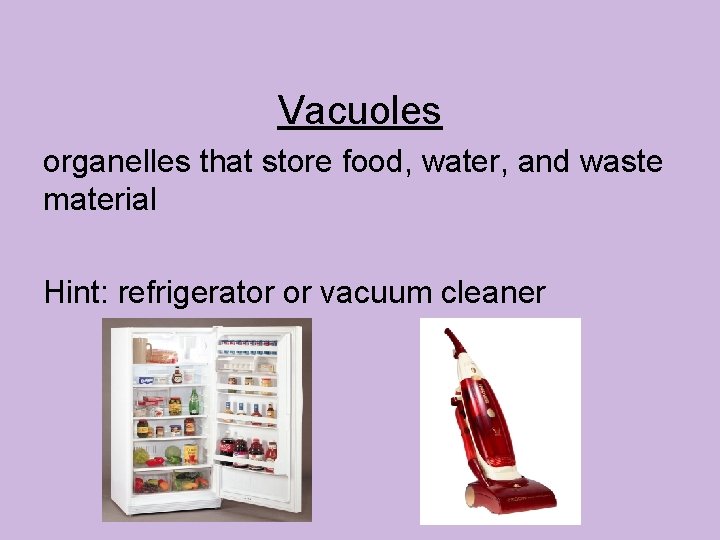
Vacuoles organelles that store food, water, and waste material Hint: refrigerator or vacuum cleaner