
8 1 Metabolism Understanding Metabolic pathways consist of
8. 1 Metabolism
Understanding �Metabolic pathways consist of chains and cycles of enzyme-catalysed reactions �Enzymes lower the activation energy of the chemical reactions that they catalyse �Enzyme inhibitors can be competitive or noncompetitive �Metablic pathways can be controlled by endproduct inhibition
Applications �End-product inhibition of the pathway that converts threonine to isoleucine �Use of databases to identify potential new antimalarial drugs
Skills �Distinguishing different types of inhibition from graphs at specified substrate concentration �Calculating and plotting rates of reaction from raw experimental results

Metabolic Pathways �Most chemical reactions in living things are pathways �They can be linear (chains) A B C D �Where A is the initial reactant, B and C are intermediates and D is the final product

Linear Pathways �Example: Glycolysis �This is a 10 step, linear metabolic pathway �Glucose is the initial reactant and lactate is the final product (in animals) �Every step is controlled by an enzyme
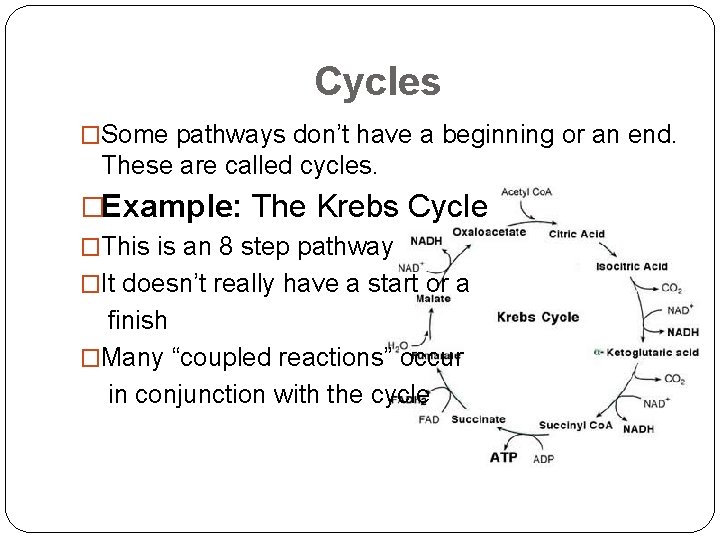
Cycles �Some pathways don’t have a beginning or an end. These are called cycles. �Example: The Krebs Cycle �This is an 8 step pathway �It doesn’t really have a start or a finish �Many “coupled reactions” occur in conjunction with the cycle
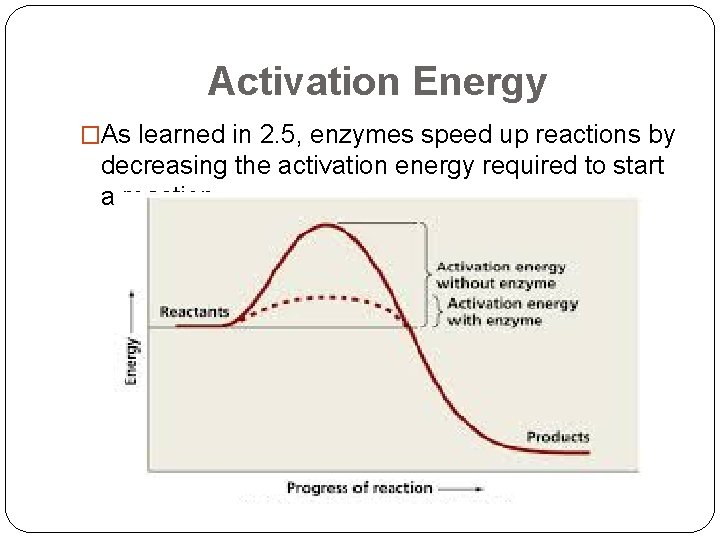
Activation Energy �As learned in 2. 5, enzymes speed up reactions by decreasing the activation energy required to start a reaction
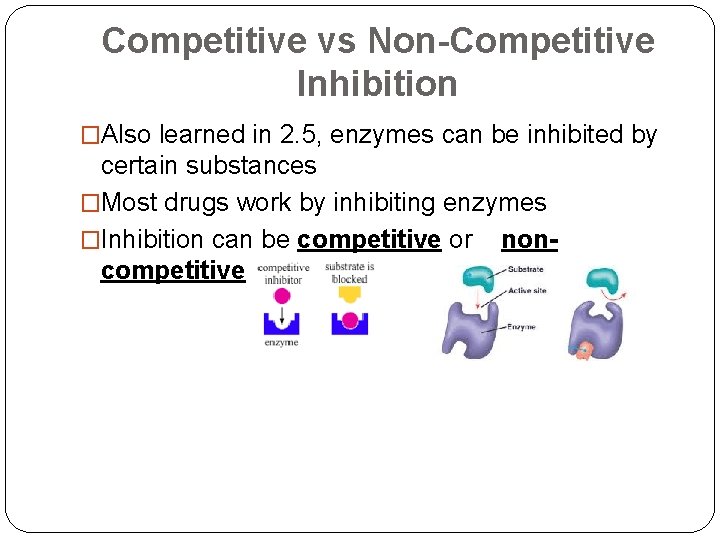
Competitive vs Non-Competitive Inhibition �Also learned in 2. 5, enzymes can be inhibited by certain substances �Most drugs work by inhibiting enzymes �Inhibition can be competitive or noncompetitive
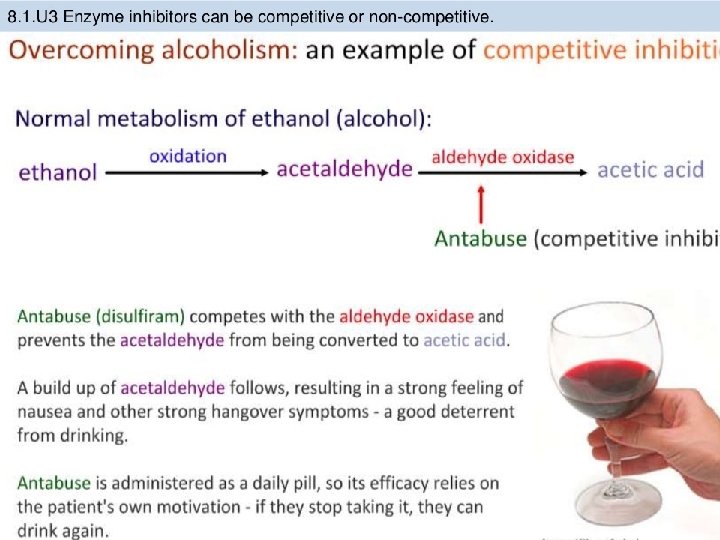
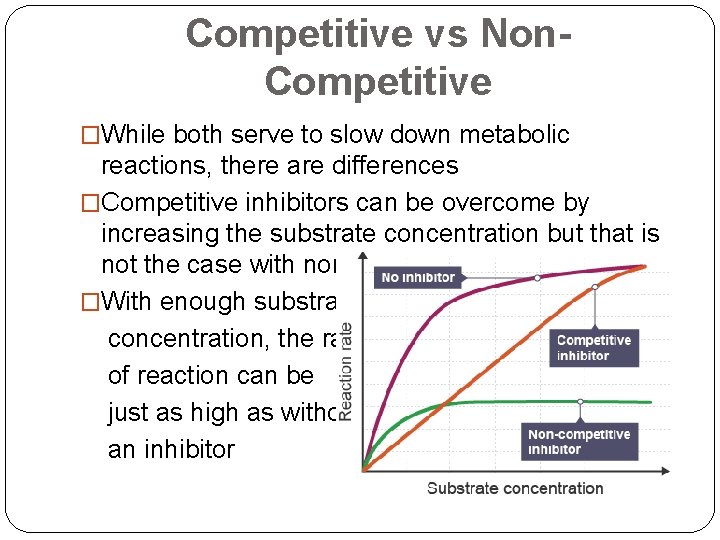
Competitive vs Non. Competitive �While both serve to slow down metabolic reactions, there are differences �Competitive inhibitors can be overcome by increasing the substrate concentration but that is not the case with non-competitive inhibitors �With enough substrate concentration, the rate of reaction can be just as high as without an inhibitor
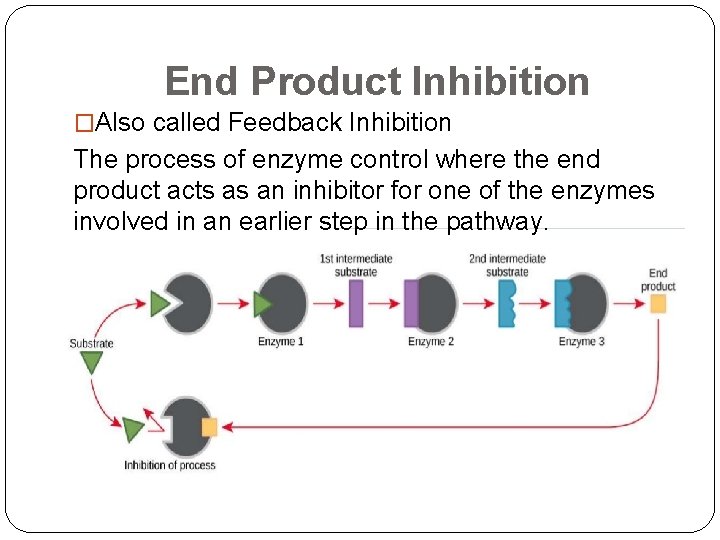
End Product Inhibition �Also called Feedback Inhibition The process of enzyme control where the end product acts as an inhibitor for one of the enzymes involved in an earlier step in the pathway.
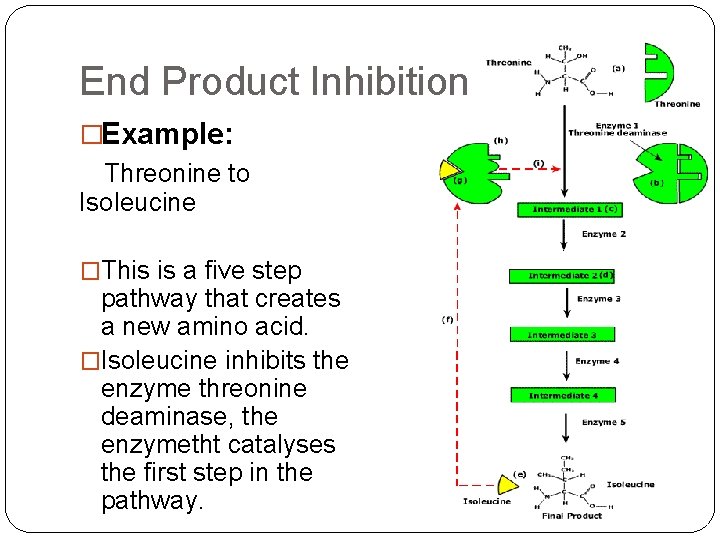
End Product Inhibition �Example: Threonine to Isoleucine �This is a five step pathway that creates a new amino acid. �Isoleucine inhibits the enzyme threonine deaminase, the enzymetht catalyses the first step in the pathway.
- Slides: 13