
8 1 Chapter 8 Strategy in the Global
8 -1 Chapter 8: Strategy in the Global Environment Text by Charles W. L. Hill Gareth R. Jones Multimedia Slides by Milton M. Pressley Univ. of New Orleans Copyright ã 1998 by Houghton Mifflin Company. All rights reserved.
8 -2 Preview 4 Profiting From Global Expansion 4 Pressures for Cost Reductions and Local Responsiveness 4 Strategic Choice 4 The Choice of Entry Mode 4 Global Strategic Alliances 4 Making Strategic Alliances Work Copyright ã 1998 by Houghton Mifflin Company. All rights reserved.
Profiting From Global Expansion 8 -3 • Transferring Distinctive Competencies • Realizing Location Economies – Lower Costs – Differentiation and Premium Pricing • Moving Down the Experience Curve • Global Expansion and Business Level Strategy Copyright ã 1998 by Houghton Mifflin Company. All rights reserved.
8 -4 Pressures for Cost Reduction and Local Responsiveness 4 Pressures for Cost Reductions 4 Pressures for Local Responsiveness Copyright ã 1998 by Houghton Mifflin Company. All rights reserved.
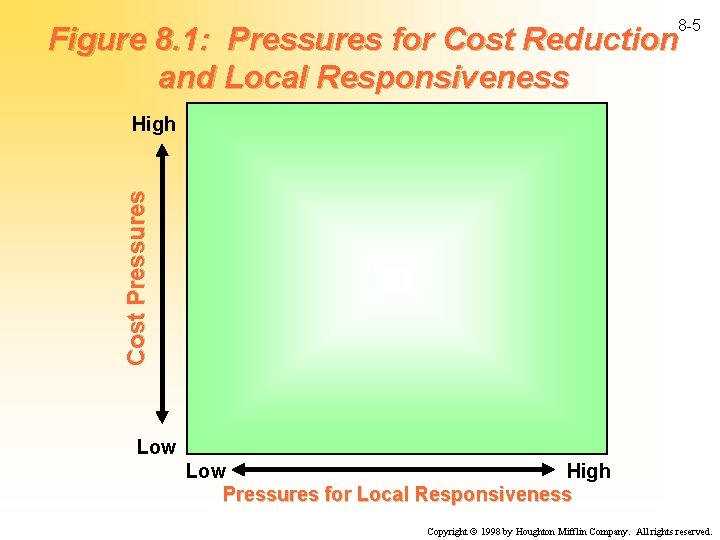
8 -5 Figure 8. 1: Pressures for Cost Reduction and Local Responsiveness Cost Pressures High Low High Pressures for Local Responsiveness Copyright ã 1998 by Houghton Mifflin Company. All rights reserved.
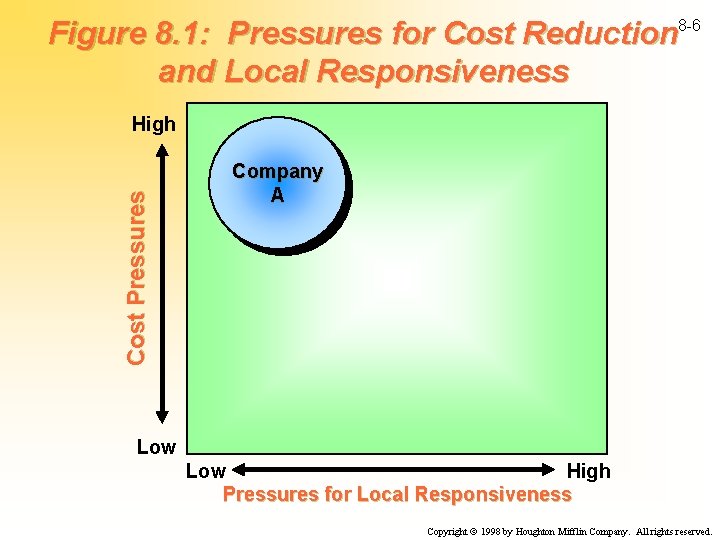
Figure 8. 1: Pressures for Cost Reduction 8 -6 and Local Responsiveness Cost Pressures High Company A Low High Pressures for Local Responsiveness Copyright ã 1998 by Houghton Mifflin Company. All rights reserved.
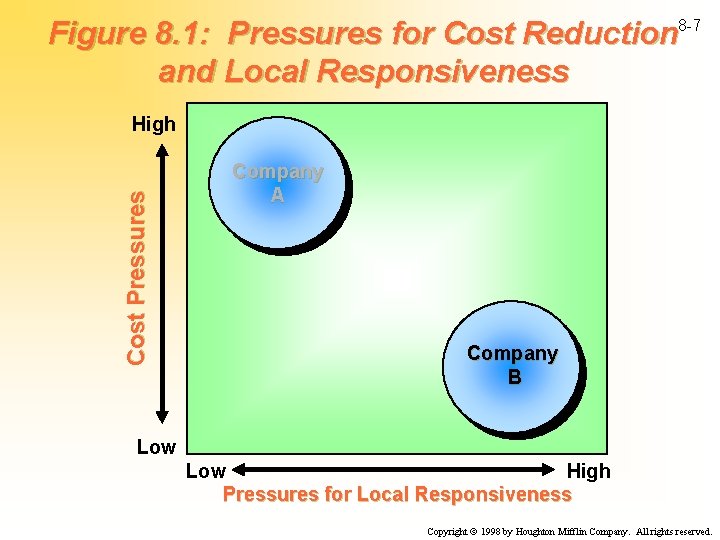
Figure 8. 1: Pressures for Cost Reduction 8 -7 and Local Responsiveness Cost Pressures High Company A Company B Low High Pressures for Local Responsiveness Copyright ã 1998 by Houghton Mifflin Company. All rights reserved.
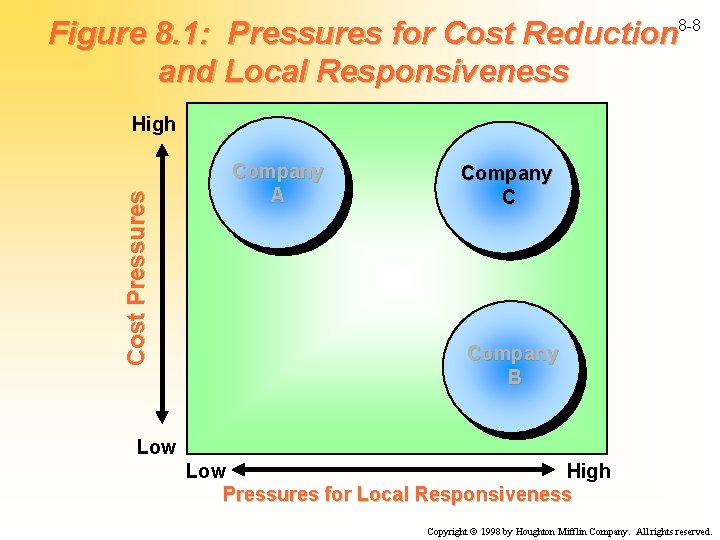
Figure 8. 1: Pressures for Cost Reduction 8 -8 and Local Responsiveness Cost Pressures High Company A Company C Company B Low High Pressures for Local Responsiveness Copyright ã 1998 by Houghton Mifflin Company. All rights reserved.
8 -9 Pressures for Cost Reduction and Local Responsiveness (Continued) • Pressures for Cost Reductions • Pressures for Local Responsiveness • Differences in Consumer Tastes and • • Preferences Differences in Infrastructure and Traditional Practices Differences in Distribution Channels Host Government Demands Implications Copyright ã 1998 by Houghton Mifflin Company. All rights reserved.
8 -10 Strategic Choice 4 International Strategy 4 Multidomestic Strategy 4 Global Strategy 4 Transnational Strategy Copyright ã 1998 by Houghton Mifflin Company. All rights reserved.
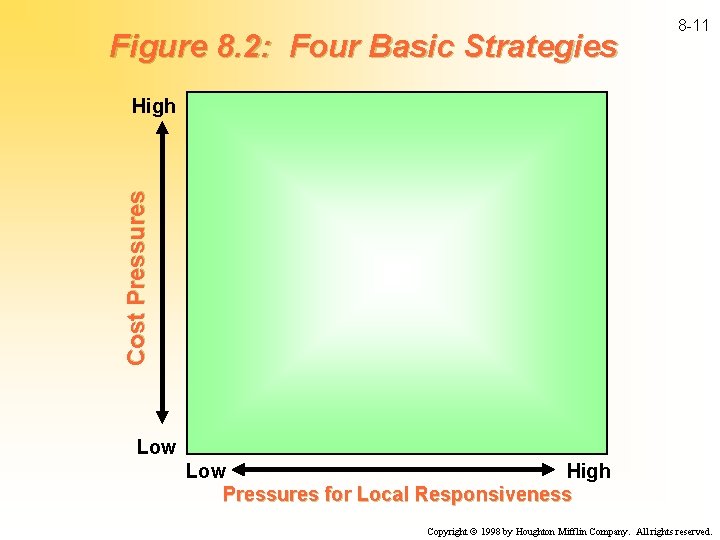
Figure 8. 2: Four Basic Strategies 8 -11 Cost Pressures High Low High Pressures for Local Responsiveness Copyright ã 1998 by Houghton Mifflin Company. All rights reserved.
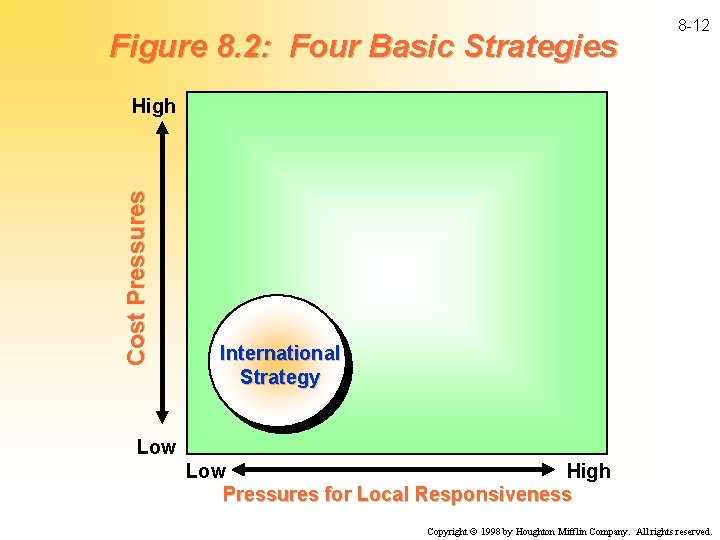
Figure 8. 2: Four Basic Strategies 8 -12 Cost Pressures High International Strategy Low High Pressures for Local Responsiveness Copyright ã 1998 by Houghton Mifflin Company. All rights reserved.
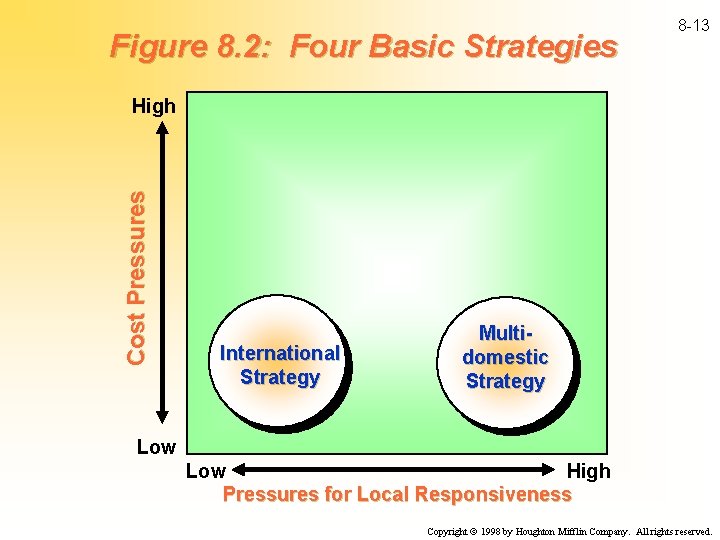
Figure 8. 2: Four Basic Strategies 8 -13 Cost Pressures High International Strategy Multidomestic Strategy Low High Pressures for Local Responsiveness Copyright ã 1998 by Houghton Mifflin Company. All rights reserved.
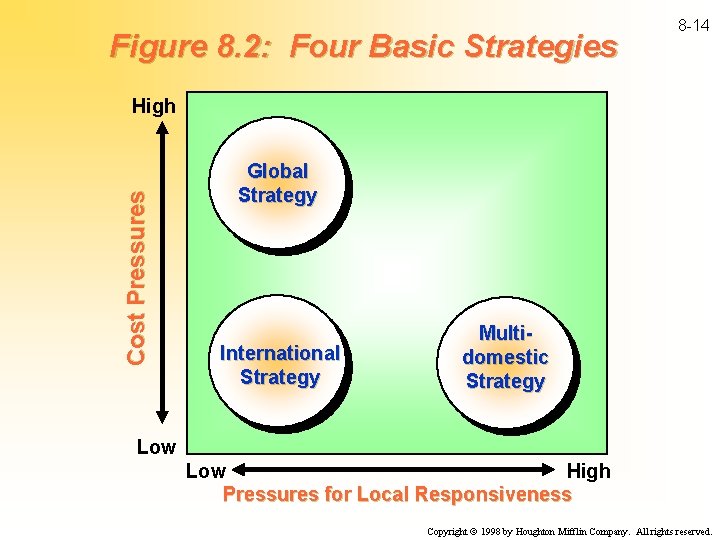
Figure 8. 2: Four Basic Strategies 8 -14 Cost Pressures High Global Strategy International Strategy Multidomestic Strategy Low High Pressures for Local Responsiveness Copyright ã 1998 by Houghton Mifflin Company. All rights reserved.
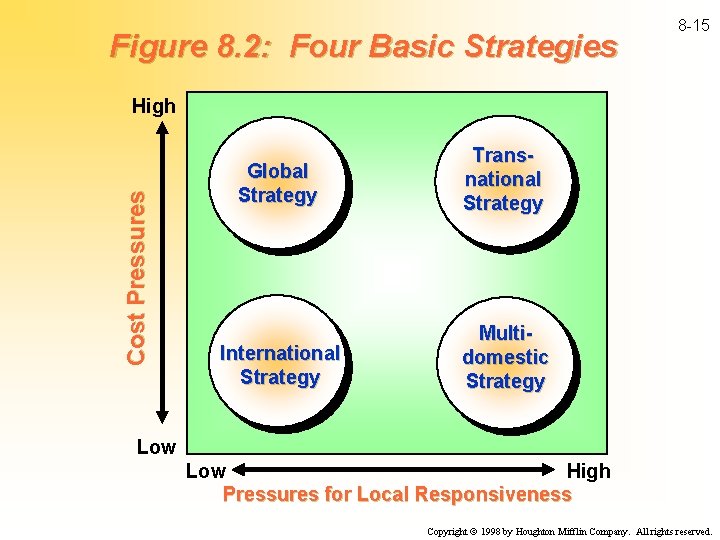
Figure 8. 2: Four Basic Strategies 8 -15 Cost Pressures High Global Strategy Transnational Strategy International Strategy Multidomestic Strategy Low High Pressures for Local Responsiveness Copyright ã 1998 by Houghton Mifflin Company. All rights reserved.
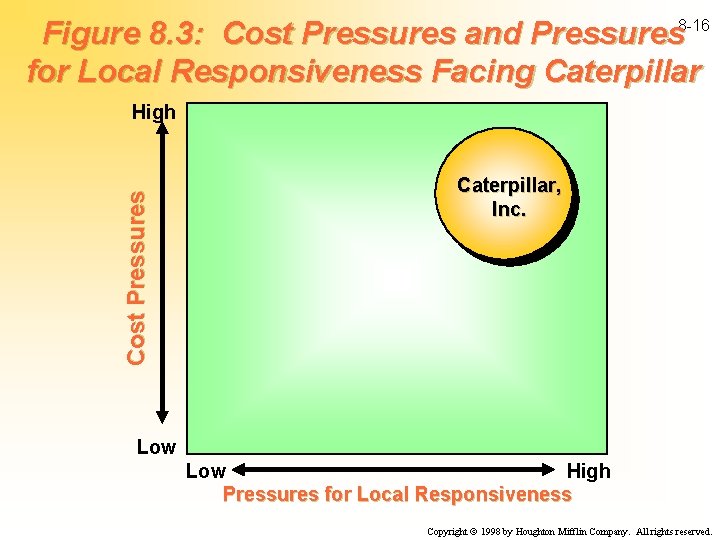
Figure 8. 3: Cost Pressures and Pressures 8 -16 for Local Responsiveness Facing Caterpillar Cost Pressures High Caterpillar, Inc. Low High Pressures for Local Responsiveness Copyright ã 1998 by Houghton Mifflin Company. All rights reserved.
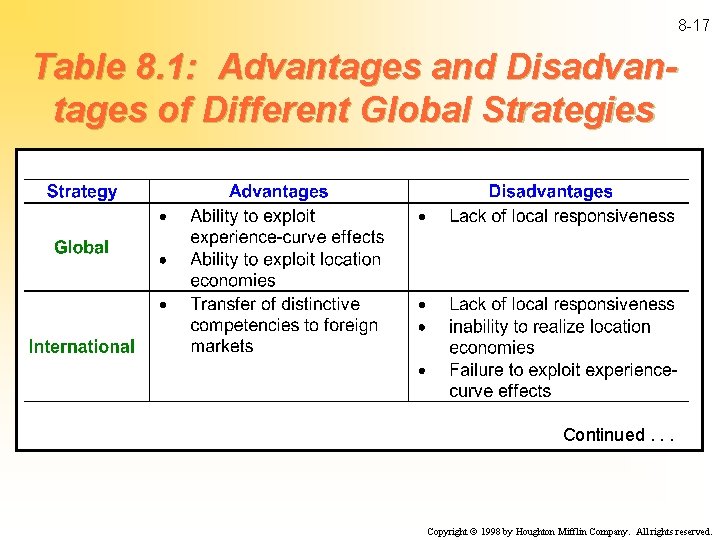
8 -17 Table 8. 1: Advantages and Disadvantages of Different Global Strategies Continued. . . Copyright ã 1998 by Houghton Mifflin Company. All rights reserved.
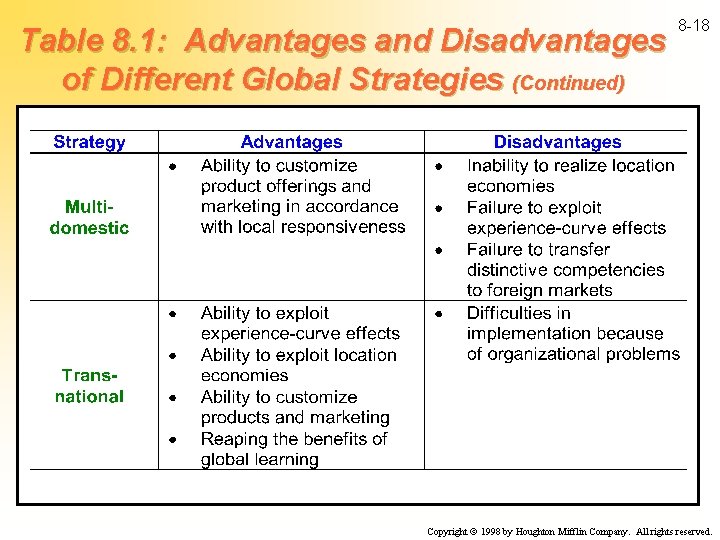
Table 8. 1: Advantages and Disadvantages of Different Global Strategies (Continued) 8 -18 Copyright ã 1998 by Houghton Mifflin Company. All rights reserved.
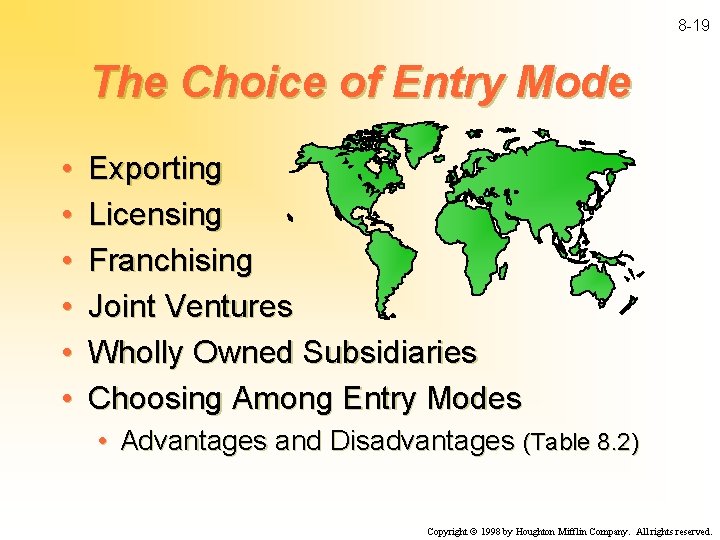
8 -19 The Choice of Entry Mode • • • Exporting Licensing Franchising Joint Ventures Wholly Owned Subsidiaries Choosing Among Entry Modes • Advantages and Disadvantages (Table 8. 2) Copyright ã 1998 by Houghton Mifflin Company. All rights reserved.
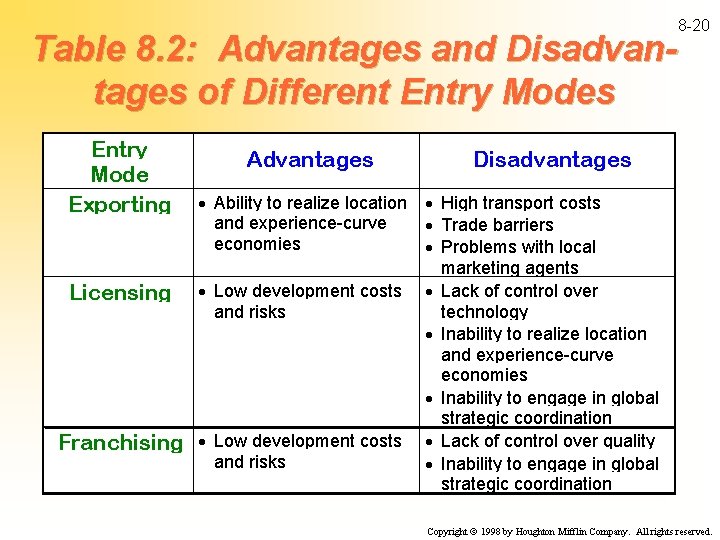
8 -20 Table 8. 2: Advantages and Disadvantages of Different Entry Modes Entry Mode Exporting Licensing Advantages · Ability to realize location and experience-curve economies · Low development costs and risks Franchising · Low development costs and risks Disadvantages · High transport costs · Trade barriers · Problems with local marketing agents · Lack of control over technology · Inability to realize location and experience-curve economies · Inability to engage in global strategic coordination · Lack of control over quality · Inability to engage in global strategic coordination Copyright ã 1998 by Houghton Mifflin Company. All rights reserved.
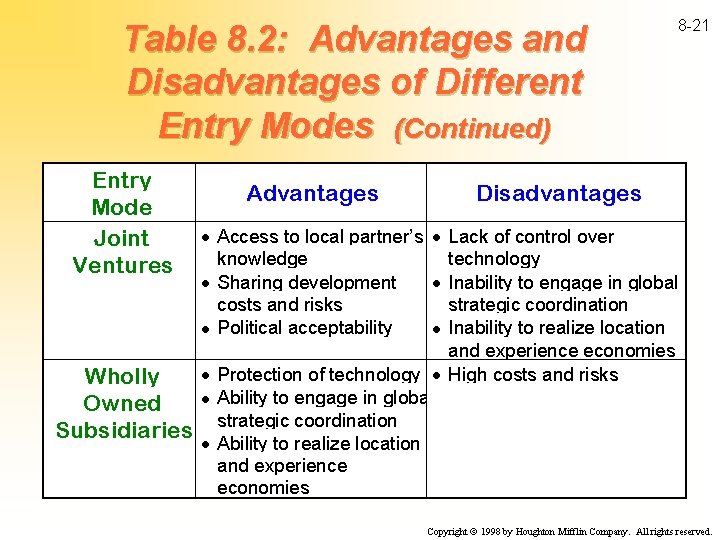
Table 8. 2: Advantages and Disadvantages of Different Entry Modes (Continued) Entry Mode Joint Ventures Wholly Owned Subsidiaries Advantages 8 -21 Disadvantages · Access to local partner’s · Lack of control over knowledge technology · Sharing development · Inability to engage in global costs and risks strategic coordination · Political acceptability · Inability to realize location and experience economies · Protection of technology · High costs and risks · Ability to engage in global strategic coordination · Ability to realize location and experience economies Copyright ã 1998 by Houghton Mifflin Company. All rights reserved.
8 -22 The Choice of Entry Mode (Continued) • Choosing Among Entry Modes –Advantages and Disadvantages (Table 8. 2) • Distinctive Competencies and Entry Mode • Pressures for Cost Reduction and Entry Mode Copyright ã 1998 by Houghton Mifflin Company. All rights reserved.
8 -23 Global Strategic Alliances • Advantages Copyright ã 1998 by Houghton Mifflin Company. All rights reserved.
8 -24 Global Strategic Alliances • Advantages • Disadvantages Copyright ã 1998 by Houghton Mifflin Company. All rights reserved.
8 -25 Making Strategic Alliances Work • Partner Selection Copyright ã 1998 by Houghton Mifflin Company. All rights reserved.
8 -26 Making Strategic Alliances Work (Continued) Characteristics of a Good Partner: • Helps Firm Achieve Its Strategic Goals • Shares Firm’s Vision for the Purpose of the Alliance • Unlikely to Opportunistically Exploit the Alliance for Its Own Ends Copyright ã 1998 by Houghton Mifflin Company. All rights reserved.
8 -27 Making Strategic Alliances Work (Continued) • Partner Selection • Alliance Structure Copyright ã 1998 by Houghton Mifflin Company. All rights reserved.
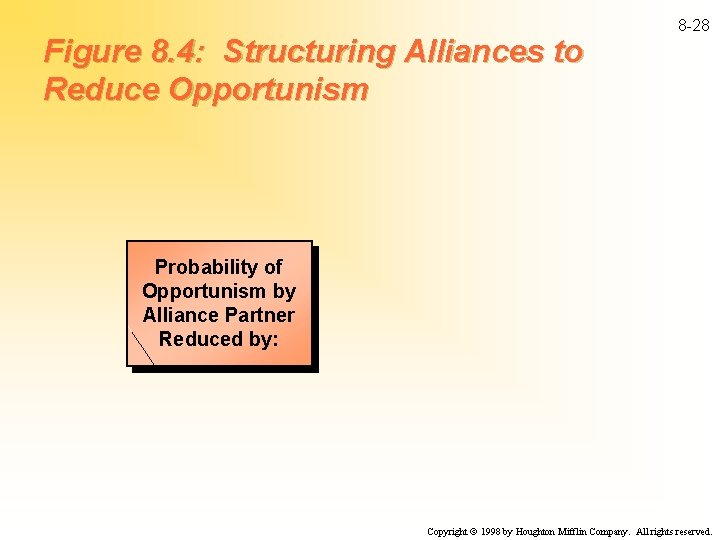
Figure 8. 4: Structuring Alliances to Reduce Opportunism 8 -28 Probability of Opportunism by Alliance Partner Reduced by: Copyright ã 1998 by Houghton Mifflin Company. All rights reserved.
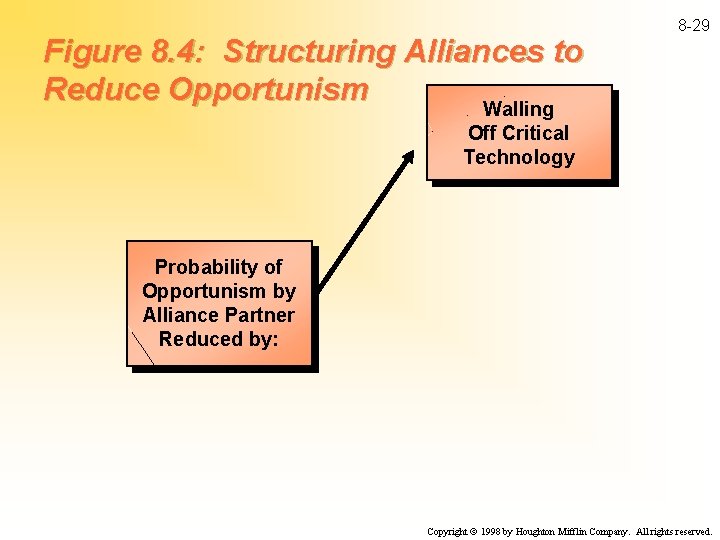
Figure 8. 4: Structuring Alliances to Reduce Opportunism Walling 8 -29 Off Critical Technology Probability of Opportunism by Alliance Partner Reduced by: Copyright ã 1998 by Houghton Mifflin Company. All rights reserved.
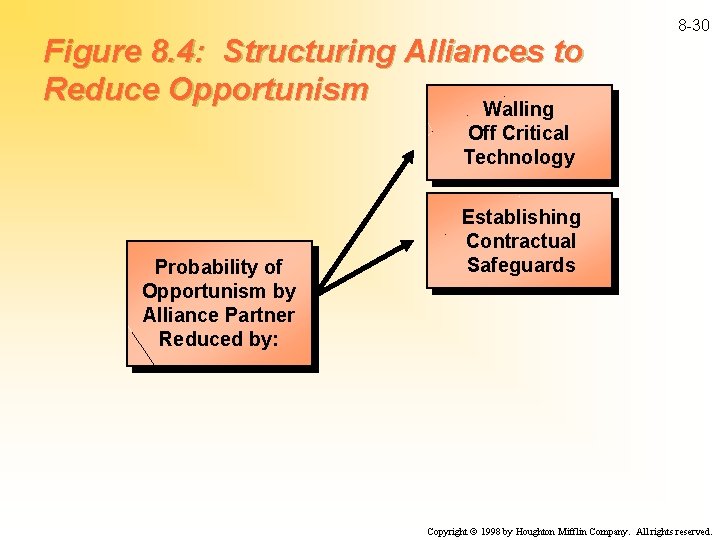
Figure 8. 4: Structuring Alliances to Reduce Opportunism Walling 8 -30 Off Critical Technology Probability of Opportunism by Alliance Partner Reduced by: Establishing Contractual Safeguards Copyright ã 1998 by Houghton Mifflin Company. All rights reserved.
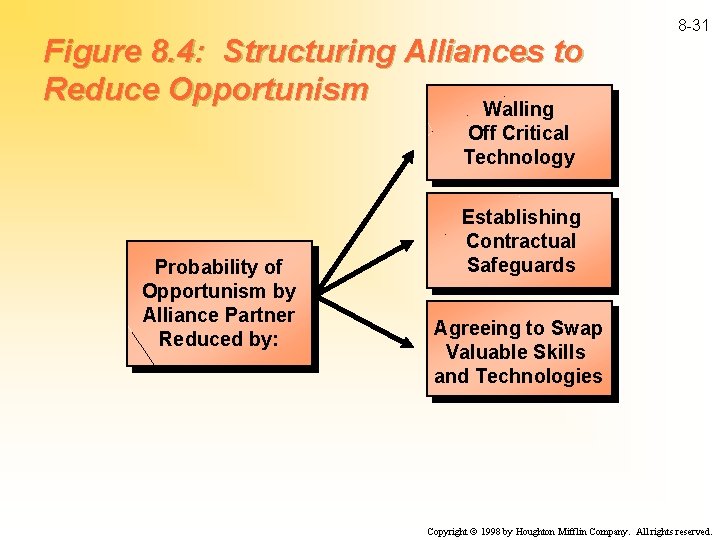
Figure 8. 4: Structuring Alliances to Reduce Opportunism Walling 8 -31 Off Critical Technology Probability of Opportunism by Alliance Partner Reduced by: Establishing Contractual Safeguards Agreeing to Swap Valuable Skills and Technologies Copyright ã 1998 by Houghton Mifflin Company. All rights reserved.
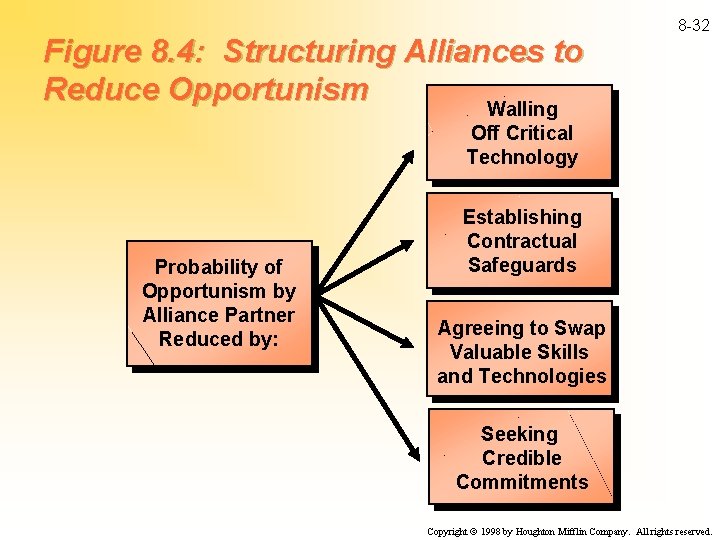
Figure 8. 4: Structuring Alliances to Reduce Opportunism Walling 8 -32 Off Critical Technology Probability of Opportunism by Alliance Partner Reduced by: Establishing Contractual Safeguards Agreeing to Swap Valuable Skills and Technologies Seeking Credible Commitments Copyright ã 1998 by Houghton Mifflin Company. All rights reserved.
8 -33 Making Strategic Alliances Work (Continued) • Partner Selection • Alliance Structure • Managing the Alliance Copyright ã 1998 by Houghton Mifflin Company. All rights reserved.
Chapter Summary 8 -34 L A B O L G M O R F G IN IT F O 4 PR EXPANSION AND S N IO T C U D E R T S O C R O F S E 4 PRESSUR LOCAL RESPONSIVENESS 4 STRATEGIC CHOICE E D O M Y R T N E F O E IC O H C 4 THE S E C N IA L L A IC G E T A R T S L A 4 GLOB K R O W S E C N IA L L A IC G E T 4 MAKING STRA Copyright ã 1998 by Houghton Mifflin Company. All rights reserved.
- Slides: 34