
70 Literary Terms HOLT Literature plot plot chain


- Slides: 142
70 Literary Terms HOLT Literature
plot
plot chain of related events that tells us what happens in a story
conflict
conflict problem faced by a character
resolved
resolved how the story turns out
complications
complications situations that create conflict
climax
climax when the outcome of the conflict is decided
resolution
resolution the last part of the plot; the end of the story
subplots
subplots parts that are part of the larger story but are not as important
parallel episodes
parallel episodes the storyteller repeats the main outline of an episode several times
proposition
proposition an opinion; usually in the beginning of a persuasive article
facts
facts the results of scientific research and surveys
statistics
statistics facts in number form
examples
examples specific instances that illustrate reasons or facts
anecodotes
anecodotes brief stories, such as personal experiences
opinion
opinion a belief or an attitude
foreshadowing
foreshadowing clues that hint at what will happen later
characterization
characterization the way a writer reveals character
motivation
motivation what makes people behave the way they do
motives
motives why characters do the things they do
biography
biography the story of someone’s life written by another person
actions
actions what characters say and do
character
character the way someone is
biased
biased one-sided, treatment of a subject
autobiography
autobiography the story of a writers own life by the writer
setting
setting where and when a story takes place
mood
mood atmosphere; the feeling of the story
chronology
chronology time order; what happens first, next, and last
inference
inference educated guess based on clues the writer gives you and your own experience
conclusion
conclusion final thought or judgement about what you have read
valid
valid both true and logical
generalization
generalization a broad statement that can apply to many situations
theme
theme answers the question “What does this reveal? ” the general idea or insight about human existence
main idea
main idea the message, opinion, or insight that is central to a piece of non-fiction
refrain
refrain repeated sounds, words, phrases, lines, or a group of lines
allusion
allusion a reference to features of a culture that people share (literature, religion, history, mythology, sports) Ex: “I have a dream” speech
narrator
narrator person telling the story
verbal irony
verbal irony we say just the opposite of what we mean
situational irony
situational irony what happens is different from what we expect
dramatic irony
dramatic irony we know something a character doesn’t know
fallacious reasoning
fallacious reasoning “false thinking” when people draw incorrect or false conclusions Ex: Because the world is flat, you’ll fall off if you sail to the end.
sterotyping
sterotyping
sterotyping believing that all members of a group share a certain characteristic Ex: All teenagers are angry and rebellious, and they all sleep too late.
fallacy
fallacy the assumption that a problem or situation has only one possible cause Ex: If we don’t elect Jane class president, girls will have no say in running the school.
analogy
analogy a comparison of two things to show they are alike; used to explain one concept by showing how it is similar to another concept
personification
personification a non-human thing is described as if it were human or alive and did something only living things do
metaphor
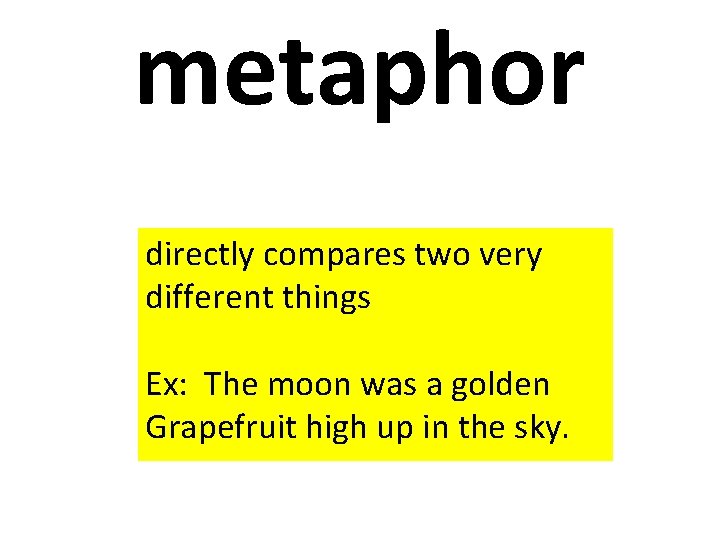
metaphor directly compares two very different things Ex: The moon was a golden Grapefruit high up in the sky.
simile
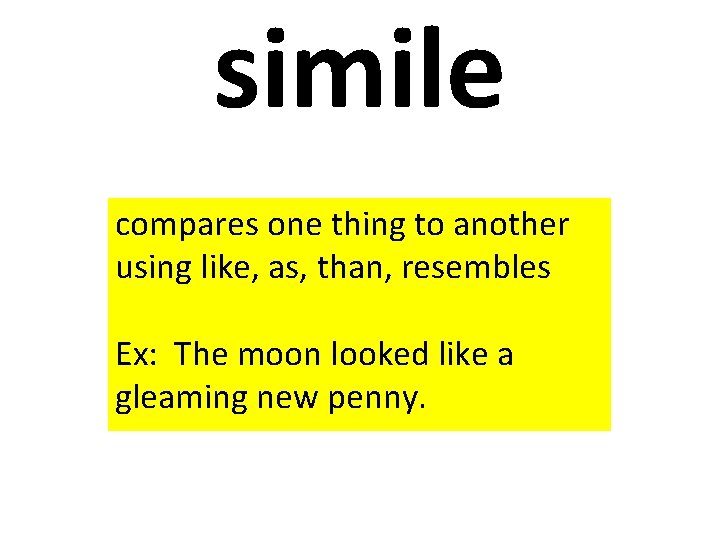
simile compares one thing to another using like, as, than, resembles Ex: The moon looked like a gleaming new penny.
lyrics (poem)
lyrics (poem) poems that express feelings and do not tell stories
narrative poem
narrative poem a poem that tells a story
ballad
ballad song or a song like poem that tells a story usually about lost love or betrayal or death
tall tale
tall tale an exaggerated, far fetched story that betrayal or death is obviously not true
exaggeration
exaggeration stretching the truth
epic
epic long narrative poem written in formal or elegant language that tells about a series of events undertaken by a great hero
ode
ode originated in Ancient Greece; celebrate a particular poem or thing
sonnet
sonnet fourteen line poem
lambic
lambic verse in which the stress is on every other syllable, starting with the unstressed beat
elegy
elegy a poem of mourning
free verse
free verse does not follow a regular rhyme, scheme, or pattern
alliteration
alliteration repetition of consonant sounds Ex: snow falling fast
onomatopoeia
onomatopoeia the use of words whose sounds echo their meaning Ex: the chains saw’s buzz
imagery
imagery language that evokes sensations of light, sound, smell, taste, and touch
figures of speech
figures of speech language that is based on comparisons and is not literally true (metaphors, similes, personification)
rhythm
rhythm the rise and fall of the voice, produced by sounds
speaker
speaker the person who tells the story or talks to you in the poem
unity
unity all the story’s details support the main idea or topic
logic
logic correct reasoning
idiom
idiom means something different from the literal meaning of each word Ex: “Hold your tongue” means don’t speak in English
epilogue
epilogue a brief closing section to a piece of literature
consumer
consumer someone who buys something or uses what someone else buys
warranty
warranty spells out exactly what happens if the product doesn’t work properly and what you are required to do to receive service
contract
contract spells out exactly what services will and will not be provided
product information
product information tells what the product will do