
7 TH GRADE UNIT 6 LIVING SYSTEMS PROJECT

- Slides: 61
7 TH GRADE UNIT 6 LIVING SYSTEMS PROJECT By Mr Forrest 01/23/2017
LESSON 1: FORCE AND ENERGY IN LIVING SYSTEMS PGS. 328 -339 ENERGY TRANSFORMATION FORCE WORK
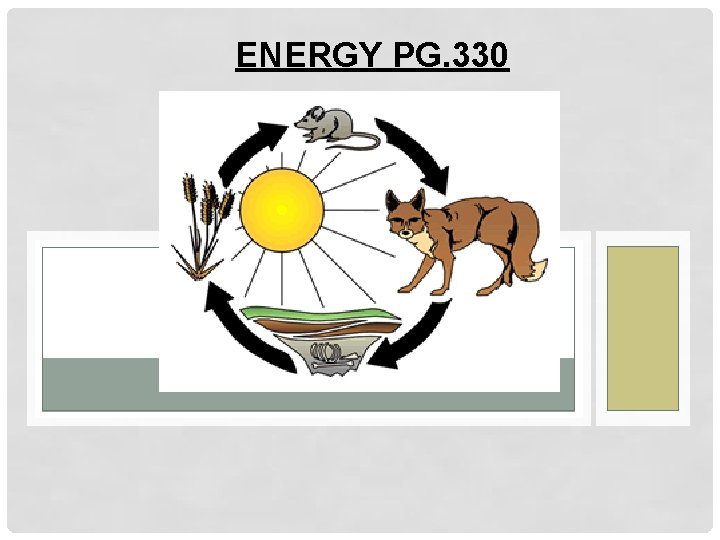
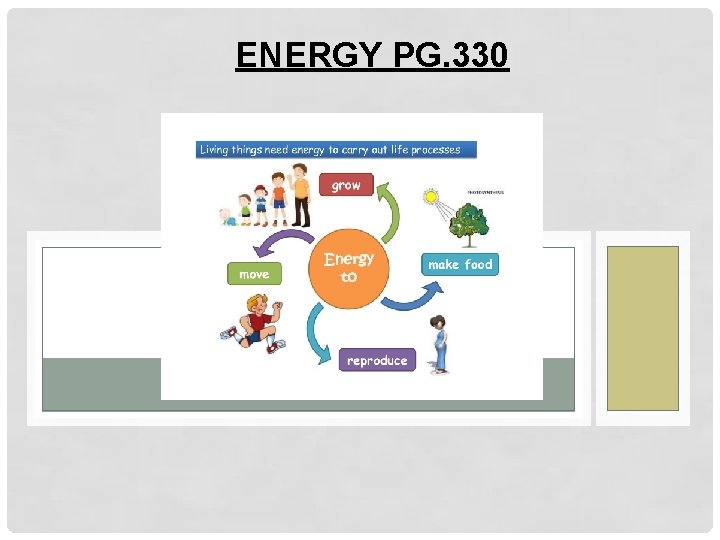
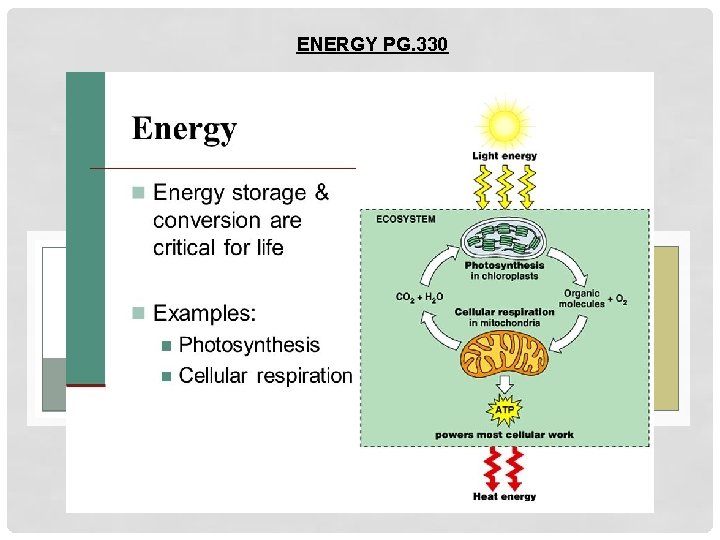
ENERGY PG. 330 • IS THE ABILITY TO CAUSE CHANGE TO A SYSTEM. • AN ORGANISM IS ONE TYPE OF SYSTEM. • FOR IT TO REMAIN ALIVE, CHANGES MUST OCCUR INSIDE AN ORGANISM EVERY SECOND OF ITS LIFE. • SUBSTANCES ARE BROKEN DOWN, BUILT UP, AND MOVED INSIDE AN ORGANISM'S BODY. • IF THE ORGANISM IS A SINGLE CELL, ALL OF THESE CHEMICAL REACTIONS OCCUR IN THAT ONE CELL. • IN SHORT, ALL ORGANISMS NEED ENERGY TO LIVE!
ENERGY PG. 330
ENERGY PG. 330
ENERGY PG. 330
ENERGY PG. 330
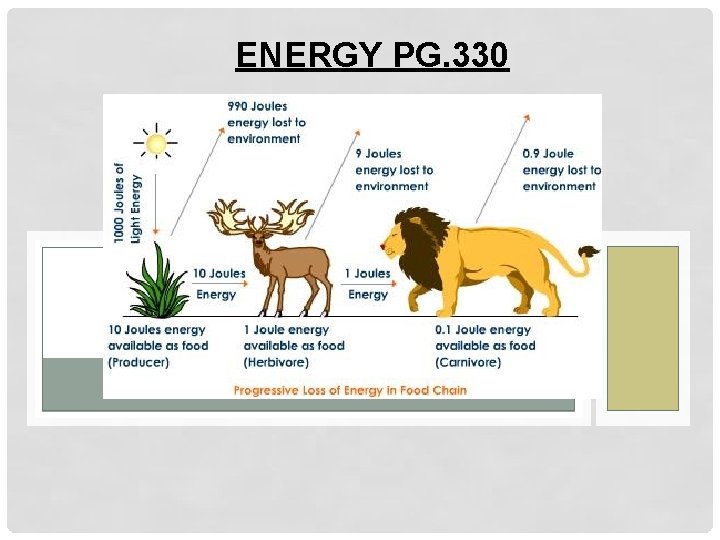
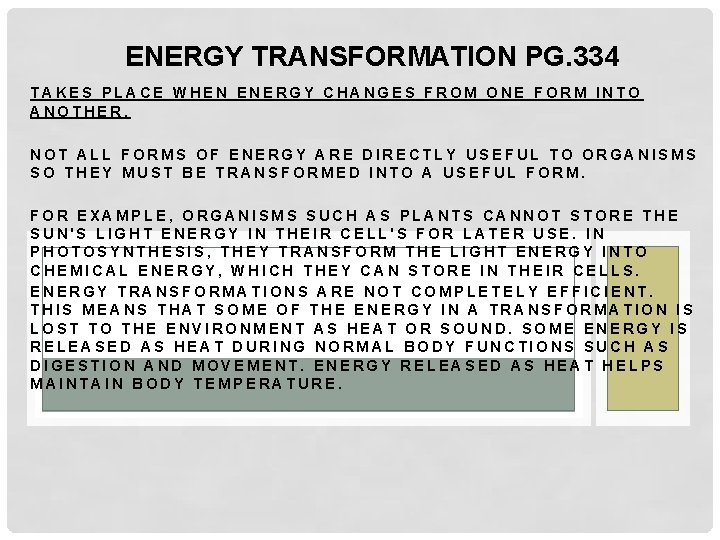
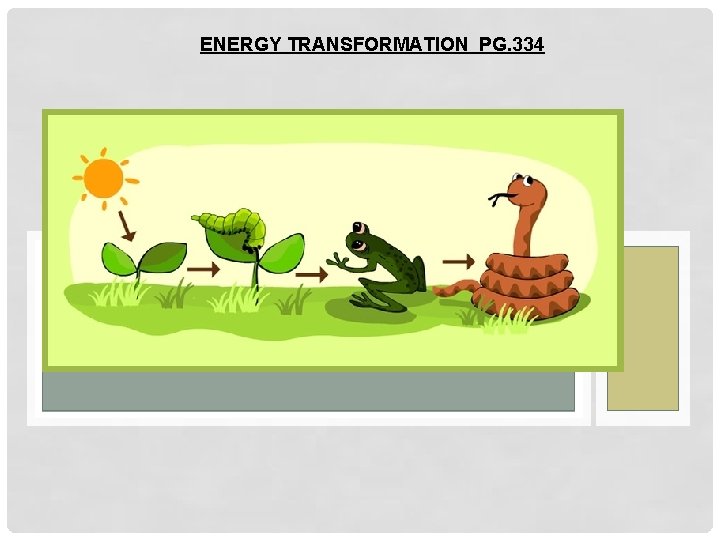
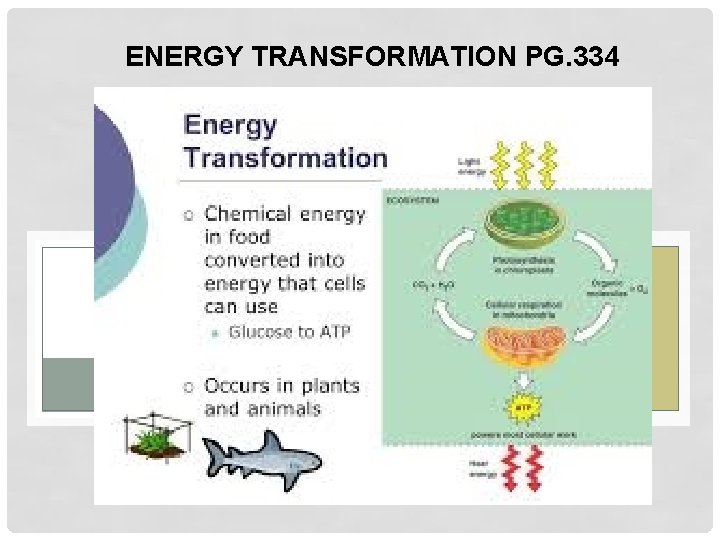
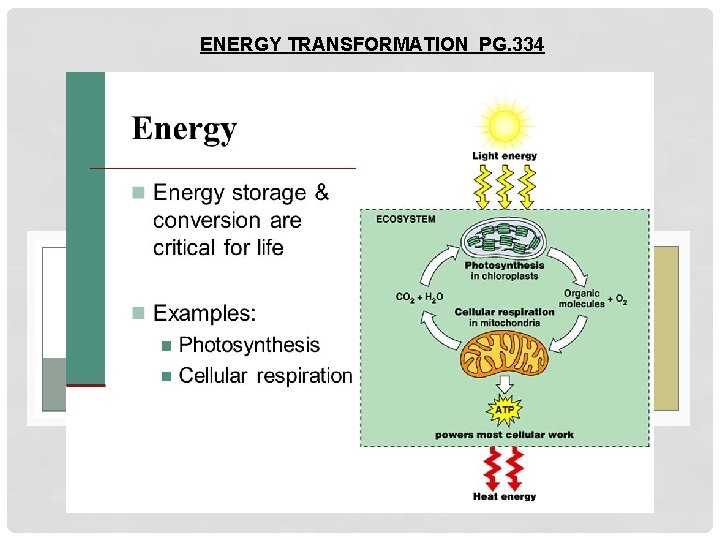
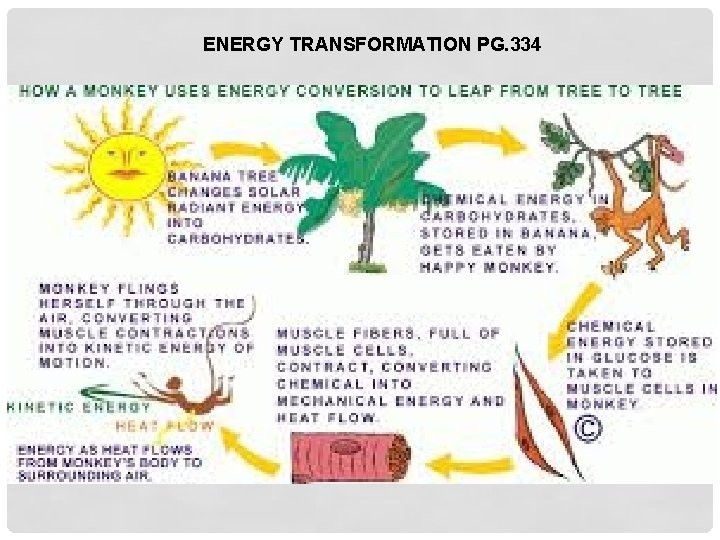
ENERGY TRANSFORMATION PG. 334 TAKES PLACE WHEN ENERGY CHANGES FROM ONE FORM INTO ANOTHER. NOT ALL FORMS OF ENERGY ARE DIRECTLY USEFUL TO ORGANISMS SO THEY MUST BE TRANSFORMED INTO A USEFUL FORM. FOR EXAMPLE, ORGANISMS SUCH AS PLANTS CANNOT STORE THE SUN'S LIGHT ENERGY IN THEIR CELL'S FOR LATER USE. IN PHOTOSYNTHESIS, THEY TRANSFORM THE LIGHT ENERGY INTO CHEMICAL ENERGY, WHICH THEY CAN STORE IN THEIR CELLS. ENERGY TRANSFORMATIONS ARE NOT COMPLETELY EFFICIENT. THIS MEANS THAT SOME OF THE ENERGY IN A TRANSFORMATION IS LOST TO THE ENVIRONMENT AS HEAT OR SOUND. SOME ENERGY IS RELEASED AS HEAT DURING NORMAL BODY FUNCTIONS SUCH AS DIGESTION AND MOVEMENT. ENERGY RELEASED AS HEAT HELPS MAINTAIN BODY TEMPERATURE.
ENERGY TRANSFORMATION PG. 334
ENERGY TRANSFORMATION PG. 334
ENERGY TRANSFORMATION PG. 334
ENERGY TRANSFORMATION PG. 334
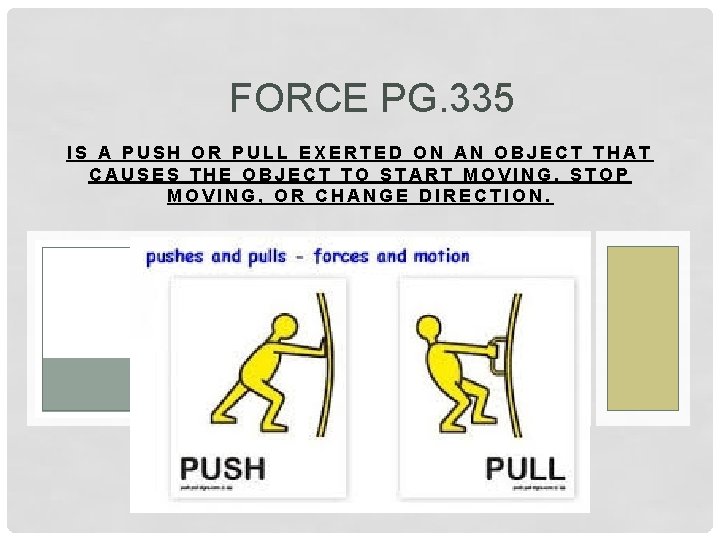
FORCE PG. 335 IS A PUSH OR PULL EXERTED ON AN OBJECT THAT CAUSES THE OBJECT TO START MOVING, STOP MOVING, OR CHANGE DIRECTION.
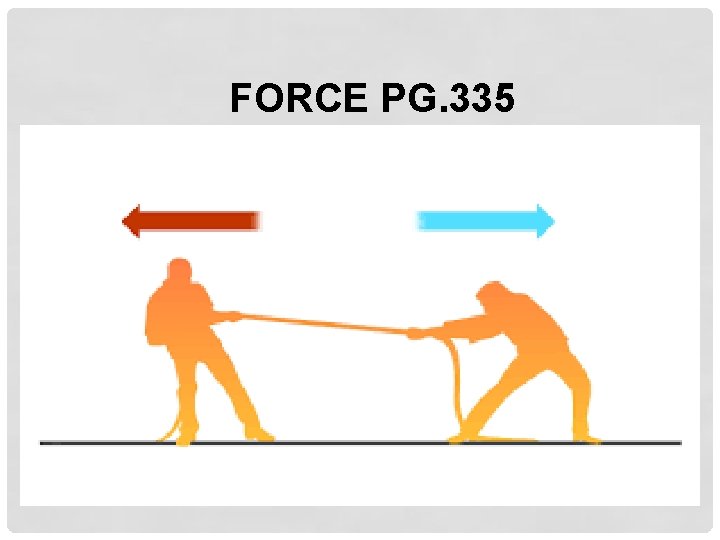
FORCE PG. 335 PUSHING A FRIEND ON A SWING CAUSES THE FRIEND TO MOVE AWAY FROM YOU EXERTED A FORCE TO PUSH THE FRIEND AWAY. HOWEVER, IF EQUAL FORCE ACTS IN THE OPPOSITE DIRECTION ON AN OBJECT, IT WILL NOT MOVE(ENERGY CANCELS OUT). FORCES ARE ESSENTIAL TO LIFE PROCESSES. FORCES ACT ON AND INSIDE EVERY ORGANISM. FOR EXAMPLE, BLOOD IS PUSHED AROUND THE BODY BY A PUMPING HEART. TINY PROTEIN STRUCTURES INSIDE MUSCLE CELLS PULL ON ONE ANOTHER TO SHORTEN, OR CONTRACT, THE MUSCLE AND CAUSE MOVEMENT. CELLS EXCHANGE SUBSTANCES WITH ONE ANOTHER AND THEIR SURROUNDINGS BY MOVING MOLECULES. THE MOVEMENT OF MOLECULES ACROSS CELL MEMBRANES REQUIRES FORCE. MAIN FORCES: ON LIVING THINGS: GRAVITY AND PRESSURE.
FORCE PG. 335
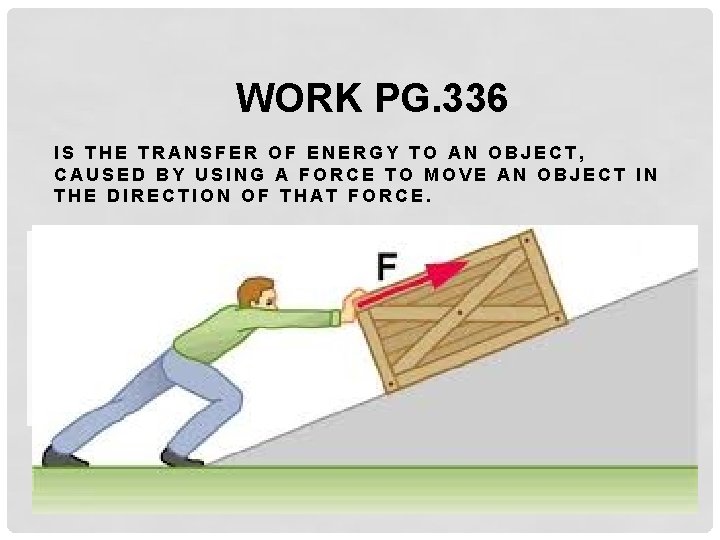
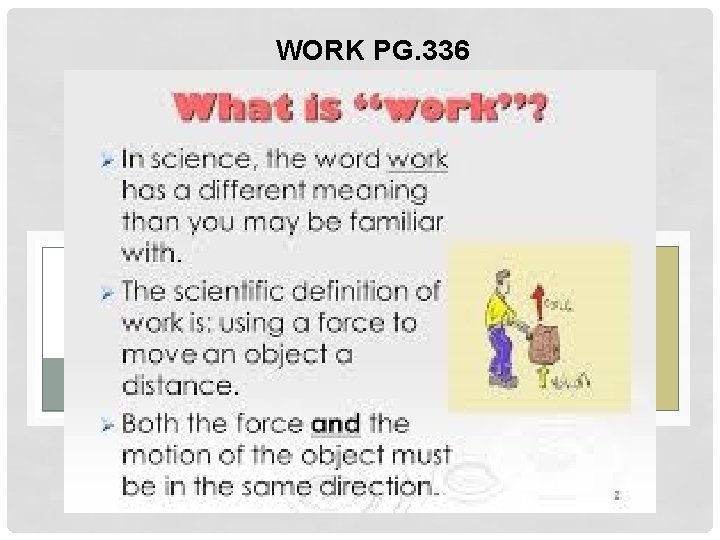
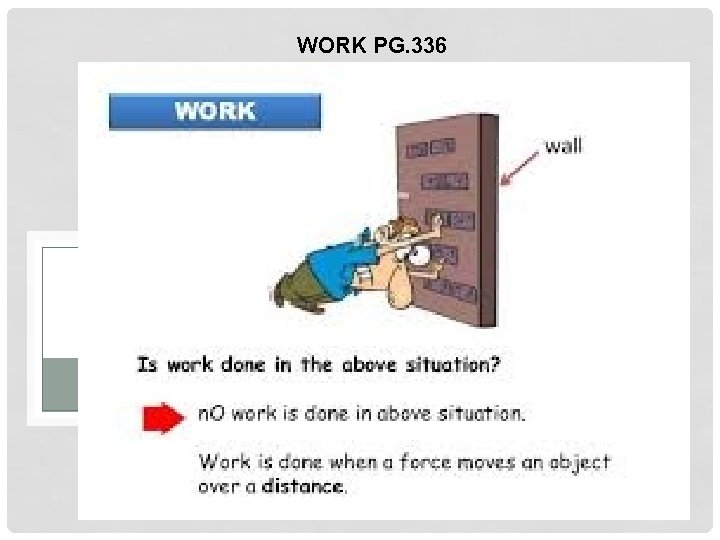
WORK PG. 336 IS THE TRANSFER OF ENERGY TO AN OBJECT, CAUSED BY USING A FORCE TO MOVE AN OBJECT IN THE DIRECTION OF THAT FORCE.
WORK PG. 336
WORK PG. 336
LESSON 2: ECOLOGY AND ENERGY TRANSFER PGS. 340353 ECOSYSTEM HABITAT PRODUCER DECOMPOSER CONSUMER HERBIVORE CARNIVORE OMNIVORE FOOD CHAIN FOOD WEB
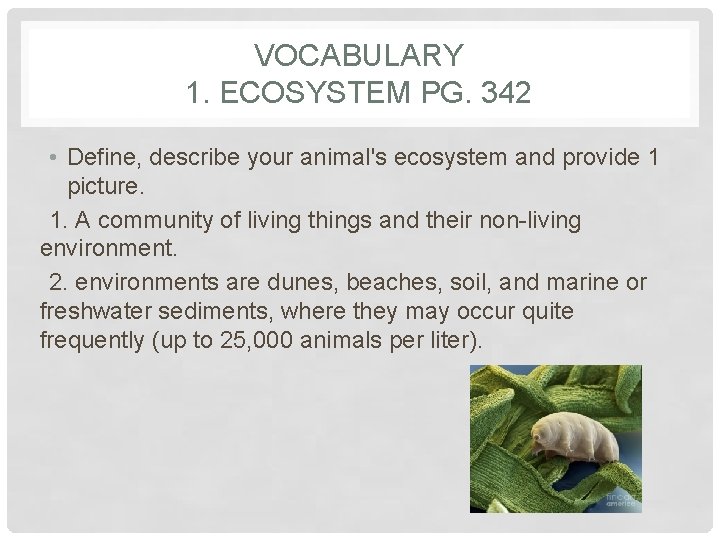
VOCABULARY 1. ECOSYSTEM PG. 342 • Define, describe your animal's ecosystem and provide 1 picture. 1. A community of living things and their non-living environment. 2. environments are dunes, beaches, soil, and marine or freshwater sediments, where they may occur quite frequently (up to 25, 000 animals per liter).
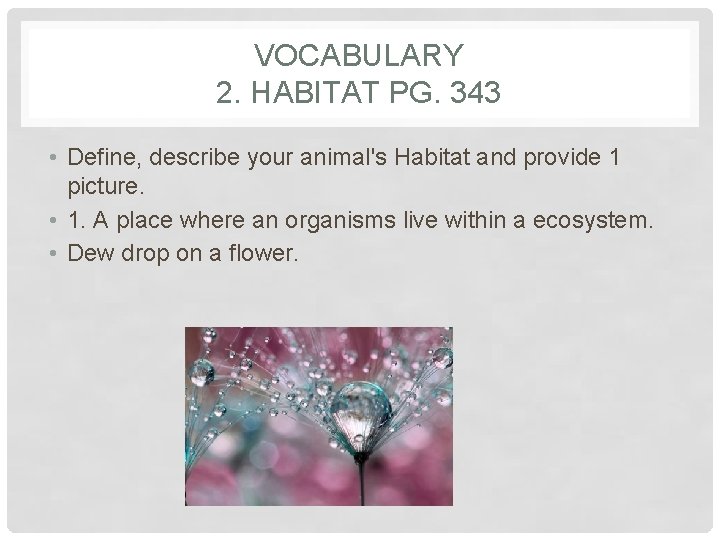
VOCABULARY 2. HABITAT PG. 343 • Define, describe your animal's Habitat and provide 1 picture. • 1. A place where an organisms live within a ecosystem. • Dew drop on a flower.
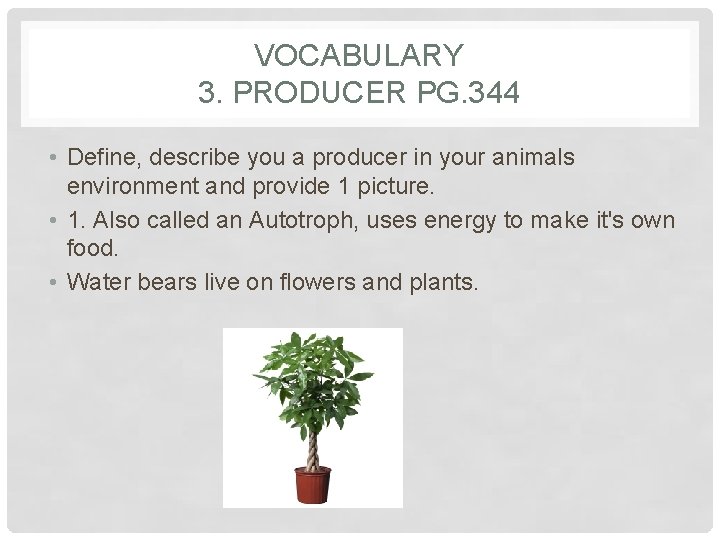
VOCABULARY 3. PRODUCER PG. 344 • Define, describe you a producer in your animals environment and provide 1 picture. • 1. Also called an Autotroph, uses energy to make it's own food. • Water bears live on flowers and plants.
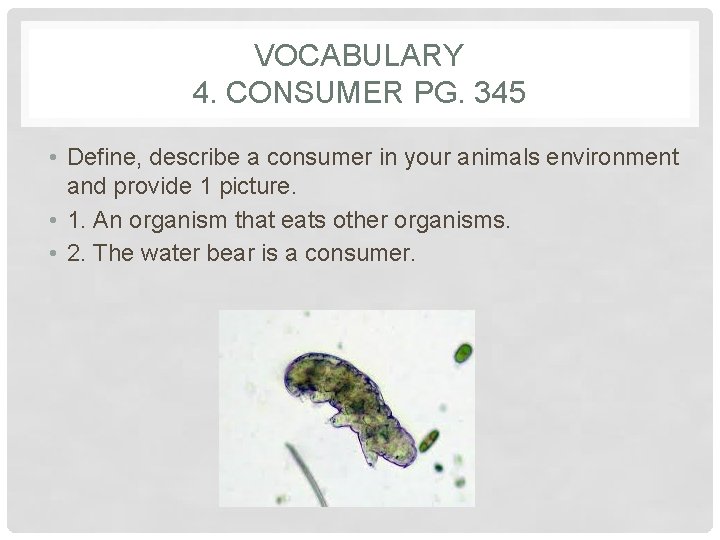
VOCABULARY 4. CONSUMER PG. 345 • Define, describe a consumer in your animals environment and provide 1 picture. • 1. An organism that eats other organisms. • 2. The water bear is a consumer.
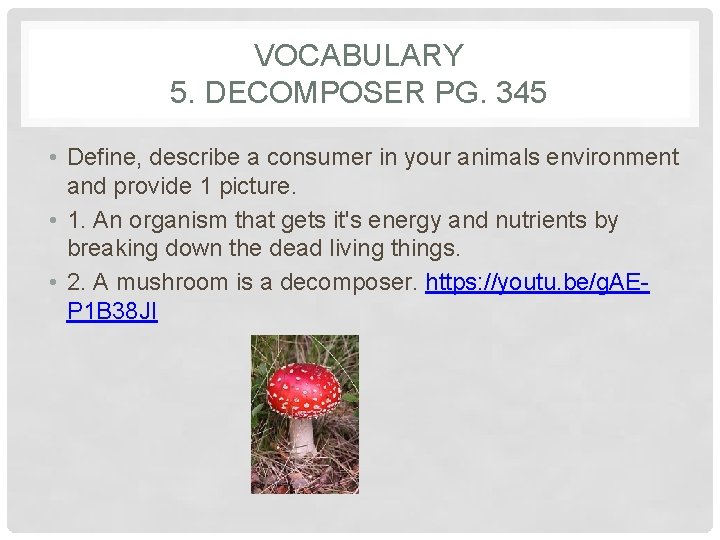
VOCABULARY 5. DECOMPOSER PG. 345 • Define, describe a consumer in your animals environment and provide 1 picture. • 1. An organism that gets it's energy and nutrients by breaking down the dead living things. • 2. A mushroom is a decomposer. https: //youtu. be/g. AEP 1 B 38 JI
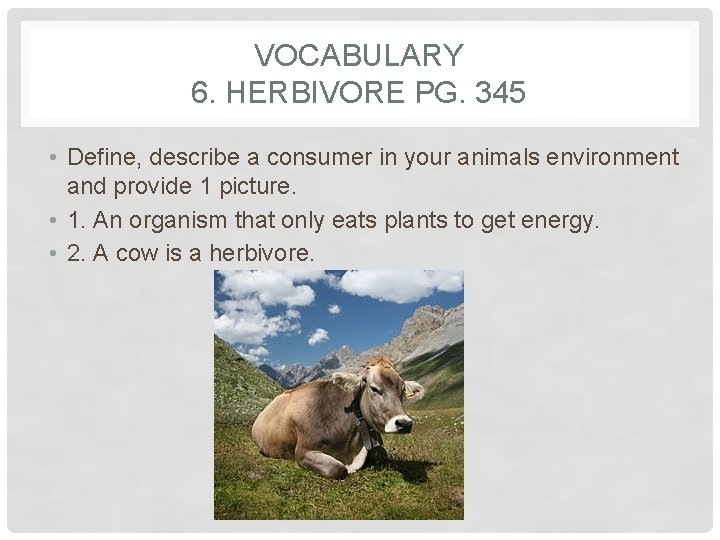
VOCABULARY 6. HERBIVORE PG. 345 • Define, describe a consumer in your animals environment and provide 1 picture. • 1. An organism that only eats plants to get energy. • 2. A cow is a herbivore.
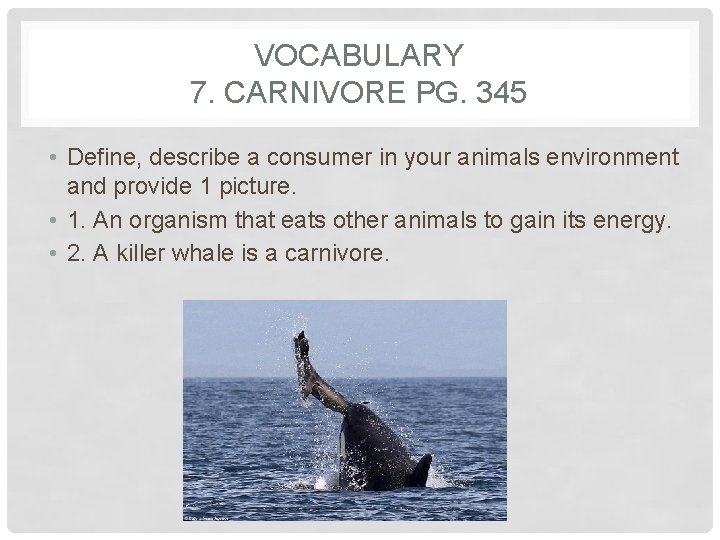
VOCABULARY 7. CARNIVORE PG. 345 • Define, describe a consumer in your animals environment and provide 1 picture. • 1. An organism that eats other animals to gain its energy. • 2. A killer whale is a carnivore.
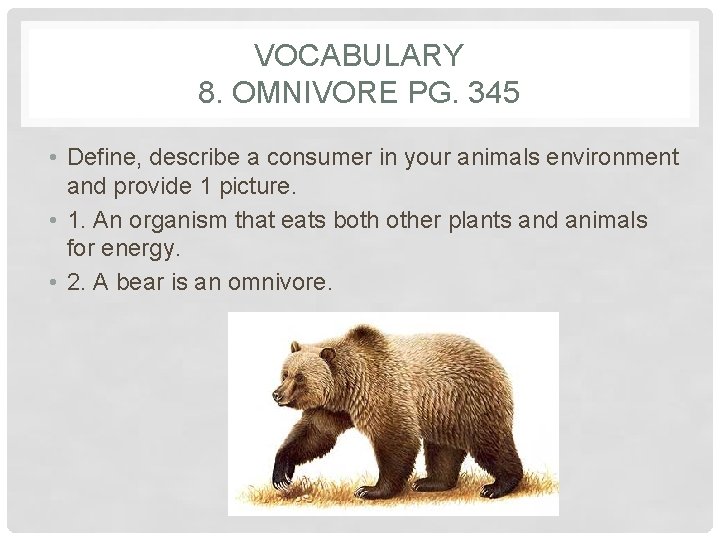
VOCABULARY 8. OMNIVORE PG. 345 • Define, describe a consumer in your animals environment and provide 1 picture. • 1. An organism that eats both other plants and animals for energy. • 2. A bear is an omnivore.
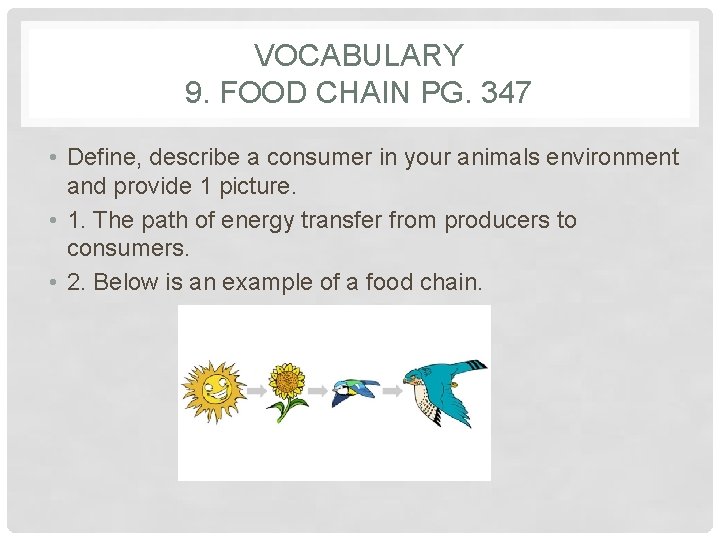
VOCABULARY 9. FOOD CHAIN PG. 347 • Define, describe a consumer in your animals environment and provide 1 picture. • 1. The path of energy transfer from producers to consumers. • 2. Below is an example of a food chain.
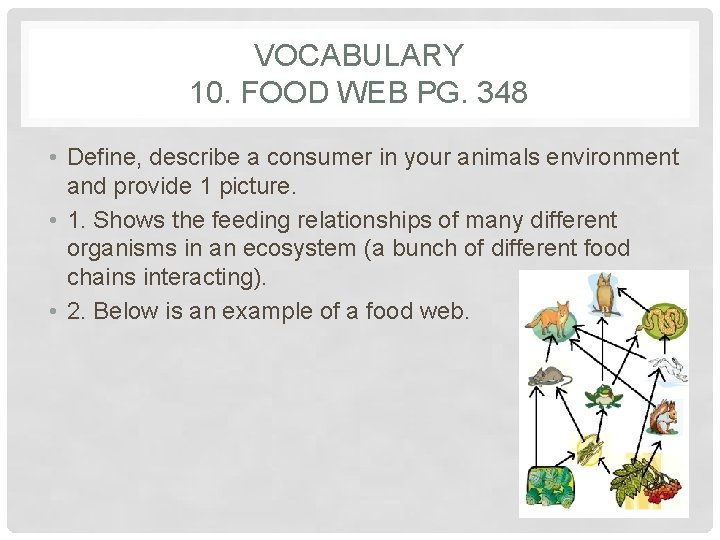
VOCABULARY 10. FOOD WEB PG. 348 • Define, describe a consumer in your animals environment and provide 1 picture. • 1. Shows the feeding relationships of many different organisms in an ecosystem (a bunch of different food chains interacting). • 2. Below is an example of a food web.
LESSON 3: ENERGY AND MATTER IN ECOSYSTEMS PGS. 354 -365 • • 1. Energy 2. Matter 3. Law of conservation of energy 4. law of conservation of matter 5. energy pyramid 6. Water Cycle 7. Nitrogen Cycle 8. Carbon Cycle
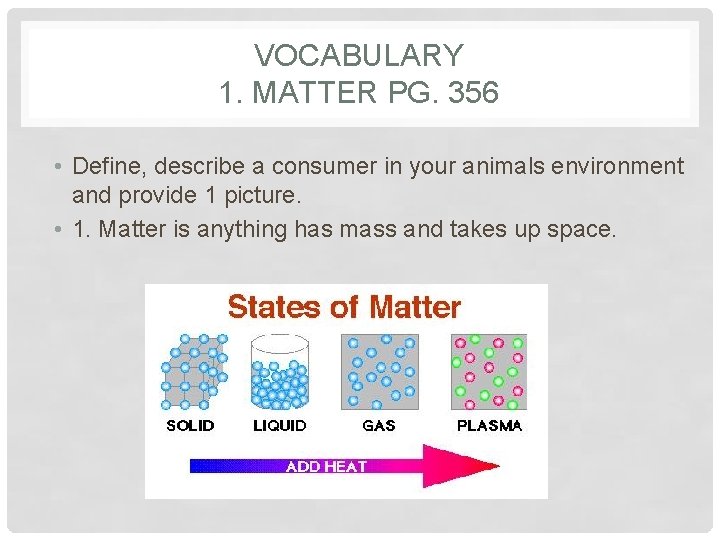
VOCABULARY 1. MATTER PG. 356 • Define, describe a consumer in your animals environment and provide 1 picture. • 1. Matter is anything has mass and takes up space.
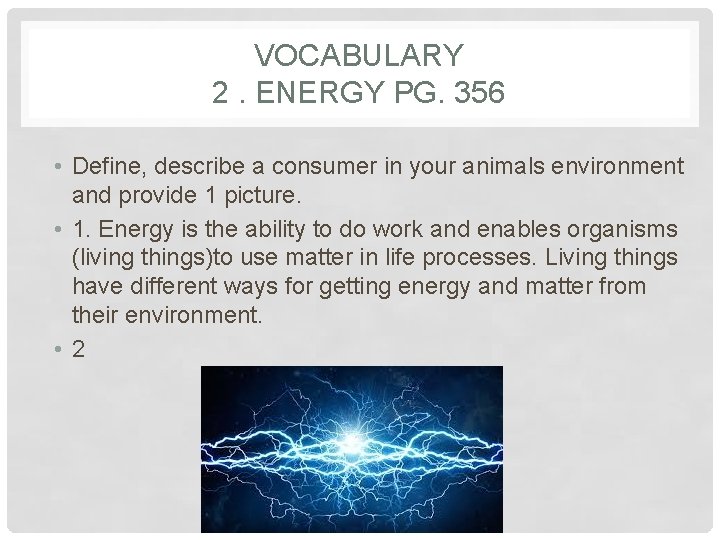
VOCABULARY 2. ENERGY PG. 356 • Define, describe a consumer in your animals environment and provide 1 picture. • 1. Energy is the ability to do work and enables organisms (living things)to use matter in life processes. Living things have different ways for getting energy and matter from their environment. • 2
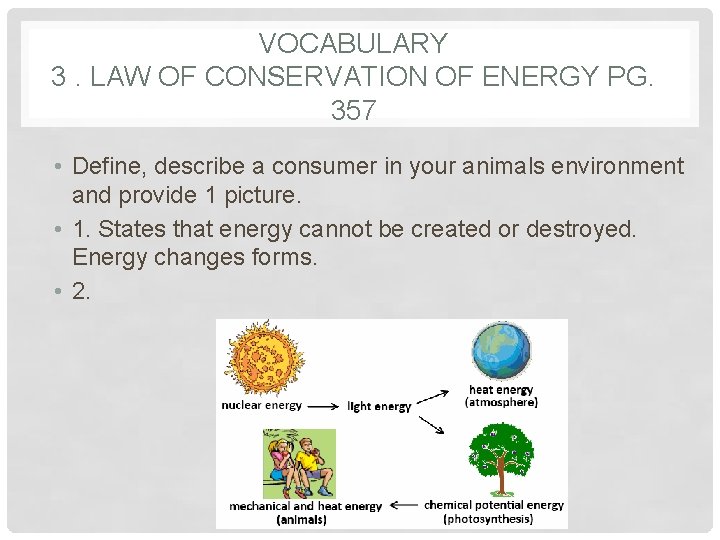
VOCABULARY 3. LAW OF CONSERVATION OF ENERGY PG. 357 • Define, describe a consumer in your animals environment and provide 1 picture. • 1. States that energy cannot be created or destroyed. Energy changes forms. • 2.
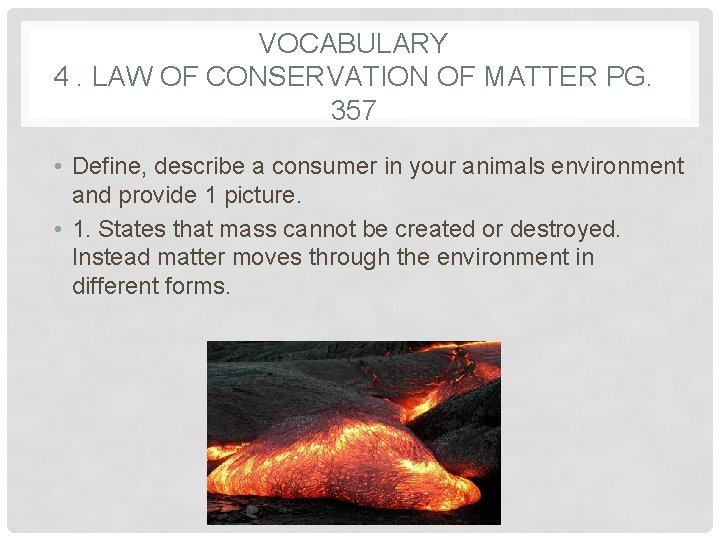
VOCABULARY 4. LAW OF CONSERVATION OF MATTER PG. 357 • Define, describe a consumer in your animals environment and provide 1 picture. • 1. States that mass cannot be created or destroyed. Instead matter moves through the environment in different forms.
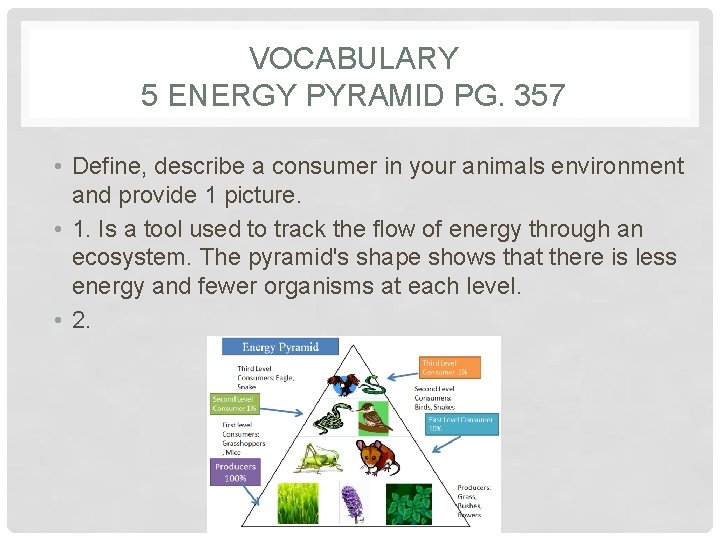
VOCABULARY 5 ENERGY PYRAMID PG. 357 • Define, describe a consumer in your animals environment and provide 1 picture. • 1. Is a tool used to track the flow of energy through an ecosystem. The pyramid's shape shows that there is less energy and fewer organisms at each level. • 2.
VOCABULARY 6. WATER CYCLE PG. 360 • Define, describe a consumer in your animals environment and provide 1 picture. • 1. The movement of water between the oceans, atmosphere, land, and living things. The three ways water can enter the atmosphere are evaporation, transpiration, and respiration.
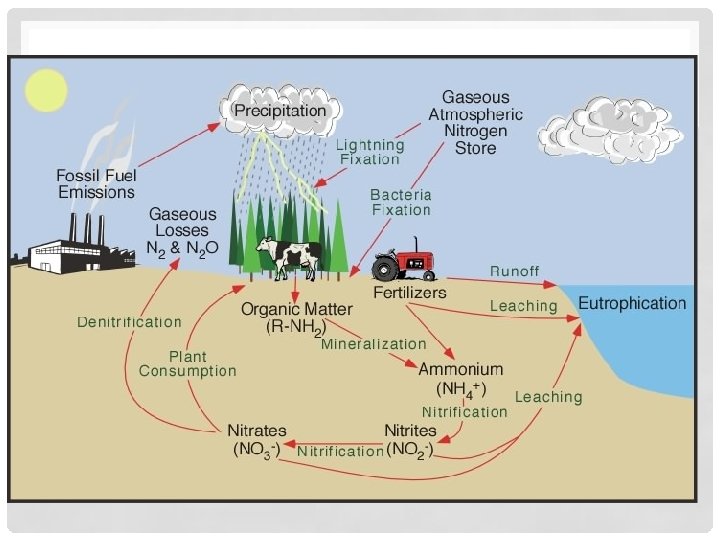
VOCABULARY 5. NITROGEN CYCLE PG. 360 • Define, describe a consumer in your animals environment and provide 1 picture. • 1. The movement of nitrogen between the environment and living things. Most of the Earth's atmosphere is Nitrogen.
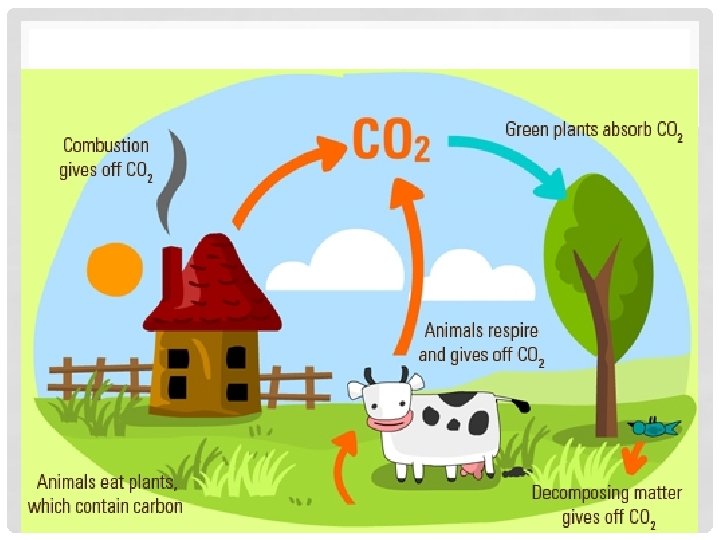
VOCABULARY 5. CARBON CYCLE PG. 362 • Define, describe a consumer in your animals environment and provide 1 picture. • 1. When carbon moves through organisms and between organisms, and the physical environment.
LESSON 4: LAND BIOMES PG. 370 -381 • • Biome Tundra Taiga Coniferous Tree Desert Grassland Deciduous Tree
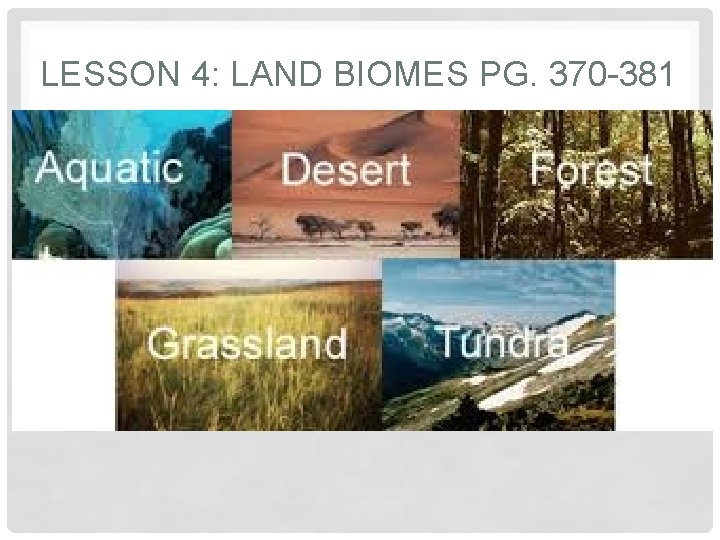
LESSON 4: LAND BIOMES PG. 370 -381
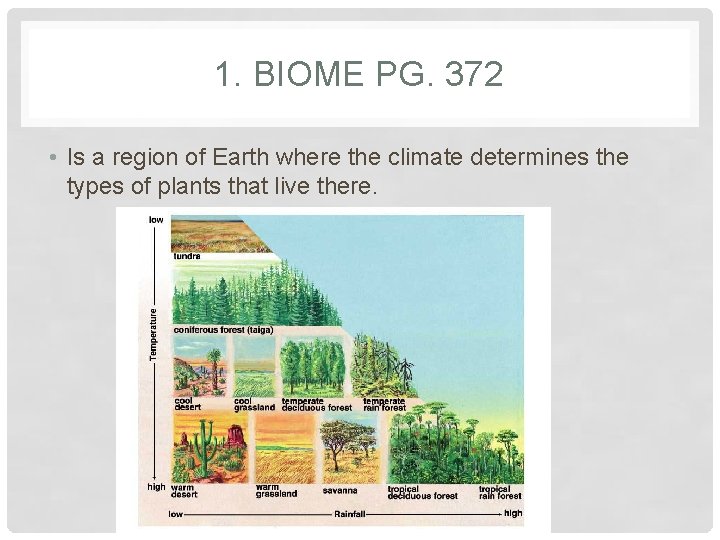
1. BIOME PG. 372 • Is a region of Earth where the climate determines the types of plants that live there.
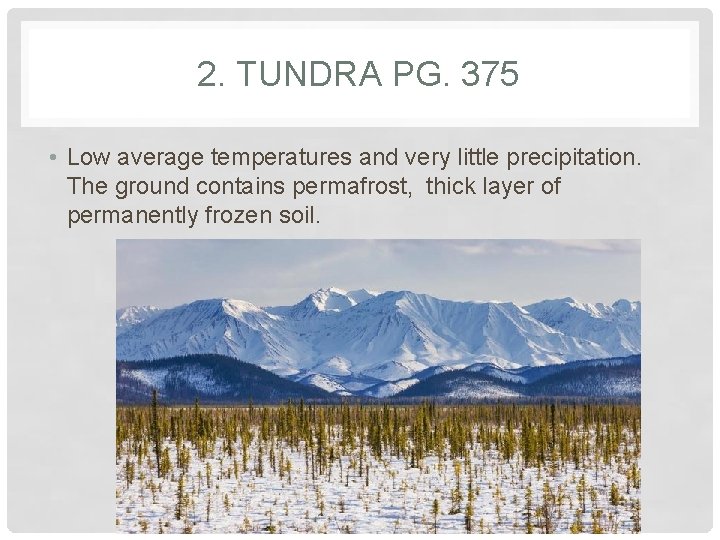
2. TUNDRA PG. 375 • Low average temperatures and very little precipitation. The ground contains permafrost, thick layer of permanently frozen soil.
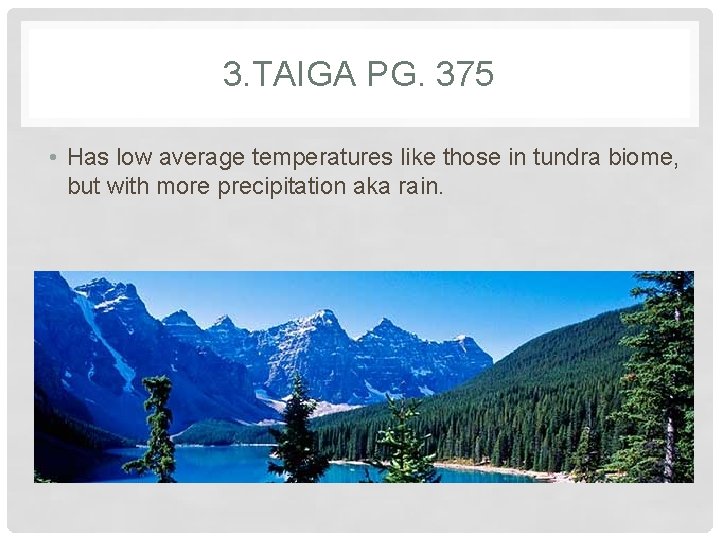
3. TAIGA PG. 375 • Has low average temperatures like those in tundra biome, but with more precipitation aka rain.
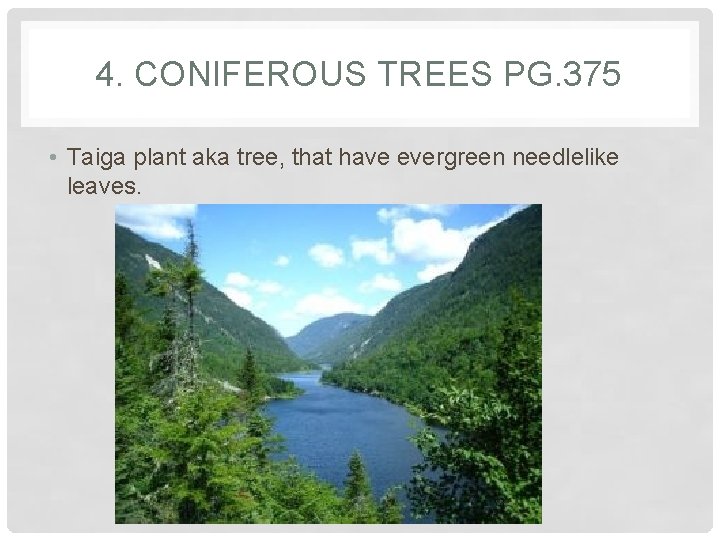
4. CONIFEROUS TREES PG. 375 • Taiga plant aka tree, that have evergreen needlelike leaves.
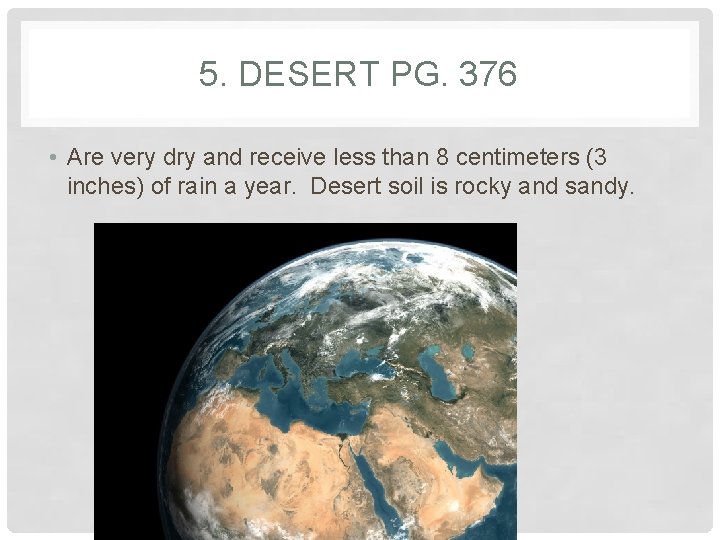
5. DESERT PG. 376 • Are very dry and receive less than 8 centimeters (3 inches) of rain a year. Desert soil is rocky and sandy.
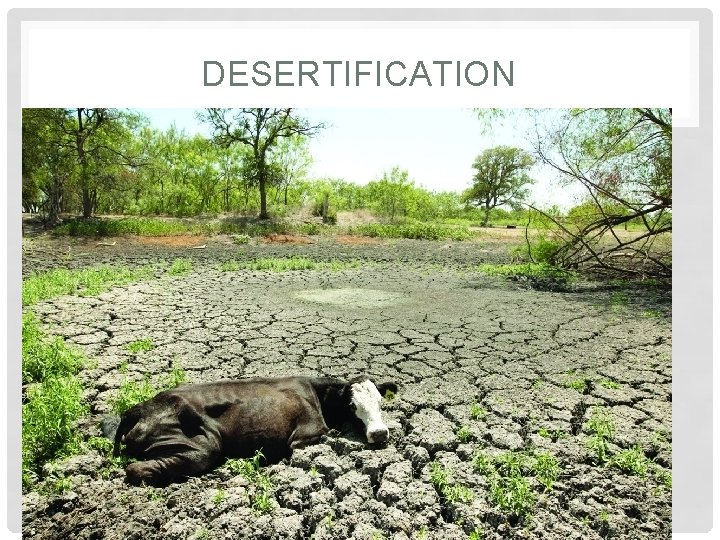
DESERTIFICATION
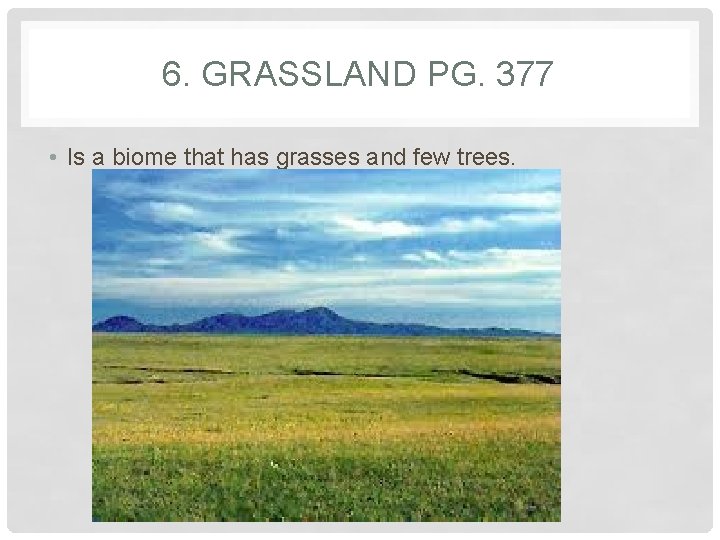
6. GRASSLAND PG. 377 • Is a biome that has grasses and few trees.
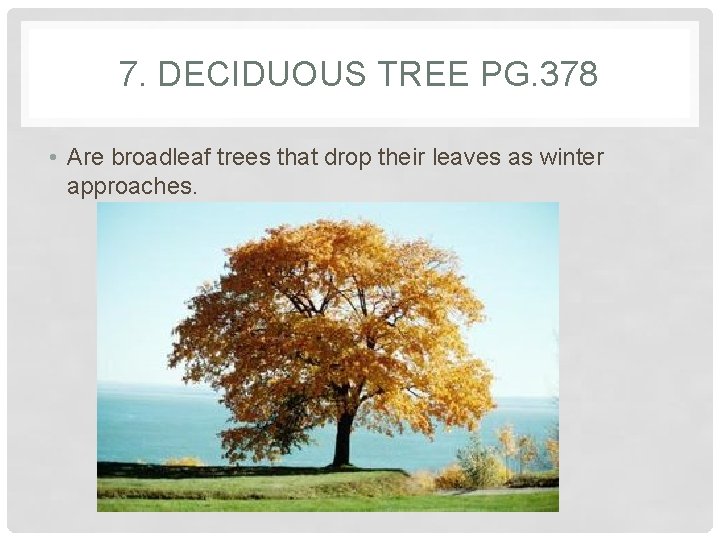
7. DECIDUOUS TREE PG. 378 • Are broadleaf trees that drop their leaves as winter approaches.
LESSON 5 AQUATIC ECOSYSTEM PGS. 382 -393 • Wetland • Estuary
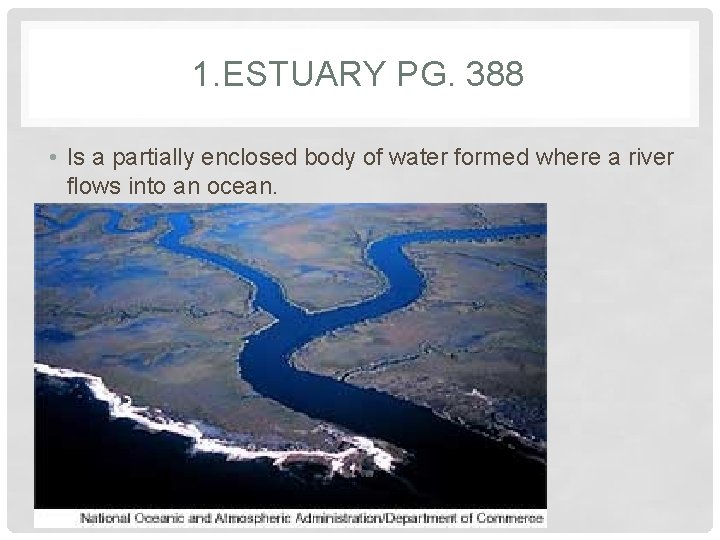
1. ESTUARY PG. 388 • Is a partially enclosed body of water formed where a river flows into an ocean.
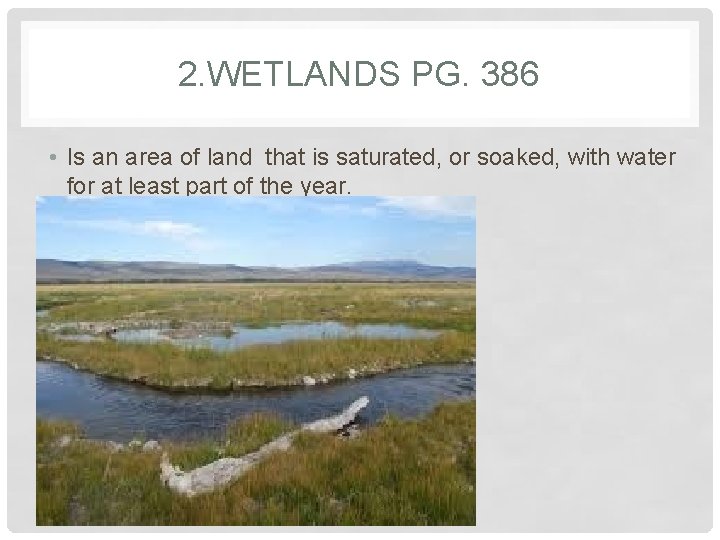
2. WETLANDS PG. 386 • Is an area of land that is saturated, or soaked, with water for at least part of the year.
LESSON 6: CHANGES IN ECOSYSTEMS PGS. 396 -407 • • • Eutrophication Disturbance Succession Pioneer Species Biodiversity
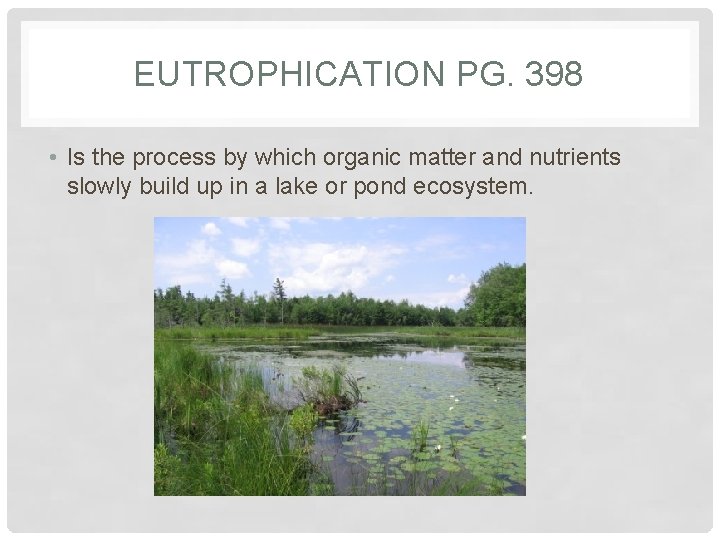
EUTROPHICATION PG. 398 • Is the process by which organic matter and nutrients slowly build up in a lake or pond ecosystem.
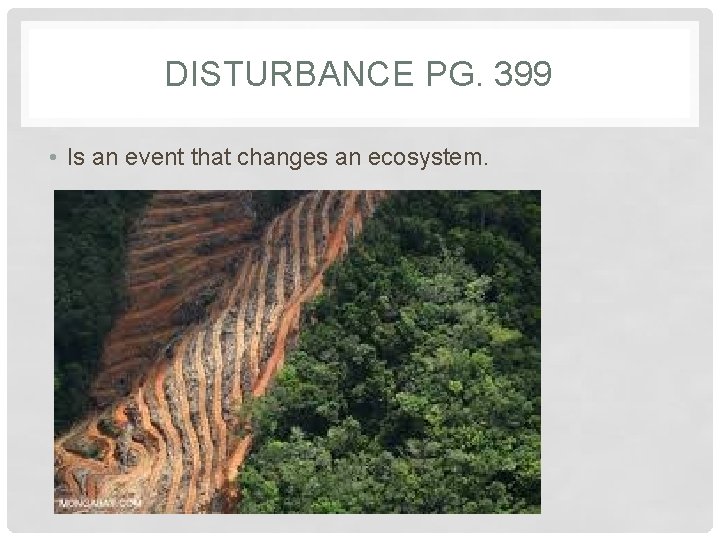
DISTURBANCE PG. 399 • Is an event that changes an ecosystem.
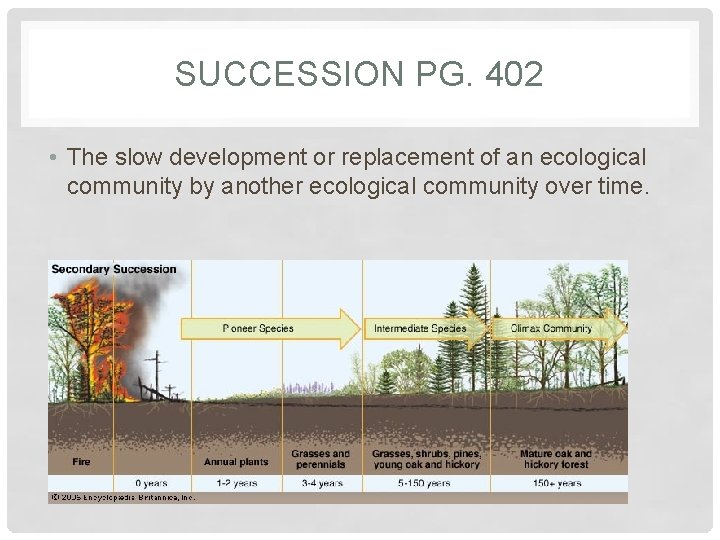
SUCCESSION PG. 402 • The slow development or replacement of an ecological community by another ecological community over time.
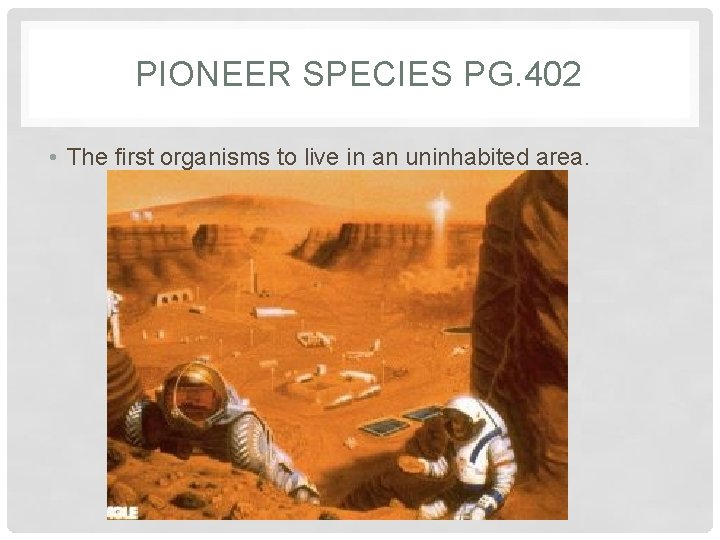
PIONEER SPECIES PG. 402 • The first organisms to live in an uninhabited area.
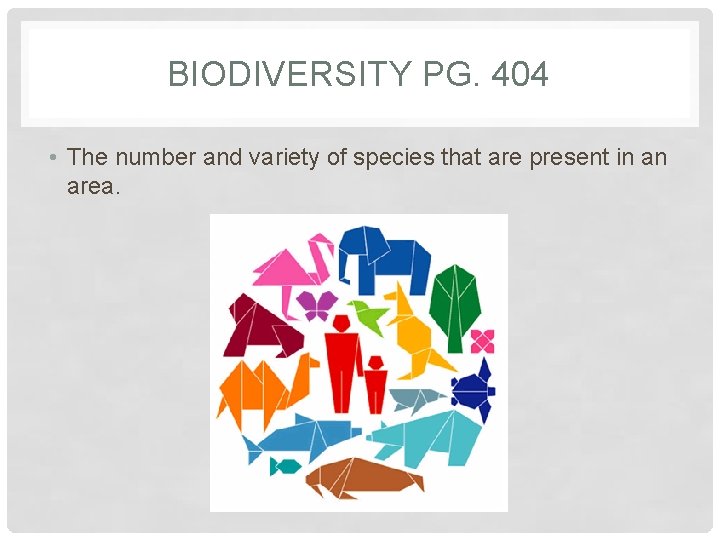
BIODIVERSITY PG. 404 • The number and variety of species that are present in an area.
DISTURBANCE AND SUCCESSION • You will look up a disturbance in Earth's history and then you will tell me how life bounced back. • Example Dinosaur killing impact of asteriod, KT Boundary. • You will tell me what the disturbance was, when it occurred, and what life was wiped out. • You will explain how life came back to the effected area and in what succession.