
7 Teat fistula The teat fistula is an
- Slides: 5
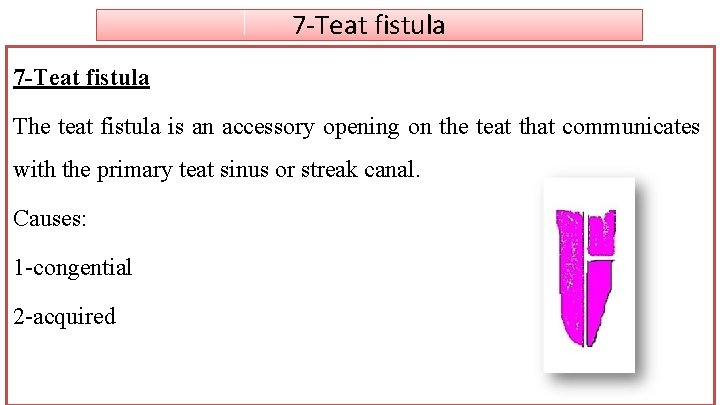
7 -Teat fistula The teat fistula is an accessory opening on the teat that communicates with the primary teat sinus or streak canal. Causes: 1 -congential 2 -acquired
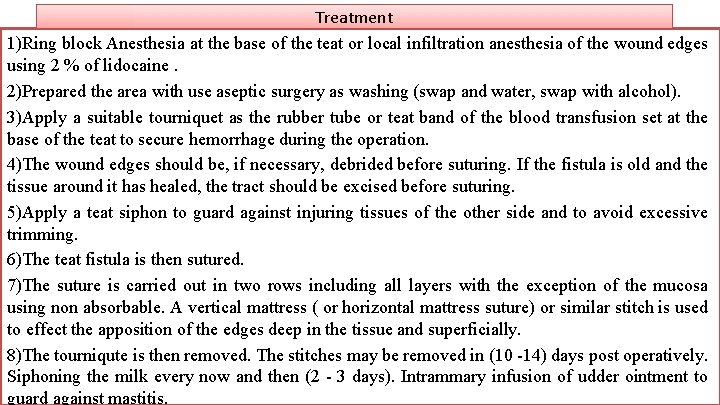
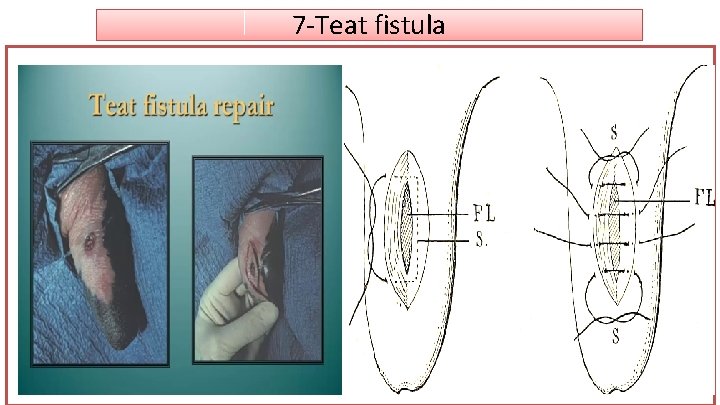
Treatment 1)Ring block Anesthesia at the base of the teat or local infiltration anesthesia of the wound edges using 2 % of lidocaine. 2)Prepared the area with use aseptic surgery as washing (swap and water, swap with alcohol). 3)Apply a suitable tourniquet as the rubber tube or teat band of the blood transfusion set at the base of the teat to secure hemorrhage during the operation. 4)The wound edges should be, if necessary, debrided before suturing. If the fistula is old and the tissue around it has healed, the tract should be excised before suturing. 5)Apply a teat siphon to guard against injuring tissues of the other side and to avoid excessive trimming. 6)The teat fistula is then sutured. 7)The suture is carried out in two rows including all layers with the exception of the mucosa using non absorbable. A vertical mattress ( or horizontal mattress suture) or similar stitch is used to effect the apposition of the edges deep in the tissue and superficially. 8)The tourniqute is then removed. The stitches may be removed in (10 -14) days post operatively. Siphoning the milk every now and then (2 - 3 days). Intrammary infusion of udder ointment to guard against mastitis.
7 -Teat fistula
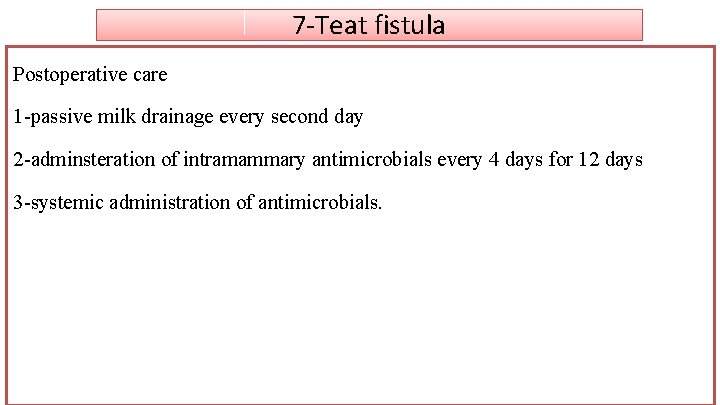
7 -Teat fistula Postoperative care 1 -passive milk drainage every second day 2 -adminsteration of intramammary antimicrobials every 4 days for 12 days 3 -systemic administration of antimicrobials.
Mastectomy is excision of one or more mammary glands or mammary tissue. Indication: 1 -sever laceration 2 -gangrene 3 -tumor