
7 SYSTEM LEADERSHIP STUDY Professor Alma Harris Dr
- Slides: 13
7 SYSTEM LEADERSHIP STUDY Professor Alma Harris Dr Michelle Suzette Jones
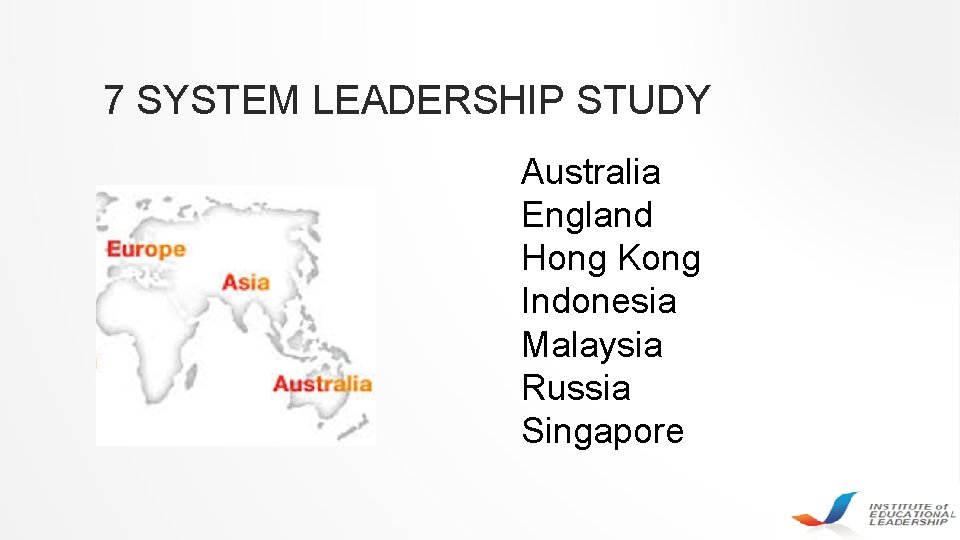
7 SYSTEM LEADERSHIP STUDY Australia England Hong Kong Indonesia Malaysia Russia Singapore
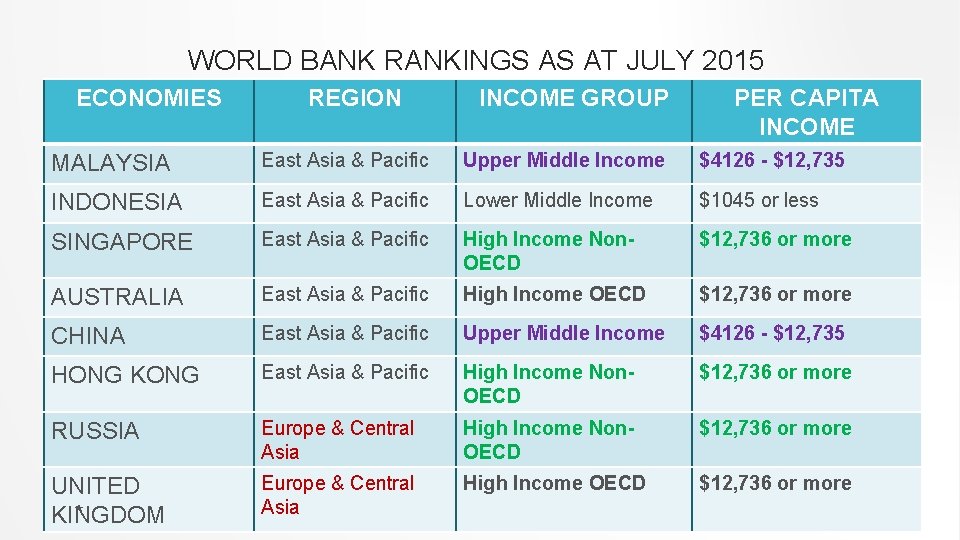
WORLD BANK RANKINGS AS AT JULY 2015 ECONOMIES REGION INCOME GROUP PER CAPITA INCOME MALAYSIA East Asia & Pacific Upper Middle Income $4126 - $12, 735 INDONESIA East Asia & Pacific Lower Middle Income $1045 or less SINGAPORE East Asia & Pacific High Income Non- OECD $12, 736 or more AUSTRALIA East Asia & Pacific High Income OECD $12, 736 or more CHINA East Asia & Pacific Upper Middle Income $4126 - $12, 735 HONG KONG East Asia & Pacific High Income Non- OECD $12, 736 or more RUSSIA Europe & Central Asia High Income Non- OECD $12, 736 or more UNITED * KINGDOM Europe & Central Asia High Income OECD $12, 736 or more
RATIONALE • This research study is a detailed and systematic comparative analysis of leadership development and leadership practice in seven different countries, Australia, England, Hong Kong, Indonesia, Malaysia, Russia and Singapore. • It examines how different programmes of leadership development are being designed and deployed as a deliberate strategy for system wide improvement and transformation. • The primary goal of this study is to contribute to the field of educational leadership and the knowledge base concerning educational improvement at the school and system level.
DATA COLLECTION METHODS • • Background & Contextual Data Documentary Analysis Performance Data 7 SLS Survey Semi-Structured Interviews Focus Groups Informal Observation
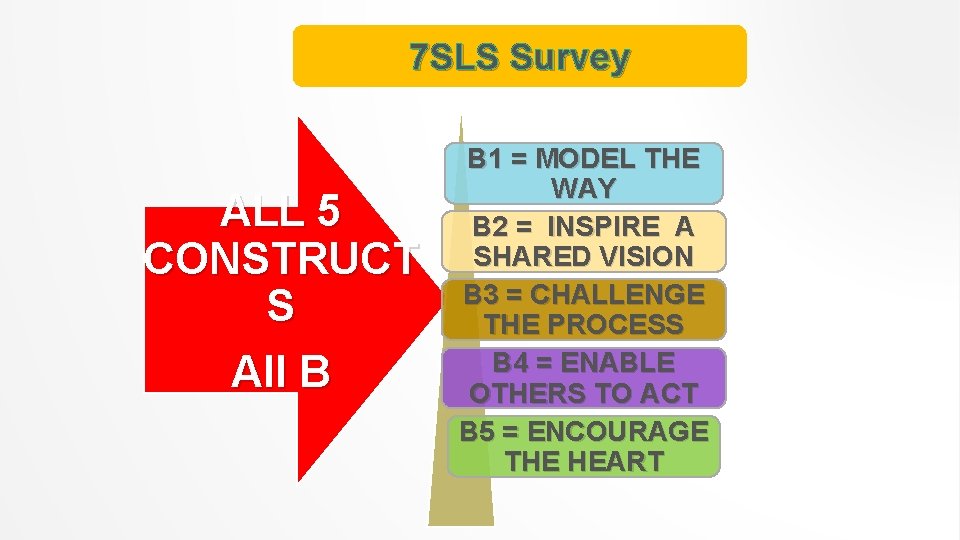
7 SLS Survey ALL 5 CONSTRUCT S All B B 1 = MODEL THE WAY B 2 = INSPIRE A SHARED VISION B 3 = CHALLENGE THE PROCESS B 4 = ENABLE OTHERS TO ACT B 5 = ENCOURAGE THE HEART
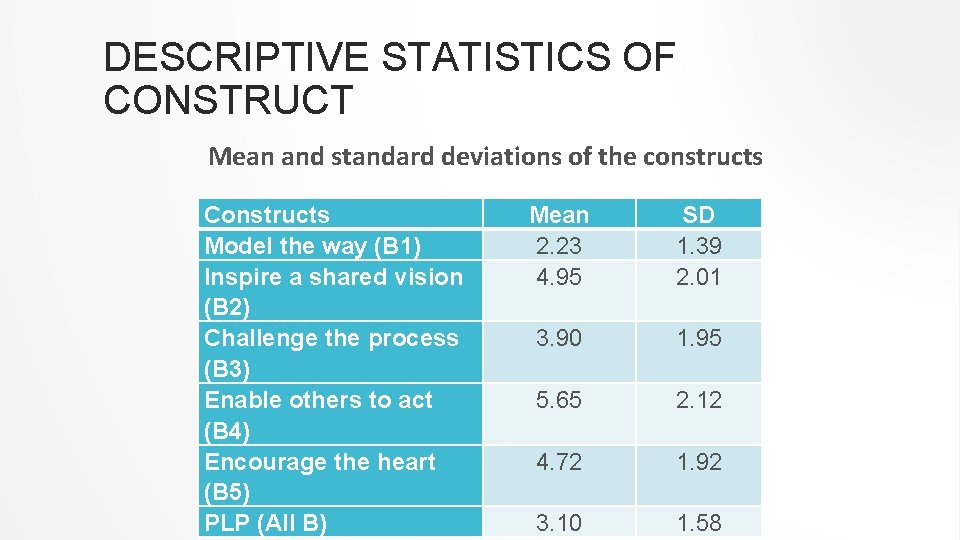
DESCRIPTIVE STATISTICS OF CONSTRUCT Mean and standard deviations of the constructs Constructs Model the way (B 1) Inspire a shared vision (B 2) Challenge the process (B 3) Enable others to act (B 4) Encourage the heart (B 5) PLP (All B) Mean 2. 23 4. 95 SD 1. 39 2. 01 3. 90 1. 95 5. 65 2. 12 4. 72 1. 92 3. 10 1. 58
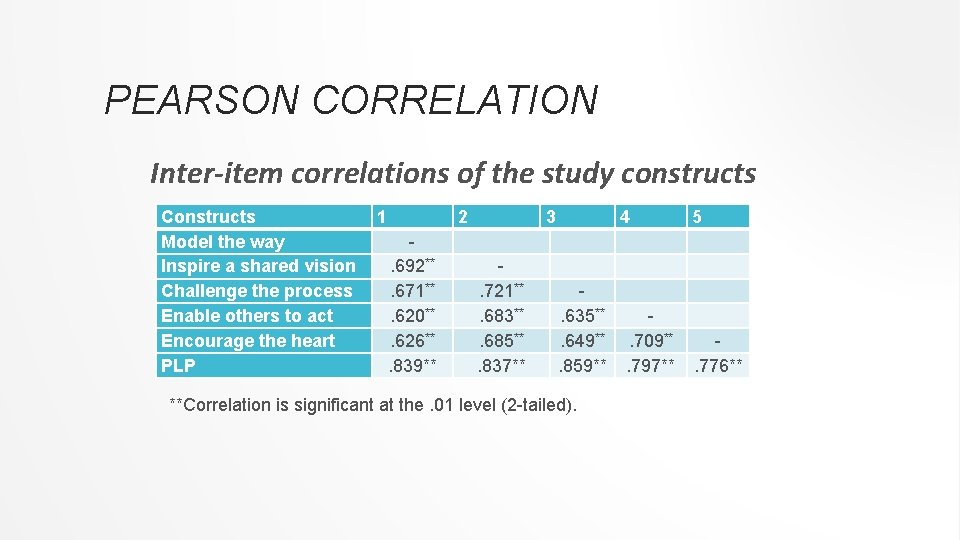
PEARSON CORRELATION Inter-item correlations of the study constructs Constructs Model the way Inspire a shared vision Challenge the process Enable others to act Encourage the heart PLP 1 2. 692**. 671**. 620**. 626**. 839** 3 . 721**. 683**. 685**. 837** 4 . 635**. 649**. 859** **Correlation is significant at the. 01 level (2 -tailed). . 709**. 797** 5 . 776**
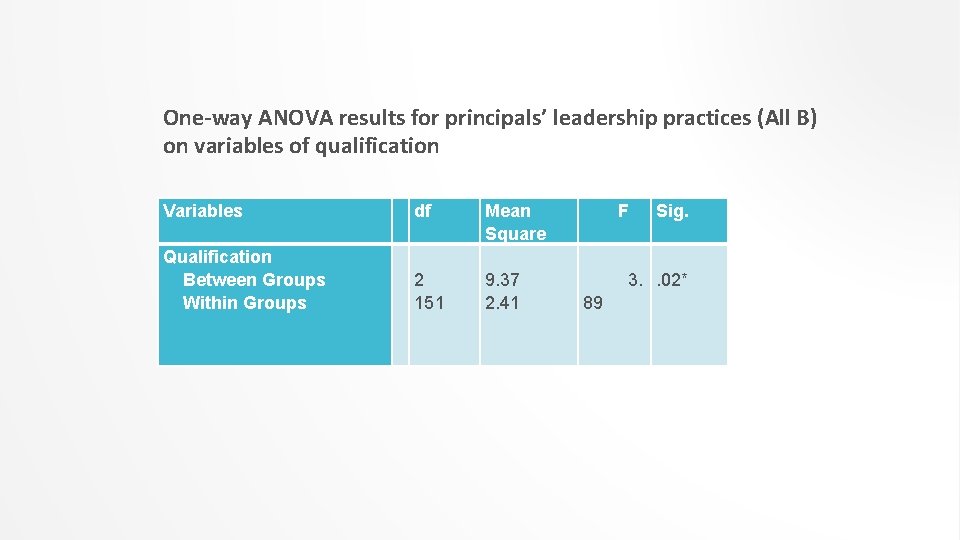
One-way ANOVA results for principals’ leadership practices (All B) on variables of qualification Variables df Qualification Between Groups Within Groups 2 151 Mean Square 9. 37 2. 41 F Sig. 3. . 02* 89
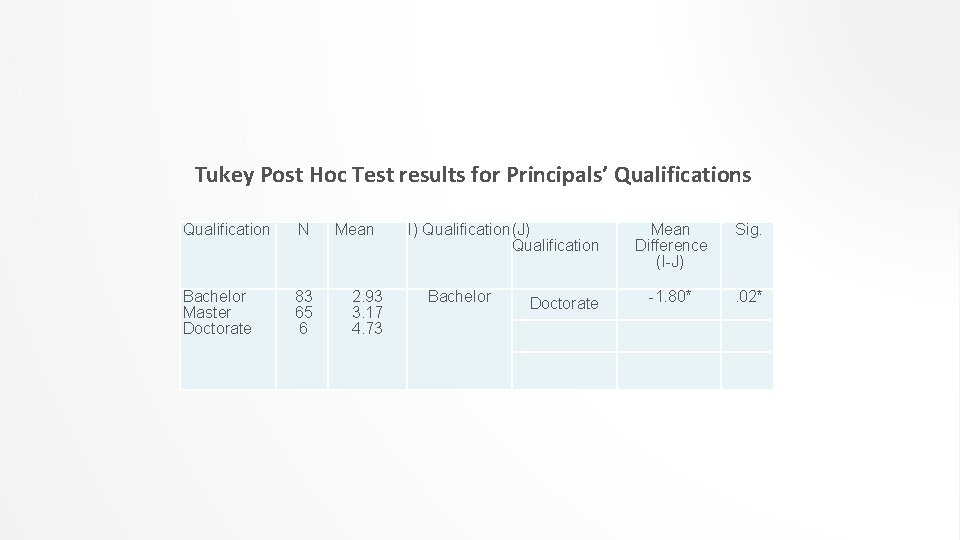
Tukey Post Hoc Test results for Principals’ Qualifications Qualification N Bachelor Master Doctorate 83 65 6 Mean 2. 93 3. 17 4. 73 I) Qualification(J) Qualification Bachelor Mean Difference (I-J) Sig. Doctorate -1. 80* . 02*
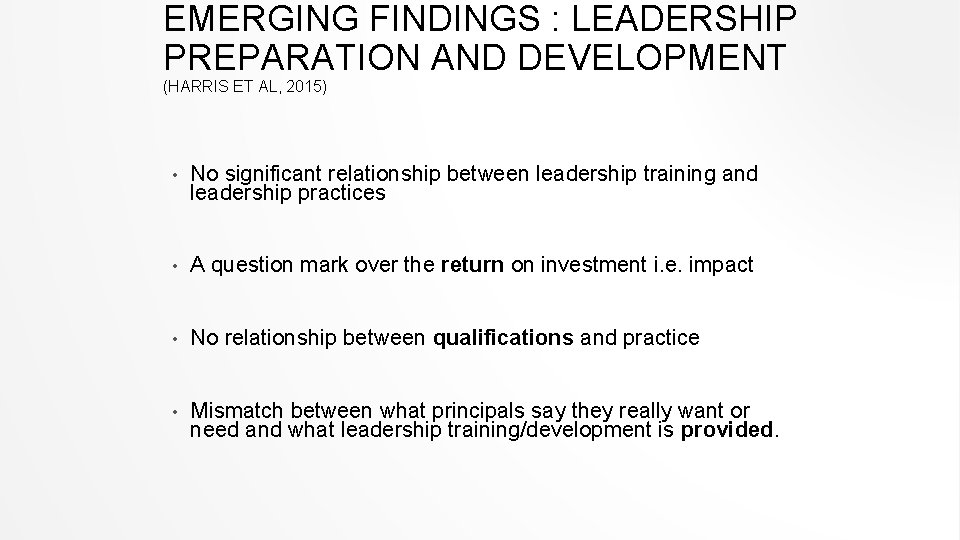
EMERGING FINDINGS : LEADERSHIP PREPARATION AND DEVELOPMENT (HARRIS ET AL, 2015) • No significant relationship between leadership training and leadership practices • A question mark over the return on investment i. e. impact • No relationship between qualifications and practice • Mismatch between what principals say they really want or need and what leadership training/development is provided.
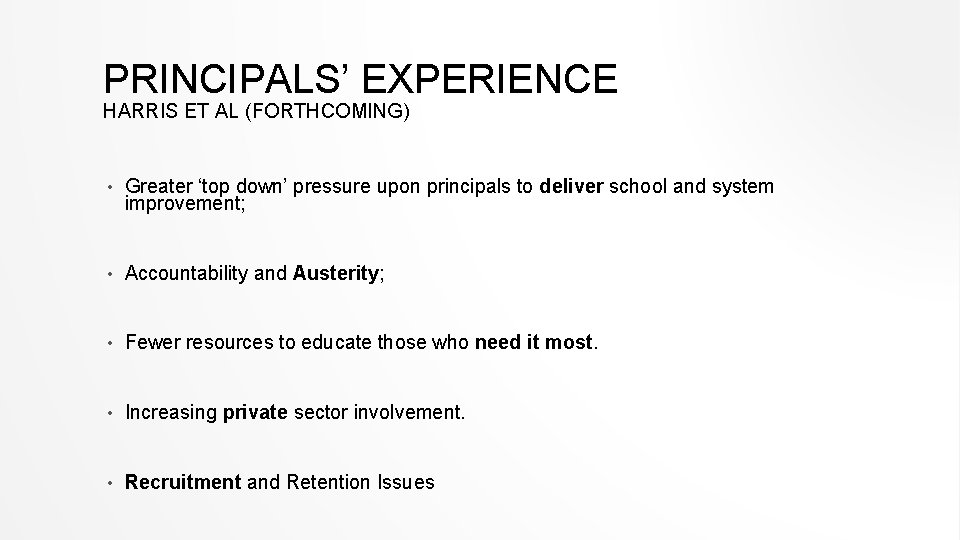
PRINCIPALS’ EXPERIENCE HARRIS ET AL (FORTHCOMING) • Greater ‘top down’ pressure upon principals to deliver school and system improvement; • Accountability and Austerity; • Fewer resources to educate those who need it most. • Increasing private sector involvement. • Recruitment and Retention Issues
7 SYSTEMLEADERSHIP@GMAIL. CO M Thank you