
7 Solid Waste Management Introduction Waste management is
- Slides: 15
7 - Solid Waste Management
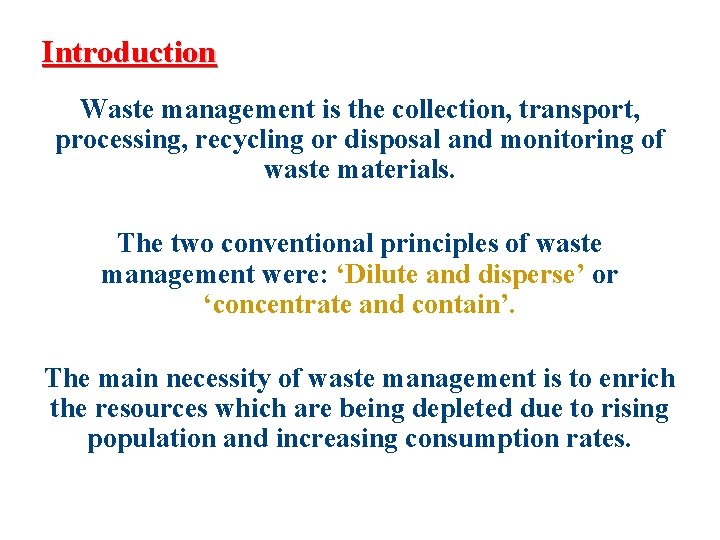
Introduction Waste management is the collection, transport, processing, recycling or disposal and monitoring of waste materials. The two conventional principles of waste management were: ‘Dilute and disperse’ or ‘concentrate and contain’. The main necessity of waste management is to enrich the resources which are being depleted due to rising population and increasing consumption rates.
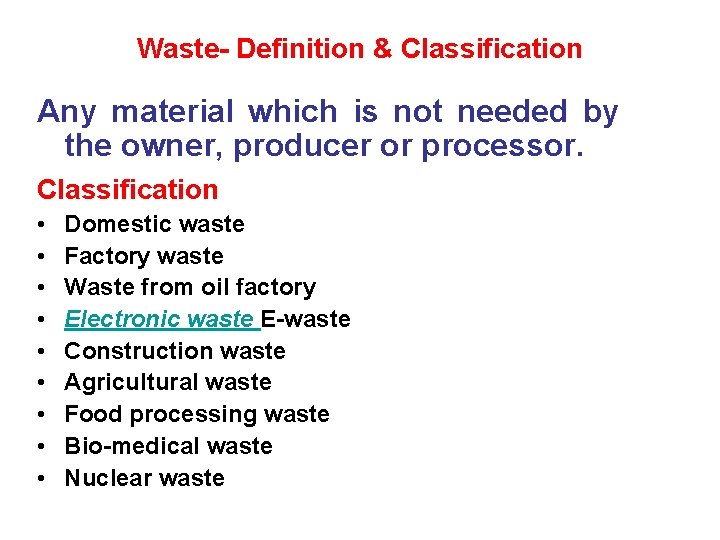
Waste- Definition & Classification Any material which is not needed by the owner, producer or processor. Classification • • • Domestic waste Factory waste Waste from oil factory Electronic waste E-waste Construction waste Agricultural waste Food processing waste Bio-medical waste Nuclear waste
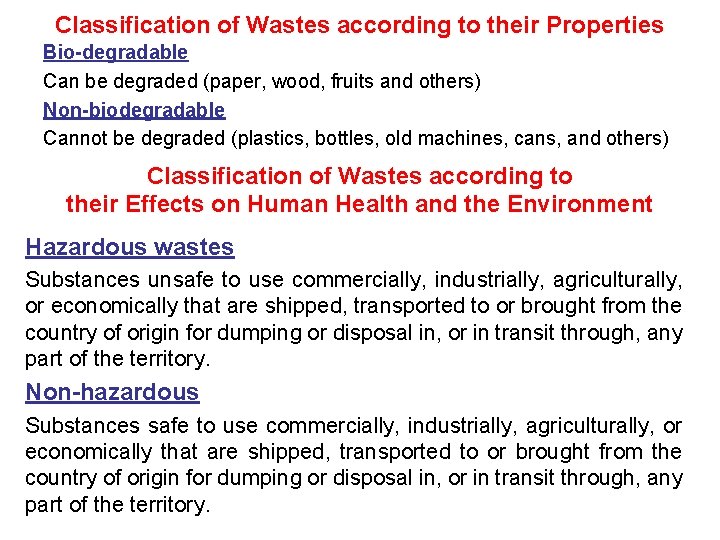
Classification of Wastes according to their Properties Bio-degradable Can be degraded (paper, wood, fruits and others) Non-biodegradable Cannot be degraded (plastics, bottles, old machines, cans, and others) Classification of Wastes according to their Effects on Human Health and the Environment Hazardous wastes Substances unsafe to use commercially, industrially, agriculturally, or economically that are shipped, transported to or brought from the country of origin for dumping or disposal in, or in transit through, any part of the territory. Non-hazardous Substances safe to use commercially, industrially, agriculturally, or economically that are shipped, transported to or brought from the country of origin for dumping or disposal in, or in transit through, any part of the territory.
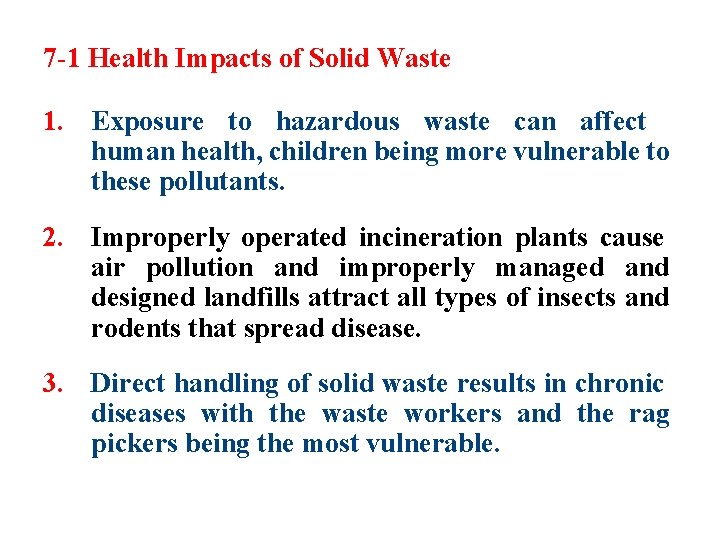
7 -1 Health Impacts of Solid Waste 1. Exposure to hazardous waste can affect human health, children being more vulnerable to these pollutants. 2. Improperly operated incineration plants cause air pollution and improperly managed and designed landfills attract all types of insects and rodents that spread disease. 3. Direct handling of solid waste results in chronic diseases with the waste workers and the rag pickers being the most vulnerable.
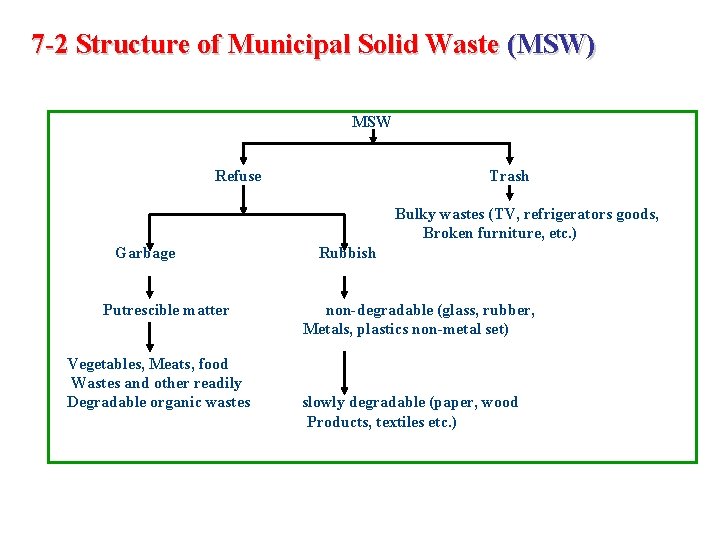
7 -2 Structure of Municipal Solid Waste (MSW) MSW Refuse Trash Bulky wastes (TV, refrigerators goods, Broken furniture, etc. ) Garbage Putrescible matter Vegetables, Meats, food Wastes and other readily Degradable organic wastes Rubbish non-degradable (glass, rubber, Metals, plastics non-metal set) slowly degradable (paper, wood Products, textiles etc. )
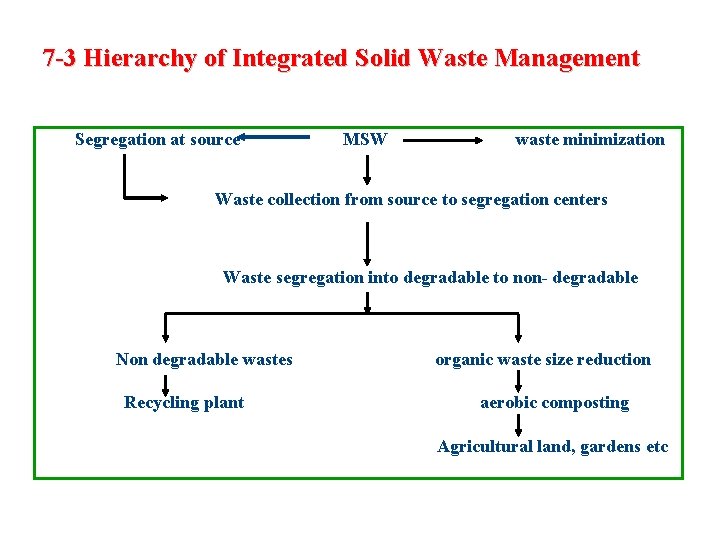
7 -3 Hierarchy of Integrated Solid Waste Management Segregation at source MSW waste minimization Waste collection from source to segregation centers Waste segregation into degradable to non- degradable Non degradable wastes Recycling plant organic waste size reduction aerobic composting Agricultural land, gardens etc
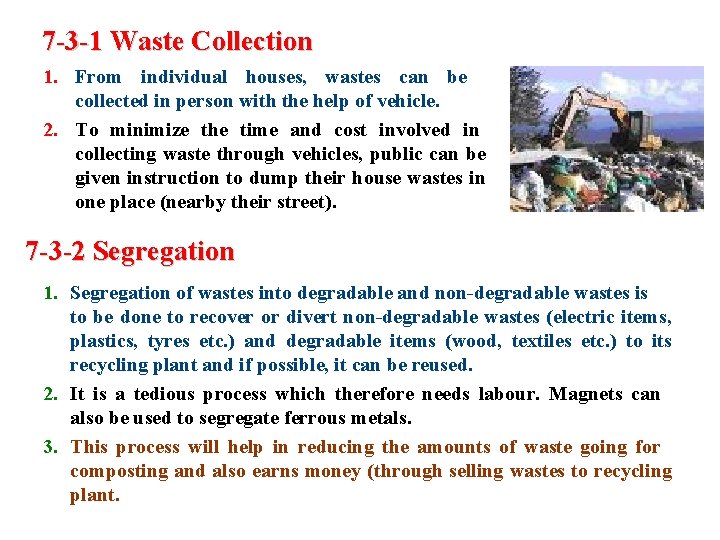
7 -3 -1 Waste Collection 1. From individual houses, wastes can be collected in person with the help of vehicle. 2. To minimize the time and cost involved in collecting waste through vehicles, public can be given instruction to dump their house wastes in one place (nearby their street). 7 -3 -2 Segregation 1. Segregation of wastes into degradable and non-degradable wastes is to be done to recover or divert non-degradable wastes (electric items, plastics, tyres etc. ) and degradable items (wood, textiles etc. ) to its recycling plant and if possible, it can be reused. 2. It is a tedious process which therefore needs labour. Magnets can also be used to segregate ferrous metals. 3. This process will help in reducing the amounts of waste going for composting and also earns money (through selling wastes to recycling plant.
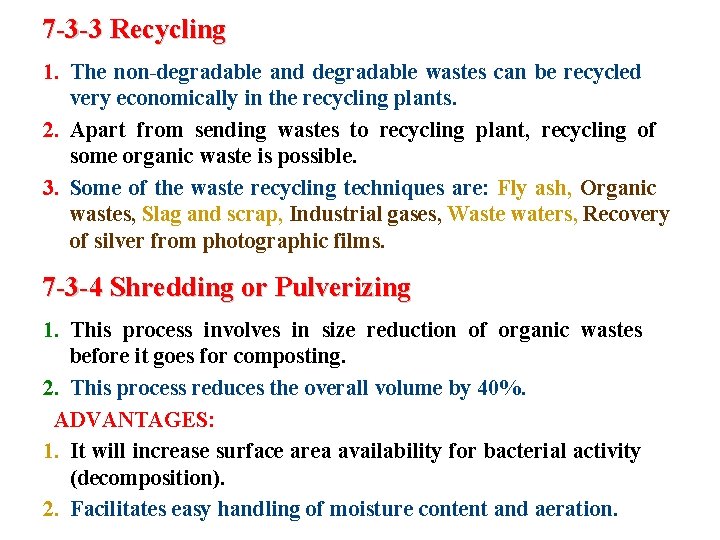
7 -3 -3 Recycling 1. The non-degradable and degradable wastes can be recycled very economically in the recycling plants. 2. Apart from sending wastes to recycling plant, recycling of some organic waste is possible. 3. Some of the waste recycling techniques are: Fly ash, Organic wastes, Slag and scrap, Industrial gases, Waste waters, Recovery of silver from photographic films. 7 -3 -4 Shredding or Pulverizing 1. This process involves in size reduction of organic wastes before it goes for composting. 2. This process reduces the overall volume by 40%. ADVANTAGES: 1. It will increase surface area availability for bacterial activity (decomposition). 2. Facilitates easy handling of moisture content and aeration.
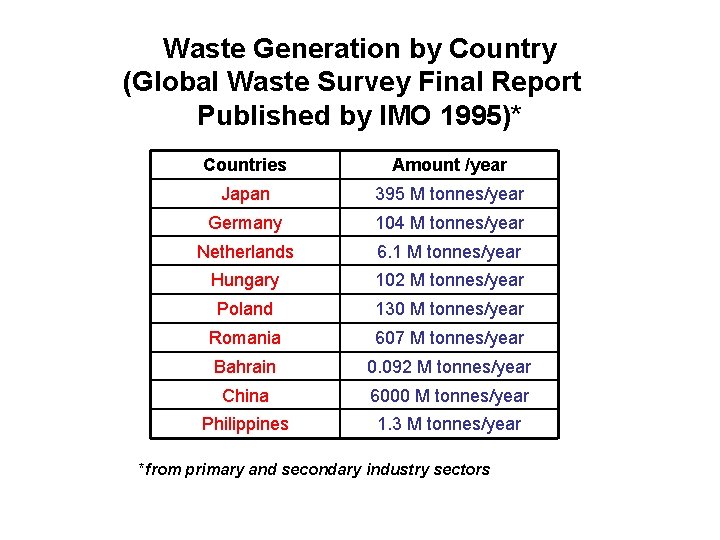
Waste Generation by Country (Global Waste Survey Final Report Published by IMO 1995)* Countries Amount /year Japan 395 M tonnes/year Germany 104 M tonnes/year Netherlands 6. 1 M tonnes/year Hungary 102 M tonnes/year Poland 130 M tonnes/year Romania 607 M tonnes/year Bahrain 0. 092 M tonnes/year China 6000 M tonnes/year Philippines 1. 3 M tonnes/year *from primary and secondary industry sectors
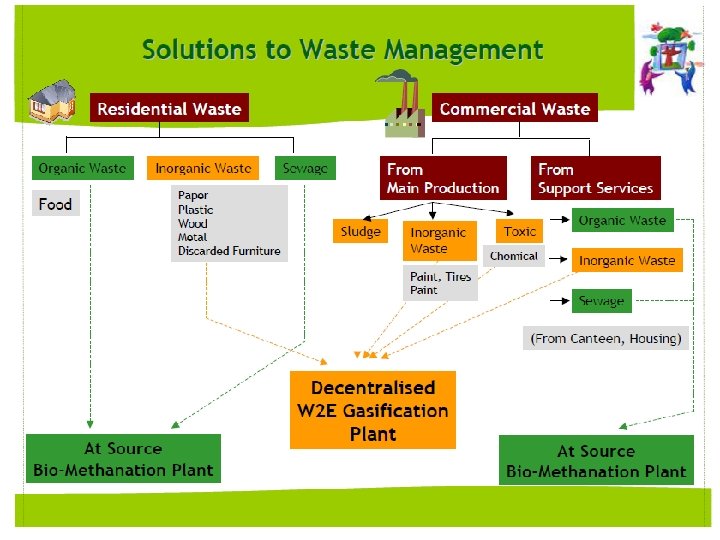
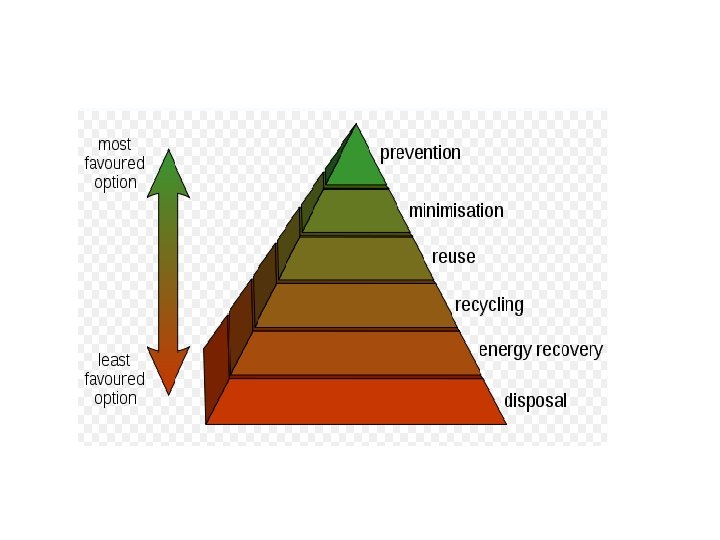
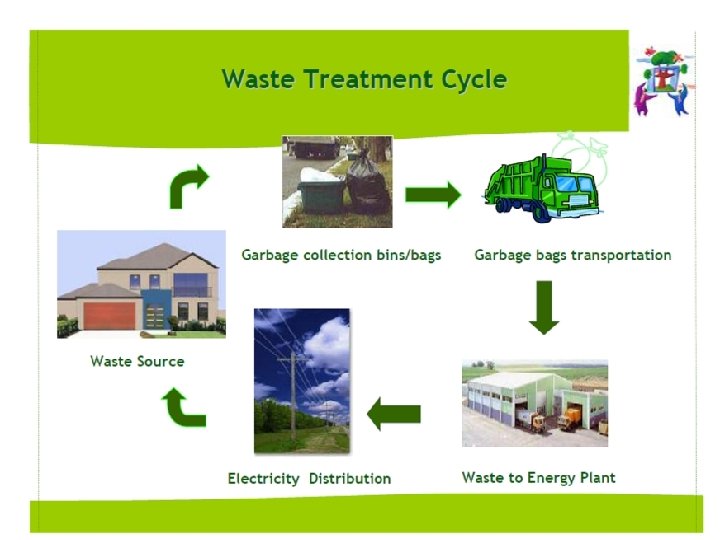
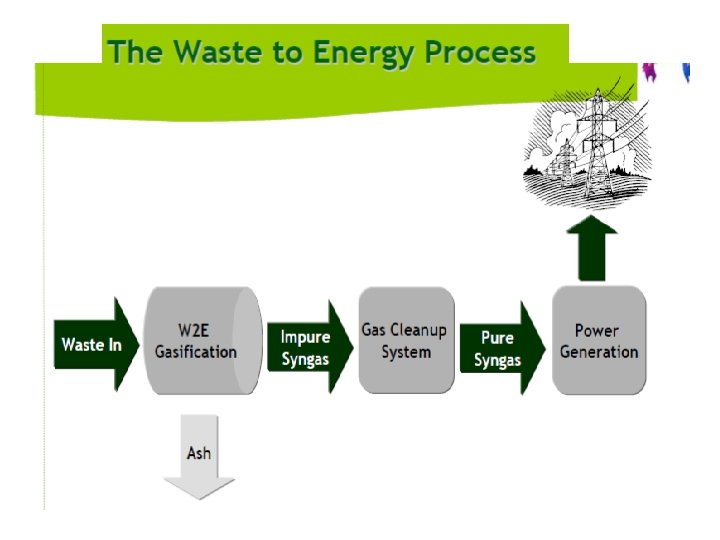
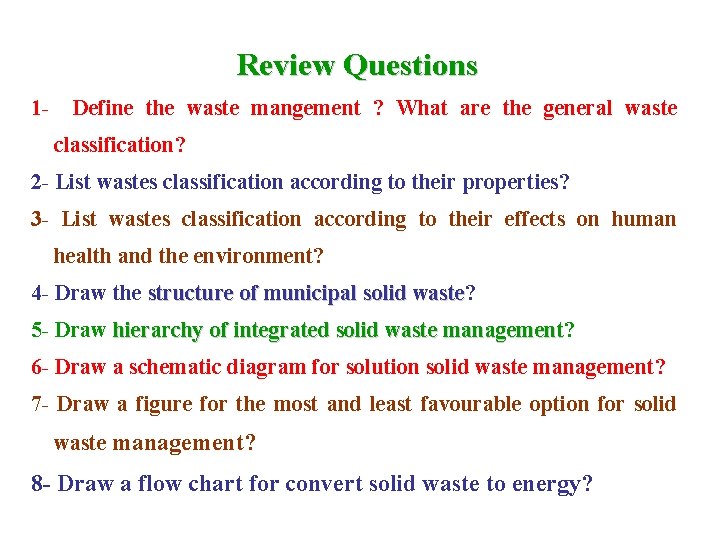
Review Questions 1 - Define the waste mangement ? What are the general waste classification? 2 - List wastes classification according to their properties? 3 - List wastes classification according to their effects on human health and the environment? 4 - Draw the structure of municipal solid waste? waste 5 - Draw hierarchy of integrated solid waste management? management 6 - Draw a schematic diagram for solution solid waste management? 7 - Draw a figure for the most and least favourable option for solid waste management? 8 - Draw a flow chart for convert solid waste to energy?