
7 Sclera 2 Aqueous Humour 1 Cornea 8





- Slides: 27
7. Sclera 2. Aqueous Humour 1. Cornea 8. Retina 3. Pupil 4. Lens 9. Blind Spot 5. Iris 6. Vitreous Humour 10. Optic Nerve
Vision Problems: Shape of Eyeball • Many vision problems are directly linked to the shape of the eyeball • With age: – the shape of the eyeball can change – the shape of the cornea can change – the lens becomes less flexible • All of the factors can lead to human vision problems
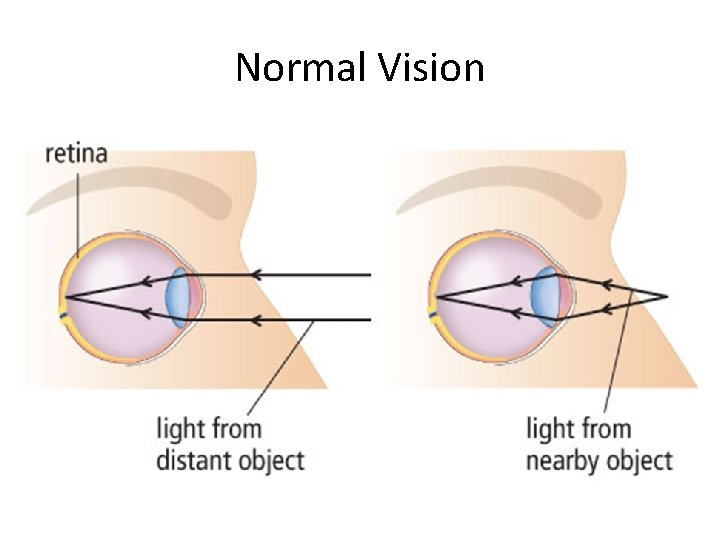
Human Vision Problems • Normal Vision: – the cornea and the lens causes the rays to converge at the retina – The shape of the eyeball keeps the retina the correct distance from the lens – A clear image is formed
Normal Vision
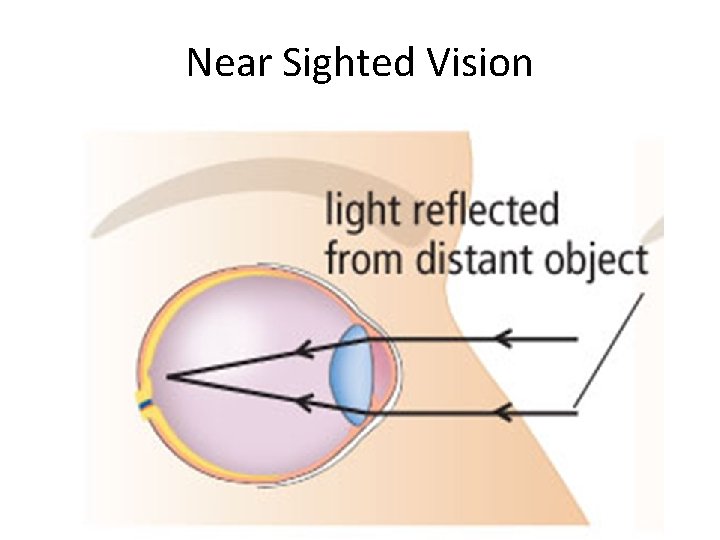
Near Sighted Vision • Near-sighted Vision: – can see nearby objects clearly but distant objects are blurry – The cornea and the lens in the eye causes the light rays to converge in front of the retina – The shape of the eyeball causes the distance from the back of the lens to the retina to be longer than usual – The rays converge in front of the retina
Near Sighted Vision
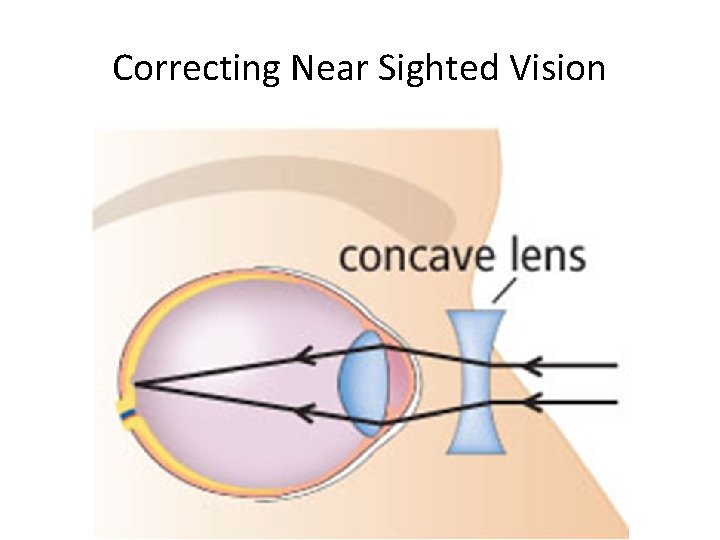
Correcting Near Sighted Vision
Correcting Near Sighted Vision What type of lens is in the diagram on the previous slide? Concave lens What does this lens do to parallel rays of light? Diverge light rays Why is it important to use this type of lens for near sighted vision? • Light rays must be spread out before they enter the eye so that they converge on the retina • Glasses with concave lens correct near-sighted vision • • •
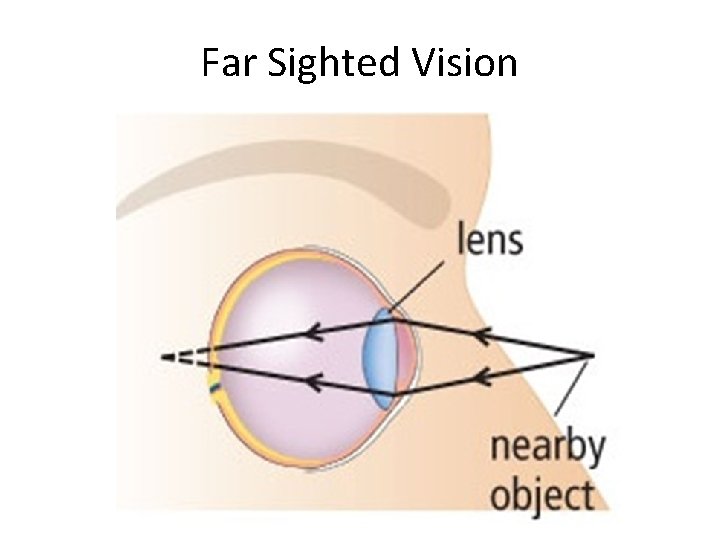
Far Sighted Vision • Far-sighted Vision: – can see distant objects clearly but nearby objects are blurry – The cornea and lens of the eye causes the light rays to converge behind the retina – The shape of the eyeball causes the distance from the back of the lens to the retina to be shorter than usual – The rays converge behind the retina
Far Sighted Vision
Correcting Far Sighted Vision
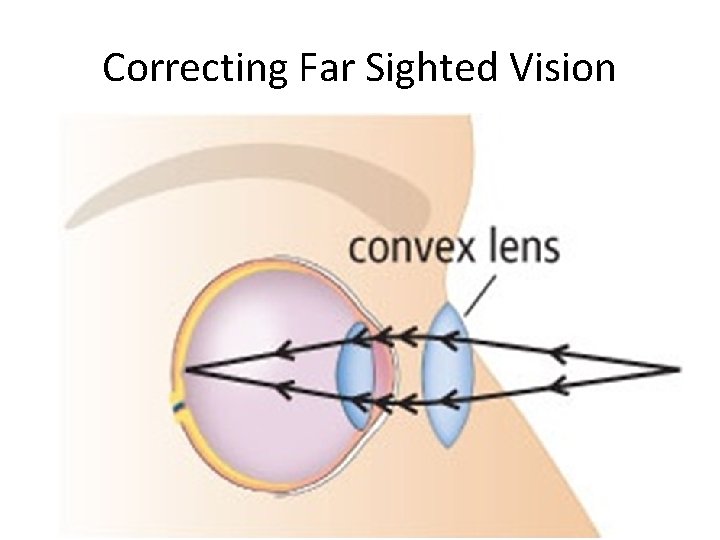
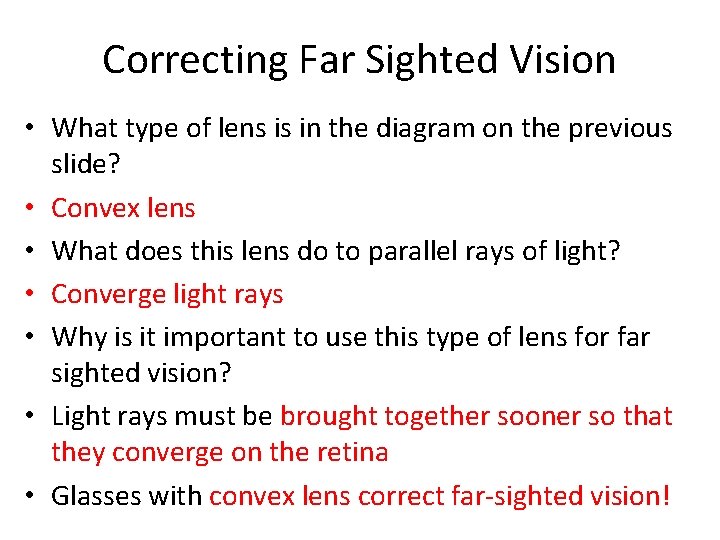
Correcting Far Sighted Vision • What type of lens is in the diagram on the previous slide? • Convex lens • What does this lens do to parallel rays of light? • Converge light rays • Why is it important to use this type of lens for far sighted vision? • Light rays must be brought together sooner so that they converge on the retina • Glasses with convex lens correct far-sighted vision!
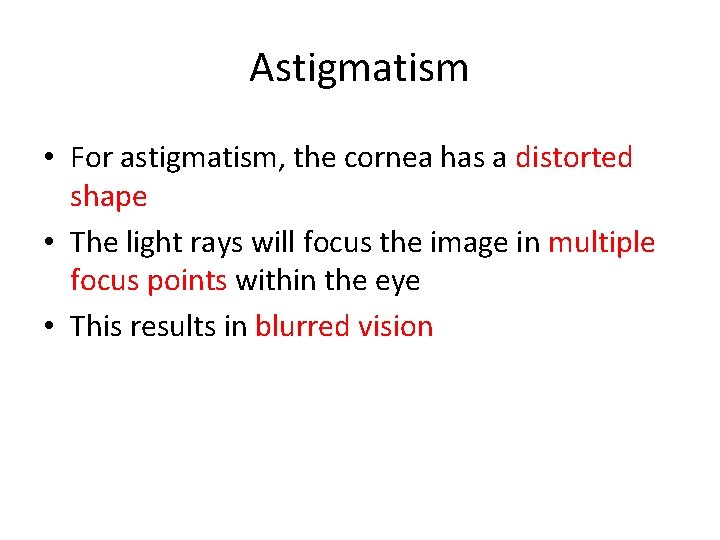
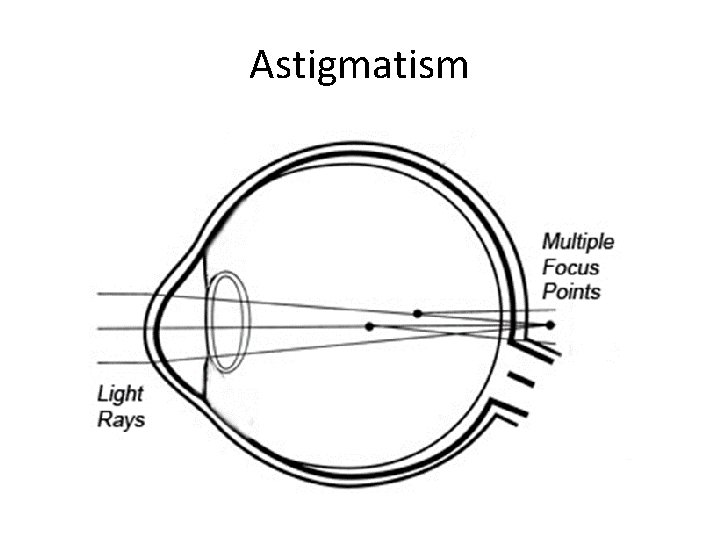
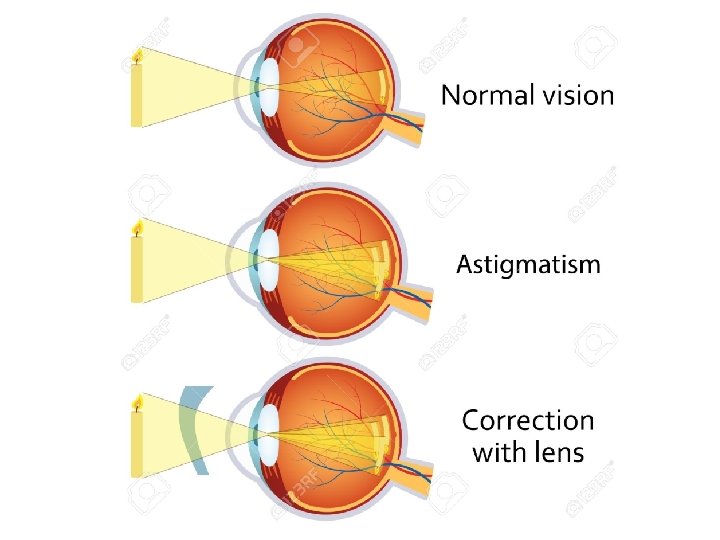
Astigmatism • For astigmatism, the cornea has a distorted shape • The light rays will focus the image in multiple focus points within the eye • This results in blurred vision
Astigmatism
Correcting Astigmatism • Astigmatism can be corrected using eyeglasses or contact lens • The lens is a complex shaped lens made up of a mixture of convex and concave lenses • Laser surgery can be used to reshape the cornea to reduce the distortion of the cornea
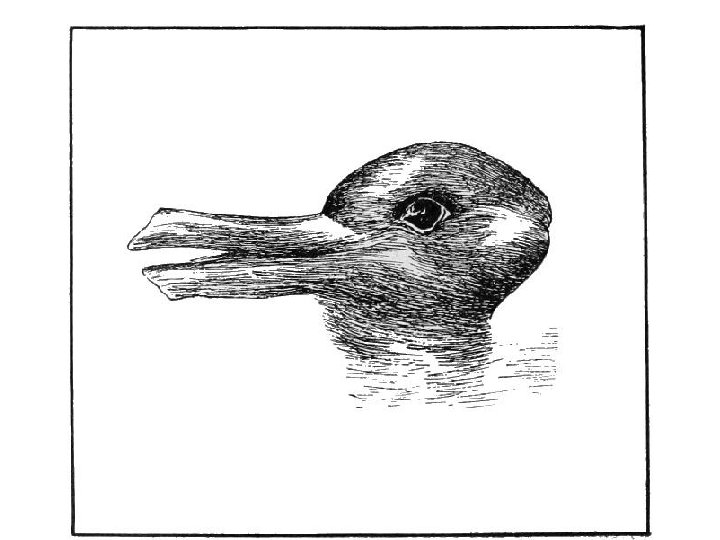
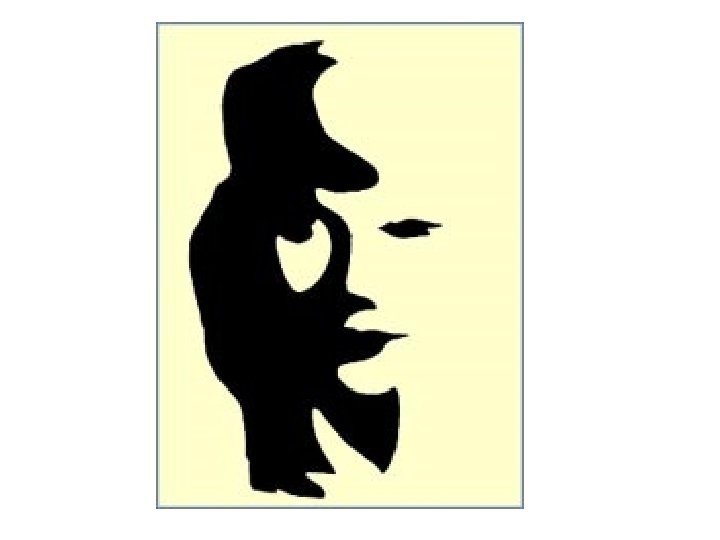
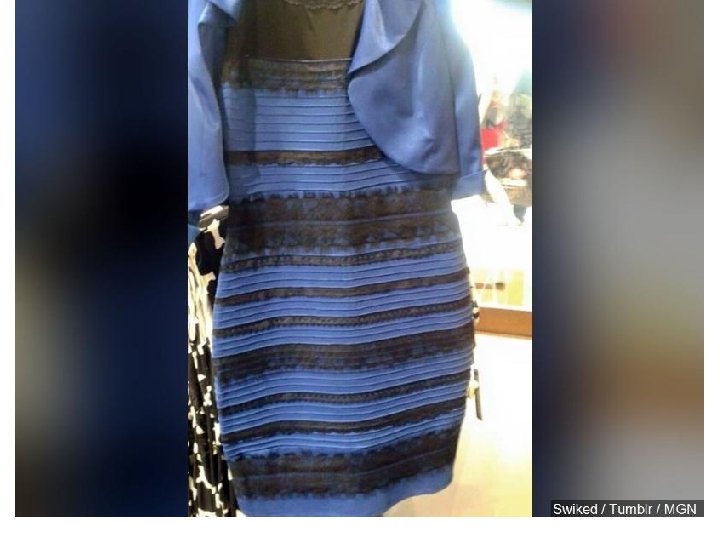
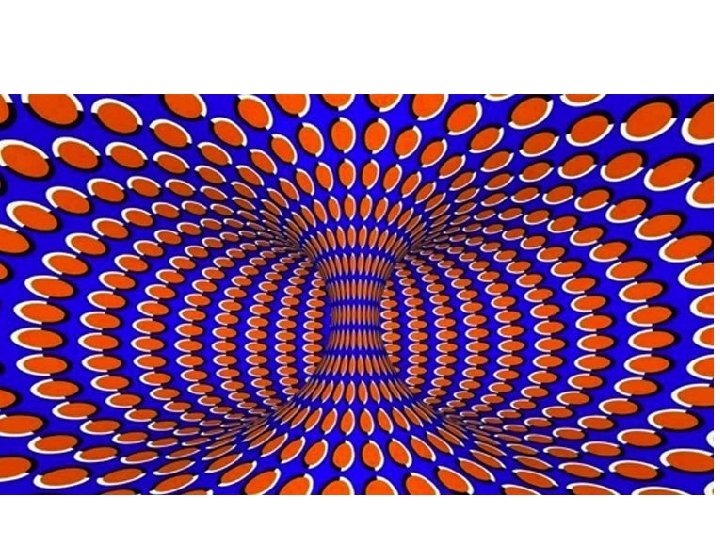
And just for fun… • Some optical illusions!