
7 Managing Quality and Time to Create Value







- Slides: 47
7 Managing Quality and Time to Create Value Mc. Graw-Hill/Irwin Copyright © 2008 by The Mc. Graw-Hill Companies, Inc. All rights reserved.
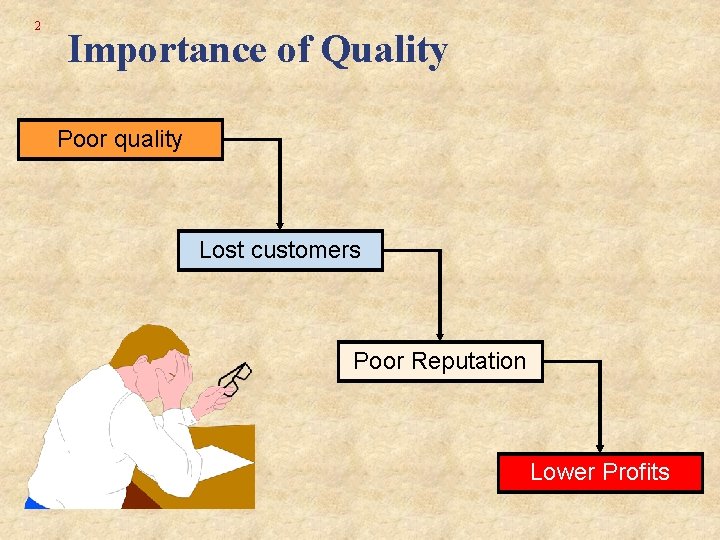
2 Importance of Quality Poor quality Lost customers Poor Reputation Lower Profits
3 Learning Objective 1
4 Costs of Improving Quality Which is more important?
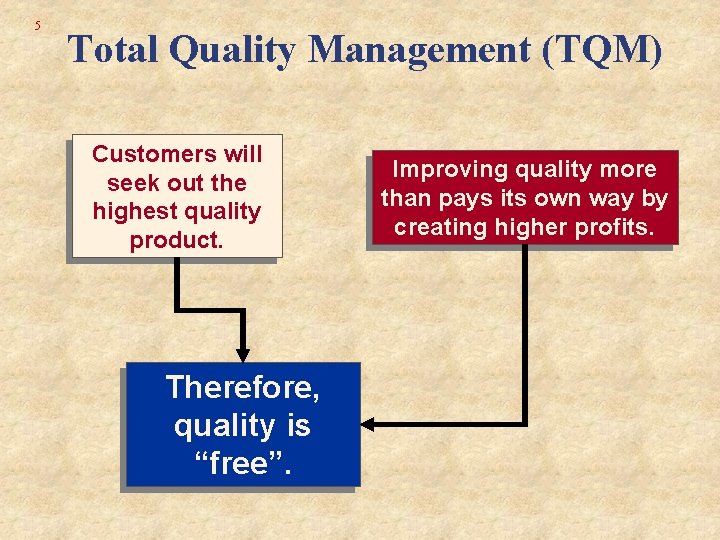
5 Total Quality Management (TQM) Customers will seek out the highest quality product. Therefore, quality is “free”. Improving quality more than pays its own way by creating higher profits.
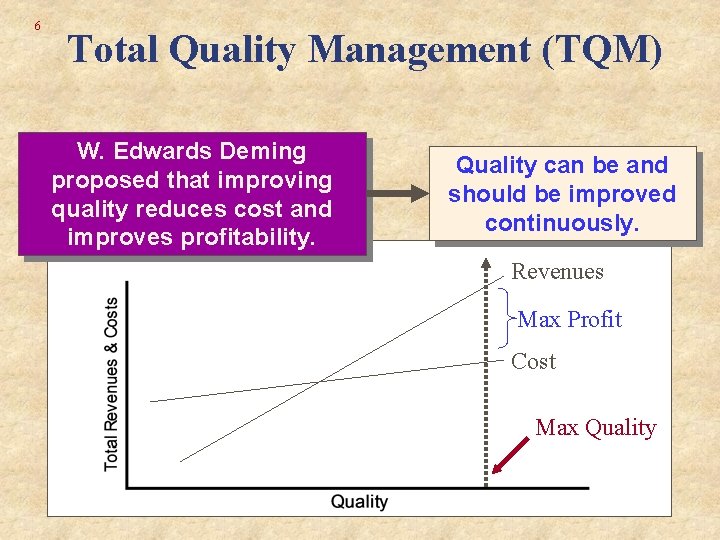
6 Total Quality Management (TQM) W. Edwards Deming proposed that improving quality reduces cost and improves profitability. Quality can be and should be improved continuously. Revenues Max Profit Cost Max Quality
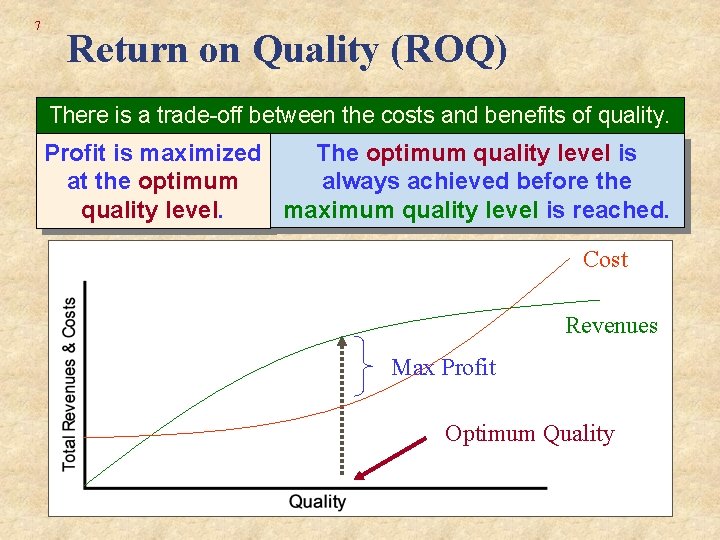
7 Return on Quality (ROQ) There is a trade-off between the costs and benefits of quality. The optimum quality level is Profit is maximized always achieved before the at the optimum maximum quality level is reached. quality level. Cost Revenues Max Profit Optimum Quality
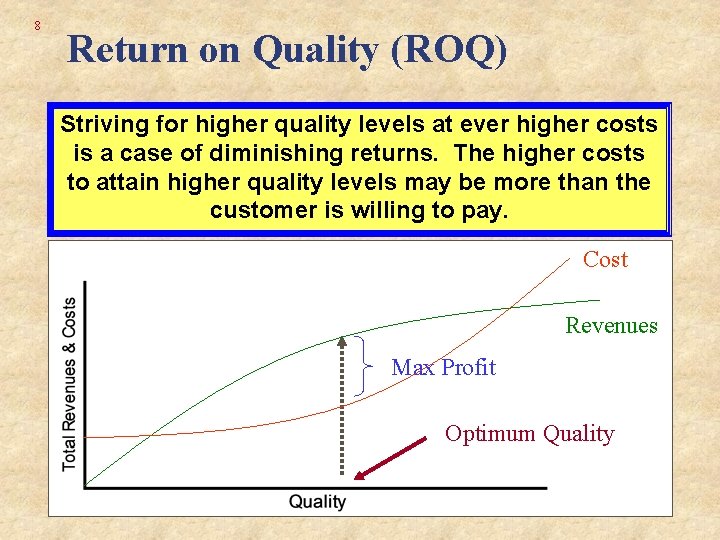
8 Return on Quality (ROQ) Striving for higher quality levels at ever higher costs is a case of diminishing returns. The higher costs to attain higher quality levels may be more than the customer is willing to pay. Cost Revenues Max Profit Optimum Quality
9 Improving Quality vis-à-vis Other Business Dimensions l l l Customers may not be willing to pay for the additional quality received. Many companies that have won awards for their commitment to quality have been unable to sustain profitability in later years. The other value-chain activities cannot be neglected.
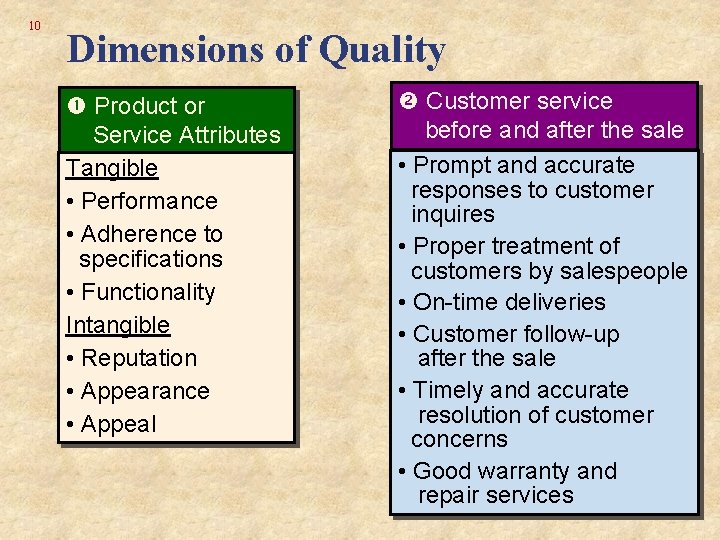
10 Dimensions of Quality Product or Service Attributes Tangible • Performance • Adherence to specifications • Functionality Intangible • Reputation • Appearance • Appeal Customer service before and after the sale • Prompt and accurate responses to customer inquires • Proper treatment of customers by salespeople • On-time deliveries • Customer follow-up after the sale • Timely and accurate resolution of customer concerns • Good warranty and repair services
11 Learning Objective 2
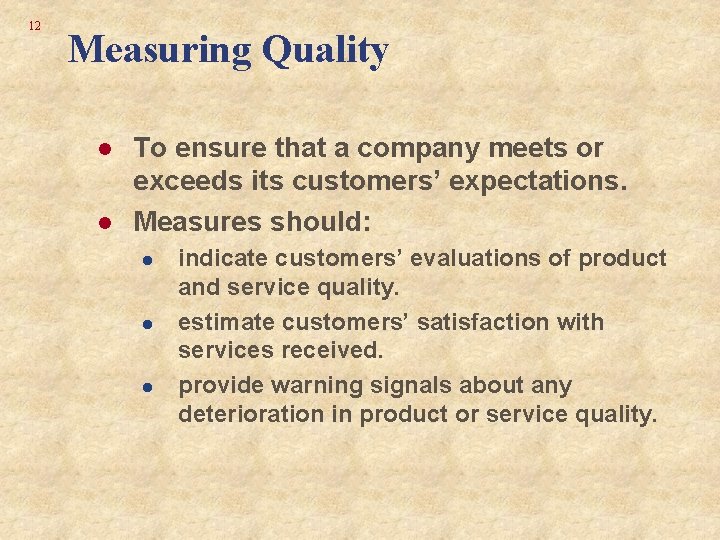
12 Measuring Quality l l To ensure that a company meets or exceeds its customers’ expectations. Measures should: l l l indicate customers’ evaluations of product and service quality. estimate customers’ satisfaction with services received. provide warning signals about any deterioration in product or service quality.
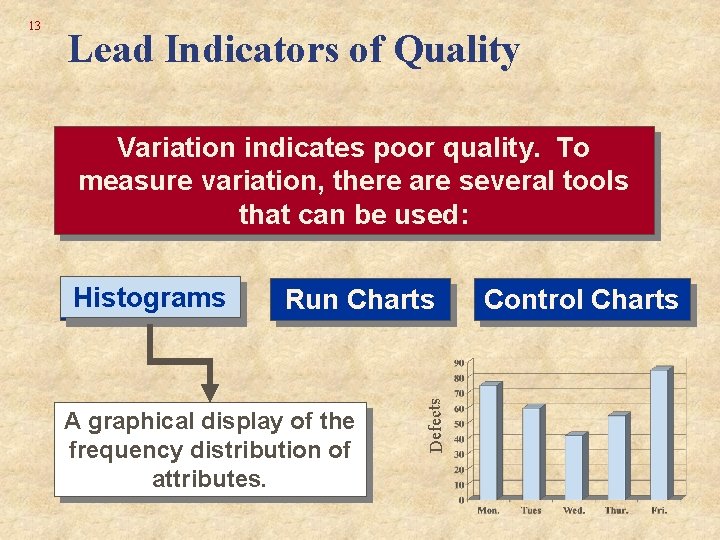
Lead Indicators of Quality Variation indicates poor quality. To measure variation, there are several tools that can be used: Histograms Run Charts A graphical display of the frequency distribution of attributes. Defects 13 Control Charts
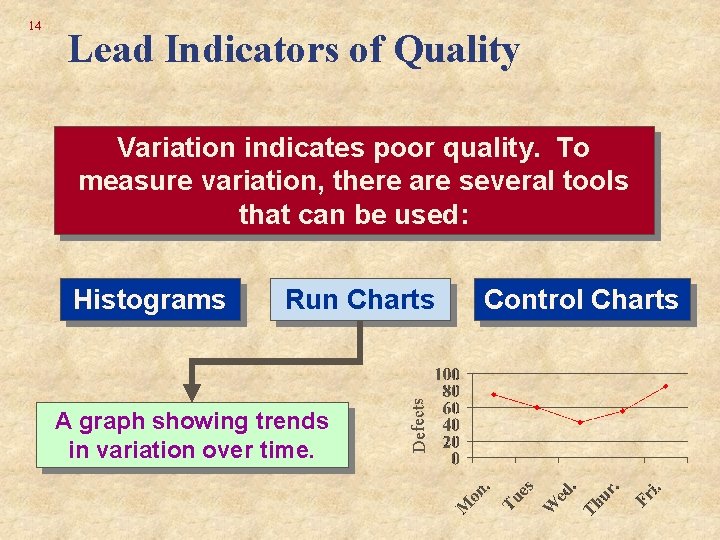
Lead Indicators of Quality Variation indicates poor quality. To measure variation, there are several tools that can be used: Histograms Run Charts A graph showing trends in variation over time. Defects 14 Control Charts
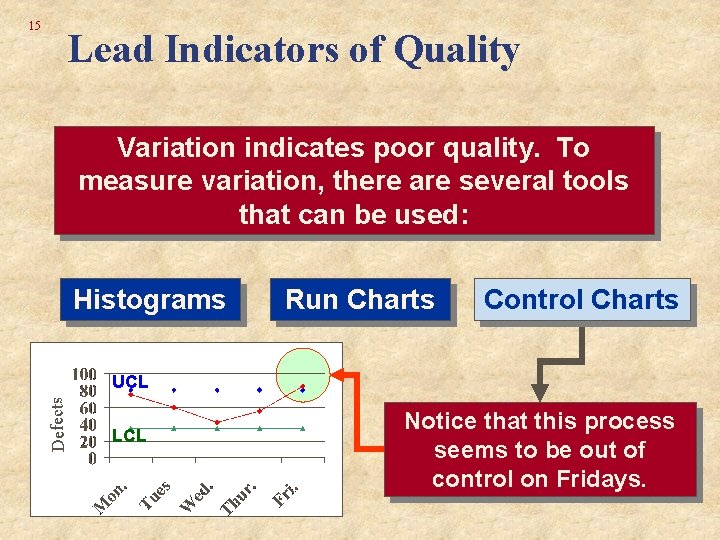
Lead Indicators of Quality Variation indicates poor quality. To measure variation, there are several tools that can be used: Histograms Run Charts Control Charts UCL Defects 15 LCL Notice A run chart that this withprocess upper andseems lower to control be outlimits. of control on Fridays.
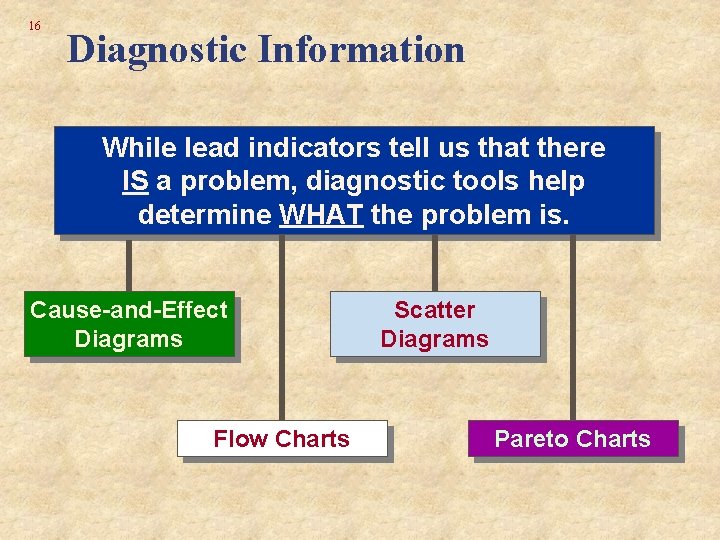
16 Diagnostic Information While lead indicators tell us that there IS a problem, diagnostic tools help determine WHAT the problem is. Cause-and-Effect Diagrams Flow Charts Scatter Diagrams Pareto Charts
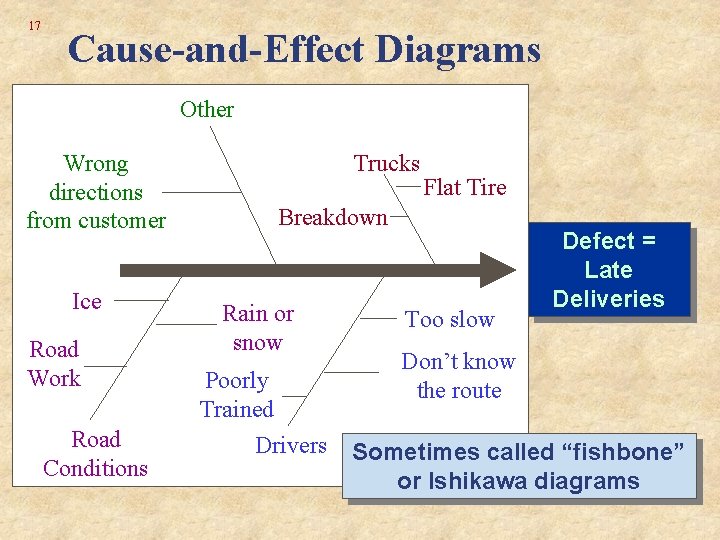
17 Cause-and-Effect Diagrams Other Wrong directions from customer Ice Road Work Road Conditions Trucks Flat Tire Breakdown Rain or snow Poorly Trained Drivers Too slow Defect = Late Deliveries Don’t know the route Sometimes called “fishbone” or Ishikawa diagrams
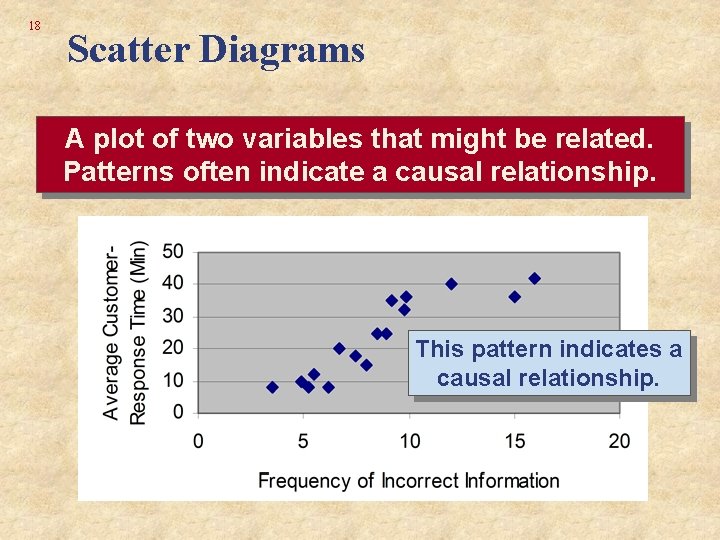
18 Scatter Diagrams A plot of two variables that might be related. Patterns often indicate a causal relationship. This pattern indicates a causal relationship.
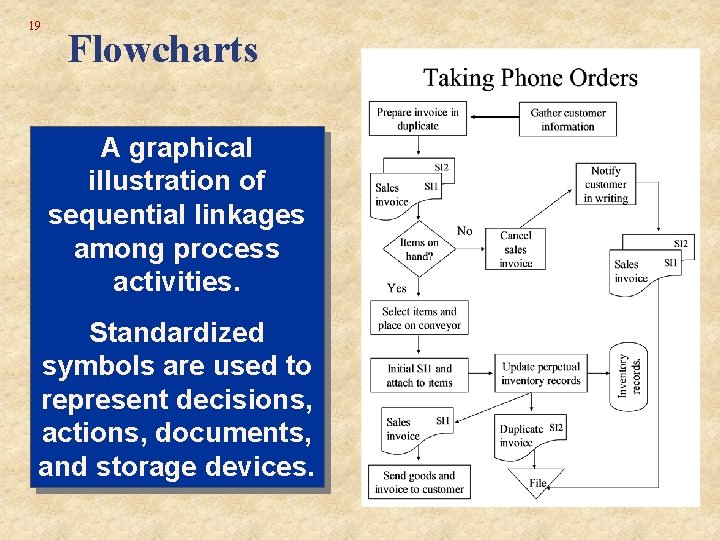
19 Flowcharts A graphical illustration of sequential linkages among process activities. Standardized symbols are used to represent decisions, actions, documents, and storage devices.
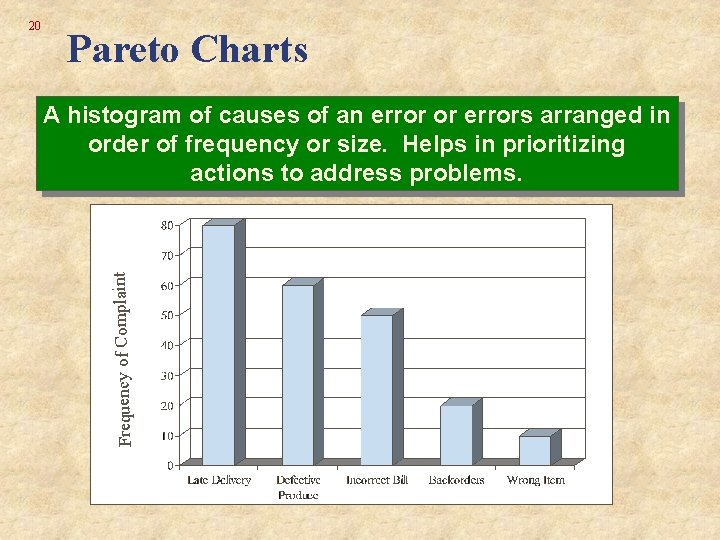
Pareto Charts A histogram of causes of an error or errors arranged in order of frequency or size. Helps in prioritizing actions to address problems. Frequency of Complaint 20
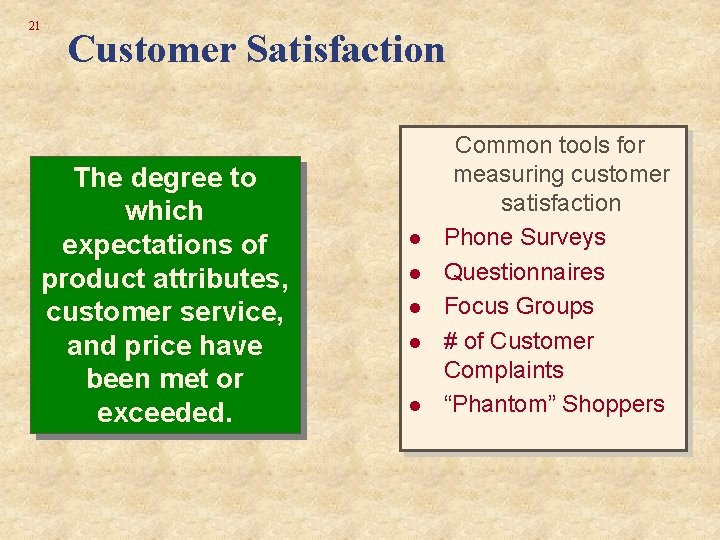
21 Customer Satisfaction The degree to which expectations of product attributes, customer service, and price have been met or exceeded. l l l Common tools for measuring customer satisfaction Phone Surveys Questionnaires Focus Groups # of Customer Complaints “Phantom” Shoppers
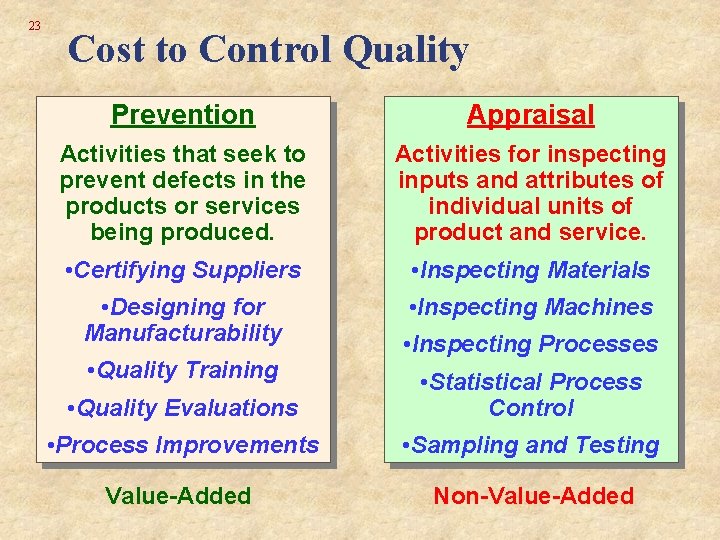
22 Cost of Quality (COQ) Out-of-pocket costs associated with quality generally fall into two categories: Costs of corrective measures taken because of a failure to control quality. Costs of activities designed to control quality.
23 Cost to Control Quality Prevention Appraisal Activities that seek to prevent defects in the products or services being produced. Activities for inspecting inputs and attributes of individual units of product and service. • Certifying Suppliers • Inspecting Materials • Designing for Manufacturability • Inspecting Machines • Quality Training • Inspecting Processes • Quality Evaluations • Statistical Process Control • Process Improvements • Sampling and Testing Value-Added Non-Value-Added
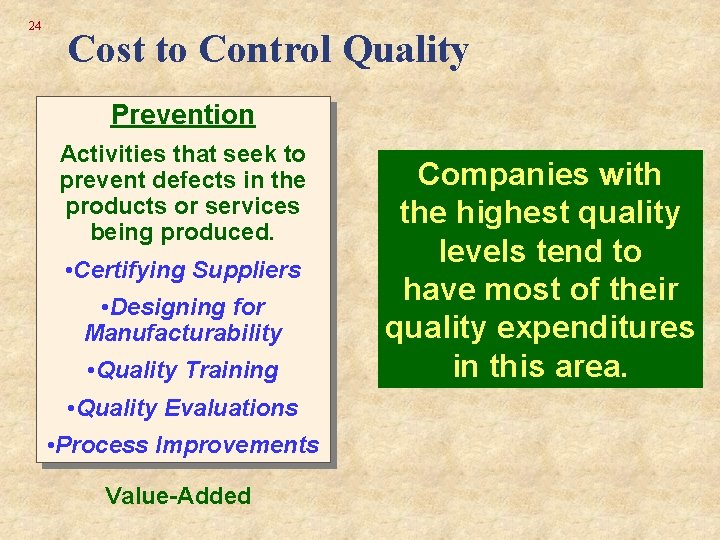
24 Cost to Control Quality Prevention Activities that seek to prevent defects in the products or services being produced. • Certifying Suppliers • Designing for Manufacturability • Quality Training • Quality Evaluations • Process Improvements Value-Added Companies with the highest quality levels tend to have most of their quality expenditures in this area.
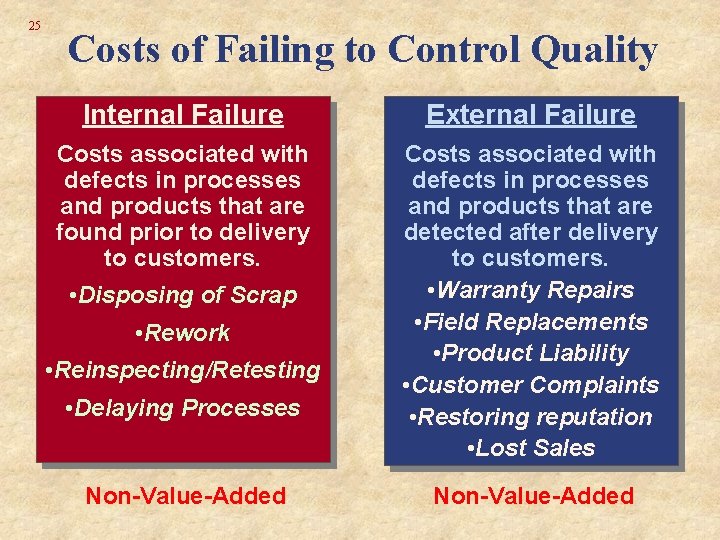
25 Costs of Failing to Control Quality Internal Failure External Failure Costs associated with defects in processes and products that are found prior to delivery to customers. Costs associated with defects in processes and products that are detected after delivery to customers. • Warranty Repairs • Field Replacements • Product Liability • Customer Complaints • Restoring reputation • Lost Sales • Disposing of Scrap • Rework • Reinspecting/Retesting • Delaying Processes Non-Value-Added
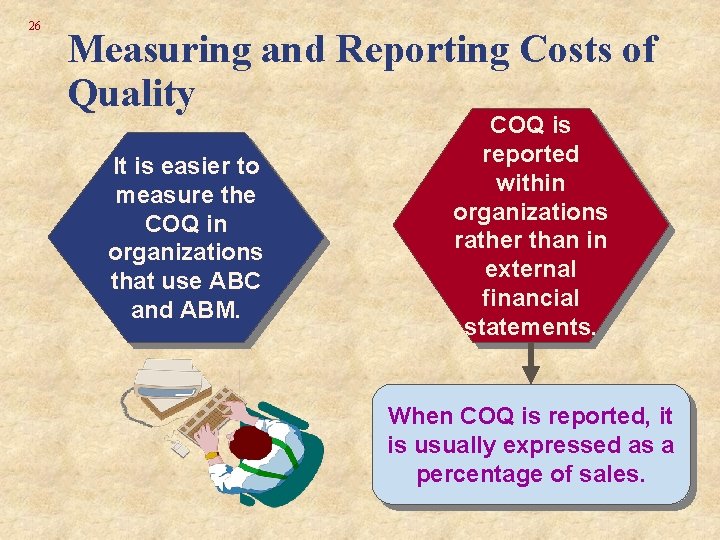
26 Measuring and Reporting Costs of Quality It is easier to measure the COQ in organizations that use ABC and ABM. COQ is reported within organizations rather than in external financial statements. When COQ is reported, it is usually expressed as a percentage of sales.
27 Quality Awards and Certificates Japan European Community
28 Learning Objective 3
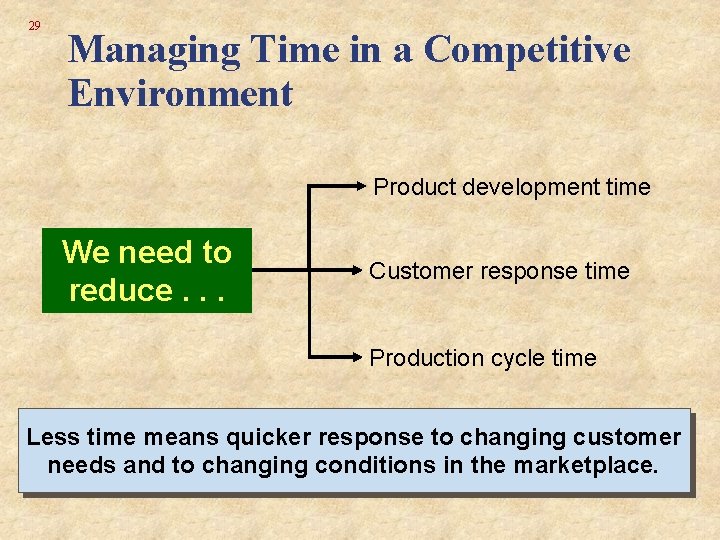
29 Managing Time in a Competitive Environment Product development time We need to reduce. . . Customer response time Production cycle time Less time means quicker response to changing customer needs and to changing conditions in the marketplace.
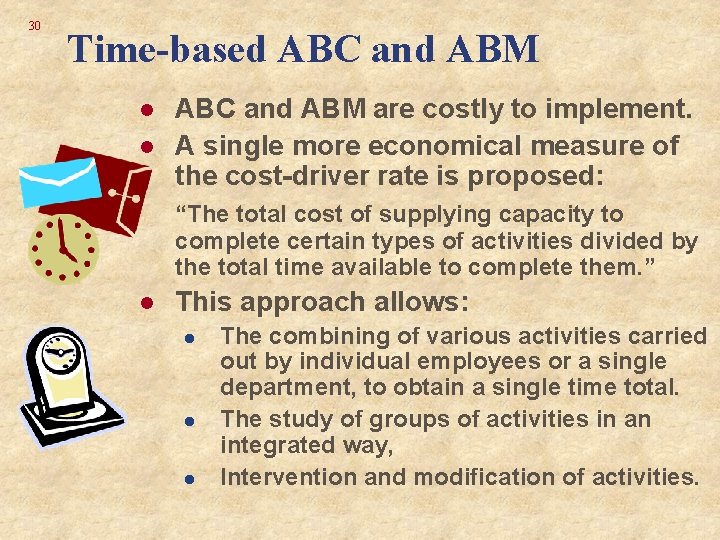
30 Time-based ABC and ABM l l ABC and ABM are costly to implement. A single more economical measure of the cost-driver rate is proposed: “The total cost of supplying capacity to complete certain types of activities divided by the total time available to complete them. ” l This approach allows: l l l The combining of various activities carried out by individual employees or a single department, to obtain a single time total. The study of groups of activities in an integrated way, Intervention and modification of activities.
31 Learning Objective 4
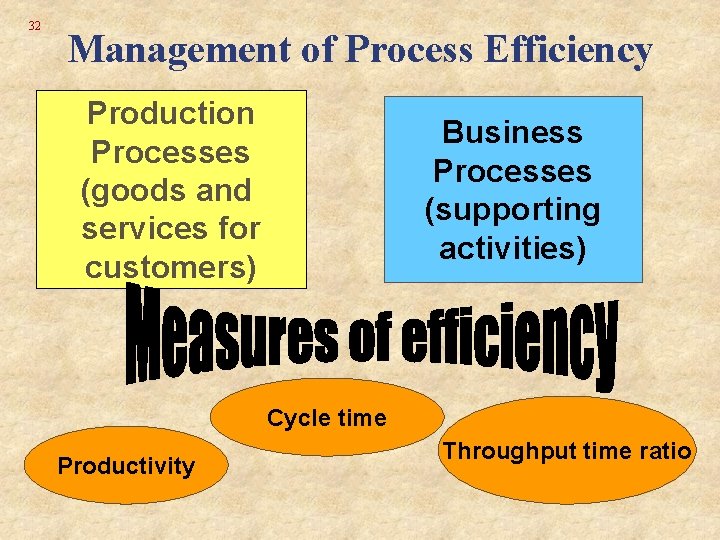
32 Management of Process Efficiency Production Processes (goods and services for customers) Business Processes (supporting activities) Cycle time Productivity Throughput time ratio
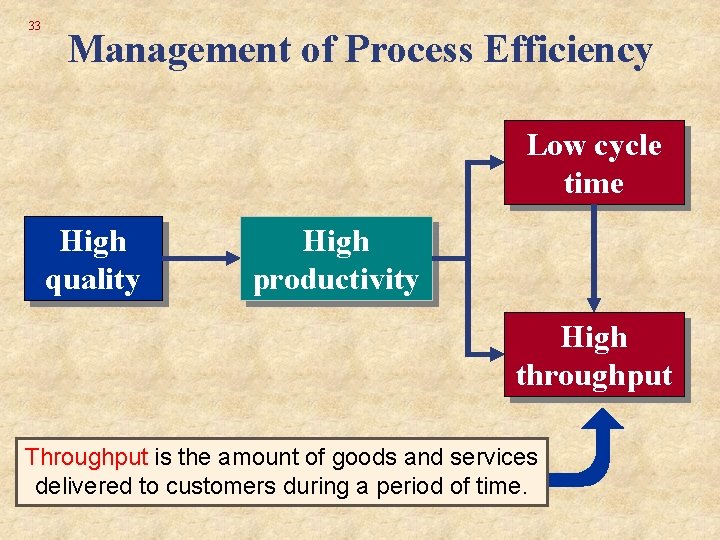
33 Management of Process Efficiency Low cycle time High quality High productivity High throughput Throughput is the amount of goods and services delivered to customers during a period of time.
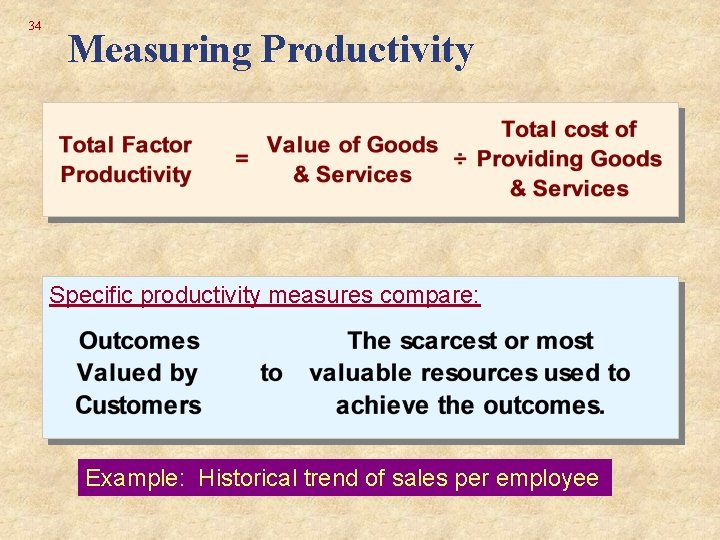
34 Measuring Productivity Specific productivity measures compare: Example: Historical trend of sales per employee
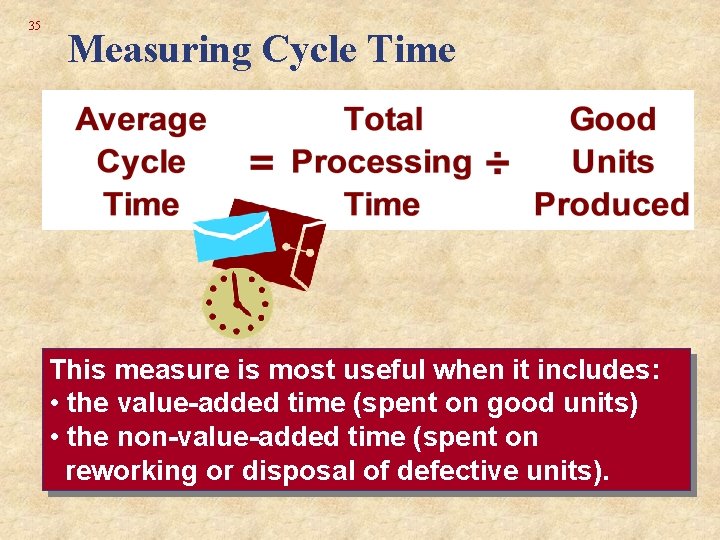
35 Measuring Cycle Time This measure is most useful when it includes: • the value-added time (spent on good units) • the non-value-added time (spent on reworking or disposal of defective units).
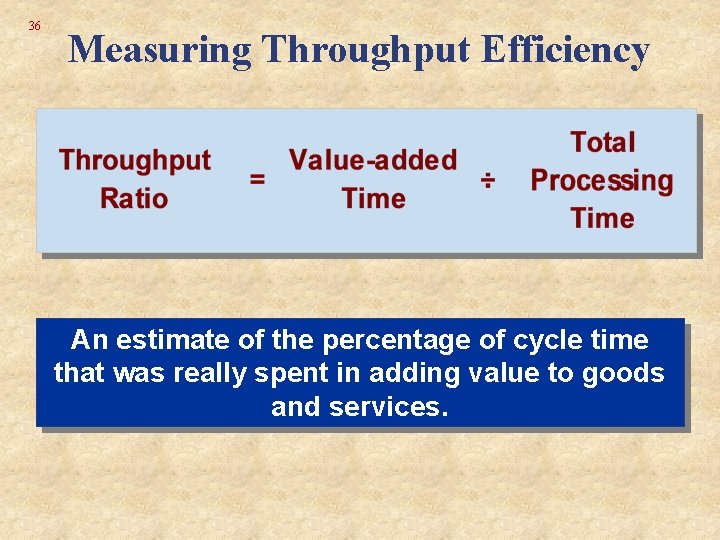
36 Measuring Throughput Efficiency An estimate of the percentage of cycle time that was really spent in adding value to goods and services.
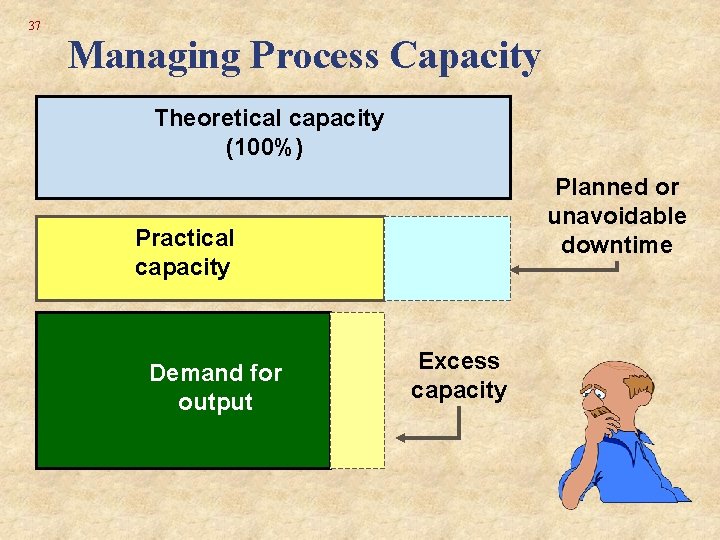
37 Managing Process Capacity Theoretical capacity (100%) Planned or unavoidable downtime Practical capacity Demand for output Excess capacity
38 Learning Objective 5
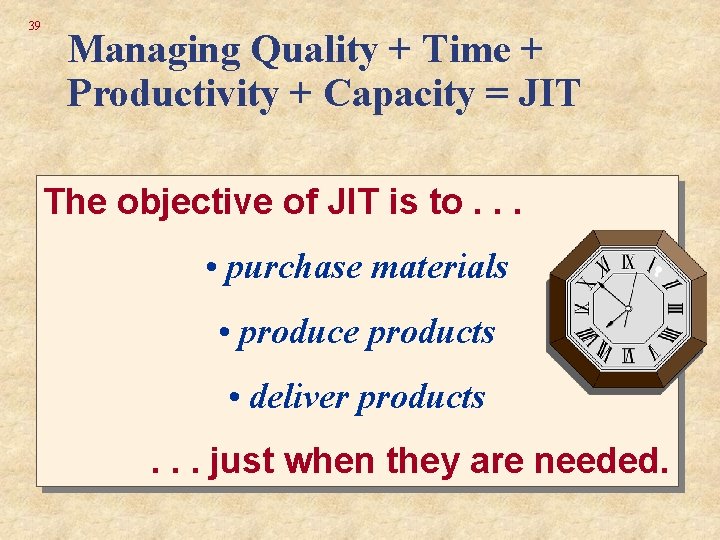
39 Managing Quality + Time + Productivity + Capacity = JIT The objective of JIT is to. . . • purchase materials • produce products • deliver products. . . just when they are needed.
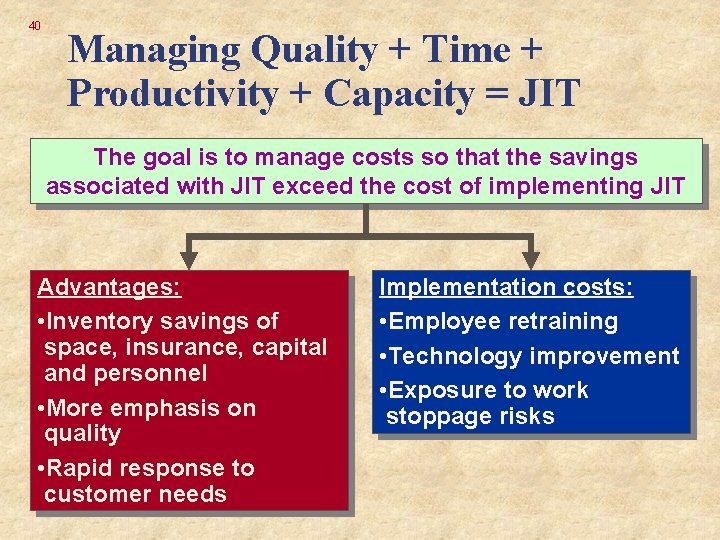
40 Managing Quality + Time + Productivity + Capacity = JIT The goal is to manage costs so that the savings associated with JIT exceed the cost of implementing JIT Advantages: • Inventory savings of space, insurance, capital and personnel • More emphasis on quality • Rapid response to customer needs Implementation costs: • Employee retraining • Technology improvement • Exposure to work stoppage risks
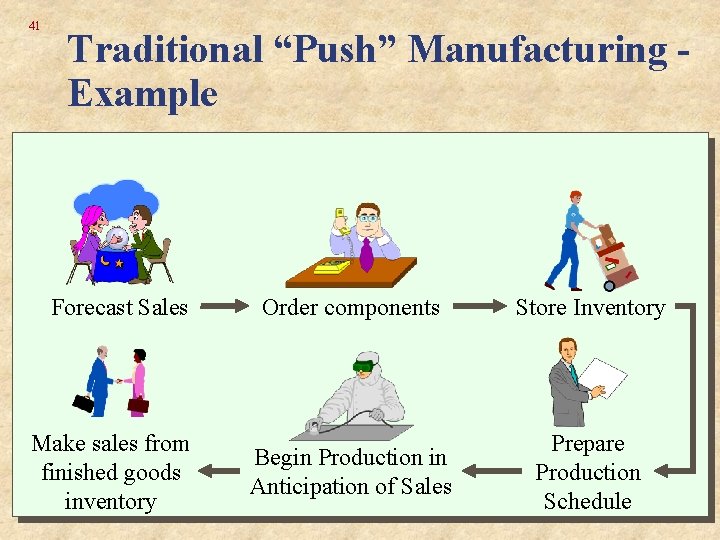
41 Traditional “Push” Manufacturing Example Forecast Sales Make sales from finished goods inventory Order components Store Inventory Begin Production in Anticipation of Sales Prepare Production Schedule
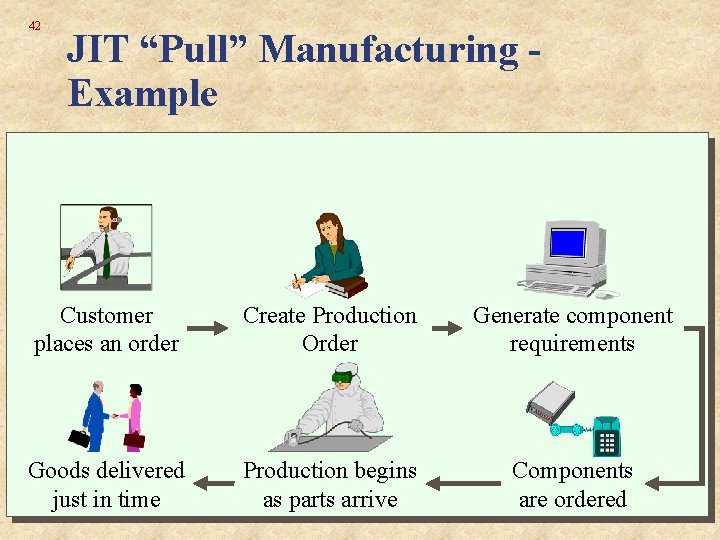
42 JIT “Pull” Manufacturing Example Customer places an order Create Production Order Generate component requirements Goods delivered just in time Production begins as parts arrive Components are ordered
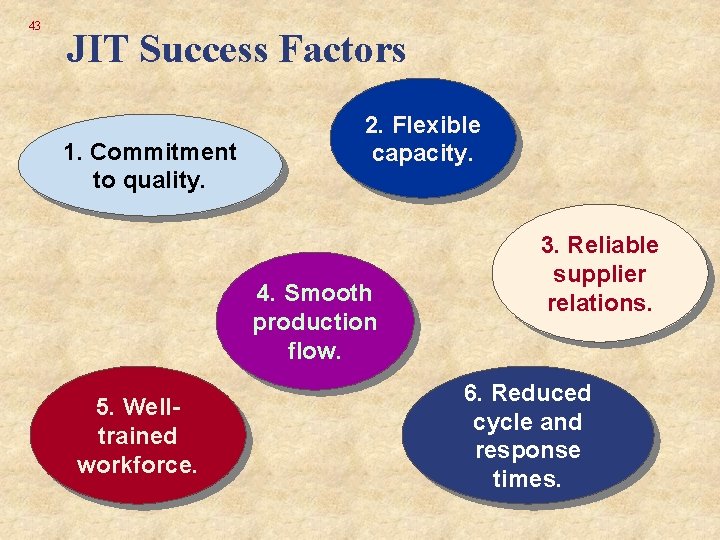
43 JIT Success Factors 1. Commitment to quality. 2. Flexible capacity. 4. Smooth production flow. 5. Welltrained workforce. 3. Reliable supplier relations. 6. Reduced cycle and response times.
44 Learning Objective 6
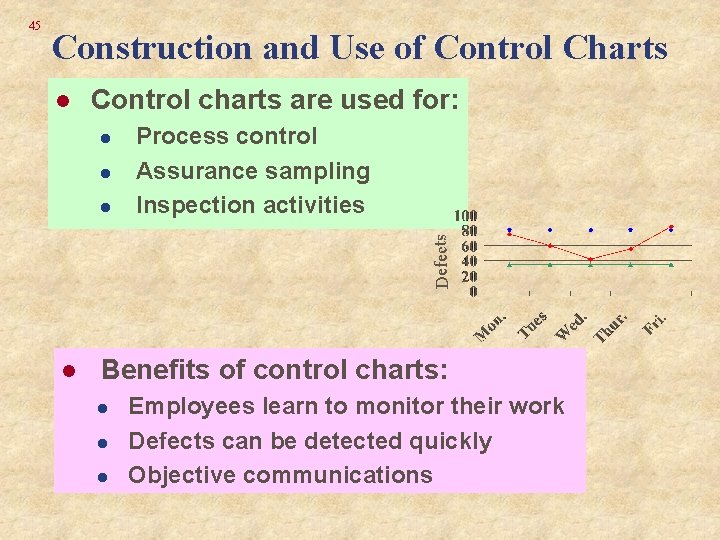
Construction and Use of Control Charts l Control charts are used for: l l l Process control Assurance sampling Inspection activities Defects 45 l Benefits of control charts: l l l Employees learn to monitor their work Defects can be detected quickly Objective communications
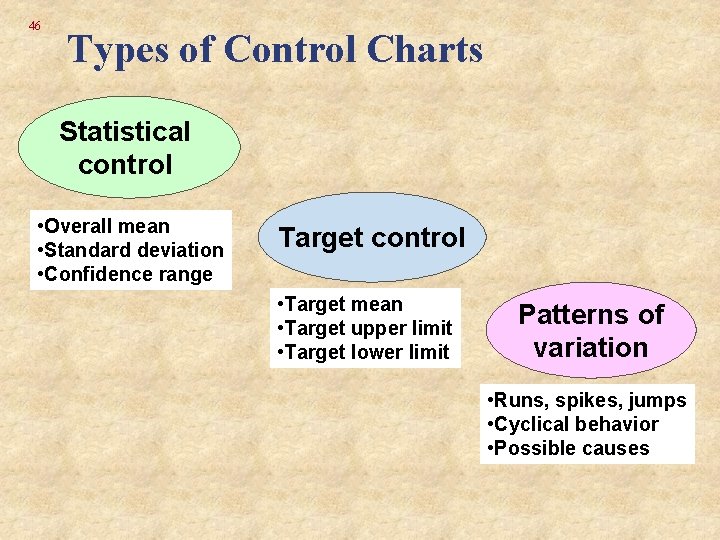
46 Types of Control Charts Statistical control • Overall mean • Standard deviation • Confidence range Target control • Target mean • Target upper limit • Target lower limit Patterns of variation • Runs, spikes, jumps • Cyclical behavior • Possible causes
47 End of Chapter 7