
7 HUMAN ANATOMY fifth edition MARIEB MALLATT WILHELM
7 HUMAN ANATOMY fifth edition MARIEB | MALLATT | WILHELM Power. Point® Lecture Slides presented by: Dr. Peter Reonisto, Moorpark College, California PART 1 Bones and Skeletal Tissues Copyright © 2008 Pearson Education, Inc. , publishing as Benjamin Cummings
Structure of a Typical Long Bone § § § § Diaphysis – “shaft” of a bone Epiphysis – ends of a bone Blood vessels – well vascularized Medullary cavity – hollow cavity filled with yellow marrow Membranes § Periosteum, perforating fibers (Sharpey’s fibers), and endosteum Compact bone – dense outer layer of bone Spongy (cancellous) bone – internal network of bone Copyright © 2008 Pearson Education, Inc. , publishing as Benjamin Cummings

Structure of a Long Bone Copyright © 2008 Pearson Education, Inc. , publishing as Benjamin Cummings Figure 6. 3 a–c
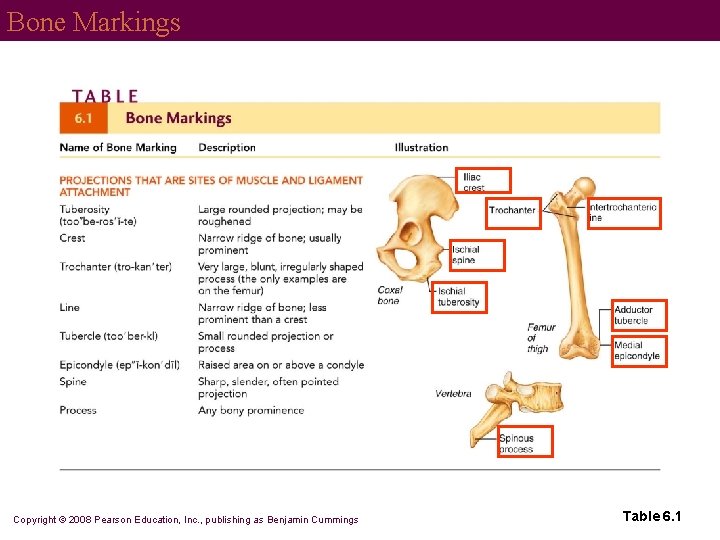
Bone Markings Copyright © 2008 Pearson Education, Inc. , publishing as Benjamin Cummings Table 6. 1
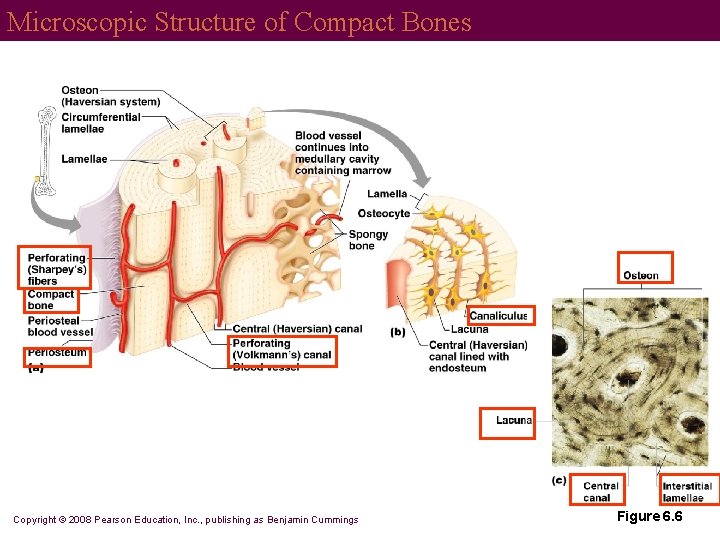
Microscopic Structure of Compact Bones Copyright © 2008 Pearson Education, Inc. , publishing as Benjamin Cummings Figure 6. 6
7 HUMAN ANATOMY fifth edition MARIEB | MALLATT | WILHELM Power. Point® Lecture Slides presented by: Dr. Peter Reonisto, Moorpark College, California The Axial Skeleton (Skull) Copyright © 2008 Pearson Education, Inc. , publishing as Benjamin Cummings
The Skeleton § Consists of § Bones, cartilage, joints, and ligaments § Composed of 206 named bones grouped into two divisions § Axial skeleton (80 bones) § Appendicular skeleton (126 bones) Copyright © 2008 Pearson Education, Inc. , publishing as Benjamin Cummings
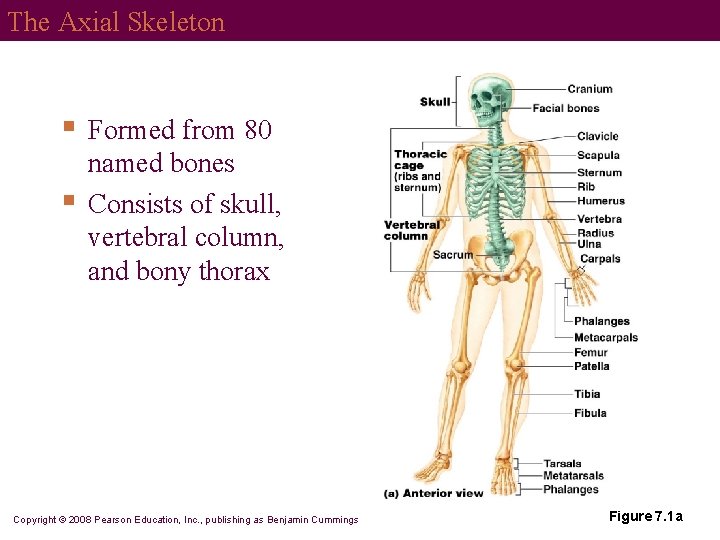
The Axial Skeleton § § Formed from 80 named bones Consists of skull, vertebral column, and bony thorax Copyright © 2008 Pearson Education, Inc. , publishing as Benjamin Cummings Figure 7. 1 a
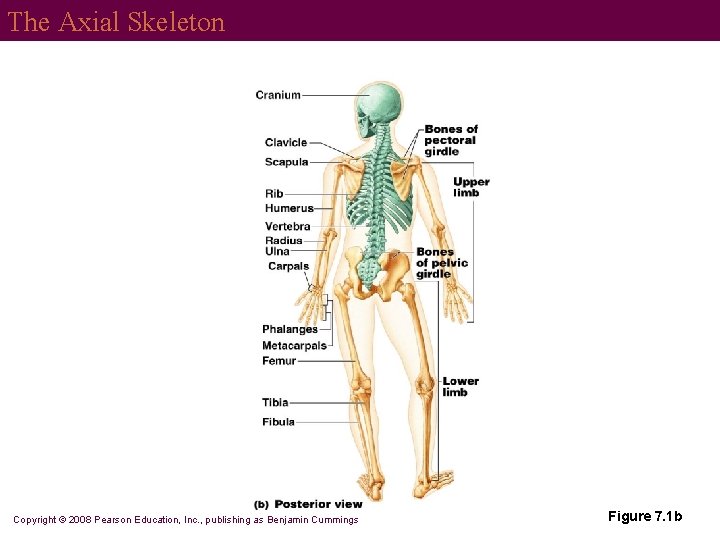
The Axial Skeleton Copyright © 2008 Pearson Education, Inc. , publishing as Benjamin Cummings Figure 7. 1 b
Bone Markings § § § Projections that provide attachment for muscles and ligaments Projections that help form joints Depressions and openings for passage of nerves and blood vessels Copyright © 2008 Pearson Education, Inc. , publishing as Benjamin Cummings
Copyright © 2008 Pearson Education, Inc. , publishing as Benjamin Cummings
Copyright © 2008 Pearson Education, Inc. , publishing as Benjamin Cummings
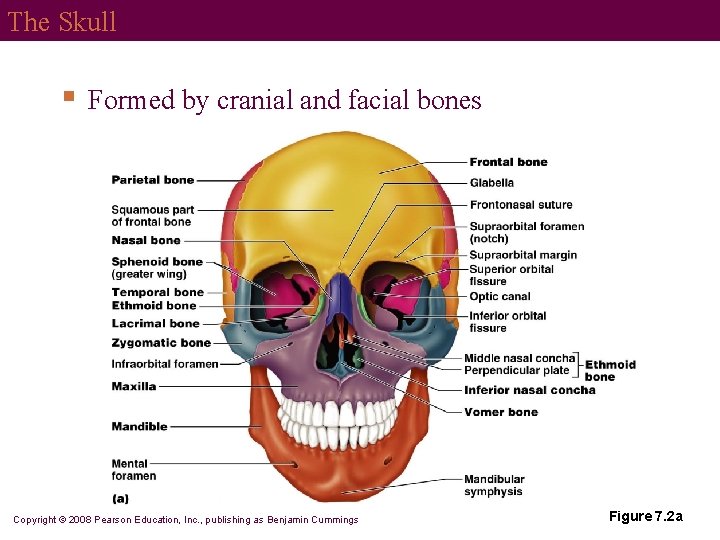
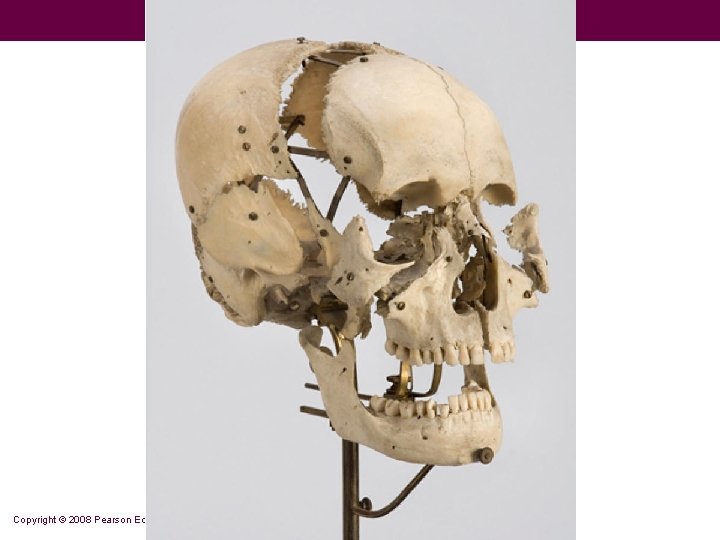
The Skull § Formed by cranial and facial bones Copyright © 2008 Pearson Education, Inc. , publishing as Benjamin Cummings Figure 7. 2 a
Copyright © 2008 Pearson Education, Inc. , publishing as Benjamin Cummings
Copyright © 2008 Pearson Education, Inc. , publishing as Benjamin Cummings
Cranium Copyright © 2008 Pearson Education, Inc. , publishing as Benjamin Cummings
Sphenoid Copyright © 2008 Pearson Education, Inc. , publishing as Benjamin Cummings
Copyright © 2008 Pearson Education, Inc. , publishing as Benjamin Cummings
Copyright © 2008 Pearson Education, Inc. , publishing as Benjamin Cummings
The Cranium § The cranium serves to § Enclose brain § Provide attachment sites for some head and neck muscles Copyright © 2008 Pearson Education, Inc. , publishing as Benjamin Cummings
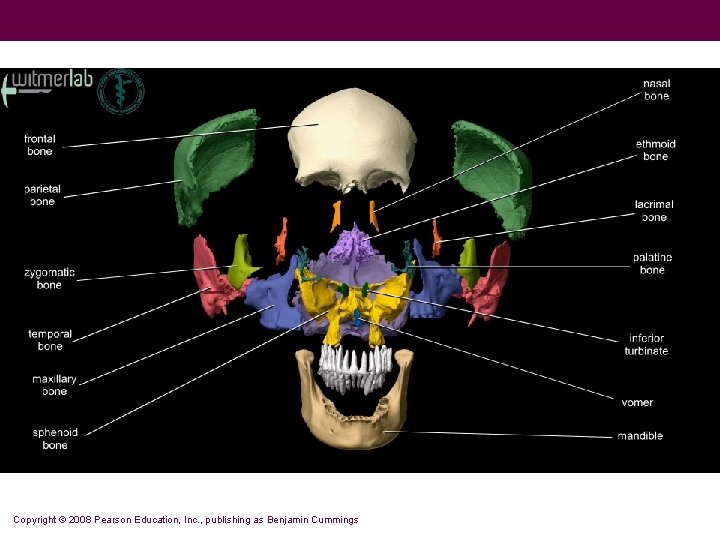
The Face § Facial bones serve to § Form framework of the face § Form cavities for the sense organs of sight, taste, and smell § Provide openings for the passage of air and food § Hold the teeth in place § Anchor muscles of the face Copyright © 2008 Pearson Education, Inc. , publishing as Benjamin Cummings
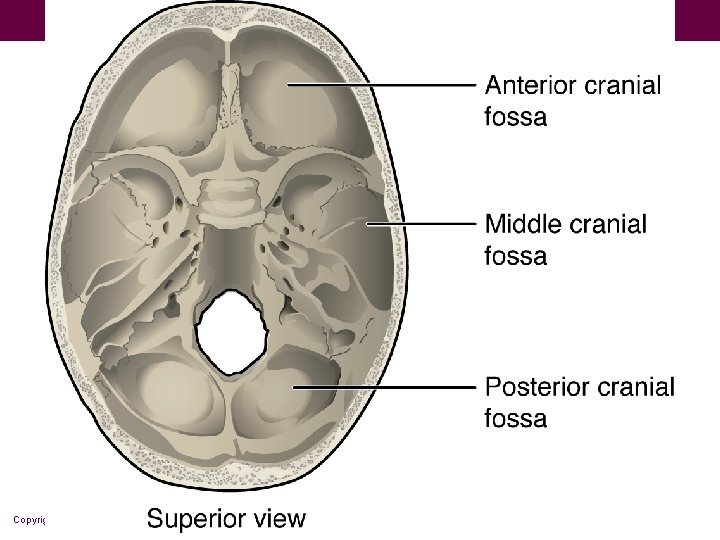
Overview of Skull Geography § § § Facial bones form anterior aspect Cranium is divided into cranial vault and the base Internally, prominent bony ridges divide skull into distinct fossae Copyright © 2008 Pearson Education, Inc. , publishing as Benjamin Cummings
Overview of Skull Geography § The skull contains smaller cavities § Middle and inner ear cavities – in lateral aspect of cranial base § Nasal cavity – lies in and posterior to the nose § Orbits – house the eyeballs § Air-filled sinuses – occur in several bones around the nasal cavity Copyright © 2008 Pearson Education, Inc. , publishing as Benjamin Cummings
Overview of Skull Geography § The skull contains approximately 85 named openings § Foramina, canals, and fissures § Provide openings for important structures § Spinal cord § Blood vessels serving the brain § 12 pairs of cranial nerves Copyright © 2008 Pearson Education, Inc. , publishing as Benjamin Cummings
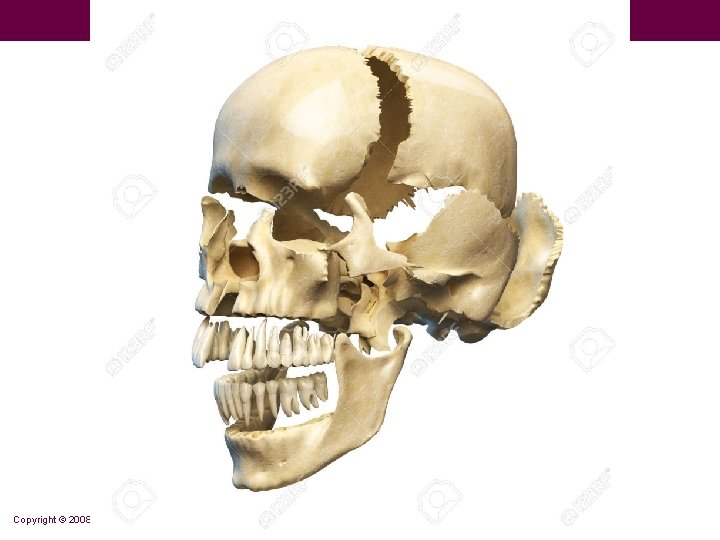
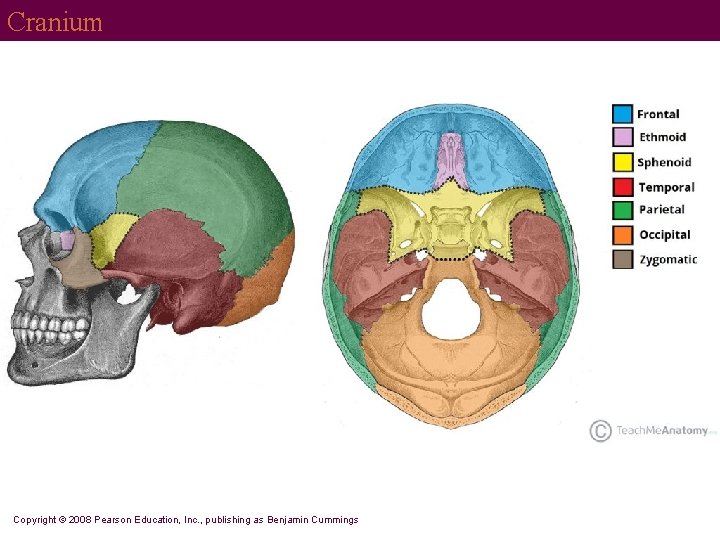
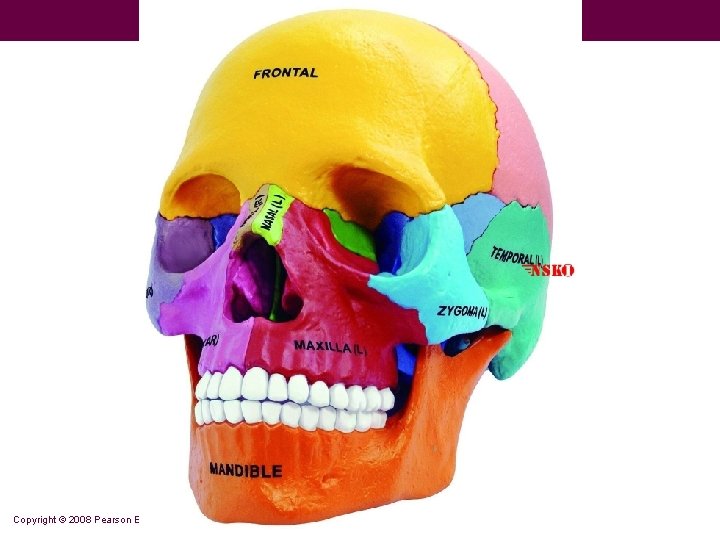
Cranial Bones § Formed from eight large bones § Paired bones include § Temporal bones § Parietal bones § Unpaired bones include § Frontal bone § Occipital bone § Sphenoid bone § Ethmoid bone Copyright © 2008 Pearson Education, Inc. , publishing as Benjamin Cummings
Frontal Bones § § Forms the forehead and roofs of the orbits Forms superciliary arches Internally, it contributes to the anterior cranial fossa Contains frontal sinuses Copyright © 2008 Pearson Education, Inc. , publishing as Benjamin Cummings
Parietal Bones and Sutures § § Parietal bones form superior and lateral parts of skull Four sutures of the cranium § Coronal suture – runs in the coronal plane § Located where parietal bones meet the frontal bone § Squamous suture – occurs where each parietal bone meets a temporal bone inferiorly Copyright © 2008 Pearson Education, Inc. , publishing as Benjamin Cummings
Parietal Bones and Sutures § Sutures of the cranium (continued) § Sagittal suture – occurs where right and left parietal bones meet superiorly § Lambdoid suture – occurs where the parietal bones meet the occipital bone posteriorly Copyright © 2008 Pearson Education, Inc. , publishing as Benjamin Cummings
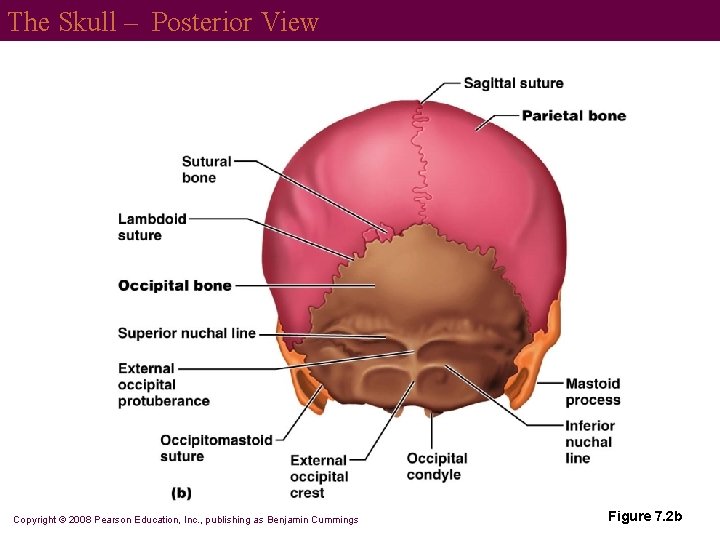
The Skull – Posterior View Copyright © 2008 Pearson Education, Inc. , publishing as Benjamin Cummings Figure 7. 2 b
Occipital Bone § § Forms the posterior portion of the cranium and cranial base Articulates with the temporal bones and parietal bones Forms the posterior cranial fossa Foramen magnum located at its base Copyright © 2008 Pearson Education, Inc. , publishing as Benjamin Cummings
Occipital Bone § Features and structures § Occipital condyles § Hypoglossal foramen § External occipital protuberance § Superior nuchal lines § Inferior nuchal lines Copyright © 2008 Pearson Education, Inc. , publishing as Benjamin Cummings
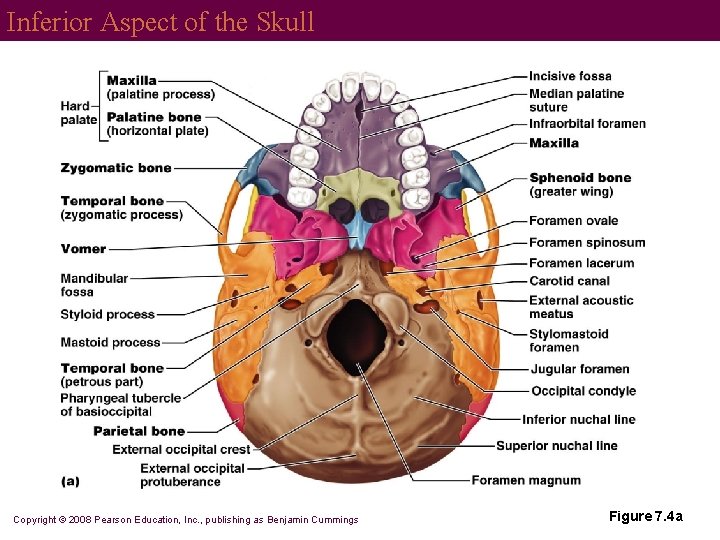
Inferior Aspect of the Skull Copyright © 2008 Pearson Education, Inc. , publishing as Benjamin Cummings Figure 7. 4 a
Temporal Bones § § § Lie inferior to parietal bones Form the inferolateral portion of the skull Term “temporal” § Comes from Latin word for time § Specific regions of temporal bone § Squamous, temporal, petrous, and mastoid regions Copyright © 2008 Pearson Education, Inc. , publishing as Benjamin Cummings
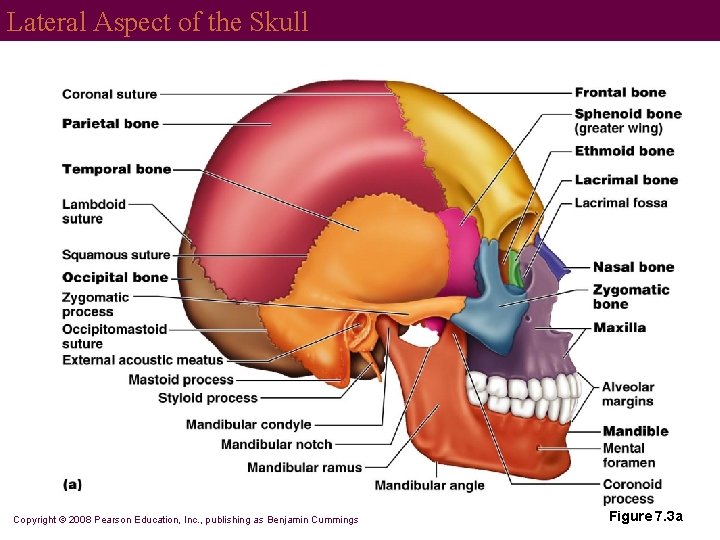
Lateral Aspect of the Skull Copyright © 2008 Pearson Education, Inc. , publishing as Benjamin Cummings Figure 7. 3 a
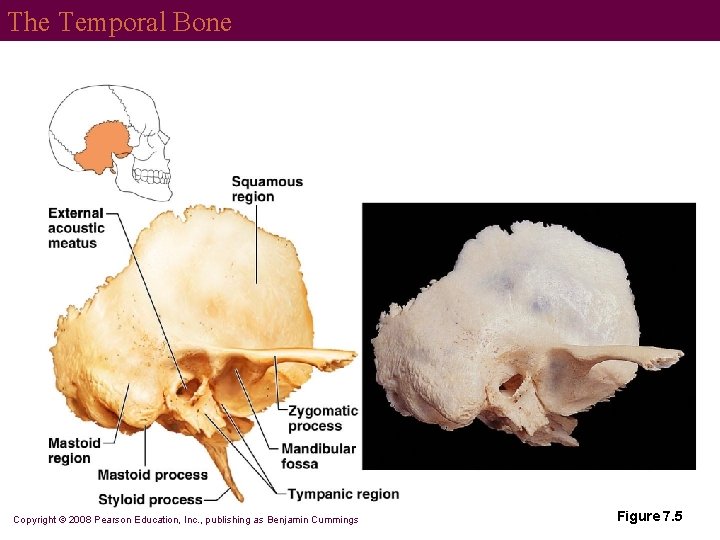
The Temporal Bone Copyright © 2008 Pearson Education, Inc. , publishing as Benjamin Cummings Figure 7. 5
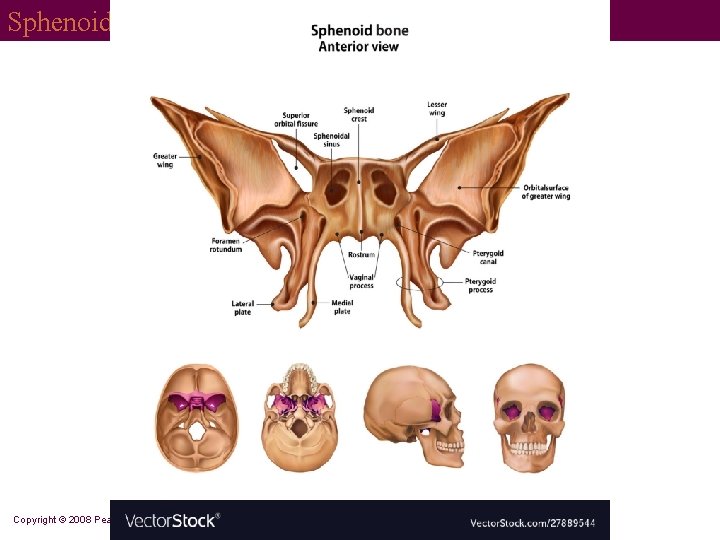
The Sphenoid Bone § § Spans the width of the cranial floor Resembles a butterfly or bat Consists of a body and three pairs of processes Contains five important openings Copyright © 2008 Pearson Education, Inc. , publishing as Benjamin Cummings
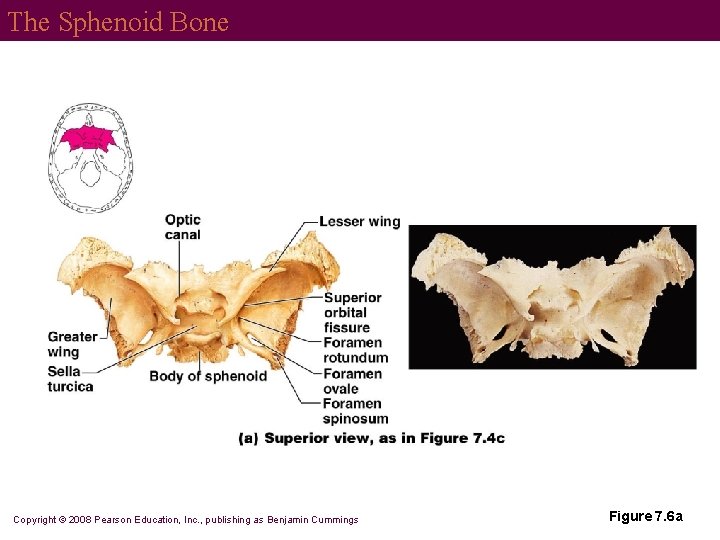
The Sphenoid Bone Copyright © 2008 Pearson Education, Inc. , publishing as Benjamin Cummings Figure 7. 6 a
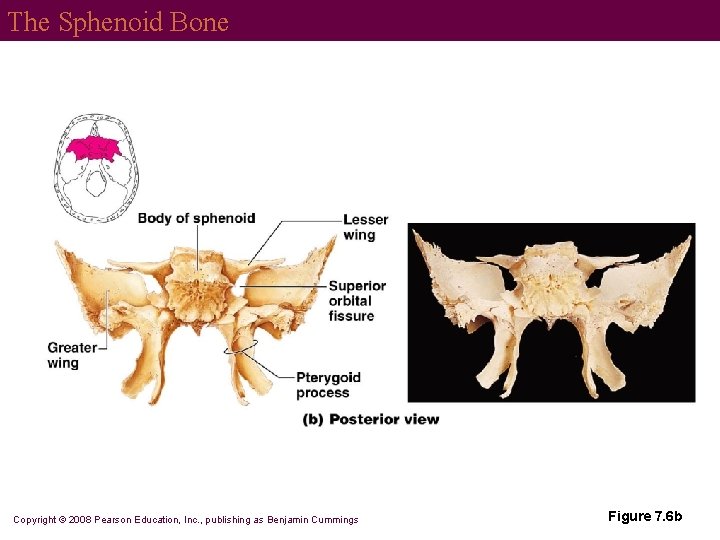
The Sphenoid Bone Copyright © 2008 Pearson Education, Inc. , publishing as Benjamin Cummings Figure 7. 6 b
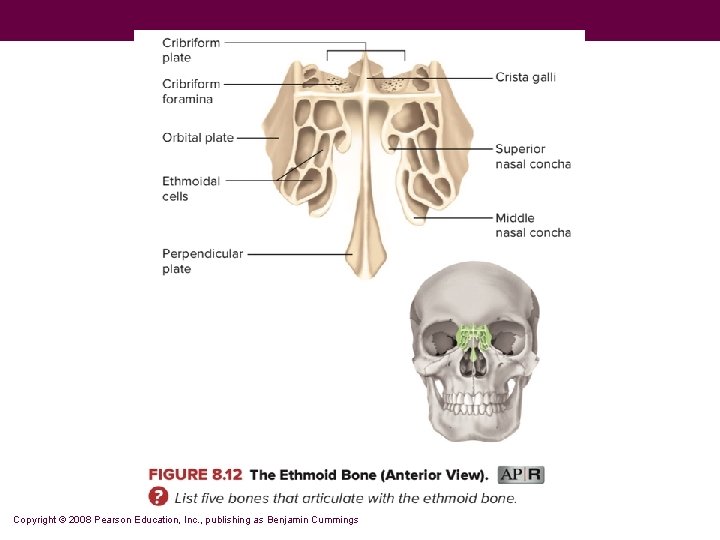
The Ethmoid Bone § § Lies between nasal and sphenoid bones Forms most of the medial bony region between the nasal cavity and orbits Copyright © 2008 Pearson Education, Inc. , publishing as Benjamin Cummings
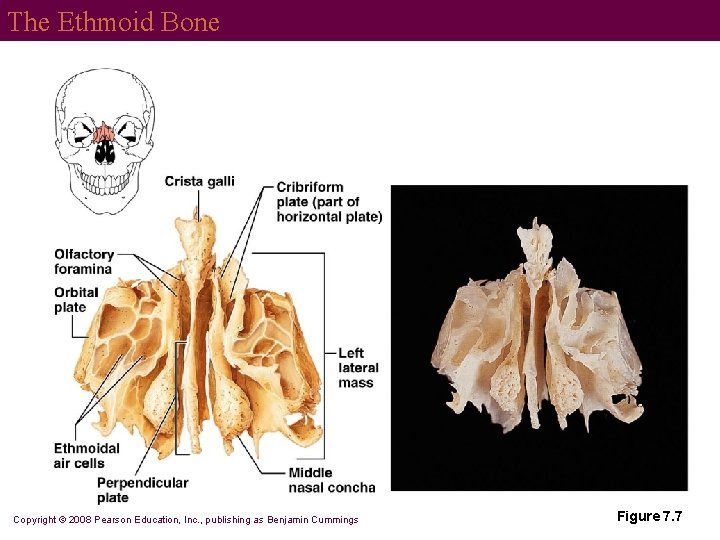
The Ethmoid Bone Copyright © 2008 Pearson Education, Inc. , publishing as Benjamin Cummings Figure 7. 7
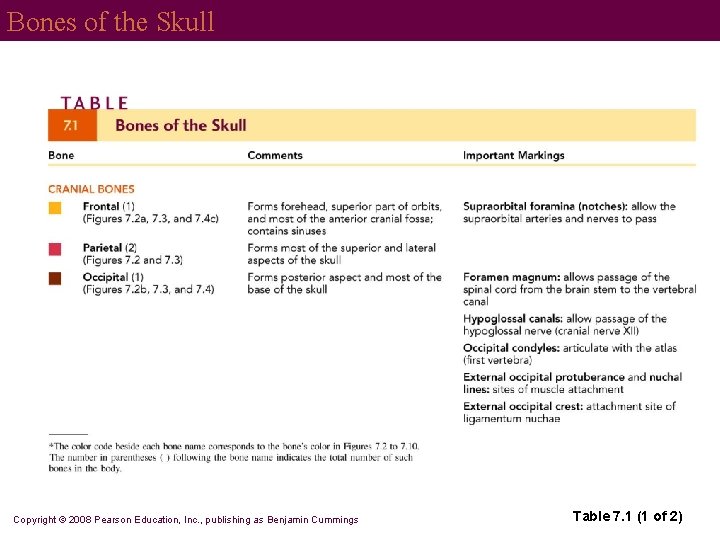
Bones of the Skull Copyright © 2008 Pearson Education, Inc. , publishing as Benjamin Cummings Table 7. 1 (1 of 2)
Facial Bones § Unpaired bones § Paired bones § Mandible and vomer § Maxillae § Zygomatic bones § Nasal bones § Lacrimal bones § Palatine bones § Inferior nasal conchae Copyright © 2008 Pearson Education, Inc. , publishing as Benjamin Cummings
Mandible § § The lower jawbone is the largest and strongest facial bone Composed of two main parts § Horizontal body § Two upright rami Copyright © 2008 Pearson Education, Inc. , publishing as Benjamin Cummings
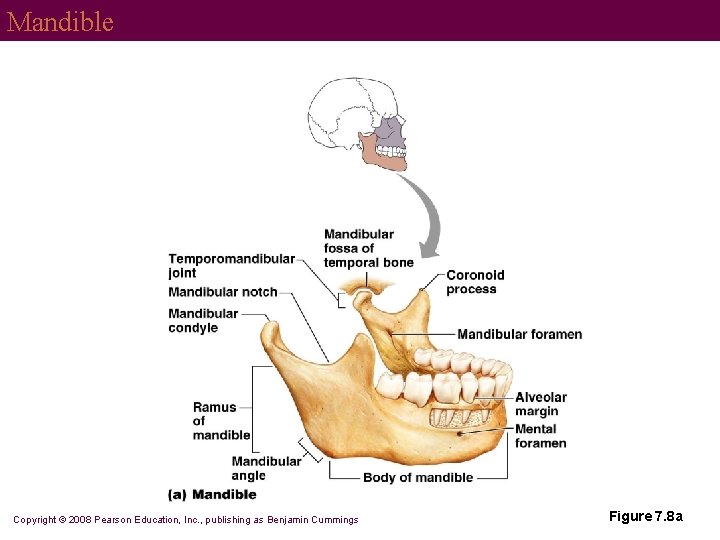
Mandible Copyright © 2008 Pearson Education, Inc. , publishing as Benjamin Cummings Figure 7. 8 a
Maxillary Bones § § § Articulate with all other facial bones except the mandible Contain maxillary sinuses – largest paranasal sinuses Forms part of the inferior orbital fissure Copyright © 2008 Pearson Education, Inc. , publishing as Benjamin Cummings
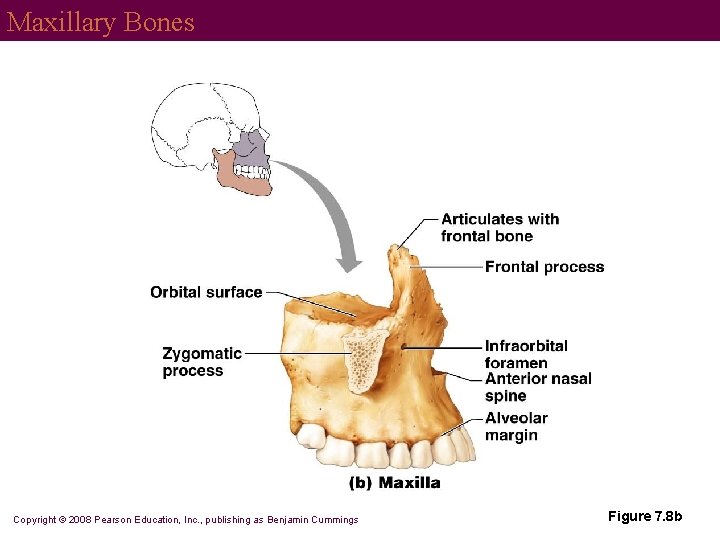
Maxillary Bones Copyright © 2008 Pearson Education, Inc. , publishing as Benjamin Cummings Figure 7. 8 b
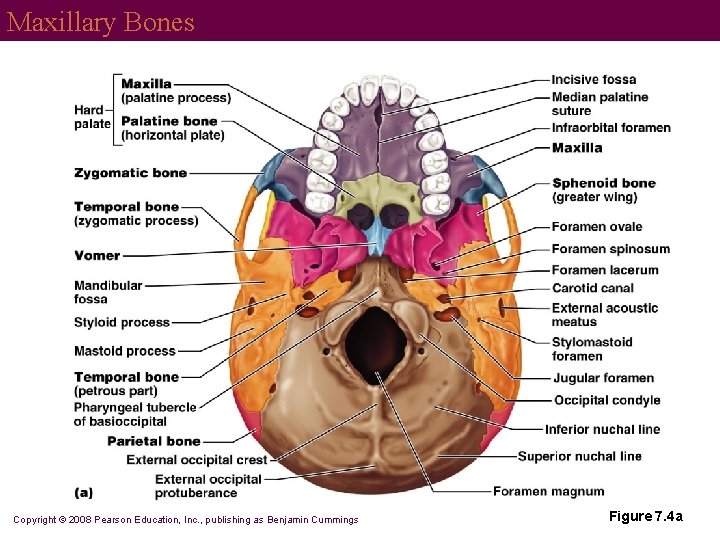
Maxillary Bones Copyright © 2008 Pearson Education, Inc. , publishing as Benjamin Cummings Figure 7. 4 a
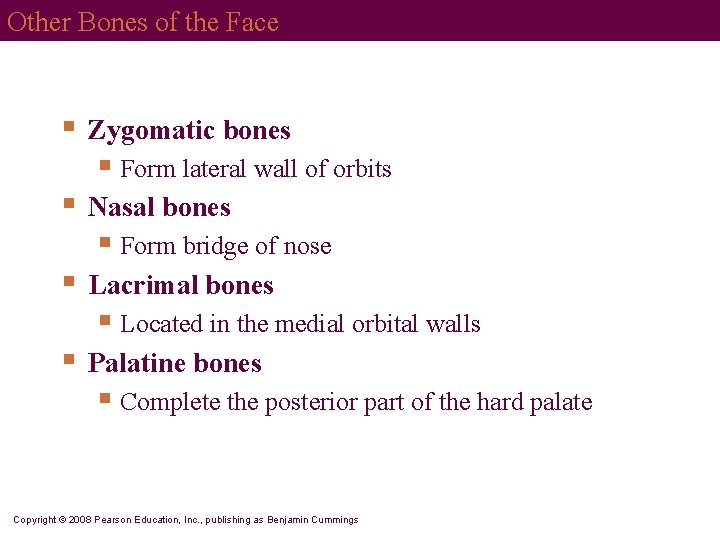
Other Bones of the Face § Zygomatic bones § Form lateral wall of orbits § Nasal bones § Form bridge of nose § Lacrimal bones § Located in the medial orbital walls § Palatine bones § Complete the posterior part of the hard palate Copyright © 2008 Pearson Education, Inc. , publishing as Benjamin Cummings
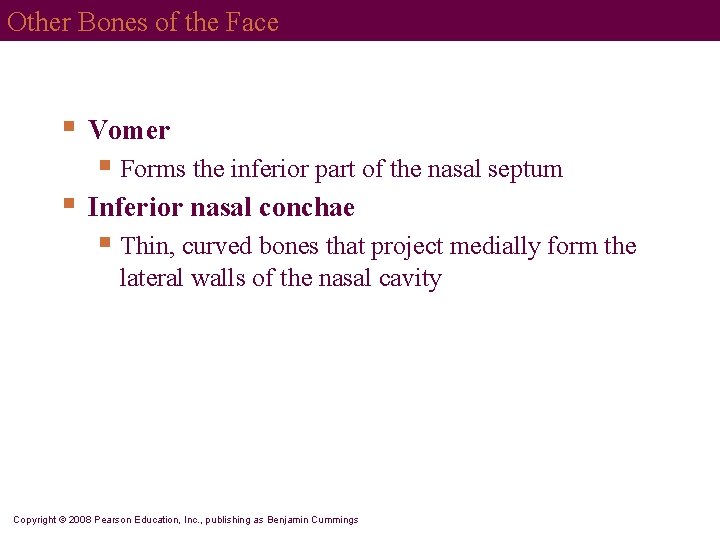
Other Bones of the Face § Vomer § Forms the inferior part of the nasal septum § Inferior nasal conchae § Thin, curved bones that project medially form the lateral walls of the nasal cavity Copyright © 2008 Pearson Education, Inc. , publishing as Benjamin Cummings
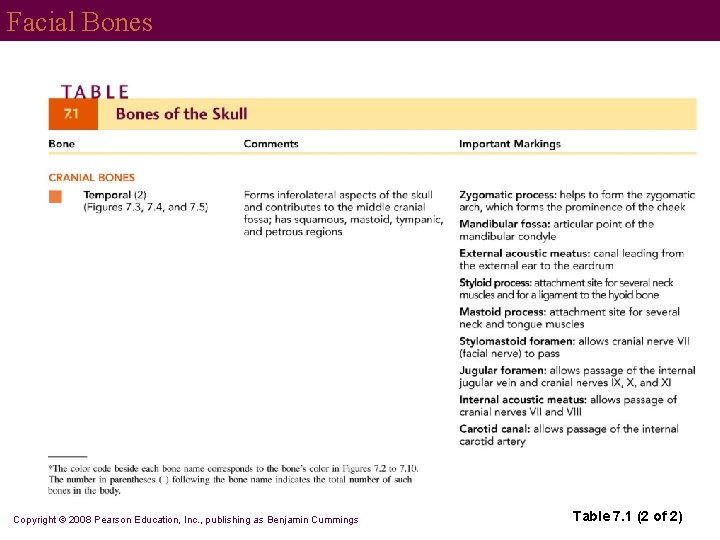
Facial Bones Copyright © 2008 Pearson Education, Inc. , publishing as Benjamin Cummings Table 7. 1 (2 of 2)
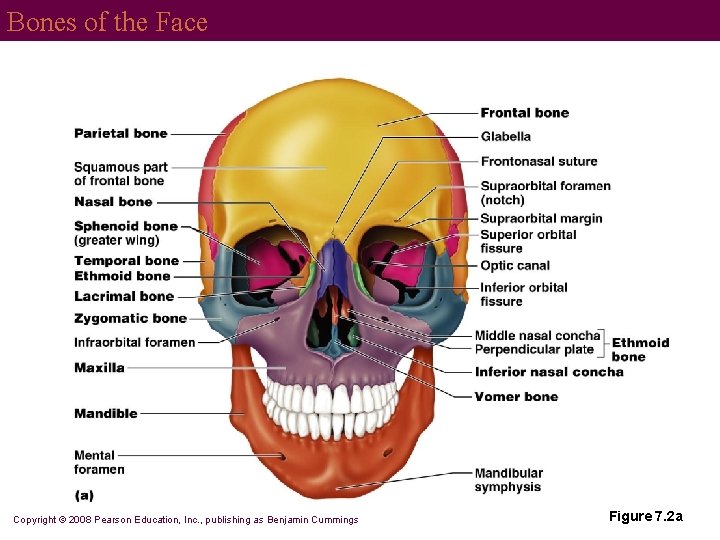
Bones of the Face Copyright © 2008 Pearson Education, Inc. , publishing as Benjamin Cummings Figure 7. 2 a
Special Parts of the Skull § § Orbits Nasal cavity Paranasal sinuses Hyoid bone Copyright © 2008 Pearson Education, Inc. , publishing as Benjamin Cummings
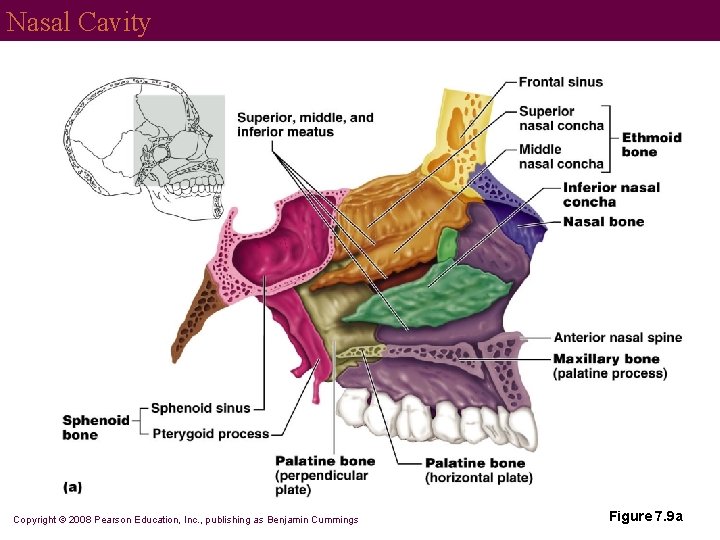
Nasal Cavity Copyright © 2008 Pearson Education, Inc. , publishing as Benjamin Cummings Figure 7. 9 a
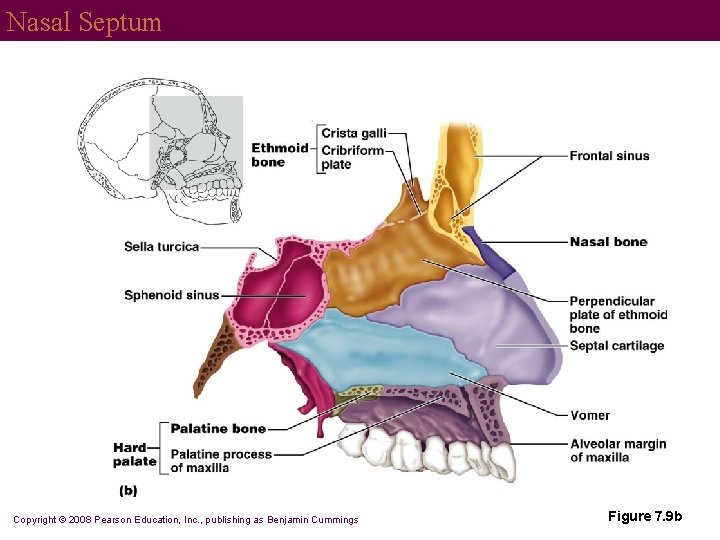
Nasal Septum Copyright © 2008 Pearson Education, Inc. , publishing as Benjamin Cummings Figure 7. 9 b
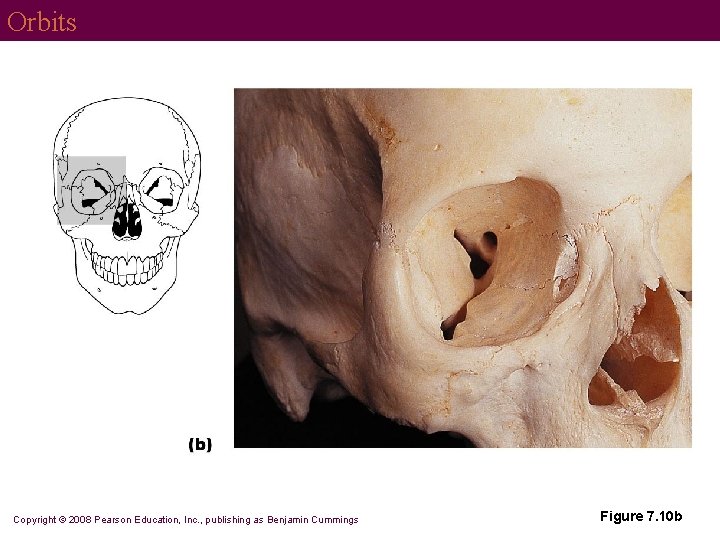
Orbits Copyright © 2008 Pearson Education, Inc. , publishing as Benjamin Cummings Figure 7. 10 b
Paranasal Sinuses § Air-filled sinuses are located within § Frontal bone § Ethmoid bone § Sphenoid bone § Maxillary bones § § Lined with mucous membrane Serve to lighten the skull Copyright © 2008 Pearson Education, Inc. , publishing as Benjamin Cummings
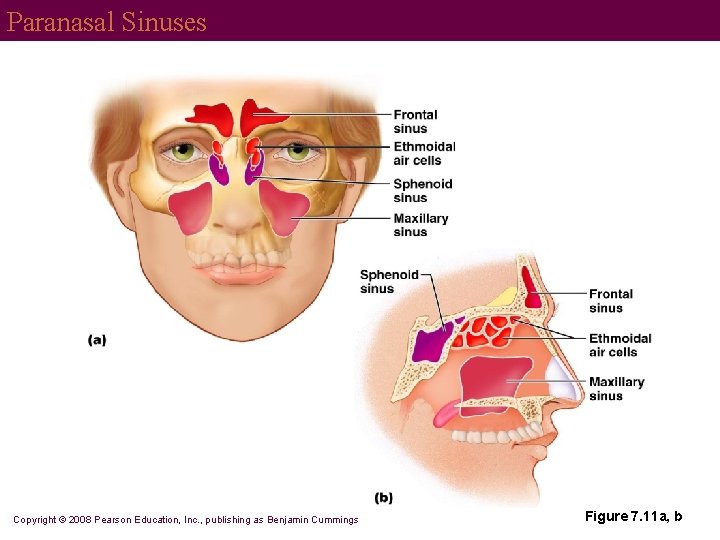
Paranasal Sinuses Copyright © 2008 Pearson Education, Inc. , publishing as Benjamin Cummings Figure 7. 11 a, b
7 HUMAN ANATOMY fifth edition MARIEB | MALLATT | WILHELM Power. Point® Lecture Slides presented by: Dr. Peter Reonisto, Moorpark College, California END Skeletal Tissue and Axial Skeleton (Skull) Copyright © 2008 Pearson Education, Inc. , publishing as Benjamin Cummings
- Slides: 58