
7 Economic Principles 1 Scarcity Forces Tradeoffs Limited

- Slides: 8
7 Economic Principles
#1 - Scarcity Forces Trade-offs • Limited resources force people to make choices and face trade-offs when they choose – SCARCITY: rare, limited, not enough for everybody – NO FREE LUNCH PRINCIPLE: even when you get something for free, you are still making a trade-off • WE ARE ALWAYS MAKING DECISIONS
#2 - Cost Versus Benefit • People choose something when the benefits of doing something are greater than the costs – COST: what you spend in time, money, or effort to get something (what you lose) – BENEFIT: what you gain from something in terms of money, time, experience, or other improvements (what you gain)
#3 – Thinking at the Margin • The decisions we make each day involve choices about a little more or little less of something rather than complete change – MARGIN: edge – MARGINAL COST: what you give up to add one additional unit of something – MARGINAL BENEFIT: what you get to add one additional unit of something
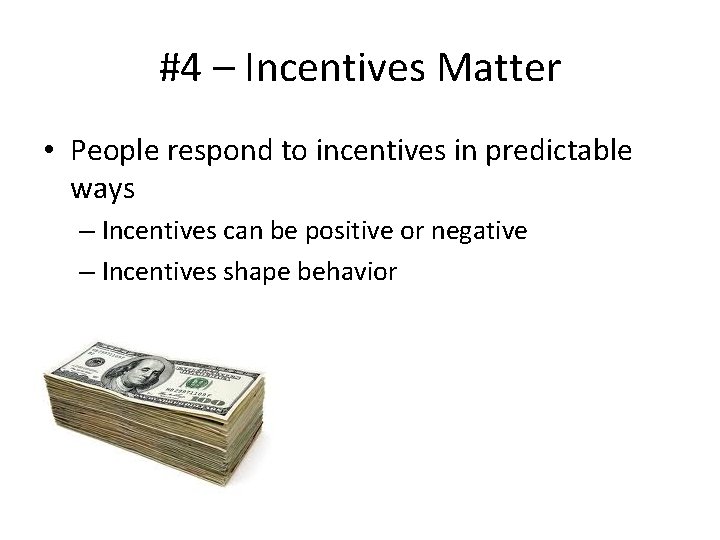
#4 – Incentives Matter • People respond to incentives in predictable ways – Incentives can be positive or negative – Incentives shape behavior
#5 – Trade Makes People Better Off • By focusing on what we do well and then trading with others, we will end up with more and better choices than by trying to do everything for ourselves
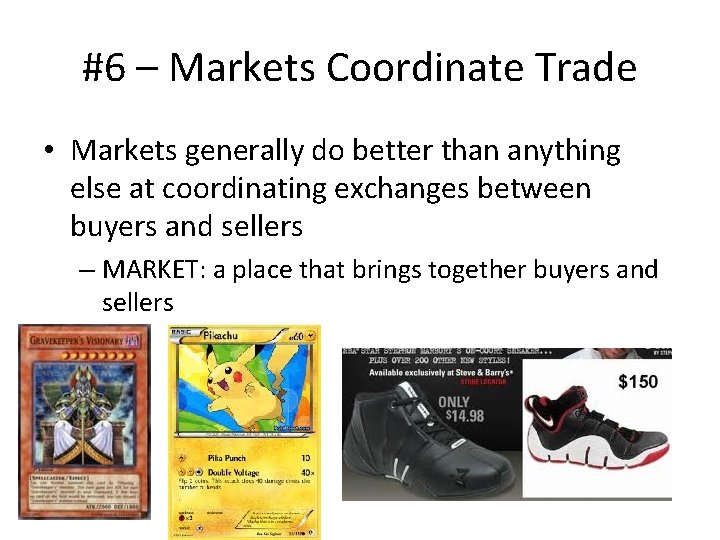
#6 – Markets Coordinate Trade • Markets generally do better than anything else at coordinating exchanges between buyers and sellers – MARKET: a place that brings together buyers and sellers
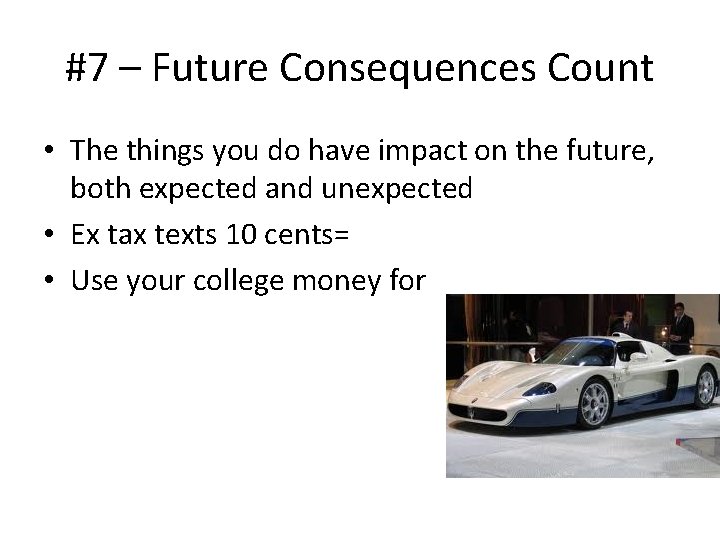
#7 – Future Consequences Count • The things you do have impact on the future, both expected and unexpected • Ex tax texts 10 cents= • Use your college money for