
7 Chapter Notes Algebra 1 7 1 Notes
7 -Chapter Notes Algebra 1
7 -1 Notes for Algebra 1 Multiplication properties of Exponents
7. 1 pg. 395 21 -63 o, 69 -84(x 3)
Monomial (only one term) A number, a variable, or the product of a number and one or more variables with nonnegative integer exponents. An expression that involves division by a variable is not a monomial.
Constant A monomial that is a real number.
Example 1: Identify Monomials •
Example 1: Identify Monomials •

Product of Powers •

Example 2: Product of Powers •

Example 2: Product of Powers •

Power of a Power •

Example 3: Power of a Power •

Example 3: Power of a Power •

Power of a Product •

Example 4: Power of a Product •

Example 4: Power of a Product •
Simplify Expressions To simplify a monomial expression, write an equivalent expression in which: • Each variables base appears exactly once, • There are no powers of powers, and • All fractions are in simplest form.

Example 5: Simplify Expressions •

Example 5: Simplify Expressions •
7. 2 Notes for Algebra 1 Division Property of Exponents
7. 2 pg. 403 19 -57 o, 66 -87(x 3)

Quotient of Powers •

Example 1: Quotient of Powers •

Example 1: Quotient of Powers •

Power of a Quotient •

Example 2: Power of a Quotient •

Example 2: Power of a Quotient •

Zero exponent •
Example 3: Zero Exponent •
Example 3: Zero Exponent •
Negative Exponent Property •
Example 4: Negative Exponents •
Example 4: Negative Exponents •
Order of Magnitude (used to compare measures to estimate and preform rough calculations) •
Example 5: Apply Properties of Exponents Darin has $123, 456 in his savings account. Tab has $156 in his savings account. Determine the order of magnitude of Darin’s account and Tab’s account. How many orders of magnitude as great is Darin’s account as Tab’s account?
Example 5: Apply Properties of Exponents •
7 -3 Notes for Algebra 1 Rational Exponents
7 -3 pg. 410 17 -83 o, 96 -114(x 3)

Rational exponents •
Example 1: Radical and Exponential Forms •
Example 1: Radical and Exponential Forms •










Power Property of Equality •
Example 5: Solve Exponential Equations •
Example 5: Solve Exponential Equations •
Example 6: solve exponential equations •
Example 6: solve exponential equations •
7 -4 Notes for Algebra 1 Scientific Notation
7. 4 pg. 414 21 -61 o, 78 -93(x 3)
Scientific Notation A way to calculate very large or small numbers easily.

Standard form to Scientific Notation •
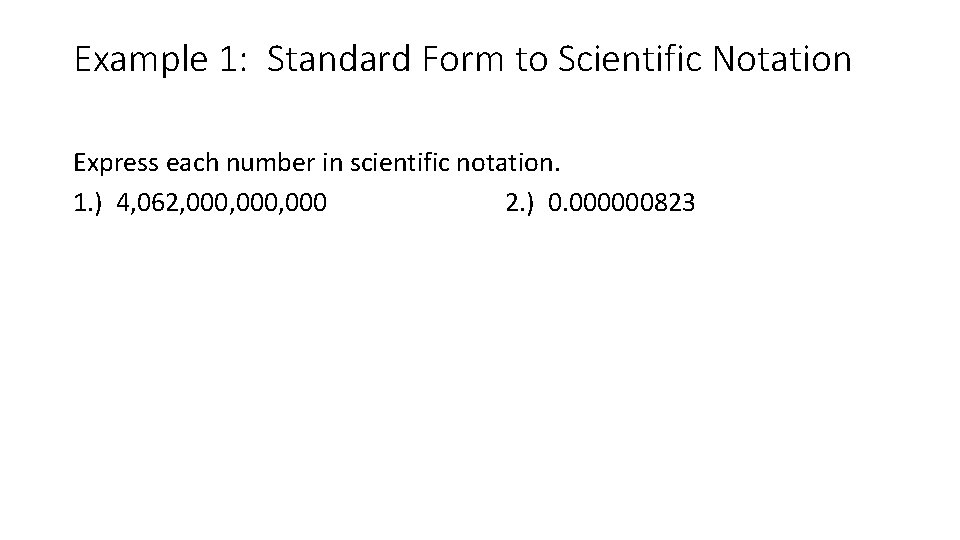
Example 1: Standard Form to Scientific Notation Express each number in scientific notation. 1. ) 4, 062, 000, 000 2. ) 0. 000000823
Example 1: Standard Form to Scientific Notation •

Scientific Notation to Standard Form •
Example 2: Scientific Notation to Standard Form •
Example 2: Scientific Notation to Standard Form •
Example 3: Multiply with Scientific Notation •
Example 3: Multiply with Scientific Notation •
Example 4: Divide with Scientific Notation •
Example 4: Divide with Scientific Notation •
Example 5: Use Scientific Notation WATERCRAFT: Last year Alison’s state registered over 400 thousand watercraft. Boat sales in her state generated more than $15. 4 million in state sales taxes that same year. a. Express the number of watercraft registered and the state sales tax generated from boat sales last year in Alison’s state in standard form. b. Write each number in Scientific Notation. c. How many watercraft have been registered in Alison’s state if 12 time the number registered in all? Write your answer in scientific notation and standard form.
Example 5: Use Scientific Notation •
7 -5 Notes for Algebra 1 Exponential Functions
7 -5 pg. 427 11 -33 o, 48 -66(x 3)

Exponential Function •

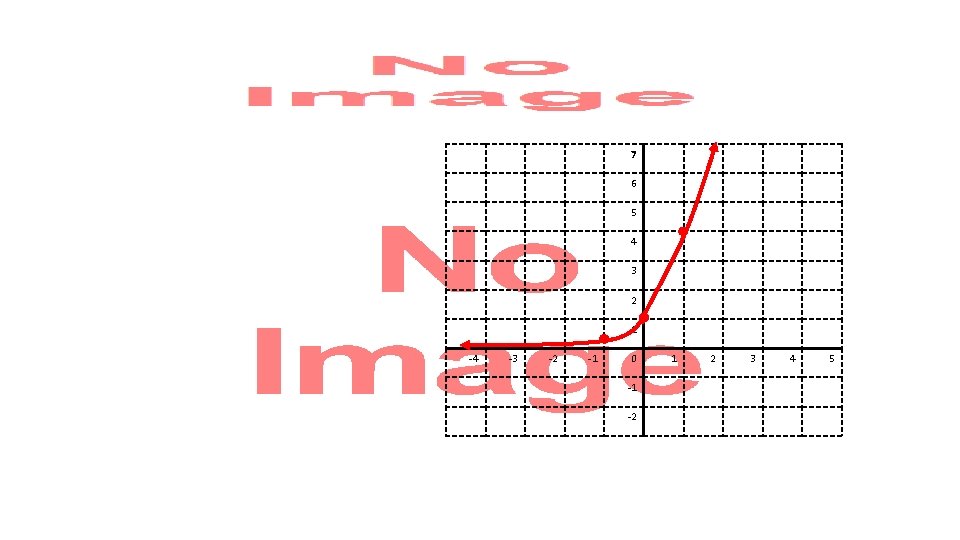
• 7 6 5 4 3 2 1 -4 -3 -2 -1 0 -1 -2 1 2 3 4 5

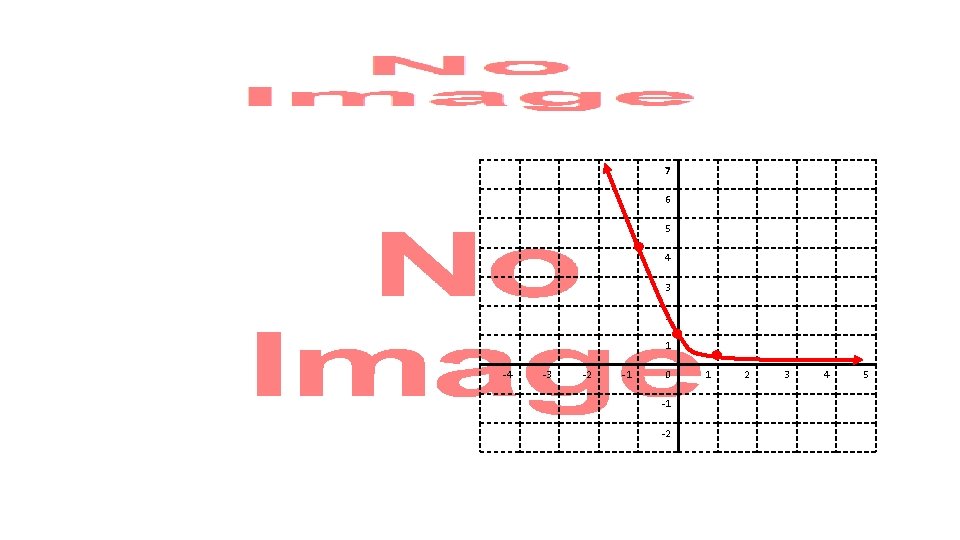
• 7 6 5 4 3 2 1 -4 -3 -2 -1 0 -1 -2 1 2 3 4 5
Example 3: Use Exponential Function to Solve Problem •
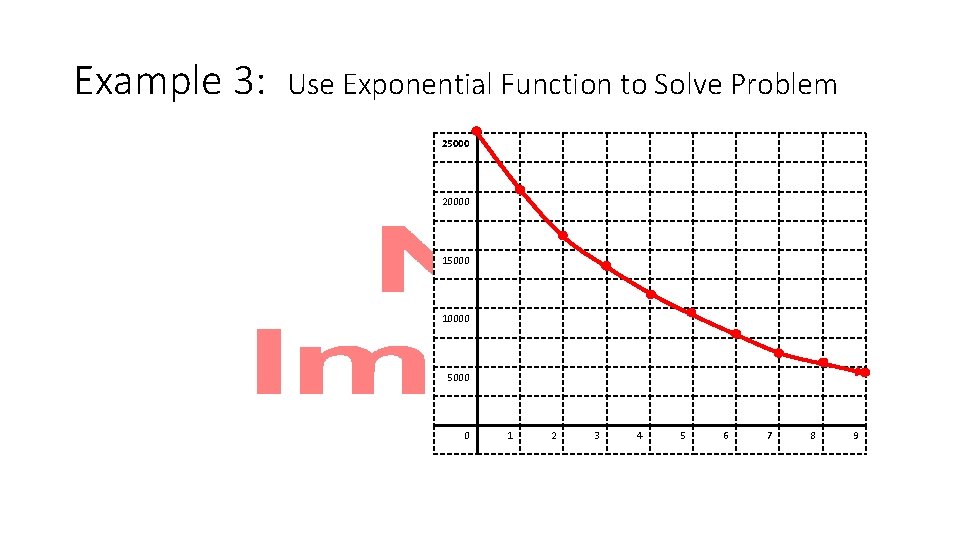
Example 3: Use Exponential Function to Solve Problem • 25000 20000 15000 10000 5000 0 1 2 3 4 5 6 7 8 9
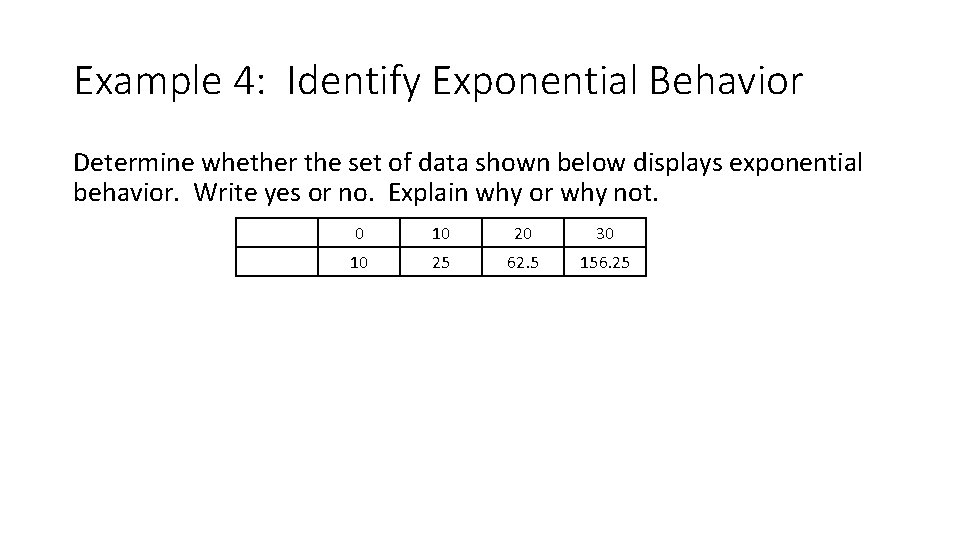
Example 4: Identify Exponential Behavior Determine whether the set of data shown below displays exponential behavior. Write yes or no. Explain why or why not. 0 10 20 30 10 25 62. 5 156. 25
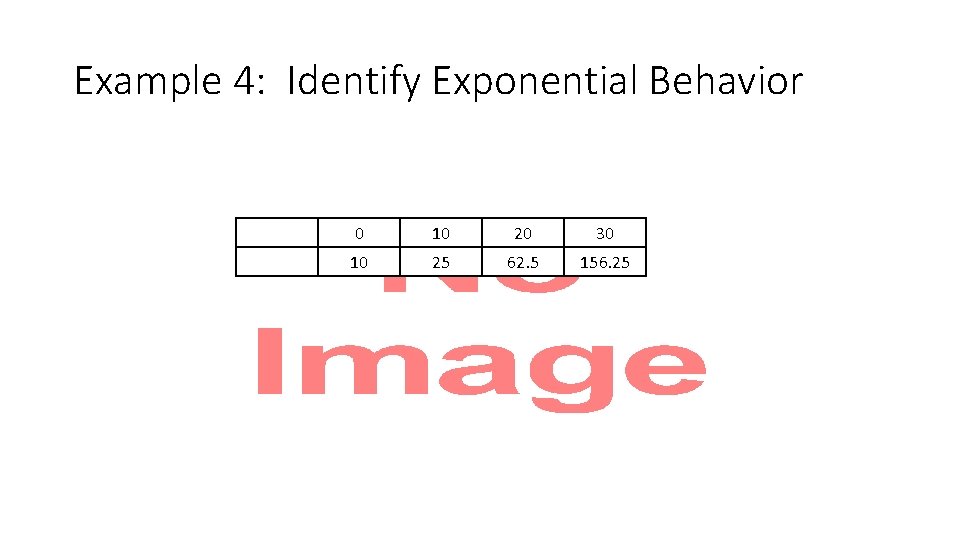
Example 4: Identify Exponential Behavior • 0 10 20 30 10 25 62. 5 156. 25
7 -6 Notes for Algebra 1 Growth and Decay
7 -6 pg. 434 4 -12
Equation for Exponential Growth •
Example 1: Exponential Growth POPULATION: In 2008 the town of Flat Creek had a population of about 280, 000 and a growth rate of 0. 85% per year. a. Write an equation to represent the population of Flat Creek since 2008. b. According to the equation what will be the population of Flat Creek in the year 2025?
Example 1: Exponential Growth •
Compound Interest earned or paid on both the initial investment and previously earned interest. (applied exponential growth)

Equation for Compound Interest •
Example 2: Compound Interest COLLEGE When Jean was born, her grandparents invested $1000 in a fixed rate savings account at a rate of 7% compounded annually. Jean will receive the money when she turns 18 to help with her college expenses. What amount of money will Jean receive from the investment.
Example 2: Compound Interest COLLEGE When Jean was born, her grandparents invested $1000 in a fixed rate savings account at a rate of 7% compounded annually. Jean will receive the money when she turns 18 to help with her college expenses. What amount of money will Jean receive from the investment. She will receive about $3380
Equation for Exponential Decay •
Example 3: Exponential Decay •
7 -7 Notes for Algebra 1 Geometric Sequences as Exponential Functions
7 -7 pg. 441 14 -29, 45 -69(x 3)

Geometric Sequence •
Example 1: Identify Geometric Sequences •
Example 1: Identify Geometric Sequences •
Example 2: Find Terms of Geometric Sequences •
Example 2: Find Terms of Geometric Sequences •



Example 4: Graph a Geometric Sequence ART A 50 -pound ice sculpture is melting at a rate in which 80% of its weight remains each hour. Draw graph to represent how many pounds of the sculpture is left at each hour.
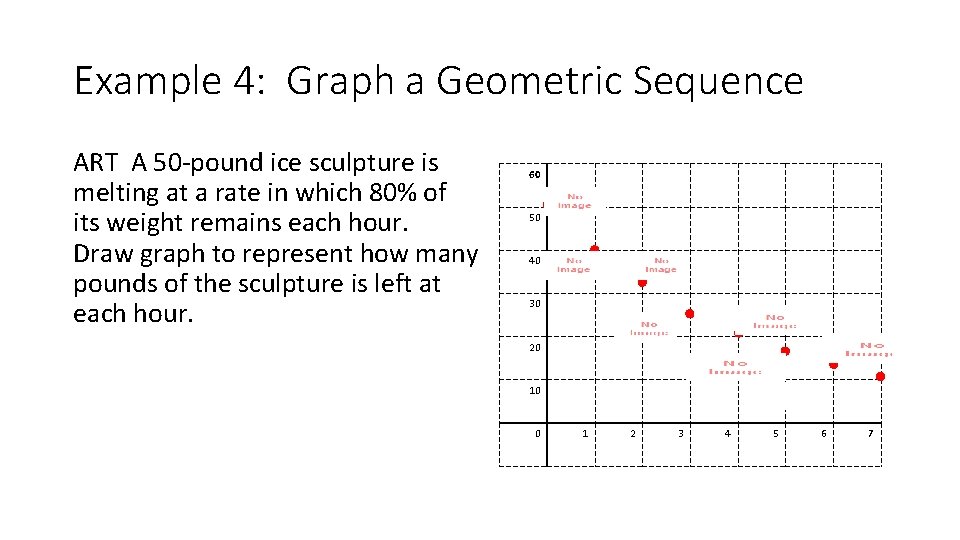
Example 4: Graph a Geometric Sequence ART A 50 -pound ice sculpture is melting at a rate in which 80% of its weight remains each hour. Draw graph to represent how many pounds of the sculpture is left at each hour. 60 50 40 30 20 10 0 1 2 3 4 5 6 7
7 -8 Notes for Algebra 1 Recursive Formulas
7 -8 pg. 448 10 -21
Recursive Formula Allows you to find the nth term of a sequence by performing operations to one or more of the preceding terms.
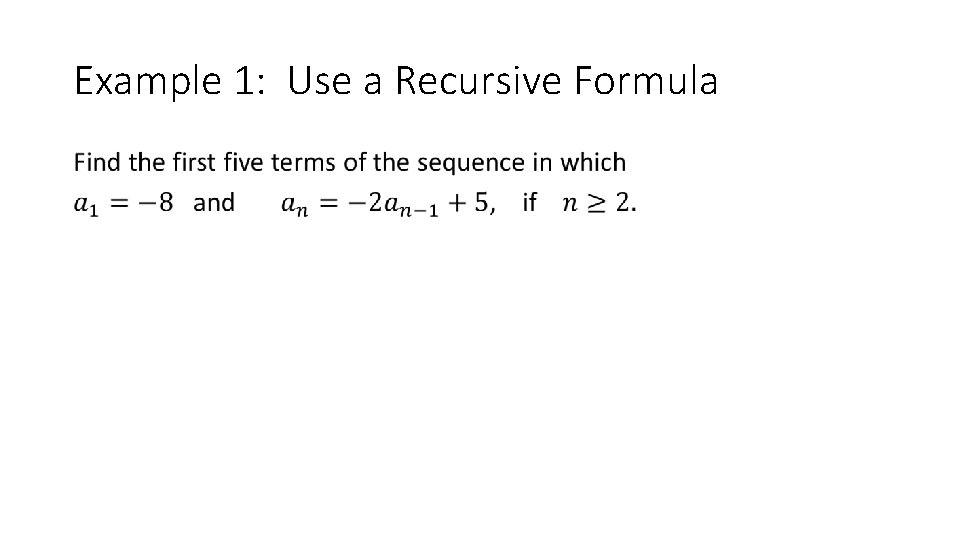
Example 1: Use a Recursive Formula •
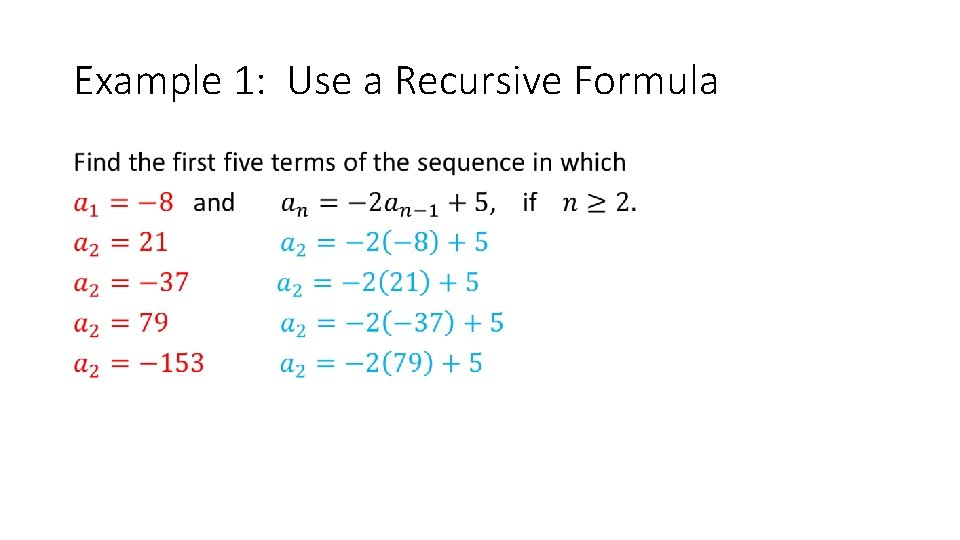
Example 1: Use a Recursive Formula •
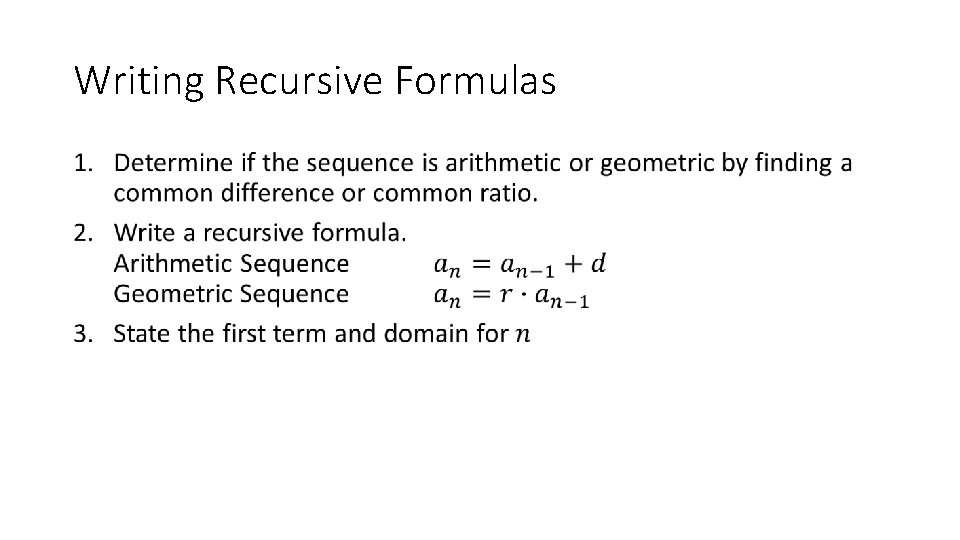
Writing Recursive Formulas •
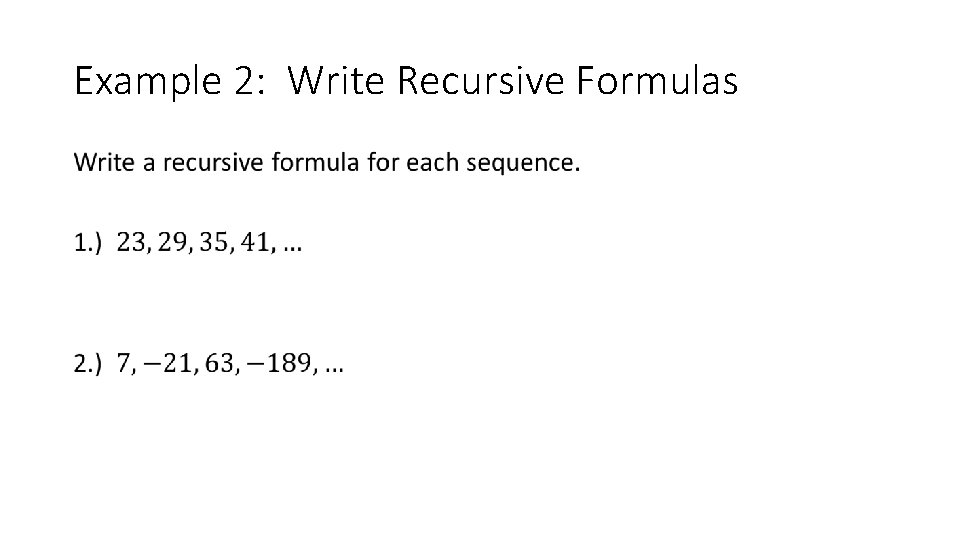
Example 2: Write Recursive Formulas •
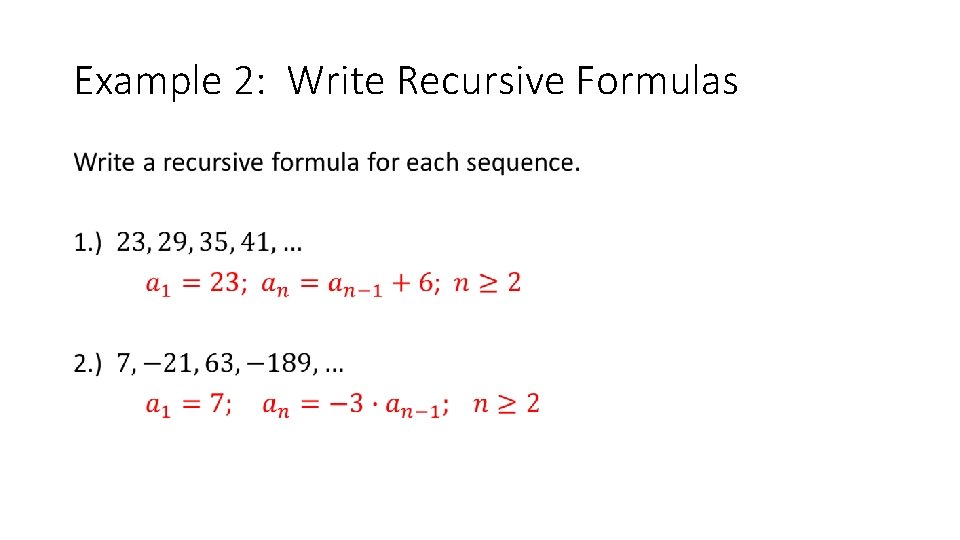
Example 2: Write Recursive Formulas •
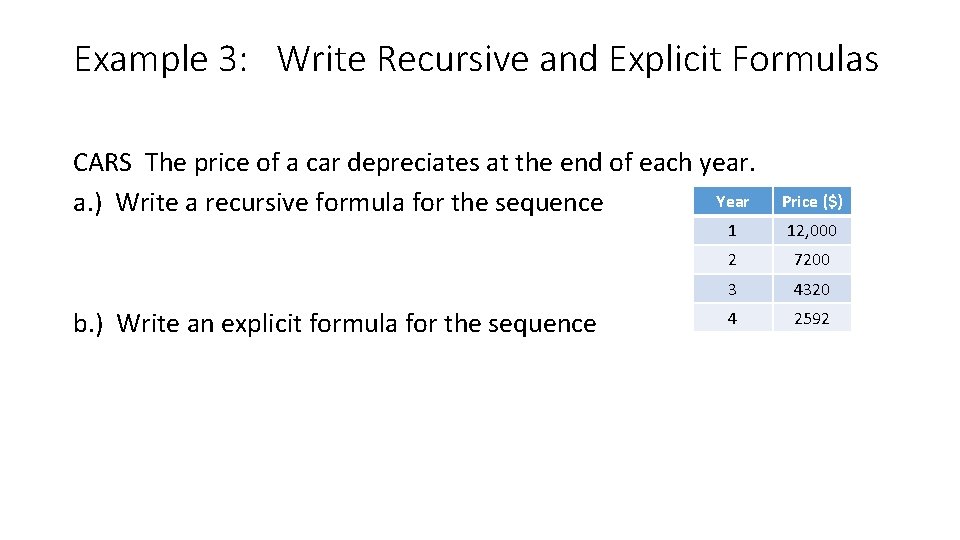
Example 3: Write Recursive and Explicit Formulas CARS The price of a car depreciates at the end of each year. Year a. ) Write a recursive formula for the sequence b. ) Write an explicit formula for the sequence Price ($) 1 12, 000 2 7200 3 4320 4 2592
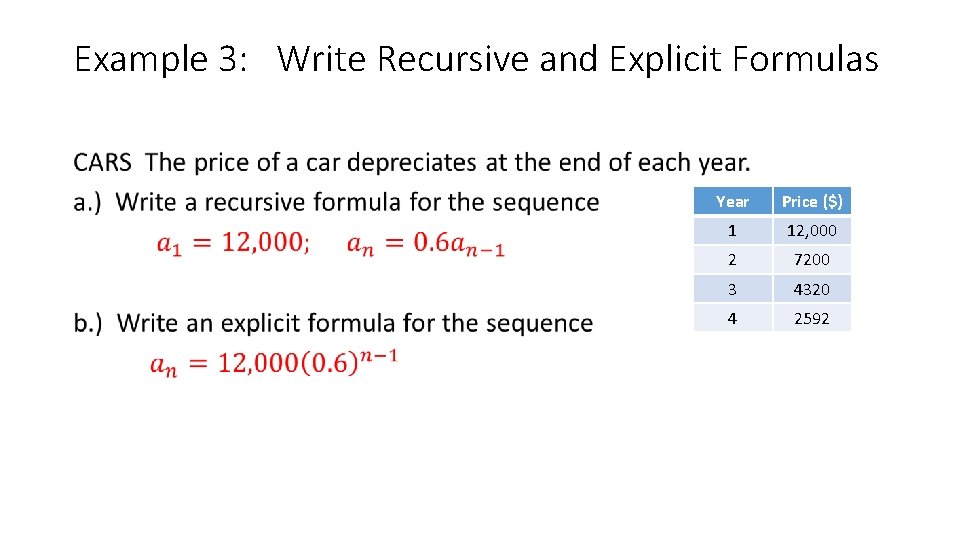
Example 3: Write Recursive and Explicit Formulas • Year Price ($) 1 12, 000 2 7200 3 4320 4 2592
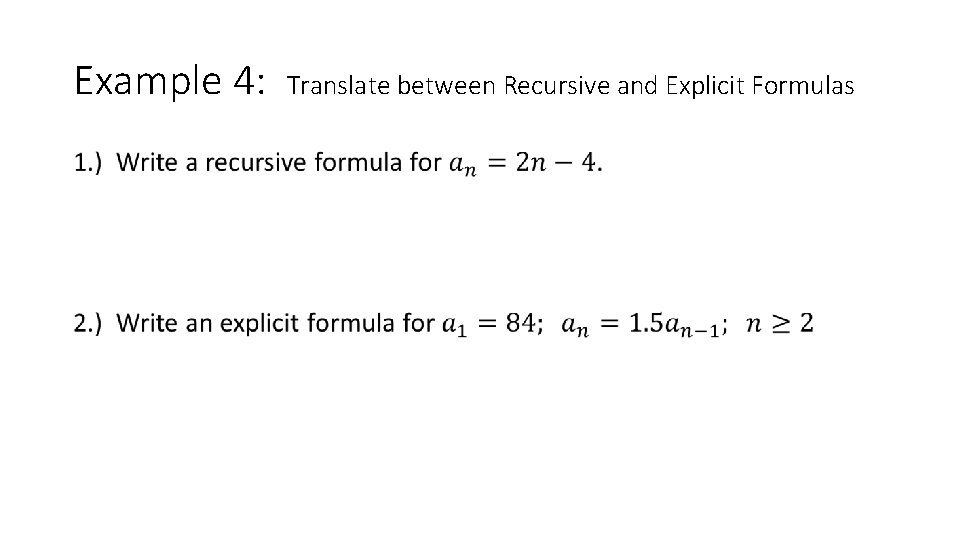
Example 4: Translate between Recursive and Explicit Formulas •
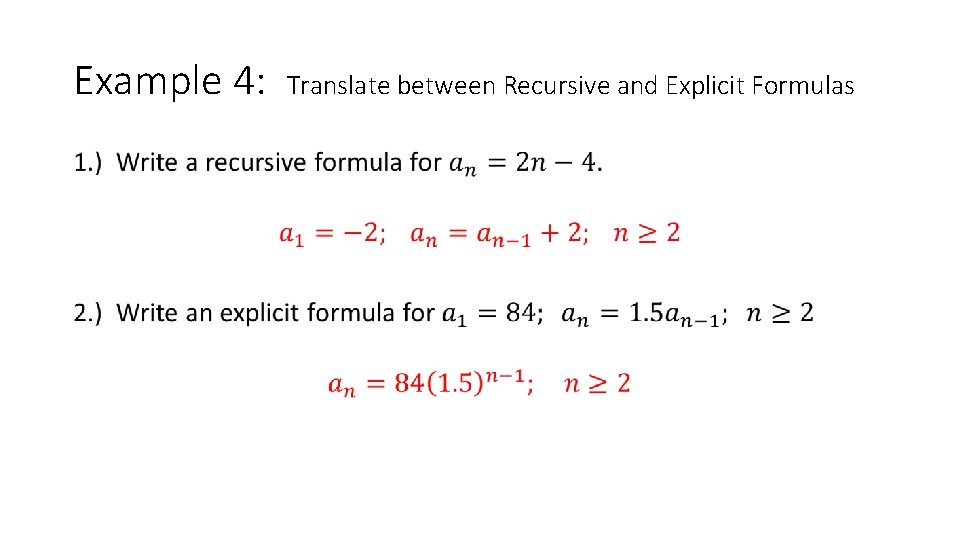
Example 4: Translate between Recursive and Explicit Formulas •
- Slides: 116