
7 5 6 Distinguish between Acids and Bases
7. 5. 6 Distinguish between Acids and Bases and use indicators to determine their relative p. H
p. H • The p. H scale is a way to measure how ACIDIC or BASIC a solution is. • The p. H range is between 0 and 14
p. H continued • The p. H of pure water is 7. Any solution with a p. H of 7 is a neutral solution. It is NOT an acid or a base • The p. H of an acidic solution is LESS than 7; the LOWER the number, the MORE acidic the solution • The p. H of a basic solution is GREATER than 7; the HIGHER the number, the MORE basic the
Acid • Acids can be identified by their SOUR taste (for example lemons and oranges contain acids) • Acids can also be identified by their reaction with some metals • For example: vinegar with limestone

Bases • Bases can be identified by their BITTER taste (for example unsweetened cocoa has a bitter taste) • Bases can also be identified by their SLIPPERY feel (for example dish detergent) • Bases can also be identified by their reaction with an acid to for a neutral p. H solution (for example an antacid to soothe an acid

Neutral Solution • It is neither an acid nor a base • For example, pure water is a neutral solution and has a p. H of 7
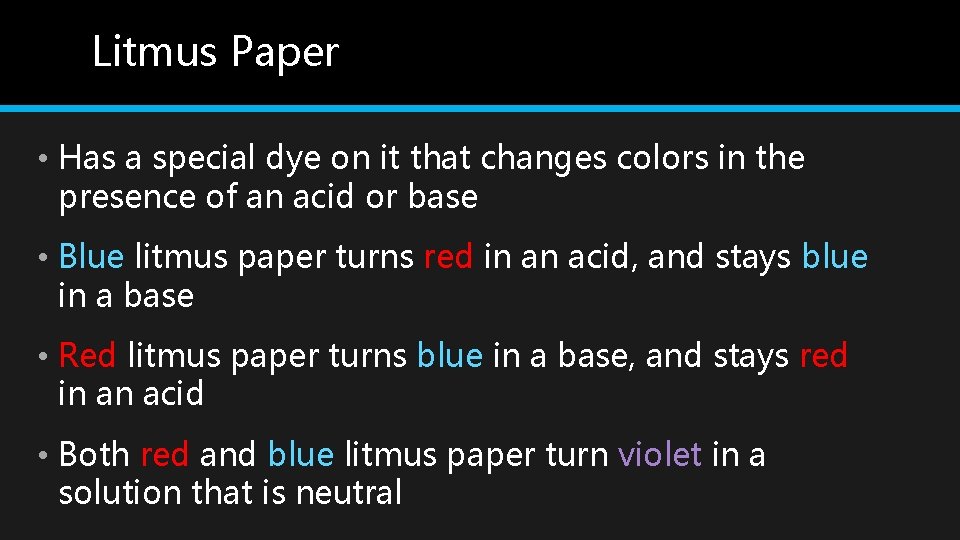
Litmus Paper • Has a special dye on it that changes colors in the presence of an acid or base • Blue litmus paper turns red in an acid, and stays blue in a base • Red litmus paper turns blue in a base, and stays red in an acid • Both red and blue litmus paper turn violet in a solution that is neutral
Phenolpthalein • Used to test for the presence of a base • It is a colorless chemical that turns magenta (bright pink) in a base, and stays colorless in neutral or acidic solutions
p. H paper • Has a range of colors depending on the p. H of the solution • The color of the paper is compared to the chart on the vial to determine the p. H
- Slides: 9