
7 2 Factors that Influence Youth Culture Adolescence


- Slides: 26
7. 2 Factors that Influence Youth Culture
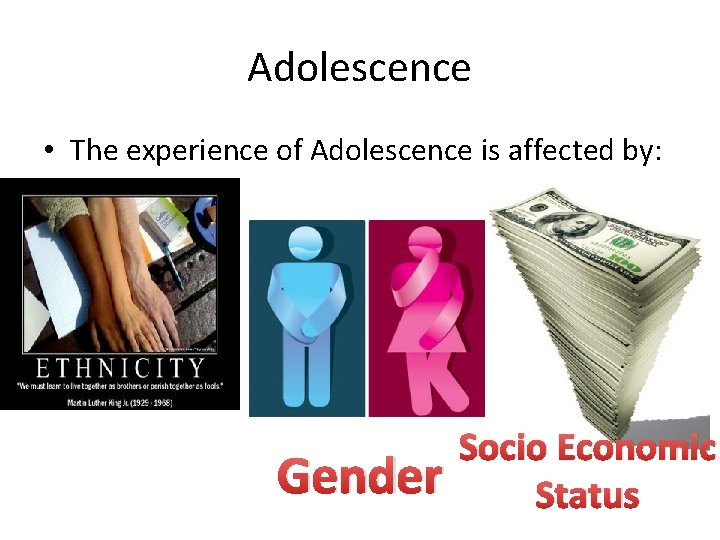
Adolescence • The experience of Adolescence is affected by: Gender Socio Economic Status
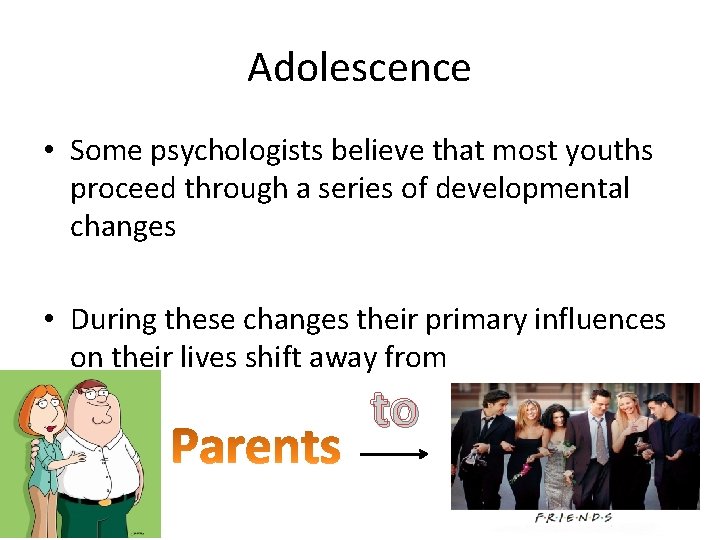
Adolescence • Some psychologists believe that most youths proceed through a series of developmental changes • During these changes their primary influences on their lives shift away from to
Psychological Factors and Developmental Trends • A major factor leading to the existence of the “youth culture” is the fact that adolescents pull away from their parents to establish their own identities • This process is a developmental trend meaning that it is a “normal” life cycle process through which adolescents journey
Psychological Factors and Developmental Trends • One explanation of how this process works was identified by psychologist Erikson • He believed that humans have to resolve different conflicts as they progress through each stage of development in the life cycle
Psychological Factors and Developmental Trends • During the adolescence stage , teens must try and figure out who they are • This conflict is notes as the identity crisis • Erikson argues that in order for teens to establish a sense of identity they must engage in exploration to find their own person
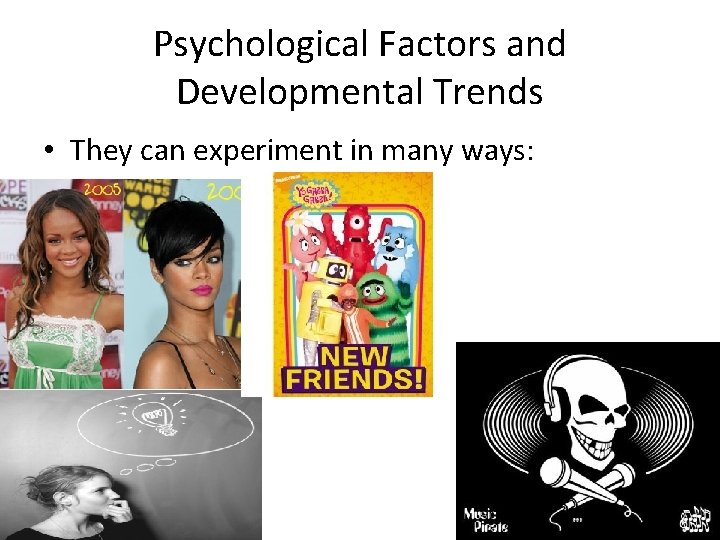
Psychological Factors and Developmental Trends • They can experiment in many ways:
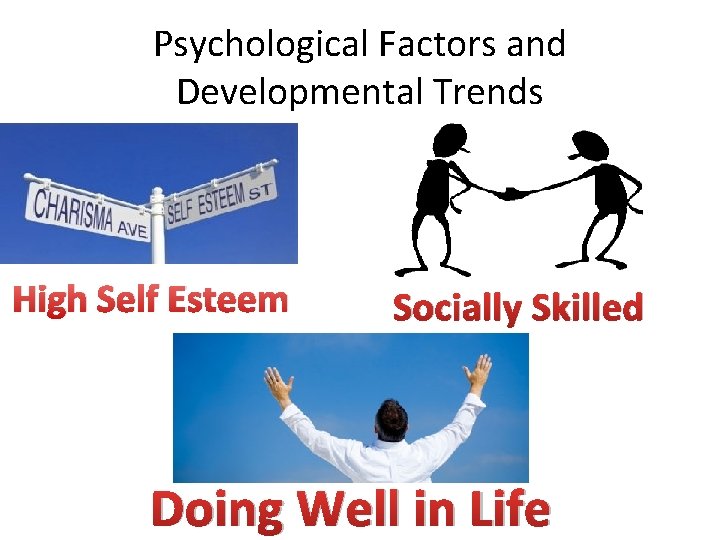
Psychological Factors and Developmental Trends • According to Erikson there are two potential outcomes to the identity search crisis: Identity Achievement • One who has a firm sense of self after engaging in a long search full of exploration • Characteristics of this person
Psychological Factors and Developmental Trends High Self Esteem Socially Skilled Doing Well in Life
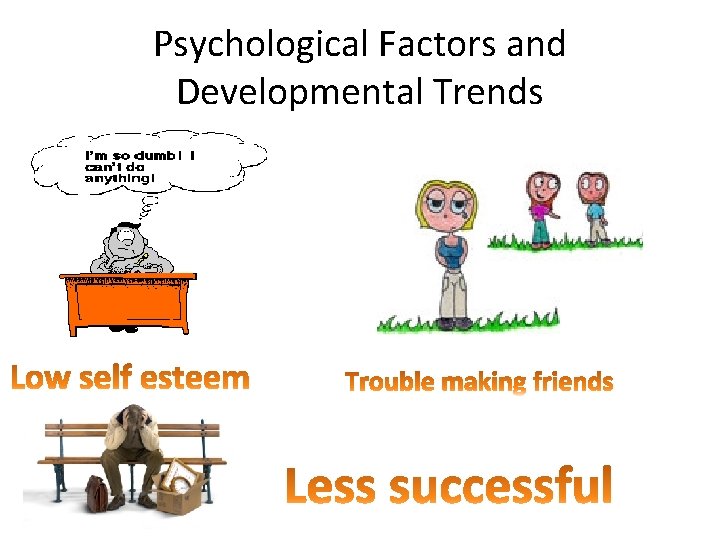
Psychological Factors and Developmental Trends Identity Diffused • This person has not been able to achieve their own sense of identity • This person is likely to have:
Psychological Factors and Developmental Trends
Psychological Factors and Developmental Trends • In 1967, psychologist Peter Blos introduced the term Seperation Individuation Process • This explains how teens gradually pull away from their parents and become independent. • He believes this to be one of the most significant stages of an adolescent life
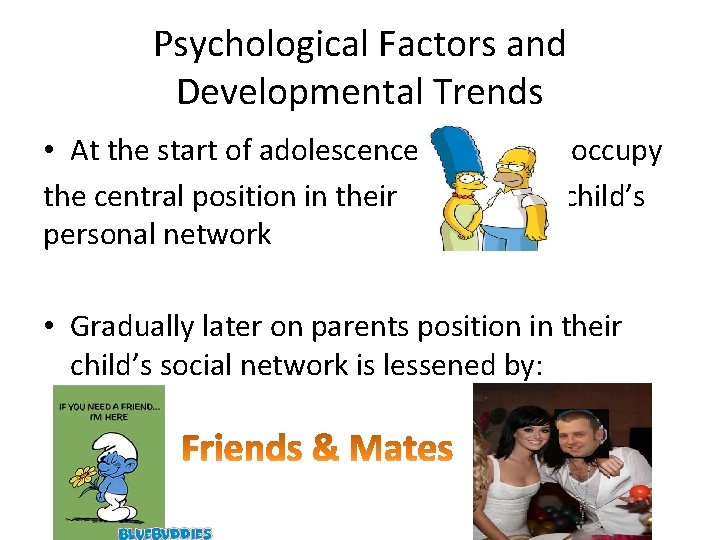
Psychological Factors and Developmental Trends • At the start of adolescence the central position in their personal network occupy child’s • Gradually later on parents position in their child’s social network is lessened by:
Psychological Factors and Developmental Trends • In 1995, Dutch psychologist Maja Dekovic and Wim Meeus explored the concepts of how adolescent identities develop • They found that we tend to use relationships outside our immediate families to derive our identities from
Psychological Factors and Developmental Trends • School identity develops around the age of 15 as well as occupational identity (knowing what you want to do later in life)
Psychological Factors and Developmental Trends • For both males and females over the age of 21, what identity do you think is most important? Why? Relationship Identity
Socialization Within The Home • Socialization is the process by which children are shaped into responsible members of society • Self concept is an important factor in socialization. With regards to self concept there is significant importance given to Gender Identity (concept of maleness or femaleness)
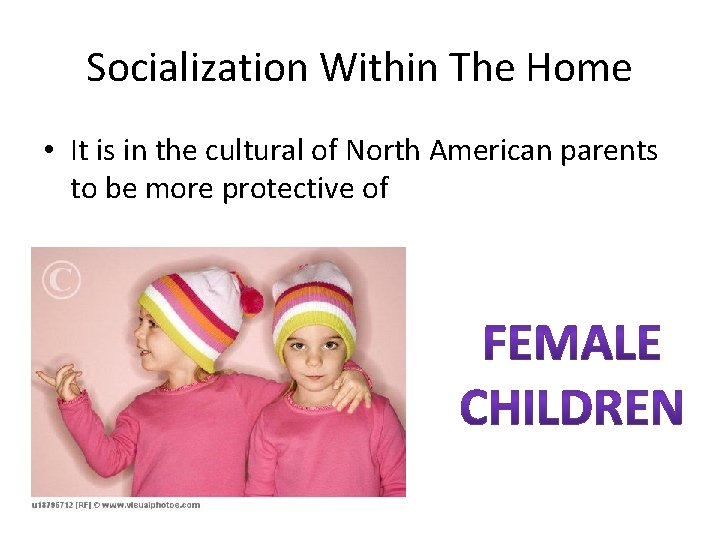
Socialization Within The Home • It is in the cultural of North American parents to be more protective of
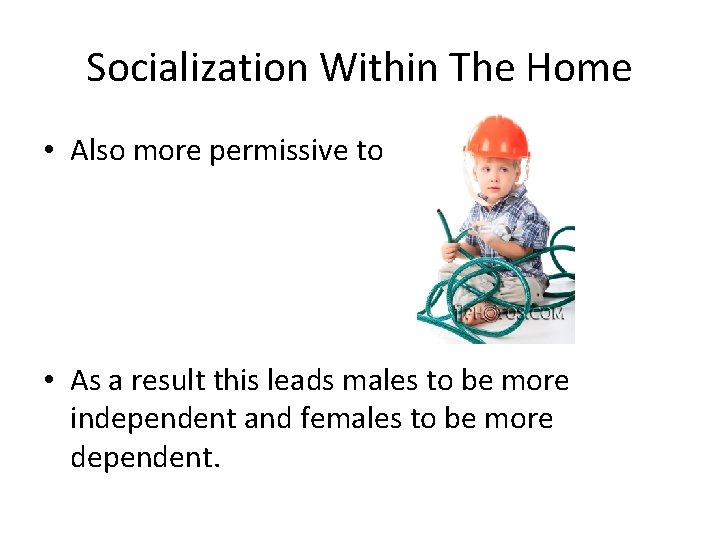
Socialization Within The Home • Also more permissive to • As a result this leads males to be more independent and females to be more dependent.
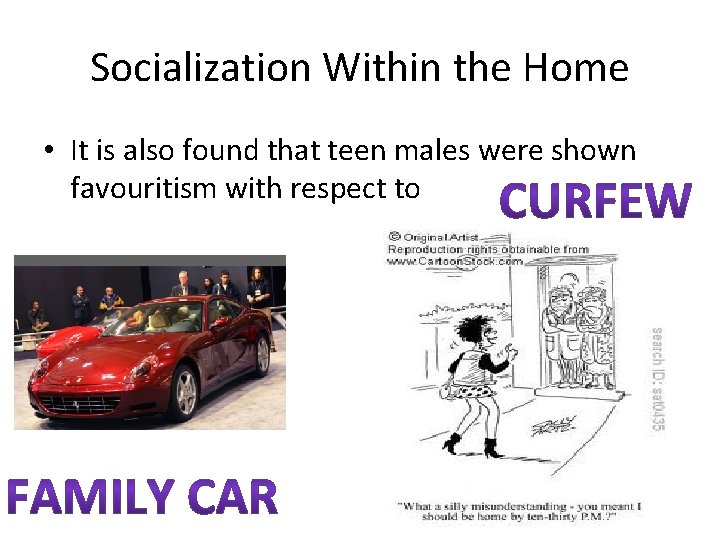
Socialization Within the Home • It is also found that teen males were shown favouritism with respect to
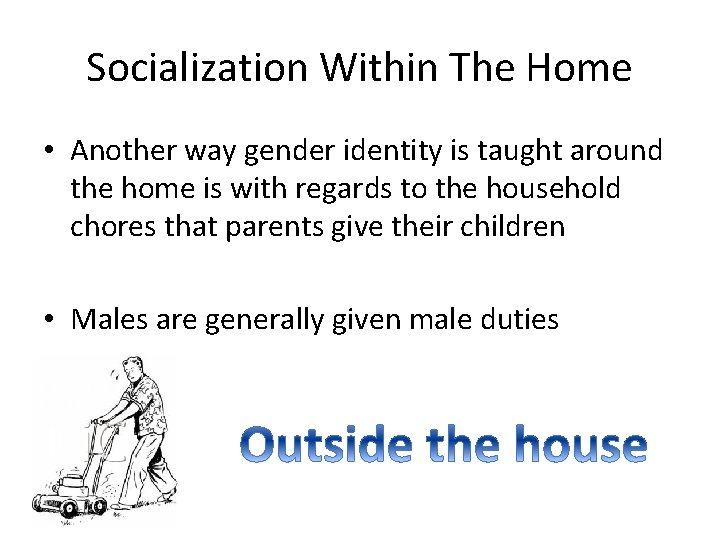
Socialization Within The Home • Another way gender identity is taught around the home is with regards to the household chores that parents give their children • Males are generally given male duties
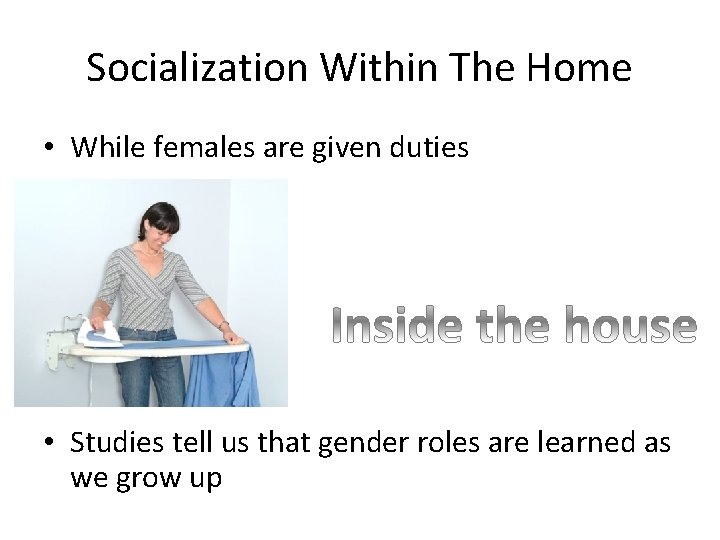
Socialization Within The Home • While females are given duties • Studies tell us that gender roles are learned as we grow up
Other Socialization Factors: Role of Television • Over time, peers, neighbours, school, and the media have an important impact on youth culture • The average Canadian child watches 23 hours of television a week
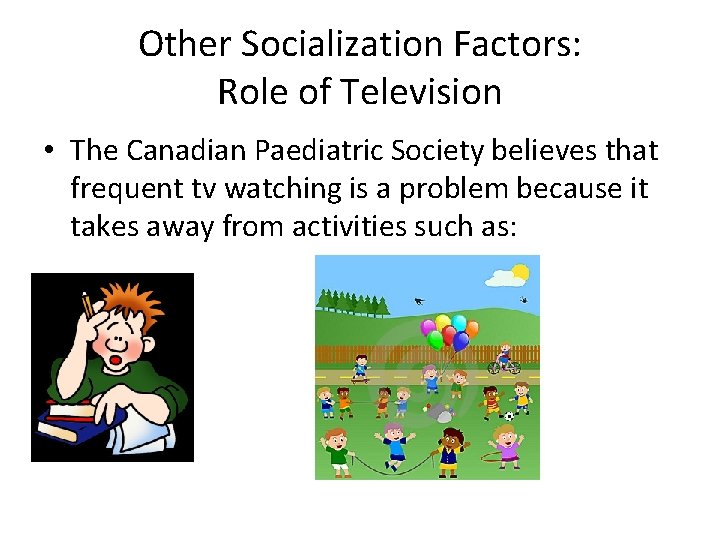
Other Socialization Factors: Role of Television • The Canadian Paediatric Society believes that frequent tv watching is a problem because it takes away from activities such as:
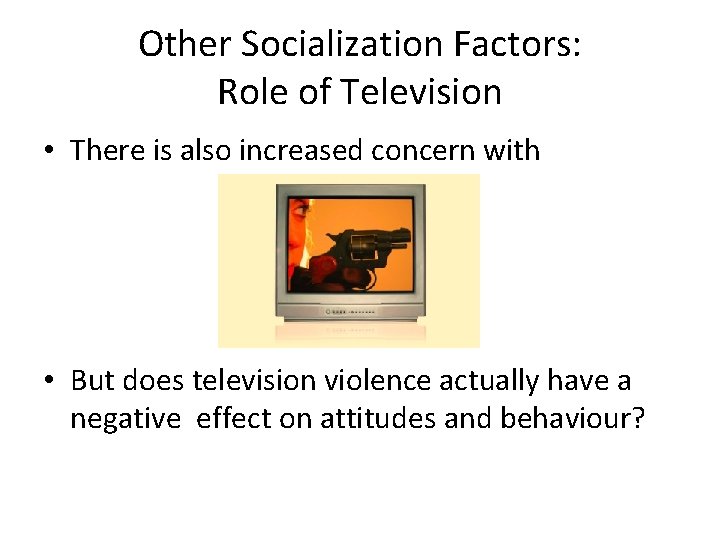
Other Socialization Factors: Role of Television • There is also increased concern with • But does television violence actually have a negative effect on attitudes and behaviour?
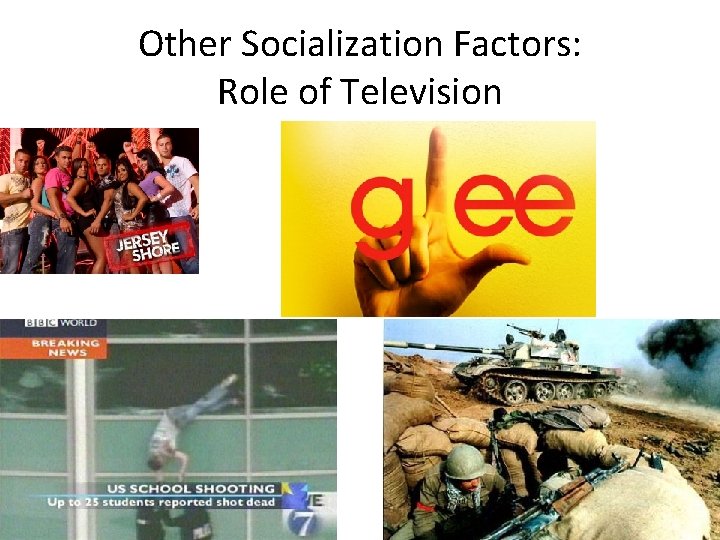
Other Socialization Factors: Role of Television