
7 2 Causes and Effects of Global Change
7. 2 Causes and Effects of Global Change
Learning Objectives § Explain how human activities change the atmosphere and climate. § Describe how changes in the atmosphere drive climate and other changes in global systems. § Explain how human land uses can cause changes in global systems. § Portray the different kinds of pollution that lead to global changes. Vocabulary § climate change-measurable long-term changes in averages of temperature, clouds, winds, precipitation and the frequency of extreme weather events such as droughts, floods, major storms and heat waves.
Vocabulary § global warming-increase in average global temperature mostly resulting from human release of greenhouse gasses such as carbon dioxide and methane. § deforestation-the cutting down of forests for lumber or farming § monoculture-human farming method of many acres of a single type of plant. § invasive species-nonnative species usually introduced by the activities of humans that can outcompete native species and disrupt an ecosystem. § pollutant-any harmful material produced by humans. § ozone layer- O 3, layer of the atmosphere which protects the surface from ultraviolet light. § smog-gray-brown haze pollution over urban areas produced from automobile exhaust.
Vocabulary § biological magnification-the process in which pollutants are concentrated as they pass through trophic levels. Organisms at the top of the food chain are exposed to higher level of toxins due to concentration.

Human Causes of Global Change
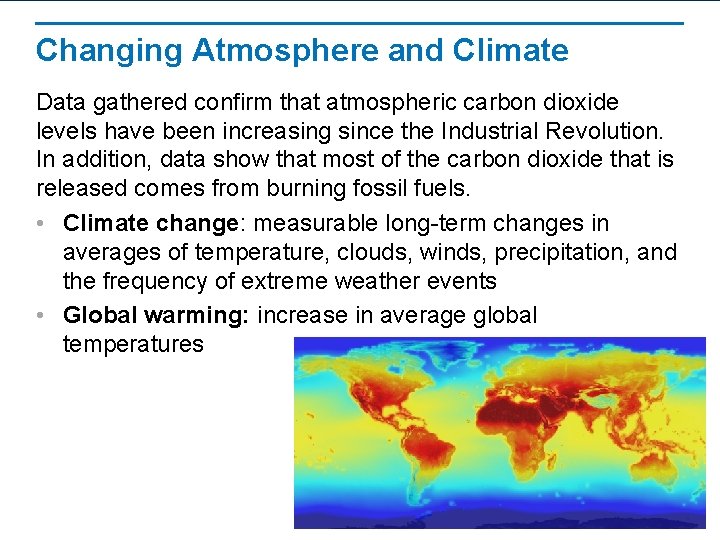
Changing Atmosphere and Climate Data gathered confirm that atmospheric carbon dioxide levels have been increasing since the Industrial Revolution. In addition, data show that most of the carbon dioxide that is released comes from burning fossil fuels. • Climate change: measurable long-term changes in averages of temperature, clouds, winds, precipitation, and the frequency of extreme weather events • Global warming: increase in average global temperatures
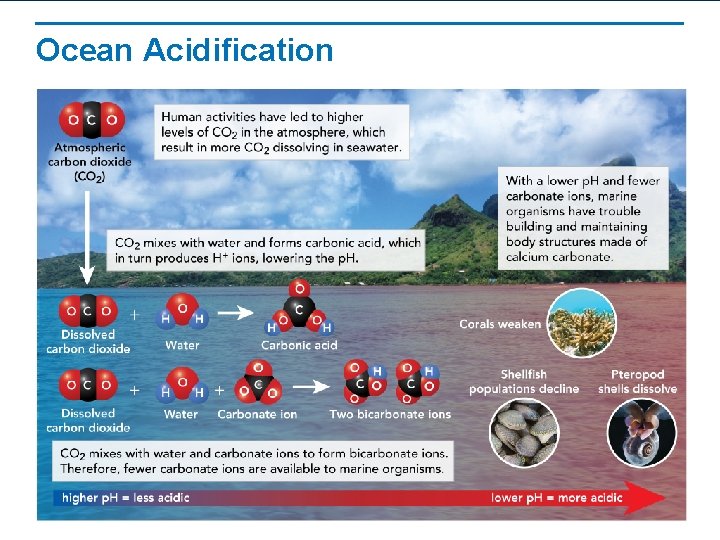
Ocean Acidification
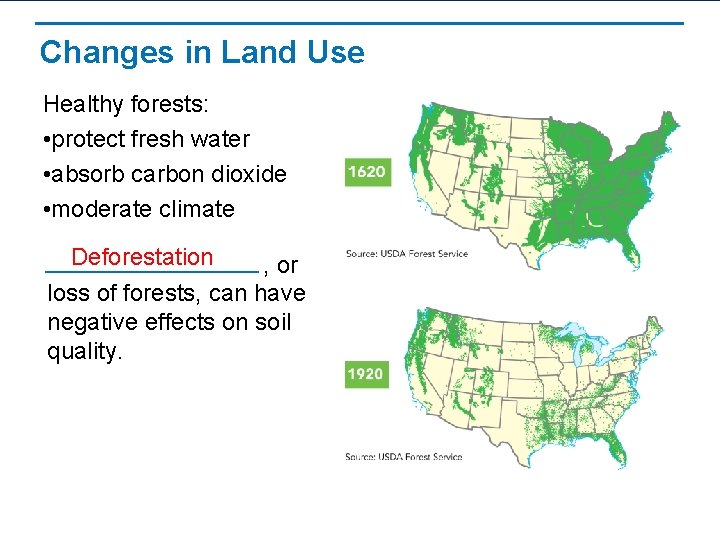
Changes in Land Use Healthy forests: • protect fresh water • absorb carbon dioxide • moderate climate Deforestation , or loss of forests, can have negative effects on soil quality.
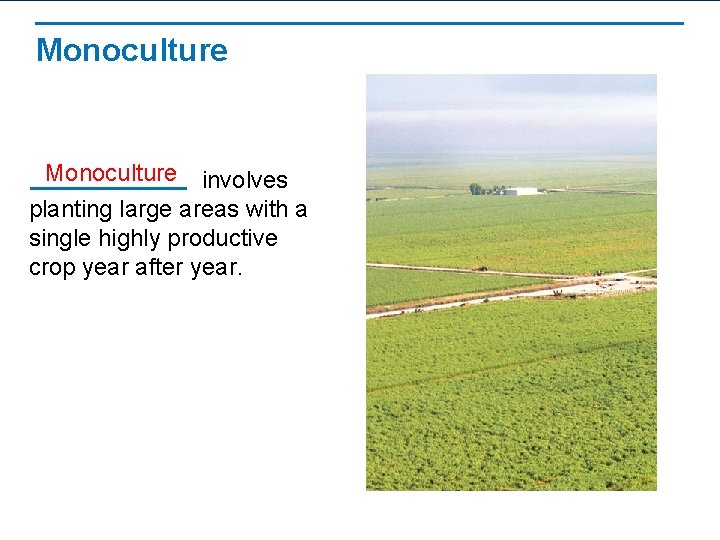
Monoculture involves planting large areas with a single highly productive crop year after year.
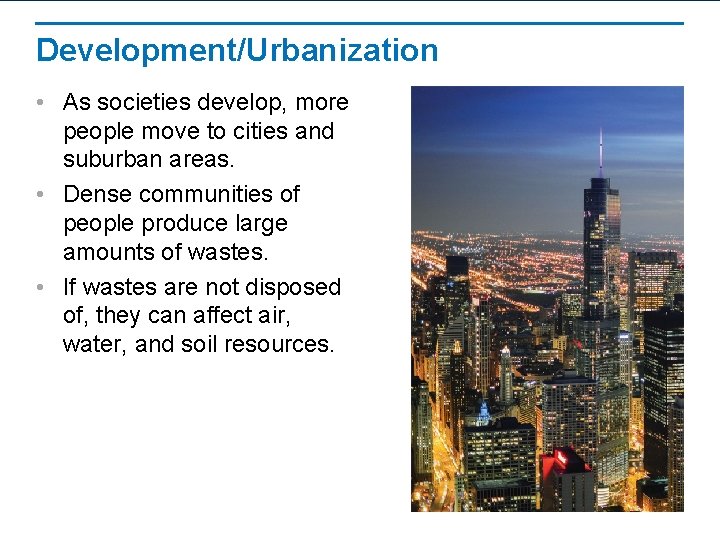
Development/Urbanization • As societies develop, more people move to cities and suburban areas. • Dense communities of people produce large amounts of wastes. • If wastes are not disposed of, they can affect air, water, and soil resources.
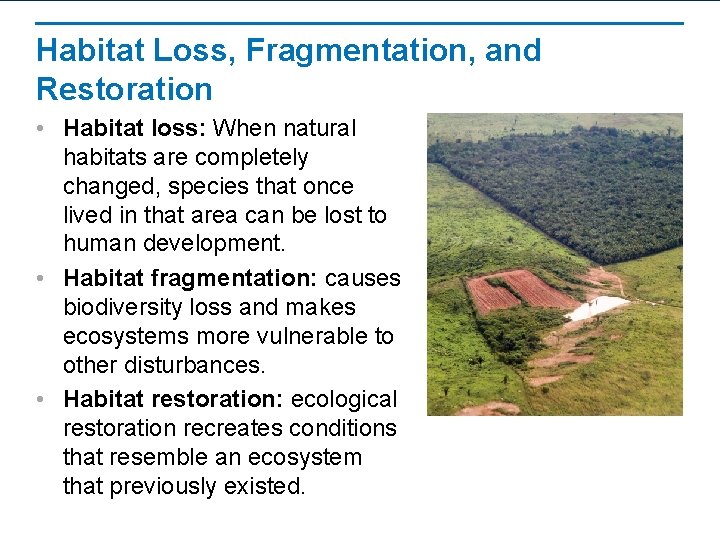
Habitat Loss, Fragmentation, and Restoration • Habitat loss: When natural habitats are completely changed, species that once lived in that area can be lost to human development. • Habitat fragmentation: causes biodiversity loss and makes ecosystems more vulnerable to other disturbances. • Habitat restoration: ecological restoration recreates conditions that resemble an ecosystem that previously existed.
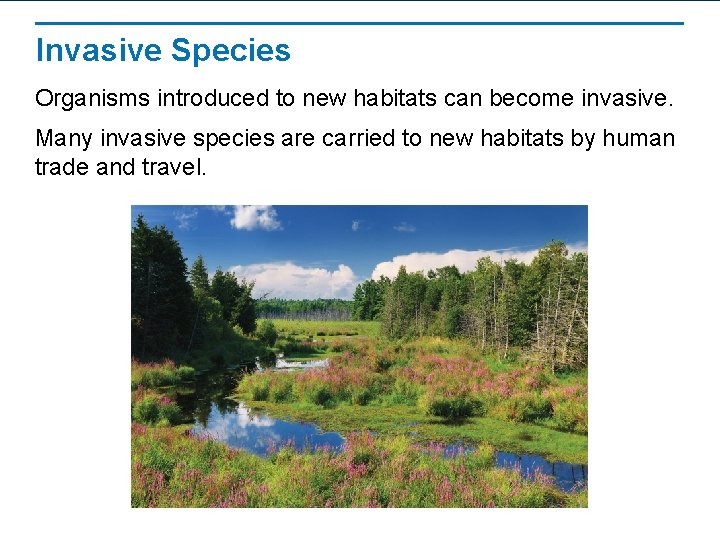
Invasive Species Organisms introduced to new habitats can become invasive. Many invasive species are carried to new habitats by human trade and travel.
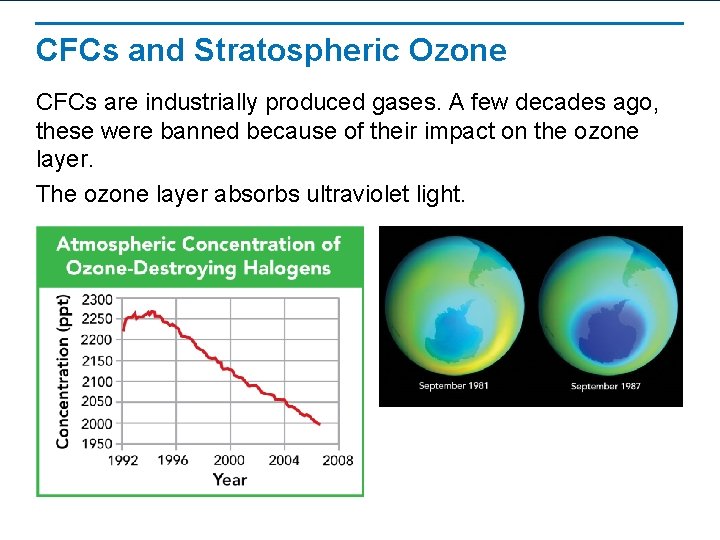
CFCs and Stratospheric Ozone CFCs are industrially produced gases. A few decades ago, these were banned because of their impact on the ozone layer. The ozone layer absorbs ultraviolet light.
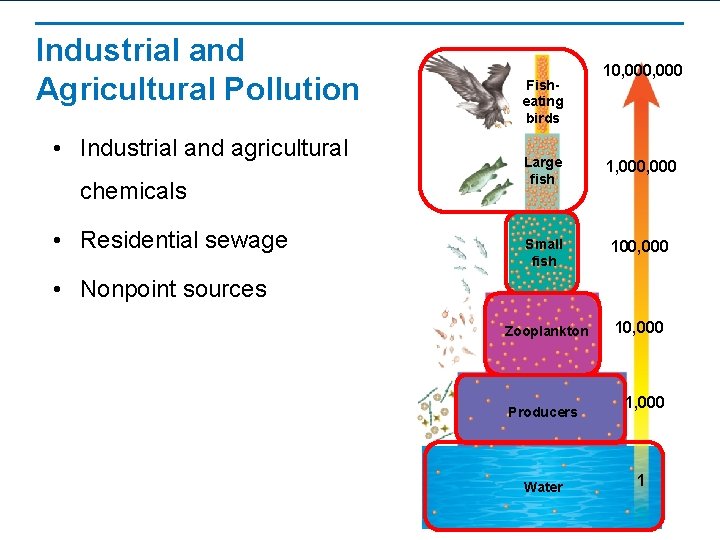
Industrial and Agricultural Pollution • Industrial and agricultural chemicals • Residential sewage Fisheating birds 10, 000 Large fish 1, 000 Small fish 100, 000 Zooplankton 10, 000 • Nonpoint sources Producers Water 1, 000 1
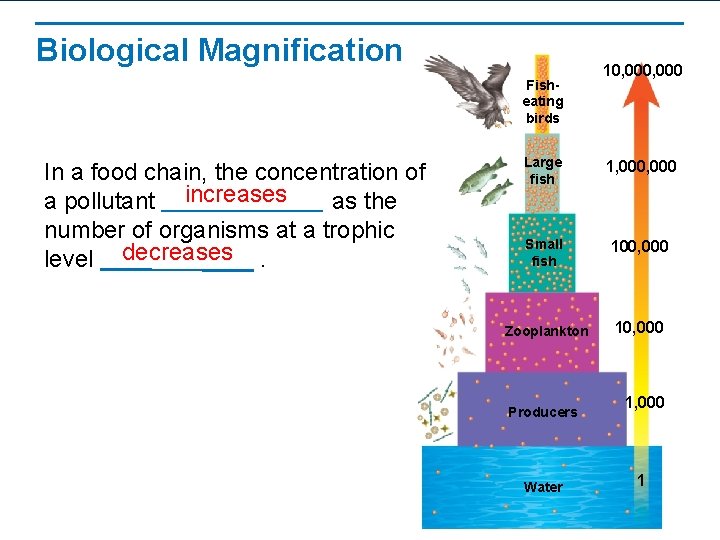
Biological Magnification Fisheating birds In a food chain, the concentration of a pollutant increases as the number of organisms at a trophic level decreases. 10, 000 Large fish 1, 000 Small fish 100, 000 Zooplankton 10, 000 Producers Water 1, 000 1
- Slides: 15