
6 th Grade Science Properties of Matter matter

- Slides: 34
6 th Grade Science Properties of Matter
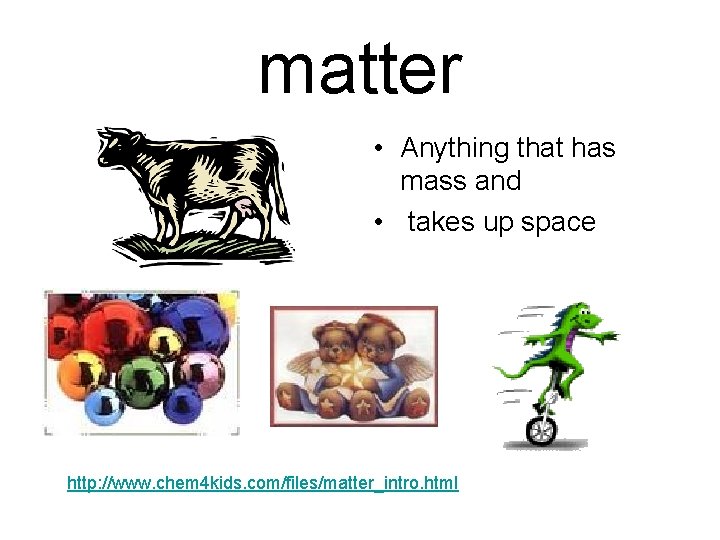
matter • Anything that has mass and • takes up space http: //www. chem 4 kids. com/files/matter_intro. html
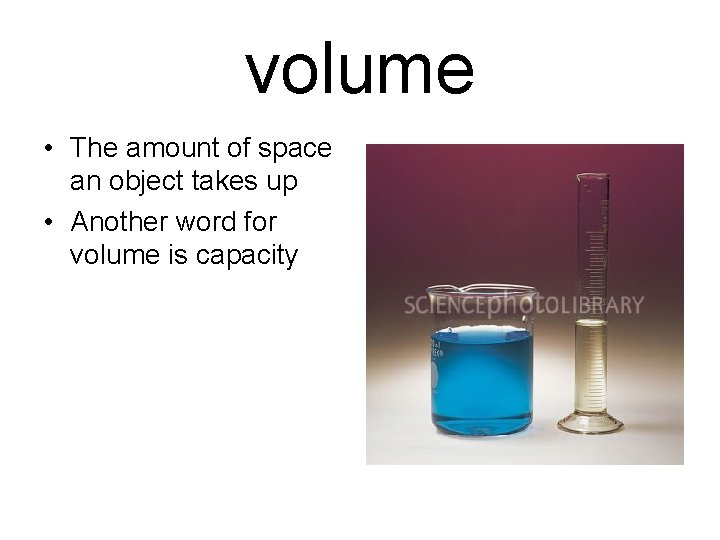
volume • The amount of space an object takes up • Another word for volume is capacity
What are three properties of matter?
What are three properties of matter? • Has mass • Takes up space (volume). • Has a shape!
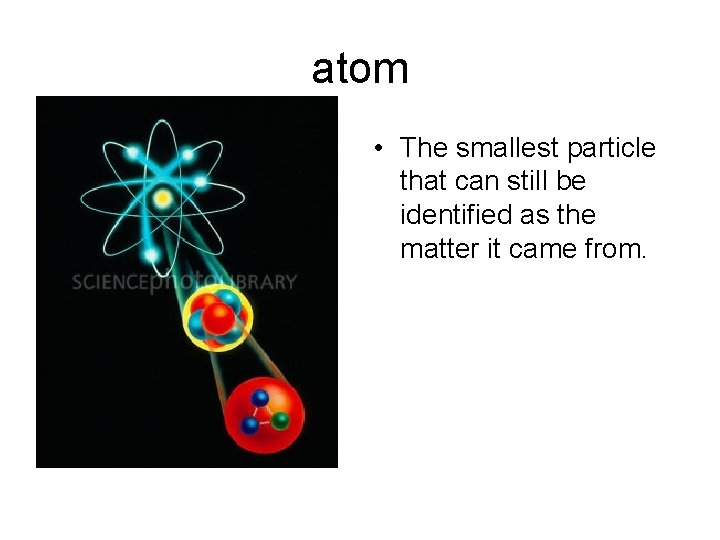
atom • The smallest particle that can still be identified as the matter it came from.
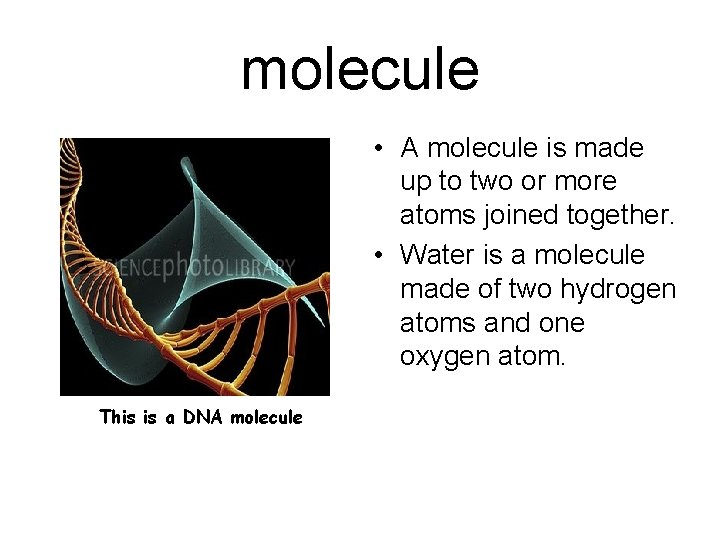
molecule • A molecule is made up to two or more atoms joined together. • Water is a molecule made of two hydrogen atoms and one oxygen atom. This is a DNA molecule
What is an atom and what are its parts?
What is an atom and what are its parts? An atom is the smallest particle of matter that still behaves like the matter it came from. An atom is made of protons, neutrons, and electrons. http: //www. harcourtschool. com/activity/science_up_close/519/deploy/interface. html
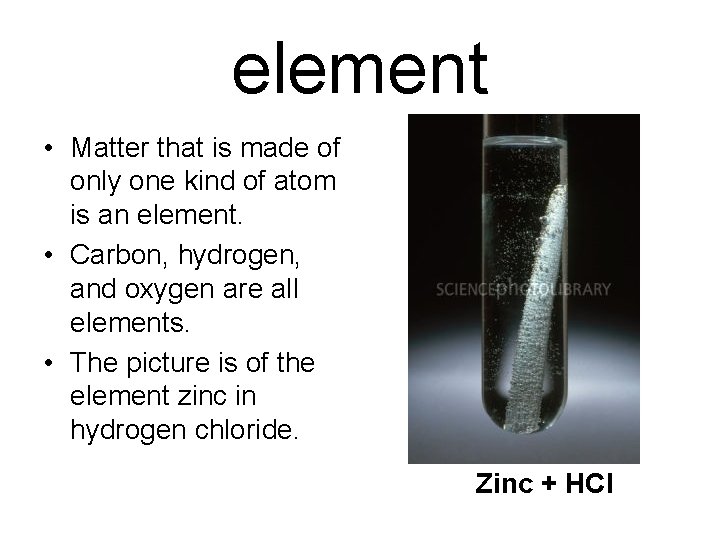
element • Matter that is made of only one kind of atom is an element. • Carbon, hydrogen, and oxygen are all elements. • The picture is of the element zinc in hydrogen chloride. Zinc + HCl
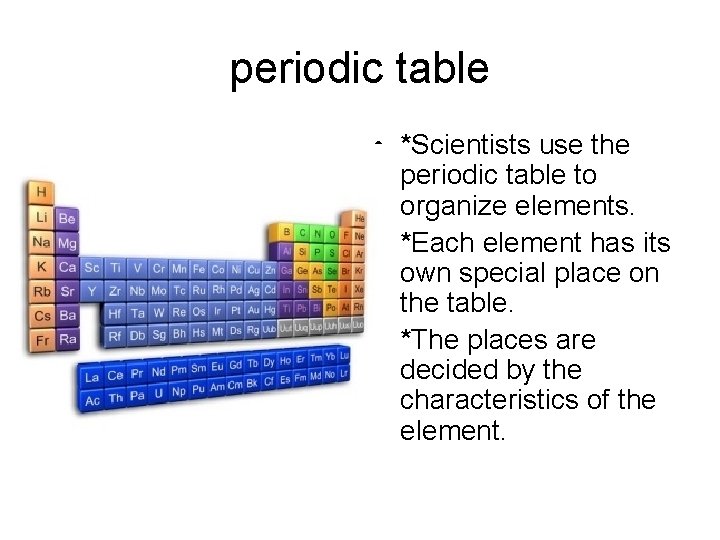
periodic table • *Scientists use the periodic table to organize elements. • *Each element has its own special place on the table. • *The places are decided by the characteristics of the element.
Solid Liquid Gas
States of Matter Demonstration • http: //www. harcourtschool. com/activity/stat es_of_matter/index. html • http: //www. chem 4 kids. com/files/matter_sta tes. html • http: //www. chem 4 kids. com/files/matter_ch anges. html
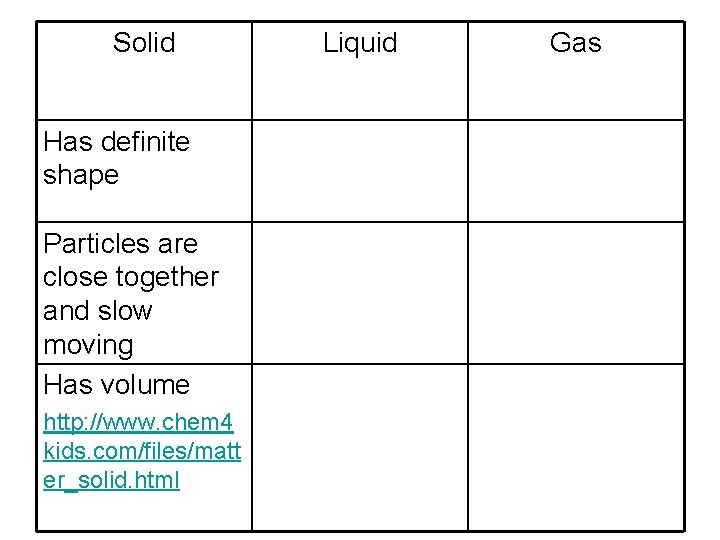
Solid Has definite shape Particles are close together and slow moving Has volume http: //www. chem 4 kids. com/files/matt er_solid. html Liquid Gas
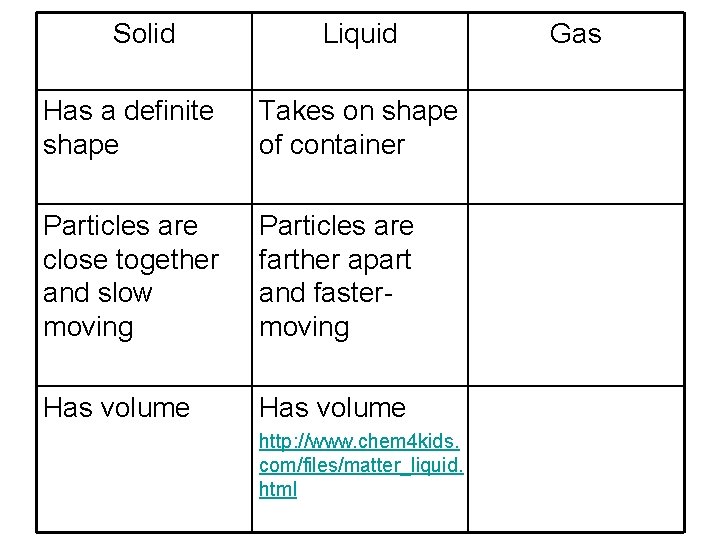
Solid Liquid Has a definite shape Takes on shape of container Particles are close together and slow moving Particles are farther apart and fastermoving Has volume http: //www. chem 4 kids. com/files/matter_liquid. html Gas
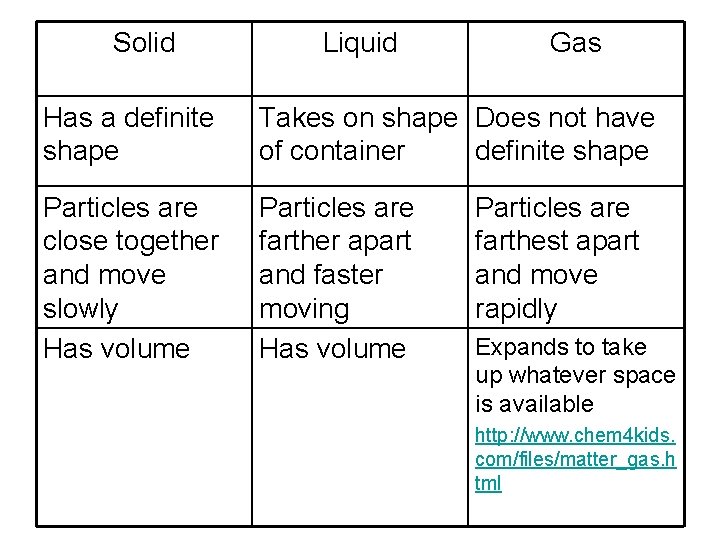
Solid Liquid Gas Has a definite shape Takes on shape Does not have of container definite shape Particles are close together and move slowly Has volume Particles are farther apart and faster moving Has volume Particles are farthest apart and move rapidly Expands to take up whatever space is available http: //www. chem 4 kids. com/files/matter_gas. h tml
How are particles arranged in solids, liquids, and gases?
How are particles arranged in solids, liquids, and gases? • The particles of solids are close together and slow-moving. • The particles of liquids are farther apart and faster-moving than solids. • The particles of gases are farthest apart and move most rapidly.
Draw a model representing how particles are arranged in solids, liquids, and gases. • Check Ch 1 - Student Reading for examples.
5 th Grade Science Chapter 14 Properties of Matter Changing States of Matter
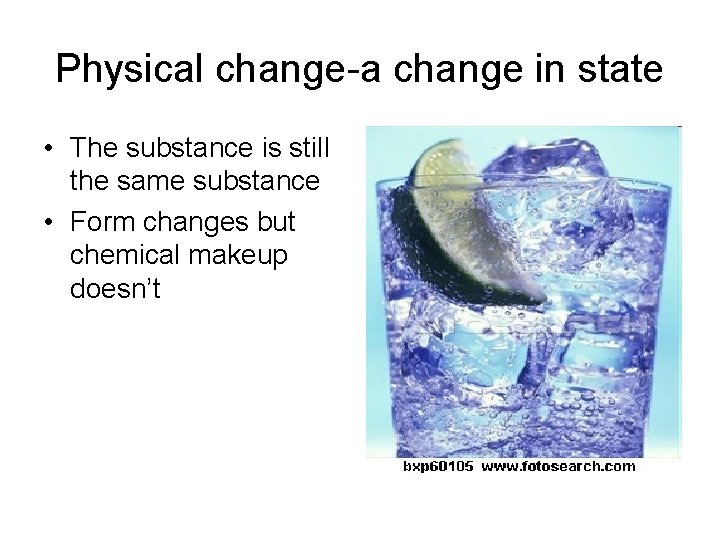
Physical change-a change in state • The substance is still the same substance • Form changes but chemical makeup doesn’t
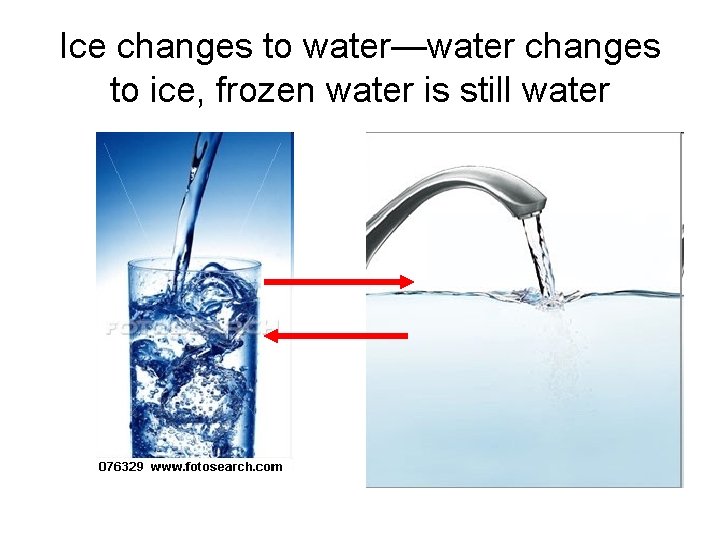
Ice changes to water—water changes to ice, frozen water is still water
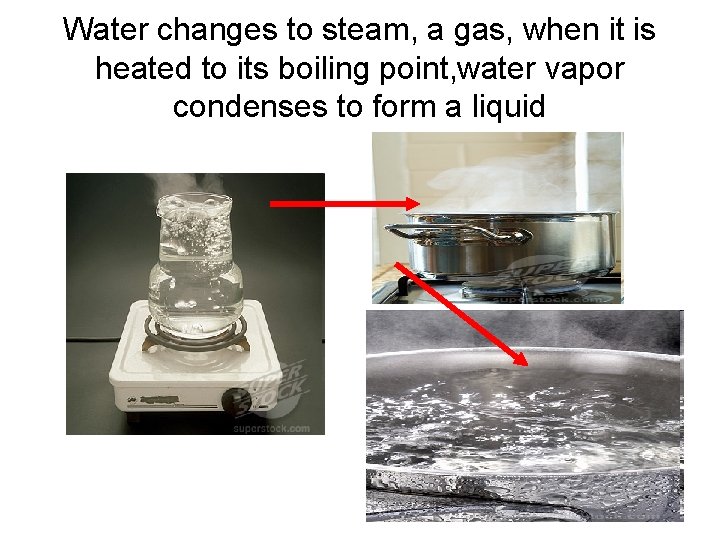
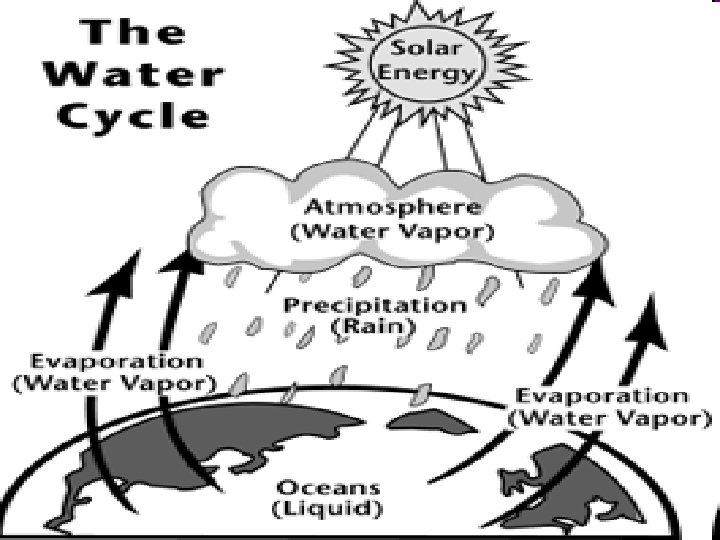
Water changes to steam, a gas, when it is heated to its boiling point, water vapor condenses to form a liquid
Changing States of Matter-Water • Water freezes at 0 degrees Celsius, 32 degrees Fahrenheit • Water boils at 100 degrees Celsius, 212 degrees Fahrenheit • http: //www. chem 4 kids. com/files/matter_ch emphys. html
Physical Properties—describe matter • Melting and boiling point (the temperature at which a substance melts or boils) • State of matter (solid, liquid, gas) • Density –measures how closely packed an object’s atoms are. • Density is a measure of how closely packed an object’s atoms are
Mixtures • A combination of two or more substances • The substances in a mixture aren’t permanently combined • Substances can be separated from the mixture and be the same as they were before they were mixed
Solutions • A mixture in which all parts are mixed evenly • Can be combinations of gases, liquids, and even solids
Insert video—Matter and Energy. What is It? • http: //ippex. pppl. gov/interactive/matter/mol ecule. html
Other Physical Changes • • Breaking Crushing Cutting Bending Melting Freezing Boiling • Can happen naturally • People can cause changes – Water evaporating – Rain falling – People cause change • Recycling paper • Recycling metal
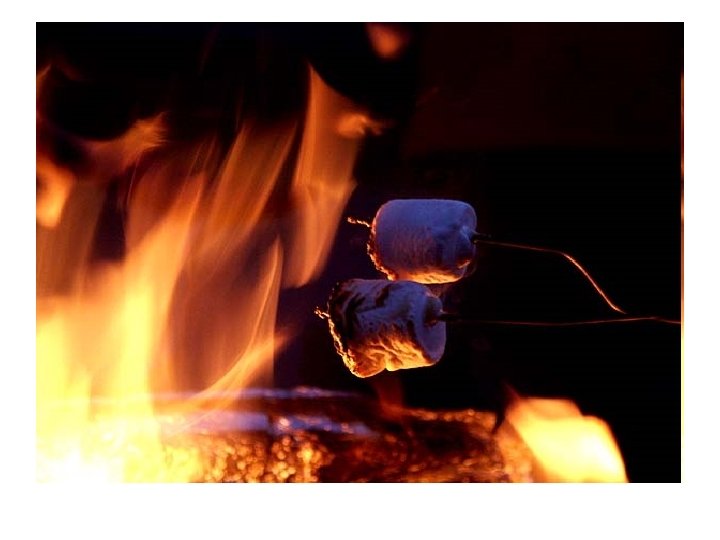
Chemical Properties and Changes • Chemical changes change the chemical nature and properties of substances to form new substances – A match burns – Two substances mix together turn a color different from either of them – Toasting marshmallows • Melt it—physical change • Burn it—chemical change
Combustibility-a measure of how easily a substance will burn, or combine rapidly with oxygen • Corrosion of metal—when iron combines with oxygen in the air, rust forms • Gas bubbles—hydrogen peroxide on a cut • A change in color-fireworks
Conservation of Matter • Chemical changes don’t make new matter