
6 Production Inputs and Cost Building Blocks for
6 Production, Inputs, and Cost: Building Blocks for Supply Analysis Of course, that’s just an estimate. The actual cost will be somewhat more. AUTO MECHANIC TO CUSTOMER
Contents ● Short-run versus Long-run Costs: What Makes an Input Variable? ● Production and Input Choice, with One Variable Input ● Multiple Input Decisions: The Choice of Optimal Input Combinations ● Cost and Its Dependence on Output Copyright© 2003 South-Western/Thomson. Publishing. Learning. All rights reserved.
Contents (continued) ● Economies of Scale ● Appendix: Production Indifference Curves Copyright© 2003 South-Western/Thomson. Publishing. Learning. All rights reserved.
Short-run versus Long-run Costs ● The Economic Short Run vs the Long Run ♦ Short run ■a period of time during which some of the firm’s cost commitments will not have ended. ■In the short run, output can change but production processes are fixed. Copyright© 2003 South-Western/Thomson Learning. All rights reserved.
Short-run versus Long-run Costs ● The Economic Short Run vs the Long Run ♦ Long run ■a period of time long enough for all of the firm’s commitments to come to an end. ■In the long run, all inputs can be varied and production processes can be changed. Copyright© 2003 South-Western/Thomson Learning. All rights reserved.
Short-run versus Long-run Costs ● Fixed Costs and Variable Costs ♦ Fixed costs = costs that cannot be changed ♦ Variable costs = costs that can be changed ♦ In the short run, some costs are fixed. In the long run, all costs are variable. Copyright© 2003 South-Western/Thomson Learning. All rights reserved.
Production and Input Choice, with 1 Variable Input ● Total physical product = the amount of output that can be produced as one input changes, with all other inputs held constant Copyright© 2003 South-Western/Thomson Learning. All rights reserved.
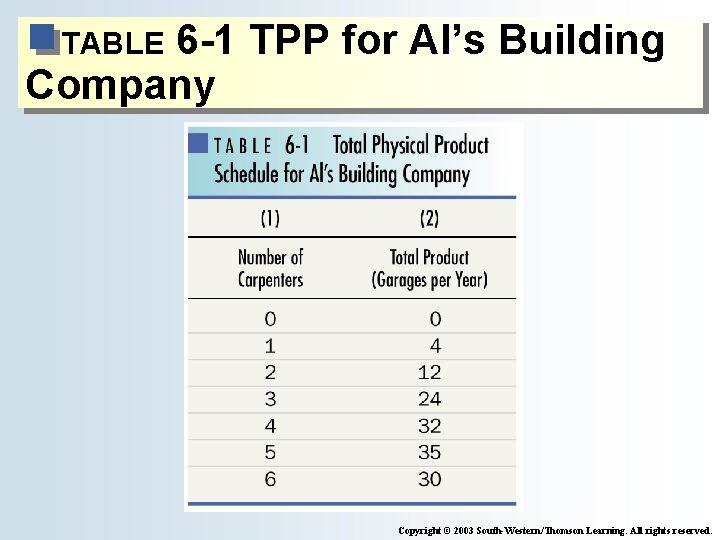
6 -1 TPP for Al’s Building Company TABLE Copyright © 2003 South-Western/Thomson Learning. All rights reserved.
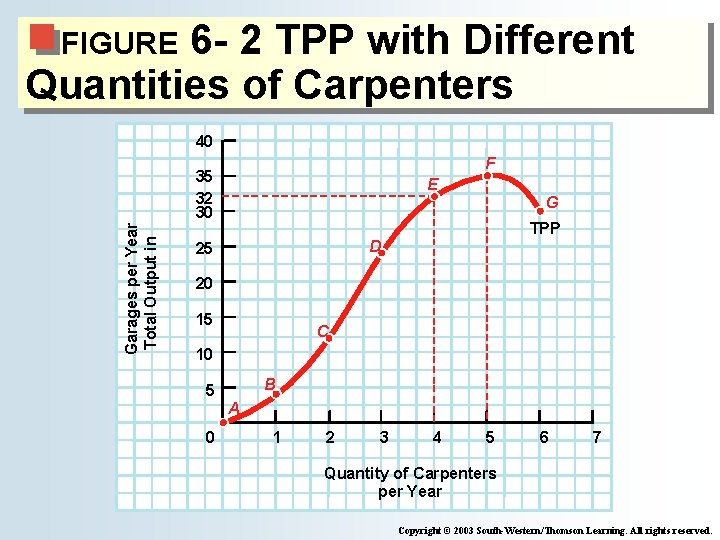
6 - 2 TPP with Different Quantities of Carpenters FIGURE 40 F Garages per Year Total Output in 35 32 30 E G TPP D 25 20 15 C 10 5 0 B A 1 2 3 4 5 6 7 Quantity of Carpenters per Year Copyright © 2003 South-Western/Thomson Learning. All rights reserved.
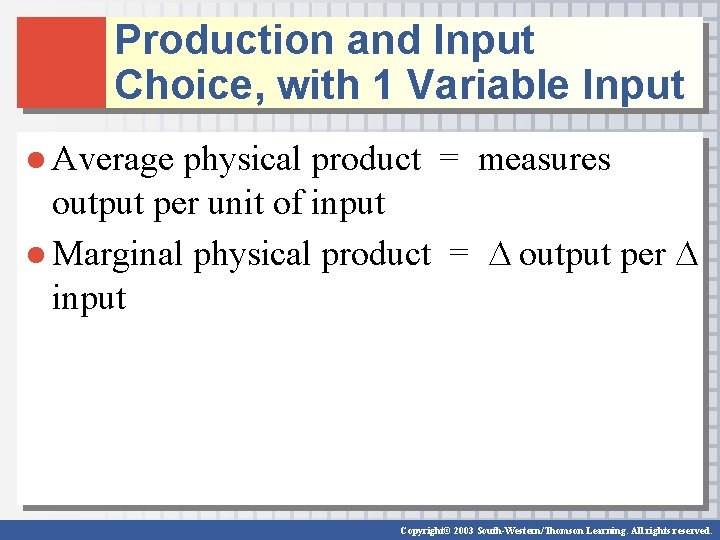
Production and Input Choice, with 1 Variable Input ● Average physical product = measures output per unit of input ● Marginal physical product = output per input Copyright© 2003 South-Western/Thomson Learning. All rights reserved.
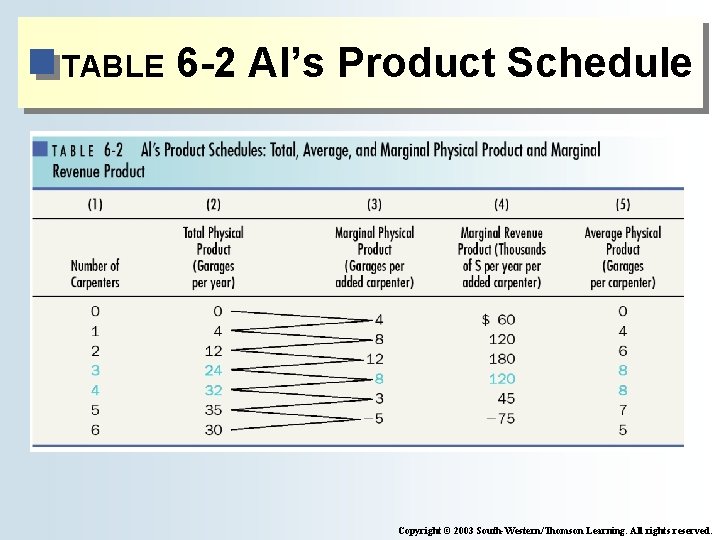
TABLE 6 -2 Al’s Product Schedule Copyright © 2003 South-Western/Thomson Learning. All rights reserved.
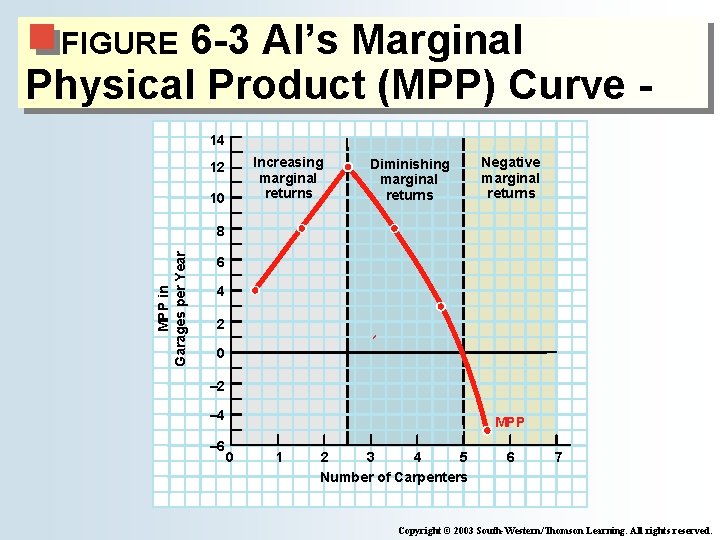
6 -3 Al’s Marginal Physical Product (MPP) Curve FIGURE 14 Increasing marginal returns 12 10 Diminishing marginal returns Negative marginal returns MPP in Garages per Year 8 6 4 2 0 – 2 – 4 – 6 MPP 0 1 2 3 4 5 Number of Carpenters 6 7 Copyright © 2003 South-Western/Thomson Learning. All rights reserved.
MPP and the “Law” of Diminishing Marginal Returns ● one input additional output created by each additional unit of the input ● Holds all other inputs constant ● Only applies past a certain point ● Explains the shape of the marginal physical product curve Copyright© 2003 South-Western/Thomson. Publishing. Learning. All rights reserved.
MPP and the “Law” of Diminishing Marginal Returns ● Marginal revenue product = marginal physical product output price ● The amount of an input is optimal when marginal revenue product = price of the input Copyright© 2003 South-Western/Thomson. Publishing. Learning. All rights reserved.
Multiple Input Decisions ● Substitutability: The Choice of Input Proportions ♦ Firms usually have a variety of tech. options and can substitute one input for another. ♦ The least-cost choice of inputs depends upon their relative prices. ♦ A production function shows the max amount produced by any combination of inputs. Copyright© 2003 South-Western/Thomson Learning. All rights reserved.
Multiple Input Decisions ● The Marginal Rule for Optimal Input Proportions ♦ Rule for optimal input proportions = the ratio of marginal physical product to price should be the same for all inputs ■MPPa/Pa = MPPb/Pb ♦ If the ratio is higher for one input, more of that input should be used, and less of the others, until the ratios are equal. Copyright© 2003 South-Western/Thomson Learning. All rights reserved.
Multiple Input Decisions ● Changes in Input Prices and Optimal Input Proportions ♦ input price ratio of marginal physical product to price ♦ To maximize profits, the firm should switch away from that input until its marginal physical product rises enough to equalize the ratios again. Copyright© 2003 South-Western/Thomson Learning. All rights reserved.
Cost and Its Dependence on Output ● Input Quantities and Total, Average, and Marginal Cost Curves ♦ Total cost = the total cost (including opportunity cost) of producing any level of output when inputs are optimally employed ♦ Average cost = total cost per unit of output ♦ Marginal cost = increase in total cost from producing an additional unit of output Copyright© 2003 South-Western/Thomson Learning. All rights reserved.
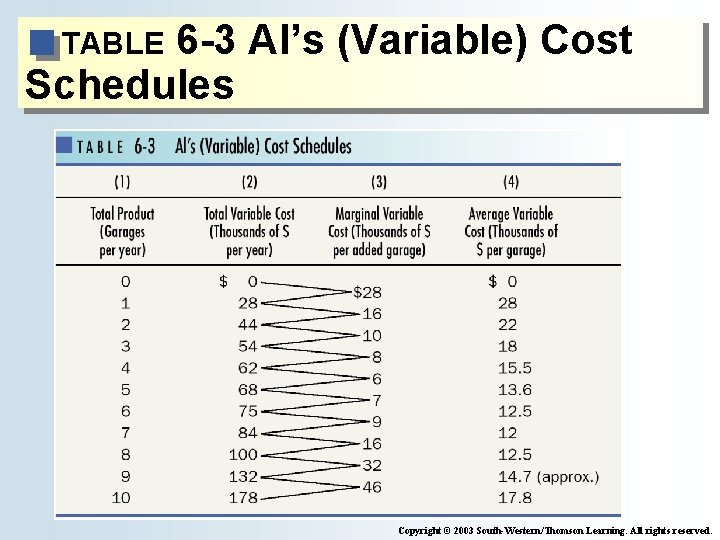
6 -3 Al’s (Variable) Cost Schedules TABLE Copyright © 2003 South-Western/Thomson Learning. All rights reserved.
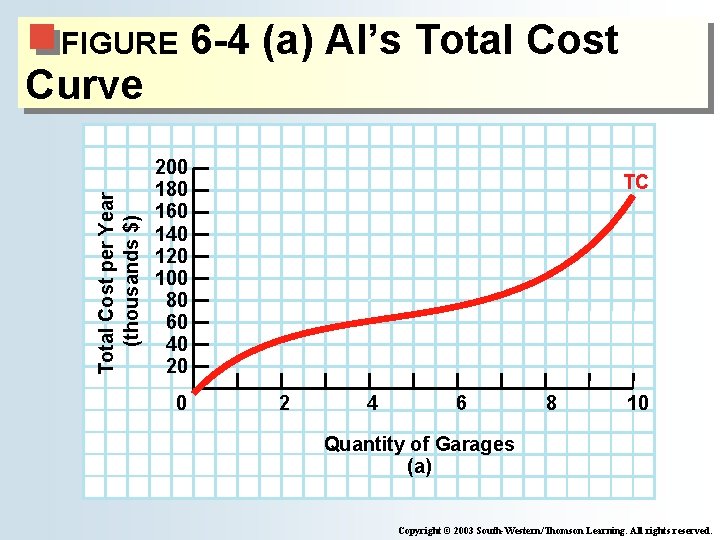
FIGURE Total Cost per Year (thousands $) Curve 6 -4 (a) Al’s Total Cost 200 180 160 140 120 100 80 60 40 20 0 TC 2 4 6 8 10 Quantity of Garages (a) Copyright © 2003 South-Western/Thomson Learning. All rights reserved.
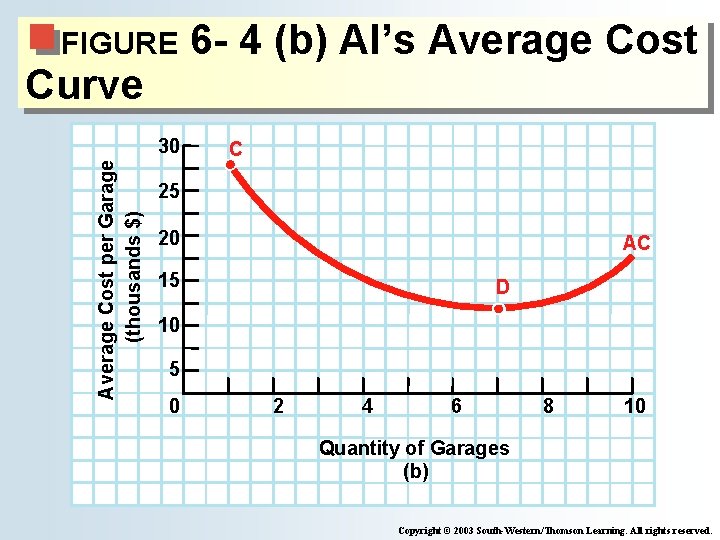
FIGURE Curve Average Cost per Garage (thousands $) 30 6 - 4 (b) Al’s Average Cost C 25 20 AC 15 D 10 5 0 2 4 6 8 10 Quantity of Garages (b) Copyright © 2003 South-Western/Thomson Learning. All rights reserved.
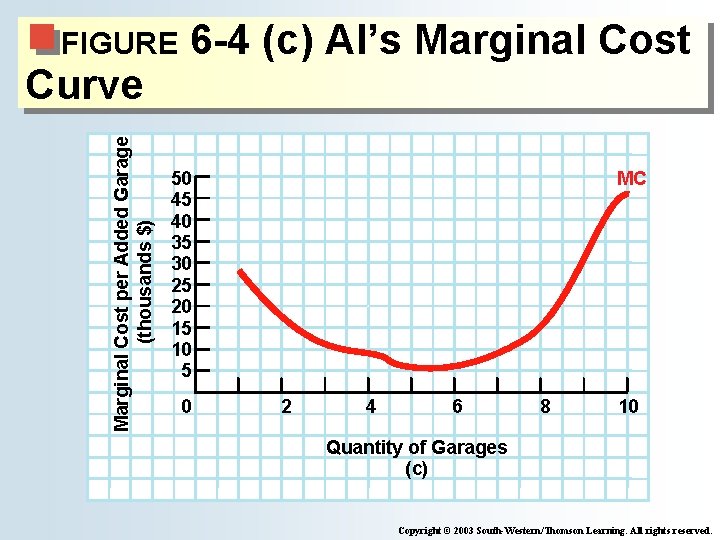
FIGURE Marginal Cost per Added Garage (thousands $) Curve 6 -4 (c) Al’s Marginal Cost 50 45 40 35 30 25 20 15 10 5 0 MC 2 4 6 8 10 Quantity of Garages (c) Copyright © 2003 South-Western/Thomson Learning. All rights reserved.
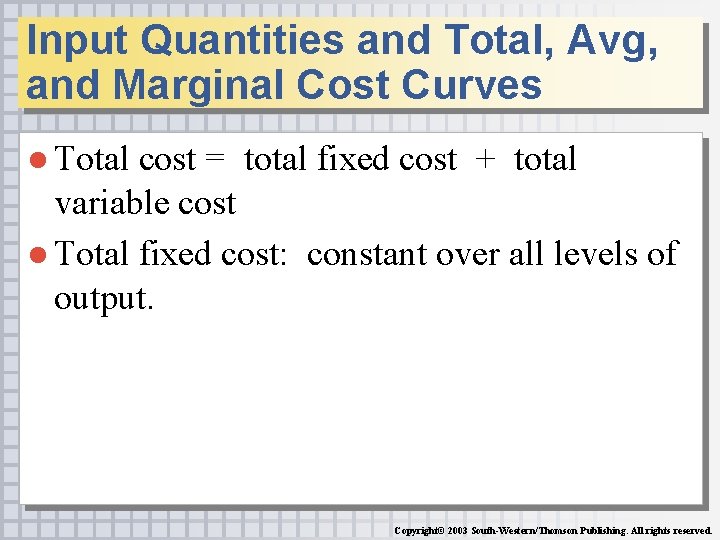
Input Quantities and Total, Avg, and Marginal Cost Curves ● Total cost = total fixed cost + total variable cost ● Total fixed cost: constant over all levels of output. Copyright© 2003 South-Western/Thomson. Publishing. Learning. All rights reserved.
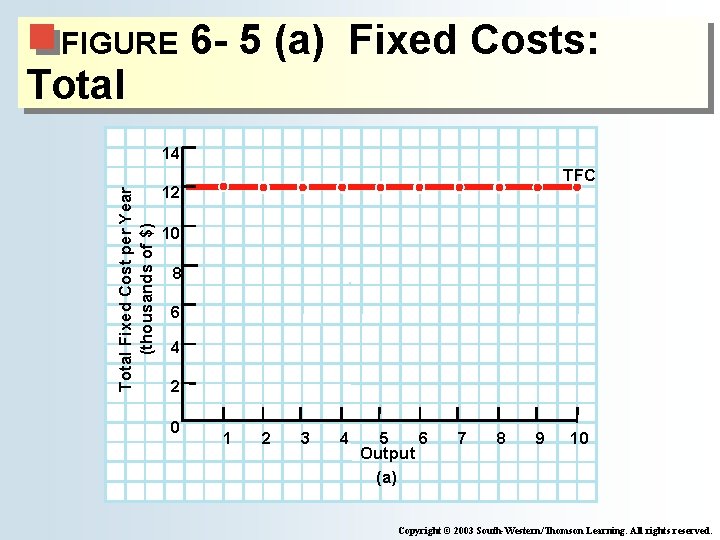
FIGURE Total 6 - 5 (a) Fixed Costs: Total Fixed Cost per Year (thousands of $) 14 TFC 12 10 8 6 4 2 0 1 2 3 4 5 6 Output (a) 7 8 9 10 Copyright © 2003 South-Western/Thomson Learning. All rights reserved.
Input Quantities and Total, Avg, and Marginal Cost Curves ● Average fixed cost = total fixed cost per unit of output ● Average fixed cost falls as output rises Copyright© 2003 South-Western/Thomson. Publishing. Learning. All rights reserved.
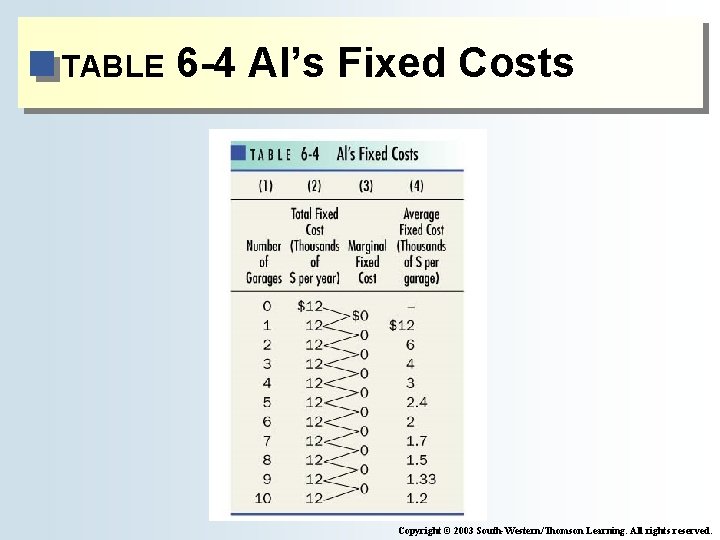
TABLE 6 -4 Al’s Fixed Costs Copyright © 2003 South-Western/Thomson Learning. All rights reserved.
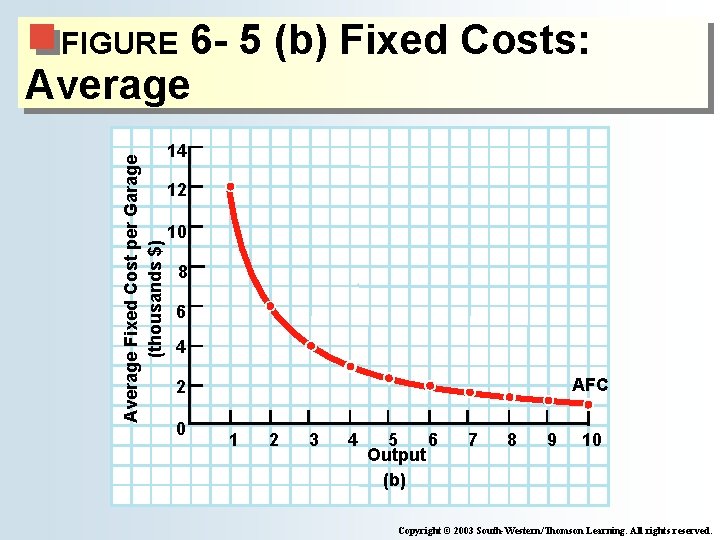
6 - 5 (b) Fixed Costs: Average Fixed Cost per Garage (thousands $) FIGURE 14 12 10 8 6 4 AFC 2 0 1 2 3 4 5 6 Output (b) 7 8 9 10 Copyright © 2003 South-Western/Thomson Learning. All rights reserved.
The Average Cost Curve in the Short and Long Run ● A typical average cost curve declines at first because average fixed costs decline. ● It then reaches a minimum and begins to rise because of decreasing marginal returns. Copyright© 2003 South-Western/Thomson. Publishing. Learning. All rights reserved.
The Average Cost Curve in the Short and Long Run ● Costs differ in the short and long runs, because in the long run, more adjustments can be made. ● The long-run average cost curve shows the lowest possible short-run average cost corresponding to each output level. Copyright© 2003 South-Western/Thomson. Publishing. Learning. All rights reserved.
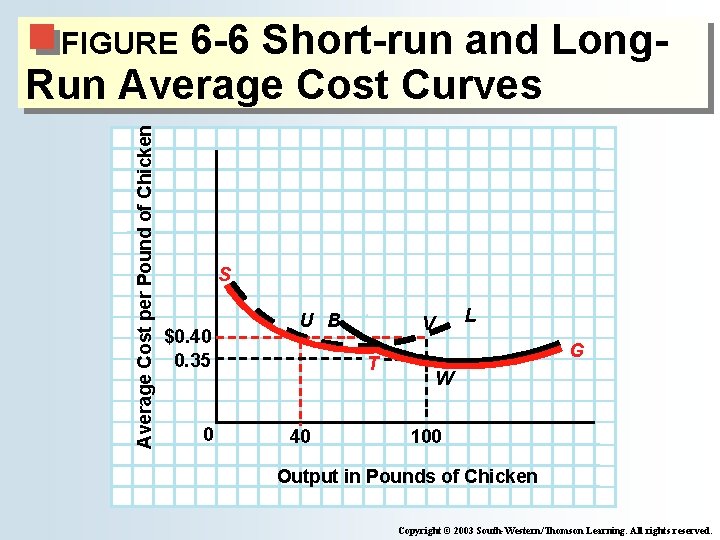
6 -6 Short-run and Long. Run Average Cost Curves Average Cost per Pound of Chicken FIGURE S $0. 40 0. 35 0 U B V T 40 L G W 100 Output in Pounds of Chicken Copyright © 2003 South-Western/Thomson Learning. All rights reserved.
Economies of Scale ● Economies of scale = output rises faster than the common rate of growth of all the inputs. ● Economies of scale = increasing returns to scale ● Economies of scale long-run declining average cost curves Copyright© 2003 South-Western/Thomson Learning. All rights reserved.

Economies of Scale ● The law of diminishing returns holds in the case of the expansion of a single input, holding other inputs constant. ● Returns to scale are relevant when all inputs increase at the same rate. Copyright© 2003 South-Western/Thomson Learning. All rights reserved.
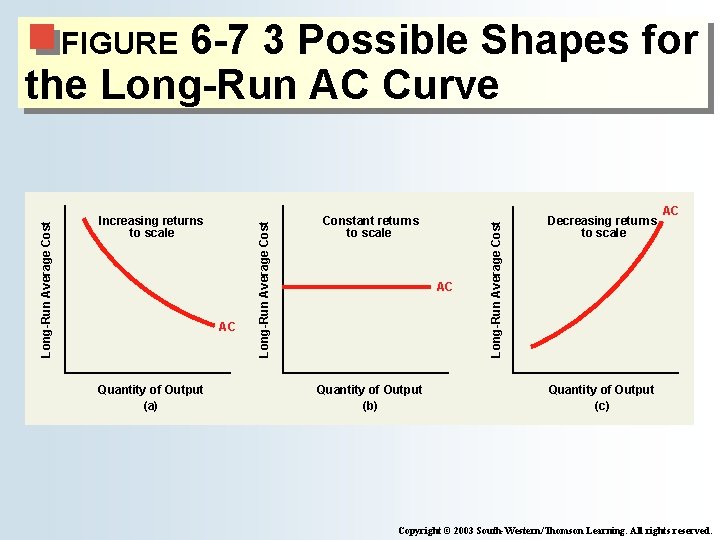
6 -7 3 Possible Shapes for the Long-Run AC Curve AC Quantity of Output (a) Constant returns to scale AC Quantity of Output (b) Long-Run Average Cost Increasing returns to scale Long-Run Average Cost FIGURE Decreasing returns to scale AC Quantity of Output (c) Copyright © 2003 South-Western/Thomson Learning. All rights reserved.
Historical Costs versus Analytical Costs Curves ● All points on the analytical cost curve (used in economic analysis) refer to the same period of time. ● An historical cost curve, showing the actual relationship between cost and output at different periods of time, is probably not a good indicator of the analytical cost curve. Copyright© 2003 South-Western/Thomson. Publishing. Learning. All rights reserved.
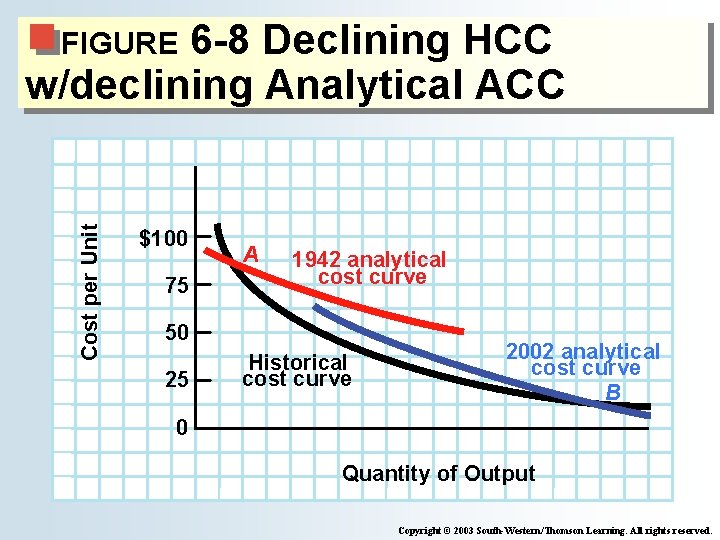
6 -8 Declining HCC w/declining Analytical ACC Cost per Unit FIGURE $100 75 A 1942 analytical cost curve 50 25 Historical cost curve 2002 analytical cost curve B 0 Quantity of Output Copyright © 2003 South-Western/Thomson Learning. All rights reserved.
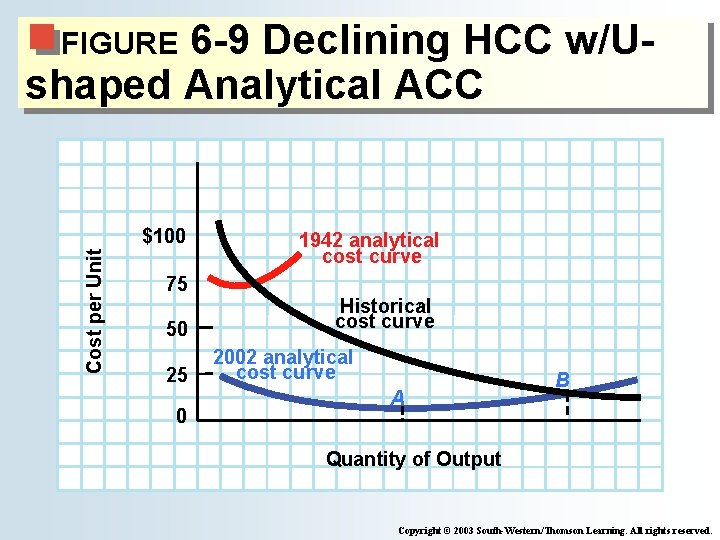
6 -9 Declining HCC w/Ushaped Analytical ACC FIGURE Cost per Unit $100 1942 analytical cost curve 75 50 25 0 Historical cost curve 2002 analytical cost curve A B Quantity of Output Copyright © 2003 South-Western/Thomson Learning. All rights reserved.
Cost Minimization in Theory and Practice ● Real business situations are more complex than those outlined in this chapter, and the quality of the available information is less precise. ● Yet when managers are doing their jobs well and the market is functioning smoothly, these models are a good approximation to the real world. Copyright© 2003 South-Western/Thomson. Publishing. Learning. All rights reserved.
Appendix: Production Indifference Curves
Character of the Production Indifference Curves ● Each production indifference curve shows all combinations of input quantities capable of producing a given quantity of output. ● Higher curves correspond to higher outputs on a production indifference map. Copyright© 2003 South-Western/Thomson Learning. All rights reserved.
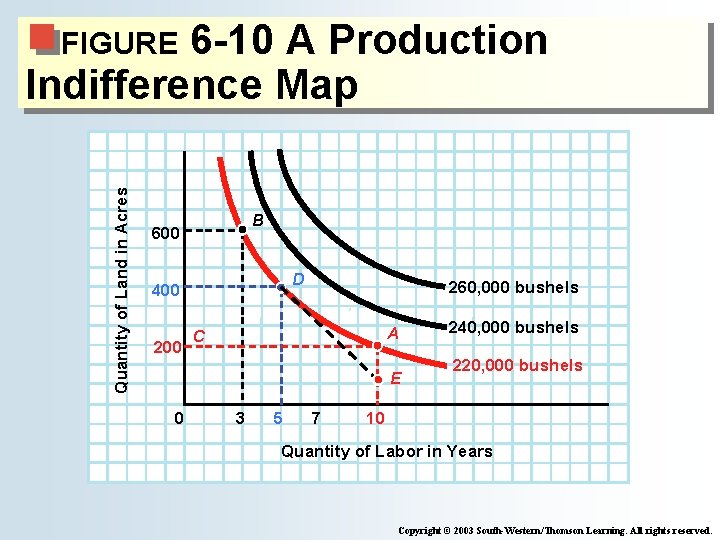
6 -10 A Production Indifference Map Quantity of Land in Acres FIGURE B 600 D 400 260, 000 bushels A C E 0 3 5 7 240, 000 bushels 220, 000 bushels 10 Quantity of Labor in Years Copyright © 2003 South-Western/Thomson Learning. All rights reserved.
Character of the Production Indifference Curves ● Budget line: a curve that shows all the combinations of inputs that keep total costs constant. ● Slope of the budget line: the trade-off between one input and another, which keeps total costs constant. ● Constant input prices constant slope of a budget line Copyright© 2003 South-Western/Thomson Learning. All rights reserved.
Cost Minim. , Expansion Path, and Cost Curves ● The least costly way to produce any given level of output is shown by the point of tangency between a budget line and the production indifference curve corresponding to that level of output. ● The combination of these points shows the firm’s expansion path. Copyright© 2003 South-Western/Thomson Learning. All rights reserved.
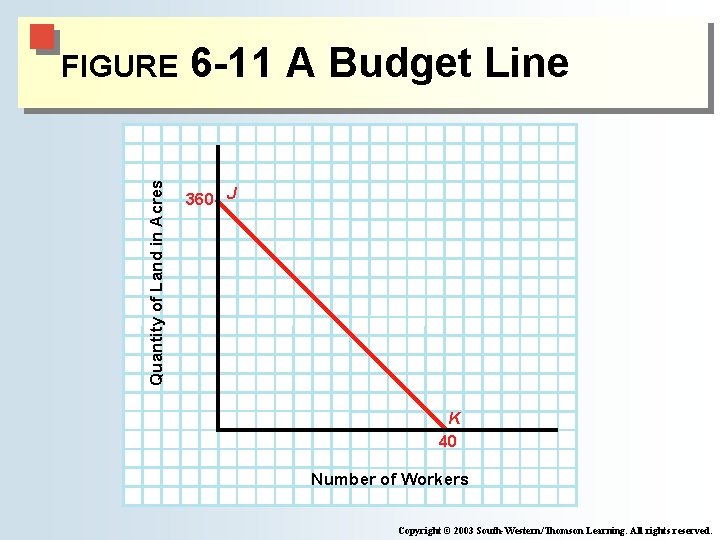
Quantity of Land in Acres FIGURE 6 -11 A Budget Line 360 J K 40 Number of Workers Copyright © 2003 South-Western/Thomson Learning. All rights reserved.
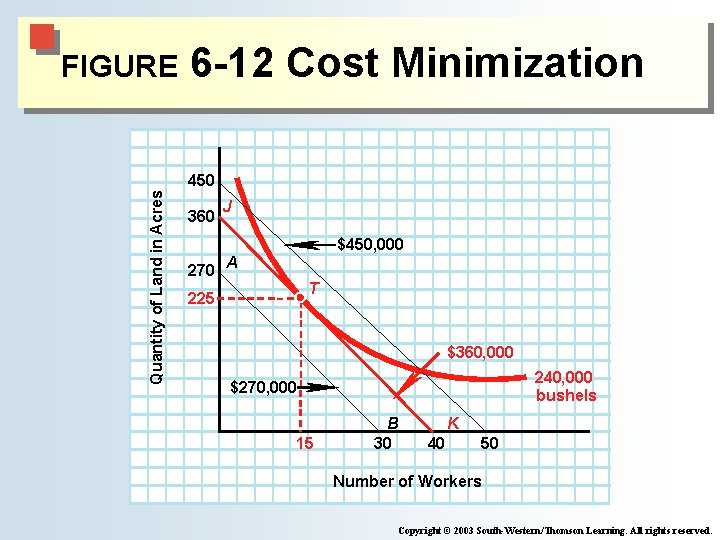
FIGURE 6 -12 Cost Minimization Quantity of Land in Acres 450 360 J $450, 000 270 A T 225 $360, 000 240, 000 bushels $270, 000 15 B 30 K 40 50 Number of Workers Copyright © 2003 South-Western/Thomson Learning. All rights reserved.
Effects of Changes in Input Prices ● input prices slope of the budget line ● Optimal input proportions then change. ● Point at which the budget line is tangent to an indifference curve also changes. Copyright© 2003 South-Western/Thomson Learning. All rights reserved.
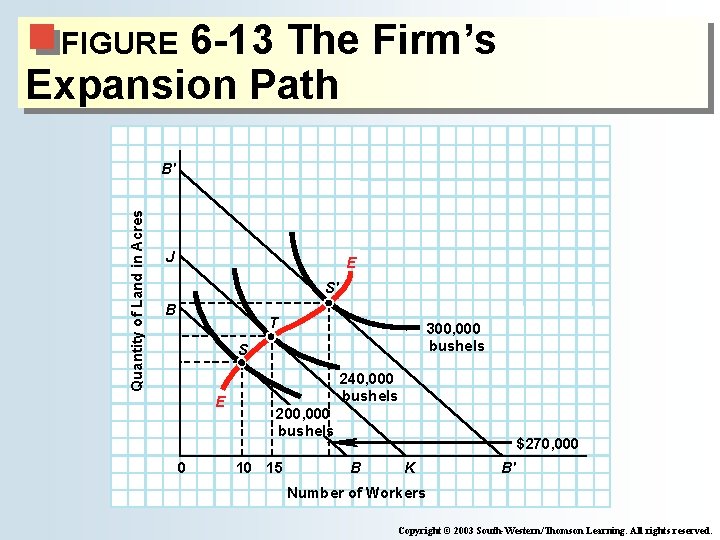
6 -13 The Firm’s Expansion Path FIGURE Quantity of Land in Acres B' J E S' B T 300, 000 bushels S E 0 240, 000 bushels 200, 000 bushels 10 15 $270, 000 B K B' Number of Workers Copyright © 2003 South-Western/Thomson Learning. All rights reserved.
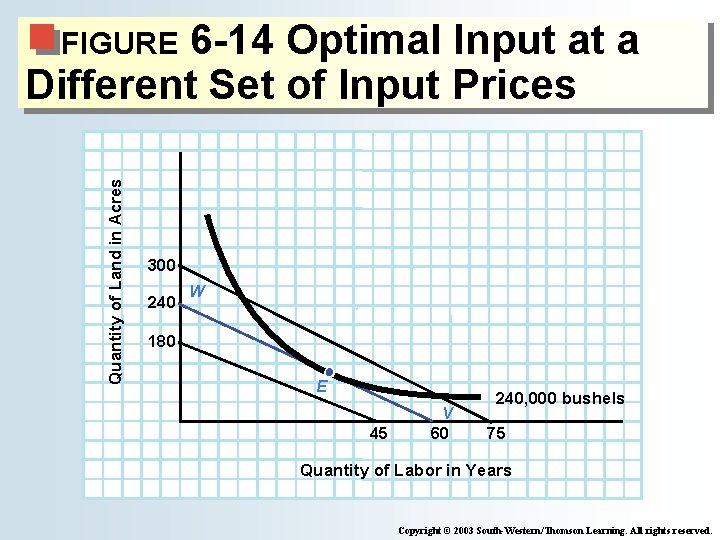
6 -14 Optimal Input at a Different Set of Input Prices Quantity of Land in Acres FIGURE 300 240 W 180 E 45 V 60 240, 000 bushels 75 Quantity of Labor in Years Copyright © 2003 South-Western/Thomson Learning. All rights reserved.
- Slides: 47