
6 Modern Approaches to Psychology 9814 Behaviorism Behaviorist
6 Modern Approaches to Psychology 9/8/14
Behaviorism • Behaviorist theory believes behavior is determined by reward & punishment • Previous learning determines behavior in present situations – Classical Conditioning
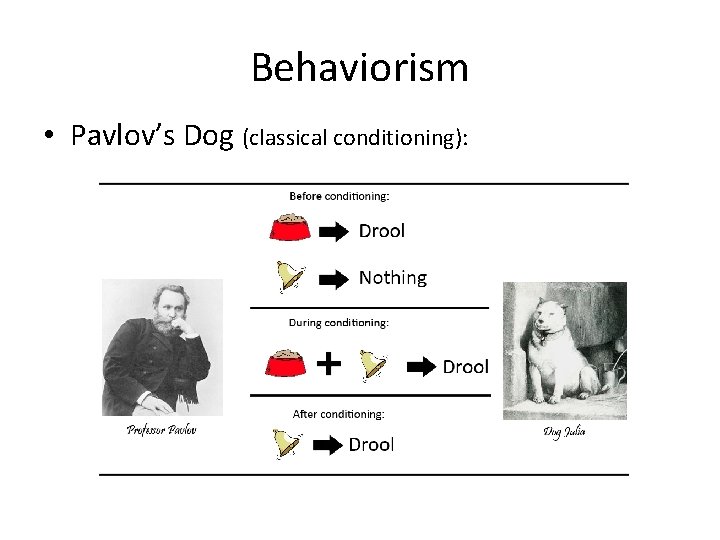
Behaviorism • Pavlov’s Dog (classical conditioning):
Behaviorism • Little Albert Experiment (1920) – John B. Watson – Classical Conditioning • https: //www. youtube. com/watch? v=FMnhy. Goz. Ly. E
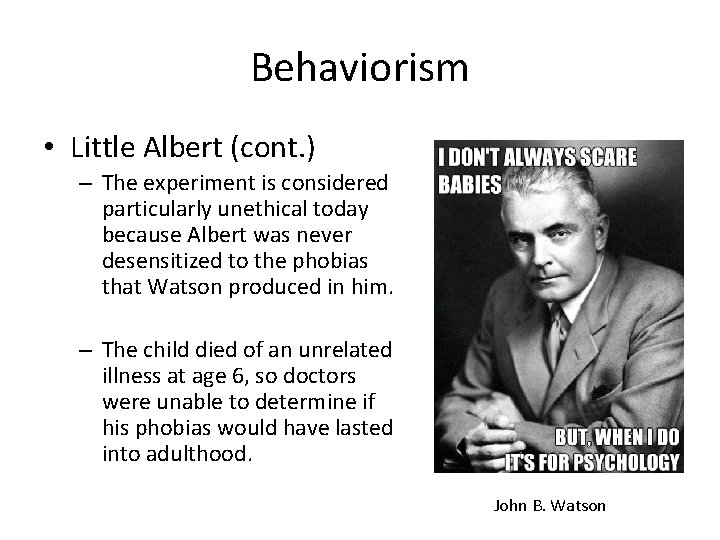
Behaviorism • Little Albert (cont. ) – The experiment is considered particularly unethical today because Albert was never desensitized to the phobias that Watson produced in him. – The child died of an unrelated illness at age 6, so doctors were unable to determine if his phobias would have lasted into adulthood. John B. Watson
Humanism • People are basically good and capable of helping themselves • Humanistic theory states that if all went right, people could reach perfection – Optimistic approach – People have control of their psyches – Opportunity for growth • Carl Rogers counseling patient, Gloria, using Humanistic approach (10 minutes): • • https: //www. youtube. com/watch? v=ZBk. Uqcq. RChg Part 2: https: //www. youtube. com/watch? v=m 30 js. Zx_Ngs&list=PL 66 A 413123 FE 2 B 4 E 4&index=2
Sociocultural • Sociocultural approach views behavior as strongly influences by the rules and expectations of specific social groups or cultures • Blue Eye/Brown Eye Experiment: (14 minutes) – https: //www. youtube. com/watch? v=Ve. K 759 FF 84 s
Neurobiological • Neurobiological approach views behavior as the result of nervous system functions and biology: – Hormones, brain chemicals, and electrical activity, sensory organs
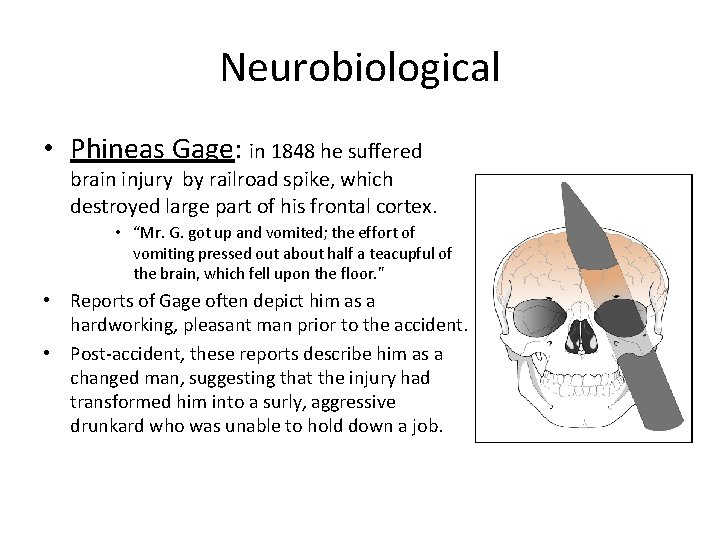
Neurobiological • Phineas Gage: in 1848 he suffered brain injury by railroad spike, which destroyed large part of his frontal cortex. • “Mr. G. got up and vomited; the effort of vomiting pressed out about half a teacupful of the brain, which fell upon the floor. " • Reports of Gage often depict him as a hardworking, pleasant man prior to the accident. • Post-accident, these reports describe him as a changed man, suggesting that the injury had transformed him into a surly, aggressive drunkard who was unable to hold down a job.
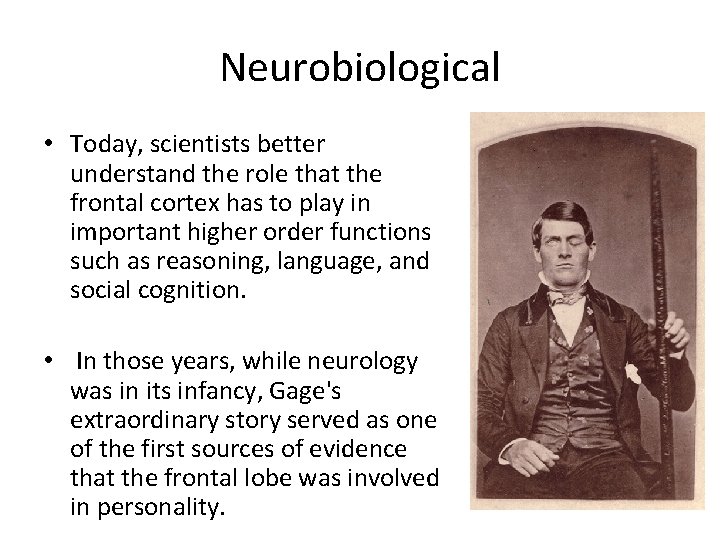
Neurobiological • Today, scientists better understand the role that the frontal cortex has to play in important higher order functions such as reasoning, language, and social cognition. • In those years, while neurology was in its infancy, Gage's extraordinary story served as one of the first sources of evidence that the frontal lobe was involved in personality.
Neurobiological • Deep brain stimulation for curing depression: – https: //www. youtube. com/watch? v=D 8 Dv. H_OXY Y 8&app=desktop • 44: 00 -51: 00
Cognitive • The cognitive approach explores higher level mental processes like memory, reasoning, information processing and creativity • Cognitive approach believes our different kinds of thoughts make up our personalities. • According to cognitive approach, people think & make decisions; handle problems with mental processes – they have more agency than other theories, like behaviorist, psychoanalytic, neurobiological, and sociocultural)
Cognitive • Rational Emotive Therapy – form of cognitive behavioral therapy meant to change thought patterns: – Albert Ellis & Gloria Counseling Session: – https: //www. youtube. com/watch? v=odno. F 8 V 3 g 6 g
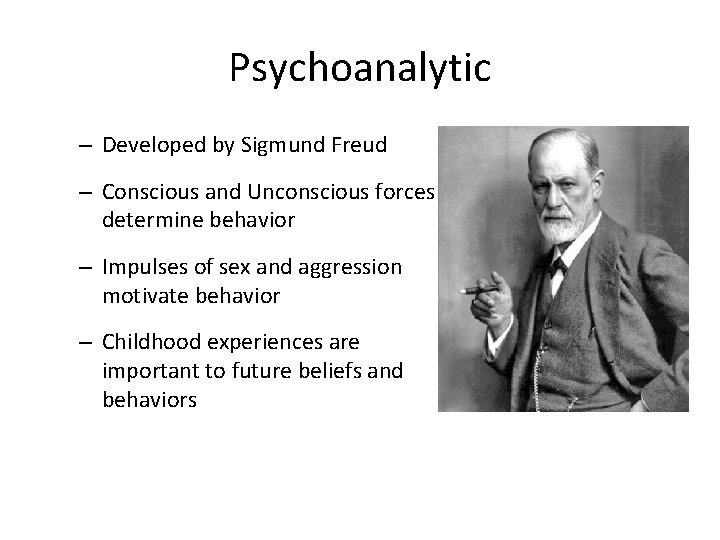
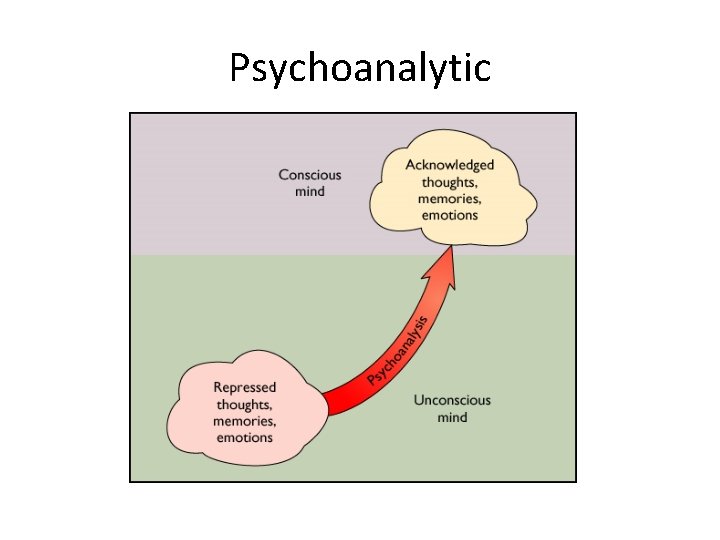
Psychoanalytic – Developed by Sigmund Freud – Conscious and Unconscious forces determine behavior – Impulses of sex and aggression motivate behavior – Childhood experiences are important to future beliefs and behaviors
Psychoanalytic
Psychoanalytic • Psychoanalytic theory believes that unconscious childhood experiences determine behavior. – Some of you said in your Medical Mystery essays that you thought people who suffered from BIID may have seen an amputee they admired as a child. • Freud might agree with that hypothesis
- Slides: 16