
6 Major Landforms of the Earth Class 6

- Slides: 13
6. Major Landforms of the Earth Class 6 th: Geography
Processes • Internal (endogenic forces) – Upliftment and Sinking • External (exogenic forces) – Erosion and Deposition • Click to watch !!
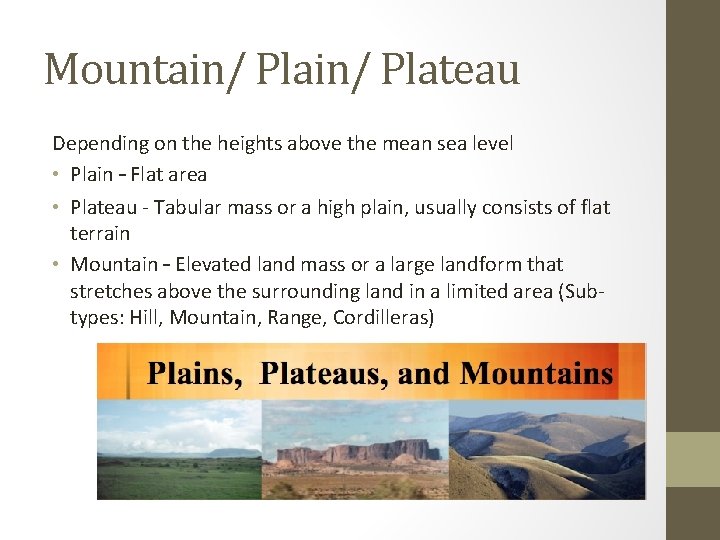
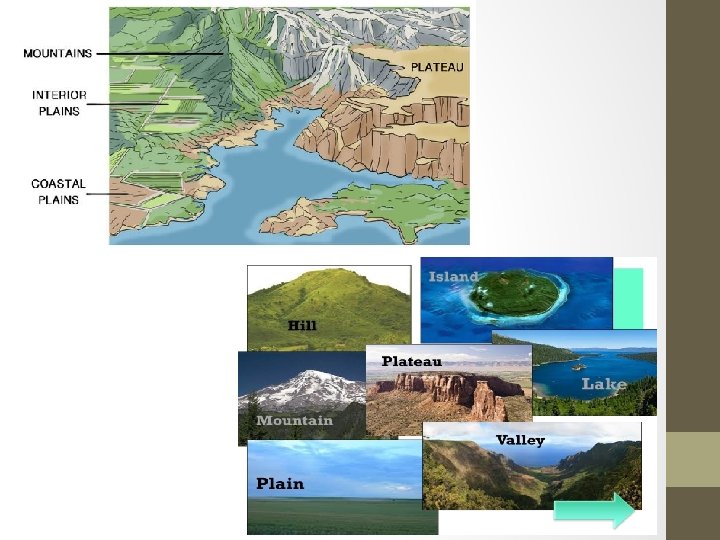
Mountain/ Plateau Depending on the heights above the mean sea level • Plain – Flat area • Plateau - Tabular mass or a high plain, usually consists of flat terrain • Mountain – Elevated land mass or a large landform that stretches above the surrounding land in a limited area (Subtypes: Hill, Mountain, Range, Cordilleras)
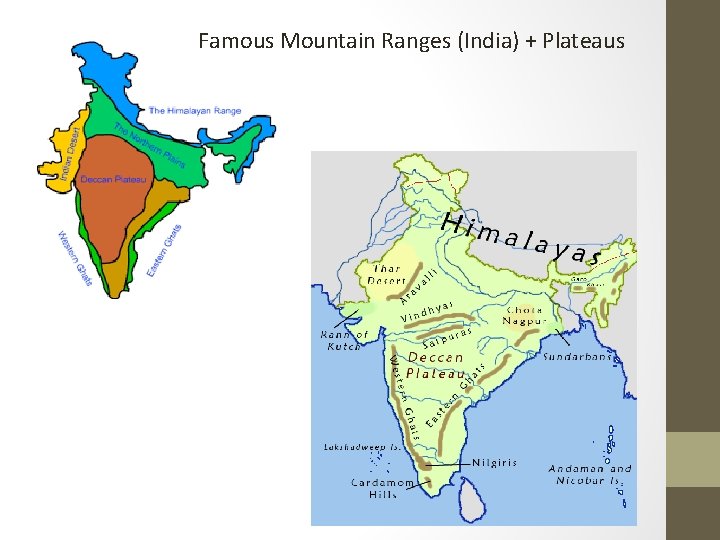
Famous Mountain Ranges (India) + Plateaus
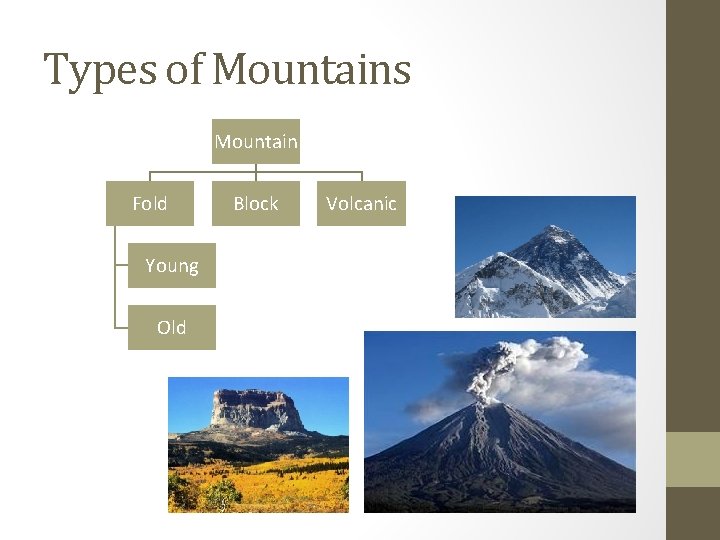
Types of Mountains Mountain Fold Young Old Block Volcanic
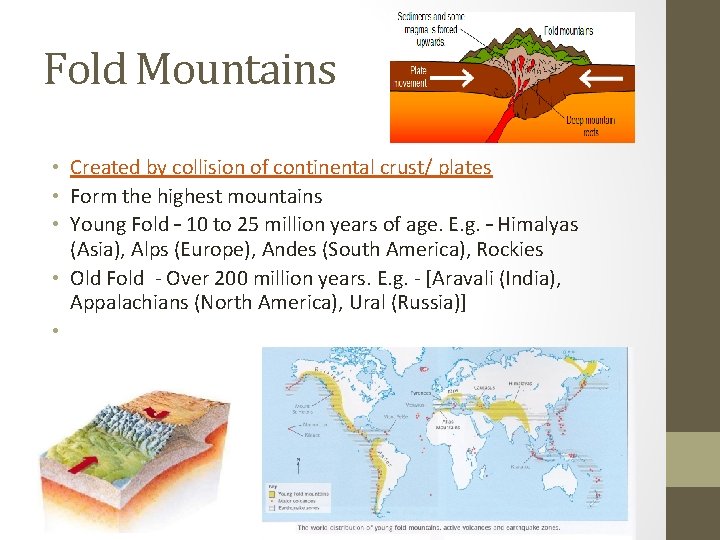
Fold Mountains • Created by collision of continental crust/ plates • Form the highest mountains • Young Fold – 10 to 25 million years of age. E. g. – Himalyas (Asia), Alps (Europe), Andes (South America), Rockies • Old Fold - Over 200 million years. E. g. - [Aravali (India), Appalachians (North America), Ural (Russia)] •
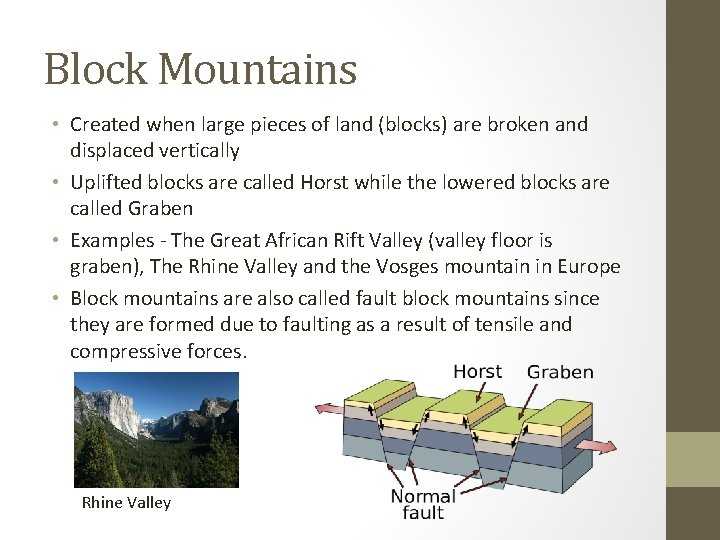
Block Mountains • Created when large pieces of land (blocks) are broken and displaced vertically • Uplifted blocks are called Horst while the lowered blocks are called Graben • Examples - The Great African Rift Valley (valley floor is graben), The Rhine Valley and the Vosges mountain in Europe • Block mountains are also called fault block mountains since they are formed due to faulting as a result of tensile and compressive forces. Rhine Valley
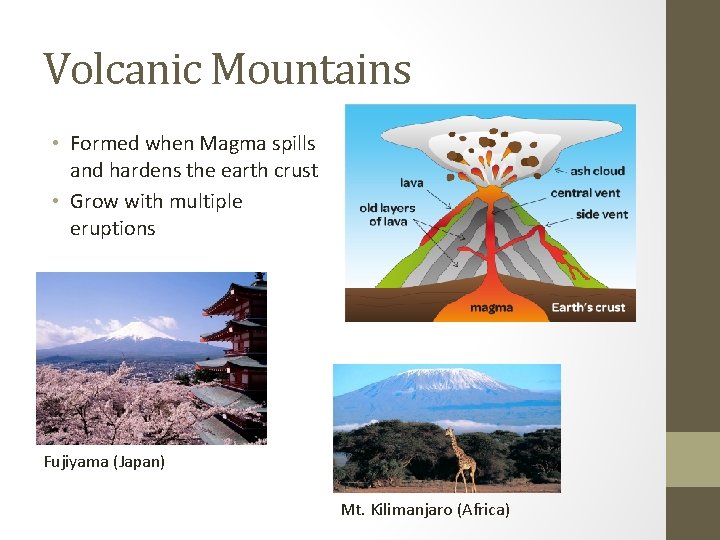
Volcanic Mountains • Formed when Magma spills and hardens the earth crust • Grow with multiple eruptions Fujiyama (Japan) Mt. Kilimanjaro (Africa)
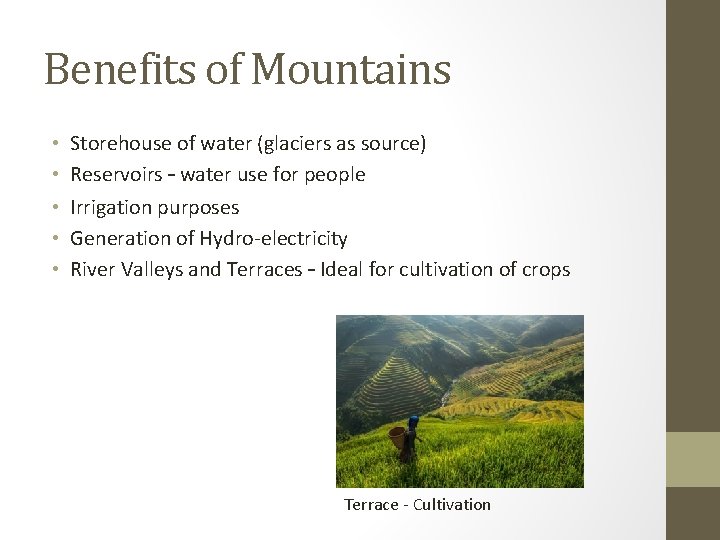
Benefits of Mountains • • • Storehouse of water (glaciers as source) Reservoirs – water use for people Irrigation purposes Generation of Hydro-electricity River Valleys and Terraces – Ideal for cultivation of crops Terrace - Cultivation
Plateau • Deccan Plateau <- Lava (volcanic in nature) – black soil • Origin of Deccan Plateau – Chota nagpur plateau (rich in minerals like Iron, Coal and Manganese) • Tibeten Plateau • Western Plateau (Australia) • Eastern Plateau (Africa) – Yuganda, Tanzania and Kenya • Columbia Plateau (USA) Benefits • Tourism (Hundru falls at Chota Nagpur plateau, Jog falls in Karnataka in Deccan Plateau region) • Mountain - trekking
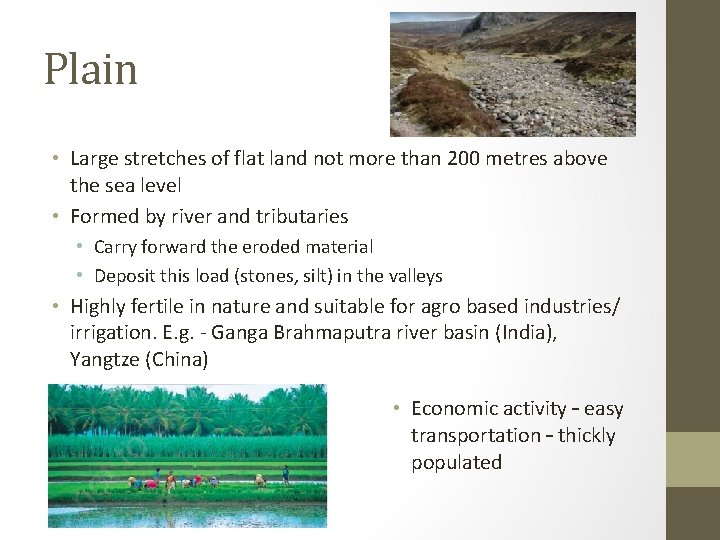
Plain • Large stretches of flat land not more than 200 metres above the sea level • Formed by river and tributaries • Carry forward the eroded material • Deposit this load (stones, silt) in the valleys • Highly fertile in nature and suitable for agro based industries/ irrigation. E. g. - Ganga Brahmaputra river basin (India), Yangtze (China) • Economic activity – easy transportation – thickly populated
Any Queries/ Doubts? THANK YOU !!