
6 Kingdoms Overview Archeabacteria Prokaryotic n Unicellular n

6 Kingdoms Overview
Archeabacteria Prokaryotic n Unicellular n Asexual reproduction n Make their own food from methaneproducers n Food source in extreme environments n Found in hot springs, deep ocean vents, etc. n
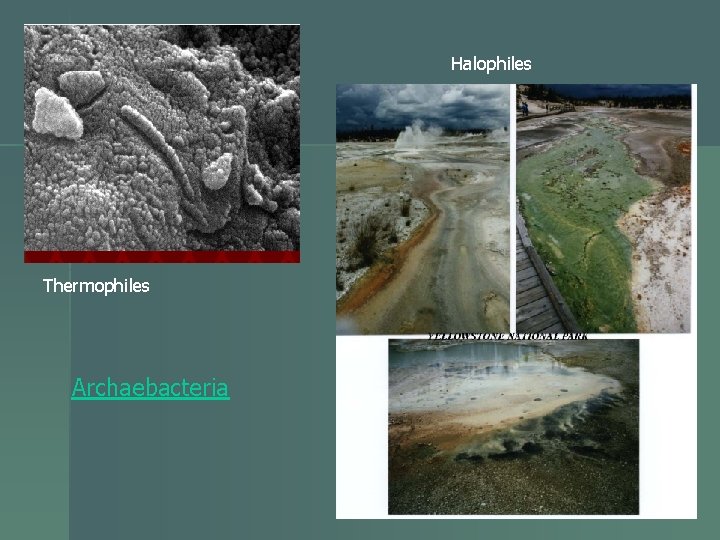
Halophiles Thermophiles Archaebacteria
Eubacteria “True Bacteria” n Prokaryotic n Unicellular n Asexual reproduction n Decomposers, Photosynthesize n
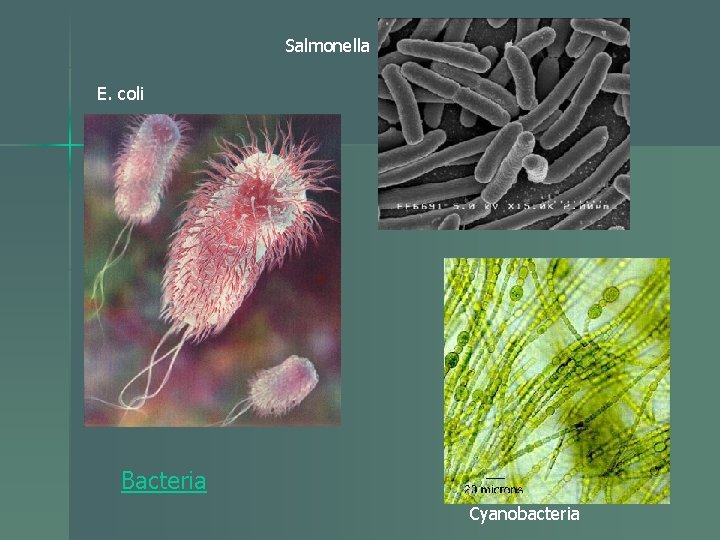
Salmonella E. coli Bacteria Cyanobacteria

Protists Protist Video n You. Tube - Slime mold n
Protista Eukaryotic n Unicellular, multicellular n Asexual, sexual reproduction n Photosynthesize, Decomposers, Consumers n “Misfit” Kingdom n
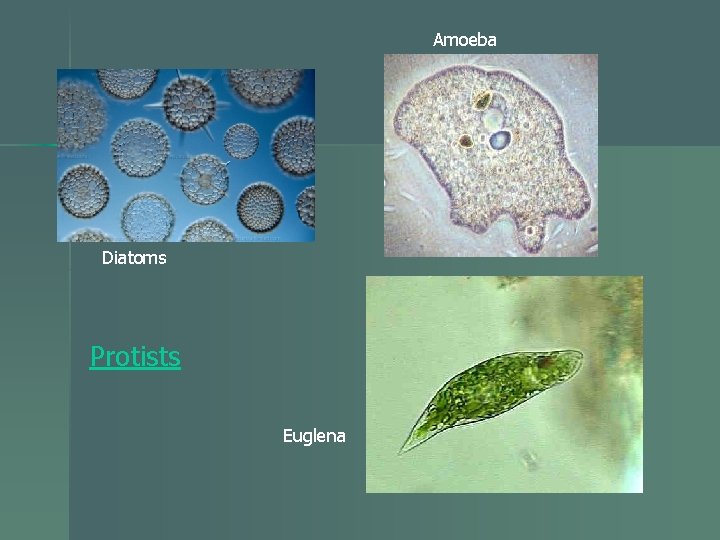
Amoeba Diatoms Protists Euglena
Fungi Eukaryotic n Unicellular, Multicellular n Asexual, sexual n Decomposers/saprophytes n Non-motile n
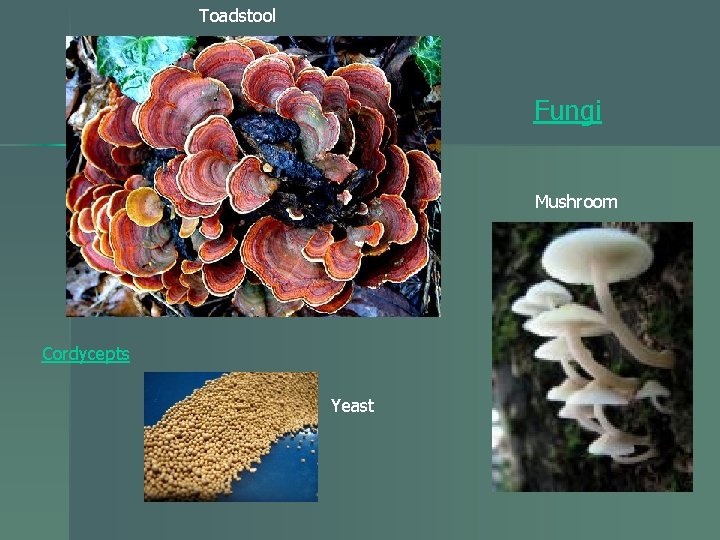
Toadstool Fungi Mushroom Cordycepts Yeast
Plantae Eukaryotic n Multicellular n Sexual reproduction n Nonmotile n Photosynthesizes!! n
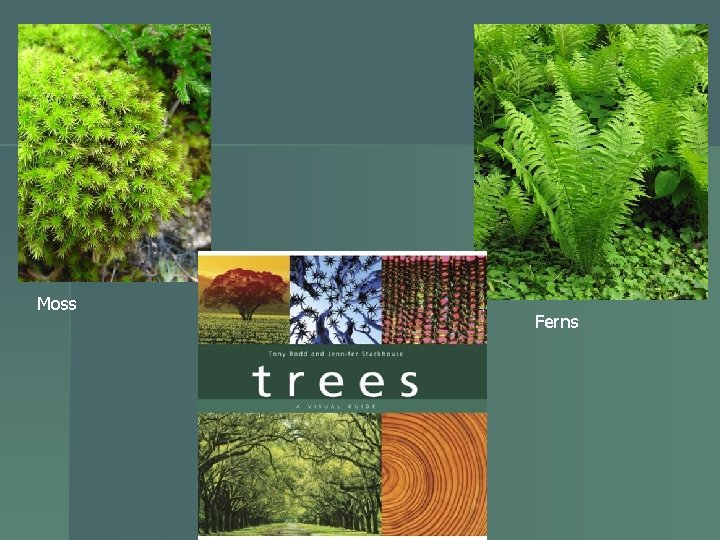
Moss Ferns
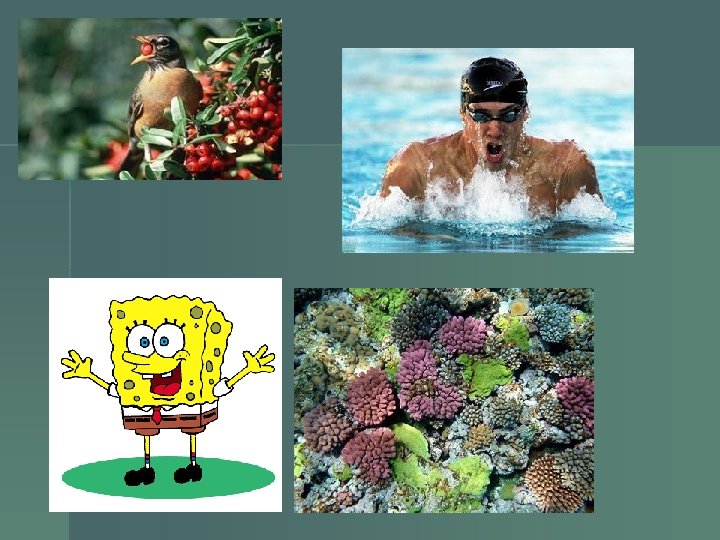
Animalia Eukaryotic n Multicellular n Sexual Reproduction n Consumers n Motile n Examples: Jellyfish, corals, sponges, nudibranch, humans n
Archeabacteria n Archaebacteria found in hydrothermal vents
After Viewing the Video Clips. . n n n In your own words, what is an extremophile? What are the environmental challenges facing cave organisms and hydrothermal vent organisms? Explain how some organisms meet these challenges. After learning about the conditions under which extremophiles live, do you think it is reasonable to argue that life could probably exist on other planets? Explain.
Protists n Protistia Kingdom

After Viewing this Video Clip… n Explain why you think a good nickname for the protista kingdom is the “Misfit Kingdom”? Give 3 specific examples to back up your answer.
Final Thoughts… After looking at these different kingdoms do you think that life on earth is diverse? n Explain your answer with four specific examples from your notes. n
- Slides: 19