
6 Kingdom System Archaebacteria Eubacteria formerly the Kingdom

6 -Kingdom System
Archaebacteria & Eubacteria (formerly the Kingdom Monera) Part 3 Classification notes
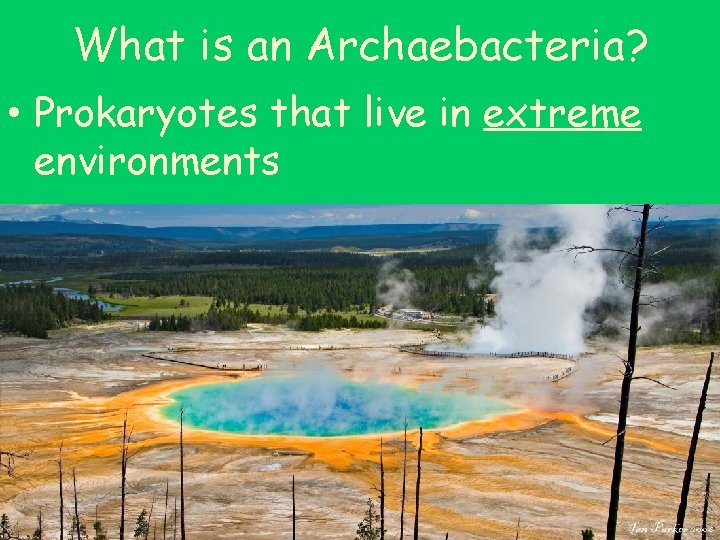
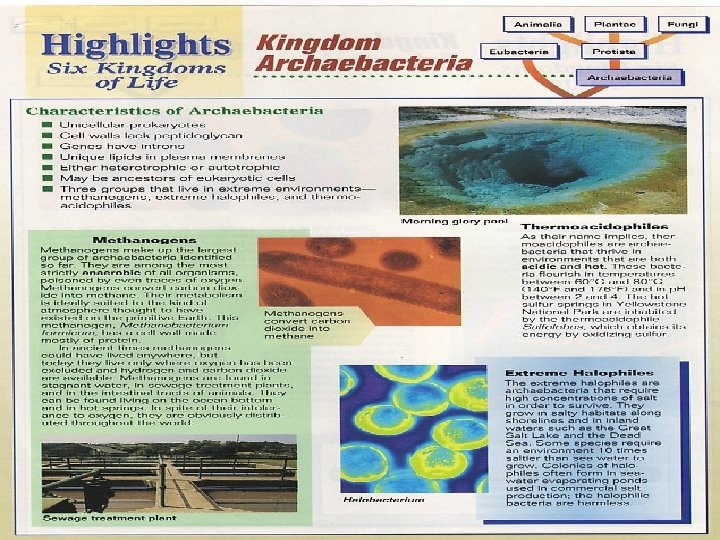
What is an Archaebacteria? • Prokaryotes that live in extreme environments
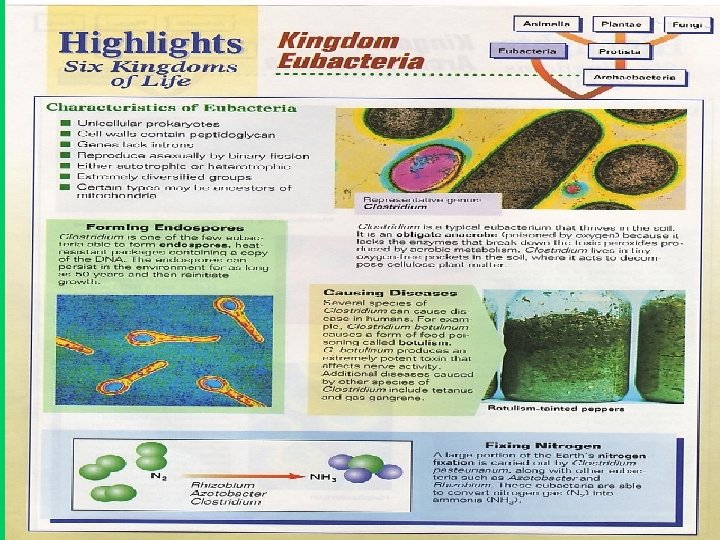
What is Eubacteria? • Prokaryotes that have very strong cell wall & less complex genetic make up • found in most habitats except the extremes
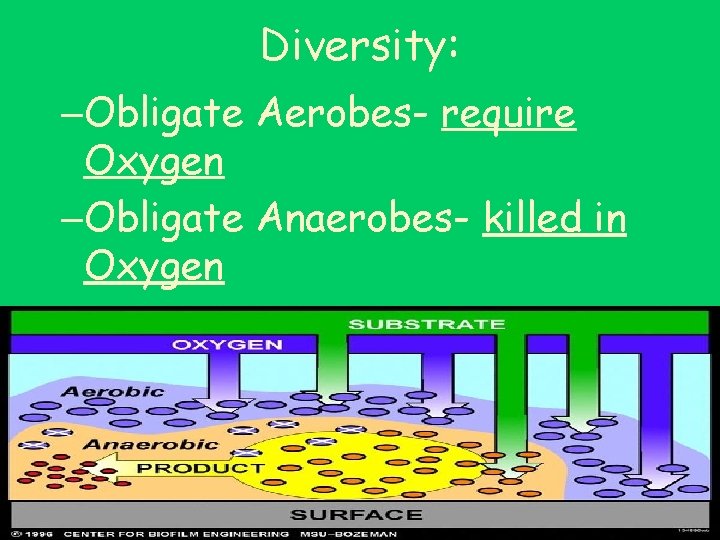
Diversity: –Obligate Aerobes- require Oxygen –Obligate Anaerobes- killed in Oxygen
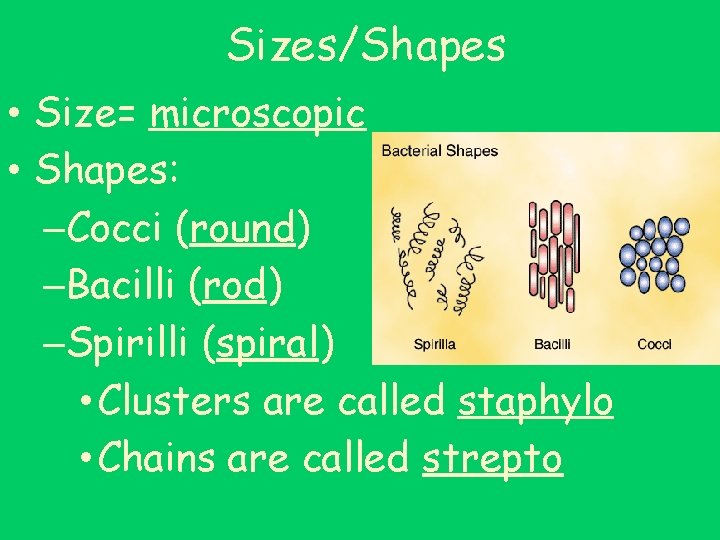
Sizes/Shapes • Size= microscopic • Shapes: –Cocci (round) –Bacilli (rod) –Spirilli (spiral) • Clusters are called staphylo • Chains are called strepto

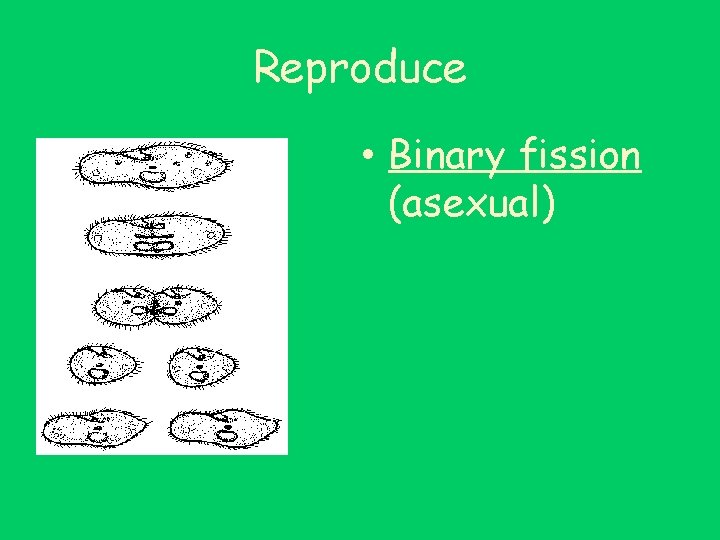
Reproduce • Binary fission (asexual)
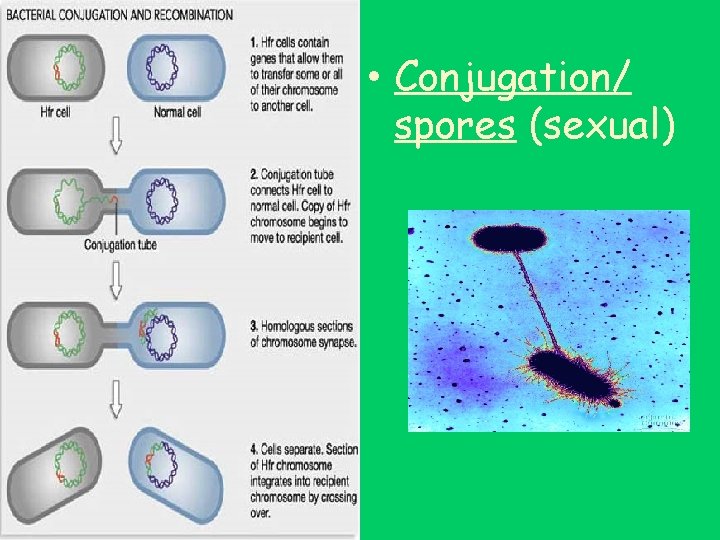
• Conjugation/ spores (sexual)
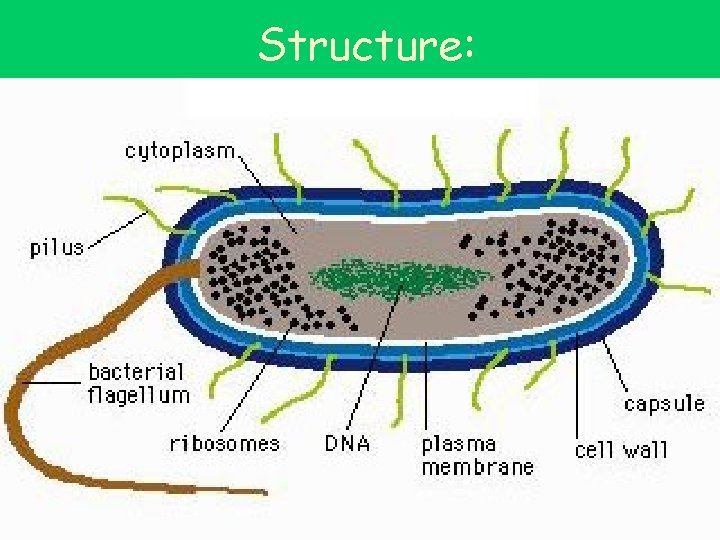
Structure:
Adaptations: • endospore- outer covering that forms in adverse conditions and can allow the bacteria to lie dormant for years
• Disadvantages: decay, spoilage, disease, infections • Advantages: genetic engineering, food, cleanups
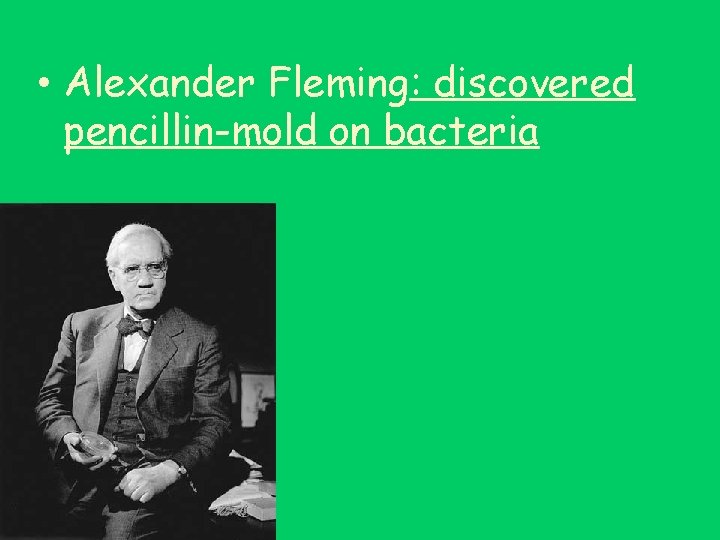
• Alexander Fleming: discovered pencillin-mold on bacteria
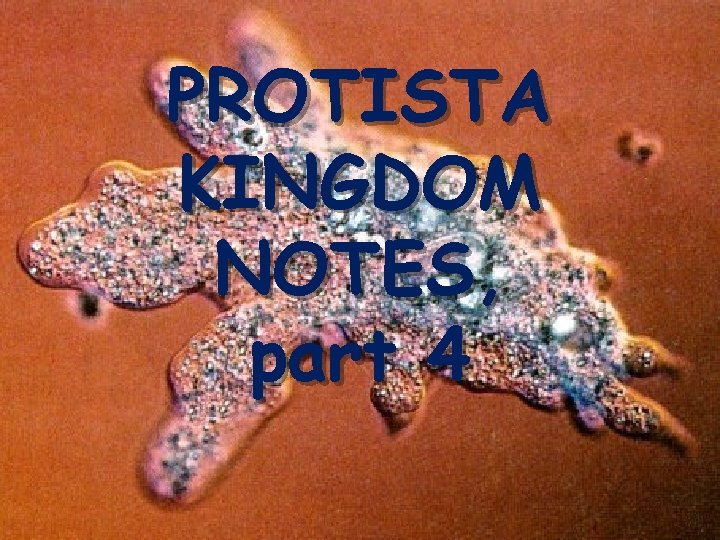
PROTISTA KINGDOM NOTES, part 4
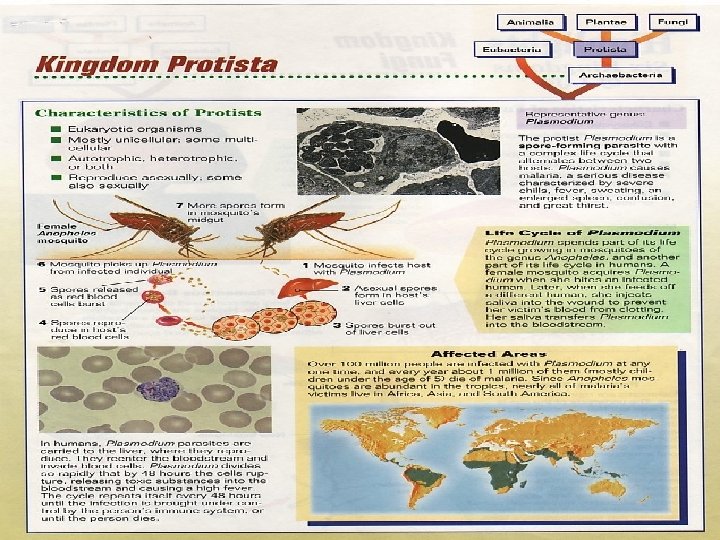
Protists • Are the diverse group of organisms • May be multicellular or unicellular • Heterotrophic or autotrophic Eukaryotes
• May be parasites (feed on living things) • May be saprophytes (feed on dead things) • May be free-living • Divided into 3 groups: Animal–like, Plant-like, Fungus-like
Animal-Like Protists • Called protozoans • Feed on other organisms or dead matter • Reproduce sexually or asexually
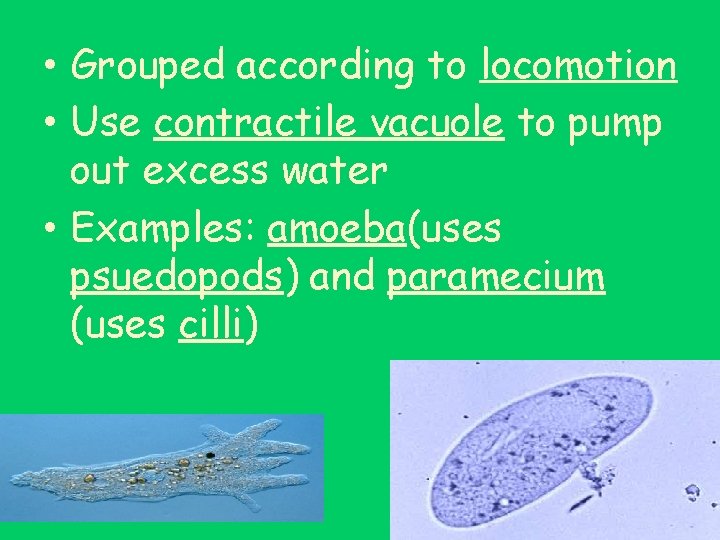
• Grouped according to locomotion • Use contractile vacuole to pump out excess water • Examples: amoeba(uses psuedopods) and paramecium (uses cilli)
Plant-Like Protists • photosynthetic Autotrophs • Some are unicellular or mutlicellular(algae) • Many use flagellum
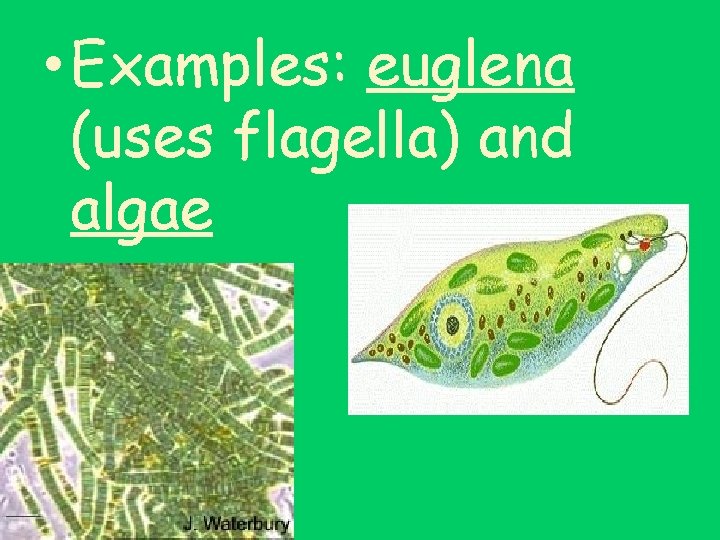
• Examples: euglena (uses flagella) and algae
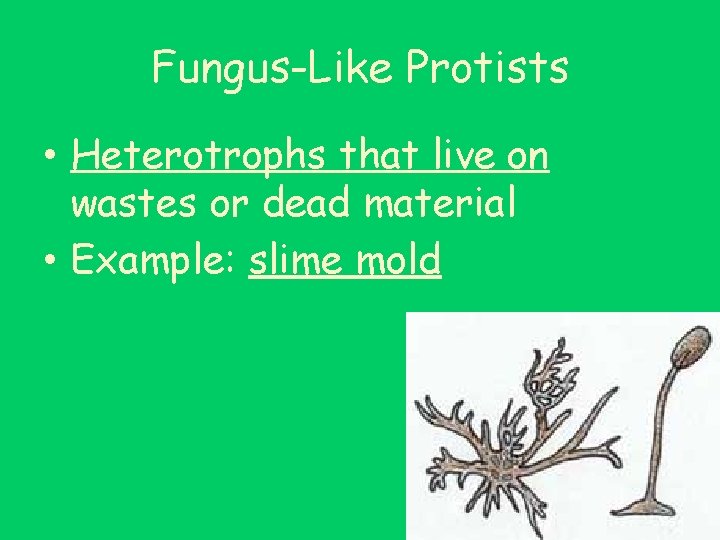
Fungus-Like Protists • Heterotrophs that live on wastes or dead material • Example: slime mold
FUNGI KINGDOM NOTES, part 5
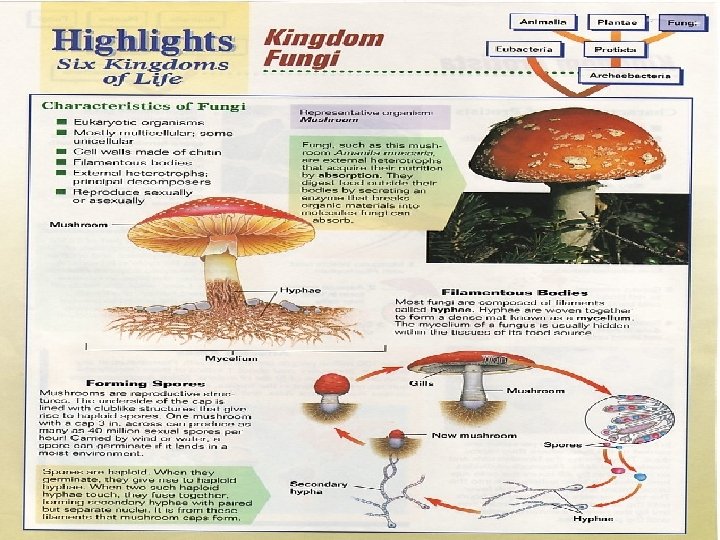
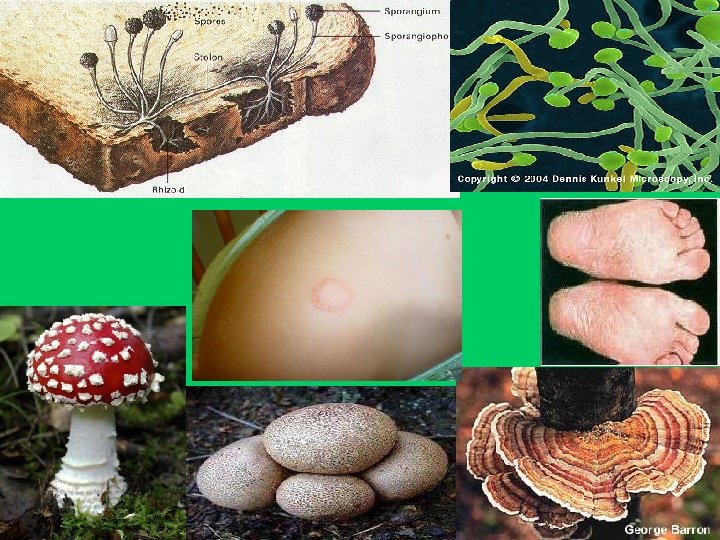
Fungi • Are multicelluar eukaryotes • Reproduces by budding, spores or fragmentation • Have cell walls made of chitin • May be parasitic, saprophytic, or mutualisitic
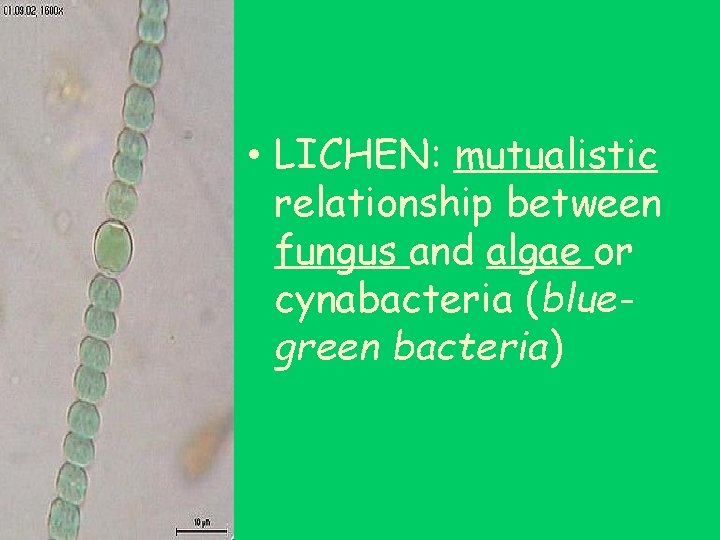
• LICHEN: mutualistic relationship between fungus and algae or cynabacteria (bluegreen bacteria)
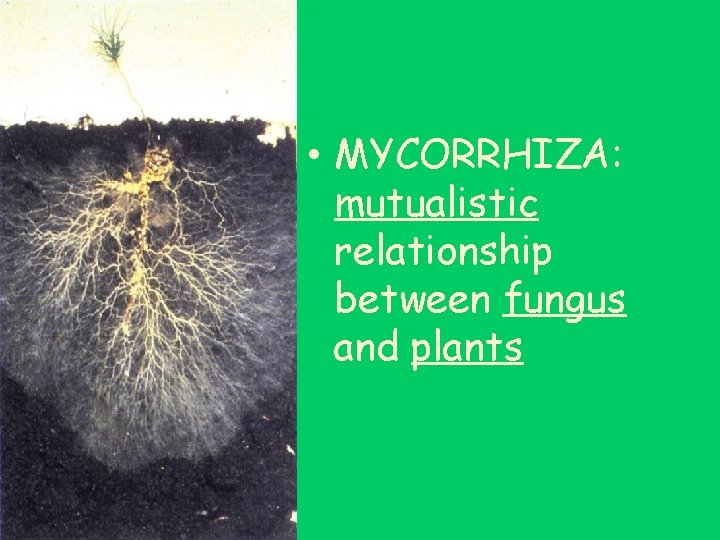
• MYCORRHIZA: mutualistic relationship between fungus and plants

• Decomposers that return and recycle nutrients
EXAMPLES • • breadmold (Rhizopus stolonifer), yeast (single-celled), Mushrooms, Puffballs, Bracket Fungi, Athlete’s foot, ringworm
PLANTAE KINGDOM NOTES
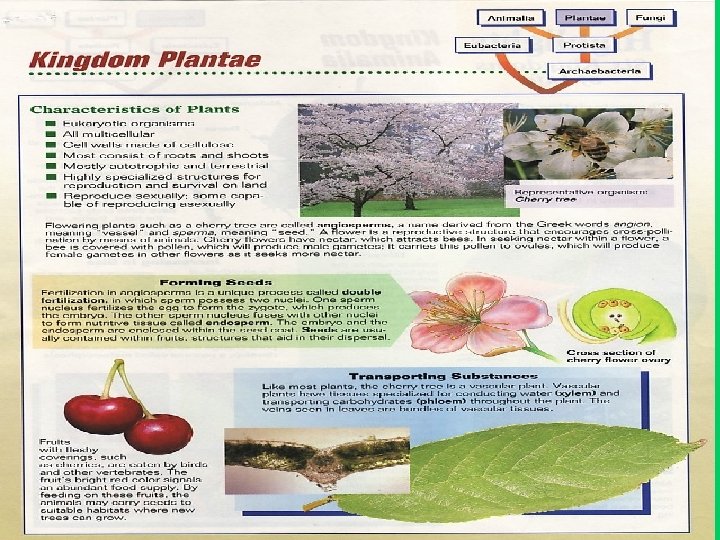

• Plants are autotrophic (produce their own food), multi-cellular, eukaryotes • Plants store food in the form of starch • Plants cells are surrounded by a cell wall which is made of cellulose
• Plants possess growing regions of activity dividing cells called meristems found at the tips of stems and roots • Auxins are a class of hormone that regulate the growth of plant cells • The phases of a plant life are the sporophyte (2 n) and gametophyte (1 n) stages • Some plants reproduce asexually by a process called vegetative propagation
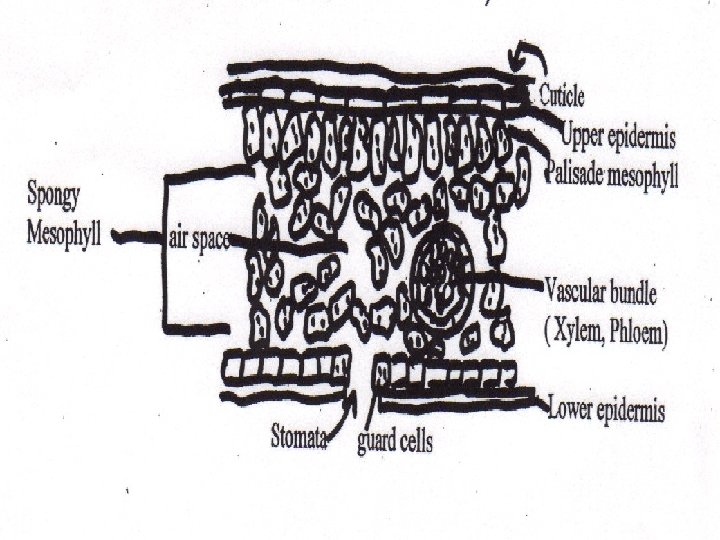
Leaves are the primary site of photosynthesis • Transpiration is the process in which water and carbon dioxide are lost in leaves through the stomata which are regulated by guard cells • The broad , flat portion of the leaf is the blade which is attached to the stem by a petiole
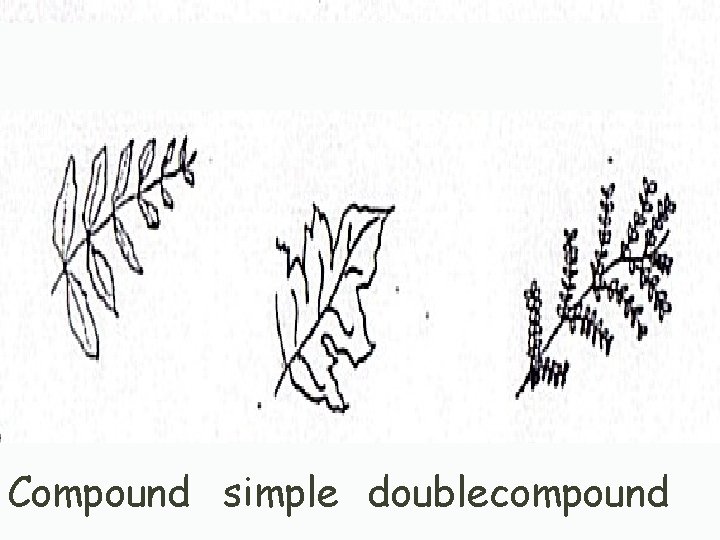
Compound simple doublecompound

• Taxonomist classify the major groups of plants into DIVISIONS based on whether or not they have vascular tissue
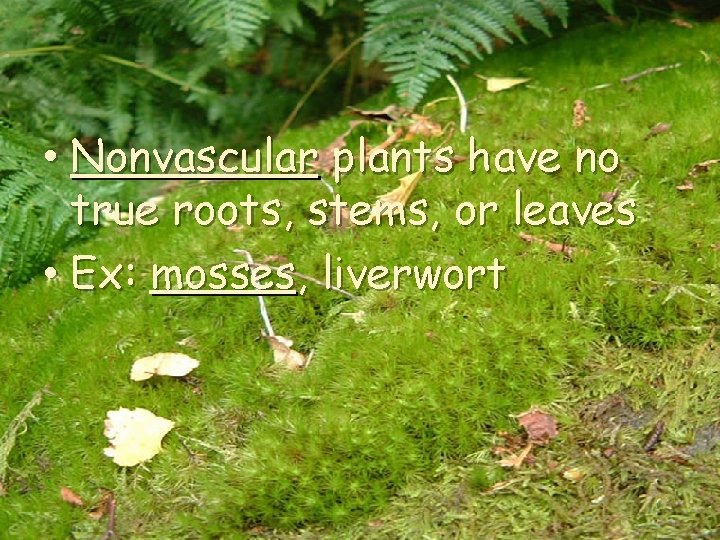
• Nonvascular plants have no true roots, stems, or leaves • Ex: mosses, liverwort
• Vascular plants transport water & mineral from one plant part to another –Seedless plants –Seed plants
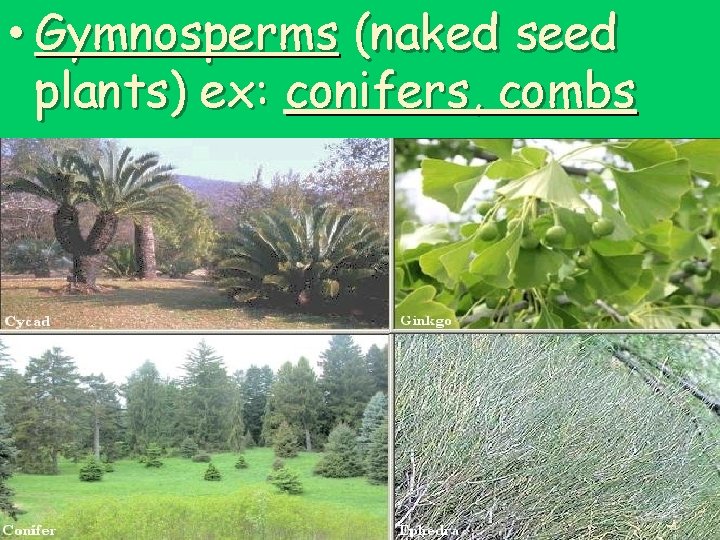
• Gymnosperms (naked seed plants) ex: conifers, combs
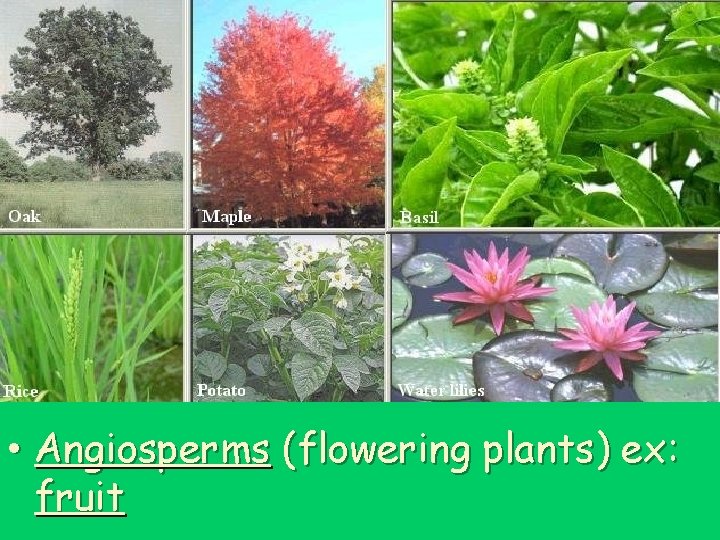
• Angiosperms (flowering plants) ex: fruit
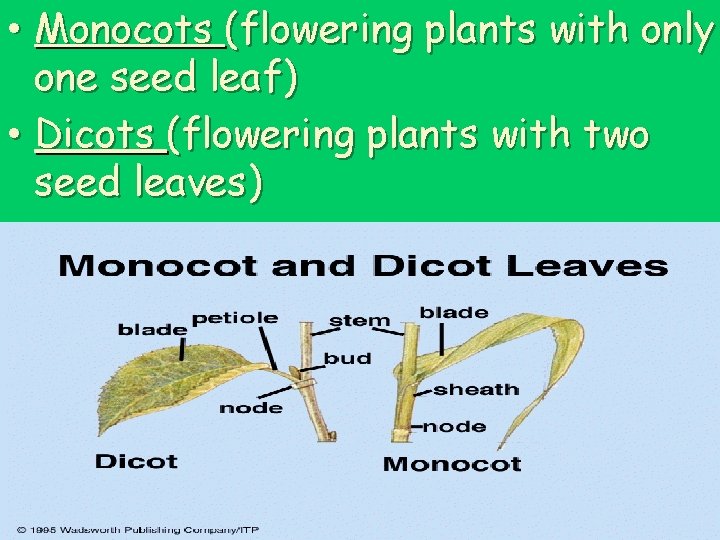
• Monocots (flowering plants with only one seed leaf) • Dicots (flowering plants with two seed leaves)

Vascular Tissue (transportation) • Xylem – carries water and minerals from the roots to stem • Phloem – transports sugar from leaves to the rest of the plant
Ground Tissue –Parenchyma – storage and food production –Collenchyma – allows cell to grow –Sclerenchyma – provides support and strength of plants • Dermal Tissue – forms the outside coverings of plants
Trophisms • plant movement toward or away from an environmental stimulus. • 5 Types: (away=negative, toward=positive)
• Phototropism –response to light coming from one direction • Hydrotropism – roots respond to water • Gravitotropism – response to gravity • Thigmotropism - growth response to contact with solid object • Chemotropism – plant growth to a chemical
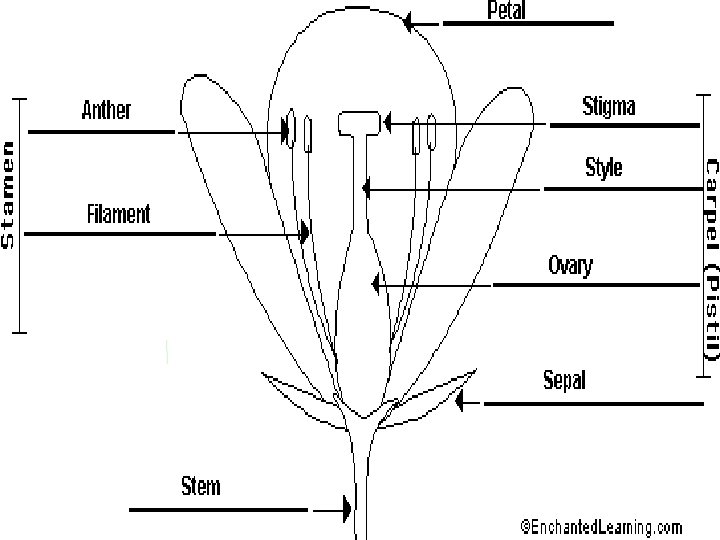
• A flower has two major reproductive structures (SEXUAL reproduction)
• The female reproductive organ or pistil (stigma + style) • The male reproductive organ or stamen (anther + filament) • Pollination is the transfer of pollen from the anther to the stigma
Animal Kingdom (Characteristics)

Classification
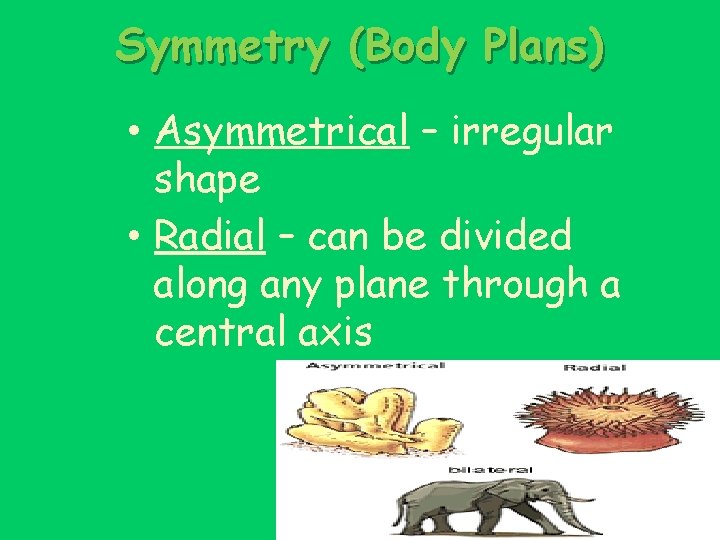
Symmetry (Body Plans) • Asymmetrical – irregular shape • Radial – can be divided along any plane through a central axis
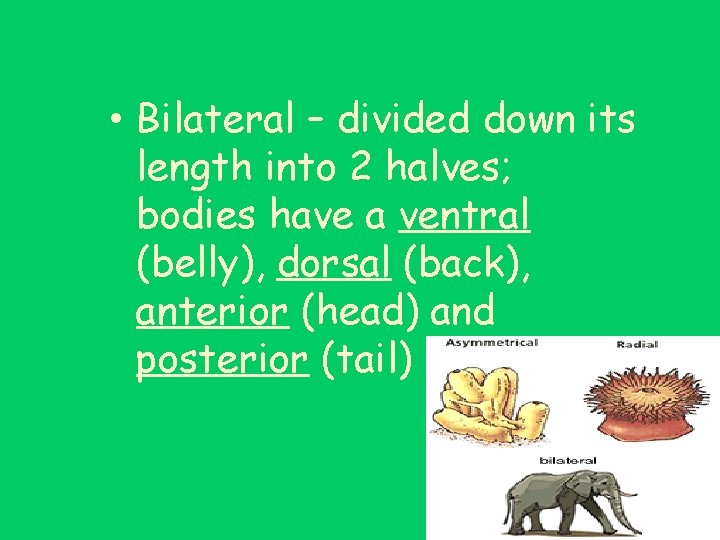
• Bilateral – divided down its length into 2 halves; bodies have a ventral (belly), dorsal (back), anterior (head) and posterior (tail)
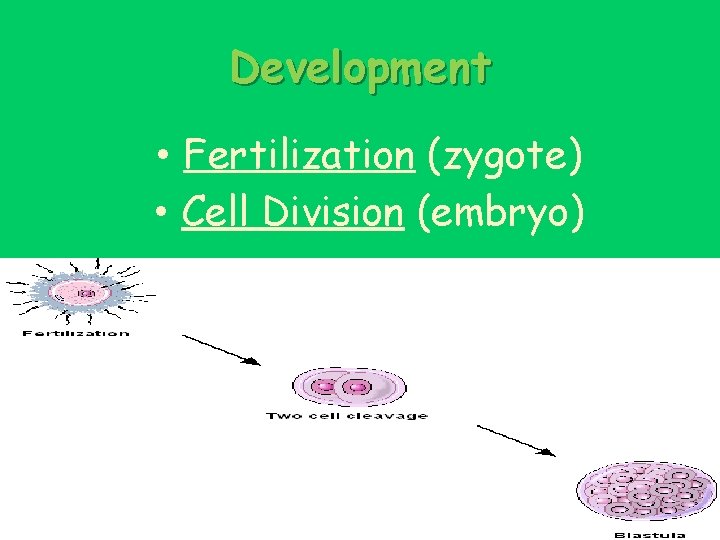
Development • Fertilization (zygote) • Cell Division (embryo)
–Blastula (hollow ball of cells) –Gastrula (ectoderm, mesoderm, endoderm) • Growth and development into an adult

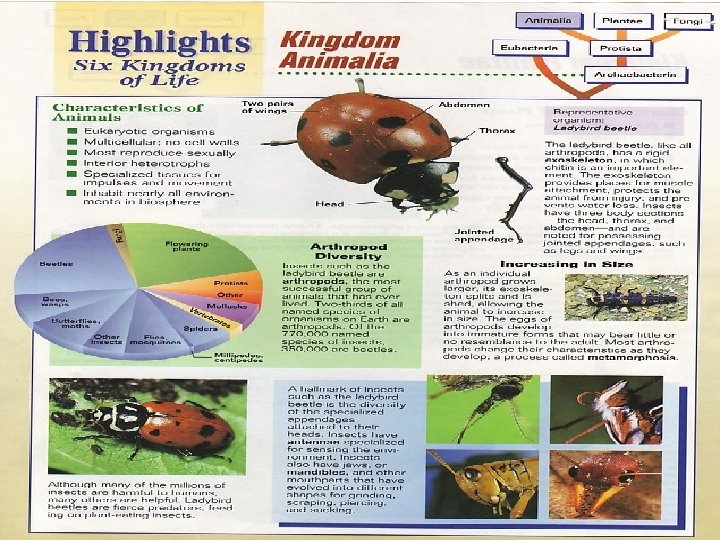
Characteristics: • Eukaryotic, multicellular, heterotrophic, ingest food, specialized cells
Protection & support • insect-exoskeleton, • human-endoskeleton
Phylum Chordata (vertebrates) • All Chordates have a notochord –flexible rod of cells located in the dorsal part of the body –replaced in early development by backbone
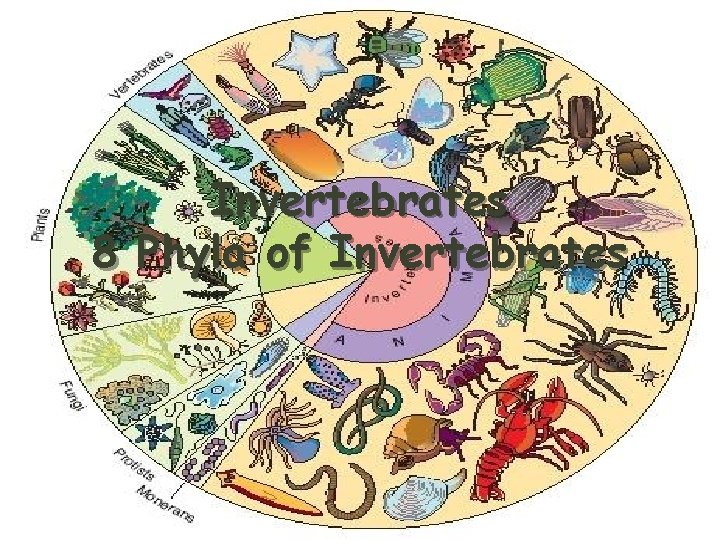
Invertebrates 8 Phyla of Invertebrates
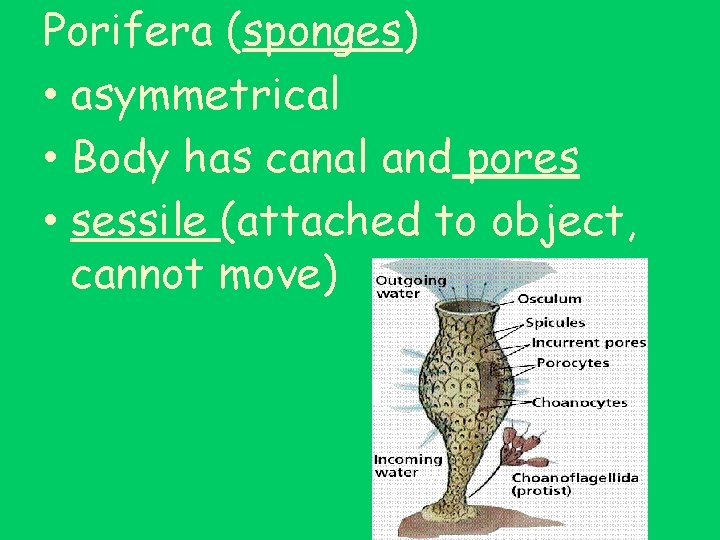
Porifera (sponges) • asymmetrical • Body has canal and pores • sessile (attached to object, cannot move)
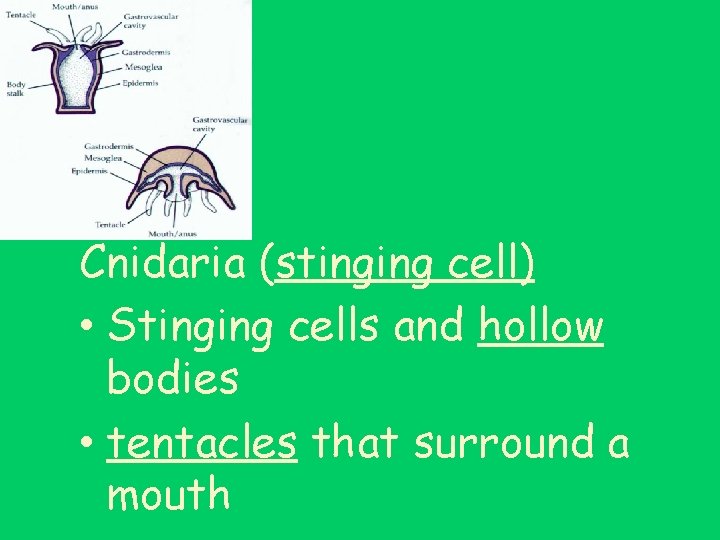
Cnidaria (stinging cell) • Stinging cells and hollow bodies • tentacles that surround a mouth
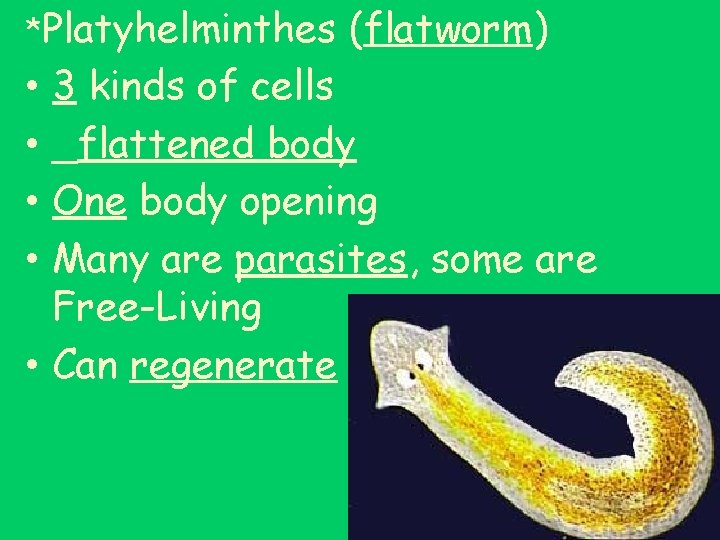
*Platyhelminthes (flatworm) 3 kinds of cells _flattened body One body opening Many are parasites, some are Free-Living • Can regenerate • •
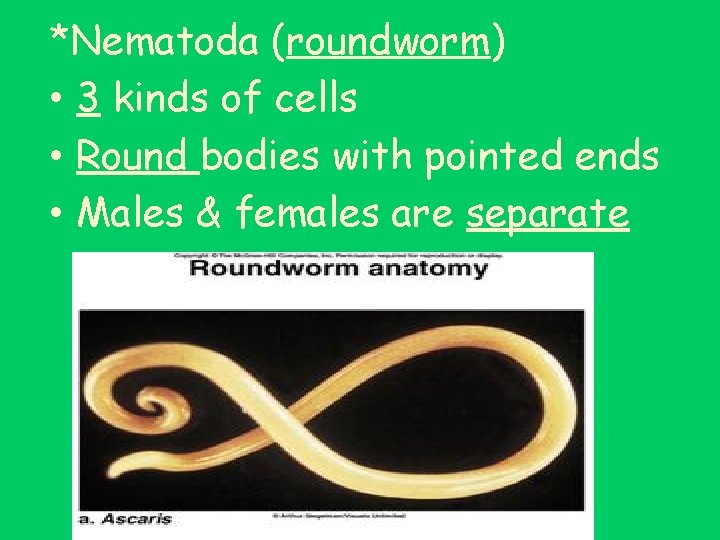
*Nematoda (roundworm) • 3 kinds of cells • Round bodies with pointed ends • Males & females are separate
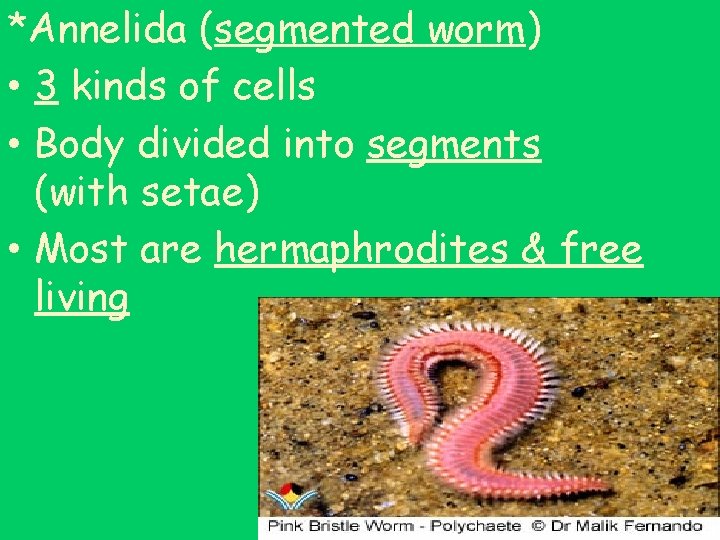
*Annelida (segmented worm) • 3 kinds of cells • Body divided into segments (with setae) • Most are hermaphrodites & free living
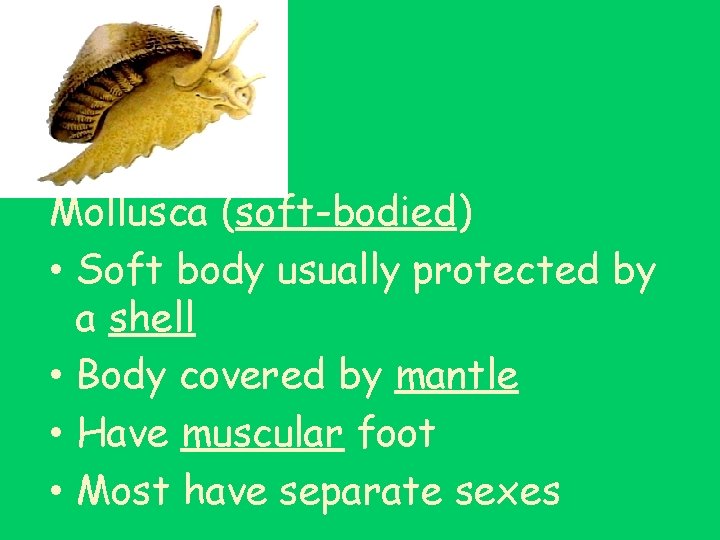
Mollusca (soft-bodied) • Soft body usually protected by a shell • Body covered by mantle • Have muscular foot • Most have separate sexes
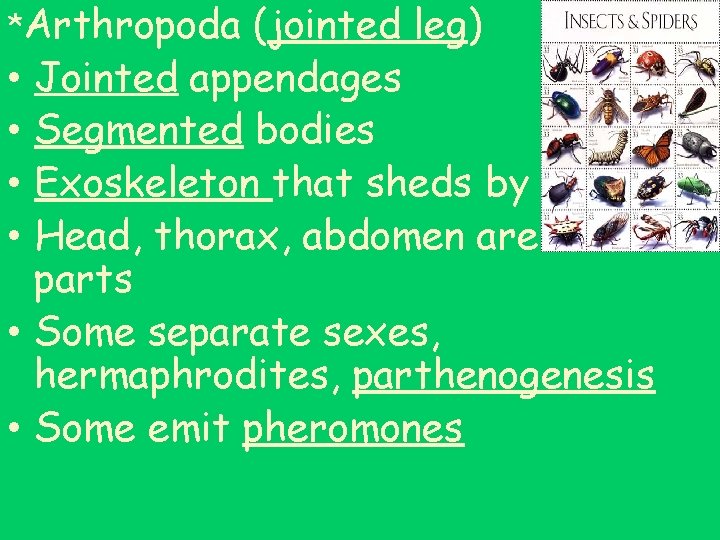
*Arthropoda • • • (jointed leg) Jointed appendages Segmented bodies Exoskeleton that sheds by molting Head, thorax, abdomen are main parts Some separate sexes, hermaphrodites, parthenogenesis Some emit pheromones
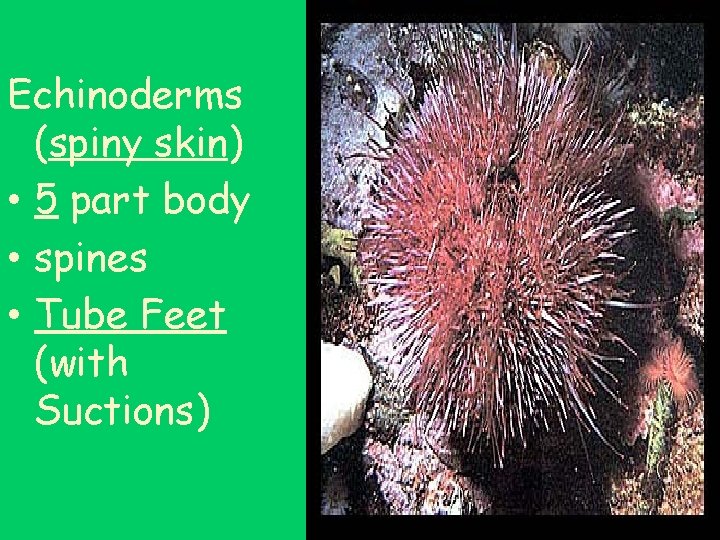
Echinoderms (spiny skin) • 5 part body • spines • Tube Feet (with Suctions)

(Kingdom Animalia, Phylum Chordata, Subphylum Vertebrata)
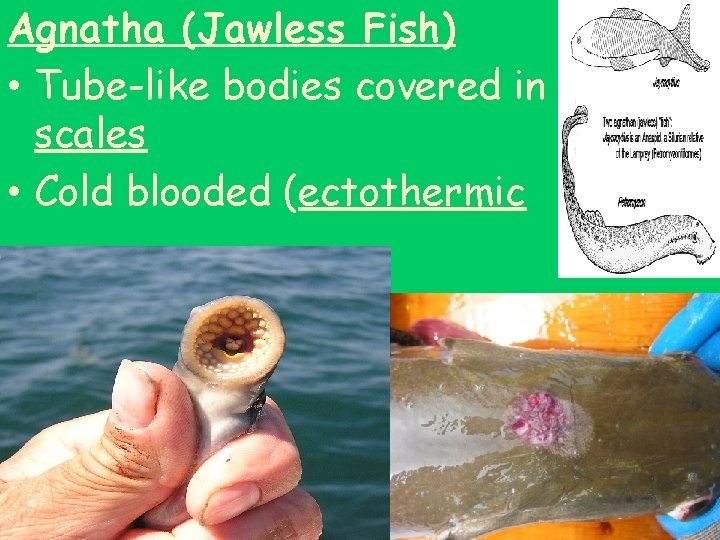
Agnatha (Jawless Fish) • Tube-like bodies covered in scales • Cold blooded (ectothermic
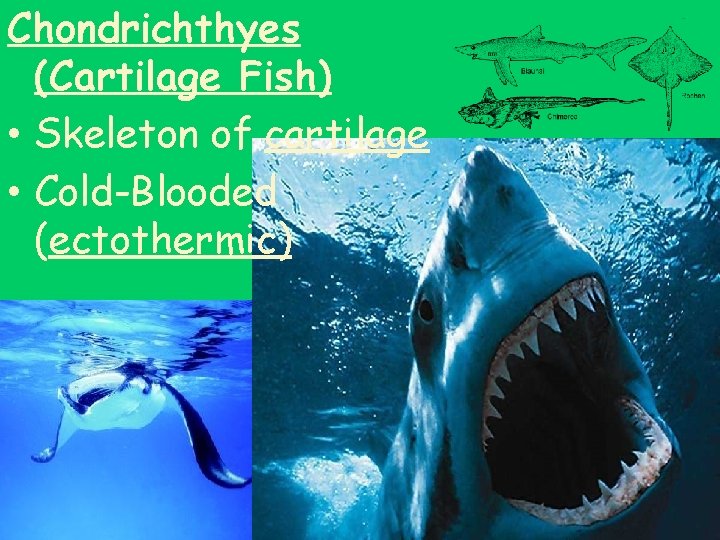
Chondrichthyes (Cartilage Fish) • Skeleton of cartilage • Cold-Blooded (ectothermic)
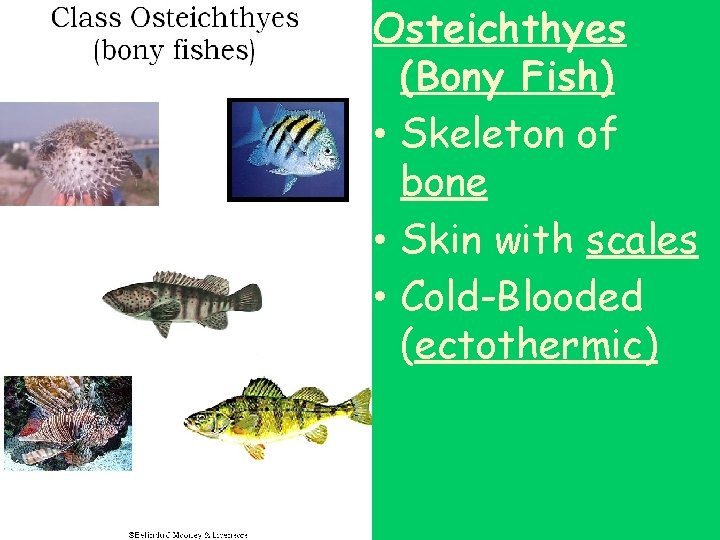
Osteichthyes (Bony Fish) • Skeleton of bone • Skin with scales • Cold-Blooded (ectothermic)
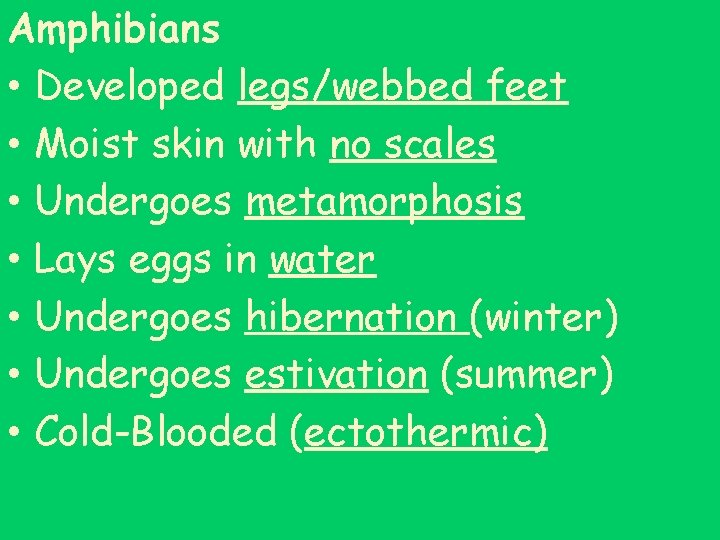
Amphibians • Developed legs/webbed feet • Moist skin with no scales • Undergoes metamorphosis • Lays eggs in water • Undergoes hibernation (winter) • Undergoes estivation (summer) • Cold-Blooded (ectothermic)
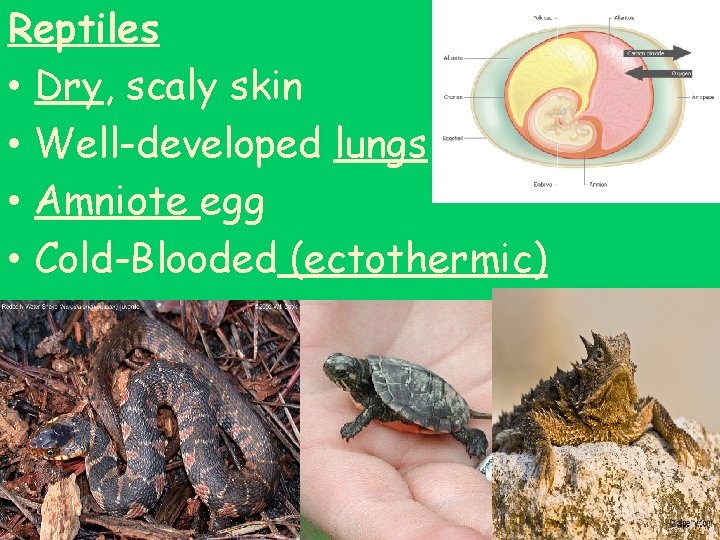
Reptiles • Dry, scaly skin • Well-developed lungs • Amniote egg • Cold-Blooded (ectothermic)
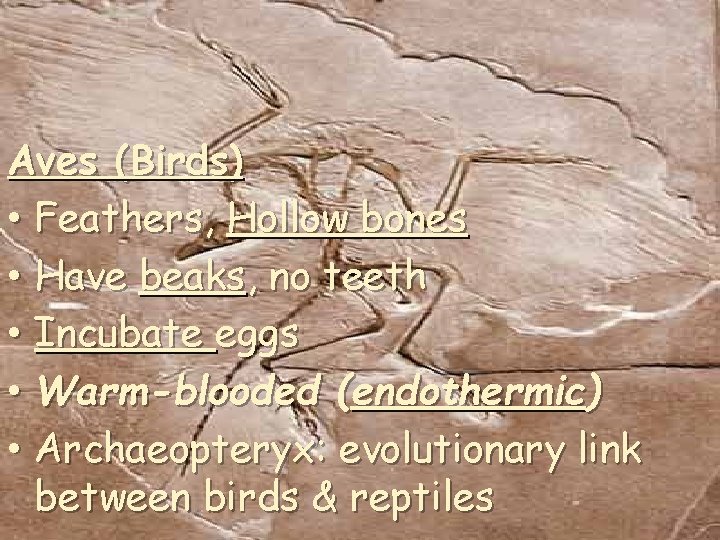
Aves (Birds) • Feathers, Hollow bones • Have beaks, no teeth • Incubate eggs • Warm-blooded (endothermic) • Archaeopteryx: evolutionary link between birds & reptiles
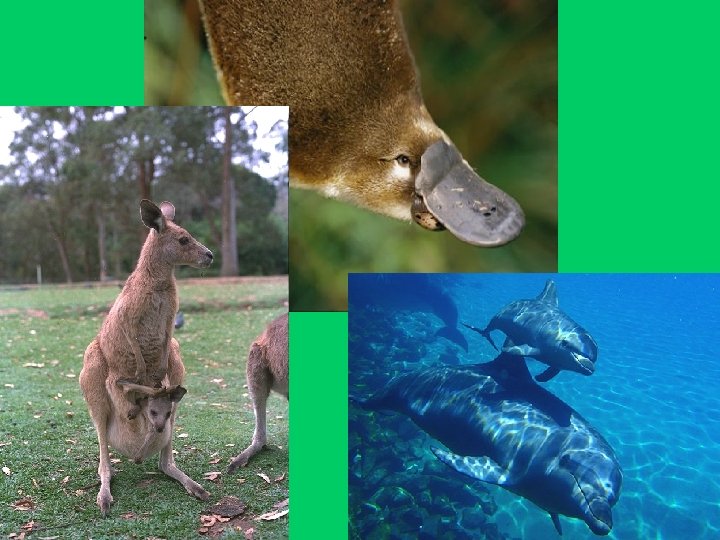
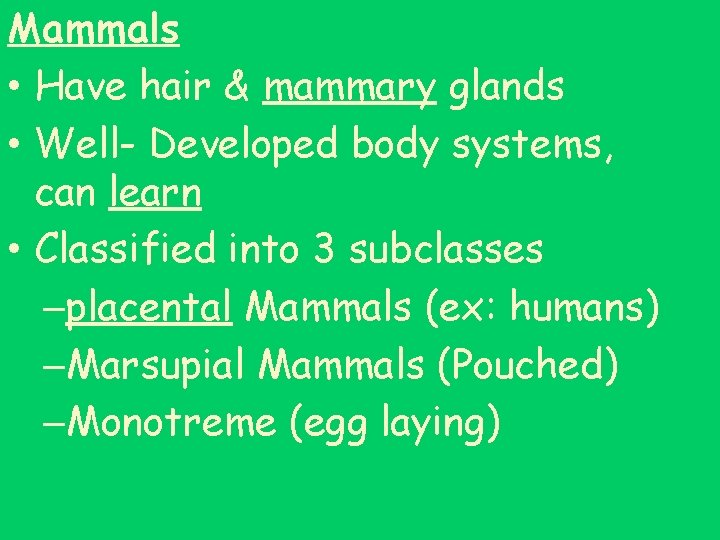
Mammals • Have hair & mammary glands • Well- Developed body systems, can learn • Classified into 3 subclasses –placental Mammals (ex: humans) –Marsupial Mammals (Pouched) –Monotreme (egg laying)

Animal Behavior • The way an organism responds to its environment • stimulus – something in the environment to which any organism can respond • response– the way the organism behaves when the stimulus is applied

• Ex. Bright light (stimulus) causes insects to hide (response)
2 TYPES OF BEHAVIOR • innate– Inborn; present & complete when born; unchanged • learned – Acquired as a result of repeated experiences (practice)
Innate Behaviors • Includes automatic responses; reflexes & “fight-or-flight” responses; • which are regulated by hormones (epinephrine and norepineephine) which are often called adrenaline (produced by the adrenal gland – sits on top of your kidneys)

Learned Behaviors • habituation- learning in which an animal comes to ignore a particular stimulus • Example: turtle being touched, going inside shell

• imprinting – takes place only during a specific • Example: gosling quickly learns to follow a moving object • Theory developed by Konrad Lorenz
• Classical conditioninglearning by association; trained to respond to a stimuli • Example: dog is trained to salivate when a bell rings • Theory developed by Ivan Pavlov

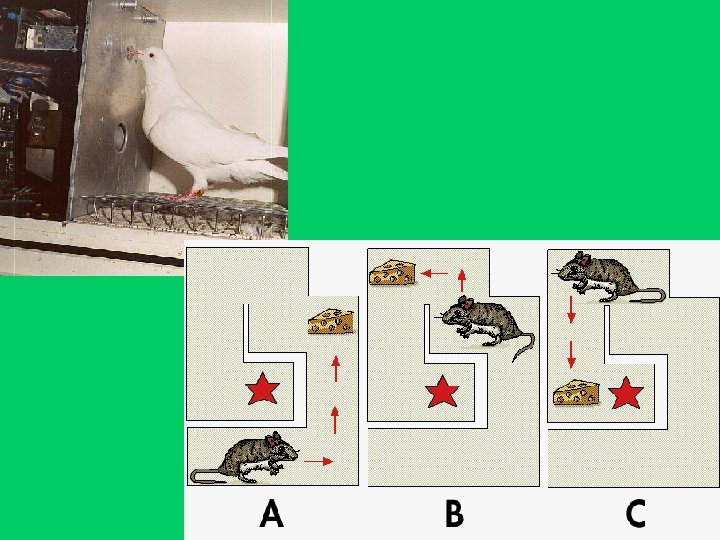
• Operant conditioning - Trial-and – error takes placed when environment rewards certain behaviors that animals perform accidentally • Example: pigeon learns that peaking at certain button releases food. • A mouse learns to navigate a maze

• Reasoning - Learning through insight (previous experience) or thinking about a solution • Example: ape figures out how to use a tool
INACTIVE Behavior Notes part 11
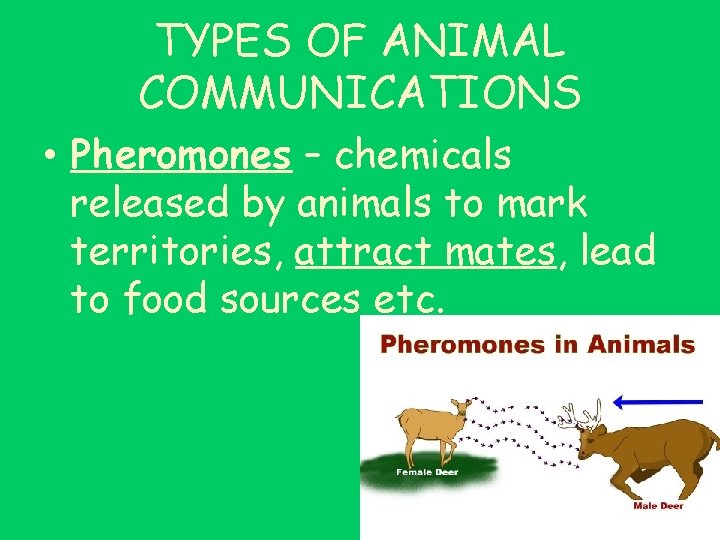
TYPES OF ANIMAL COMMUNICATIONS • Pheromones – chemicals released by animals to mark territories, attract mates, lead to food sources etc.

• Visual Display- action of posture meant to be seen by another animal
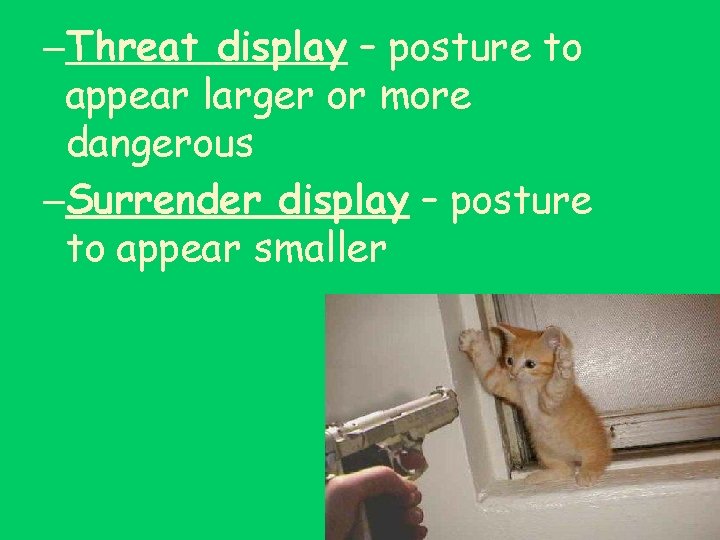
–Threat display – posture to appear larger or more dangerous –Surrender display – posture to appear smaller
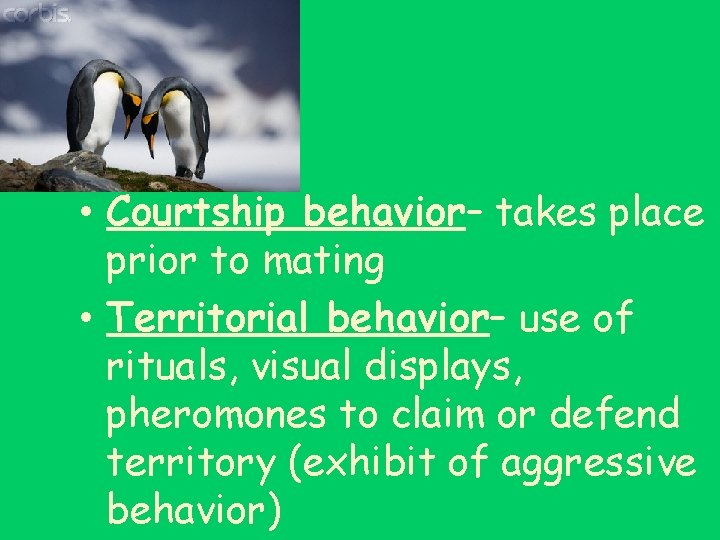
• Courtship behavior– takes place prior to mating • Territorial behavior– use of rituals, visual displays, pheromones to claim or defend territory (exhibit of aggressive behavior)
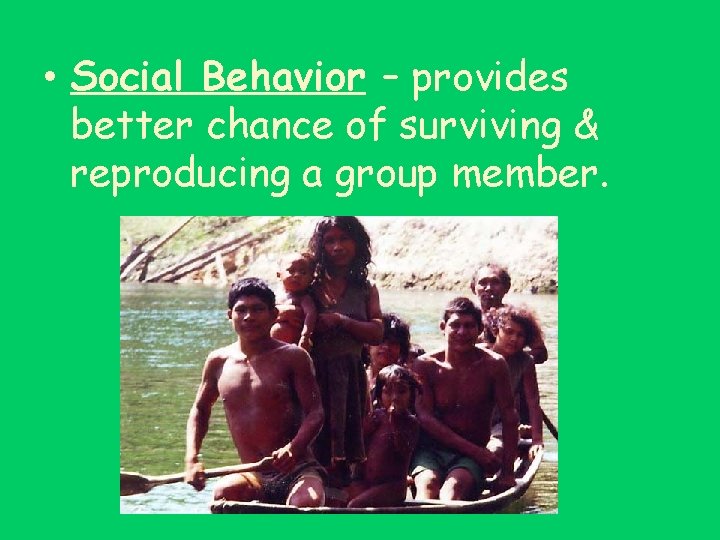
• Social Behavior – provides better chance of surviving & reproducing a group member.
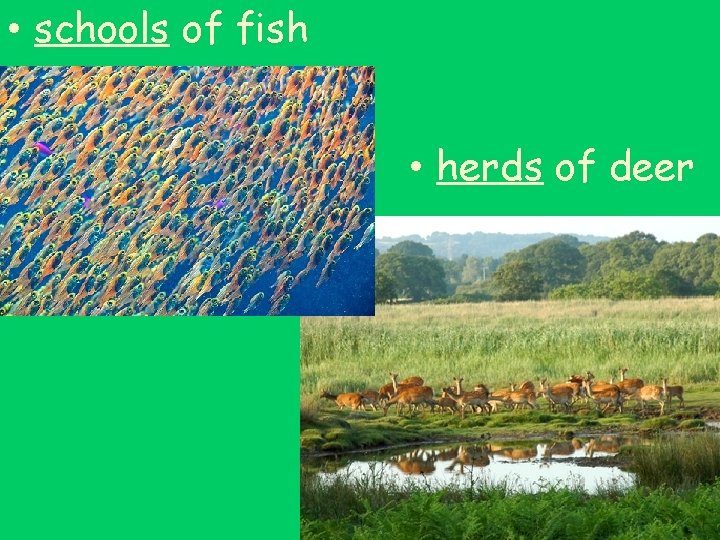
• schools of fish • herds of deer
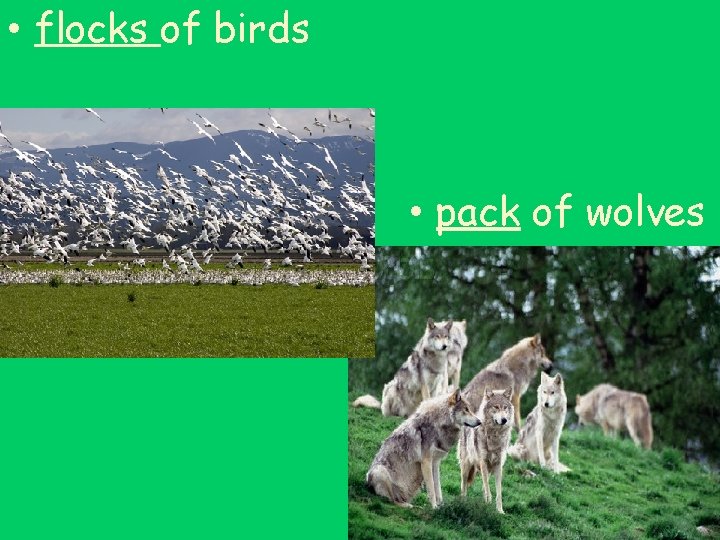
• flocks of birds • pack of wolves
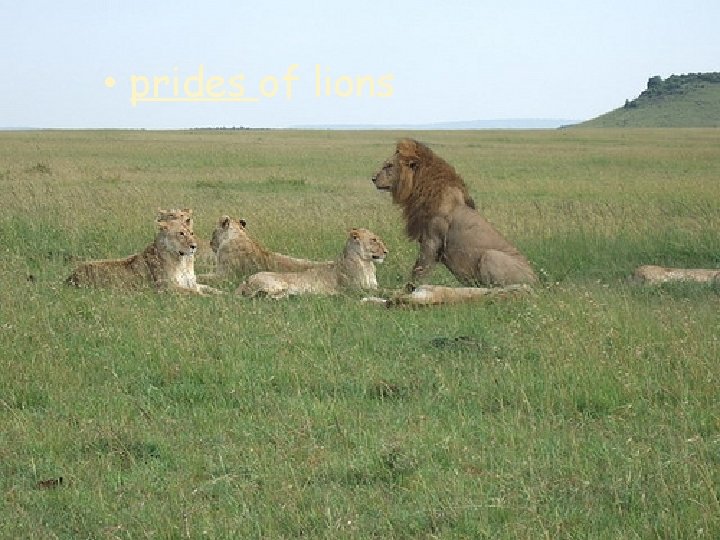
• prides of lions
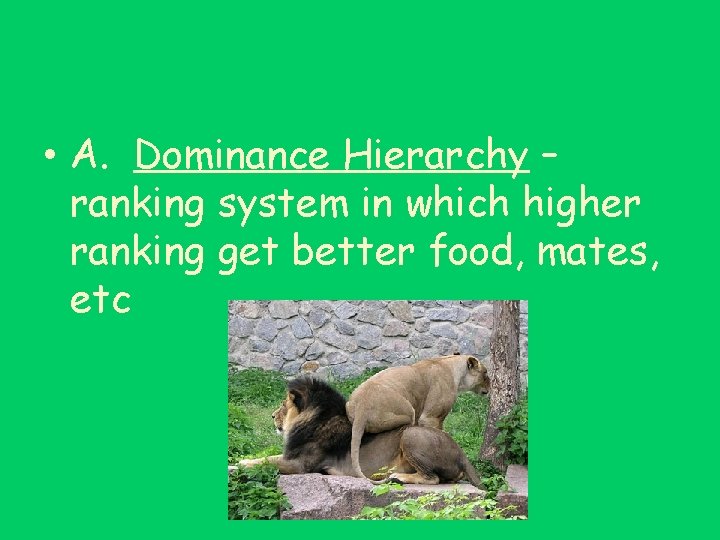
• A. Dominance Hierarchy – ranking system in which higher ranking get better food, mates, etc

• B. Kin Selection – response that may endanger a particular individual but save another species • Ex. Worker bee sting
• Behaviors resulting from external or internal clocks (Biological Rhythms) based on 24 hour day/night cycle called Circadian Rhythm
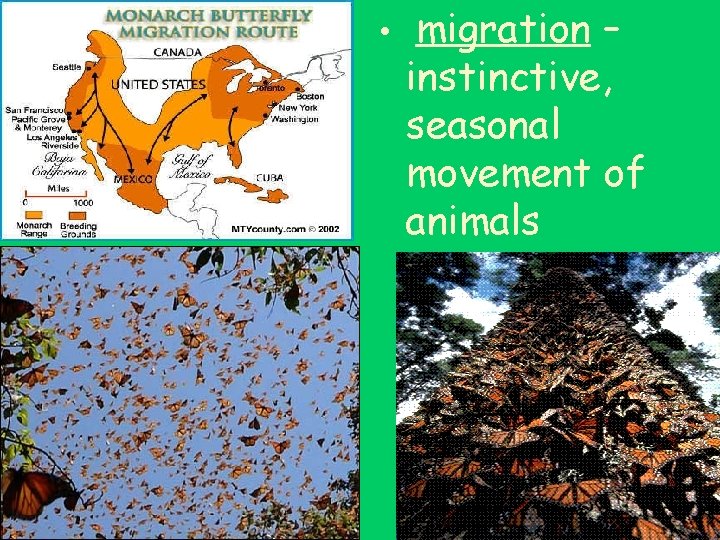
• migration – instinctive, seasonal movement of animals
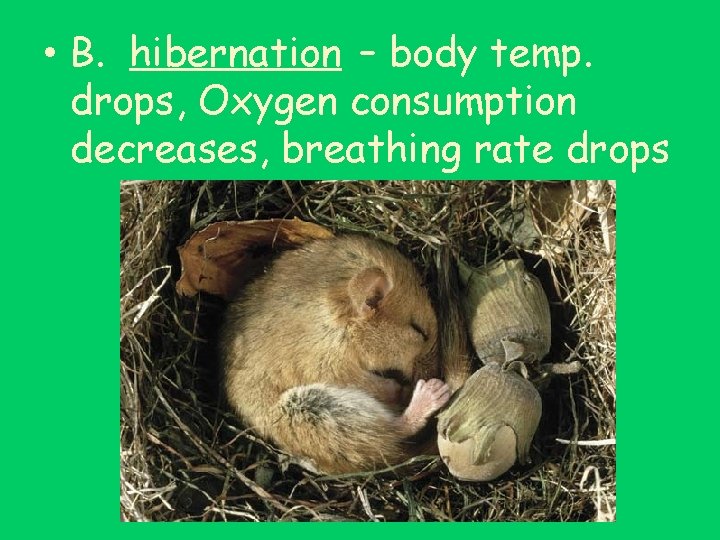
• B. hibernation – body temp. drops, Oxygen consumption decreases, breathing rate drops
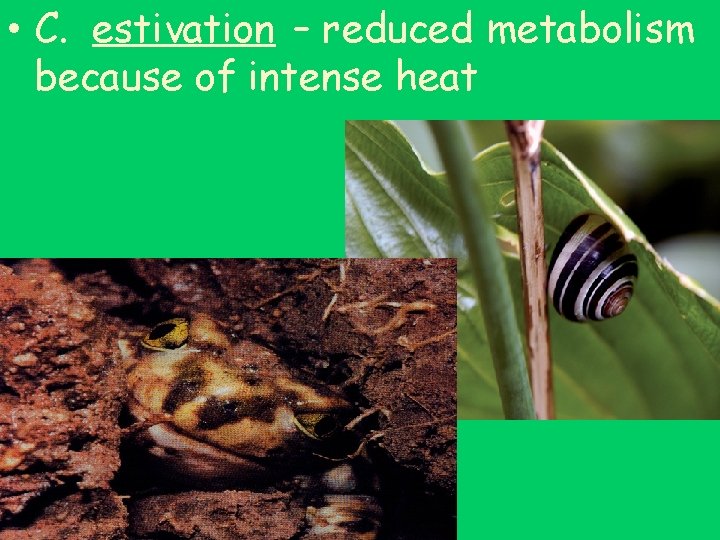
• C. estivation – reduced metabolism because of intense heat
• Defense Adaptations - enhance survival • camouflage – coloring adaptation, organism blends into environment • warning coloration (Mimicry)
- Slides: 108