
6 Kingdom System A brief but wonderful overview
6 Kingdom System A brief, but wonderful overview

The Six Kingdoms are… Starting with the least complex to the more complicated and fancy. . 1 – Archaebacteria 2 – Eubacteria 3 – Protists 4 – Fungi 5 – Plants 6 - Animalia
Kingdom Archaebacteria General Characteristics 1. Single-celled and Prokaryotic (cells have no nucleus) 2. Asexual reproduction 3. Come in 3 shapes 4. -cocci, rod, spiral 5. 4. Live in extreme conditions – very salty, hot, acidic
Kingdom Eubacteria 1. Single-celled and eukaryotic (cells have a nucleus) 2. Asexual reproduction 3. 3. Come in 3 shapes – cocci, rod, spiral 4. 4. Found e Come in 3 shapes – cocci, rod, spiral verywhere – even in your mouth
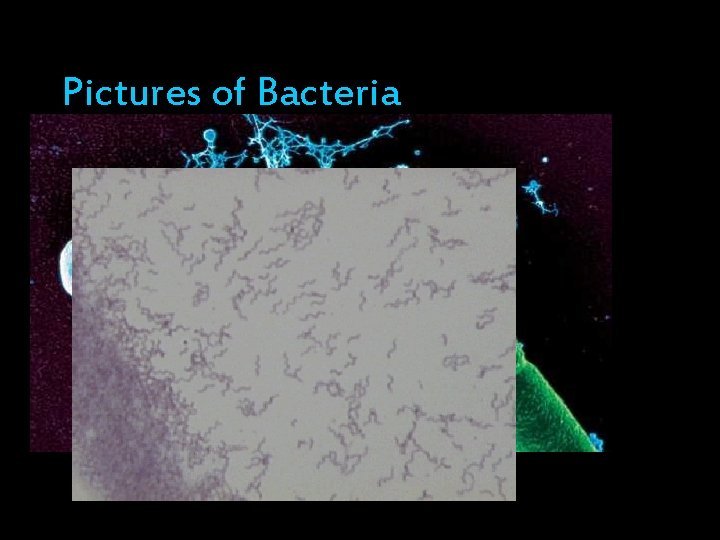
Pictures of Bacteria
Kingdom Protista 1. Eukaryotic Cells 2. Single or multi-cellular 3. Asexual and Sexual Reproduction 4. Can move with flagella, (whip-like tail), cilia (hair like projections) or pseudopods (false feet) 5. Watch pseudopods in ACTION http: //wolfbat 359. com/streaming 1. html

Protists in Action
Kingdom Fungi f 1. Eukaryotic cells and Multi-cellular 2. Unable to move 3. Sexual and Asexual reproduction 4. Feed off dead organisms for nutrients (saprophytes)
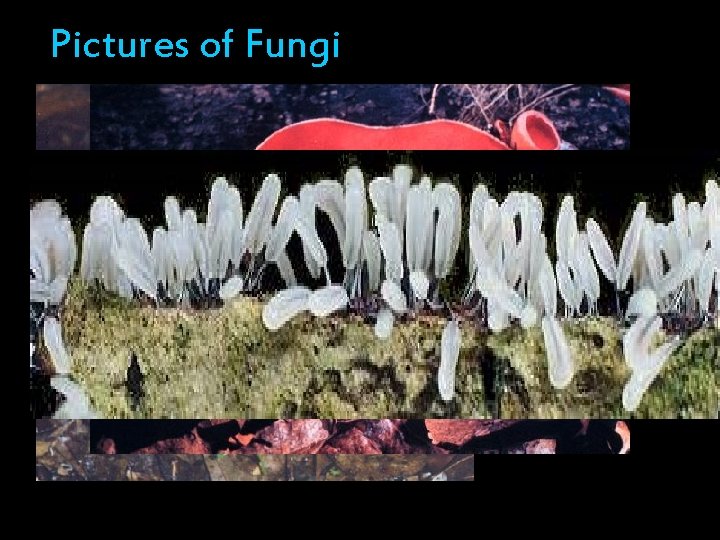
Pictures of Fungi
Kingdom Plantae 1. Eukaryotic Cells with cell walls, chloroplasts, chlorophyll 2. Multi-cellular 3. Sexual and asexual reproduction 4. Capable of photosynthesis – makes its own food using sunlight 5. Immobile (no movement)
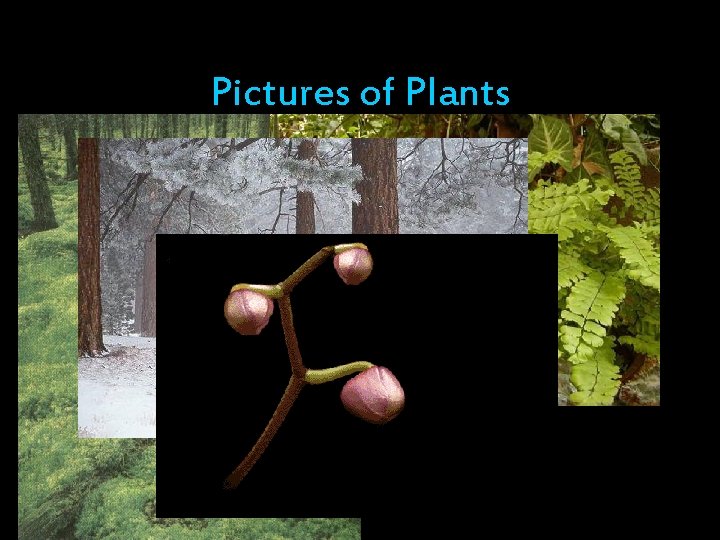
Pictures of Plants
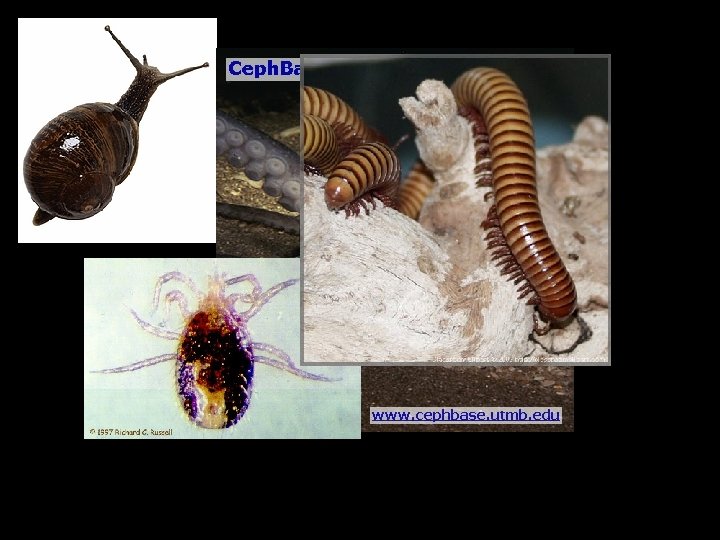
Kingdom Animalia **There are many types of animals, but these are some of the things they all have in common 1. Many-celled and eukaryotic 2. Heterotrophs – cannot make their own food and must rely on other organisms for nutrients 3. All are capable of sexual reproduction 4. Capable of movement in many forms
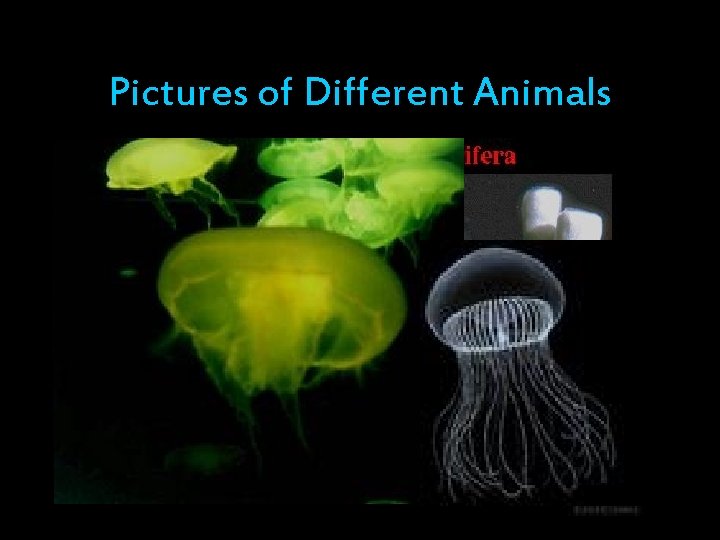
Pictures of Different Animals
- Slides: 14