
6 d FGS Workshop Epping 11 July 2003
- Slides: 24
6 d. FGS Workshop, Epping 11 July 2003 Fred Watson (and the RAVErs)
Overview What is RAVE? Science goals—why are we RAVEing? Instrumentation The RAVE’s progress A few other issues. . .
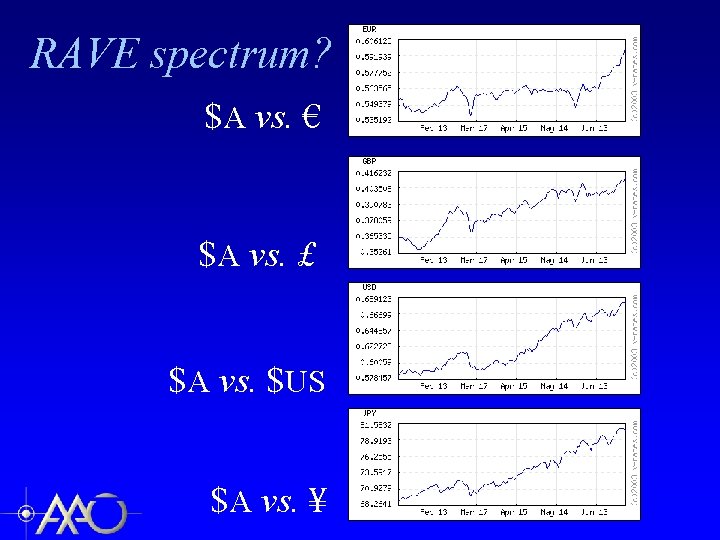
What is RAVE? RAdial Velocity Experiment International collaboration— 22 scientists in 11 nations All-sky survey of stellar velocities & metallicities 50 million stars, complete to I=15 (Biggest EVER) Enables true galactic archaeology Spawned from (now-defunct) space missions UK Schmidt Telescope and a northern counterpart Completely externally funded ($A, €, $US, ¥? ) Public data-base; VO compliant
Science goals Comparison with simulations of structure-growth within a CDM Universe (Steinmetz & Navarro, 2002) Substructure in the halo (cold stellar streams) Chemical signatures ([ /Fe], [Fe/H]) to identify common formation sites among widely-separated stars Formation of bulges Origin of the thick disk Dynamical state of the thin disk and neighbouring spiral arms www. aip. de/RAVE/
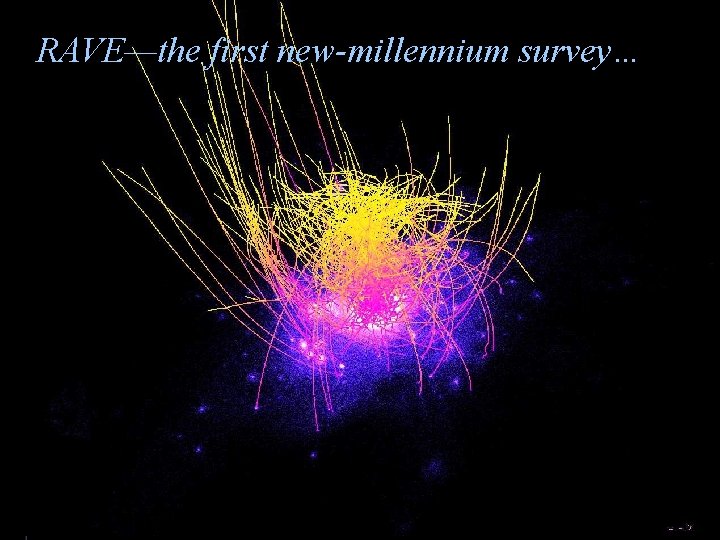
RAVE—the first new-millennium survey…
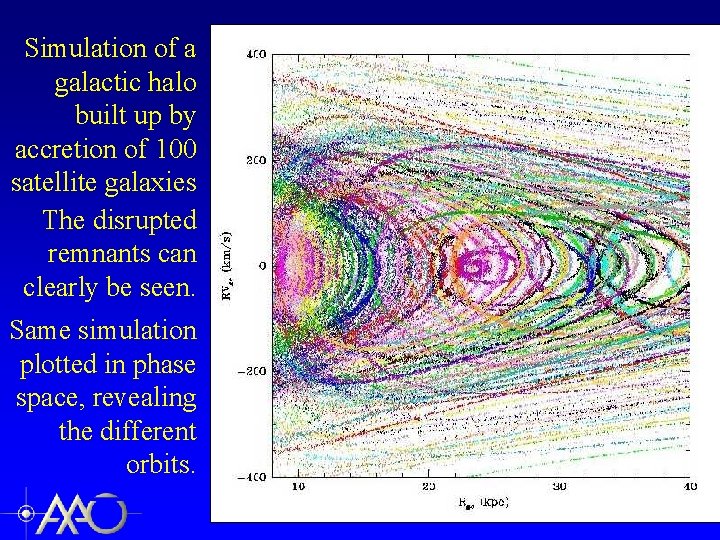
Simulation of a galactic halo built up by accretion of 100 satellite galaxies The disrupted remnants can clearly be seen. Same simulation plotted in phase space, revealing the different orbits.
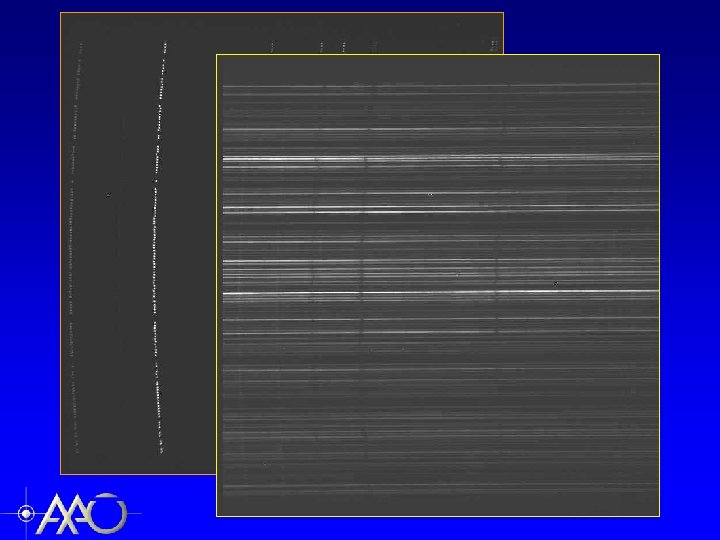
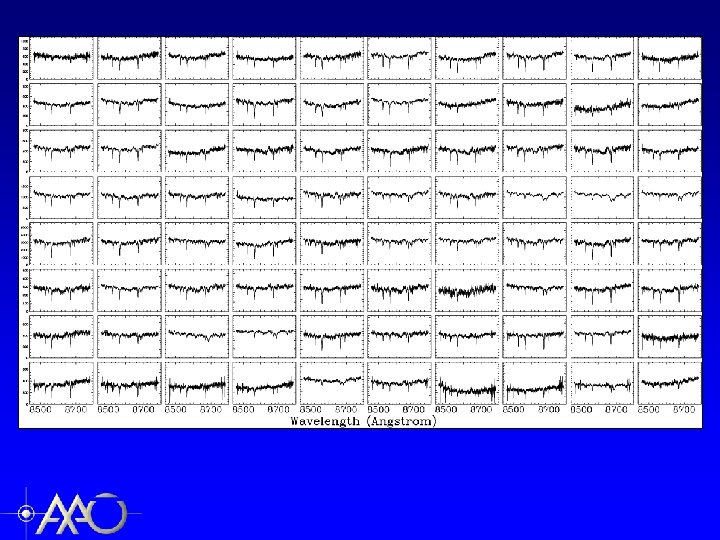
More RAVEing Phase I: April 2003–June 2005, using unallocated UKST bright time during the 6 d. F Galaxy Survey 105 stars with I<13. 5, B-V<0. 8 Centred on Ca triplet: 8498Å, 8542Å, 8662Å in the far red region of the spectrum Currently measuring 700 stars per night Phase II: 2006– 10, all UKST time once the Galaxy Survey is complete Will measure 22, 000 stars per night
Instrumentation for RAVEing
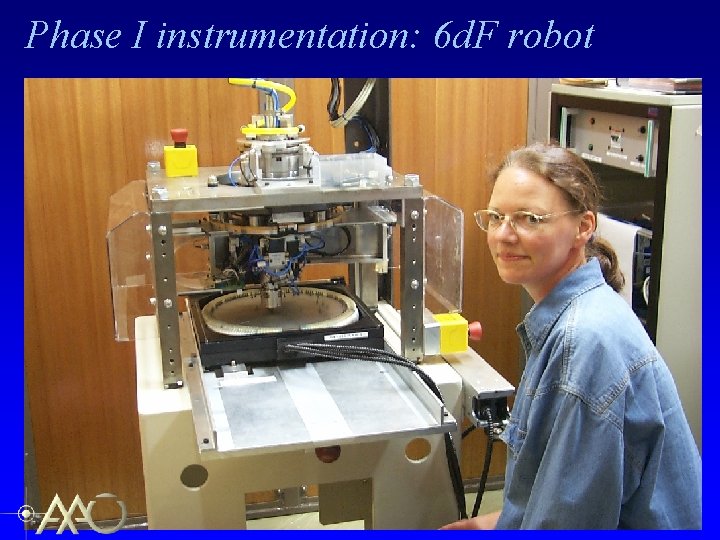
Phase I instrumentation: 6 d. F robot
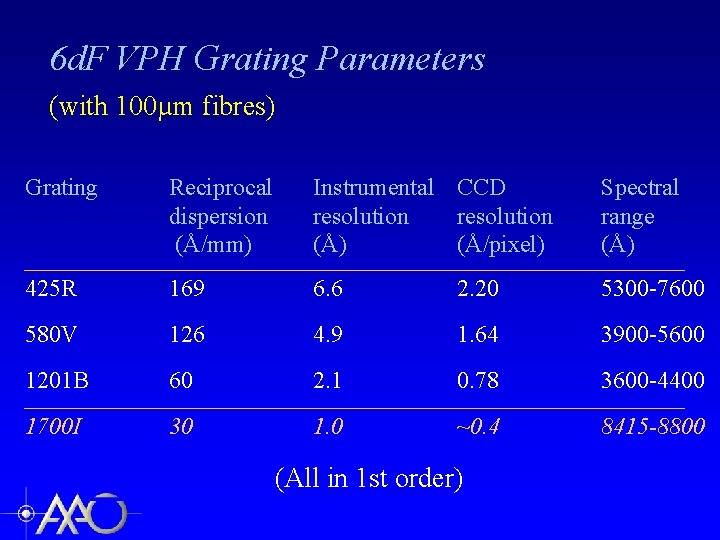
6 d. F VPH Grating Parameters (with 100µm fibres) Grating Reciprocal dispersion (Å/mm) Instrumental CCD resolution (Å) (Å/pixel) Spectral range (Å) 425 R 169 6. 6 2. 20 5300 -7600 580 V 126 4. 9 1. 64 3900 -5600 1201 B 60 2. 1 0. 78 3600 -4400 1700 I 30 1. 0 ~0. 4 8415 -8800 (All in 1 st order)
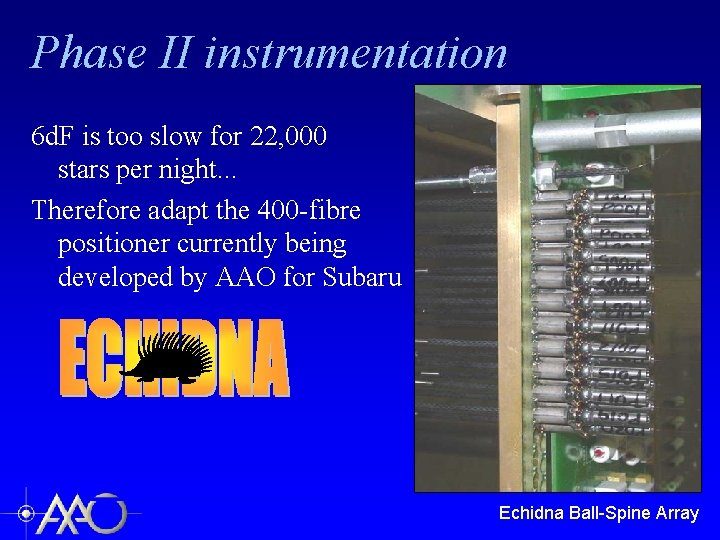
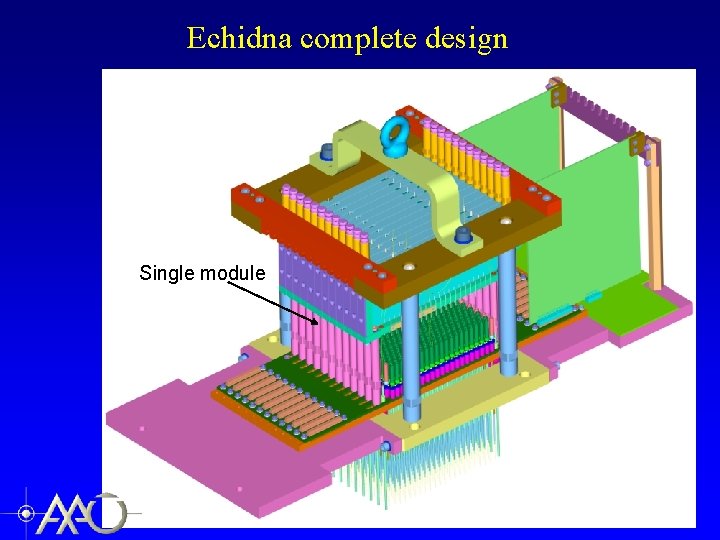
Phase II instrumentation 6 d. F is too slow for 22, 000 stars per night. . . Therefore adapt the 400 -fibre positioner currently being developed by AAO for Subaru Echidna Ball-Spine Array
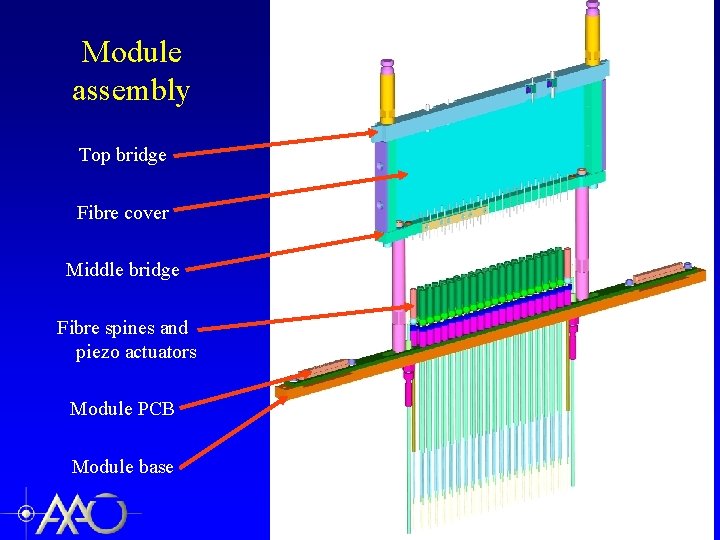
Module assembly Top bridge Fibre cover Middle bridge Fibre spines and piezo actuators Module PCB Module base
Echidna complete design Single module
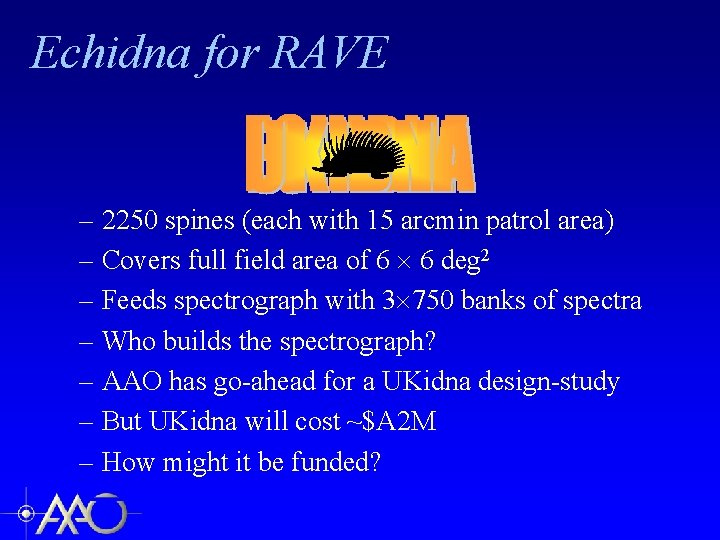
Echidna for RAVE – 2250 spines (each with 15 arcmin patrol area) – Covers full field area of 6 6 deg 2 – Feeds spectrograph with 3 750 banks of spectra – Who builds the spectrograph? – AAO has go-ahead for a UKidna design-study – But UKidna will cost ~$A 2 M – How might it be funded?
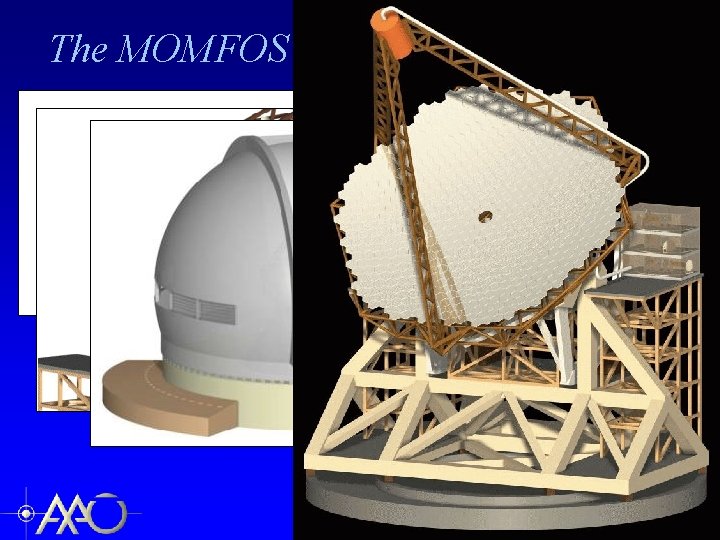
The MOMFOS story…
The RAVE’s Progress
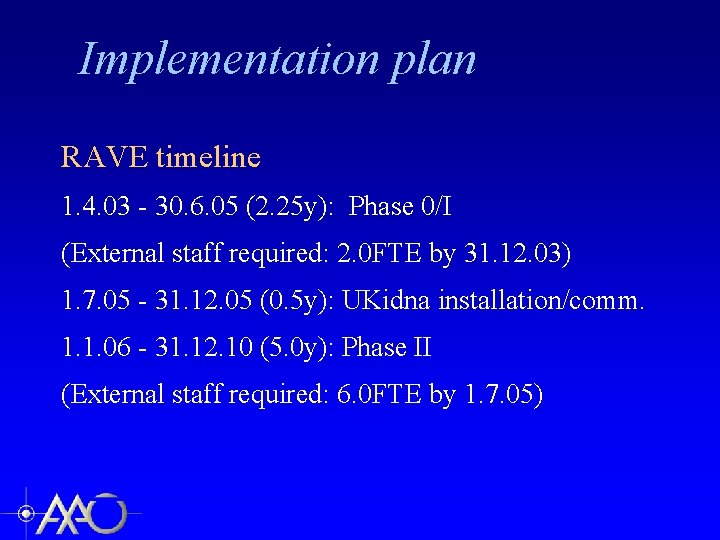
Implementation plan RAVE timeline 1. 4. 03 - 30. 6. 05 (2. 25 y): Phase 0/I (External staff required: 2. 0 FTE by 31. 12. 03) 1. 7. 05 - 31. 12. 05 (0. 5 y): UKidna installation/comm. 1. 1. 06 - 31. 12. 10 (5. 0 y): Phase II (External staff required: 6. 0 FTE by 1. 7. 05)
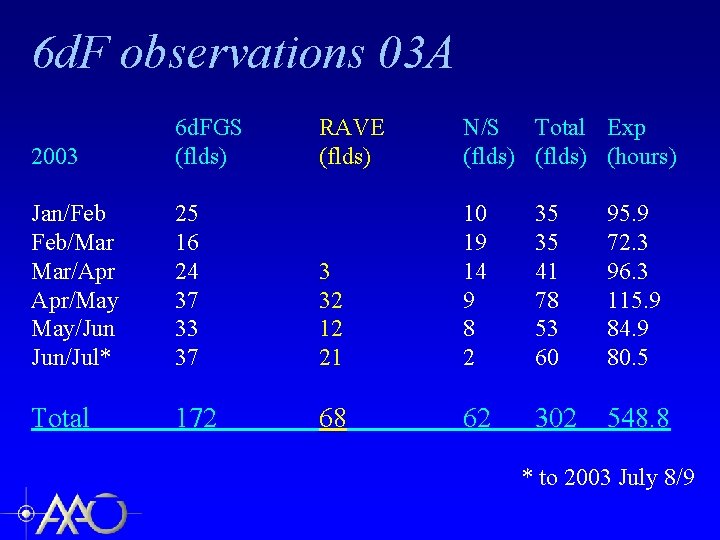
6 d. F observations 03 A 2003 6 d. FGS (flds) RAVE (flds) N/S Total Exp (flds) (hours) Jan/Feb Feb/Mar Mar/Apr Apr/May May/Jun Jun/Jul* 25 16 24 37 33 37 3 32 12 21 10 19 14 9 8 2 35 35 41 78 53 60 95. 9 72. 3 96. 3 115. 9 84. 9 80. 5 Total 172 68 62 302 548. 8 * to 2003 July 8/9
VO-compliance Data-format: easy to make VO compliant (though AAO may adopt CADC format rather than VOtable) Metadata: robot-generated data, etc. already written to data headers, but observer data is not Log 6 d. F will allow additional metadata to be aatached (observing conditions, weather data, field alignment quality, observer’s name, observer comments, etc. )
RAVE spectrum? $A vs. € $A vs. £ $A vs. $US $A vs. ¥