
6 Common European Framework of Reference for Languages

- Slides: 6
6. Common European Framework of Reference for Languages
Why is the Common European Framework of Reference for Languages needed? § A further intensification of language learning and teaching in member countries is necessary in the interests of greater mobility, more effective international communication combined with respect for identity and cultural diversity, better access to information, more intensive personal interaction, improved working relations and a deeper mutual understanding.
Uses of CEF § planning of language-learning programmes § the planning of language certification § the planning of self-directed learning.
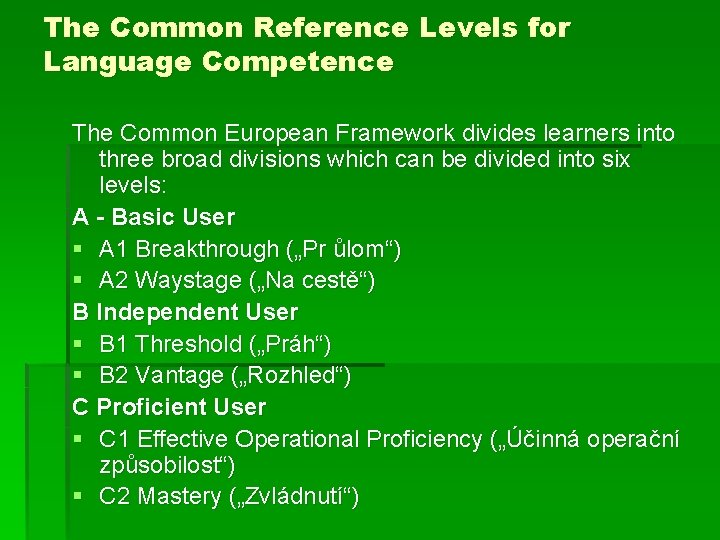
The Common Reference Levels for Language Competence The Common European Framework divides learners into three broad divisions which can be divided into six levels: A - Basic User § A 1 Breakthrough („Pr ůlom“) § A 2 Waystage („Na cestě“) B Independent User § B 1 Threshold („Práh“) § B 2 Vantage („Rozhled“) C Proficient User § C 1 Effective Operational Proficiency („Účinná operační způsobilost“) § C 2 Mastery („Zvládnutí“)
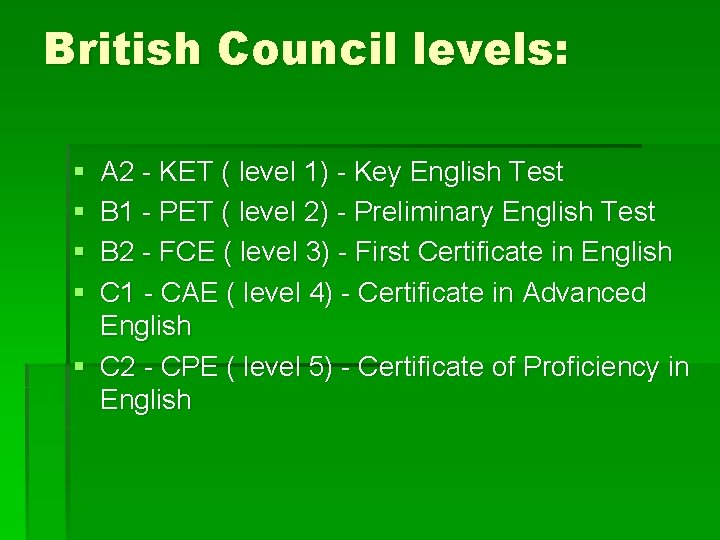
British Council levels: § § A 2 - KET ( level 1) - Key English Test B 1 - PET ( level 2) - Preliminary English Test B 2 - FCE ( level 3) - First Certificate in English C 1 - CAE ( level 4) - Certificate in Advanced English § C 2 - CPE ( level 5) - Certificate of Proficiency in English