
6 Chapter Organization Design and Structure Copyright 2013

- Slides: 35
6 Chapter Organization Design and Structure Copyright © 2013 Pearson Education, Inc. publishing as Prentice Hall 6 -1
Learning Outcomes After studying this chapter, you will be able to: • Describe six key elements in org design. • Identify the contingency factors that favor either the mechanistic model or the organic model of organizational design. • Compare and contrast traditional and contemporary organizational designs. • Discuss the design challenges faced by today’s organizations. Copyright © 2013 Pearson Education, Inc. publishing as Prentice Hall 6 -2
Copyright © 2013 Pearson Education, Inc. publishing as Prentice Hall 6 -3
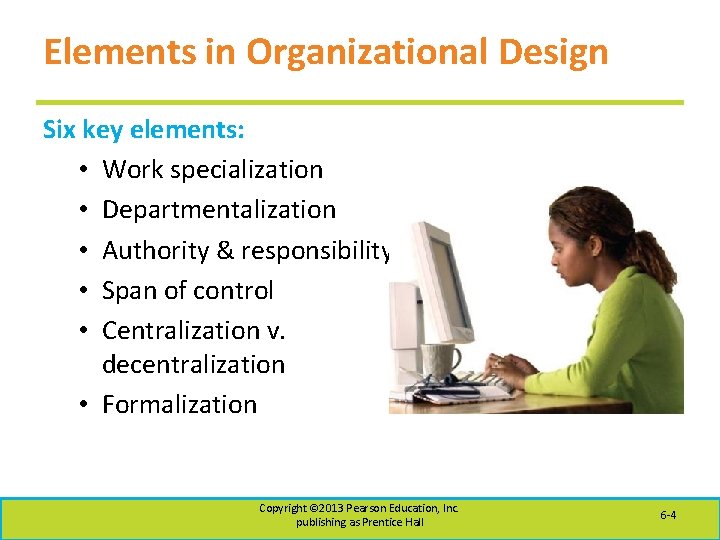
Elements in Organizational Design Six key elements: • Work specialization • Departmentalization • Authority & responsibility • Span of control • Centralization v. decentralization • Formalization Copyright © 2013 Pearson Education, Inc. publishing as Prentice Hall 6 -4
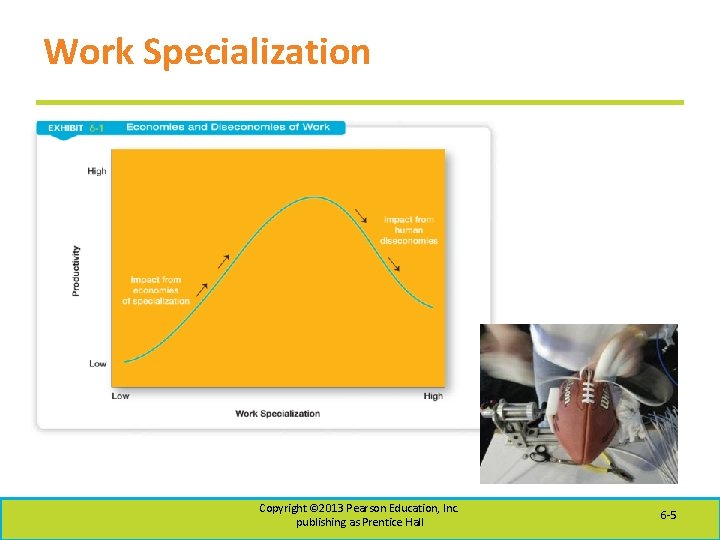
Work Specialization Copyright © 2013 Pearson Education, Inc. publishing as Prentice Hall 6 -5
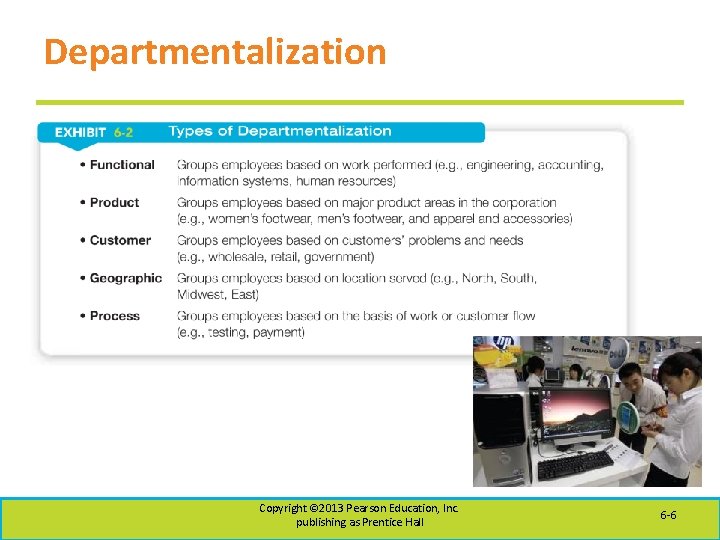
Departmentalization Copyright © 2013 Pearson Education, Inc. publishing as Prentice Hall 6 -6
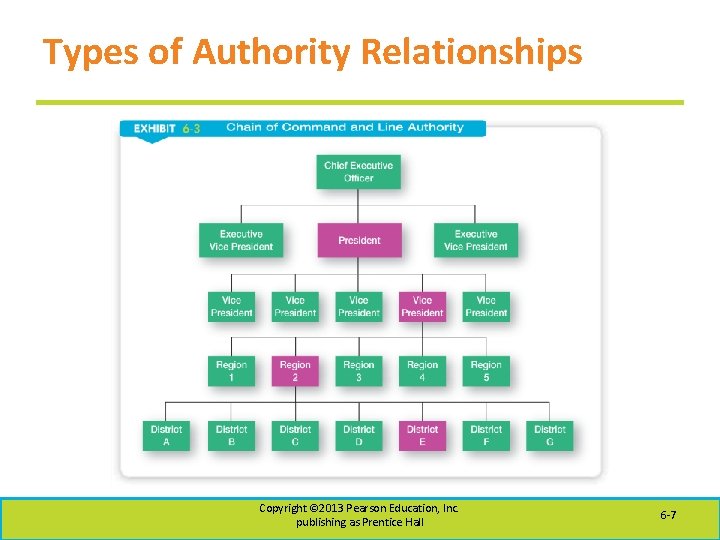
Types of Authority Relationships Copyright © 2013 Pearson Education, Inc. publishing as Prentice Hall 6 -7
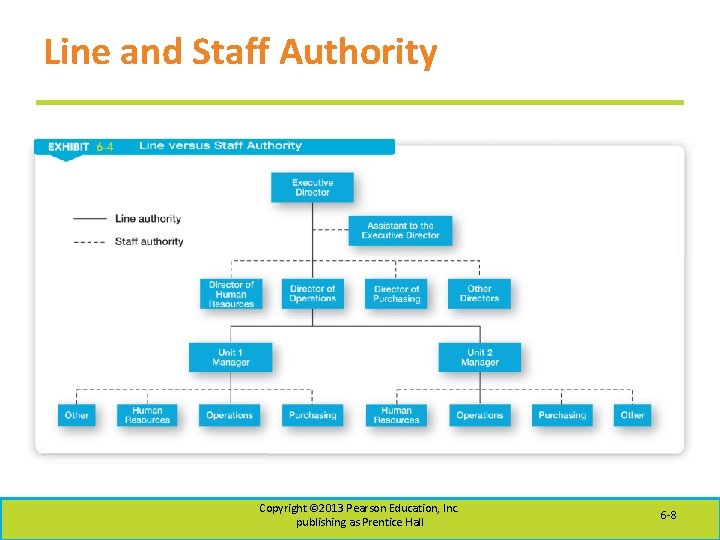
Line and Staff Authority Copyright © 2013 Pearson Education, Inc. publishing as Prentice Hall 6 -8
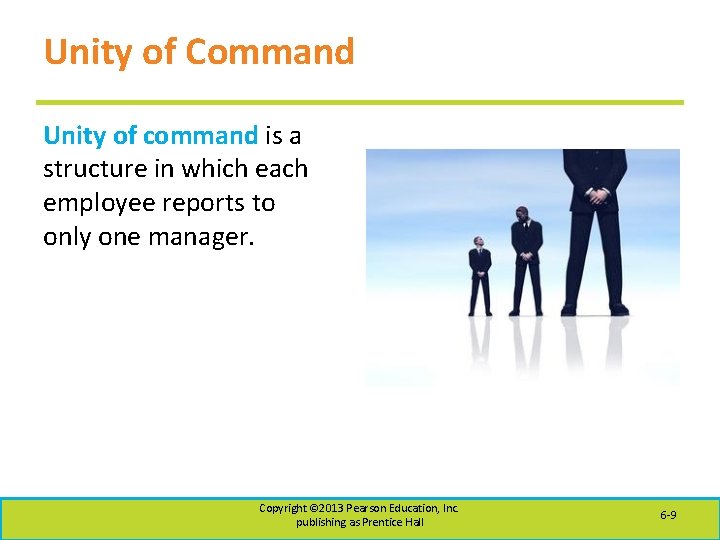
Unity of Command Unity of command is a structure in which each employee reports to only one manager. Copyright © 2013 Pearson Education, Inc. publishing as Prentice Hall 6 -9
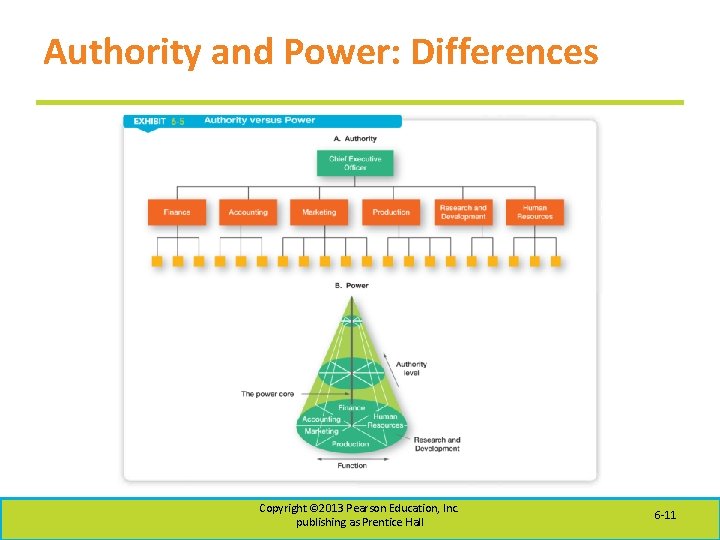
Authority and Power • Authority – A right; legitimacy is based on authority figure’s position in the organization • Power – An individual’s capacity to influence decisions Copyright © 2013 Pearson Education, Inc. publishing as Prentice Hall 6 -10
Authority and Power: Differences Copyright © 2013 Pearson Education, Inc. publishing as Prentice Hall 6 -11
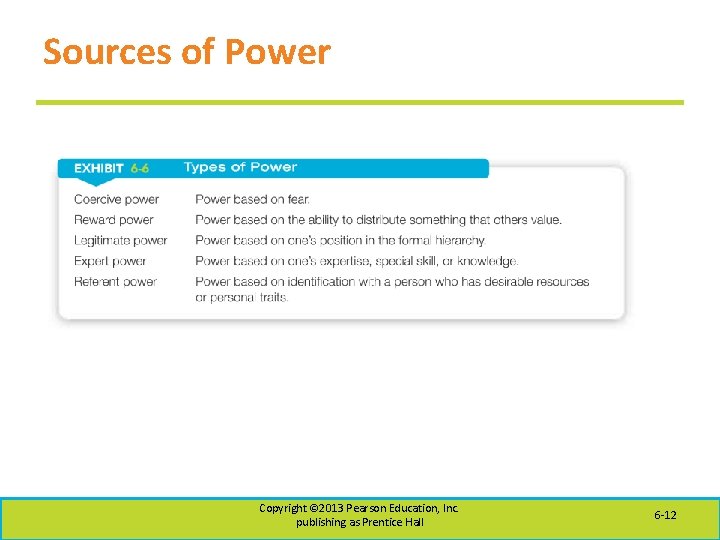
Sources of Power Copyright © 2013 Pearson Education, Inc. publishing as Prentice Hall 6 -12
Span of Control Span of control – The number of employees a manager can efficiently and effectively supervise Examples of contingency variables: – – – Employee training and experience Similarity of tasks and task complexity Location of employees Use of standardized procedures Sophistication of management information system Copyright © 2013 Pearson Education, Inc. publishing as Prentice Hall 6 -13
Centralization and Decentralization Centralization – Decision making takes place at upper levels of the organization. Decentralization – Lower-level managers provide input or actually make decisions. Copyright © 2013 Pearson Education, Inc. publishing as Prentice Hall 6 -14
Formalization Copyright © 2013 Pearson Education, Inc. publishing as Prentice Hall 6 -15
Copyright © 2013 Pearson Education, Inc. publishing as Prentice Hall 6 -16
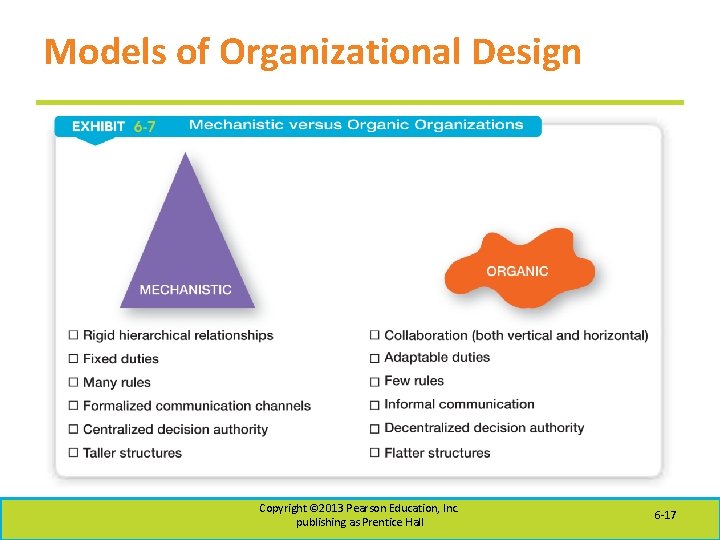
Models of Organizational Design Copyright © 2013 Pearson Education, Inc. publishing as Prentice Hall 6 -17
Strategy and Structure • Organizations looking for innovation – organic structure • Organizations looking for tight cost controls – mechanistic structure Copyright © 2013 Pearson Education, Inc. publishing as Prentice Hall 6 -18
Size and Structure Large organizations tend to have more specialization, departmentalization, centralization, and regulations than small organizations. Copyright © 2013 Pearson Education, Inc. publishing as Prentice Hall 6 -19
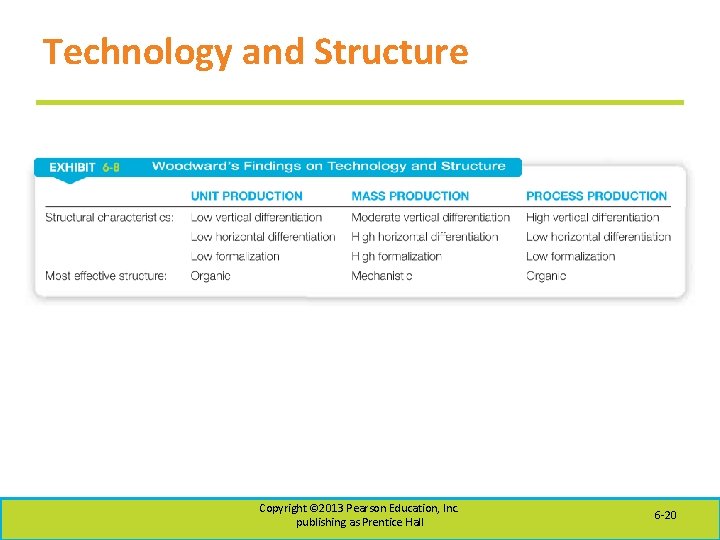
Technology and Structure Copyright © 2013 Pearson Education, Inc. publishing as Prentice Hall 6 -20
The Environment and Structure • Mechanistic organizations • Organic organizations • Dynamic environmental forces – – Global competition Accelerated product innovation by competitors Knowledge management Increased customer demand for higher quality and faster deliveries. Copyright © 2013 Pearson Education, Inc. publishing as Prentice Hall 6 -21
Copyright © 2013 Pearson Education, Inc. publishing as Prentice Hall 6 -22
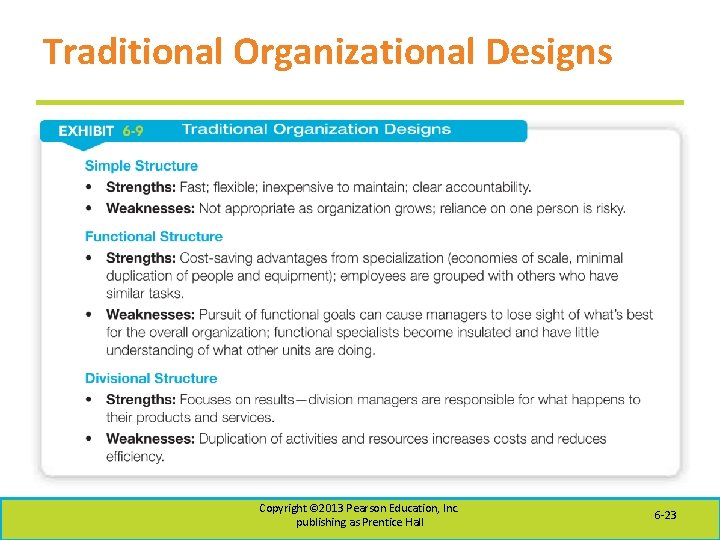
Traditional Organizational Designs Copyright © 2013 Pearson Education, Inc. publishing as Prentice Hall 6 -23
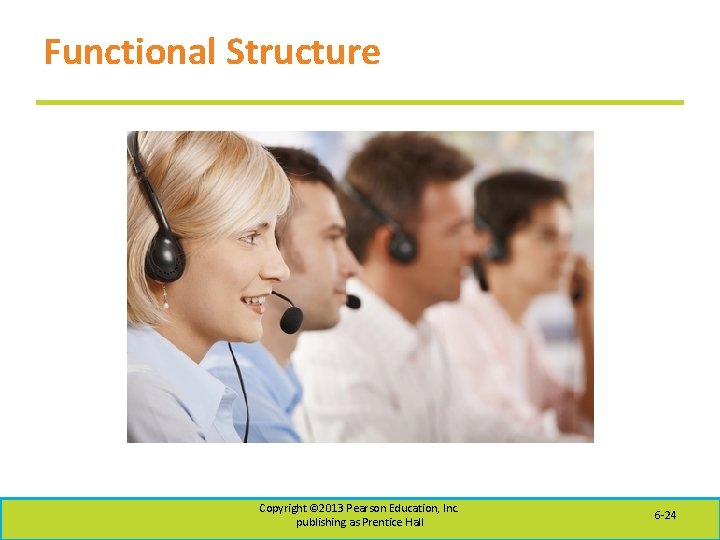
Functional Structure Copyright © 2013 Pearson Education, Inc. publishing as Prentice Hall 6 -24
Divisional Structure Copyright © 2013 Pearson Education, Inc. publishing as Prentice Hall 6 -25
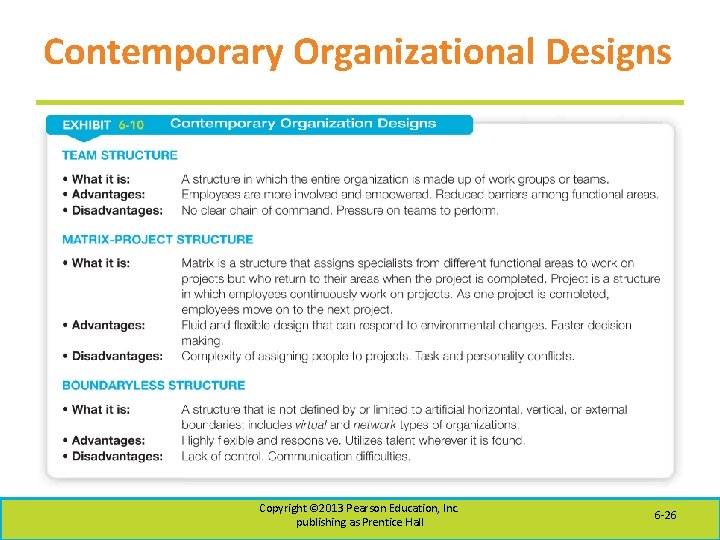
Contemporary Organizational Designs Copyright © 2013 Pearson Education, Inc. publishing as Prentice Hall 6 -26
Team Structure Copyright © 2013 Pearson Education, Inc. publishing as Prentice Hall 6 -27
Matrix & Project Structures Copyright © 2013 Pearson Education, Inc. publishing as Prentice Hall 6 -28
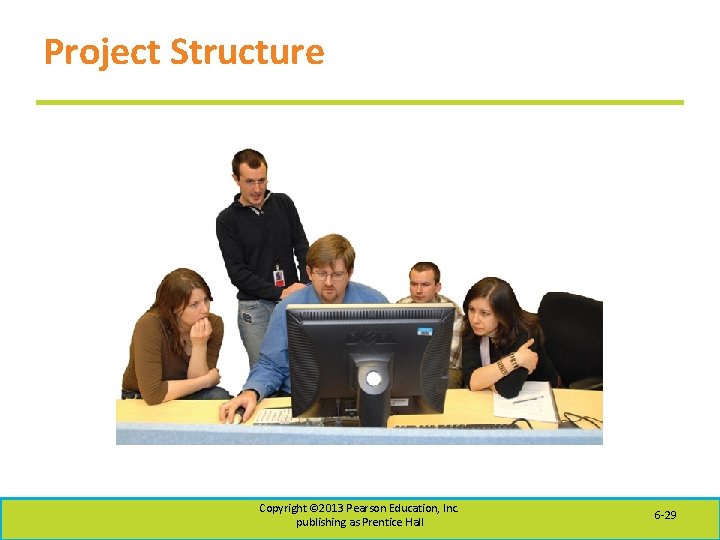
Project Structure Copyright © 2013 Pearson Education, Inc. publishing as Prentice Hall 6 -29
Boundaryless Organizations Boundaryless organization – An organization whose design is not imposed by a predefined structure – Internal boundaries – External boundaries • Can be minimized or eliminated by using virtual or network structural designs Copyright © 2013 Pearson Education, Inc. publishing as Prentice Hall 6 -30
Copyright © 2013 Pearson Education, Inc. publishing as Prentice Hall 6 -31
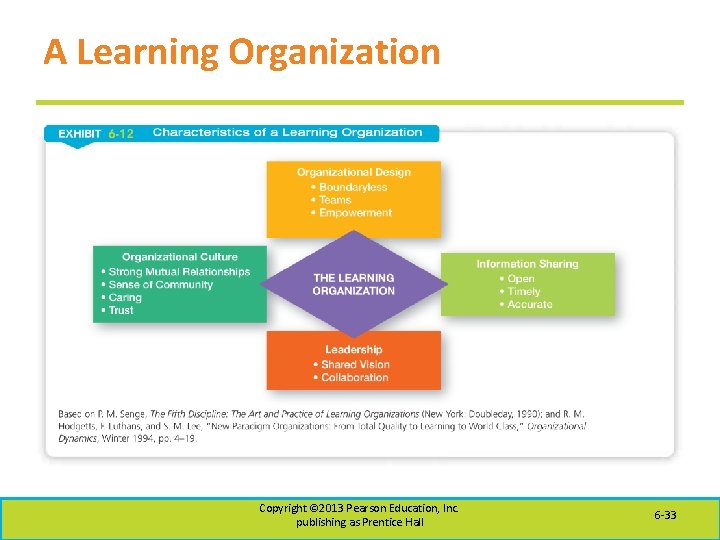
Current Organizational Design Challenges 1. Keeping employees connected 2. Managing global structural issues 3. Building a learning org 4. Designing flexible work arrangements Copyright © 2013 Pearson Education, Inc. publishing as Prentice Hall 6 -32
A Learning Organization Copyright © 2013 Pearson Education, Inc. publishing as Prentice Hall 6 -33
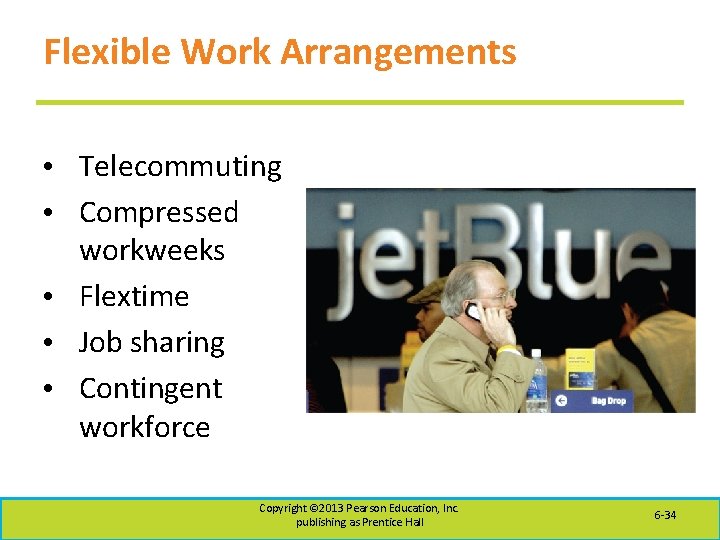
Flexible Work Arrangements • Telecommuting • Compressed workweeks • Flextime • Job sharing • Contingent workforce Copyright © 2013 Pearson Education, Inc. publishing as Prentice Hall 6 -34
Copyright © 2013 Pearson Education, Inc. publishing as Prentice Hall 6 -35