
6 chapter Forms of Business Ownership Better Business
6 chapter Forms of Business Ownership Better Business 3 rd Edition Solomon (Contributing Editor) · Poatsy · Martin © 2014 Pearson Education, Inc. 6 -1
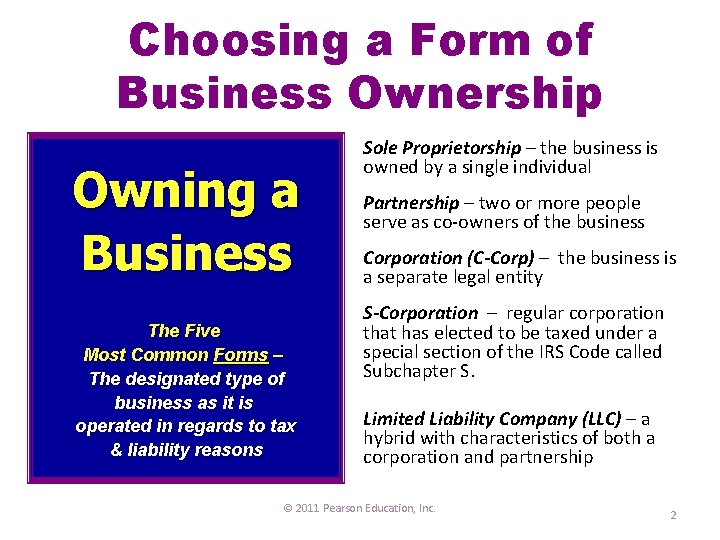
Choosing a Form of Business Ownership Owning a Business The Five Most Common Forms – The designated type of business as it is operated in regards to tax & liability reasons Sole Proprietorship – the business is owned by a single individual Partnership – two or more people serve as co-owners of the business Corporation (C-Corp) – the business is a separate legal entity S-Corporation – regular corporation that has elected to be taxed under a special section of the IRS Code called Subchapter S. Limited Liability Company (LLC) – a hybrid with characteristics of both a corporation and partnership © 2011 Pearson Education, Inc. 2
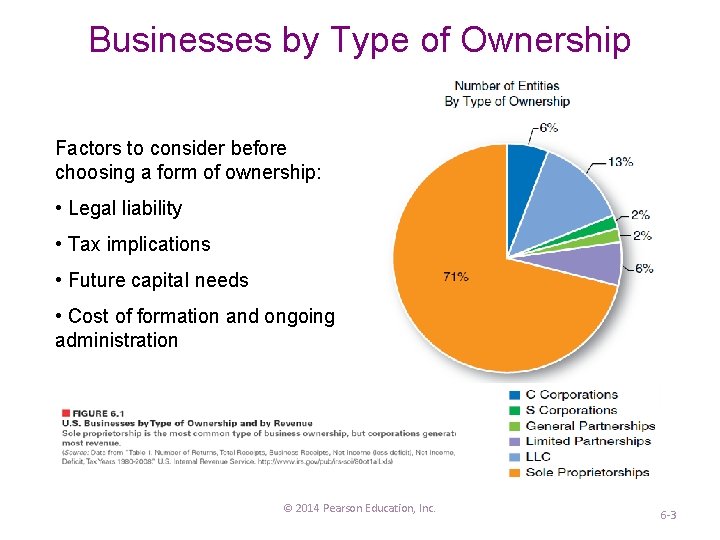
Businesses by Type of Ownership Factors to consider before choosing a form of ownership: • Legal liability • Tax implications • Future capital needs • Cost of formation and ongoing administration © 2014 Pearson Education, Inc. 6 -3
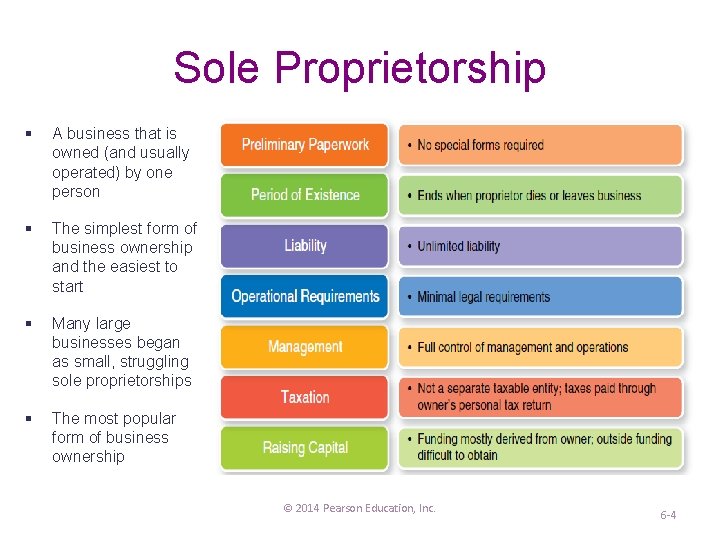
Sole Proprietorship § A business that is owned (and usually operated) by one person § The simplest form of business ownership and the easiest to start § Many large businesses began as small, struggling sole proprietorships § The most popular form of business ownership © 2014 Pearson Education, Inc. 6 -4
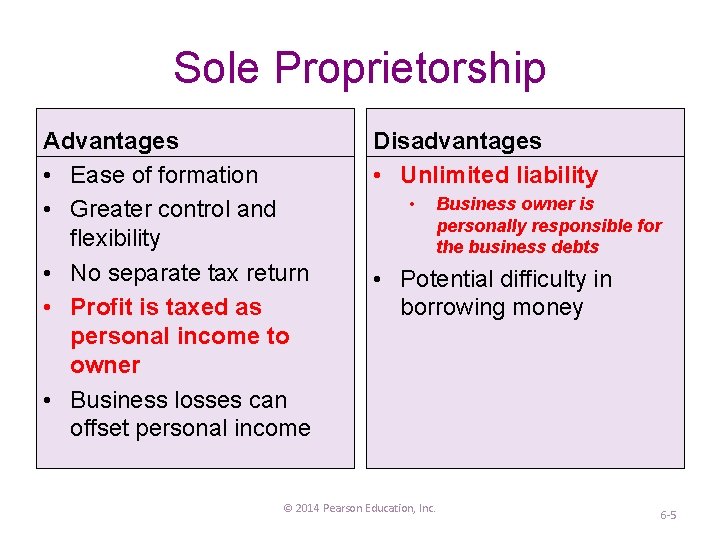
Sole Proprietorship Advantages _____ __ • Ease of _____ formation ______ control _______ • Greater and ______ flexibility _ ____ ___return ______ • No separate tax Business _______ losses ______ can ___ • Profit is taxed as ______ offset personal ____ income personal income to ______ owner • Business losses can offset personal income Disadvantages • Unlimited ____liability _____ • Business owner isin • Potential ____ difficulty _____ personally responsible for __ _____ borrowing money _____ the business debts • Potential difficulty in borrowing money © 2014 Pearson Education, Inc. 6 -5
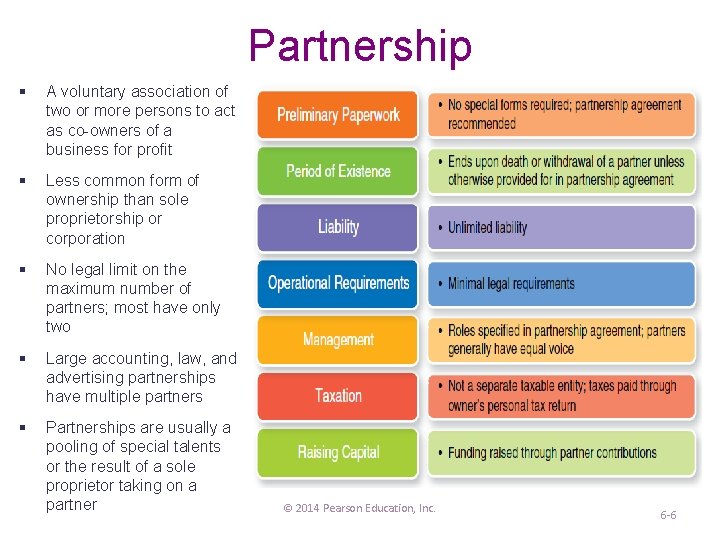
Partnership § A voluntary association of two or more persons to act as co-owners of a business for profit § Less common form of ownership than sole proprietorship or corporation § No legal limit on the maximum number of partners; most have only two § Large accounting, law, and advertising partnerships have multiple partners § Partnerships are usually a pooling of special talents or the result of a sole proprietor taking on a partner © 2014 Pearson Education, Inc. 6 -6
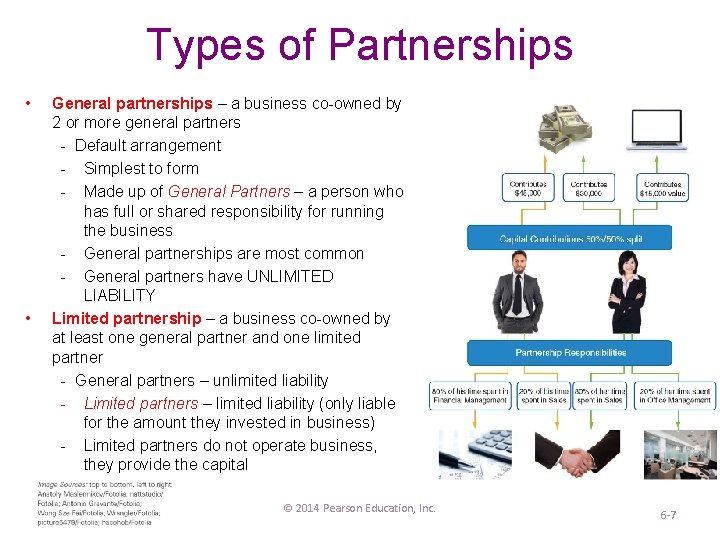
Types of Partnerships • • General partnerships – a business co-owned by 2 or more general partners - Default arrangement - Simplest to form - Made up of General Partners – a person who has full or shared responsibility for running the business - General partnerships are most common - General partners have UNLIMITED LIABILITY Limited partnership – a business co-owned by at least one general partner and one limited partner - General partners – unlimited liability - Limited partners – limited liability (only liable for the amount they invested in business) - Limited partners do not operate business, they provide the capital © 2014 Pearson Education, Inc. 6 -7
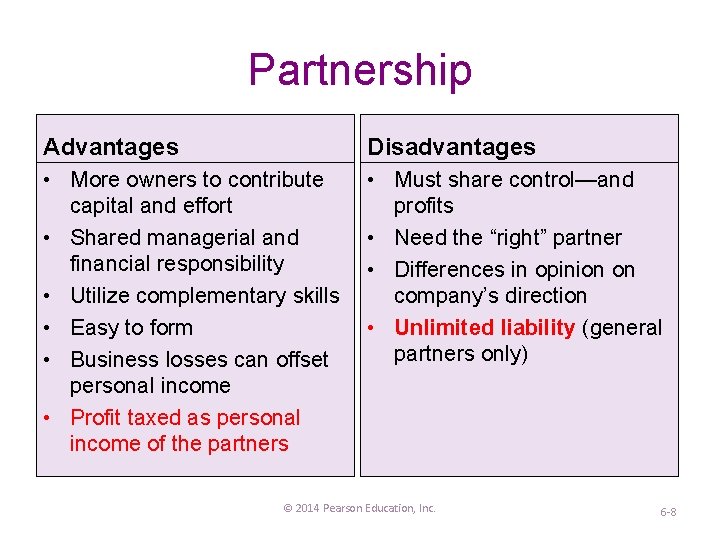
Partnership Advantages Disadvantages • More owners to contribute capital and effort • Shared managerial and financial responsibility • Utilize complementary skills • Easy to form • Business losses can offset personal income • Profit taxed as personal income of the partners • Must share control—and profits • Need the “right” partner • Differences in opinion on company’s direction • Unlimited liability (general partners only) © 2014 Pearson Education, Inc. 6 -8

Partnership Agreement • • • Capital contributions Responsibilities of each partner Decision-making process Shares of profits or losses Departure of partners Addition of partners © 2014 Pearson Education, Inc. 6 -9

Corporations • Most common type of corporation is a “C” corporation • A corporation is a legal entity, separate from its owners • Requirements vary by state, many states are “corporationfriendly” • Corporations are owned by stockholders • Articles of incorporations must be filed and corporate bylaws adopted © 2014 Pearson Education, Inc. 6 -10
Special Elements of a Corporation § Corporate ownership • Stock – The shares of ownership of a corporation – 2 Types: 1) Common Stock (voting privileges), 2) Preferred Stock (no voting rights, dividends paid first) • Stockholder (aka Shareholder) – A person who owns a share or shares of a corporation’s stock • Dividend – A portion of the corporation’s profit (earnings) that is distributed to stockholders • Board of Directors – The governing body of the corporation, elected by stockholders and appoint corporate officers • Closed (private) corporation – A corporation whose stock is owned by relatively few people and is not sold to the general public • Open (public) corporation – A corporation whose stock is bought and sold on security exchanges and can be purchased by any individual © 2011 Pearson Education, Inc. 11
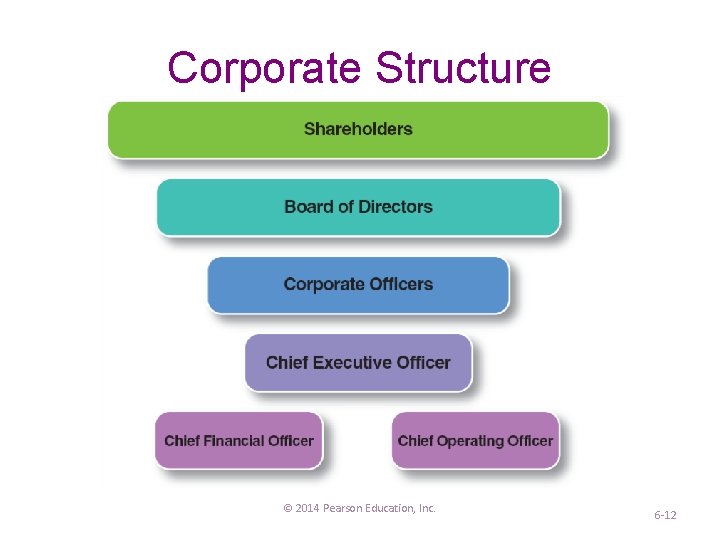
Corporate Structure © 2014 Pearson Education, Inc. 6 -12
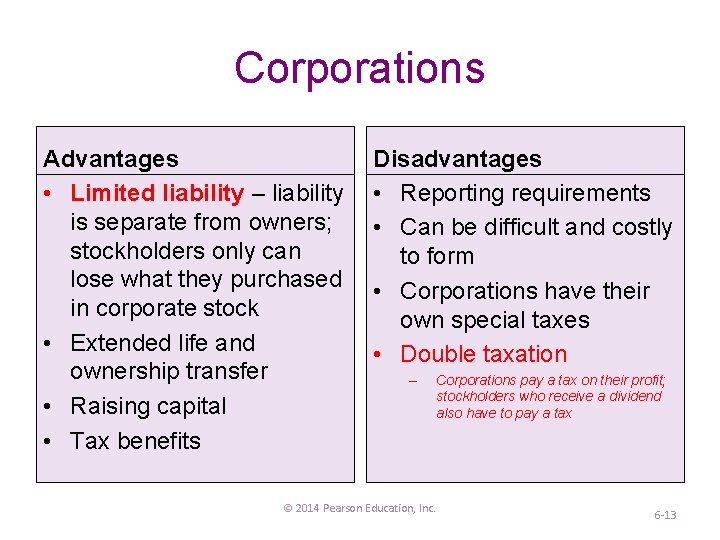
Corporations Advantages • Limited liability – liability is separate from owners; stockholders only can lose what they purchased in corporate stock • Extended life and ownership transfer • Raising capital • Tax benefits Disadvantages • Reporting requirements • Can be difficult and costly to form • Corporations have their own special taxes • Double taxation – Corporations pay a tax on their profit; stockholders who receive a dividend also have to pay a tax © 2014 Pearson Education, Inc. 6 -13
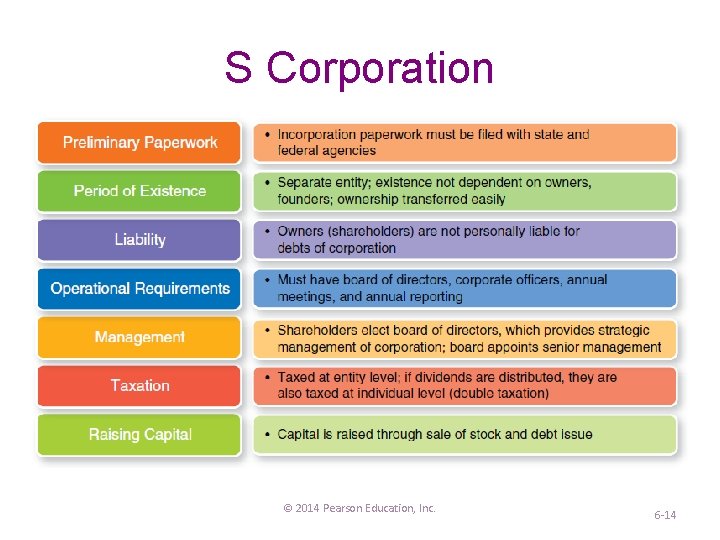
S Corporation © 2014 Pearson Education, Inc. 6 -14
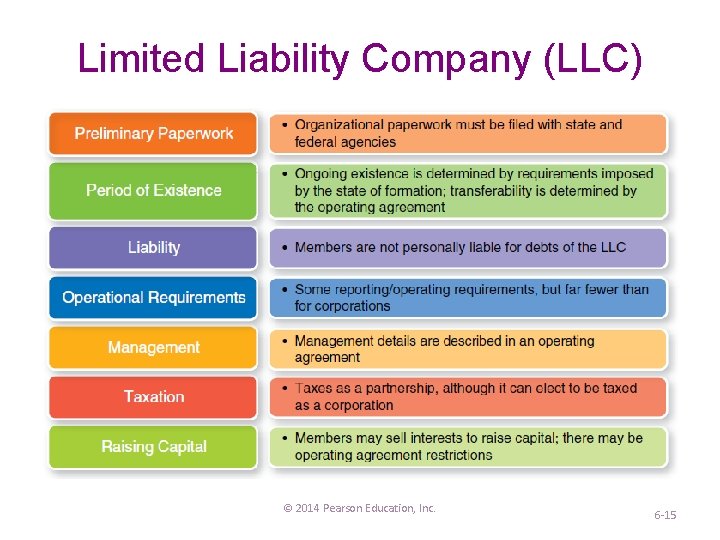
Limited Liability Company (LLC) © 2014 Pearson Education, Inc. 6 -15
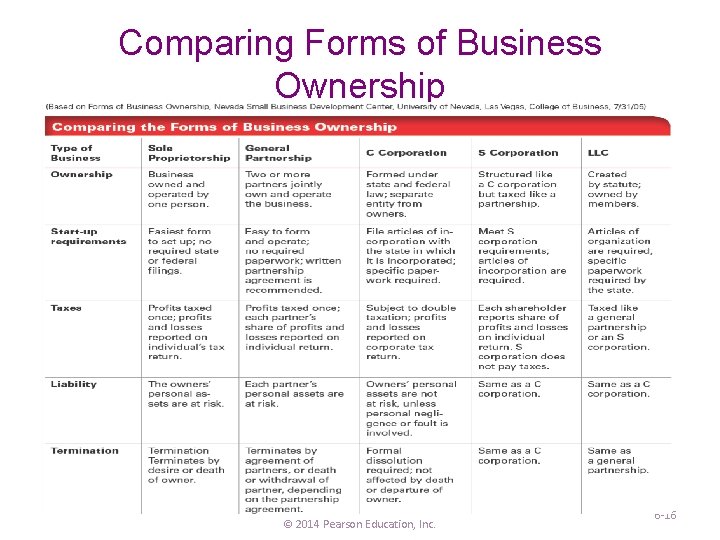
Comparing Forms of Business Ownership © 2014 Pearson Education, Inc. 6 -16
Not-for-Profit Corporations • An incorporated business that does not seek a profit • Utilizes revenue available after normal operating expenses for the corporation’s declared social or educational goals • Tax-exempt status granted by federal and state governments © 2014 Pearson Education, Inc. 6 -17
Mergers and Acquisitions • Merger - Two companies join to form one company • Acquisition - One company takes over another company © 2014 Pearson Education, Inc. 6 -18
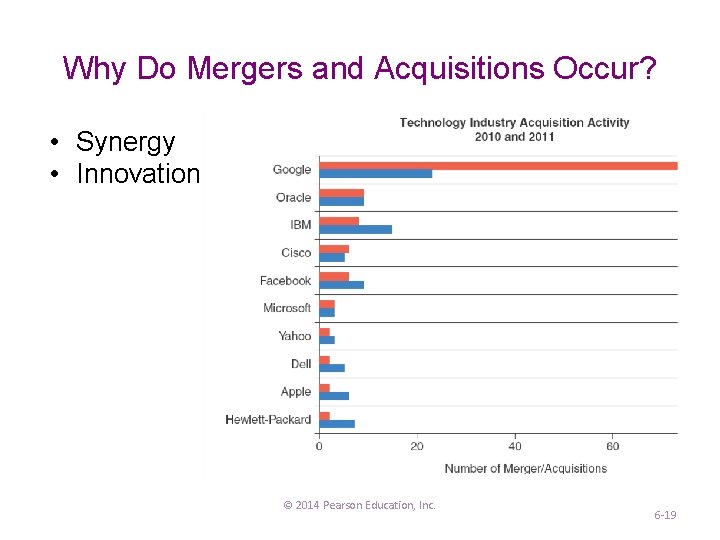
Why Do Mergers and Acquisitions Occur? • Synergy • Innovation © 2014 Pearson Education, Inc. 6 -19
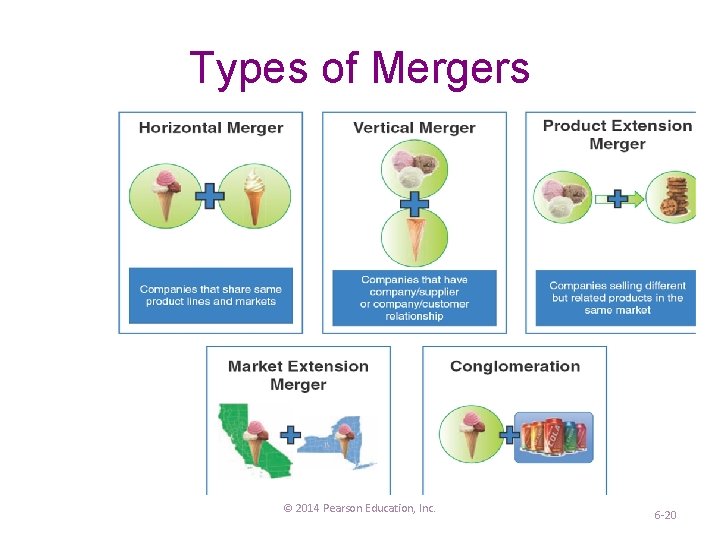
Types of Mergers © 2014 Pearson Education, Inc. 6 -20

Disadvantages of Mergers More than ½ of all mergers don’t meet expectations because of: • Poor integration • Conflicting corporate cultures • Power struggles in management team • Employee turnover © 2014 Pearson Education, Inc. 6 -21
© 2014 Pearson Education, Inc. 6 -22
- Slides: 22