
6 A RS DNA Identify components of DNA
- Slides: 15
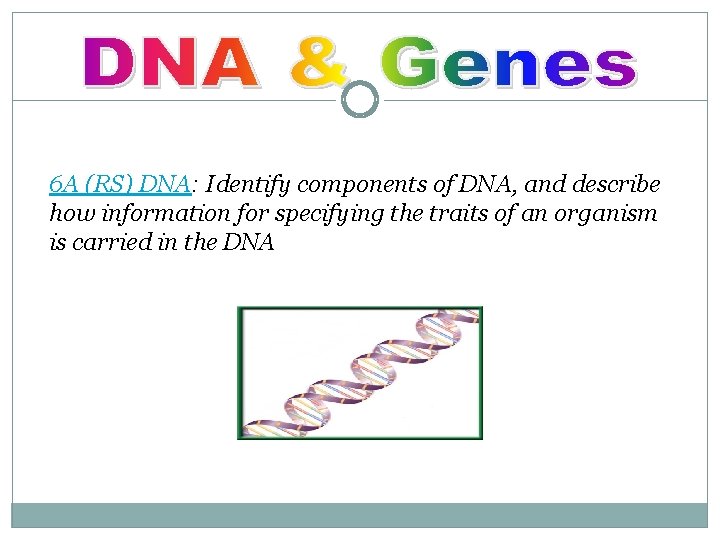
6 A (RS) DNA: Identify components of DNA, and describe how information for specifying the traits of an organism is carried in the DNA
What is DNA? DNA - deoxyribonucleic acid A chemical substance that’s present in the nucleus of all cells in all living organisms controls the production of proteins
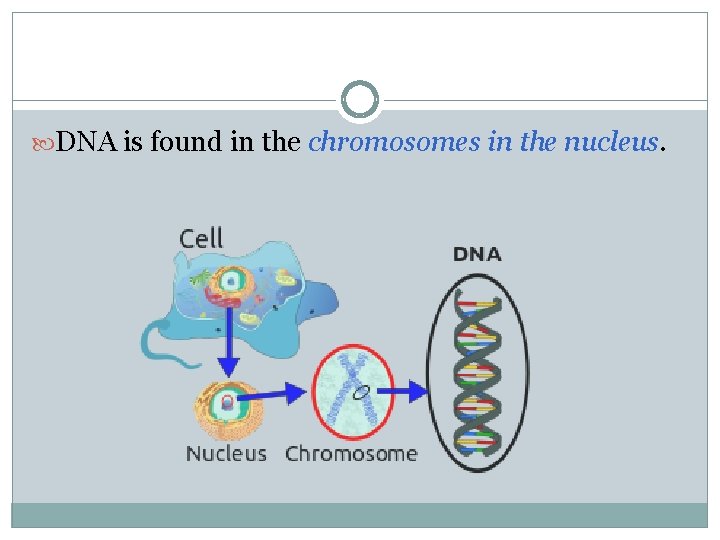
DNA is found in the chromosomes in the nucleus.
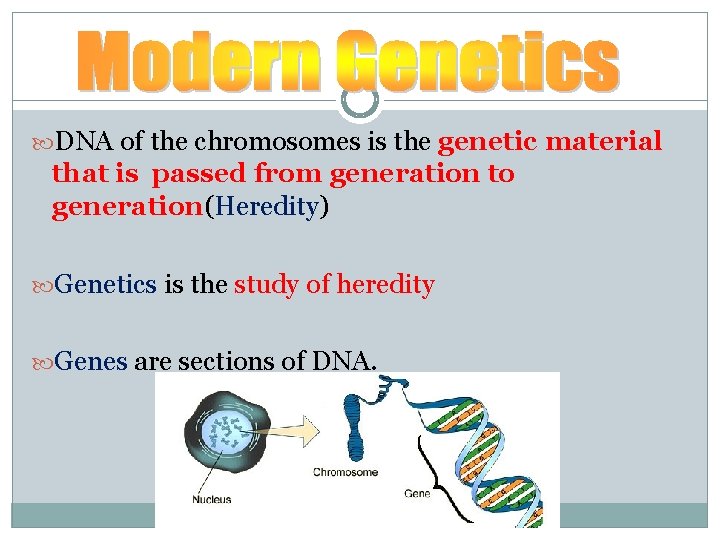
DNA of the chromosomes is the genetic material that is passed from generation to generation(Heredity) Genetics is the study of heredity Genes are sections of DNA.
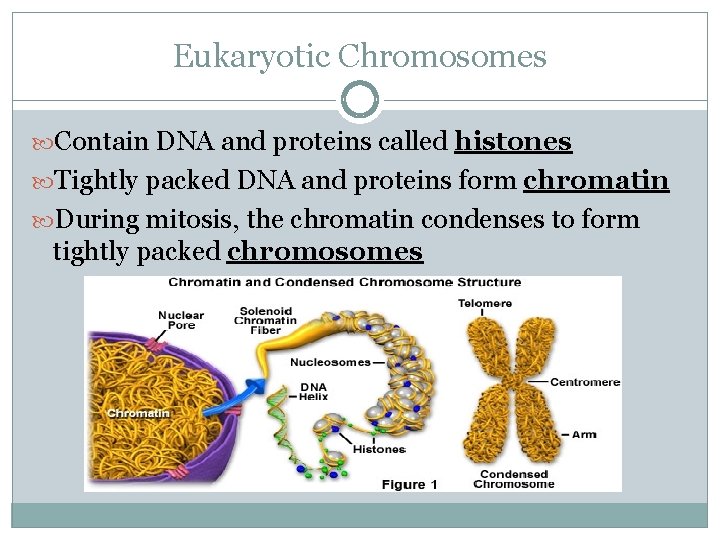
Eukaryotic Chromosomes Contain DNA and proteins called histones Tightly packed DNA and proteins form chromatin During mitosis, the chromatin condenses to form tightly packed chromosomes
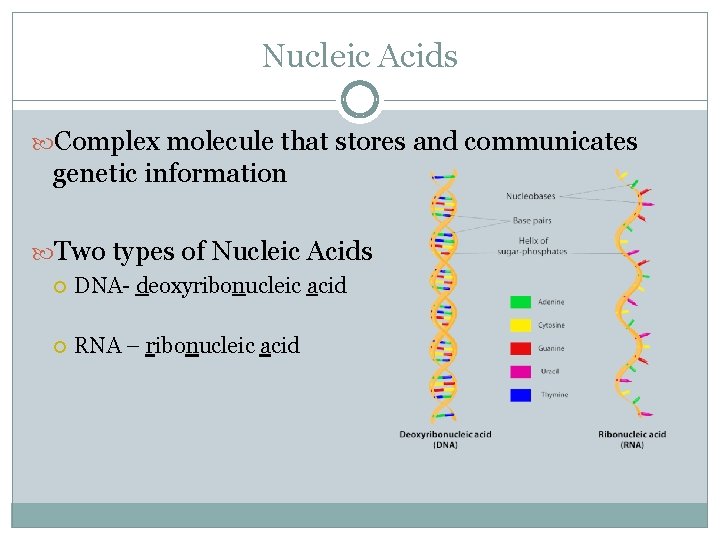
Nucleic Acids Complex molecule that stores and communicates genetic information Two types of Nucleic Acids DNA- deoxyribonucleic acid RNA – ribonucleic acid
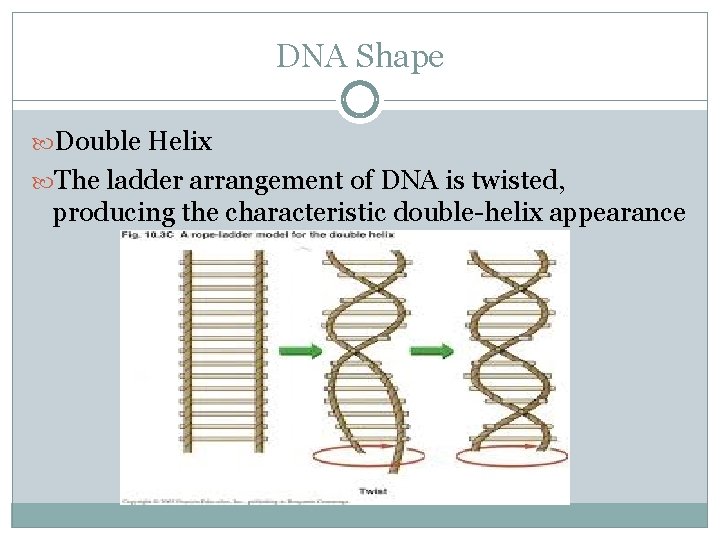
DNA Shape Double Helix The ladder arrangement of DNA is twisted, producing the characteristic double-helix appearance
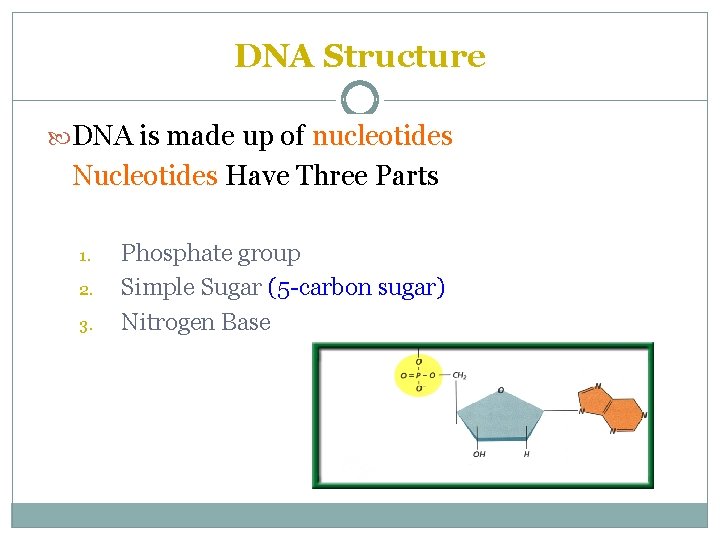
DNA Structure DNA is made up of nucleotides Nucleotides Have Three Parts 1. 2. 3. Phosphate group Simple Sugar (5 -carbon sugar) Nitrogen Base
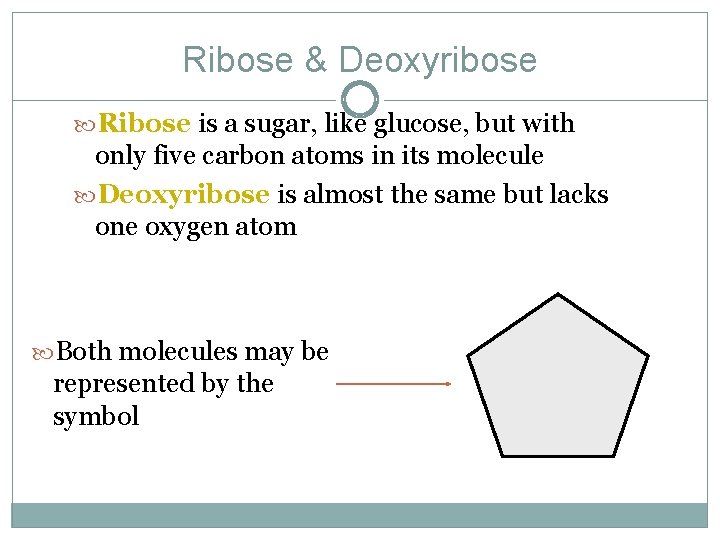
Ribose & Deoxyribose Ribose is a sugar, like glucose, but with only five carbon atoms in its molecule Deoxyribose is almost the same but lacks one oxygen atom Both molecules may be represented by the symbol
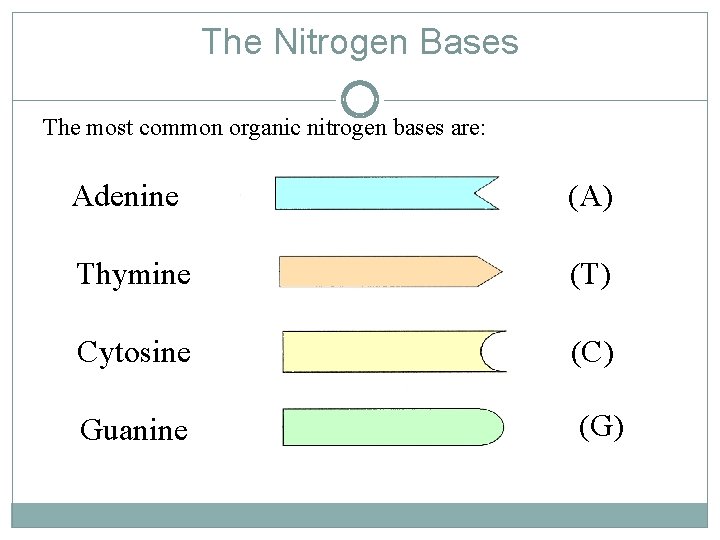
The Nitrogen Bases The most common organic nitrogen bases are: Adenine (A) Thymine (T) Cytosine (C) Guanine (G)
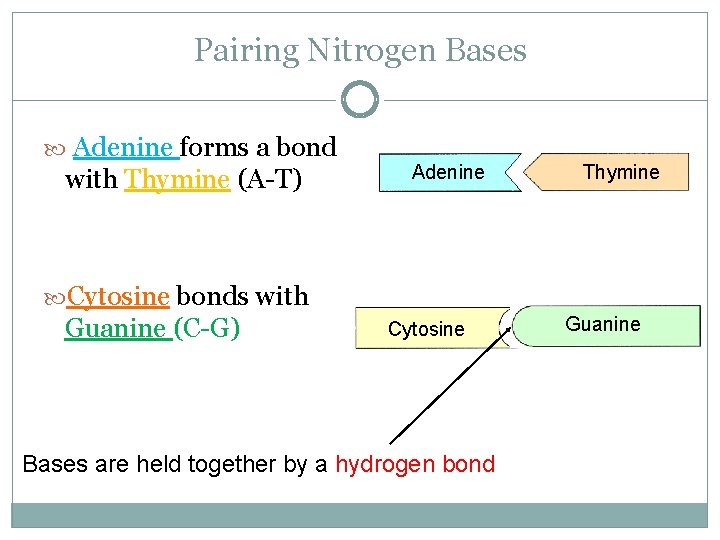
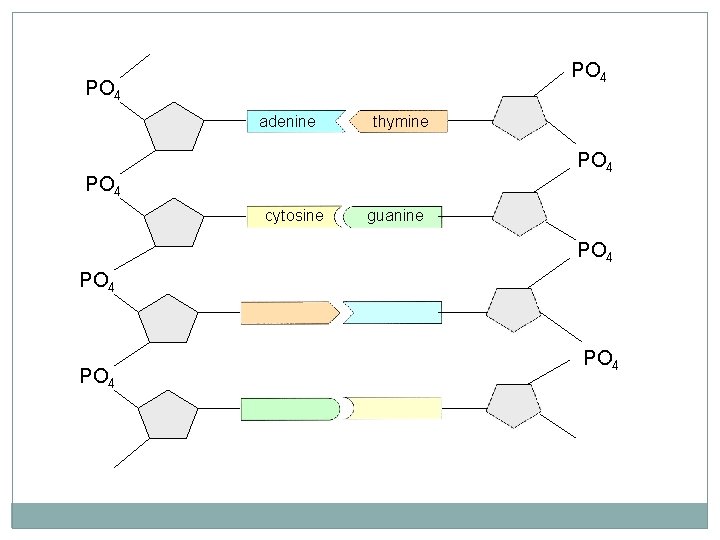
Pairing Nitrogen Bases Adenine forms a bond with Thymine (A-T) Adenine Thymine Cytosine bonds with Guanine (C-G) Cytosine Bases are held together by a hydrogen bond Guanine
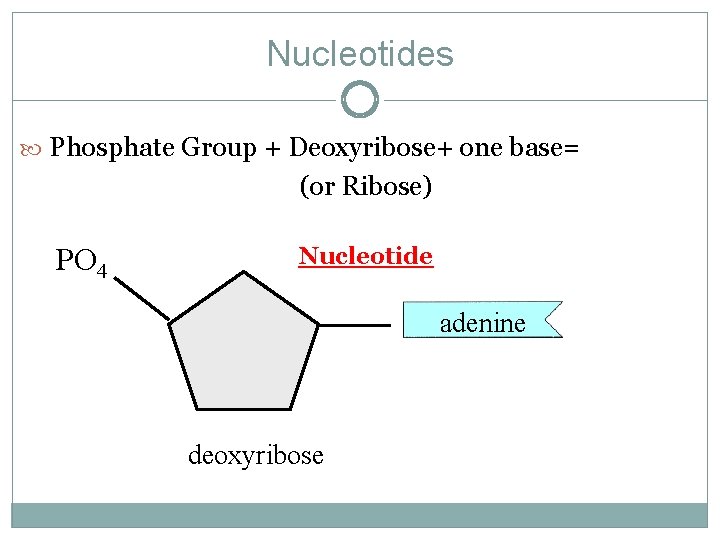
Nucleotides Phosphate Group + Deoxyribose+ one base= (or Ribose) PO 4 Nucleotide adenine deoxyribose
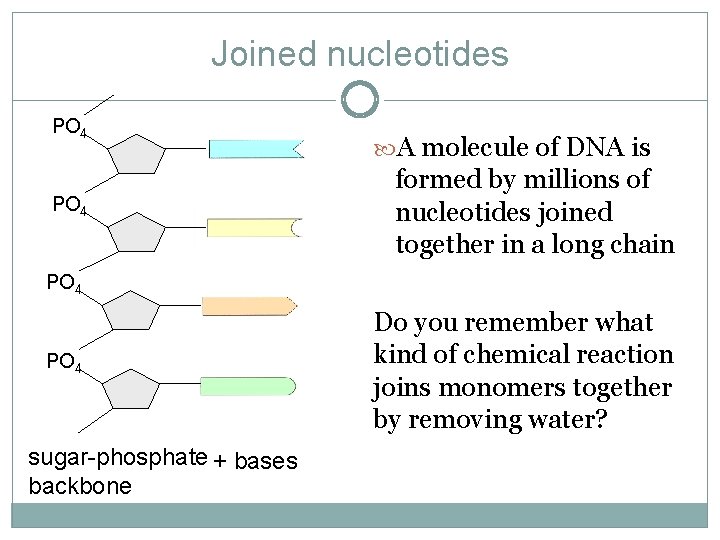
Joined nucleotides PO 4 A molecule of DNA is formed by millions of nucleotides joined together in a long chain PO 4 sugar-phosphate + bases backbone Do you remember what kind of chemical reaction joins monomers together by removing water?
PO 4 adenine thymine PO 4 cytosine guanine PO 4
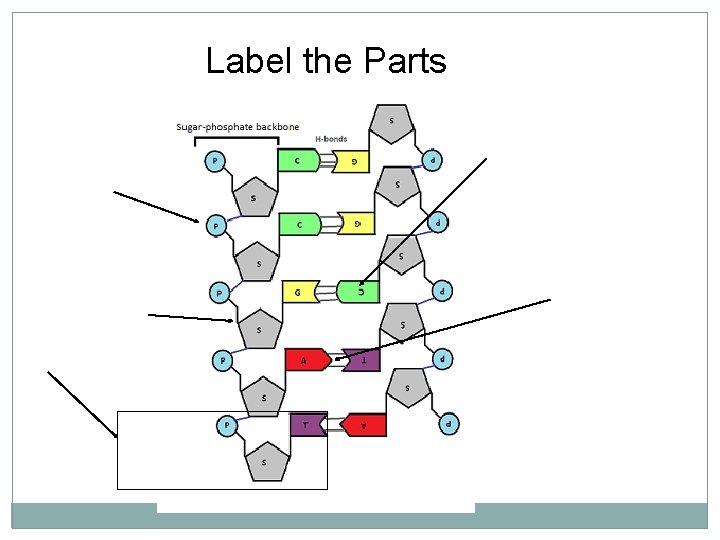
Label the Parts